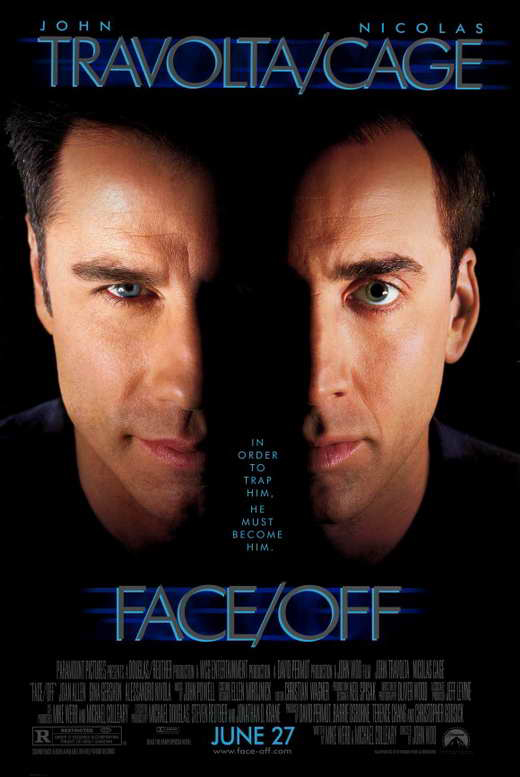
Since today is John Woo’s birthday, it only feels appropriate that today’s song of the day should come from John Powell’s score for Face/Off.
Since today is John Woo’s birthday, it only feels appropriate that today’s song of the day should come from John Powell’s score for Face/Off.
4 Shots From 4 Films is just what it says it is, 4 shots from 4 of our favorite films. As opposed to the reviews and recaps that we usually post, 4 Shots From 4 Films lets the visuals do the talking!
Today, we wish a happy birthday to director John Woo. It’s time for….
4 Shots From 4 John Woo Films
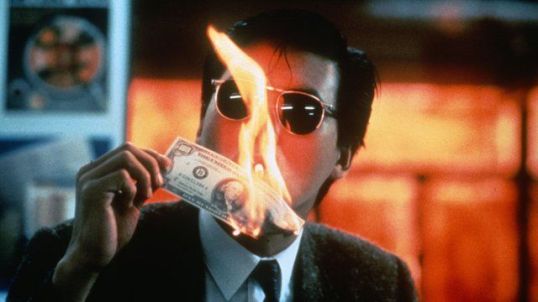
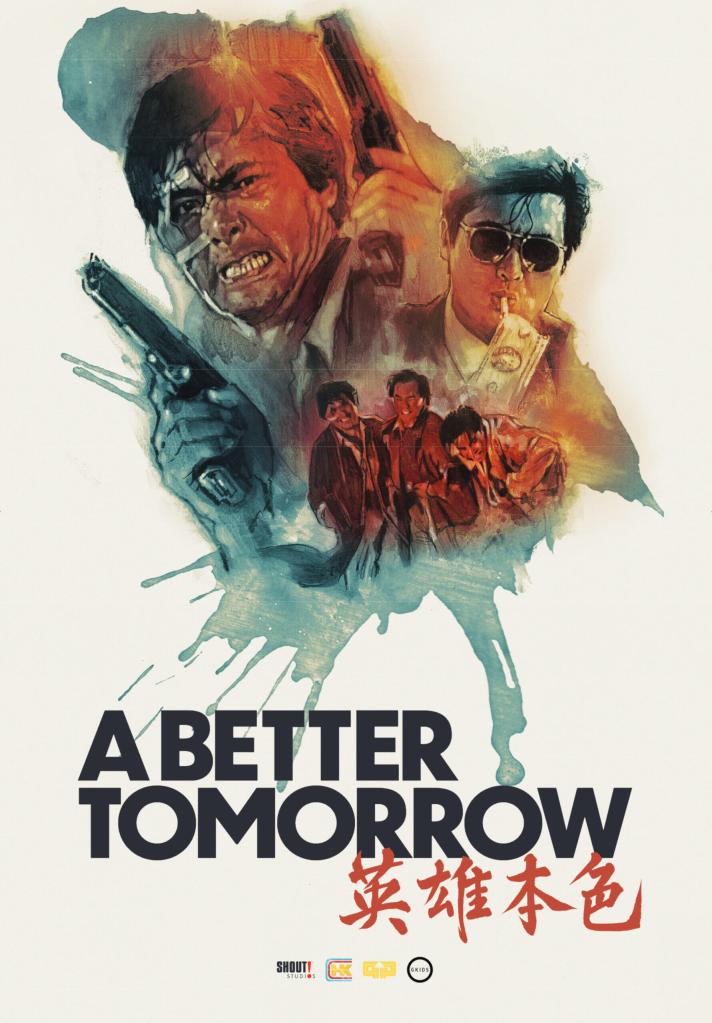
A Better Tomorrow (1986, dir by John Woo, DP: Wing-Hang Wong)
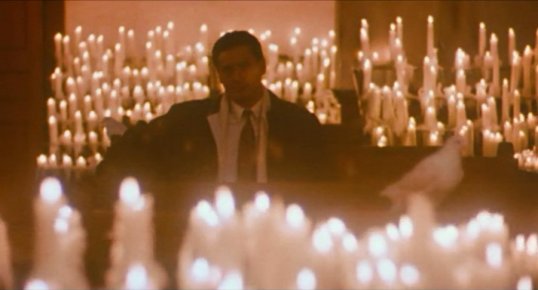
The Killer (1989, dir by John Woo, DP: Peter Pau, Wing-Hang Wong)
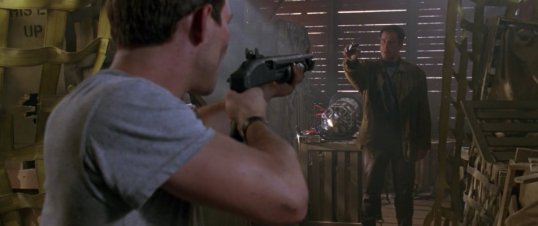
Broken Arrow (1996, dir by John Woo, DP: Peter Levy)
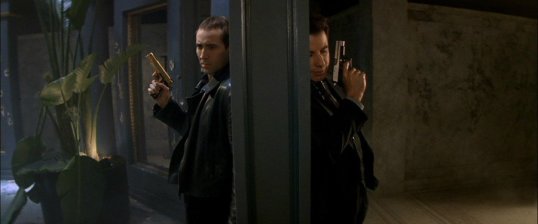
Face/Off (1997, dir by John Woo, DP: Oliver Wood)
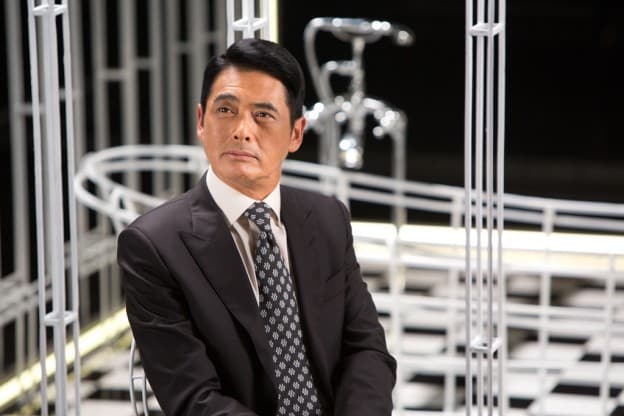
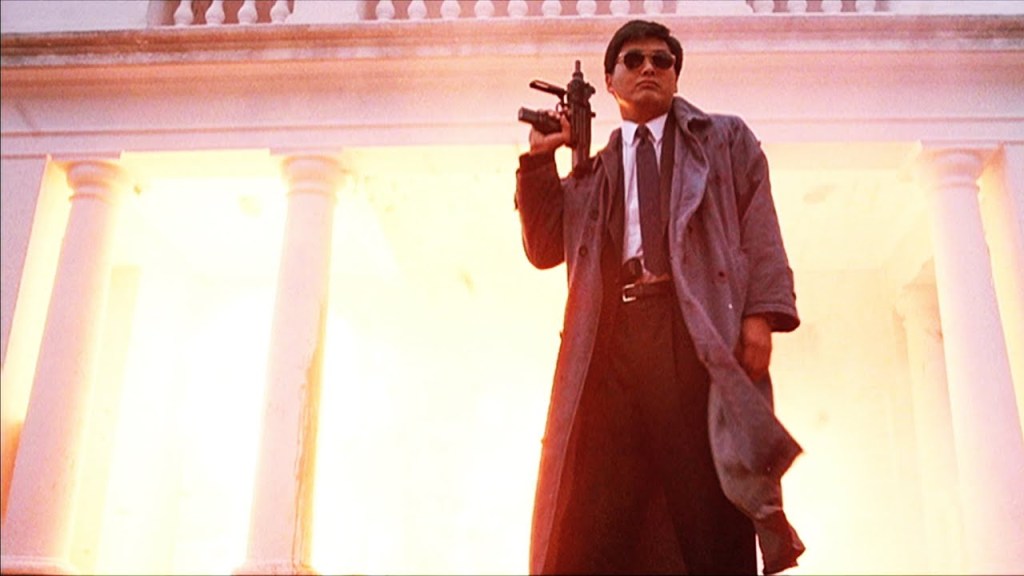
Chow Yun-Fat is one of the great international movie stars, and he’s my favorite living actor. Today is his 71st birthday, and I’ve been watching and reviewing his movies like crazy this month. I’ve had a ball. I’ll have new reviews to share soon, but today I’m sharing six fun screen images featuring the Hong Kong legend!
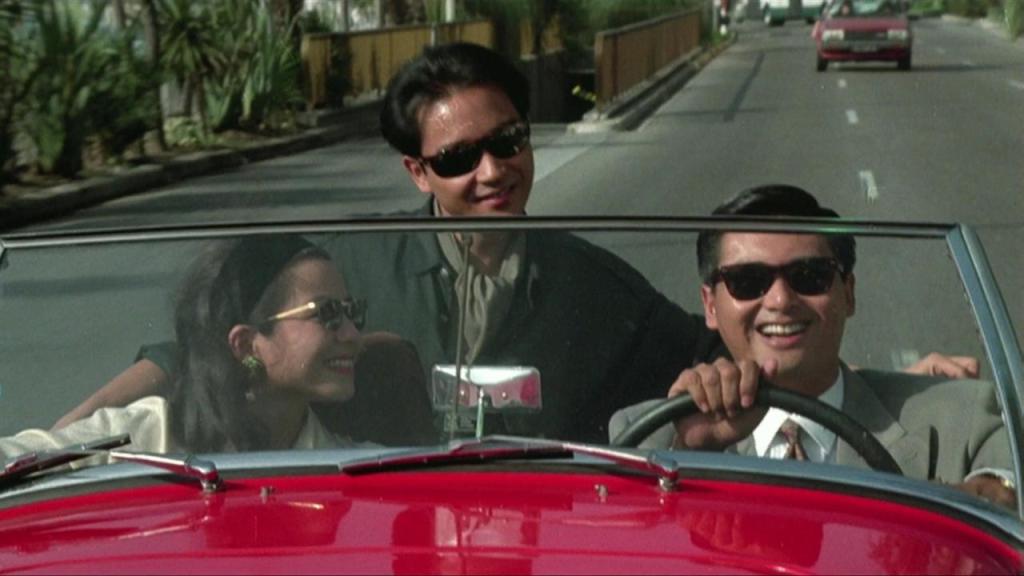
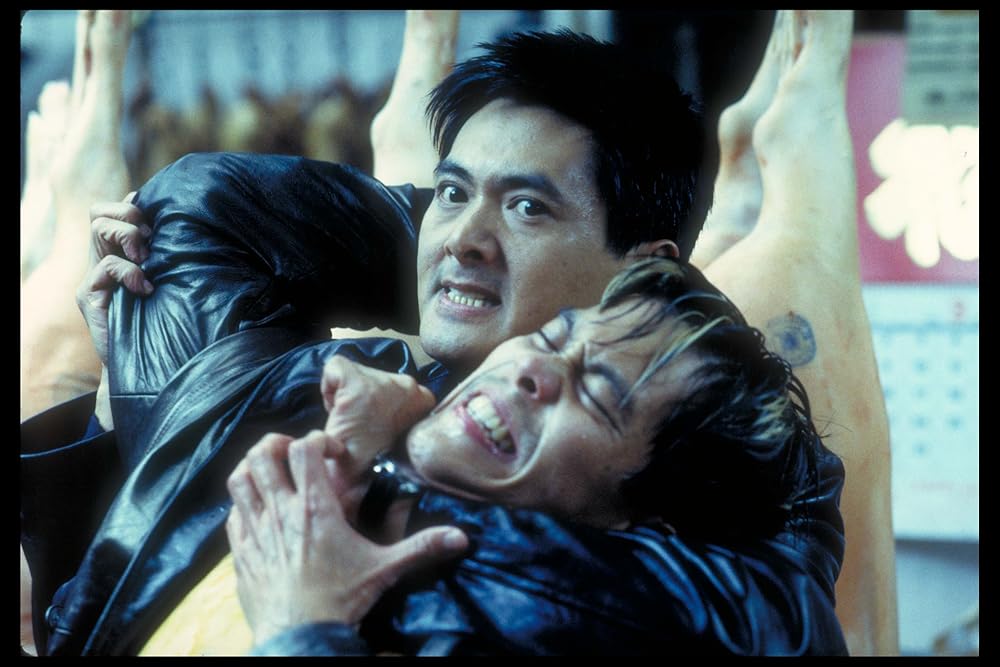
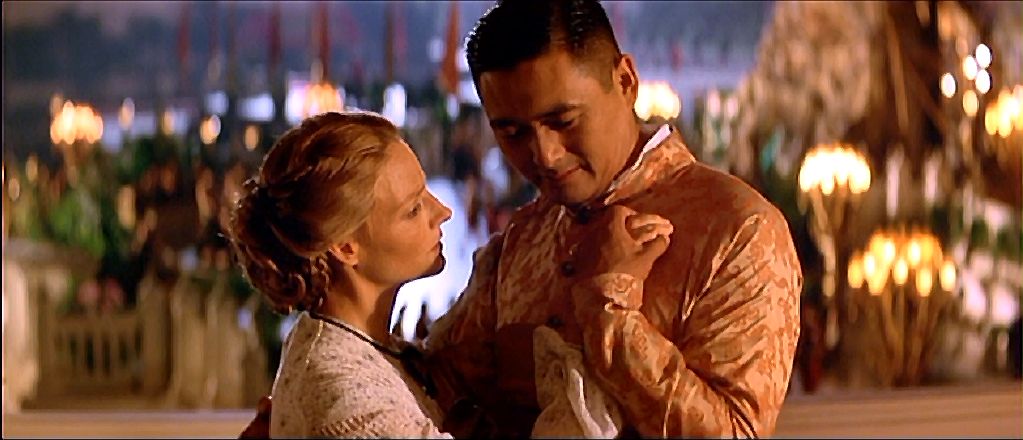
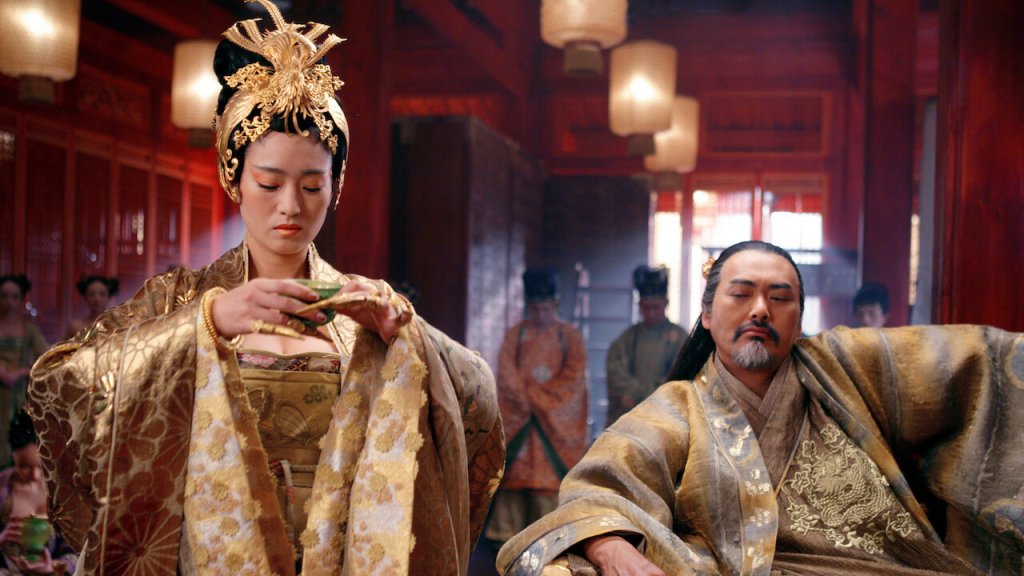
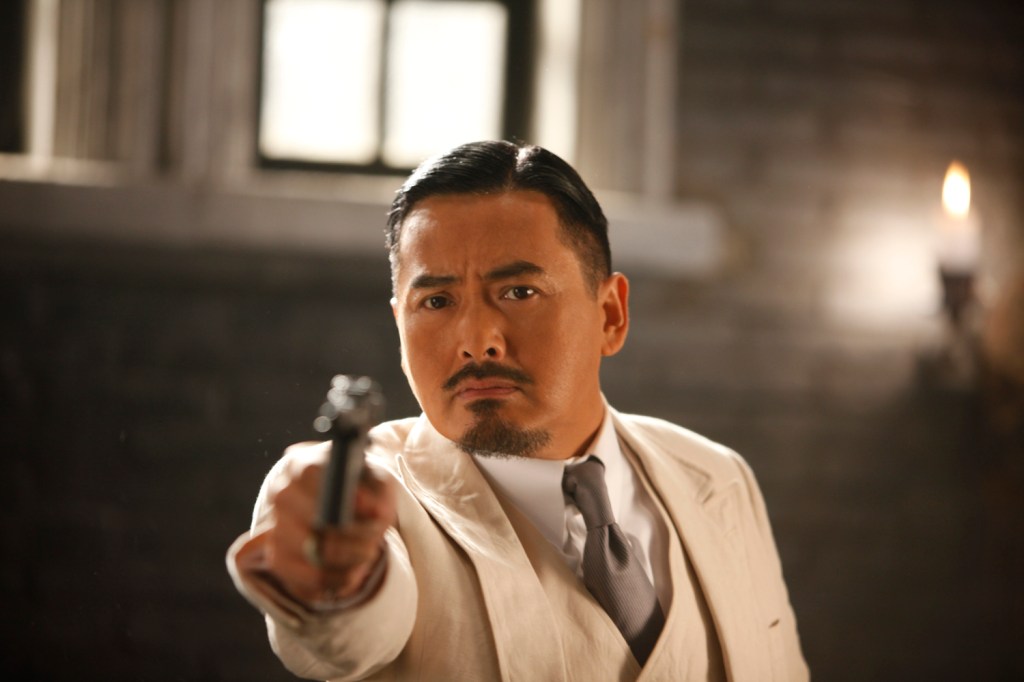
John Woo’s A BETTER TOMORROW was such a gigantic hit in Hong Kong cinemas when it came out in 1986 that you had to know that a sequel would soon follow. A BETTER TOMORROW II would open a year later, bringing back all the stars from the original. This film would go even bigger with both the action and the melodrama, with varying levels of success, but we’ll get to that in a little bit.
The plot seems familiar at first, as ex-gangster Ho (Ti Lung) is let out of prison to work with the police to dig up dirt on his old friend Lung (Dean Shek), a former criminal who’s trying to run a legitimate business down at the shipyard. The main reason he agrees to help though, is because his younger brother / undercover cop Kit (Leslie Cheung) is working on the case and Ho wants to protect him. After a series of double-crosses and betrayals, it seems that we’re in for the same type of story that we got in the first film. Key differences emerge when Lung is framed for murder and escapes to New York City. There we meet Ken Gor (Chow Yun-Fat), the conveniently discovered twin brother of tragic hero Mark Gor. Ken tries to help Lung, who has fallen into a state of catatonic shock upon learning that his daughter has been killed. When death squads come after him in New York, Ken shows his badass cred and saves his ass. Lung eventually snaps out of it and the two head back to Hong Kong together. There they team up with Ho and Kit to exact bloody vengeance on all who have gotten in the way of their efforts at personal reform!
The first thing I’ll say about A BETTER TOMORROW II is that the film has some incredible action sequences, some of the best you’ll ever see, and some of Woo’s best work. The finale where the trio of Ken, Ho and Lung storm the bad guy’s mansion is a masterpiece of extended and creative bloody violence. I 100% recommend the film for the action.
The second thing I’ll say about A BETTER TOMORROW II is that it has some of the most over the top melodrama that you’ll ever see. My comment is mainly aimed at the section of the film where Ken tries to get Lung to snap out of his shock. I really don’t enjoy these scenes, with my least favorite being the scene where Chow Yun-Fat tries to force a completely zoned out Dean Shek to eat. There is a lot of good-looking food wasted in that scene, and I cringe every time I watch it!
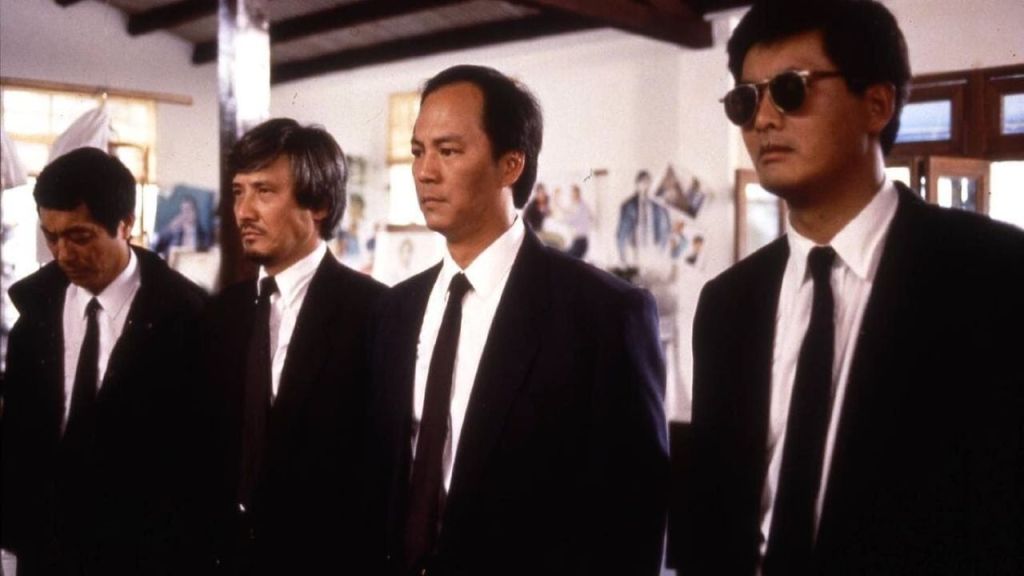
I’ve read that the film was a troubled production, and that John Woo and producer Tsui Hark had very different ideas on the type of movie that each wanted to make. Both tried to produce different edits of the film, and with too many cooks in the kitchen, we ended up with this glorious Frankenstein. When the dust settled, John Woo mostly disowned the film except for that majestic, crimson-stained finale. Tsui Hark would take over the series and turn out A BETTER TOMORROW III a couple of years later, while Woo would move on to THE KILLER.
There are interesting ideas here, and the film almost wants to turn into a comic book. For example, the scene that first introduces us to Ken Gor, Mark’s twin brother, features an old man who’s devoted his life to drawing storyboard illustrations of the adventures of Mark, Ho and Kit. He even has Mark’s trademark sunglasses and blood-stained, bullet-riddled coat, which you know Ken will put on at some point. This seems appropriate to many of the shenanigans that go on, but then the film will switch its focus to extended scenes of a depressed Kit or a drooling Lung, and it seems like we’re in a different movie. There are parts of this film that I love and there are parts that I just want to be over.
At the end of the day, if you’ve come to A BETTER TOMORROW II for the promise of John Woo’s awesome action, you will get your fill. You’ll get to see Chow Yun-Fat at his charismatic best, wearing his long coat and sunglasses, and wielding twin barettas as he takes out hordes of henchmen. You’ll get to see Ti Lung swinging a sword that might bring back images of his Shaw Brothers heydays! Just be prepared to watch Dean Shek spill milk, eat through an orange (peel and all), and gnaw on a piece of frozen meat along the way.
A BETTER TOMORROW II is currently streaming on Amazon Prime, Tubi, and Plex.
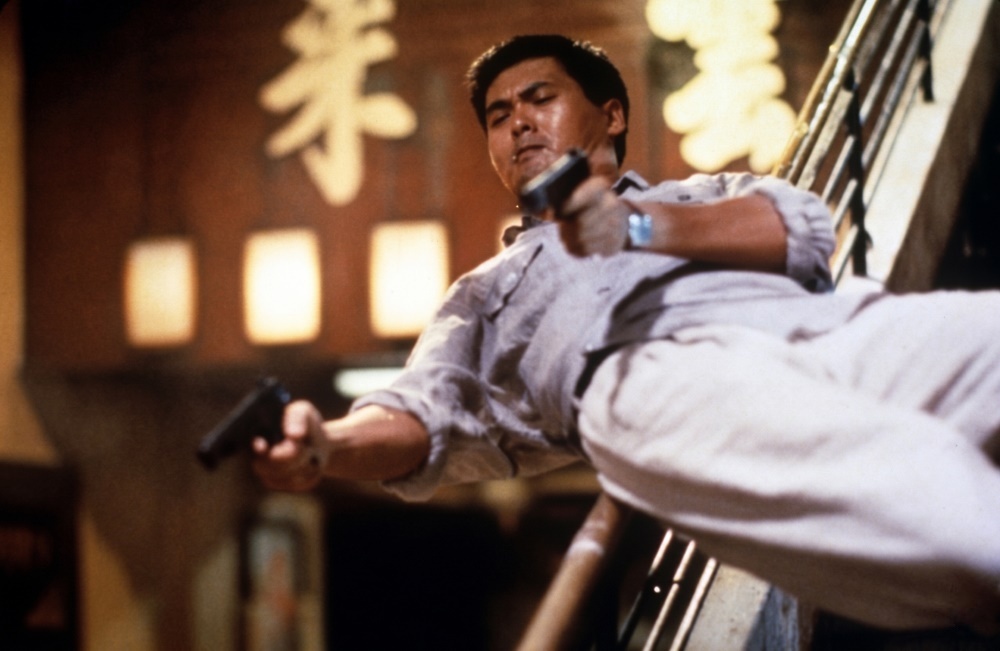
Inspector “Tequila” Yuen Ho‑yan is one of those action heroes who feels like a classic the second he steps on screen, but he also holds up under close character study. On the surface, he’s pure Hong Kong cool: trench coat, ever‑burning cigarette, toothpick, and twin Berettas, sliding through shootouts like they’re part of some stylish routine. But peel back the image and you see a cop haunted by his partner’s death, worn down by the violence he’s forced to perpetuate, and quietly desperate to protect the innocent. That mix of flashy exterior and inner weight is what makes him feel both mythic and grounded.
What gives Tequila his staying power is the way he maintains a clear moral center in a gray world. He’s not a squeaky‑clean officer; he disobeys orders, uses brutal methods, and sometimes plays fast and loose with the rules. But his core principles never waver: he won’t let the innocent get hurt, he won’t let murderers walk free, and he won’t let his own grief turn him into the kind of monster he’s chasing. He’s the kind of hero who makes you like him less for being perfect and more for being stubbornly decent in a system that doesn’t reward it.
His personality is also what makes him feel like more than a gun‑play machine. Tequila is playful, even charming, in the middle of chaos—tossing off lines, leaning casually on overturned tables, treating his shootouts like improvised performances. Yet there’s always a sadness in his eyes, a sense that he’s doing this because he has to, not because he enjoys it. That contrast—cocky and composed on the outside, burdened and sentimental on the inside—is exactly what keeps him from feeling like a generic action hero. He’s a guy you’d want to have a drink with, but also a guy you’d want backing you up in a firefight.
Visually and thematically, Tequila encapsulates Hong Kong action at its most operatic. His love of jazz, his quiet moments with his clarinet, and the way director John Woo frames his gunfights all suggest someone who sees his violence as a kind of performance art. He doesn’t just shoot to win; he shoots to make a point about honor, loyalty, and the cost of doing the right thing. That theatricality—turning street‑level crime into something almost mythic—is part of what makes him such an enduring icon rather than just another tough cop.
In the end, Tequila feels iconic because he’s so well‑balanced: cool but not smug, violent but not cynical, stylish but not shallow. He’s a character who appeals on a gut level—his looks, his moves, his one‑liners—while still giving you something to think about underneath. It helps that an equally charismatic actor like Chow Yun‑fat brings him to life, because his relaxed presence and natural magnetism make Tequila feel like the role he was born to play. It’s almost as if John Woo had written the part specifically for his go‑to actor, matching a perfectly crafted hero with the one performer who could sell every ounce of swagger, sorrow, and soul in the role.
Today, the Shattered Lens wishes a happy 77th birthday to director John Woo, the man who did the most to popularize the idea of the slo mo of doom!
Today’s scene that I love comes from Woo’s 1997 film, Face/Off. In this scene, Nicolas Cage and John Travolta purse each other in speedboats. The action is wonderfully over-the-top. Throughout this film, Cage and Travolta both do what they do best in this scene and so does John Woo.
I’m just reminding y’all that the John Woo / Chow Yun-fat classic A BETTER TOMORROW (1986) is playing in movie theaters this week on Sunday, March 1st, Monday, March 2nd, and Wednesday, March 4th. I will be attending the Cinemark in Little Rock, Arkansas on March 1st to watch the film myself. A BETTER TOMORROW is one of the most influential action films in history, and I happily recommend it to everyone who loves action movies. Enjoy, my friends!
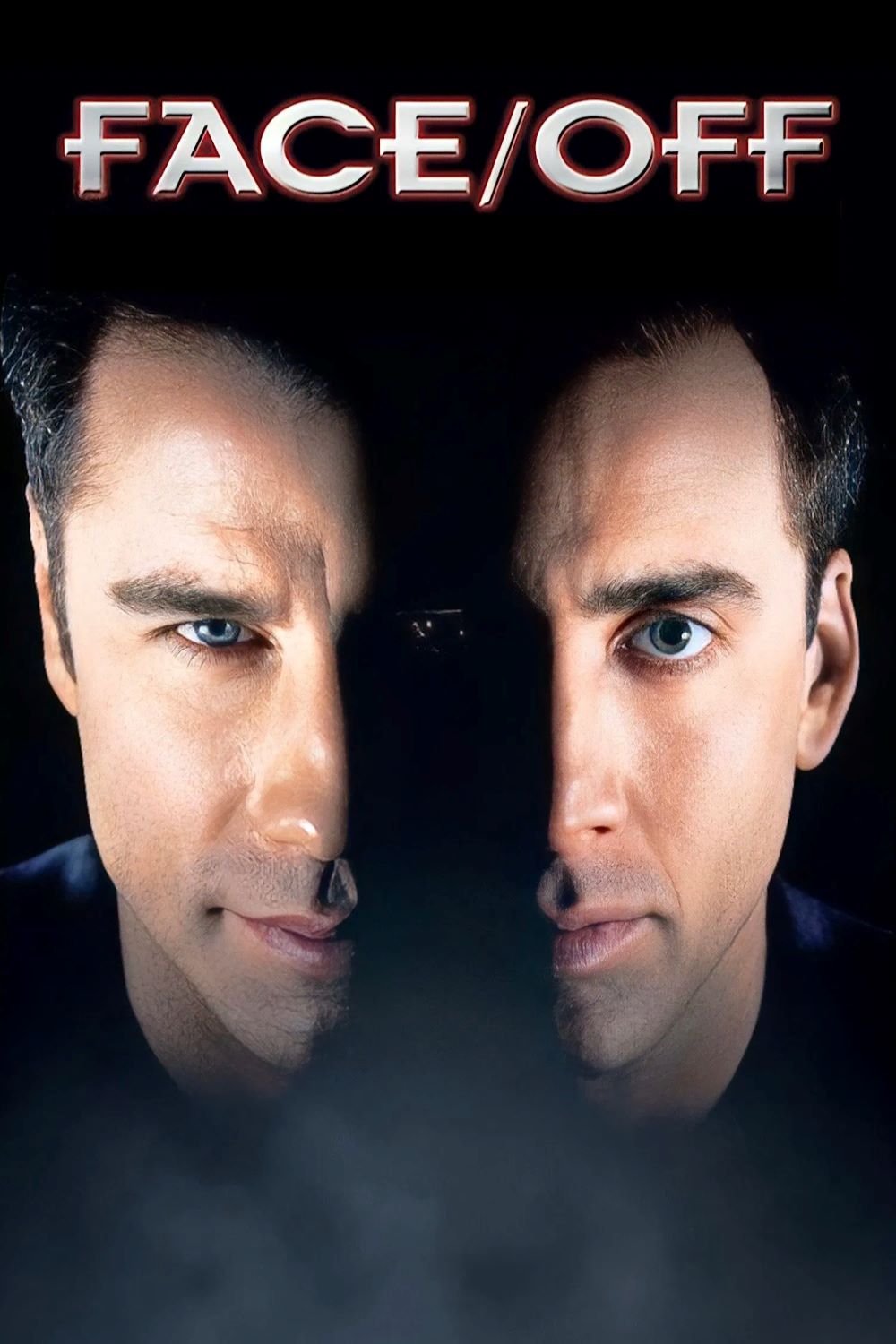
“It’s like looking in a mirror. Only… Not.” — Castor Troy with Sean Archer’s face
Face/Off is one of those late‑90s action movies that feels like it escaped from an alternate universe where “too much” is a compliment, not a warning label. It is bigger than it needs to be, sillier than the premise probably deserves, and yet somehow more emotionally earnest than most modern blockbusters. The result is a film that swings hard between breathtakingly good and gloriously ridiculous, and that tension is exactly what makes it worth revisiting.
At its core, Face/Off is a story about two men who literally become each other, but it works because it never treats that concept as a small thing. John Travolta’s Sean Archer is an FBI agent consumed by grief after the death of his young son, while Nicolas Cage’s Castor Troy is a theatrical terrorist who seems to enjoy being evil as a kind of performance art. The sci‑fi hook—cutting off their faces and swapping them—does not remotely pass a reality test, but the movie leans into the idea with such conviction that you either roll with it or get left behind in the opening act.
The big selling point is the acting showcase baked into that swap. Watching Travolta play a supposedly buttoned‑up lawman unraveling inside the body of a flamboyant villain, while Cage dials his madness into something deceptively controlled, gives the film a strange, theatrical energy. There is a real pleasure in tracking how each actor steals little gestures and rhythms from the other, so scenes become layered: what you’re seeing on the surface and who you know is “underneath” the borrowed face are constantly at odds.
That identity confusion isn’t just a gimmick; it gives the film some surprising emotional weight. Archer’s grief isn’t window dressing—his obsession with bringing down Troy comes from the trauma of losing his son, and the face swap forces him to confront who he’s become in that tunnel‑vision pursuit. Meanwhile, Troy, once inside Archer’s life, plays “family man” in a way that’s both gross and unnervingly intimate, manipulating Archer’s wife Eve and daughter Jamie with a mix of faux tenderness and predatory charm.
Joan Allen, as Eve, quietly grounds all this insanity. Her character spends a good chunk of the film being gaslit on a level that would break most people, yet Allen plays her with a subdued intelligence that makes the eventual moment of realization feel earned instead of convenient. Dominique Swain’s Jamie gets more of a stock “rebellious teen” setup, but the way Troy‑as‑Archer slithers into her life gives some scenes a genuinely uncomfortable edge, underlining how invasive the villain’s masquerade really is.
Of course, this is a John Woo movie, so the drama is constantly fighting for space with balletic gunfights and slow‑motion chaos. The action is elaborate and stylized, full of dual pistols, flying bodies, and highly choreographed carnage that feels closer to a violent dance than a grounded firefight. Whether it is the prison escape with its magnetic boots or the church shootout framed with doves and religious imagery, Woo stages set pieces as big operatic crescendos, not just plot checkpoints.
That operatic tone is both a strength and a weakness. On the one hand, the heightened style matches the bonkers premise, letting the movie exist in a kind of hyper‑reality where emotions and bullets fly with the same intensity. On the other hand, the sheer excess sometimes undercuts the more serious beats, as if the film can’t decide whether it wants to be a heartfelt story about grief and identity or the wildest action comic you have ever flipped through.
The script occasionally gestures at deeper themes but rarely lingers on them. Archer’s time in a secret off‑the‑books prison hints at broader commentary about state power and dehumanization, yet the movie mostly uses the setting as a backdrop for an escape sequence rather than exploring what it means. Similarly, Troy’s infiltration of Archer’s family brushes against ideas about how easily trust and intimacy can be weaponized, but the story is more interested in cranking up tension than really unpacking that psychological damage.
Where the writing truly shines is in the mechanics of the cat‑and‑mouse relationship. The film keeps finding new ways to twist the knife, whether it’s Archer stuck in Troy’s body trying to convince former enemies he’s changed sides, or Troy using Archer’s authority to erase evidence and tighten the trap. Some of the most satisfying scenes are the quieter confrontations where both men have to stay in character in front of others while aiming verbal daggers at each other, maintaining the illusion even as their hatred escalates.
Still, Face/Off is not exactly a model of restraint or logic, and that’s where some fair criticism comes in. The science of the face swap is nonsense even by sci‑fi standards, and the movie’s attempts to hand‑wave voice, body shape, and mannerisms require a level of suspension of disbelief that will be deal‑breaking for some viewers. On top of that, the third act piles on so many stunts and reversals that fatigue can set in; not every action beat feels necessary when the emotional arc has already hit its key notes.
There is also the question of tone in how the film treats violence and trauma. The opening murder of Archer’s son is genuinely brutal, and the later manipulation of his family taps into real discomfort, yet the movie often snaps back into cool‑shot mode a moment later, as if unsure how long it wants to sit with pain. That tonal whiplash can make it hard to fully buy into the emotional stakes, because the film keeps reminding you it is here, first and foremost, to put on a show.
Despite those flaws, Face/Off has aged in a strangely resilient way. In an era where many big action movies flatten actors into interchangeable cogs in a CG machine, there’s something refreshing about how much personality this film allows its leads to display, even when they’re chewing the scenery. The movie’s excess becomes part of its charm: it feels handcrafted in its madness, a spectacle built around big performances rather than just big effects.
Face/Off is neither a straightforward masterpiece nor a disposable guilty pleasure; it lives in a messy, entertaining space between those extremes. The film delivers memorable performances, inventive set pieces, and a surprisingly sincere emotional throughline, but it also leans on ludicrous science, tonal inconsistency, and overindulgent action. If you can accept its central absurdity and meet it on its own heightened wavelength, it remains a wild, engaging ride that showcases what happens when star power, genre bravado, and unfiltered style crash into each other at full speed.
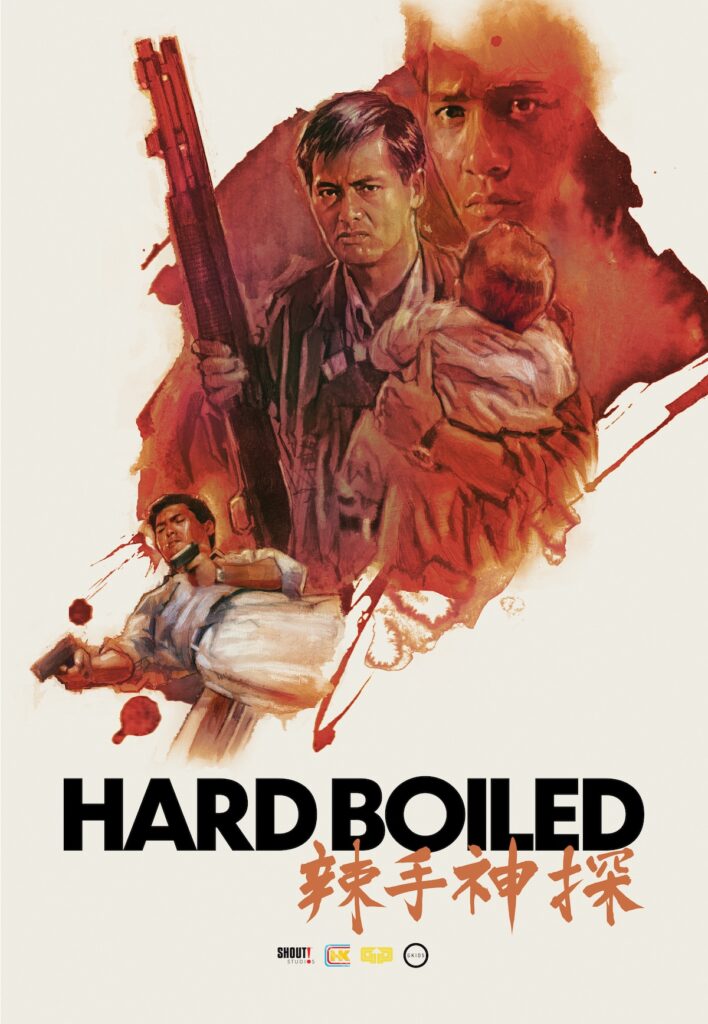
I just got an e-mail today from “Shout Studios!” that makes me very happy! In 2026, the John Woo / Chow Yun-Fat classics HARD BOILED (1992), A BETTER TOMORROW (1986), and THE KILLER (1989) will be getting extremely limited theatrical releases. If you love these movies as much as I do, or if you want to see some of the greatest action films of all time, I just want to make sure my readers are aware of this incredible opportunity. You can buy your tickets now, and I’ve checked and they’re even playing in Little Rock, Arkansas, so I know they’ll be playing all over the country. The schedule is as follows:
These may be being released during tax season, but I usually take Sundays off and each of these limited windows include a Sunday. YAY!! This is finally my chance to see these iconic films on the big screen! I hope some of you will plan to watch them as well! To whet your appetite, enjoy this incredible action sequence from THE KILLER!
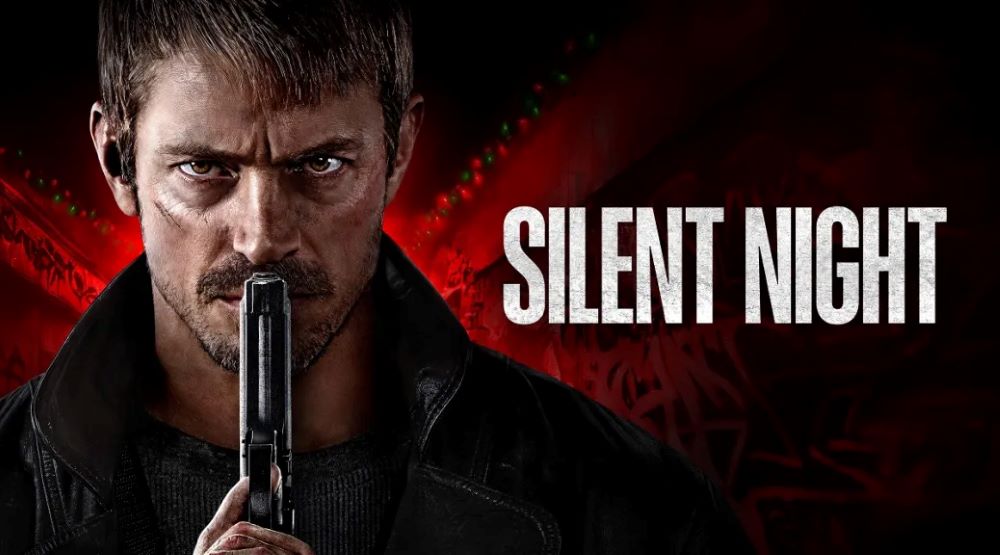
“I can’t speak, but I’ll make them listen.” — Brian Godlock
Silent Night (2023) finds John Woo making his first American action film in two decades, since the disappointing Paycheck in 2003. While it’s definitely a step up from that sci-fi thriller misfire, Silent Night still doesn’t quite reach the heights of Woo’s Hong Kong classics or even his best Western productions like Face/Off. This latest outing is a lean, mostly dialogue-free revenge thriller that has Woo’s fingerprints all over it—a mix of balletic violence and emotional anguish—but it also shows the limitations of trying to recapture that old Woo magic in a very different cinematic landscape.
The story is simple: Joel Kinnaman plays Brian Godlock, an electrician whose son is killed in a gang shootout on Christmas Eve, and he himself is shot in the throat, losing his voice. The film then follows Brian’s quiet but brutal quest for revenge a year later. The choice to tell this nearly wordless story is a bold gamble, and for much of the film, the absence of dialogue adds power to the emotions and the tension. Kinnaman’s physical performance carries most of the weight—his grief, anger, and determination are all conveyed through body language and expression. This is one of the biggest strengths of Silent Night: Woo’s ability to communicate story and feeling visually, which harkens back to the silent films of early cinema, blending with his signature poetic violence.
That said, the silence also highlights the script’s thinness. The supporting characters, including Brian’s wife (Catalina Sandino Moreno) and a sympathetic detective (Kid Cudi), feel underdeveloped, serving more as plot functions than full people. This narrow focus on Brian’s pain and revenge means the film sometimes feels emotionally shallow beyond the core trauma. Compared to Woo’s earlier work, where secondary characters and relationships added layers of complexity and intensity, Silent Night is more singular and direct, for better and worse.
When it comes to action, Woo shows he still has the chops. The gunfights and hand-to-hand scenes are meticulously choreographed, emphasizing realism with a solid dose of stylized flair. It’s a return to the grounded grit Woo displayed in some of his earlier Hong Kong films, leaving behind some of the higher-octane operatic excess of his best-known Hollywood hits. The violence feels impactful and earned, avoiding cheap spectacle for a more tactile, bone-crunching effect.
Still, Silent Night doesn’t quite have the scope and scale of Face/Off or The Killer. It lacks the grandeur and intricate storytelling that made those films iconic. Instead, it’s a tighter, moodier experience that prioritizes emotional atmosphere over plot complexity. This stripped-down approach is refreshing to a degree, but it can also become monotonous—especially since the lack of dialogue and limited character development demand more patience from the viewer.
Comparing it directly to Paycheck, Silent Night is a clear improvement. Paycheck was widely regarded as a forgettable action film that failed to capitalize on Woo’s talents, stuck with a muddled sci-fi plot and lacking the emotional firepower Woo excels at. Silent Night ditches the high-concept sci-fi for a more grounded, personal revenge story, allowing Woo to bring more of his hallmarks to bear—the intense physical performances, a palpable sense of loss, and carefully crafted action sequences.
However, it’s important to temper enthusiasm with the fact that Silent Night is not a full return to Woo’s prime Hong Kong cinema or his best Hollywood days. It’s missing some of the poetry, charm, and iconic bravado of movies like Hard Boiled or Face/Off, where Woo’s characters felt larger than life and the action was operatic and unforgettable. Here, the film often feels restrained, even muted, perhaps reflecting a director adapting to new cinematic expectations but also struggling to fully bring himself back to the forefront in the American industry.
Silent Night is a worthwhile viewing for fans of John Woo and action cinema looking for something different—one part homage to classic revenge tales, one part experiment in silent storytelling. It’s emotionally raw, visually precise, and markedly better than Paycheck, but it also lacks the fire and inventiveness that made Woo a legend. It’s a step forward and a reminder that even the greatest filmmakers can evolve and sometimes falter. If Woo is finding his voice again, it’s decidedly quieter but still unmistakably his own.

