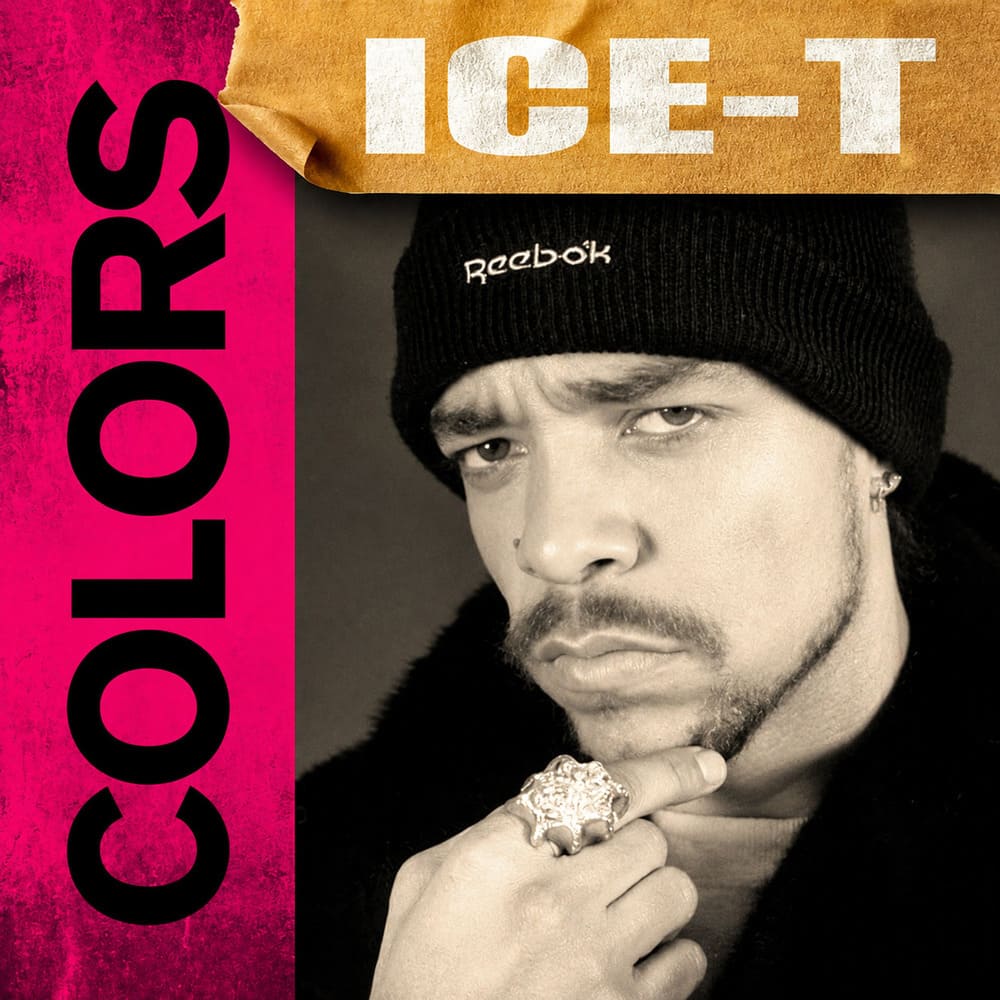
Song of the Day: Colors (by Ice-T)


Ice-T’s “Colors” feels like one of those records where West Coast hip-hop stops sounding like a regional offshoot and starts speaking with its own unmistakable voice. Released for Dennis Hopper’s 1988 film of the same name, it does not romanticize Los Angeles gang life so much as report from inside its atmosphere: territorial, tense, and tragically routine. Ice-T’s narrator is not offering a neat moral lesson or trying to turn the street into a fantasy; he is laying out a social reality in plain, hard language. That documentary quality is a major reason the song still lands so forcefully.

What makes “Colors” especially important is how natural Ice-T makes its perspective sound. The flow is controlled and conversational, almost like somebody walking you through the rules of a place where the wrong glance, neighborhood, or color can carry consequences. That approach helped define a West Coast identity built around local detail, storytelling, and lived environment. The song’s world is specifically Los Angeles—not a generic “inner city”—and its focus on the Bloods-and-Crips color divide gave rap listeners outside California a stark picture of how geography and identity could become inseparable.

That was a crucial foundation for what gangsta rap would become. Before the genre hardened into a marketable label—and, later, into endless caricature—“Colors” showed that street-centered rap could be vivid social observation. Ice-T was already a major West Coast presence, and the song helped establish the template that artists such as N.W.A. would push further: police pressure, neighborhood politics, danger, survival, and anger described with little interest in making outsiders comfortable. The song is confrontational, but its real power comes from its clarity; it makes a listener feel how a culture of affiliation can become a trap.

It also helped distinguish the West Coast from the East Coast tradition that had shaped hip-hop’s earliest public identity. New York rap was often treated as the genre’s center of gravity, with its own emphasis on DJ culture, battle skills, dense rhyme patterns, and sample-driven production. “Colors” did not reject lyricism—it is a sharply written record—but it put place and narration ahead of verbal acrobatics. The West Coast voice that grew around songs like this left more room for a direct, cinematic account of life in Los Angeles. That difference should not be flattened into a simplistic coast-versus-coast rivalry, but “Colors” made clear that California hip-hop had its own stories, rhythms, and stakes—and would not need New York’s approval to matter.

Colors

I am a nightmare walking, psychopath talking
King of my jungle, just a gangster stalking
Living life like a firecracker, quick is my fuse
Then dead as a death pack, the colors I choose

Red or blue ‘cuss or blood
It just don’t matter
Sucker die for your life when my shotgun scatters
We gangs of L.A. will never die, just multiply

Colors

You don’t know me, fool, you disown me, cool
I don’t need your assistance, social persistence
Any problem I got I just put my fist in
My life is violent, but violent is life

Peace is a dream, reality is a knife
My colors my honor my colors my all
With my colors upon me one soldier stands tall
Tell me what have you left me

What have I got
Last night in cold blood my young brother got shot
My homeboy got jacked, my mother’s on crack
My sister can’t work ’cause her arms show tax

Madness insanity, live in profanity
Then some punk claiming’ they understanding’ me
Give me a break, what world do you live in
Death is my sect, guess my religion

Colors

My pants are sagging’ braided hair
Suckers stare but I don’t care
My game ain’t knowledge, my game’s fear
I’ve no remorse so squares beware

But my true mission is just revenge
You ain’t in my sect, you ain’t my friend
Wear the wrong color, your life could end
Homicide’s my favorite venue

Colors

So I’ll just walk like a giant, police defiant
You’ll say to stop but I’ll say that I can’t
My gangs my family, it’s all that I have
I’m a star on the wall’s my autograph

You don’t like it, so you know where you can go
‘Cause the streets are my stage and terror’s my show
Psycho-analyze try and diagnose me, why?
It wasn’t your brother that brutally died

But it was mine, so let me define my territory don’t cross the line
Don’t try to act crazy ’cause the shit don’t faze me
If you ran like a punk, it wouldn’t amaze me
‘Cause my colors death, though we all want peace
But our war won’t end till all wars cease

Colors
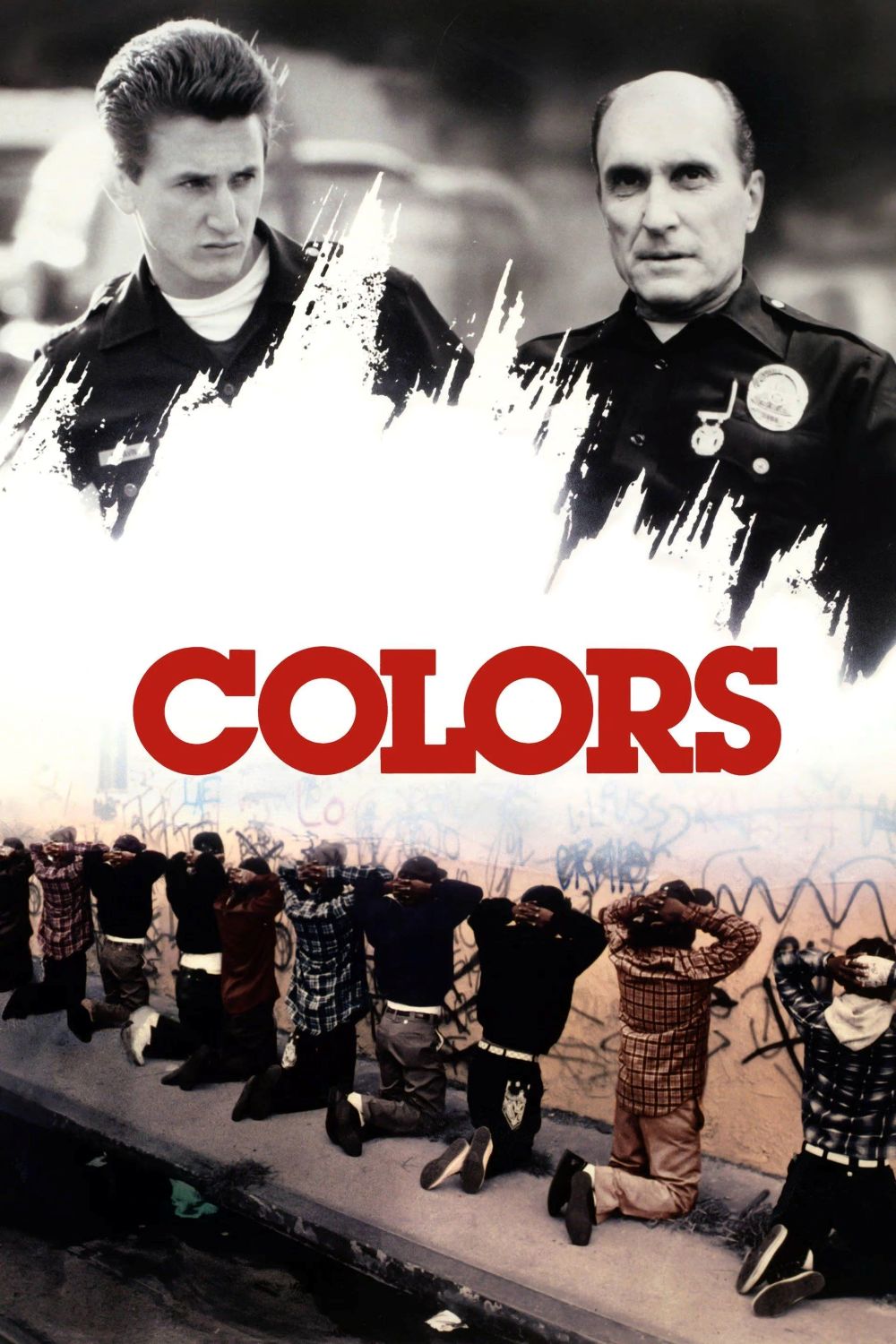
Review: Colors (dir. by Dennis Hopper)


“You got problems with the whole fuckin’ world.” — Officer Bob Hodges

Consider, for a moment, the cultural landscape of 1988. Inner-city gang violence was hardly a new phenomenon, but it remained largely relegated to local news broadcasts and distant urban nightmares for most of the country. Dennis Hopper’s Colors changed that dynamic almost overnight, serving as a brutal, unfiltered introduction to a world that mainstream America had collectively chosen to ignore. Hopper, whose own countercultural credentials were cemented decades earlier with Easy Rider, took a considerable risk here, and while the final product is undeniably uneven, its cultural footprint is impossible to overstate. The film functions simultaneously as a historical document, a cautionary tale, and a cinematic watermark that forever altered how audiences perceived the volatile landscape of Los Angeles.

The basic setup is old-school buddy-cop material. Robert Duvall plays Bob Hodges, a seasoned LAPD officer in the CRASH unit—Community Resources Against Street Hoodlums—who has spent enough years policing Los Angeles to understand that aggression does not automatically produce respect. Sean Penn plays Danny McGavin, his hotheaded new partner, a guy who approaches every situation like he has something to prove. They are assigned to patrol neighborhoods divided by Bloods, Crips, and Chicano gangs, attempting to keep retaliation killings from escalating into full-scale warfare. The main plot is not especially complicated, and that is probably intentional. Hopper is less interested in a twist-heavy police procedural than in dropping the viewer into a city where tension seems to hang over every street corner, traffic stop, and act of public bravado.

Duvall is the film’s anchor. Hodges is not written as a saint—he is still a cop working inside a hostile and often brutal institution—but Duvall gives him a weary, almost paternal quality that makes him more compelling than the standard “veteran teaching the rookie a lesson” archetype. He understands that policing gangs is not as simple as walking in, making arrests, and congratulating yourself afterward. He has a kind of street fluency, knowing when to talk, when to threaten, and when to step back before a small humiliation becomes a body count. Penn, meanwhile, is all sharp edges. McGavin is reckless, racist in ways he may not fully recognize, and always a half-second away from making a situation worse. Penn can be exhausting here, but that is the point. His character embodies the movie’s fear that a badge, a gun, and an appetite for confrontation can be as combustible as any gang rivalry.

Hopper directs Colors with a lot of energy and an almost documentary-like alertness to its setting. The film’s Los Angeles feels sun-blasted, crowded, and perpetually unstable, not the glossy dream factory of postcards and celebrity magazines. Haskell Wexler’s cinematography does huge work in making the city feel tactile and lived-in. Hopper also has a sharp ear for the way music, cars, clothing, graffiti, and neighborhood boundaries become a visual language of identity. The title is not subtle, but it works: colors signify affiliation, pride, danger, and the instantly visible lines people are willing to kill or die over. The film’s soundtrack, including Ice-T’s title song, further locks it into the cultural moment, giving the movie a rawness that separates it from more generic police thrillers.

What makes Colors uncomfortable is also what makes it valuable. Its attention to gangs was controversial from the beginning, with critics and community voices arguing that it risked sensationalizing violence and reducing Black and Latino communities to dangerous backdrops for a cop story. The criticism is fair. The film sees gang life largely from the windshield of the LAPD cruiser; its gang-affiliated characters are often treated as threats, symbols, or tragic consequences rather than people granted the same interiority as Hodges and McGavin. Even at its strongest, Colors can make complex social realities feel like an arena in which two white cops test their methods and masculinity.

Still, it would be wrong to dismiss it as empty exploitation. Colors does not really romanticize its violence. Hopper shoots drive-bys, funerals, and retaliations with a nasty abruptness; nobody comes out looking triumphant. The gang members are not cleanly divided into monsters and victims either. Some are cruel, some are frightened, some are locked into a status they may not know how to escape, and some clearly enjoy the power that comes with being feared. The movie may not fully examine poverty, segregation, institutional racism, the drug economy, or generational trauma, but the instability of its world comes through. The police are not presented as saviors, either. They are frequently antagonistic, operating through intimidation and humiliation, while McGavin’s actions repeatedly demonstrate how easily law enforcement can intensify exactly the conflict it claims to contain.

This is where Colors matters most historically. Before it, movies had certainly depicted urban crime, racial conflict, and youth violence, but Hopper’s film made contemporary L.A. gang culture recognizable as a major studio subject. It helped bring gang culture, strained police-community relations, and inner-city issues into a much wider popular conversation. The film did not invent the genre that followed, but it helped clear a path for the wave of gang-related and urban-crime movies that arrived in the late ’80s and especially the ’90s. Films such as Boyz n the Hood, American Me, South Central, New Jack City, and Menace II Society inherited some of its urgency, its focus on neighborhoods under siege, and its refusal to pretend gang violence was merely a distant news-story problem.

The major difference is that many of those later movies also corrected Colors’ biggest limitation: they shifted the point of view inward. Boyz n the Hood does not treat South Central as a backdrop for police work; it makes the residents’ friendships, families, dreams, grief, and daily routines the emotional center. American Me follows the historical and institutional roots of Chicano gang identity with a scope Colors never attempts. South Central turns toward redemption, fatherhood, and the possibility—however fragile—of interrupting the cycle. In that sense, Hopper’s film can feel like an important opening statement rather than the final word. It showed mainstream audiences the subject; the films that followed increasingly demanded that audiences understand the people living inside it.

Its influence can also be felt internationally, though it is best understood as part of a broader transnational exchange of urban-crime cinema, hip-hop culture, and anti-police sentiment rather than a simple one-to-one blueprint. Mathieu Kassovitz’s La Haine is far more formally daring and politically focused than Colors, but both films draw power from a city divided by territory, race, policing, and simmering retaliation. La Haine brought France’s banlieues to mainstream French audiences and put police violence and marginalized youth at the center of the frame. Where Colors views the street crisis through law enforcement’s eyes, La Haine makes its young Black, Jewish, and Arab protagonists the whole point. Yet the resemblance is there in the oppressive sense of escalation, the combustible police encounters, and the idea that one violent incident can send an already alienated community toward catastrophe. Colors helped establish a mainstream vocabulary for this kind of story, while La Haine transformed that vocabulary into something more intimate, stylized, and politically devastating.

In the end, Colors is messy, dated in places, and frustratingly narrow in its perspective, but those flaws are part of why it is worth revisiting. It captures a Hollywood industry beginning to confront an issue it did not fully understand, using the sturdy frame of a cop thriller to look at a social wound much larger than its plot. Dennis Hopper brings volatility, Duvall brings soul, Penn brings danger, and Los Angeles itself does the rest. It is not the definitive gang film—later movies would surpass it in depth, perspective, and emotional force—but it is a crucial precursor. Colors made the subject visible to the mainstream, and the films that came after kept pushing the camera closer to the people trapped inside the picture.

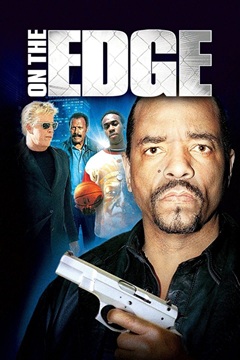
On The Edge (2002, directed by Fred Williamson)


When a high school basketball player named Willie Joe Harris (Derrick Franklin) gets in some trouble with some local drug dealers, he goes to Dakota Smith (Fred Williamson), an ex-cop and private investigator who now spends his time golfing.  Realizing that the old neighborhood has been taken over by drug dealers like Slim Jim (Ice-T), Dakota and his friends come together to take back the streets.  Jim Brown is former football coach Chad Grant.  Ron O’Neal is Willie Joe’s guardian, Frank.  Bernie Casey is Rex Stevens, whose family was killed by hitmen looking for Willie Joe.  Together, they’re on the edge.  They’re not alone on the edge, though.  A manic Gary Busey plays a hitman named Felix.  Gloria Allred (!) plays Councilwoman Gloria Johnson, Dakota’s contact at city hall.

Fred Williamson directed On The Edge and, in tradition of Original Gangstas, the main appeal of the film is to see a bunch of former blaxploitation stars showing off that they could still own the screen.  Our stars may not move as quickly as they used to but they’re still good shots, they’re still good with a quip, and the ladies still love Fred.  The film also has an anti-drug “take care of your community” message but most people will just be watching to see Fred Williamson and Jim Brown doing their thing.  (The film’s cover art might feature Ice-T front-and-center but this is a Fred Williamson film all the way.)

The film itself isn’t great.  Sometimes, it was impossible to make out what the characters were saying and the scene with Gloria Allred mostly seemed to be there so that Fred could say that he knew Gloria Allred.  But the combination of Williamson, Casey. O’Neal, and Brown still carried a punch.  Say what you will about his films, few people were more confident on screen than Fred Williamson.

Music Video of the Day: This Is Why We Ride by Body Count (2015, directed by Treach)


Body Count never gets the respect that it deserves.  Though it may have started out as being Ice-T’s side project, it developed into an important band of its own.

This video was directed by actor and rapper Treach, who also directed three videos for his own group, Naughty by Nature.

Enjoy!

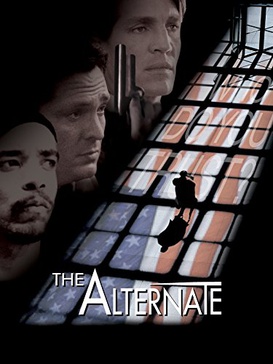
Shattered Politics: The Alternate (dir by Sam Firstenberg)


Why is 2000’s The Alternate one of the greatest action films ever made?

Consider this: President John Fallbrook (John Beck) is scheduled to give a speech at a World Hunger Symposium, where he will be announcing legislation that will make it illegal for people not to have food.  (I’m not sure how that would work but whatever.  It’s a movie.)  Eric Roberts is The Alternate, a former intelligence agent who has just been recruited to serve as a member of a team that is being used by Agent William (Ice-T) to test the President’s security.  (Ronn Moss, of Hard Ticket to Hawaii and Bold and the Beautiful fame, plays the fake President.)  The Leader (Bryan Genesse) tells the Alternate that the CIA actually wants to abduct the President for real in order to help boost the President’s reelection campaign.  The Alternate agrees to help but then it turns out that the Leader is actually just in it for the money and he’s planning on holding the President hostage until he gets paid.  While Agent Briggs (Michael Madsen) watches from the outside, The Alternate makes his way through a nearly deserted hotel and attempts to defeat the bad guys.

It’s Die Hard …. with Eric Roberts!

The plot is so convoluted that it borders on self-parody but director Sam Firstenberg keeps the action moving quickly and, to its credit, this is a film that fully understands how to embrace the melodrama.  When the Leader tries to take out The Alternate, he doesn’t just pursue him with a gun.  Instead, he picks up a flame thrower!  When The Alternate gets into a gunfight at the hotel’s pool, he doesn’t just duck behind pillars and fire his gun.  Instead, he grabs a banner and swings back and forth over the water, all the while shooting his gun.  When the President says that he doesn’t like heights, it isn’t just a case of him getting nervous about being on the roof of the hotel.  Instead, he’s so paralyzed that he literally has to be picked up and carried from one location to the next.  When The Leader calls the police and gives them his list of demands, he doesn’t just make the usual threats.  Instead, he speaks in what sounds like a French accent and claims to be a infamous (and possibly fictional) terrorist.  When it’s time to kidnap the President, the kidnappers don’t just use guns.  Instead, they also use blow-darts to paralyze the Secret Service agents.  Everything about the film is gloriously and wonderfully over the top.

(I’ve always felt that, when it comes to low-budget action films, the best ones are the ones that are willing to just be as ridiculous as possible. Bring out the flame thrower. Fly the Money Plane. Cast Joe Don Baker as your lead. Just jump off that cliff and see what happens.)

The Alternate is definitely a film that deserves to be better-known.  (It was also released under the title The Replacement.)  In the realm of Die Hard rip-offs, it’s in a class by itself, a totally enjoyable thrill ride that manages to get more and more excessive with each passing minute.  Bryan Genesse, who also wrote the script, gets to show off some stylish martial arts moves.  John Beck is the wimpiest President ever.  Michael Madsen never takes off his dark glasses.  And, best of all, Eric Roberts gets to be the star!

The Alternate?  Why, it’s just one of the best action movies ever!

Previous Eric Roberts Films That We Have Reviewed:

  1. Paul’s Case (1980)
  2. Star 80 (1983)
  3. Runaway Train (1985)
  4. To Heal A Nation (1988)
  5. Best of the Best (1989)
  6. Blood Red (1989)
  7. The Ambulance (1990)
  8. The Lost Capone (1990)
  9. Best of the Best II (1993)
  10. Love, Cheat, & Steal (1993)
  11. Voyage (1993)
  12. Love Is A Gun (1994)
  13. Sensation (1994)
  14. Dark Angel (1996)
  15. Doctor Who (1996)
  16. Most Wanted (1997)
  17. Mercy Streets (2000)
  18. Raptor (2001)
  19. Rough Air: Danger on Flight 534 (2001)
  20. Strange Frequency (2001)
  21. Wolves of Wall Street (2002)
  22. Border Blues (2004)
  23. Mr. Brightside (2004)
  24. Six: The Mark Unleased (2004)
  25. We Belong Together (2005)
  26. Hey You (2006)
  27. Depth Charge (2008)
  28. Amazing Racer (2009)
  29. The Chaos Experiment (2009)
  30. In The Blink of an Eye (2009)
  31. Bed & Breakfast (2010)
  32. Enemies Among Us (2010)
  33. The Expendables (2010) 
  34. Sharktopus (2010)
  35. Beyond The Trophy (2012)
  36. The Dead Want Women (2012)
  37. Deadline (2012)
  38. The Mark (2012)
  39. Miss Atomic Bomb (2012)
  40. Assault on Wall Street (2013)
  41. Bonnie And Clyde: Justified (2013)
  42. Lovelace (2013)
  43. The Mark: Redemption (2013)
  44. The Perfect Summer (2013)
  45. Revelation Road: The Beginning of the End (2013)
  46. Revelation Road 2: The Sea of Glass and Fire (2013)
  47. Self-Storage (2013)
  48. Sink Hole (2013)
  49. A Talking Cat!?! (2013)
  50. This Is Our Time (2013)
  51. Bigfoot vs DB Cooper (2014)
  52. Doc Holliday’s Revenge (2014)
  53. Inherent Vice (2014)
  54. Road to the Open (2014)
  55. Rumors of War (2014)
  56. So This Is Christmas (2014)
  57. Amityville Death House (2015)
  58. Deadly Sanctuary (2015)
  59. A Fatal Obsession (2015)
  60. Las Vegas Story (2015)
  61. Sorority Slaughterhouse (2015)
  62. Stalked By My Doctor (2015)
  63. Enemy Within (2016)
  64. Hunting Season (2016)
  65. Joker’s Poltergeist (2016)
  66. Prayer Never Fails (2016)
  67. Stalked By My Doctor: The Return (2016)
  68. The Wrong Roommate (2016)
  69. Dark Image (2017)
  70. The Demonic Dead (2017)
  71. Black Wake (2018)
  72. Frank and Ava (2018)
  73. Stalked By My Doctor: Patient’s Revenge (2018)
  74. Clinton Island (2019)
  75. Monster Island (2019)
  76. The Reliant (2019)
  77. The Savant (2019)
  78. Seven Deadly Sins (2019)
  79. Stalked By My Doctor: A Sleepwalker’s Nightmare (2019)
  80. The Wrong Mommy (2019)
  81. Exodus of a Prodigal Son (2020)
  82. Free Lunch Express (2020)
  83. Her Deadly Groom (2020)
  84. Top Gunner (2020)
  85. Deadly Nightshade (2021)
  86. The Elevator (2021)
  87. Just What The Doctor Ordered (2021)
  88. Killer Advice (2021)
  89. Megaboa (2021)
  90. Night Night (2021)
  91. The Poltergeist Diaries (2021)
  92. The Rebels of PT-218 (2021)
  93. Red Prophecies (2021)
  94. A Town Called Parable (2021)
  95. Bleach (2022)
  96. Dawn (2022)
  97. My Dinner With Eric (2022)
  98. 69 Parts (2022)
  99. The Rideshare Killer (2022)
  100. The Company We Keep (2023)
  101. D.C. Down (2023)
  102. Aftermath (2024)
  103. Bad Substitute (2024)
  104. Devil’s Knight (2024)
  105. Insane Like Me? (2024)
  106. Space Sharks (2024)
  107. The Wrong Life Coach (2024)
  108. Broken Church (2025)
  109. Shakey Grounds (2025)
  110. When It Rains In L.A. (2025)

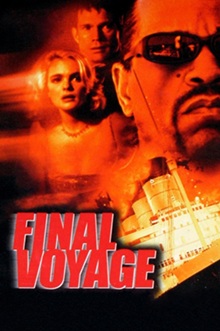
Final Voyage (1999, directed by Jim Wynorski)


Aaron (Dylan Walsh) has been hired to sever as a bodyguard for spoiled heiress Gloria (Erika Eleniak) while she takes a cruise.  Things go wrong when Josef (Ice-T) and Max (Claudia Christian) hijack the cruise.  They think that they’ll make a fortune by taking everyone hostage and searching the boat.  Little do they know that the boat is very slowly sinking.  (They would known except they killed the engineers when they first took over.)  Aaron and Gloria have to defeat the terrorists before the boat sinks.

Imagine Die Hard or Under Siege made not with expensive special effects but instead with a healthy supply of stock footage and built not around proven action stars like Bruce Willis and Steven Seagal but instead around the charisma-free Dylan Walsh and you have a pretty good idea why Final Voyage is one of the more forgettable movies to be ripped off from either one of those two films.  At least Dylan Walsh has the excuse of being miscast.  Erika Eleniak actually was in Under Siege and still seems clueless as to what she’s supposed to be doing during Final Voyage.  Ice-T is an amusing villain and the movie opens with a gunfight on an airplane that is so poorly choreographed and improbable that it becomes entertaining to watch.  Otherwise, Final Voyage is a cruise best not taken.

This is a Jim Wynorski film so there’s plenty of gratuitous bra and cleavage shots for those who are specifically looking for that.  Jim Wynorski definitely has a style and he manages to bring it to every film that he makes, even when it doesn’t really make sense for the story being told.  Give Wynorski this, he understands why people are watching his movies.

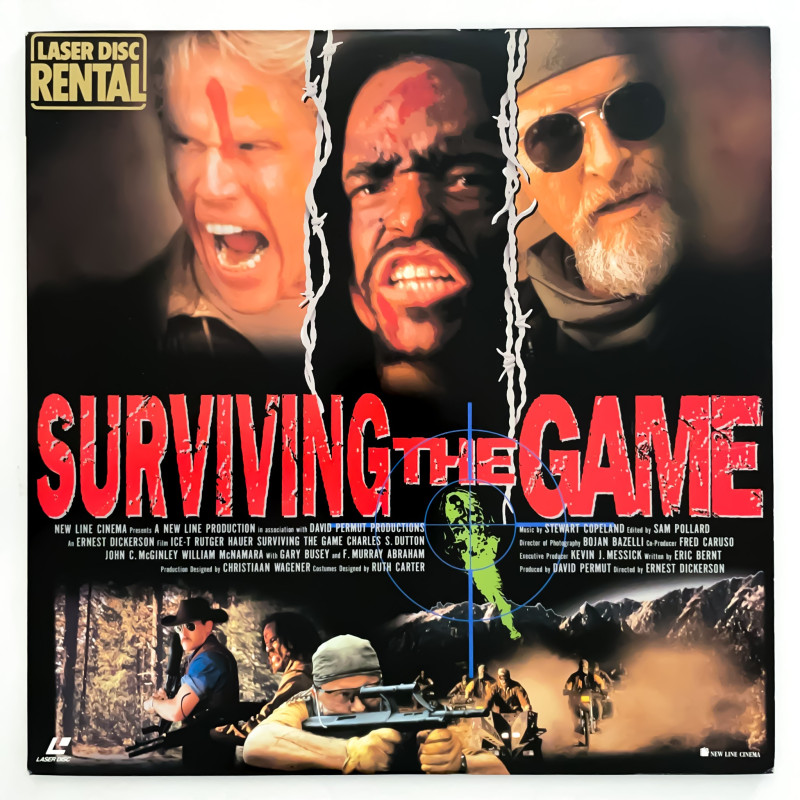
#SundayShorts with SURVIVING THE GAME!


Since Sunday is a day of rest for a lot of people, I present #SundayShorts, a weekly mini review of a movie I’ve recently watched.

Jack Mason (Ice-T) is a homeless man who’s having a very bad day. His dog and best friend both die so he’s ready to give up on life. Just in the nick of time, a kind gentleman named Walter Cole (Charles S. Dutton), who works at the 7th Street mission, shows up, saves his life, and tells him about a potential job opportunity, even giving Jack his partner’s business card. The job would consist of helping out a group of hunters as a survival guide. Soon, Jack is meeting with rich businessman Thomas Burns (Rutger Hauer), who tells him all about the responsibilities of the job and hires him for the position. It looks like things are finally turning Jack’s way as he finds himself on a charter flight out into the mountains, where the hunters are waiting. The night he arrives, they have a huge feast as he gets to know the guys. It’s a strange lot, but hey, he’s got food in his belly and money in his pocket, so he can put up with some odd behavior for a few days. This very short period of happiness turns out to be fool’s gold as Jack is roused from his sleep early the next morning and told to run. They’re going to be playing a game, and the rules are simple… kill or be killed!

SURVIVING THE GAME was released to theaters on April 15th, 1994, when I was 20 years old. As one of Rutger Hauer’s biggest fans, I went to see it in the movie theater of course. As a fan of B-movies filled with action and violence, I had a good time with it. A big part of that fun came from it’s cast of interesting actors. I’d watch Hauer in any role, and I pretty much have. There’s not a lot asked of him in SURVIVING THE GAME in terms of heavy lifting, but I still enjoy watching him on screen. He looks pretty cool riding his motorcycle with his big goatee and ponytail. I just like Ice-T. There’s something I’ve always found appealing about him on screen, and the same can be said here. Charles S. Dutton is so capable of projecting good on screen. The fact that his character is working at a charity mission as a front to set up homeless men to be hunted and killed was a nice bit of casting. And finally, with other actors like Gary Busey, F. Murray Abraham and John C. McGinley playing the hunters, you just know you’re in for an over-the-top, scenery chewing good time. I also want to shout out one particularly disturbing and graphic scene that involves Charles S. Dutton and a blown up 4-wheeler. It’s the one scene from the film that I’ve remembered ever since saw it that first time at the theater.   

Five Fast Facts:

  1. SURVIVING THE GAME was released about eight months after John Woo’s HARD TARGET starring Jean-Claude Van Damme. Both films are re-tellings of THE MOST DANGEROUS GAME. Woo’s higher budgeted film did much better at the box office.
  2. It was Rutger Hauer’s idea that his character rides a motorcycle rather than a 4-wheeler, like the other hunters in the film. He felt the bike looked like an iron horse, giving him the appearance of a warrior knight!
  3. There’s not a single female character in the film.
  4. Near the end of the movie, there’s a shot of a cityscape with a caption on the screen that reads “Three Days Later in Seattle.” The cityscape is actually that of Philadelphia.
  5. Prior to directing his own films, director Ernest R. Dickerson had been the cinematographer for the Spike Lee joints SHE’S GOTTA HAVE IT, SCHOOL DAZE, DO THE RIGHT THING, MO’ BETTER BLUES, JUNGLE FEVER, and MALCOLM X.

The Eric Roberts Horror Collection: Clinton Road (dir by Richard Grieco and Steve Stanulis)


2019’s Clinton Road features what might be my favorite Eric Roberts cameo appearance.

Roberts appears standing outside a club in New Jersey.  He’s speaking to the woman who is working the door and trying to convince her that he should be allowed into the club, even though she doesn’t think that he’s on the list.  He explains that he’s Eric Roberts.  The woman replies that he’s not the Eric Roberts that she knows but then, suddenly, she realizes that he is Eric Roberts the movie star!  She apologizes profusely.  Eric says its okay and gives her a fist bump.  Everyone waiting to get into the club applauds.

Seriously, that is the extent of Eric Roberts’s role in Clinton Road.  It comes out of nowhere and it has nothing to do with the actual plot of the film.  Why is Eric Roberts waiting outside of some club in New Jersey?  Who knows?  He’s just there and he’s a cool dude and everyone loves him.  As with so many of his cameos, one gets the feeling that Roberts just happened to see some people shooting a movie and he decided to be a part of it.

Eric Roberts is not the only well-known actor to make a brief appearance in Clinton Road.  The film itself was directed by actor Richard Grieco and it’s obvious that he asked some of his well-known friends to help out.  The manager of the club is played Ice-T and he shows up long enough to tell the urban legend of the vanishing hitchhiker.  The owner of the club is Vincent Pastore, who played Pussy on The Sopranos.  Private investigator-turned-character actor Bo Dietl shows up, playing the mayor of the town and barking orders at people.  Everyone gets a chance to be, at least briefly, the center of attention but none of them play characters who actually have anything to do with the film’s main story.

That story is about Michael (played by former American Idol contestant, Ace Young), a fireman whose wife disappeared while walking down Clinton Road, a haunted rural road in New Jersey.  (For the record, Clinton Road is real and, as this film states, it’s the center of many urban legends.)  Michael is ready to move on and marry his new girlfriend, Kayla (Lauren LaVera).  However, Michael’s former sister-in-law, Isabella (Katie Morrison), convinces Michael to go out to Clinton Road with her and make one last effort to contact his wife’s spirit.  Accompanying them is a medium named Begory (James DeBello), Begory’s girlfriend, Gianna (Erin O’Brien), and Michael’s brother, Tyler (former Big Brother houseguest Cody Calafiore).  Tyler is loudly skeptical of Begory’s claims to be able to speak to the dead but it soon becomes clear that the group is not alone on Clinton Road.

To my surprise, I ended up liking Clinton Road.  It’s a very low-budget film and the plot doesn’t always make sense but it was obviously made by people who both loved New Jersey and who loved the legends that have sprung up around Clinton Road.  The atmosphere was ominous, the imagery was often surreal, and, when they did appear, the spirits were effectively creepy.  The fact that the characters all had an attitude that was more appropriate to The Sopranos than to a standard lost-in-the-woods horror film only served to make the film all the more entertaining.  If you’re going to set your horror film in New Jersey, you might as well go all out and make the most New Jersey horror film imaginable.

I enjoyed this film.  I just hope Eric Roberts didn’t make the mistake of turning down Clinton Road on his way home.

Previous Eric Roberts Films That We Have Reviewed:

  1. Star 80 (1983)
  2. Blood Red (1989)
  3. The Ambulance (1990)
  4. The Lost Capone (1990)
  5. Love, Cheat, & Steal (1993)
  6. Love Is A Gun (1994)
  7. Sensation (1994)
  8. Dark Angel (1996)
  9. Doctor Who (1996)
  10. Most Wanted (1997)
  11. Mr. Brightside (2004)
  12. Six: The Mark Unleased (2004)
  13. Hey You (2006)
  14. In The Blink of an Eye (2009)
  15. Enemies Among Us (2010)
  16. The Expendables (2010) 
  17. Sharktopus (2010)
  18. Deadline (2012)
  19. Miss Atomic Bomb (2012)
  20. Lovelace (2013)
  21. Self-Storage (2013)
  22. This Is Our Time (2013)
  23. Inherent Vice (2014)
  24. Road to the Open (2014)
  25. Rumors of War (2014)
  26. Amityville Death House (2015)
  27. A Fatal Obsession (2015)
  28. Stalked By My Doctor (2015)
  29. Joker’s Poltergeist (2016)
  30. Prayer Never Fails (2016)
  31. Stalked By My Doctor: The Return (2016)
  32. The Wrong Roommate (2016)
  33. Dark Image (2017)
  34. Stalked By My Doctor: Patient’s Revenge (2018)
  35. Monster Island (2019)
  36. Seven Deadly Sins (2019)
  37. Stalked By My Doctor: A Sleepwalker’s Nightmare (2019)
  38. The Wrong Mommy (2019)
  39. Exodus of a Prodigal Son (2020)
  40. Free Lunch Express (2020)
  41. Her Deadly Groom (2020)
  42. Top Gunner (2020)
  43. Deadly Nightshade (2021)
  44. Just What The Doctor Ordered (2021)
  45. Killer Advice (2021)
  46. The Poltergeist Diaries (2021)
  47. A Town Called Parable (2021)
  48. My Dinner With Eric (2022)

Music Video of the Day: Colors by Ice-T (1988, directed by ????)


Today’s music video of the day is typical of the type of video that used to dominate MTV, the movie tie-in where clips of the artist performing were mixed with scenes from the film.  The video for Colors goes further than many other film-related music videos by not only showing scenes from the film but also by projecting them on the brick wall behind Ice-T.  The movie was a hit and, on MTV, so was the video.

Enjoy!

3000 Miles to Graceland (2001, directed by Demian Lichtenstein)


Five thieves show up in Vegas to rob a casino.  The casino is also hosting an Elvis convention so the criminals all dress up like Elvis before trying to pull off their heist.  Since one of the criminals is played by Kurt Russell and Russell famously played Elvis in a made-for-TV movie, it’s a meta joke.  The worst of the criminals is played by Kevin Costner because, in 2001, Costner’s career was dead in the water and he was trying to reinvent himself as some sort of badass character actor.

As a result of a shootout and series of personal betrayals, Russell and Costner are the only two thieves who survive the heist.  Kurt Russell ends up taking all of the money for himself and running off with single mother Courteney Cox.  (Yes, Cox’s then-husband, David Arquette, does have a small role in the movie.)  Costner pursues them, killing anyone who he comes in contact with until it all leads to one final shoot out.

3000 Miles to Graceland is a stupid, stupid movie that was made at the time when every director was still trying to remake Reservoir Dogs and The Usual Suspects.  If you need any proof of how bad this movie is, just consider that it is one of the few Kurt Russell films to never develop a cult following.  There are people who would jump into the mouth of a volcano if Kurt Russell told them to and even they won’t watch 3000 Miles to Graceland.  Even the worst 90s crime films have at least a few people willing to defend them but 3000 Miles to Graceland has been abandoned on the ash heap of crime film history.  Despite having a once-in-a-lifetime supporting cast — Christian Slater, Bookeem Woodbine, Kevin Pollack, Jon Lovitz, Howie Long, Ice-T, and even Paul Anka — 3000 Miles to Graceland has never even received a direct-to-video sequel.

Why is 3000 Miles to Graceland so forgettable?  The heist storyline has been done to death and this film doesn’t bring anything new to the genre.  The only new wrinkle that 3000 Miles to Graceland brings to its familiar story is that the thieves are all dressed like Elvis and that gets old pretty quick.  The other problem is that Kevin Costner is miscast as the psycho villain.  Michael Madsen could have handled the role.  So could Tom Sizemore or Woody Harrelson or just about other actor out there.  But Kevin Costner, who first found fame as a sort of modern-day Gary Cooper, never seems comfortable playing a cold-hearted sociopath.  He makes up for this discomfort by trying too hard.  Comparing his performance here to his more nuanced turn as another criminal in A Perfect World shows just how miscast he was in 3000 Miles To Graceland.

Fortunately, better things were ahead for almost everyone involved in this movie.  Kevin Costner has recently returned to playing the type of roles that made him a star to begin with and Kurt Russell has become an American idol.  Fortunately, 3000 Miles to Graceland is remembered, if at all, as just an unfortunate detour in their otherwise distinguished careers.