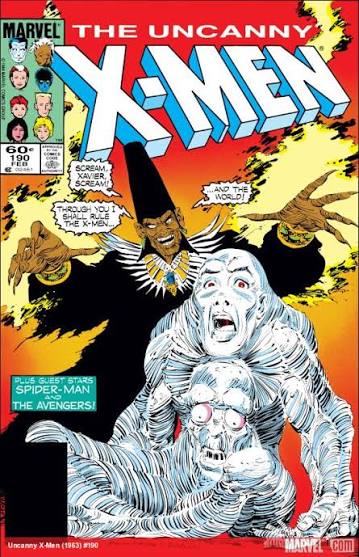
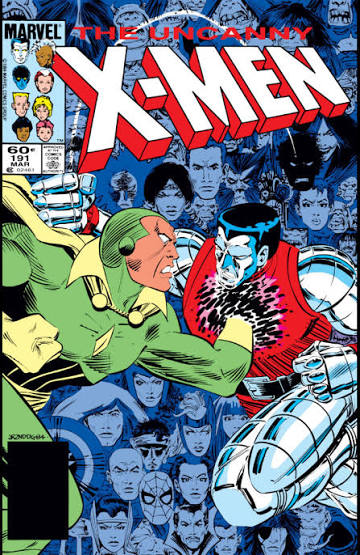
Kulan Gath, an evil sorcerer from the Hyborian Age who fought both Conan and Red Sonja, emerges from a magic amulet in Manhattan and casts a spell that turns the city into an ancient city, complete with warriors, wizards, and other mythical monsters. Because he was defeated by Spider-Man the last time he showed up in modern times, Gath is obsessed with capturing and sacrificing the web-slinger. He recruits and transforms members of the X-Men, Avengers, New Mutants, and the Morlocks and uses them to hunt down Spider-Man. Those whom Gath has not succeeded in capturing try to return Manhattan to normal.
Today, we know that any time a comic book takes a trip to an alternate reality or timeline, almost everyone is going to end up dead. It almost feels like it’s a way for comic book artists and writers to get out their frustration over not being able to permanently change any of the characters. We’re used to the big slaughters that take place, and it’s no longer a big deal to read that an alternate version of our favorite character was killed in battle.
I don’t know if people were used to it in 1985, when X-Men #190 and #191 told the story of Kulan Gath conquering Manhattan and featured one of the biggest bloodbaths in Marvel history. Over the course of two issues, nearly every prominent Marvel hero was either transformed into a grotesque creature or horribly killed. Rogue gets stabbed in the back. Colossus explodes. Selene loses her mouth, Even Spider-Man eventually ended up dying. Things got so extreme that Dr. Strange and Magik had to team up to change history to keep Kulan Gath from even emerging from that amulet in the first place. By the end of it, there were only six heroes left alive. When Storm, one of the survivors, said that humanity would never know that they had been saved by mutants, Captain America made a point to thank her. He says he knows it’s probably not enough. You’re right, Cap. It’s not. Did you see what they did to Spider-Man?
Written by Chris Claremont with art by John Romita, Jr. and Dan Green, the saga of Kulan Gath is a classic X-Men story. X-Men #191 was entitled “Raiders of the Lost Temple.” It could have just as easily been called “No One Lives.” I’m glad Dr. Strange was there to set everything right.
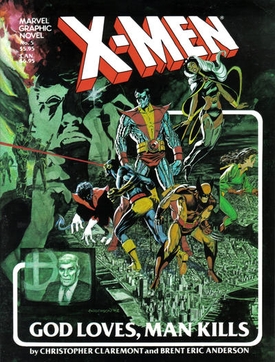
X-Men: God Loves, Man Kills was the fifth Marvel Graphic Novel. It was first published in 1982. It’s 44 years old, and it still makes an impression. When I was a kid, there was a copy of it hidden among the periodicals and magazines at Waldenbooks. When I was in the store, I’d find it, open it, and pick up where I had left off. I knew there was no way I could get away with buying something called God Loves, Man Kills, but that’s because the story wasn’t for kids.
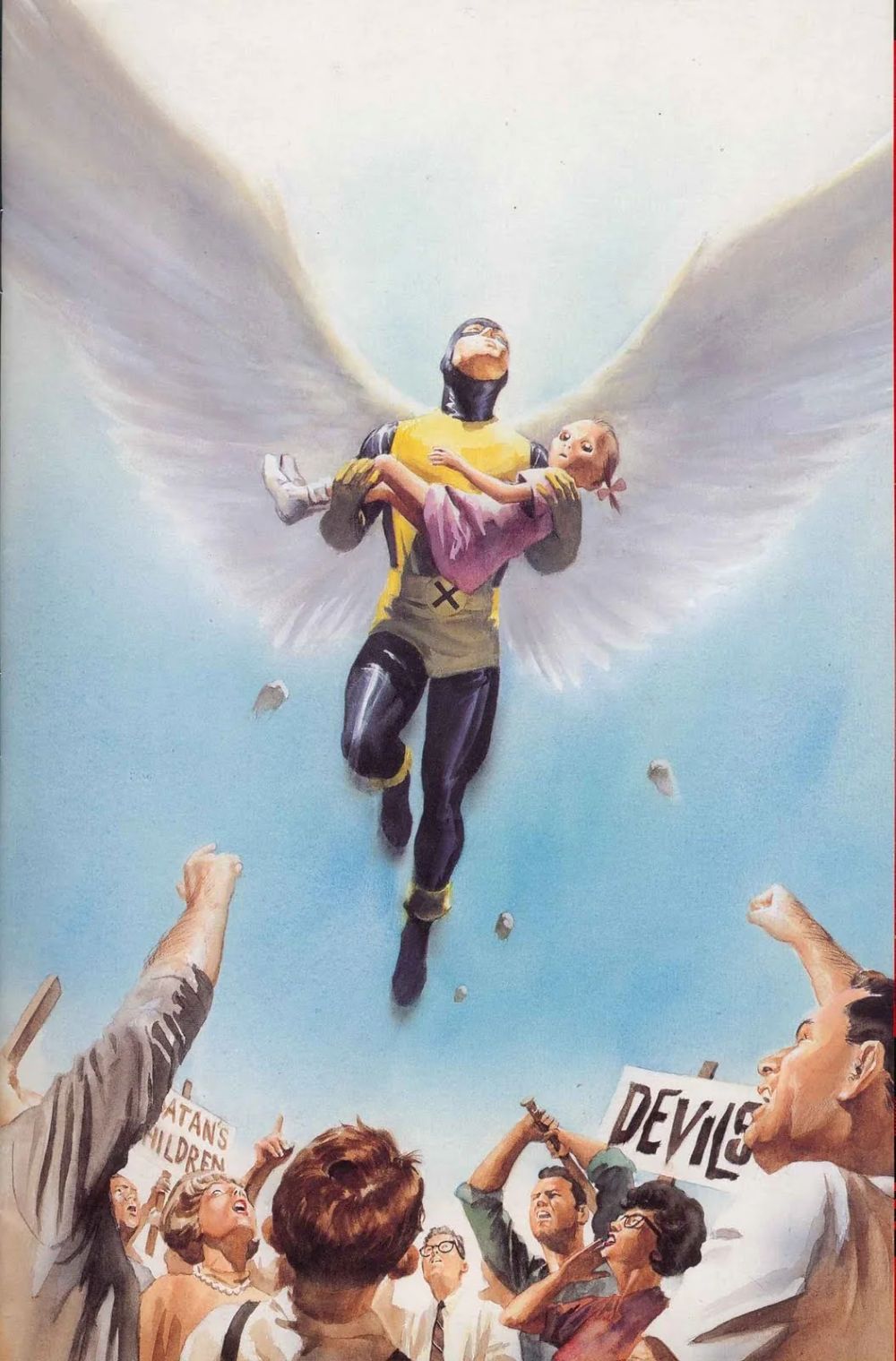
Two children are shot and killed in a playground and left hanging from a swing set. Why? Because they were mutants. Magneto, who until that point had been presented as a villain, is the one who gives them a proper burial. From the beginning, X-Men was a comic book that was actually about prejudice and racism, but God Loves, Man Kills made the message clear. The opening of the story wasn’t something you’d find in a normal monthly Marvel comic.
The villain is a white-haired televangelist named William Stryker. He preaches against mutants. He secretly leads the Purifiers. He kidnaps Professor X and attempts to use his powers to destroy the X-Men. The X-Men and Magneto team up and face an enemy so obsessed with their destruction that, for once, Magneto no longer seems like the fanatic. Even Professor X is tempted to give up his dream of coexistence.
Stryker appears to die, shot by a human security guard who fired to keep Stryker from killing a mutant. It’s a powerful ending. In typical Marvel fashion, the ending was ruined when they decided to bring Stryker back. Stryker died multiple times and somehow came back to life repeatedly. Eventually, he went from being a televangelist to being a Satanist. Marvel never knew how to leave well enough alone.
God Loves, Man Kills remains powerful, though. It was a true graphic novel, with a plot and themes worthy of a novel and graphics that were far more mature than anything to be found in the comics. I read it at Waldenbooks, and I’ve never forgotten it.
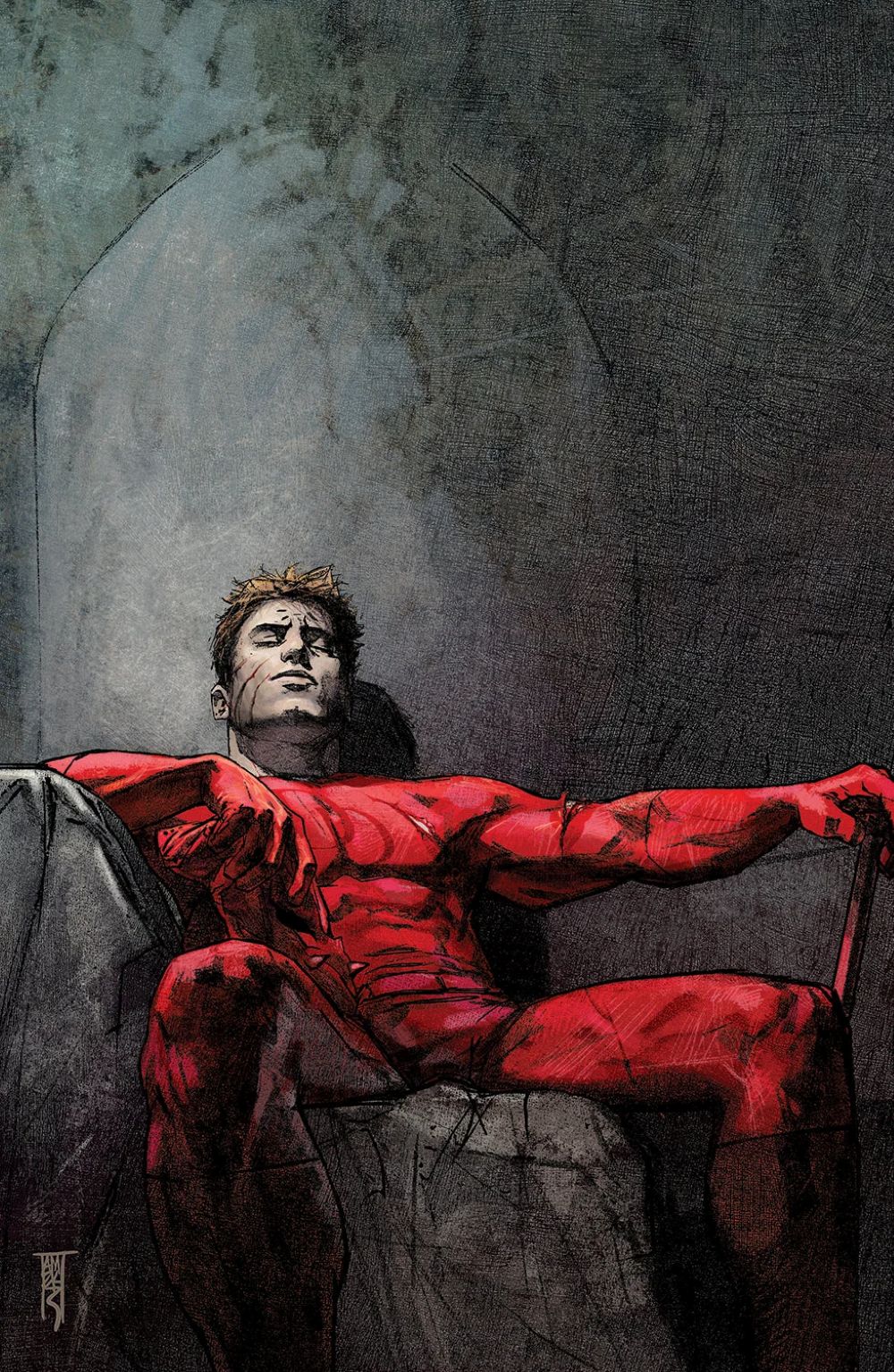
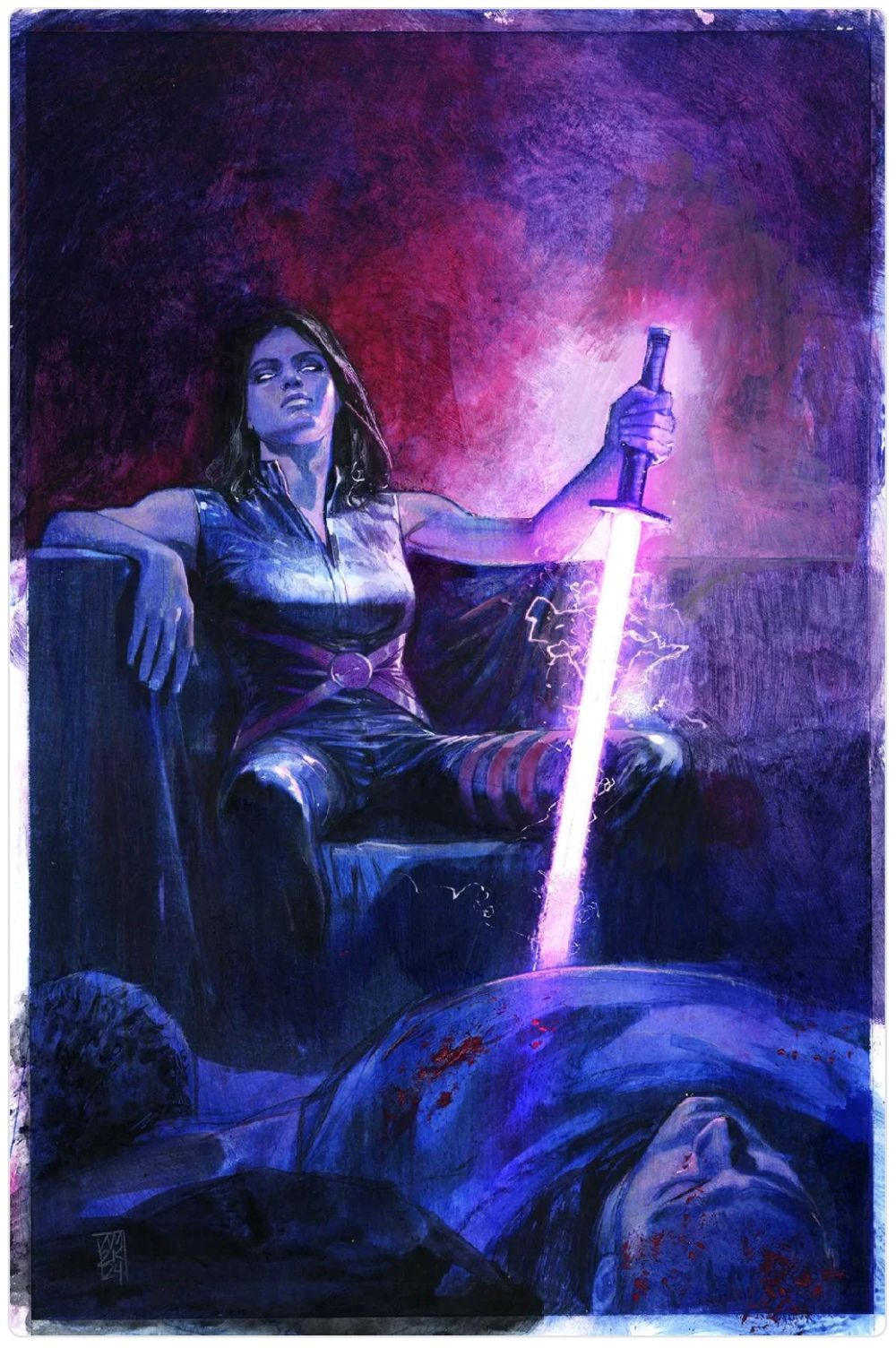
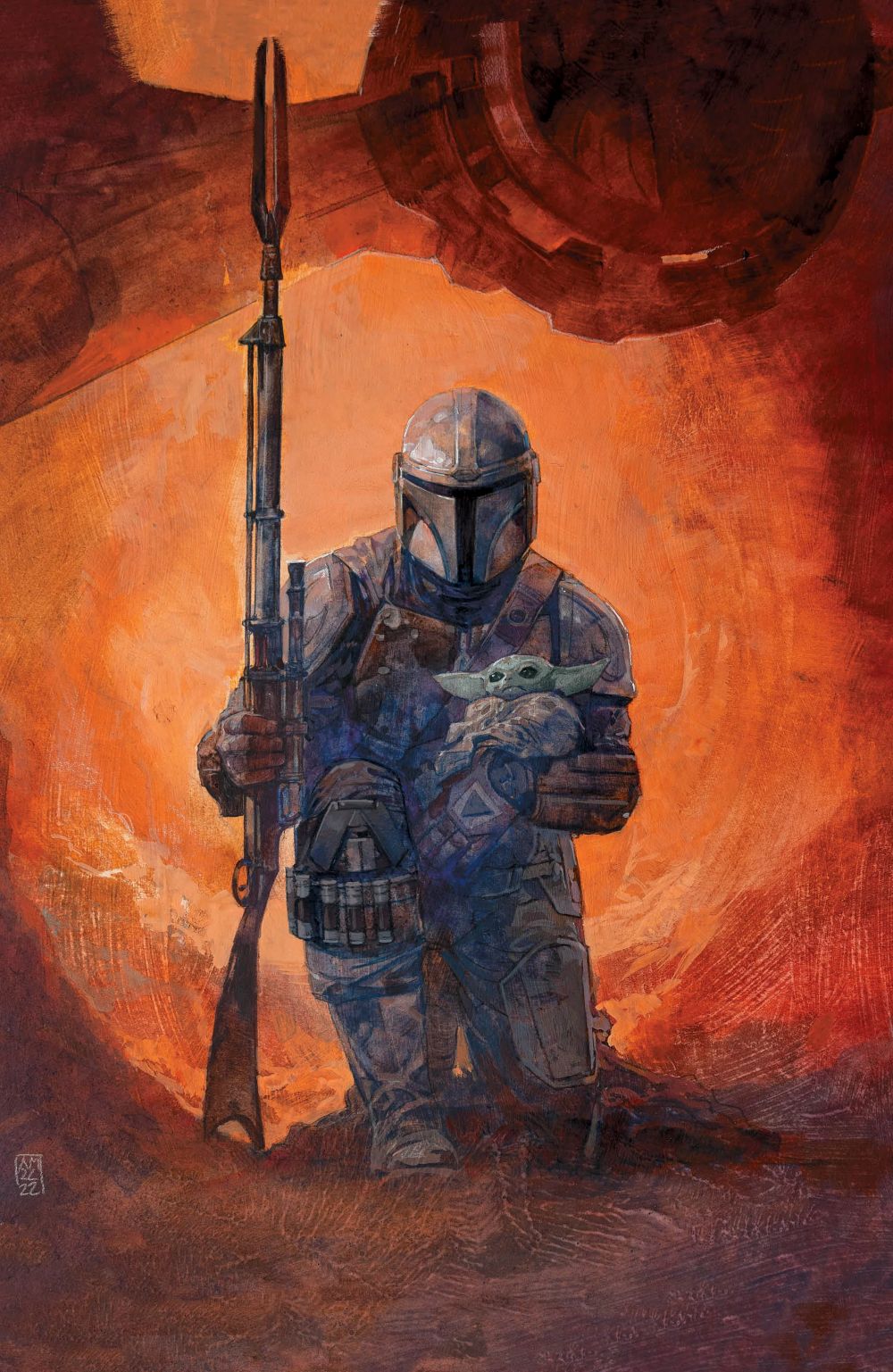
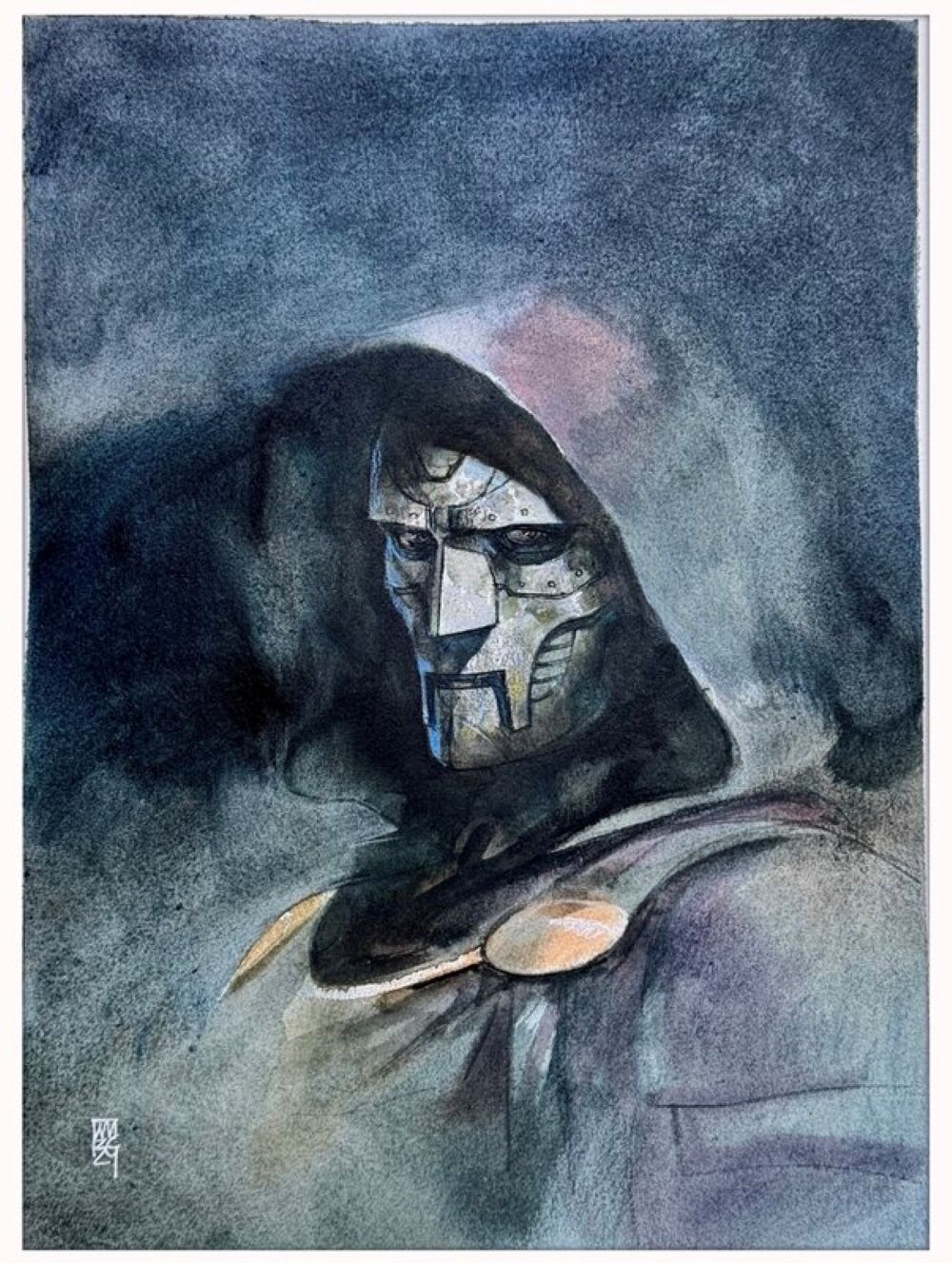
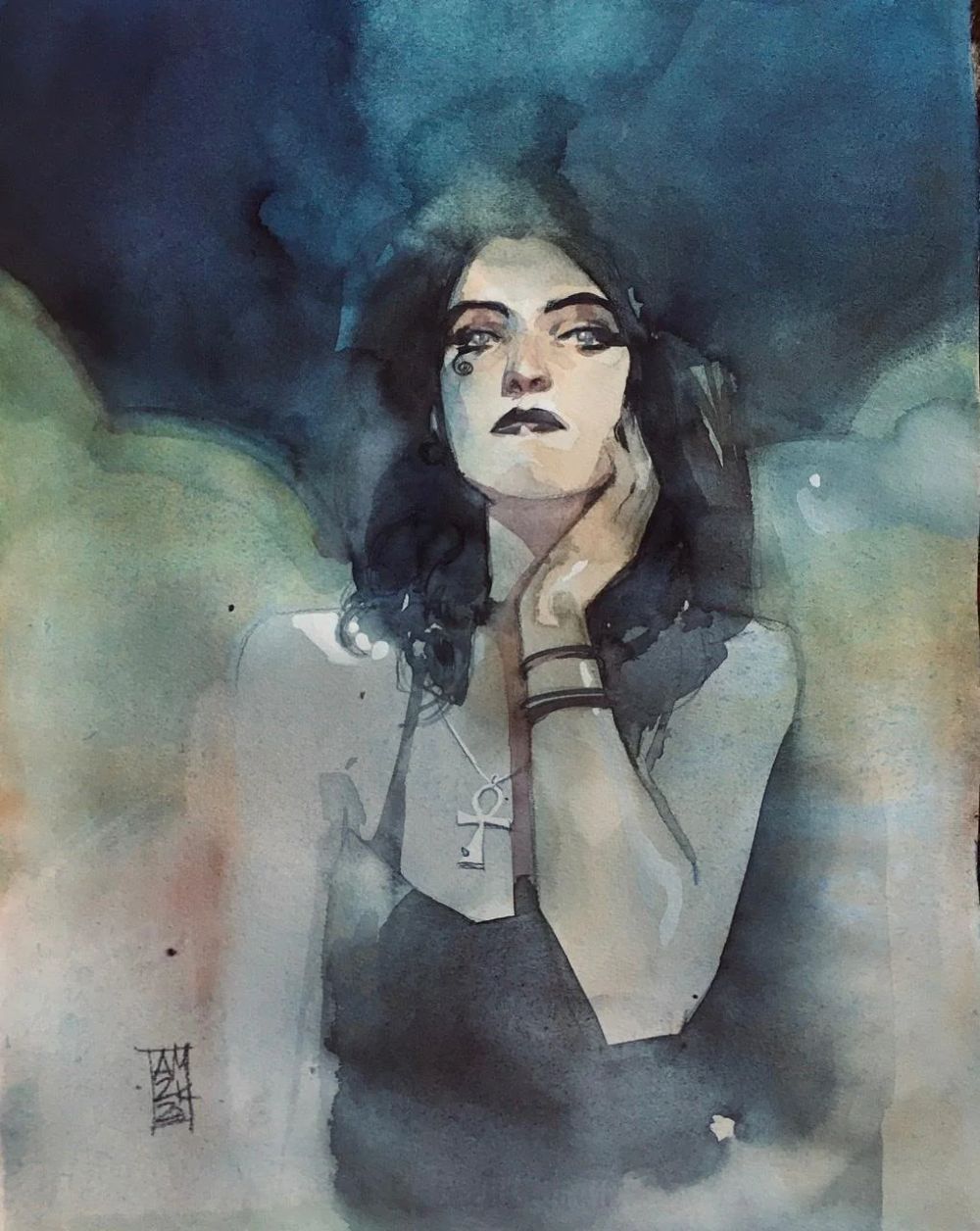
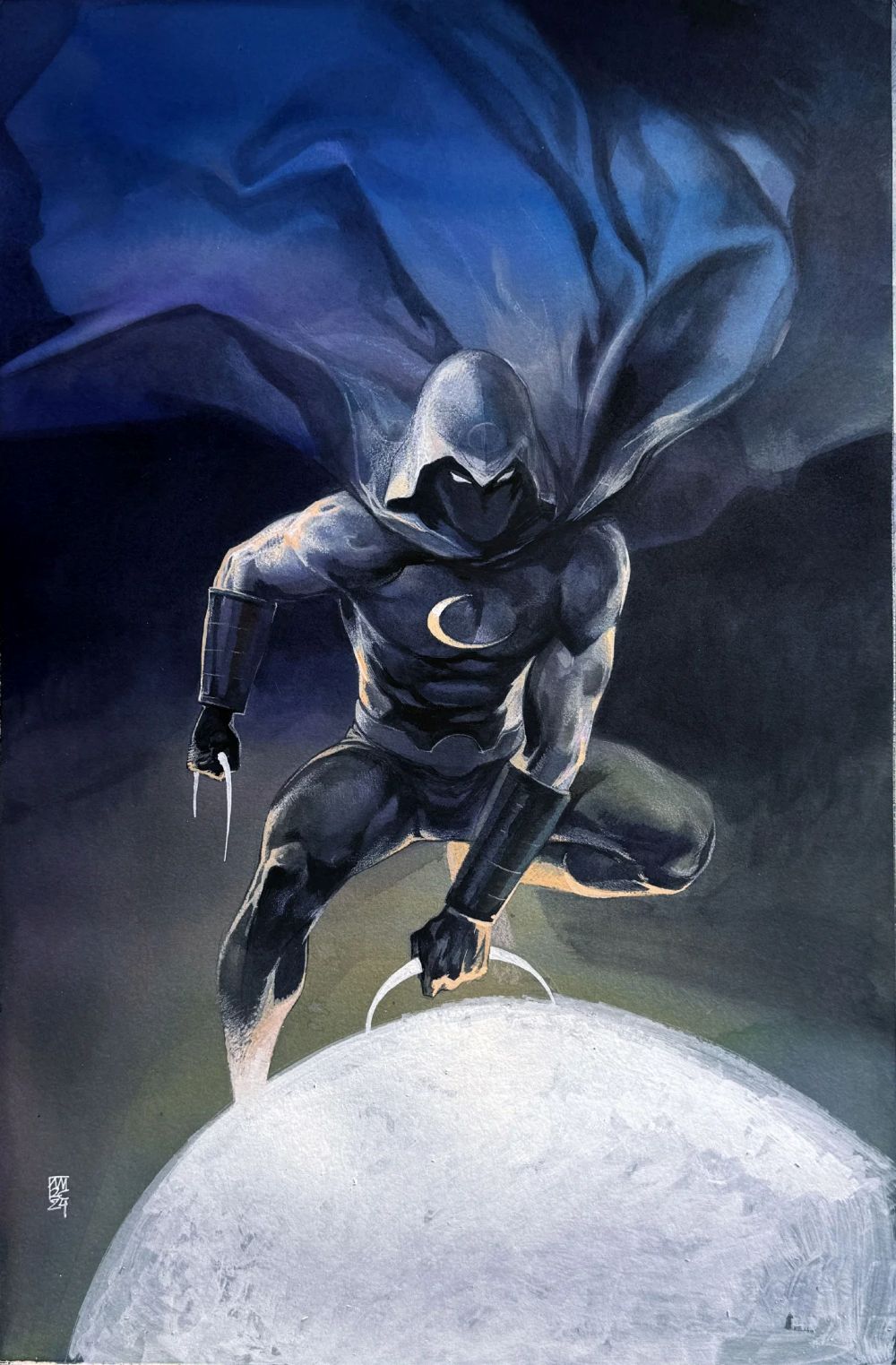
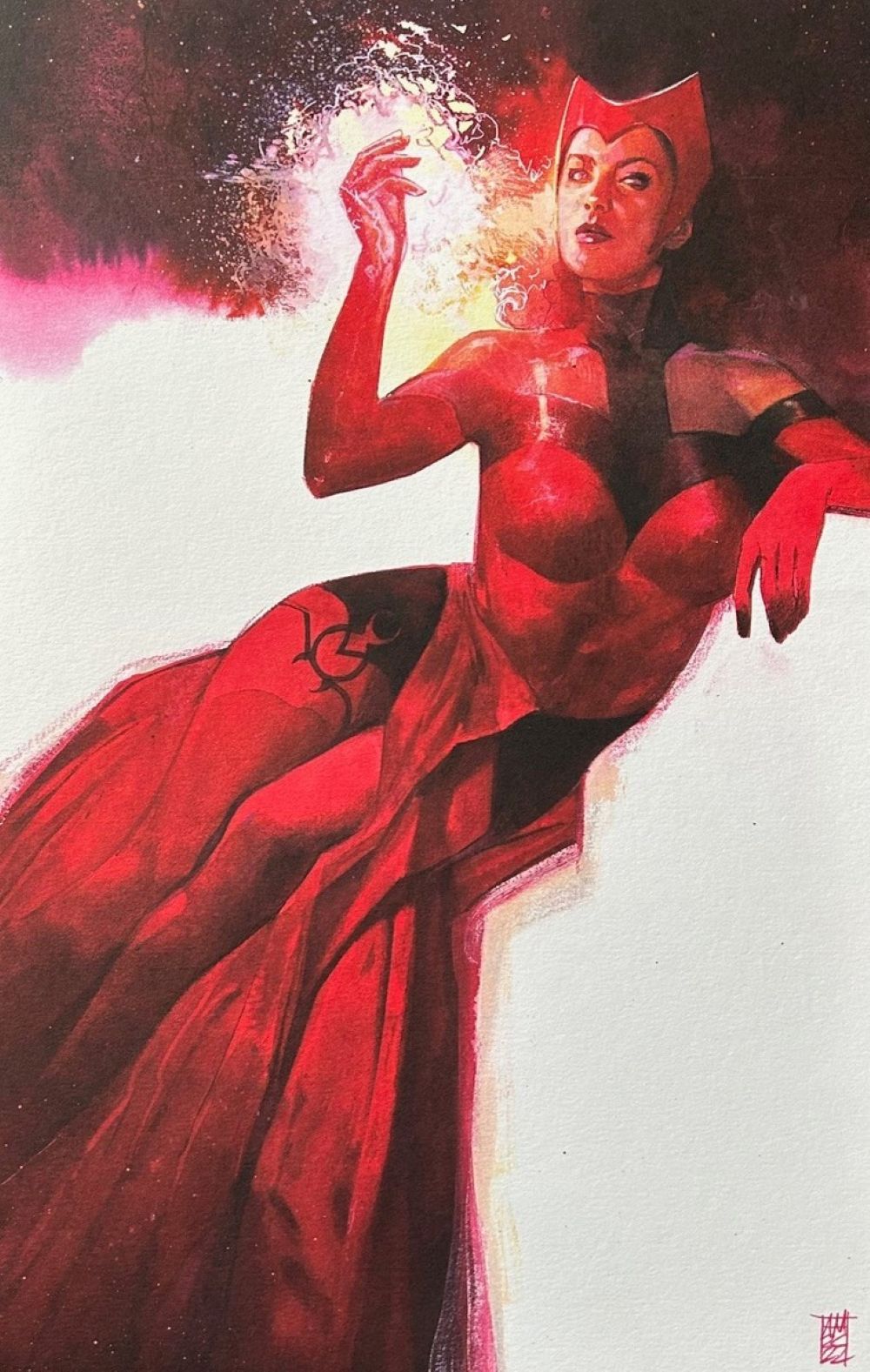
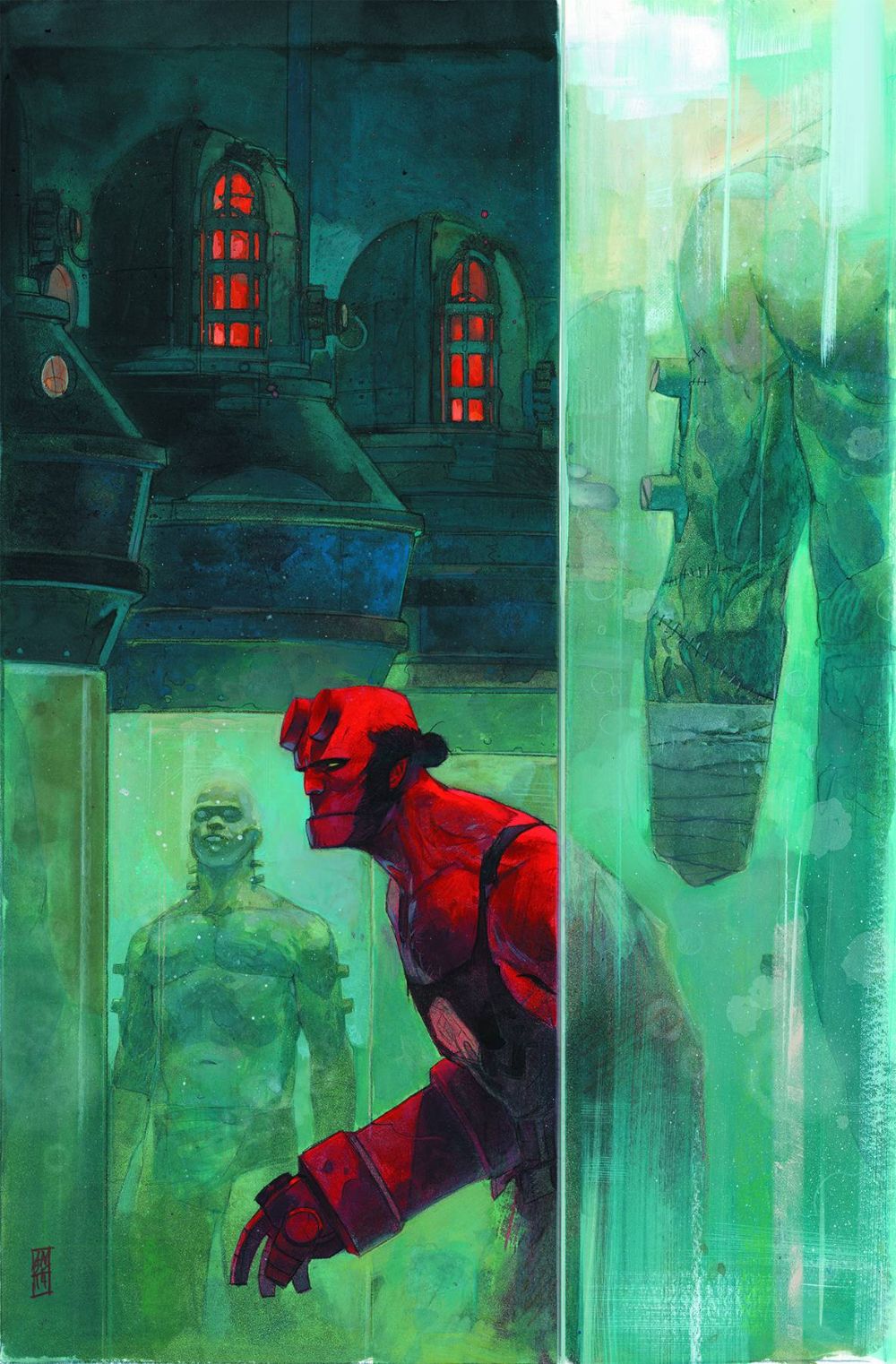
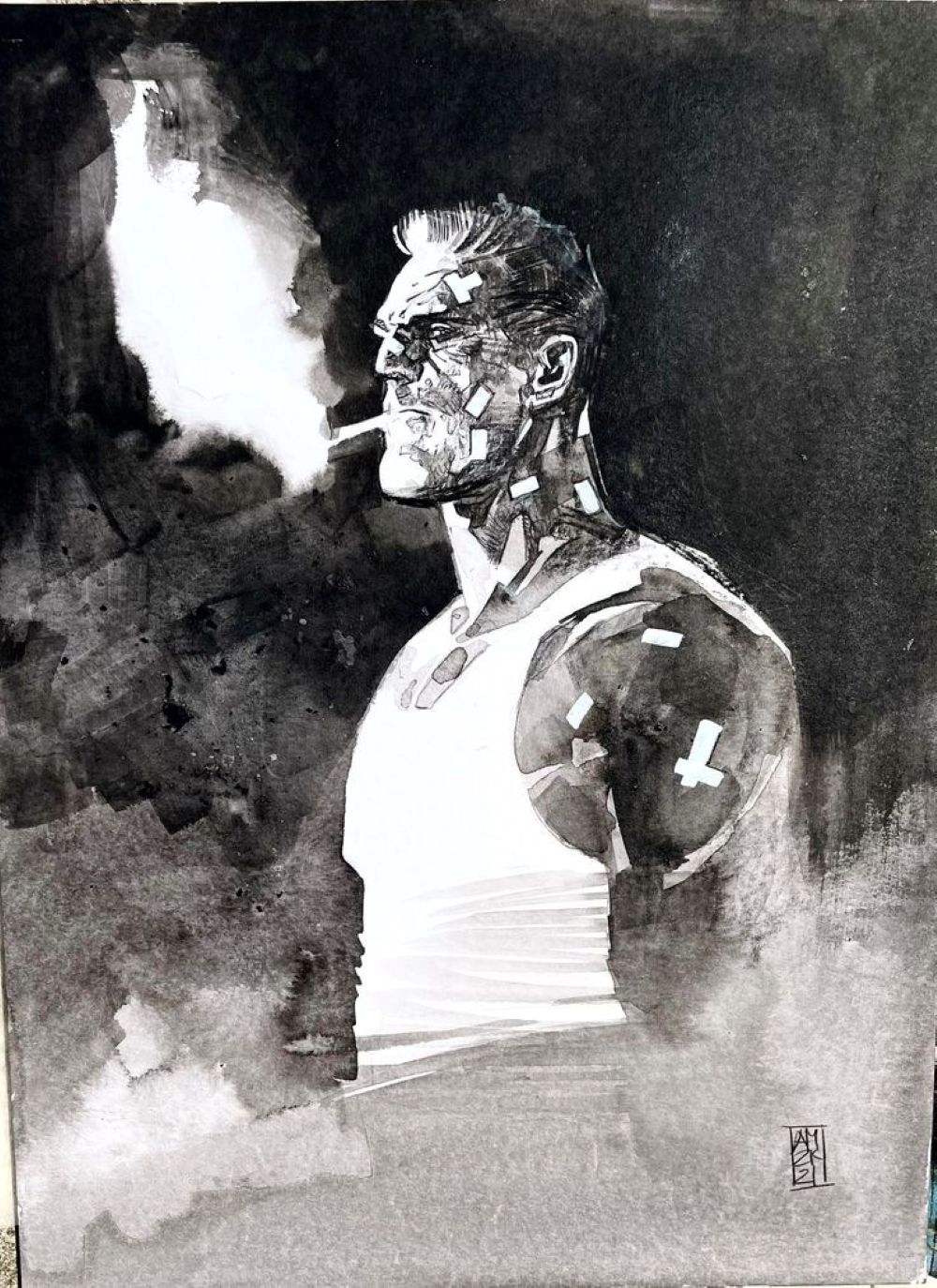
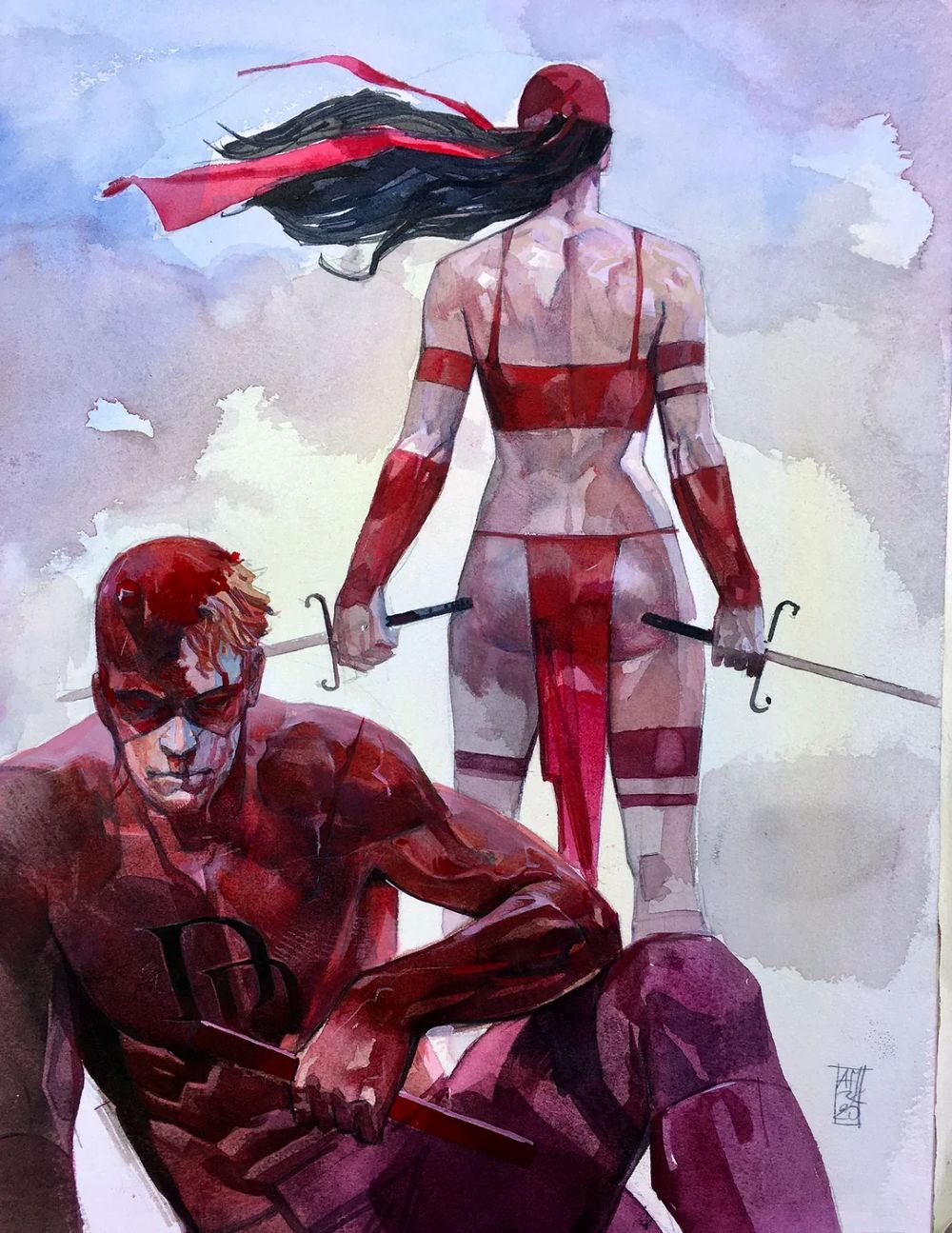
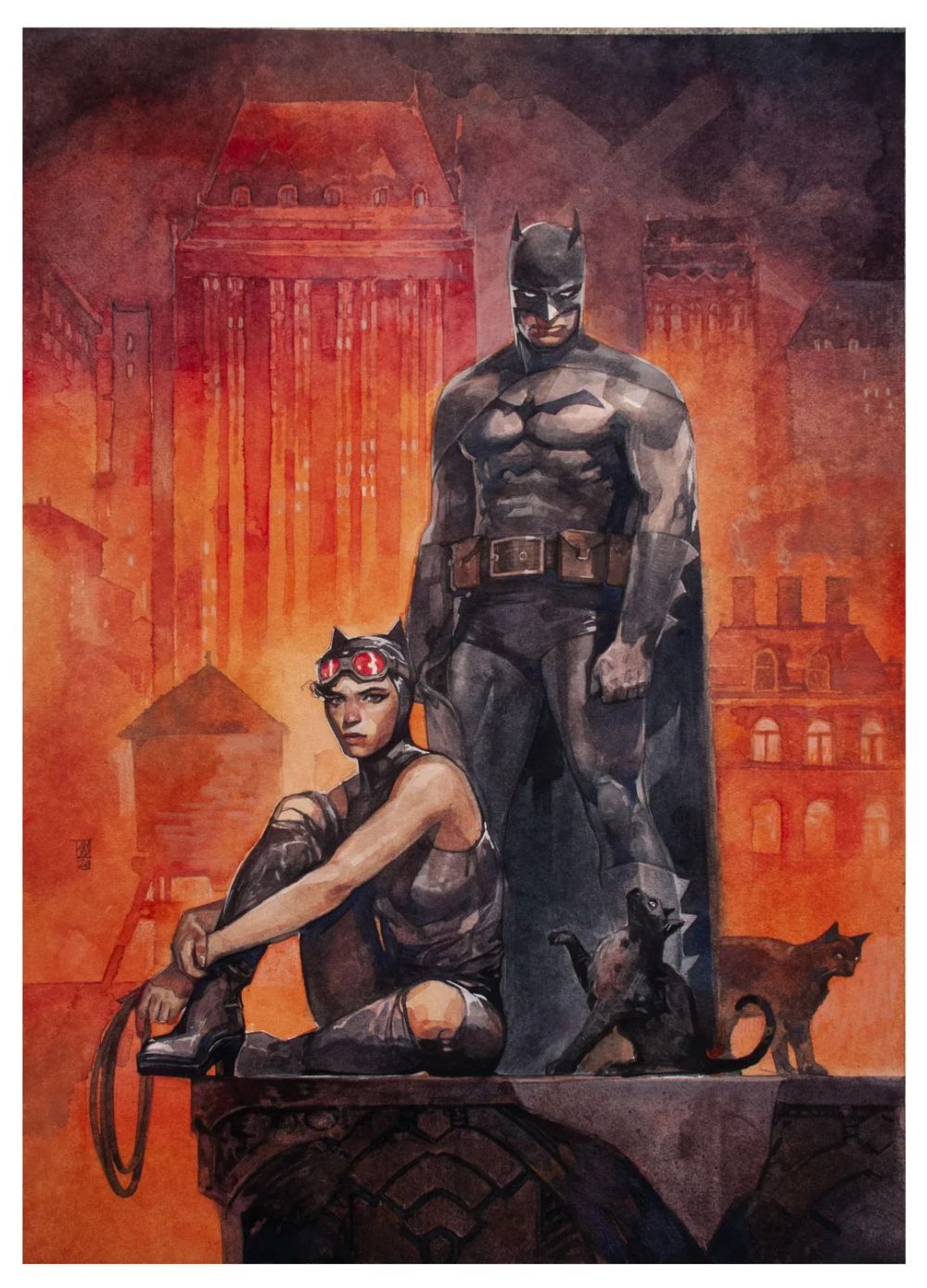
Alex Maleev’s work stands out because it makes superhero comics feel physically inhabited rather than merely illustrated. His figures are not polished icons frozen in clean, declarative poses; they look exhausted, wounded, watchful, and frighteningly close to the people one might pass on a city street. Through textured linework, severe shadows, photographic reference, digital manipulation, and painterly color, Maleev developed a noir-inflected visual language that lends even familiar Marvel characters a sense of emotional weather. The grime on a wall, the hard light on a face, or the oppressive darkness surrounding a figure can carry as much narrative force as dialogue. His approach favors mood, intimacy, and psychological pressure over conventional superhero spectacle, which is why his pages often feel closer to crime cinema or an urban thriller than to traditional four-color adventure comics.
That sensibility found its defining expression in his celebrated collaboration with writer Brian Michael Bendis on Daredevil. Maleev was not simply illustrating Matt Murdock’s stories; he helped redefine the character’s world as a bruised, morally unstable, and deeply personal version of Hell’s Kitchen. The Bendis–Maleev run brought a grounded visual credibility to Daredevil’s civilian life, legal battles, criminal enemies, and private anguish, making every close-up and every dimly lit room feel consequential. Their earlier work on Sam and Twitch, and subsequent collaborations including Spider-Woman, Moon Knight, Scarlet, New Avengers material, and Halo: Uprising, demonstrate how adaptable that partnership could be. Still, Daredevil remains the central achievement: an acclaimed run whose visual atmosphere helped establish the template for a darker, more adult, and more psychologically intimate kind of Marvel storytelling.
Maleev’s legacy is therefore not just that he produced memorable covers, faces, or grim cityscapes, but that he expanded what mainstream superhero art could communicate. At a time when the genre could easily default to glossy anatomy and kinetic bombast, he proved that visual discomfort, ugly realism, silence, and shadow could be as powerful as a splash page. His art also helped legitimize a more hybrid, mixed-media mode of comics illustration—one that uses painting, photography, design, and sequential storytelling without treating any of those tools as mutually exclusive. Emerging from Bulgaria’s comics scene before becoming a major American-comics figure, Maleev built a body of work that remains immediately recognizable: moody, tactile, cinematic, and relentlessly human.
“Imagine the good this boy could do. I know what he is, what he might grow into, maybe even what he’s meant to be. But I also see what he can be. He just needs a little guidance and someone to set a proper example.” — Trevor Bruttenholm
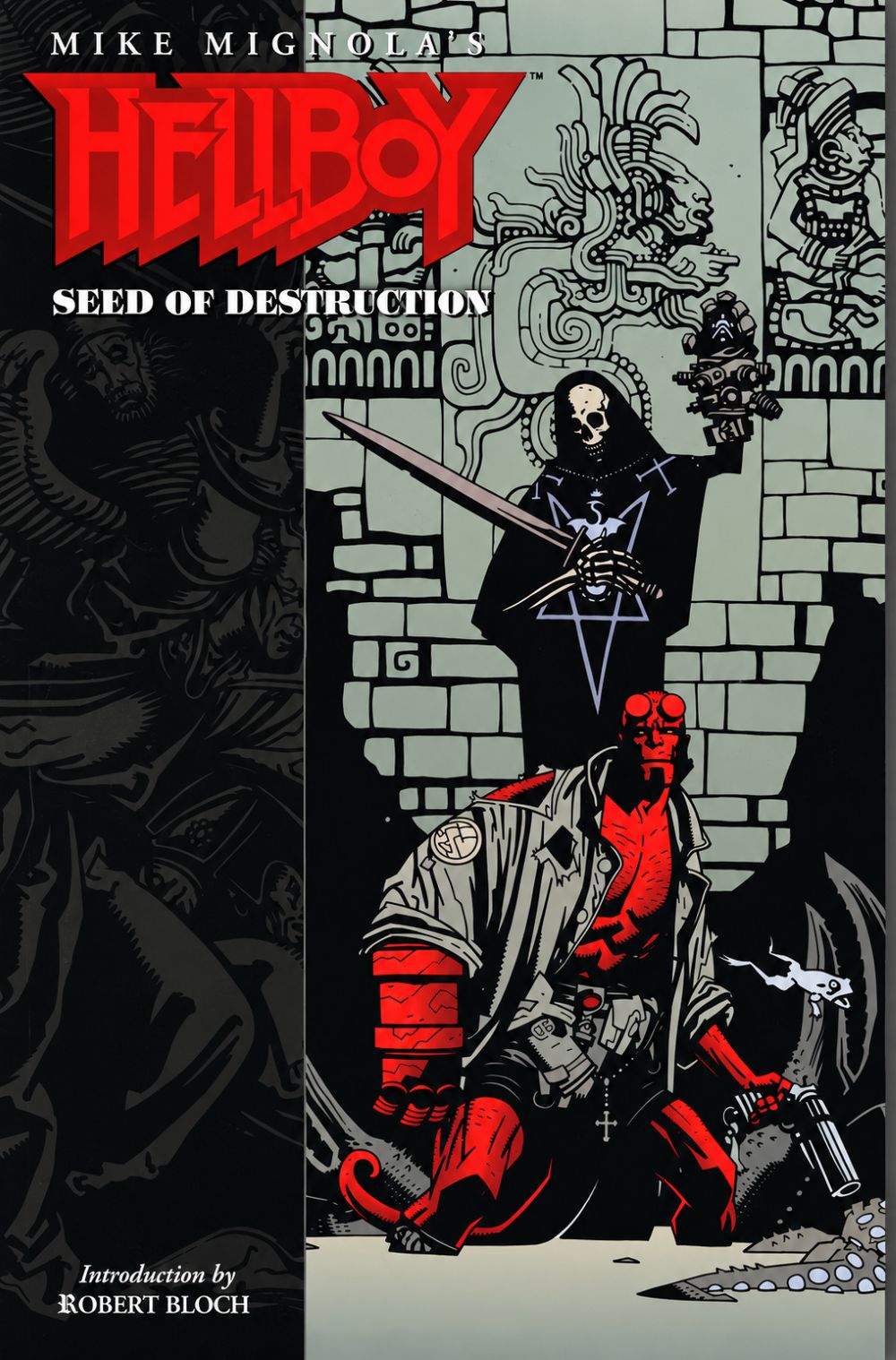
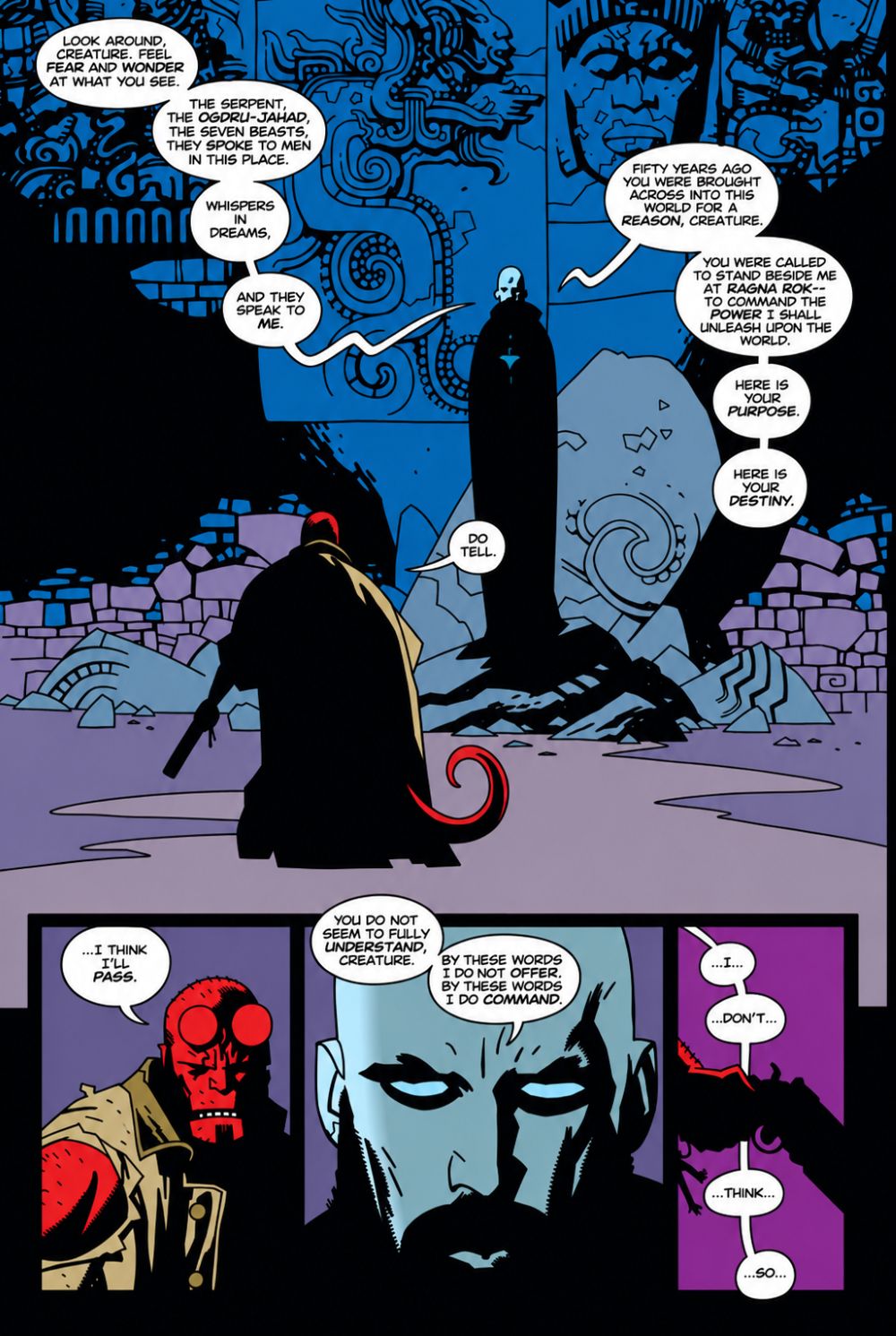
Mike Mignola’s Hellboy: Seed of Destruction is more than the opening chapter of a popular comic-book universe. It is a foundational work of supernatural adventure, combining pulpy monster fiction, wartime conspiracy, Gothic imagery, Lovecraftian apocalypse, and a surprisingly human story about identity and free will. First published as a four-issue miniseries in 1994 and co-plotted with John Byrne, the graphic novel introduces Hellboy with striking confidence. The mythology already feels vast, the visual identity is fully recognizable, and the title character arrives as one of the most distinctive heroes in modern comics: a cigar-smoking red demon with a stone right hand, a sarcastic sense of humor, and a stubborn refusal to become the monster everyone expects him to be.
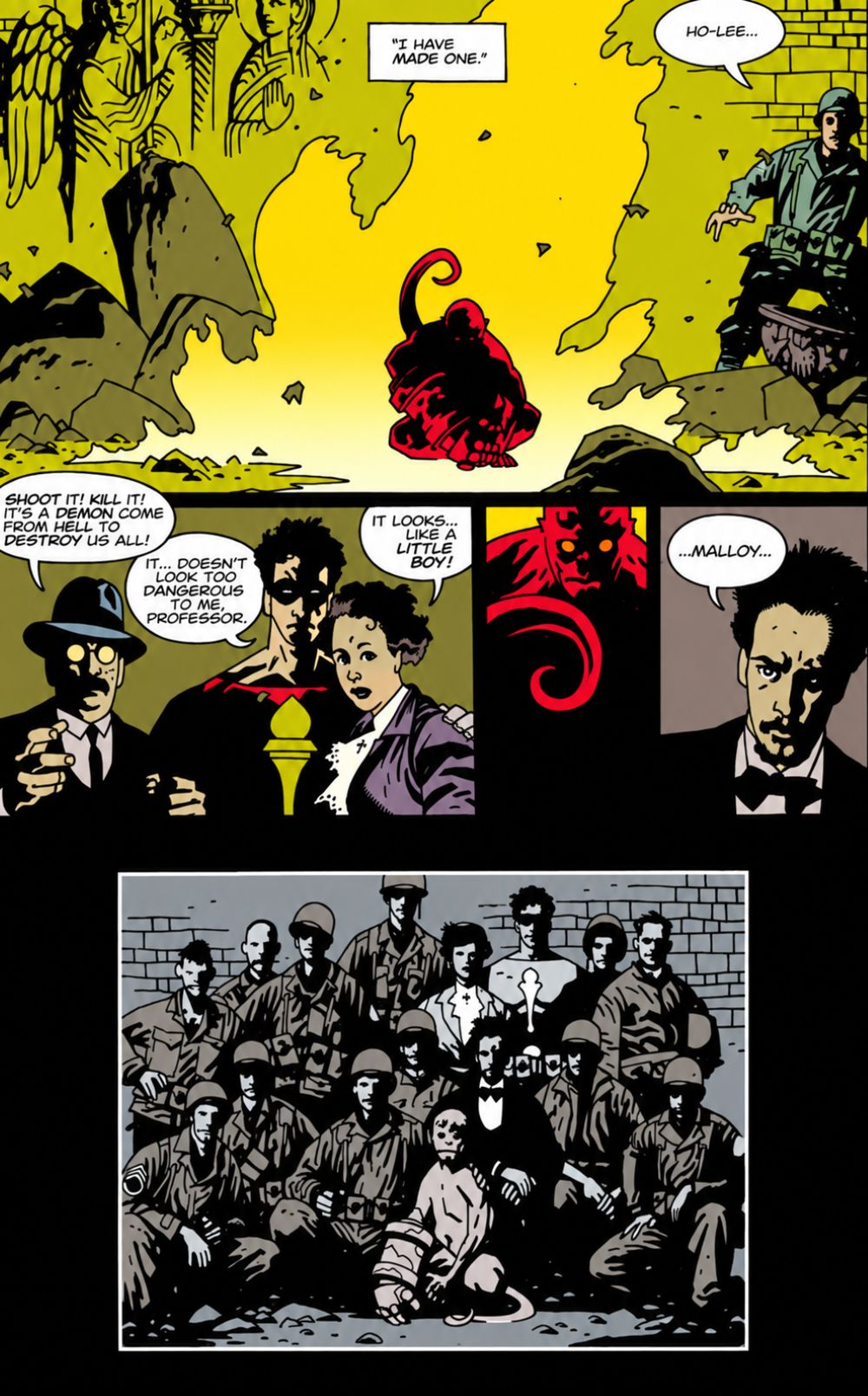
The premise is immediately compelling. In the final days of World War II, Nazi occultists conduct an elaborate ritual intended to summon a weapon powerful enough to alter the war’s outcome. The ceremony is overseen by Grigori Rasputin, who is reimagined here not simply as the notorious Russian mystic but as a servant of ancient, world-ending forces. Allied soldiers disrupt the ritual, but instead of the apocalypse the Nazis hoped to unleash, they discover a small red-skinned demon child transported to Earth. That child becomes Hellboy. He is taken in by Professor Trevor Bruttenholm, founder of the Bureau for Paranormal Research and Defense, and raised not as a weapon or scientific specimen, but as a son.
That decision gives Hellboy: Seed of Destruction its emotional center. Hellboy looks like the obvious villain of his own story. He has red skin, filed-down horns, a tail, cloven feet, and the massive stone right hand known as the Right Hand of Doom. He appears as though he should stand alongside Dracula, Frankenstein’s monster, or Satan himself. Yet Mignola’s central idea is that origin does not have to determine destiny. Hellboy may have entered the world through an act of evil, and powerful supernatural forces may expect him to fulfill an apocalyptic role, but he chooses another path. As an adult, he works for the B.P.R.D., investigating paranormal threats and protecting humanity from the very kinds of monsters he might be expected to join.
The main story takes place decades after Hellboy’s arrival and begins when a death close to him forces the past back into the present. The loss gives the investigation a personal urgency and propels Hellboy toward the hidden truth behind his own origins. As he follows the trail, he becomes entangled in a conspiracy involving Rasputin’s return, surviving Nazi occultists, forgotten rituals, buried secrets, and the terrifying possibility that Hellboy himself may have a role in an event far greater than any single monster attack. The plot steadily expands from a personal mystery into a threat with apocalyptic implications, but it never completely loses sight of Hellboy as a character caught between the person he has chosen to be and the fate others want to impose upon him.
Hellboy is joined by fellow B.P.R.D. agents Abe Sapien and Liz Sherman. Abe, an amphibious investigator with a calm, analytical nature, provides an effective contrast to Hellboy’s bluntness and impatience. Liz, a pyrokinetic woman whose connection to fire comes with emotional burdens of its own, brings a more vulnerable and tragic element to the team. In this first volume, they are not yet as richly developed as they would become in later stories, but their presence establishes the B.P.R.D. as something more interesting than an ordinary superhero team. These are not polished celebrity heroes in colorful costumes. They are unusual, damaged, and often isolated people employed to confront dangers that the public cannot know exist.
Mignola’s art is the graphic novel’s defining achievement. Even among the strongest comics of the 1990s, Hellboy: Seed of Destruction feels visually singular. At a time when much of mainstream superhero art emphasized intricate rendering, oversized muscles, and hyperactive action, Mignola worked through silhouette, shadow, stark design, and carefully controlled negative space. His figures are often blocky and stylized, but they are never lifeless. A few lines can convey fear, exhaustion, anger, or resignation. A large black shape can become a doorway, a corridor, an abyss, or a threat the reader cannot fully see.
Mignola does not use darkness merely to make the comic look moody. His shadows are active storytelling tools. Characters disappear into them, monsters emerge from them, and entire environments seem to exist only partially in the light. A seemingly empty room can become frightening because its far wall is swallowed by blackness. A frozen landscape can feel ominous because it leaves its characters exposed beneath an enormous blank sky. His layouts often evoke old pulp-horror illustrations, German Expressionist cinema, Gothic architecture, folklore engravings, and vintage monster movies. Rather than presenting a sleek modern superhero world, Mignola creates a universe that feels ancient, secretive, and half-buried under centuries of superstition.
The color work deepens that atmosphere. The pages use earthy browns, faded blues, icy whites, sickly greens, and vivid flashes of red to create a world that feels both dreamlike and decayed. Hellboy’s red skin makes him instantly recognizable within Mignola’s compositions, especially when he stands against a field of black shadow. He often resembles a burning ember in a world of darkness: visually connected to the supernatural realm around him, yet refusing to be extinguished by it. That visual contrast captures the character’s place in the story. Hellboy belongs to the darkness in a literal sense, but he continually chooses to stand against it.
The writing is more exposition-heavy than some later Hellboy stories, but it serves an understandable purpose. Hellboy: Seed of Destruction has to introduce Hellboy, the B.P.R.D., Rasputin, the Nazi occultist threat, the supernatural cosmology, and the significance of the Right Hand of Doom in a relatively short space. John Byrne’s scripting helps organize the material and gives the narrative forward momentum. Certain explanations have the recognizable rhythm of early-1990s genre comics, but the story’s atmosphere remains strong enough that the mythology rarely feels like a dry information dump. Mignola and Byrne create the impression that readers are seeing only a small piece of an immense occult history, one filled with ancient gods, forgotten disasters, and forces that have been waiting in darkness for centuries.
The pacing is deliberate rather than relentlessly action-driven. Mignola allows scenes to breathe, lingering over ruined architecture, old artifacts, empty corridors, haunted chambers, and moments of tense silence. The dread accumulates gradually. When action erupts, it tends to be sudden, heavy, and physical. Hellboy is not an acrobatic hero who glides through combat with effortless grace. He breaks through doors, trades blows with monsters, absorbs punishment, and keeps moving forward. His heroism has a blue-collar quality. He treats fighting the impossible as difficult, unpleasant work that nevertheless needs to be done.
That quality makes him especially effective within the story’s Lovecraftian framework. Traditional cosmic horror often centers on human helplessness in the face of forces too vast, ancient, and indifferent to comprehend. Hellboy: Seed of Destruction preserves that feeling, particularly in its suggestions of ancient beings and apocalyptic forces beyond normal understanding. However, it gives readers a protagonist willing to confront that terror rather than collapse before it. Hellboy cannot necessarily understand every supernatural threat, and he cannot erase the ominous circumstances of his birth, but he can refuse to cooperate with the fate laid out for him. His defiance is not naïve optimism. It is a hard-earned, practical moral stance: he will not let anyone turn him into a weapon, and he will not stand aside while innocent people are endangered.
The relationship between Hellboy and Bruttenholm gives that moral stance its weight. Bruttenholm represents the compassion that allowed Hellboy to become something other than an instrument of destruction. He does not deny Hellboy’s demonic origins, but he refuses to treat those origins as a permanent verdict. Their bond lends real emotion to the graphic novel without overwhelming it with melodrama. Mignola’s best moments of feeling are often restrained, expressed through silence, body language, or a brief line rather than a lengthy speech. This restraint suits Hellboy himself. He is not a character who easily verbalizes grief, fear, or tenderness, but those feelings are present beneath his rough exterior.
The graphic novel also has an important place in Hellboy’s larger cultural legacy because it served as the basis for Guillermo del Toro’s live-action film Hellboy. The adaptation draws from the comic’s wartime origin, B.P.R.D. framework, Rasputin-centered occult threat, and larger supernatural mythology, helping bring Mignola’s character and visual world to a wider audience. Even so, Hellboy: Seed of Destruction stands firmly on its own as the original expression of that world: darker, quieter, and more reliant on the power of shadow, silence, and graphic design than any adaptation could fully reproduce.
Hellboy: Seed of Destruction is not entirely flawless. The exposition can occasionally be dense, and Abe and Liz are not yet given the emotional complexity they receive in later Hellboy stories. The book also has the understandable burden of establishing a great deal of lore in a short opening arc. Yet those limitations are minor beside its achievements. Mignola creates a complete aesthetic universe from the beginning, one populated by ancient horrors, occult conspiracies, cryptic prophecies, and damaged people trying to do the right thing in a world that often seems hostile to human life.
Ultimately, Hellboy: Seed of Destruction remains a landmark graphic novel because it places mood, design, and character above conventional superhero spectacle. It is not simply about a demon punching monsters, even though it delivers that pleasure exceptionally well. It is about a creature born under the shadow of evil who insists on defining himself through his choices. Hellboy’s greatest strength is not his stone fist, supernatural durability, or ability to survive encounters with horrors beyond human comprehension. It is his refusal to become what he was made to be.
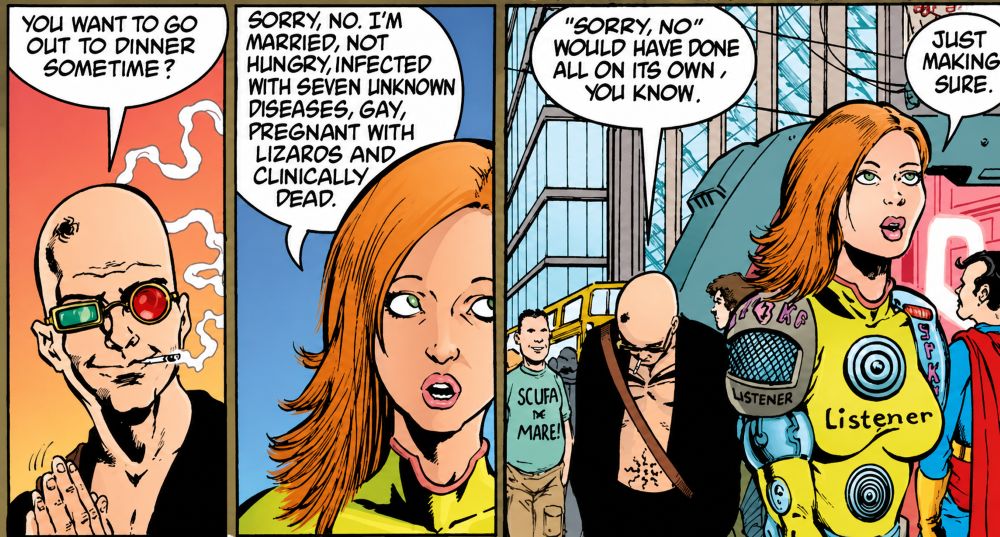
“Journalism is just a gun. It’s only got one bullet in it, but if you aim right, that’s all you need. Aim it right, and you can blow a kneecap off the world.” — Spider Jerusalem
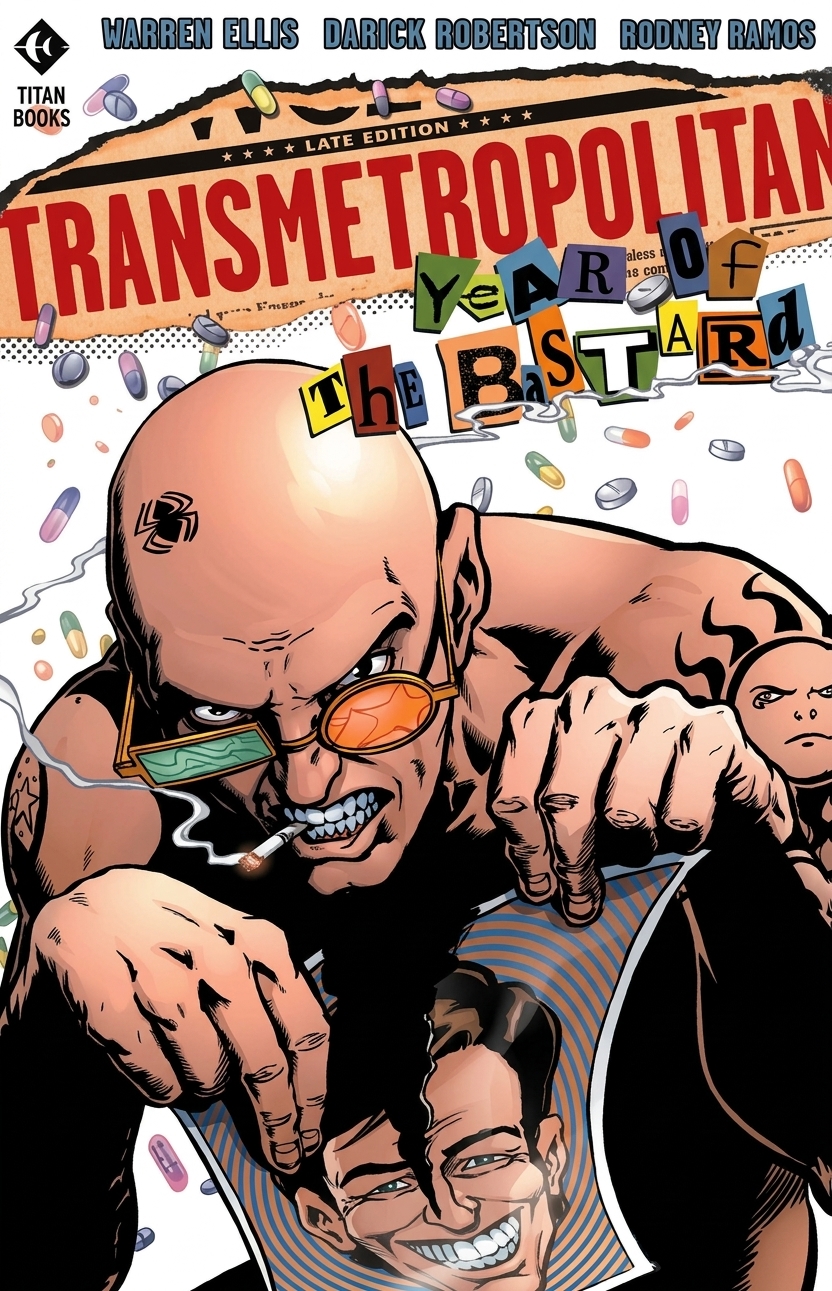
Transmetropolitan Vol. 3: Year of the Bastard is where Warren Ellis and Darick Robertson’s series fully locks into its political purpose. The earlier volumes establish the wild, filthy, hilarious, and relentlessly overstimulating future world of the City, while also introducing Spider Jerusalem as one of comics’ most aggressive and unconventional protagonists. This third collection gives that chaos a more direct target. Spider’s reporting increasingly centers on President Gary Callahan, known as “the Beast,” and the book becomes a sharper examination of political corruption, media manipulation, public apathy, and the ugly necessity of speaking truth to power.
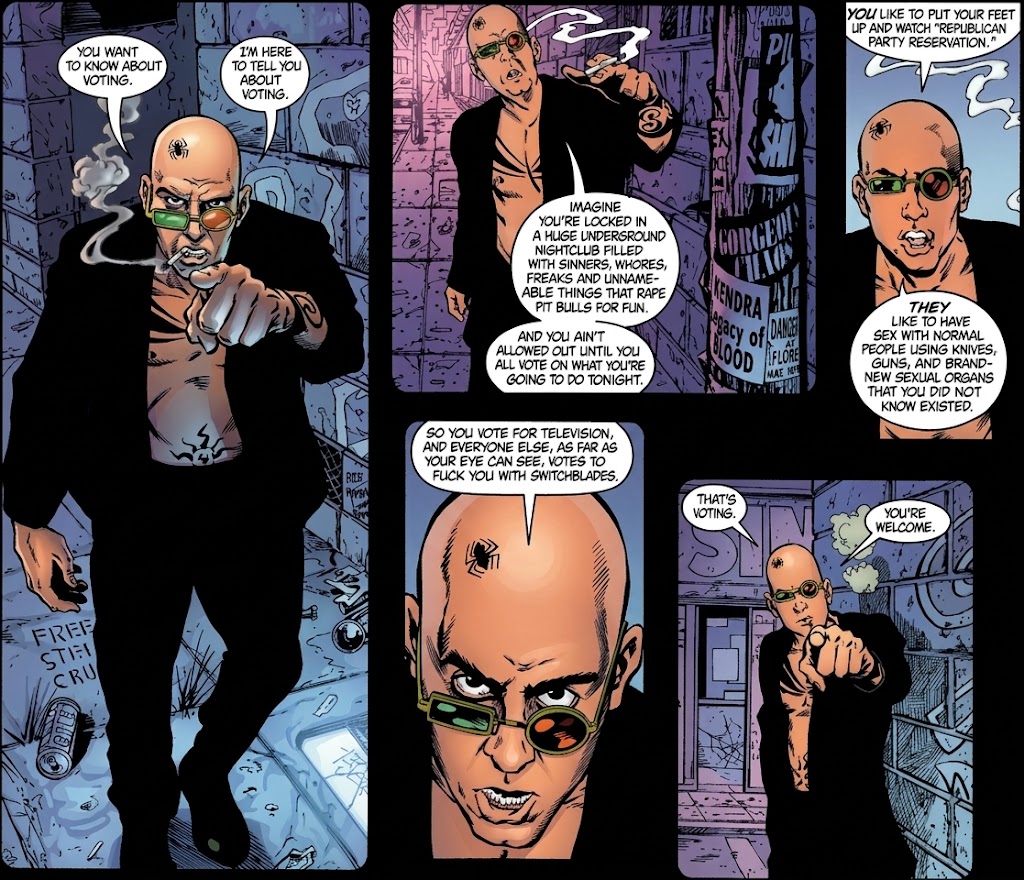
Spider remains the main reason Transmetropolitan works as well as it does. He is not a conventionally likable hero, and the series has no interest in sanding down his worst edges. Spider is arrogant, filthy, confrontational, casually cruel, and frequently unbearable to everyone around him. He insults his assistants, attacks people with little warning, abuses his position as an employer, and seems to approach most conversations as though they are a competition he needs to win. His anger is not performative, though. Spider is furious because he sees how the City works, how easily people are exploited, and how often institutions that are meant to serve the public instead exist to preserve wealth, influence, and power.
That is what separates Spider from a standard rebellious antihero. He does not simply dislike authority because it tells him what to do. He hates authority when it becomes insulated from consequence. His journalism is not neutral in the shallow sense of pretending that every side of an issue deserves equal moral consideration. Spider believes that facts matter, that evidence matters, and that powerful people deserve aggressive scrutiny. He wants documents, interviews, proof, and a story solid enough to survive legal threats and political spin. But he also wants that story to make its target feel exposed. For Spider, journalism is both a public service and an act of combat.
Year of the Bastard makes that approach feel especially urgent through the arrival of Gary Callahan. The Beast is an amalgamation of all the worst traits associated with the fictional politician: narcissistic, shameless, opportunistic, cruel, dishonest, charismatic when it suits him, and utterly willing to use ordinary people as tools in his pursuit of power. He is the kind of leader who can speak in a language of public service while treating the public as disposable, who can turn fear into political currency, and who can rely on supporters to dismiss his most obvious sins as either necessary strength or a conspiracy against him.
Callahan is exaggerated in the way that much of Transmetropolitan is exaggerated, but that does not make him feel safely distant from reality. The series filters him through dystopian satire, giving him the monstrous nickname, the heightened rhetoric, and the almost grotesque confidence of a villain who believes consequences are for other people. Yet the deeper qualities behind him are painfully familiar. He thrives on division, contempt for truth, resentment, spectacle, and the belief that accountability is something to be attacked rather than accepted. In recent memory, that has only made the Beast feel more unsettling. Political figures with traits that once seemed too bluntly villainous for anything but fiction have repeatedly demonstrated how easily cruelty can be reframed as authenticity, dishonesty as strategy, and public anger as a route to power. The book’s details are futuristic and extreme, but its political instincts feel less like prediction than recognition.
Spider recognizes Callahan for what he is long before the system is ready to confront him. That is where the volume’s central conflict becomes stronger than a simple “reporter versus corrupt president” story. Spider is not just investigating a bad man; he is fighting the machinery that allows bad men to flourish. The City’s citizens are overwhelmed by media noise, consumer distractions, social trends, technological novelty, and the endless stream of minor scandals competing for their attention. In such an environment, truth can be buried not only by censorship but by excess. A revelation does not have to be disproven if it can simply be drowned beneath louder, stupider, more entertaining material.
The City continues to be one of the series’ best creations because it is more than a colorful science-fiction backdrop. It is a civilization that has commodified every aspect of life. Identity can be altered, sold, copied, upgraded, discarded, and turned into another lifestyle product. Entertainment is invasive and often grotesque. Technology has expanded human possibility without necessarily expanding human empathy. Politics has become entertainment as well, reduced to personality contests, public outrage, tribal loyalties, and marketable images. The City is often funny in a deliberately ridiculous way, but the humor always has a sour edge. Its people are not simply stupid targets for Spider’s contempt. They are citizens living under a system designed to exhaust their attention and turn their frustration into something profitable.
That context complicates Spider’s relationship to the public. He clearly cares about people, especially the people who are harmed by the City’s power structures, but he also finds people maddening. Spider’s rage at ignorance, conformity, and complacency can make him seem almost as contemptuous of the public as the politicians he despises. The difference is that Spider’s contempt is not rooted in a desire to dominate them. He wants them to wake up, pay attention, and demand better, even when he expresses that desire through insults, threats, and spectacularly unhealthy behavior. His empathy is real, but it is buried beneath layers of cynicism and hostility.
That is why Channon Yarrow and Yelena Rossini remain so important to the book. They keep Spider from becoming a purely self-contained force of rage. Channon often brings a more immediate human response to the stories they cover. She can be tough and sarcastic, but she has not completely absorbed Spider’s defensive habit of treating emotional vulnerability as weakness. Her presence highlights the people behind the headlines, which is essential in a series where the main character can sometimes become so consumed by the larger fight that he risks forgetting the individual lives at stake.
Yelena offers a different kind of balance. As Spider’s editor, she understands the importance of his work, but she also has to deal with the consequences of his methods. She recognizes his talent and his instincts, while refusing to indulge every destructive impulse as if it were a sign of genius. Their relationship is built on tension, professional respect, and mutual exasperation. Yelena knows that Spider can find the story nobody else wants to touch, but she also knows that his self-destructive behavior can jeopardize the very work he believes in. She is one of the few people capable of treating him as both an indispensable journalist and a deeply difficult human being.
The visual side of Year of the Bastard remains a major strength. Darick Robertson makes the City feel constantly alive, crowded, unpleasant, and funny in equal measure. Every street scene suggests a thousand strange subcultures, consumer products, body modifications, and private disasters unfolding at once. Robertson’s detail is not merely there to make the book look weird. It reinforces the idea that this is a society drowning in visual information. The City is so busy that horror can pass as background decoration, and the reader has to look closely to notice what its inhabitants have learned to ignore.
Robertson’s Spider is equally effective. The sunglasses, tattoos, bald head, cigarettes, and permanent scowl make him immediately recognizable, but the art also captures how tired he is. Spider does not look like a sleek futuristic revolutionary. He looks worn down, unhealthy, and held together by stimulants, spite, and a professional obligation he cannot escape. That physical exhaustion matters because it keeps him from becoming an invulnerable fantasy figure. For all his bravado, Spider is a man who is being consumed by the same world he is trying to expose.
The volume still carries the abrasive humor and deliberately offensive energy that define Transmetropolitan, and that will remain a dividing line for readers. Ellis often pushes jokes, imagery, and dialogue to extremes. Sometimes that excess adds to the punk-rock force of the series, making the City feel like a place where every cultural impulse has been turned up beyond the point of sanity. At other times, the shock-heavy approach can feel like it is fighting for attention with the book’s more serious political and emotional material. Even so, Year of the Bastard benefits from its willingness to be ugly. A story about corruption, exploitation, and media spectacle would lose something if it presented its world too cleanly.
Ultimately, Transmetropolitan Vol. 3: Year of the Bastard is a strong escalation of the series because it gives Spider Jerusalem a political enemy worthy of his fury. The Beast represents the worst kind of public figure: someone who turns cruelty into strength, dishonesty into strategy, and division into a campaign platform. Spider, for all his cruelty and instability, becomes compelling because he refuses to accept that kind of power as normal. He may be an awful boss, a reckless friend, and a man whose personal life is largely a disaster, but he understands that journalism has to do more than politely record the world’s failures. Sometimes it has to expose the bastards responsible for them.
“You people don’t know what the truth is! It’s there, just under their bullshit, but you never look! That’s what I hate most about this fucking city—lies are news and the truth is obsolete!” — Spider Jerusalem
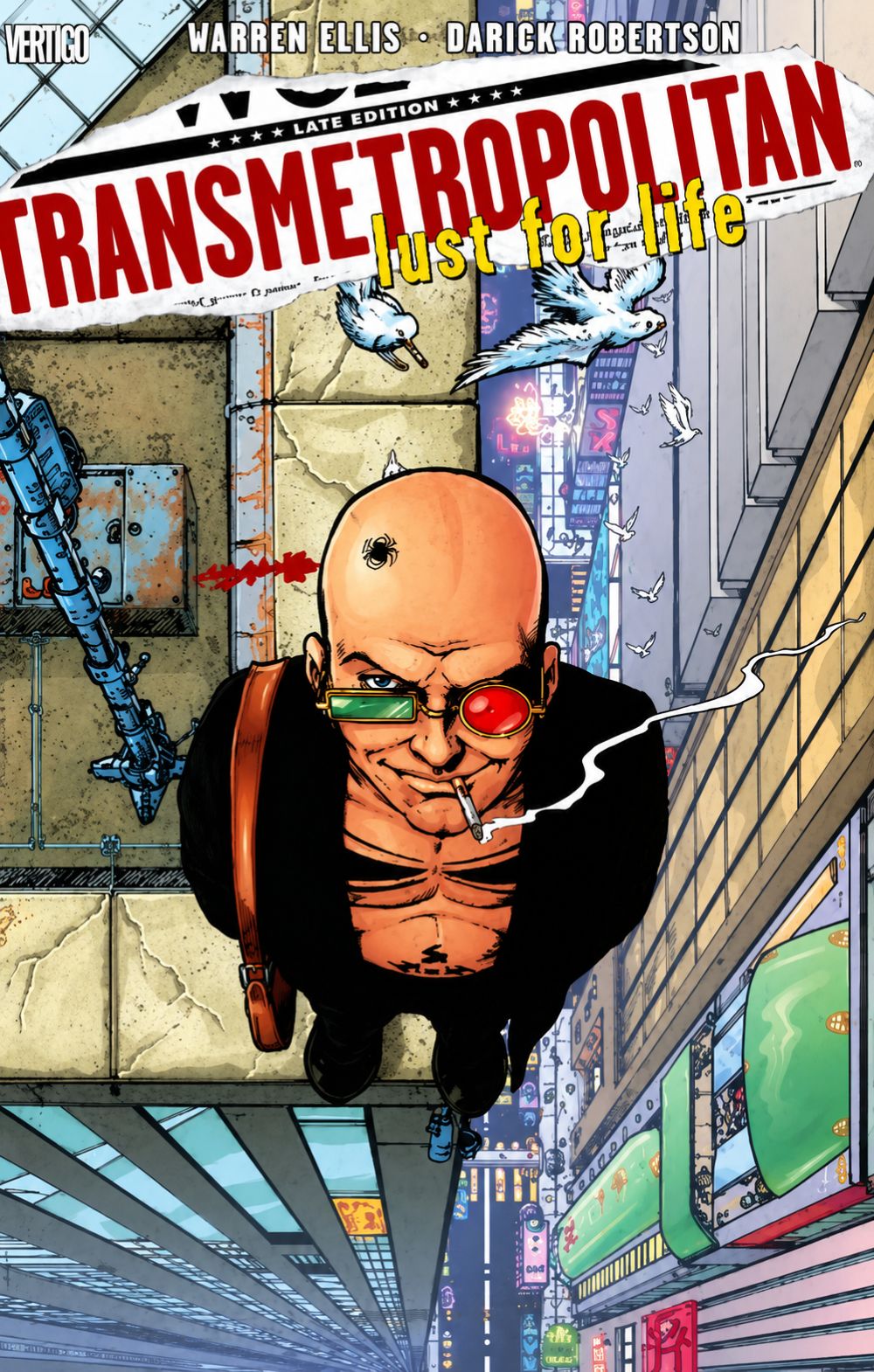
When you crack open the second volume of Warren Ellis and Darick Robertson’s Transmetropolitan, collected as Lust for Life, you’re not just getting another fix of cyberpunk chaos. You’re getting a book that solidifies exactly why this series is so brutally timeless. The first volume, Back on the Street, introduced us to the magnificent, drug-fueled trainwreck that is Spider Jerusalem and the grotesque, sprawling City he calls home. The second volume, however, is where the series finds its real footing. It’s not just about the loud, visceral shock value—though there’s plenty of that—but about deepening the world and its characters in a way that hits uncomfortably close to home.
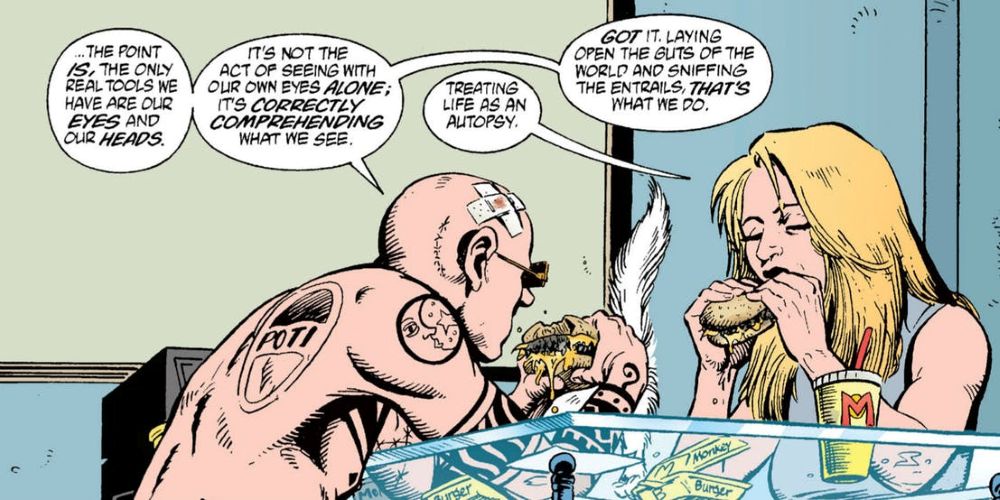
Spider Jerusalem is, and always will be, the heart of this series. He’s a chain-smoking, drug-abusing, perpetually enraged journalist in the mold of Hunter S. Thompson, armed with a bowel disruptor and a vicious tongue. He’s a complete and utter bastard to almost everyone he meets, prone to violent outbursts and scatological tirades. And yet, he’s our hero because he’s one of the few people in this future who actually gives a damn. His entire reason for being is his unwavering, almost religious, dedication to “The Truth.” He despises the apathy of the masses as much as the corruption of the powerful, and he’s willing to burn his life down to expose both. This volume showcases that beautifully, adding a layer of vulnerability that prevents him from becoming a one-note caricature. He’s a misanthrope who somehow still cares, and that tension is what makes him so compelling.
Lust for Life collects issues thirteen through twenty-four, and it’s structured more as a series of vignettes than a single, driving narrative. This is actually its greatest strength, as it allows Ellis and Robertson to expand the world and build the supporting cast in ways a more focused plot wouldn’t allow. A major chunk of the book is dedicated to the insane adventure of the frozen head of Spider’s ex-wife being stolen. It’s a gloriously bizarre plot, full of the kind of absurd, high-stakes chaos that Transmetropolitan does so well.
But the real emotional heft of Lust for Life comes from the quieter, more tragic stories woven between the gunfights and drug-induced rants. One of the most powerful sequences focuses on Channon, Spider’s long-suffering assistant. She’s a pillar of strength, constantly cleaning up Spider’s messes, but this volume shows her vulnerability. Her boyfriend decides to undergo a process to become a “gaseous vapor,” leaving his body behind for a formless existence. It’s a concept that sounds completely outlandish, but the execution is devastating. Ellis writes it not as a sci-fi gimmick but as a heartbreaking exploration of letting go, of watching someone you love choose a path you can’t follow. Channon’s pain and helplessness are palpable, grounding the over-the-top world in real human emotion.
Then there’s the story of Mary, a woman from our recent past who was cryogenically frozen and wakes up in the City. She’s presented as a historical relic, a simple photographer from the twentieth century who is completely out of her depth in this frantic, hyper-consumerist future. This is where the book delivers its most potent gut-punch. Mary is us. She’s the reader, trying to make sense of this alien world, and she fails. The City is a claustrophobic nightmare even for the people who were born into it, but for Mary, it’s a terrifying prison of isolation and confusion. Her story is a bleak reminder that this “progress” we’re supposedly heading toward often comes at the cost of our humanity. It’s a deeply existential and sad tale that serves as a harsh critique of the very future we might be trying to build.
Now, while Transmetropolitan is set in a hyper-exaggerated, grotesque future, the reason it remains so relevant is that the satire has proven to be uncomfortably prophetic. The City is a sprawling, neon-drenched hellscape where the line between news and entertainment has completely dissolved, where handheld devices connect everyone to a digital stream of information, and where journalism has devolved into a race for ratings and eyeballs. It’s a world where media personalities are more influential than politicians, and political leaders are cynical, manipulative populists who are experts at gaming the system. Sound familiar?
The landscape of modern journalism feels like a grim step toward this world. The “Death of Truth” that Spider rails against is a concept that has become a cornerstone of our current political and media discourse. The Beast and The Smiler, the corrupt politicians in the series, aren’t just cartoon villains; they’re mirrors reflecting a world of political spin, gerrymandering, and where the “villains” are often the ones controlling the narrative. Spider’s constant, violent struggle to get the real story feels less like a sci-fi fantasy and more like a desperate wish-fulfillment for anyone frustrated with the spin and half-truths of modern politics.
When Spider writes his column, “I Hate It Here,” he’s speaking for a populace that feels powerless and manipulated, a populace nicknamed “The New Scum” by the establishment. This social commentary hits hard because you can see its echoes everywhere today. The series suggests that technology has advanced, but human nature—our greed, our apathy, our susceptibility to manipulation—has not. It’s a bitter pill to swallow, but it’s what gives the book its power.
Transmetropolitan Vol. 2: Lust for Life might be a little light on overarching plot for some readers’ tastes. It’s not a major political arc; it’s more of a character study of the city and its inhabitants. But that’s precisely why it’s so effective. It proves that the series isn’t just a one-trick pony of cyberpunk fury. It has a heart, a soul, and a searing intelligence that cuts to the bone of our own societal failings. It’s a book that will make you laugh at its absurdity one minute and then leave you staring at the wall in quiet contemplation the next. It reinforces that even a nihilistic, drug-addled, foul-mouthed bastard like Spider Jerusalem is exactly the kind of hero we need to remind us of what we’re losing.
“Journalism is just a gun. It’s only got one bullet in it, but if you aim right, that’s all you need. Aim it right, and you can blow a kneecap off the world.” — Spider Jerusalem
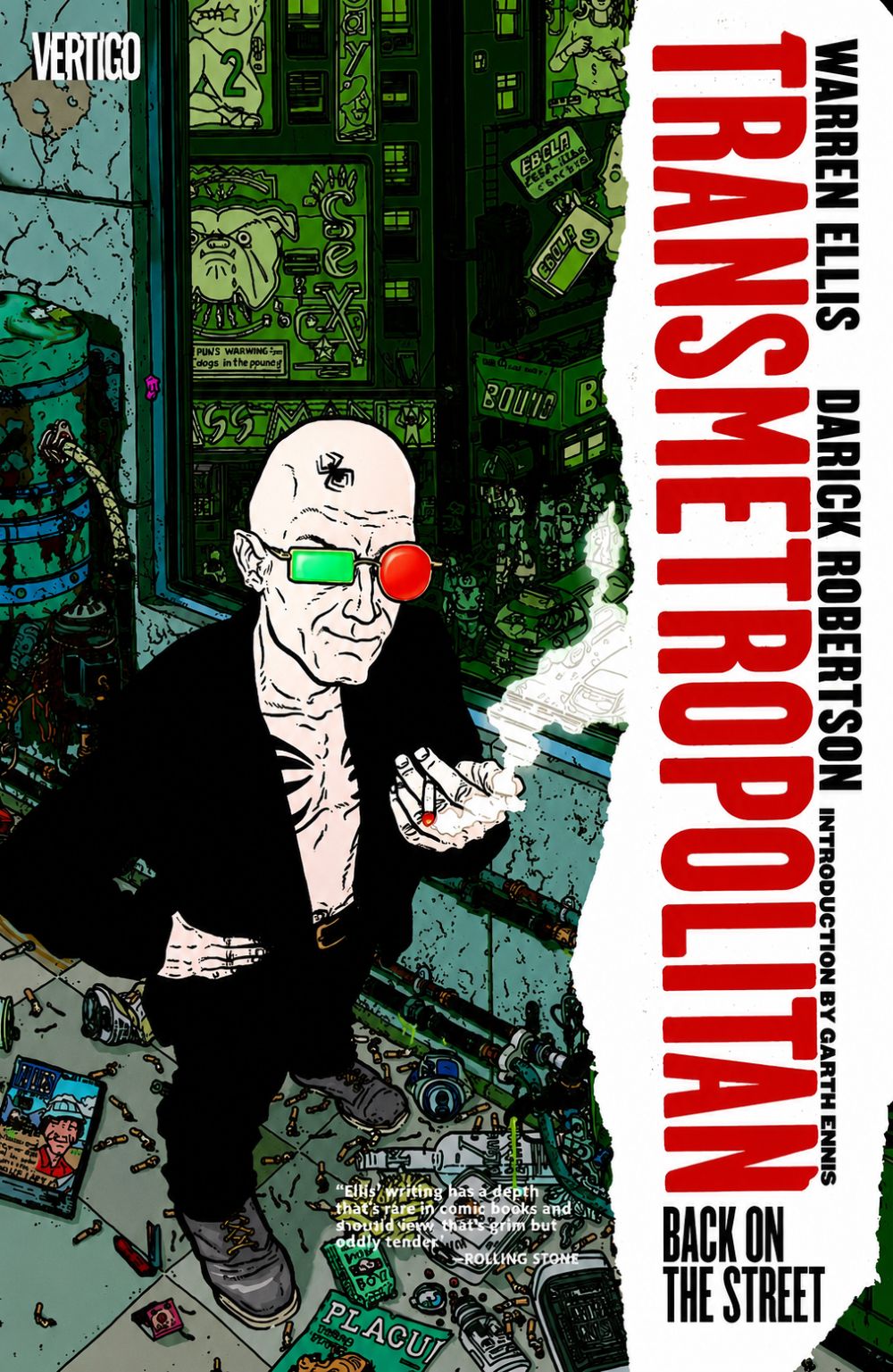
There is a particular kind of jolt that comes from revisiting a story written decades earlier and realizing it was not so much predicting the future as identifying a sickness already taking hold. Written by Warren Ellis and illustrated by Darick Robertson, Transmetropolitan Vol. 1: Back on the Street is exactly that kind of book. It is loud, filthy, hilarious, and vicious in all the ways it needs to be, and it lands differently now than it likely did in the late nineties. What once read primarily as a wild, hyperbolic satire of politics, media, consumerism, and public numbness now can feel unnervingly close to reportage with the names changed. Its 23rd-century City remains an over-the-top cyberpunk nightmare, but the institutions, personalities, and manufactured distractions running it feel very familiar.
The volume begins with Spider Jerusalem living in isolation, hiding in the mountains after abandoning the City and the career that made him famous. He has a book contract to fulfill, a pile of debts to settle, and no actual desire to rejoin civilized life. Unfortunately for him, the people financing his escape have had enough. Spider is forced back into the City, a vast, overcrowded cyberpunk metropolis that seems to have taken every bad impulse of contemporary society and pushed it beyond all reasonable limits. His return is not a heroic homecoming. It is more like dropping an angry, drug-addled, heavily armed journalist into the middle of a garbage fire and asking him to write a column about the smoke.
Spider’s immediate appeal is that he has no interest in performing respectability. He is rude, vindictive, profane, selfish, and fully capable of treating even his friends terribly. He uses violence too casually, insults everyone around him, and carries a bowel disruptor gun that can incapacitate people in the most humiliating manner imaginable. In another book, these traits might make him an unbearable edgelord. Back on the Street, however, understands that Spider’s ugliness is part of a larger contradiction. He is not cruel because he does not care; he is cruel because he cares too much and has no healthy way of processing how badly the world fails ordinary people.
That is what makes him more than a Hunter S. Thompson imitation with futuristic sunglasses. Spider is a gonzo journalist, but his journalism is not merely an excuse for a manic lifestyle or a stage for his personality. At his best, he is driven by an almost old-fashioned moral belief that the truth matters, that citizens deserve to know what is being done in their name, and that powerful people should not be allowed to bury their crimes under public-relations language. The series positions journalism as something active rather than passive. Spider does not just report what happens; he investigates, provokes, exposes, and refuses to let the comfortable look away.
His column, “I Hate It Here,” captures the character’s relationship with the City. Spider hates it because he sees it clearly. He sees the absurdity of its consumer culture, the cruelty hiding behind political slogans, and the way people are taught to accept exploitation as normal. Yet he also understands the City in a way that few other characters do. It is full of strange, desperate, damaged people trying to survive in a system that is too big, too loud, and too indifferent to care whether they live with dignity. Spider’s contempt is not aimed equally at everyone. He has little patience for complacency, hypocrisy, and stupidity, but he shows genuine anger when vulnerable people are victimized by police, politicians, corporations, or public indifference. His idealism is twisted, abrasive, and buried beneath several layers of chemical abuse, but it is still idealism.
The City itself is the book’s other major character. Robertson’s art sells its overwhelming scale and ugliness. Every street looks packed with signs, body modifications, crowds, trash, strange fashion, predatory businesses, and people whose lives have been reshaped by technology in ways both liberating and grotesque. The future is not sleek in the familiar science-fiction sense. It is grubby, crowded, commercial, and deeply human. People can alter their bodies, change their identities, pursue bizarre new faiths, and live inside an endless stream of media stimulation, but none of those developments have solved poverty, loneliness, corruption, or abuse of power.
That is why the book has aged more effectively than many stories set in a supposedly distant future. Its technology is exaggerated, but its social anxieties feel much closer now. The City is saturated with information, yet its people are often less informed than ever. Everyone has access to spectacle, outrage, personality-driven media, and instant distractions, but the institutions shaping their lives remain opaque and unaccountable. The comic’s dystopia is not based on the idea that technology automatically destroys humanity. Instead, it suggests that technology amplifies the priorities already built into society. If a culture values profit, spectacle, division, and convenience over empathy and truth, more advanced technology simply gives those impulses more efficient tools.
The political material in this first volume is especially pointed. Ellis is interested in the gap between public image and actual power. Politicians do not need to be secretly subtle or brilliant to be dangerous; they only need to understand how to manipulate fear, identity, frustration, and media attention. The institutions around them—police, corporate media, wealthy interests, and political operatives—help sustain the illusion that ordinary people have meaningful control while making sure the system remains insulated from consequences. The book’s vision of power can be blunt, but bluntness is part of its style. Transmetropolitan does not whisper its anger. It shouts because it believes politeness is often one of the tools that lets abuse continue unchallenged.
At the same time, Back on the Street is not flawless. Its satire can be so broad that it occasionally feels like the story is pointing at a target with both hands and yelling until the reader gets it. Some of the shock humor and sexual material carry an intentionally trashy late-nineties edge that may feel juvenile or dated. The supporting cast is still taking shape, so many people primarily exist as foils for Spider’s verbal attacks or examples of the City’s bizarre social landscape. The book’s relentless attitude can also wear readers down if they need a more emotionally grounded entry point.
Still, the excess is usually purposeful. This is a world where the boundaries between entertainment, propaganda, commerce, and personal identity have all but collapsed, so subtle world-building would almost be dishonest. The visual and verbal overload puts the reader in Spider’s position: constantly assaulted by nonsense, constantly asked to separate meaningful horror from everyday noise. The absurdity makes the real injustice sharper. A city can be full of outrageous fashion, talking animals, hallucinogens, and body-modification trends, yet its most disturbing feature remains how easily human suffering is turned into content, data, or a political talking point.
Ultimately, Transmetropolitan Vol. 1: Back on the Street works because Spider Jerusalem is not presented as a clean solution to a corrupt society. He is a mess, an irritant, and sometimes a monster in miniature. But he is also someone who refuses to be numb. In a world built to keep people distracted, passive, and exhausted, that refusal has real value. The book’s cyberpunk future remains wildly over-the-top, but its central warning feels uncomfortably familiar: the most dangerous dystopias are not always the ones with impossible technology. Sometimes they are the ones where the public is flooded with noise, the powerful face no consequences, and telling the truth becomes an act of open rebellion.
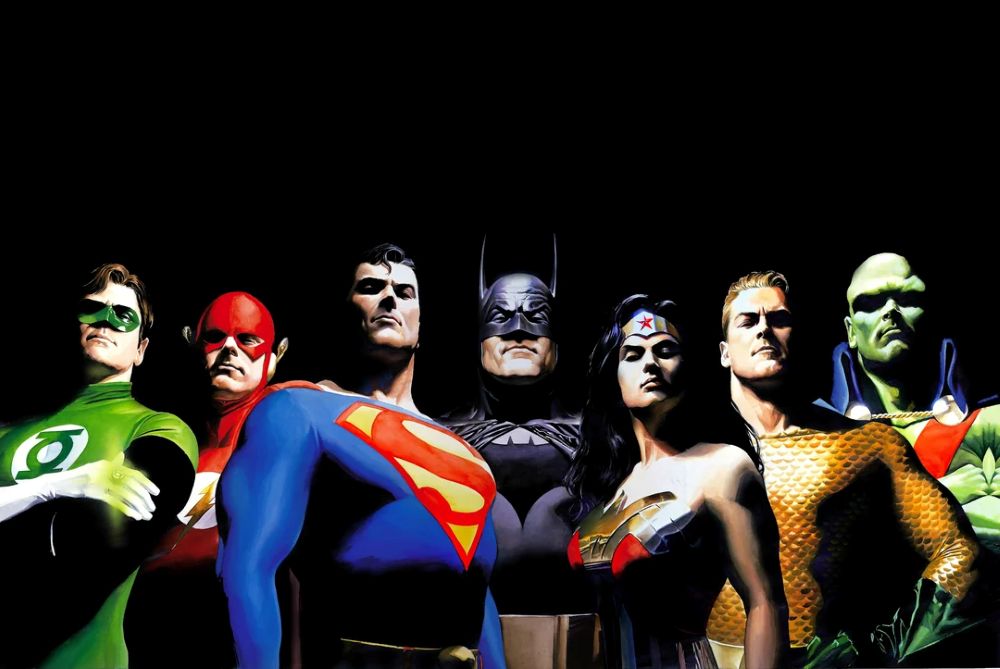
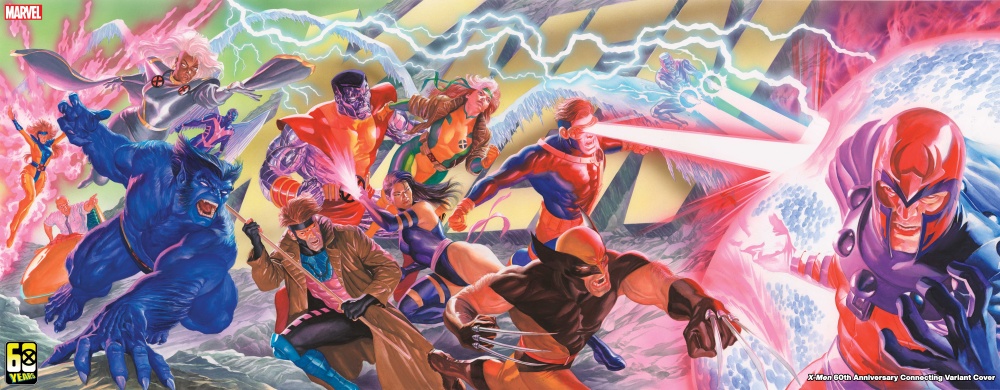
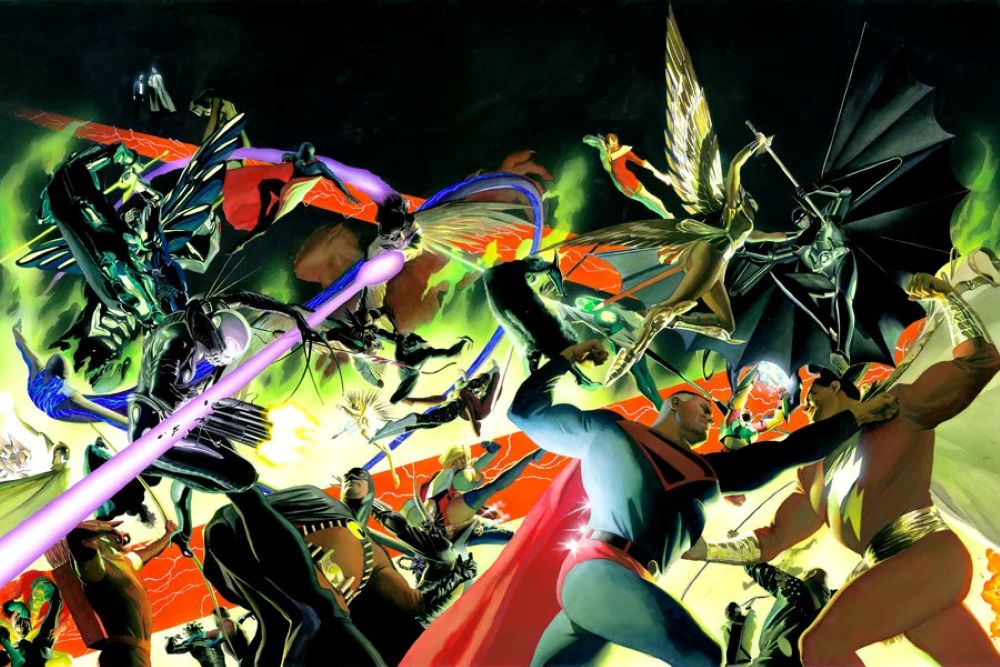
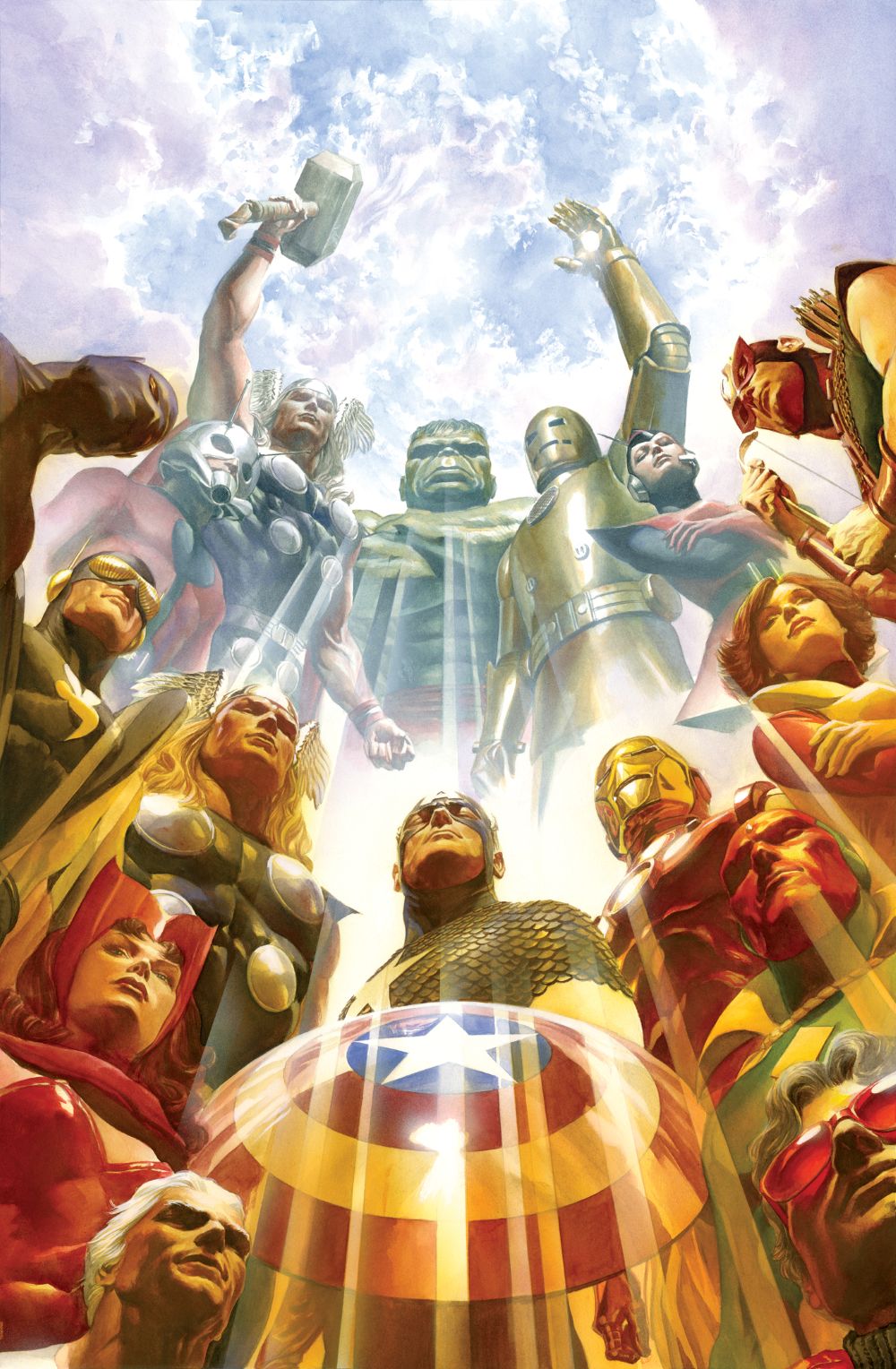
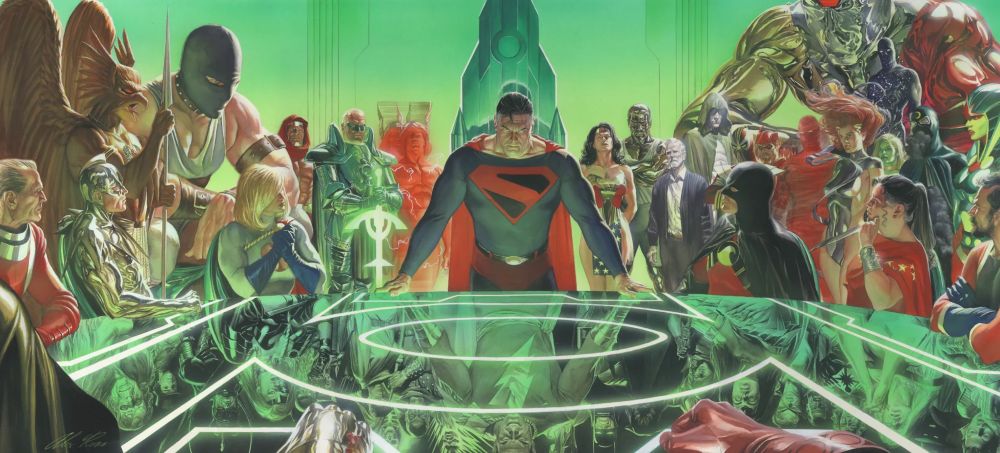
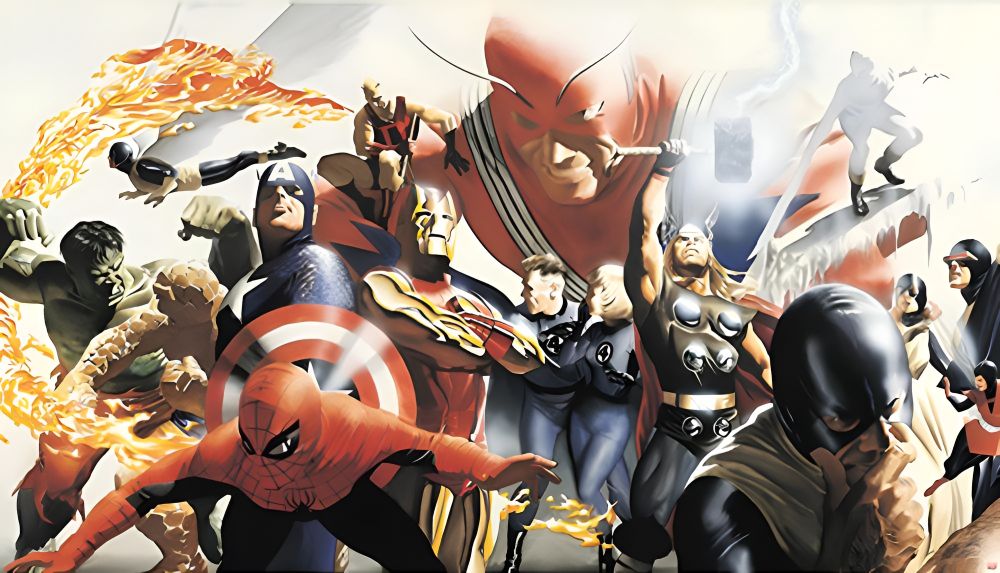
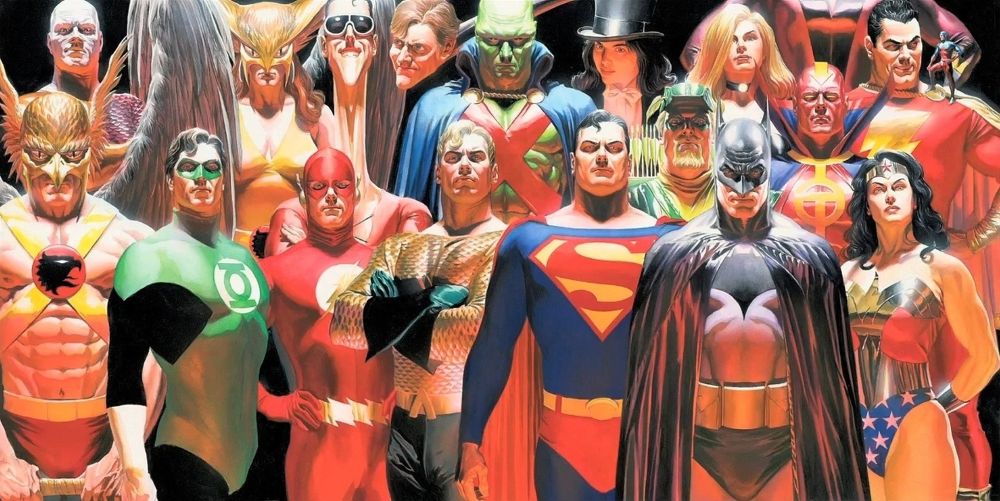
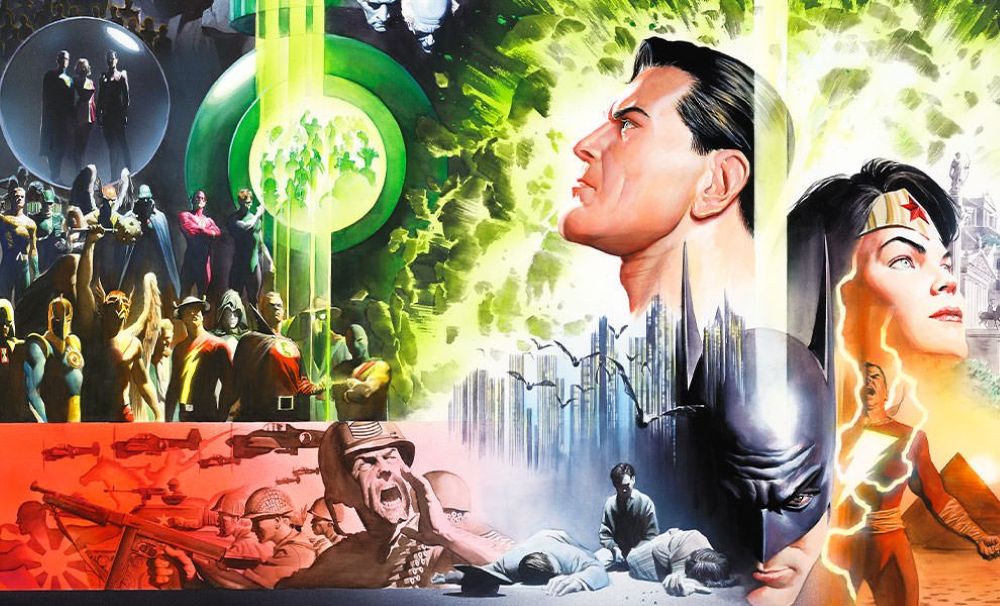
Alex Ross fundamentally transformed the visual language of American comic books by introducing a level of photorealistic fine art painting previously unseen in the medium. Eschewing traditional pen-and-ink line work, Ross utilized gouache, watercolor, and ink to render iconic superheroes with a tangible weight and texture that made them feel startlingly real. His approach treated comic book characters not as colorful abstractions, but as living, breathing figures existing in a recognizable world. By grounding these fantastical beings in reality through meticulous brushwork, realistic lighting, and lifelike facial expressions, Ross elevated the comic book cover and interior page to the status of gallery-worthy illustration, forever changing the expectations of comic book artistry.
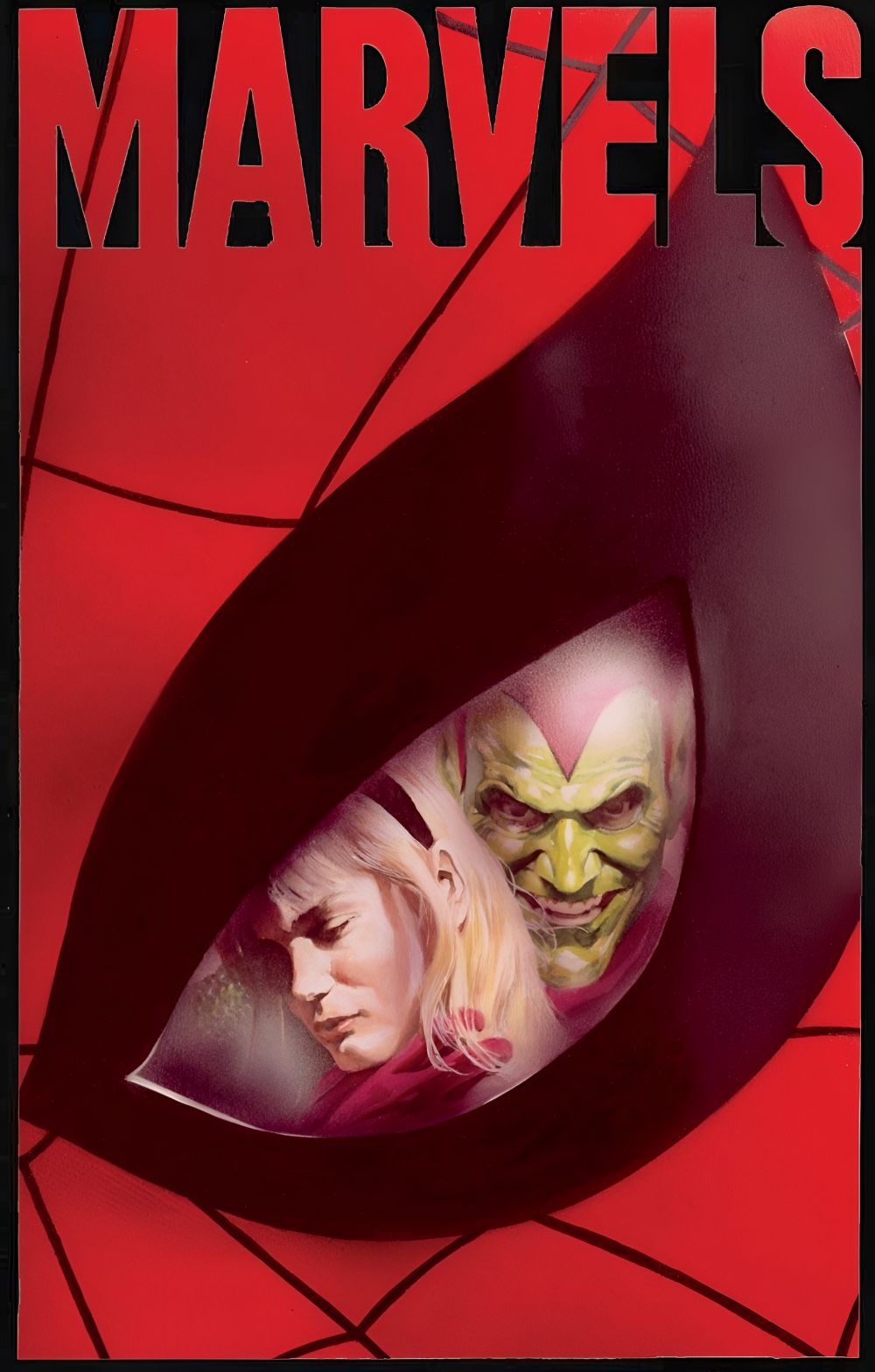
Ross’s impact is indelibly tied to his defining projects for the industry’s “Big Two” publishers. At Marvel Comics, his groundbreaking 1994 miniseries Marvels recontextualized the Golden and Silver Ages of the publisher’s universe through the weary eyes of an ordinary photojournalist, capturing the awe and terror of living alongside gods. He later expanded this sprawling mythos with the Earth X trilogy. However, it was at DC Comics where Ross arguably cemented his legacy. His 1996 magnum opus Kingdom Come offered a grand, prophetic, and deeply moral vision of the DC Universe’s future, utilizing his painted style to bridge the gap between the publisher’s Golden Age innocence and modern cynicism. Through works like Justice and Peace on Earth, Ross continually reimagined DC’s most famous characters, stripping away decades of dark reinterpretations to restore their fundamental nobility and mythic grandeur.
The legacy of Alex Ross extends far beyond the individual pages of his graphic novels; he essentially spawned an entire subgenre of painted comic book art that dominated the industry in the late twentieth century. While many imitators emerged attempting to replicate his style, few could match his nuanced understanding of color theory, historical costume design, and emotional resonance. Furthermore, his aesthetic influence has bled heavily into broader pop culture, with his conceptual character designs serving as direct visual inspiration for numerous animated television shows and live-action films. By proving that superhero mythology could be approached with the same gravitas and classical technique as Norman Rockwell’s illustrations or Renaissance portraiture, Ross forced the comic book industry to permanently expand its artistic boundaries.
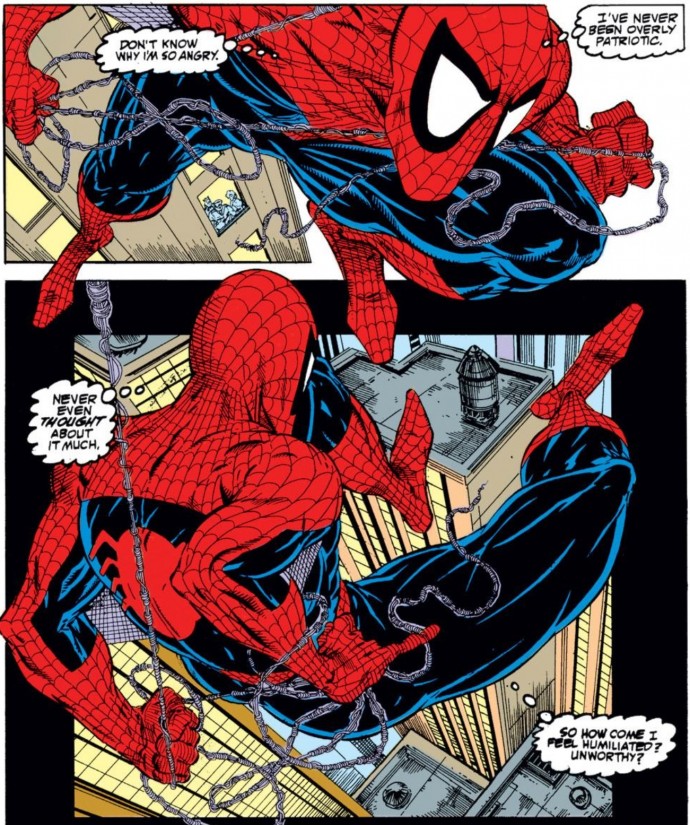
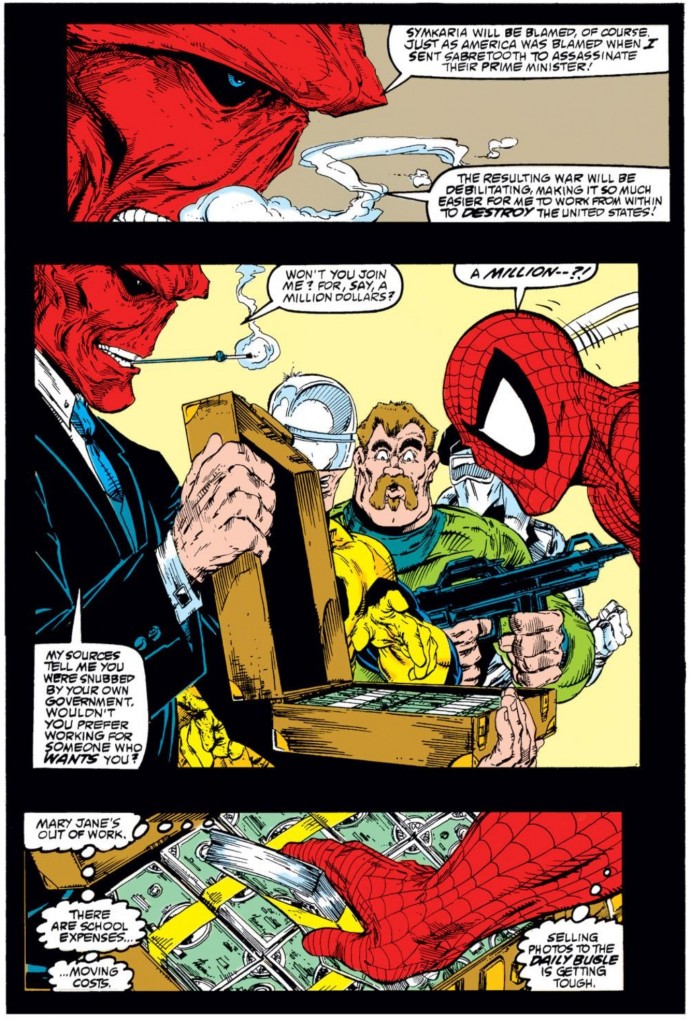
In 1989, the Red Skull offered Spider-Man a million dollars to sell out his country.
It happened in The Amazing Spider-Man #325. The Red Skull was trying to engineer a war between America and the (fictional) country of Symaria by framing each country for murdering the other’s ambassador. The Red Skull felt the war would leave America weakened and distracted and therefore vulnerable to his attempts to conquer and destroy it. He offered Spider-Man a million dollars to turn traitor and help him.
Spider-Man had reason to be tempted. Unlike most of the Marvel heroes, Spider-Man was never rich. He was usually on the verge of getting kicked out of his home for not being able to pay the rent. J. Jonah Jameson didn’t pay a lot for his pictures. His marriage to Mary Jane was usually strained, due to his finances and also lazy writing on the part of Spider-Man’s creative team. As well, in this issue, the U.S. government refused to issue Spider-Man a security clearance because he wouldn’t reveal his secret identity. Realistically, most people would probably ask for a lot more than a million before risking execution as a traitor but, to comic book readers in 2000, a million still seemed like a big deal.
Did Spider-Man sell out his country?
What do you think?
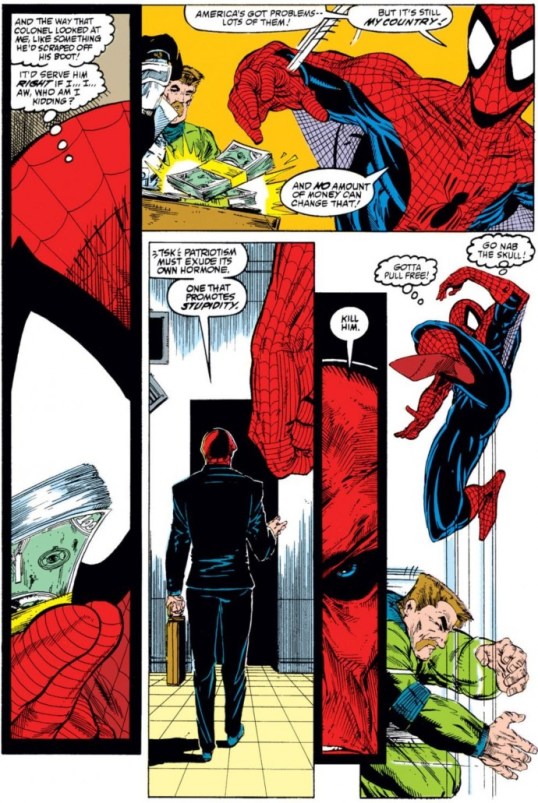
The Amazing Spider-Man #325 is controversial because, amongst other things, it neve made sense that the Red Skull would think he could bribe Spider-Man in the first place. For today, though, the important thing is that Spider-Man, one of Marvel’s most easily disillusioned heroes, confirmed what we already suspected.