Review: Transmetropolitan Vol. 2 – Lust for Life


“You people don’t know what the truth is! It’s there, just under their bullshit, but you never look! That’s what I hate most about this fucking city—lies are news and the truth is obsolete!” — Spider Jerusalem

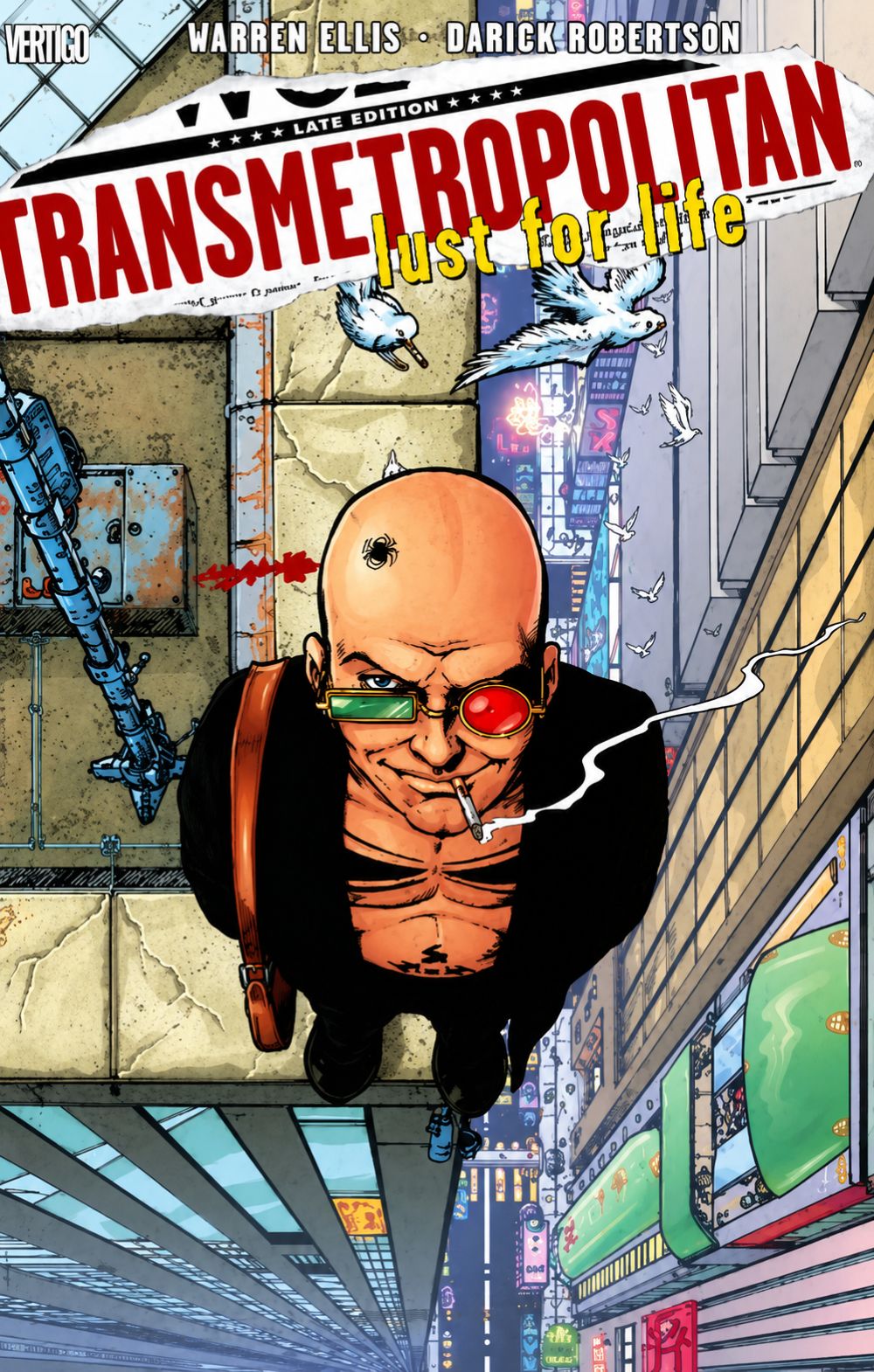
When you crack open the second volume of Warren Ellis and Darick Robertson’s Transmetropolitan, collected as Lust for Life, you’re not just getting another fix of cyberpunk chaos. You’re getting a book that solidifies exactly why this series is so brutally timeless. The first volume, Back on the Street, introduced us to the magnificent, drug-fueled trainwreck that is Spider Jerusalem and the grotesque, sprawling City he calls home. The second volume, however, is where the series finds its real footing. It’s not just about the loud, visceral shock value—though there’s plenty of that—but about deepening the world and its characters in a way that hits uncomfortably close to home.

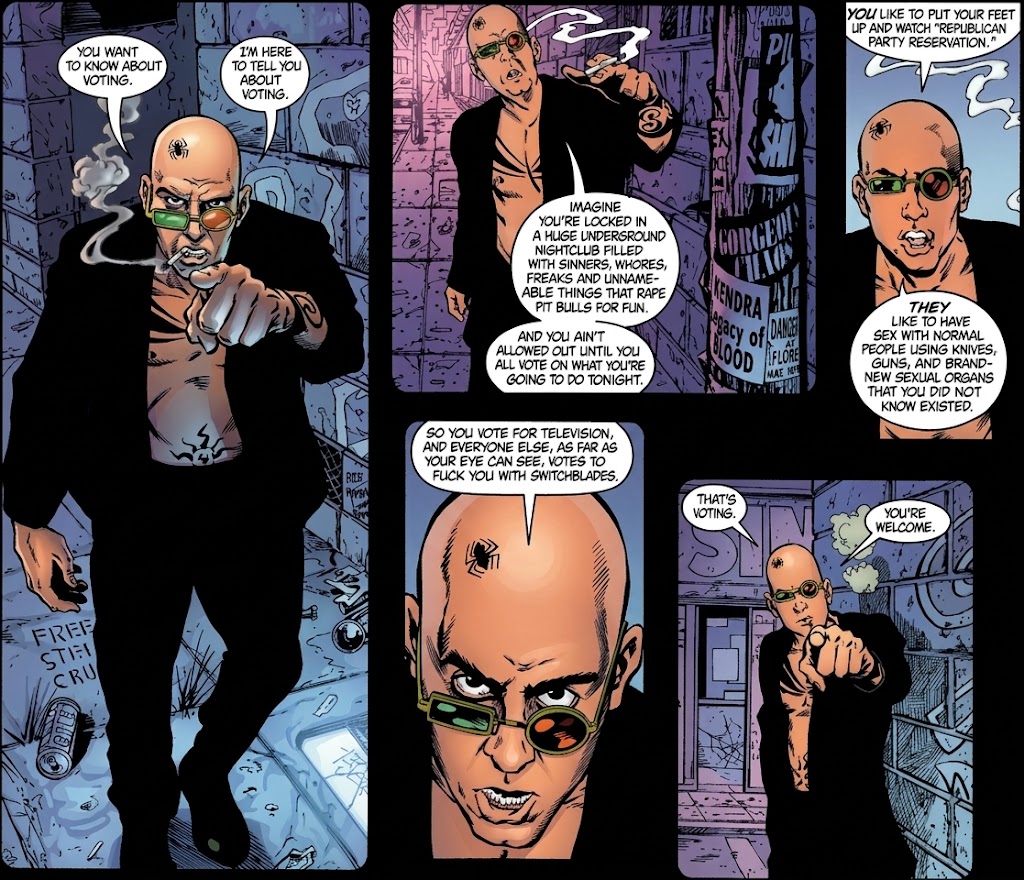
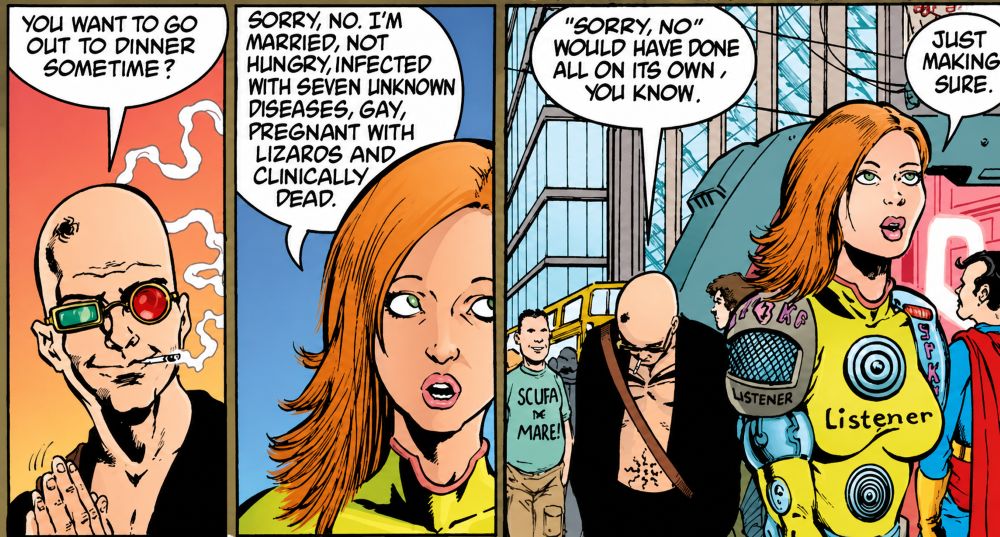
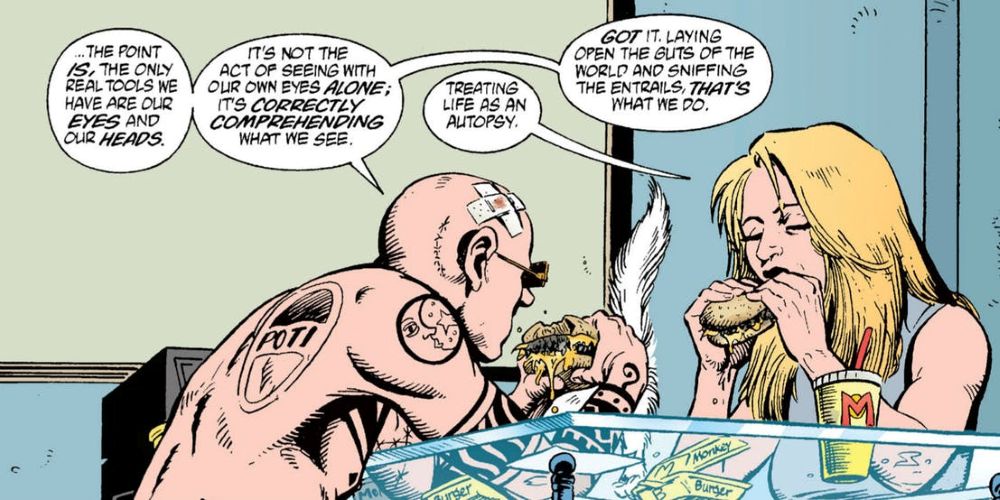
Spider Jerusalem is, and always will be, the heart of this series. He’s a chain-smoking, drug-abusing, perpetually enraged journalist in the mold of Hunter S. Thompson, armed with a bowel disruptor and a vicious tongue. He’s a complete and utter bastard to almost everyone he meets, prone to violent outbursts and scatological tirades. And yet, he’s our hero because he’s one of the few people in this future who actually gives a damn. His entire reason for being is his unwavering, almost religious, dedication to “The Truth.” He despises the apathy of the masses as much as the corruption of the powerful, and he’s willing to burn his life down to expose both. This volume showcases that beautifully, adding a layer of vulnerability that prevents him from becoming a one-note caricature. He’s a misanthrope who somehow still cares, and that tension is what makes him so compelling.

Lust for Life collects issues thirteen through twenty-four, and it’s structured more as a series of vignettes than a single, driving narrative. This is actually its greatest strength, as it allows Ellis and Robertson to expand the world and build the supporting cast in ways a more focused plot wouldn’t allow. A major chunk of the book is dedicated to the insane adventure of the frozen head of Spider’s ex-wife being stolen. It’s a gloriously bizarre plot, full of the kind of absurd, high-stakes chaos that Transmetropolitan does so well.

But the real emotional heft of Lust for Life comes from the quieter, more tragic stories woven between the gunfights and drug-induced rants. One of the most powerful sequences focuses on Channon, Spider’s long-suffering assistant. She’s a pillar of strength, constantly cleaning up Spider’s messes, but this volume shows her vulnerability. Her boyfriend decides to undergo a process to become a “gaseous vapor,” leaving his body behind for a formless existence. It’s a concept that sounds completely outlandish, but the execution is devastating. Ellis writes it not as a sci-fi gimmick but as a heartbreaking exploration of letting go, of watching someone you love choose a path you can’t follow. Channon’s pain and helplessness are palpable, grounding the over-the-top world in real human emotion.

Then there’s the story of Mary, a woman from our recent past who was cryogenically frozen and wakes up in the City. She’s presented as a historical relic, a simple photographer from the twentieth century who is completely out of her depth in this frantic, hyper-consumerist future. This is where the book delivers its most potent gut-punch. Mary is us. She’s the reader, trying to make sense of this alien world, and she fails. The City is a claustrophobic nightmare even for the people who were born into it, but for Mary, it’s a terrifying prison of isolation and confusion. Her story is a bleak reminder that this “progress” we’re supposedly heading toward often comes at the cost of our humanity. It’s a deeply existential and sad tale that serves as a harsh critique of the very future we might be trying to build.

Now, while Transmetropolitan is set in a hyper-exaggerated, grotesque future, the reason it remains so relevant is that the satire has proven to be uncomfortably prophetic. The City is a sprawling, neon-drenched hellscape where the line between news and entertainment has completely dissolved, where handheld devices connect everyone to a digital stream of information, and where journalism has devolved into a race for ratings and eyeballs. It’s a world where media personalities are more influential than politicians, and political leaders are cynical, manipulative populists who are experts at gaming the system. Sound familiar?

The landscape of modern journalism feels like a grim step toward this world. The “Death of Truth” that Spider rails against is a concept that has become a cornerstone of our current political and media discourse. The Beast and The Smiler, the corrupt politicians in the series, aren’t just cartoon villains; they’re mirrors reflecting a world of political spin, gerrymandering, and where the “villains” are often the ones controlling the narrative. Spider’s constant, violent struggle to get the real story feels less like a sci-fi fantasy and more like a desperate wish-fulfillment for anyone frustrated with the spin and half-truths of modern politics.

When Spider writes his column, “I Hate It Here,” he’s speaking for a populace that feels powerless and manipulated, a populace nicknamed “The New Scum” by the establishment. This social commentary hits hard because you can see its echoes everywhere today. The series suggests that technology has advanced, but human nature—our greed, our apathy, our susceptibility to manipulation—has not. It’s a bitter pill to swallow, but it’s what gives the book its power.

Transmetropolitan Vol. 2: Lust for Life might be a little light on overarching plot for some readers’ tastes. It’s not a major political arc; it’s more of a character study of the city and its inhabitants. But that’s precisely why it’s so effective. It proves that the series isn’t just a one-trick pony of cyberpunk fury. It has a heart, a soul, and a searing intelligence that cuts to the bone of our own societal failings. It’s a book that will make you laugh at its absurdity one minute and then leave you staring at the wall in quiet contemplation the next. It reinforces that even a nihilistic, drug-addled, foul-mouthed bastard like Spider Jerusalem is exactly the kind of hero we need to remind us of what we’re losing.

Transmetropolitan Volume Reviews

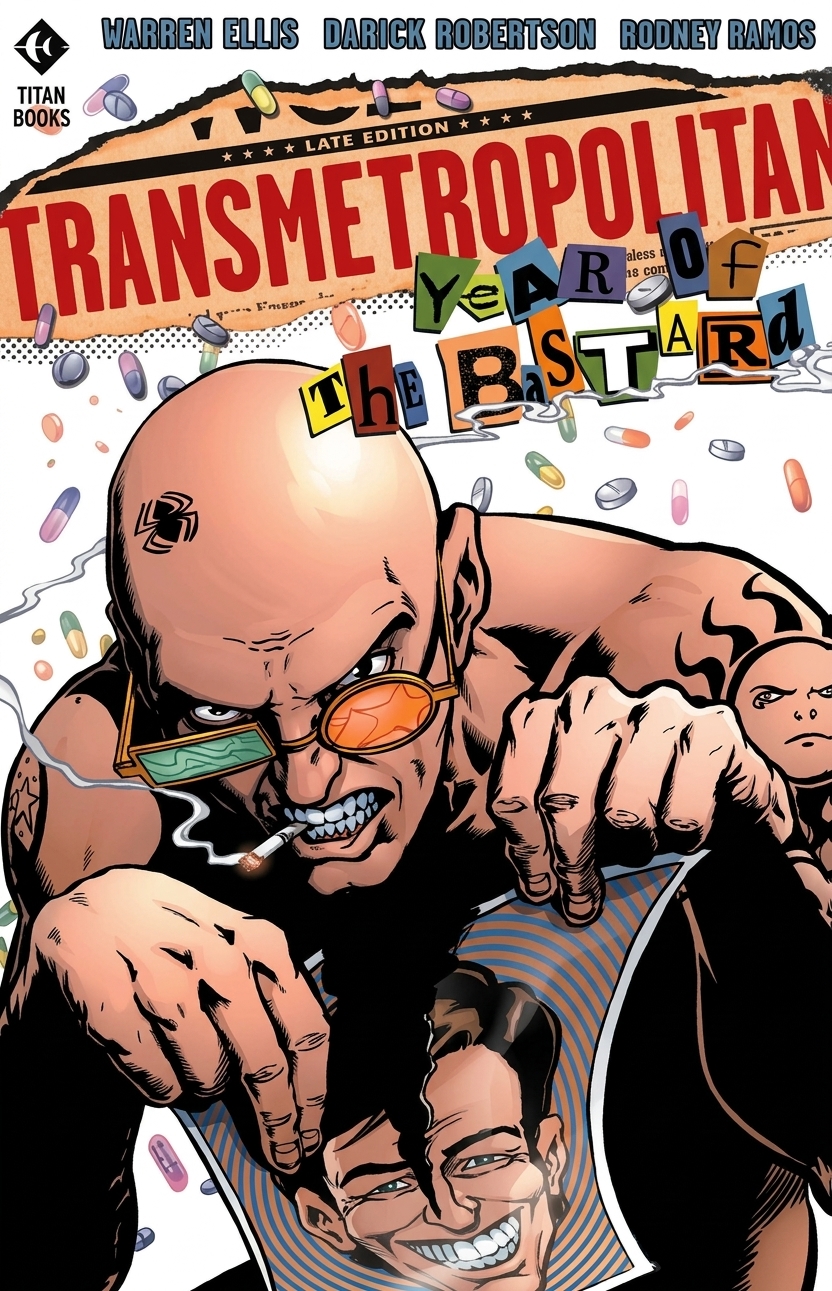
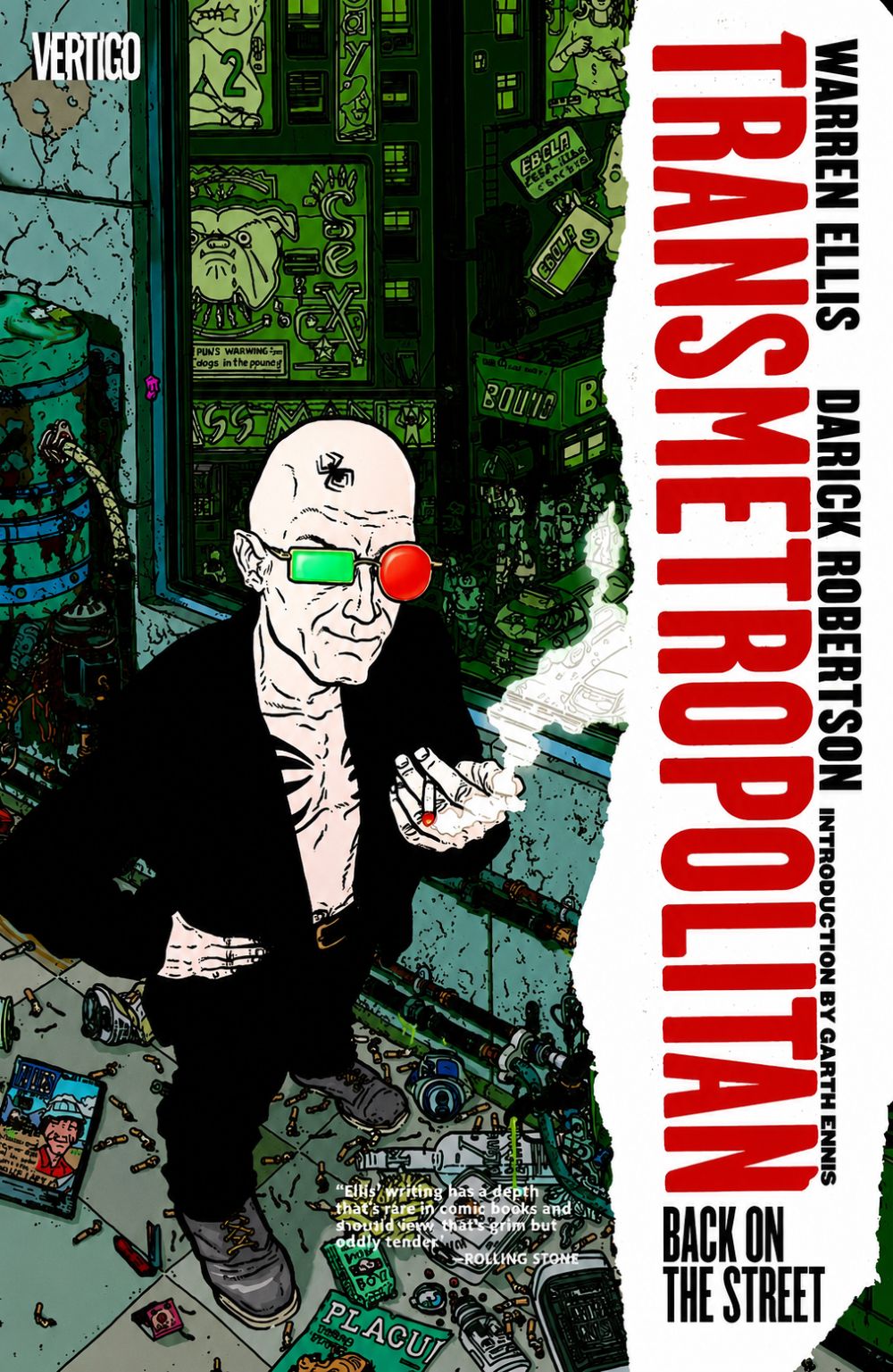
Review: Transmetropolitan Vol. 1 – Back on the Street


“Journalism is just a gun. It’s only got one bullet in it, but if you aim right, that’s all you need. Aim it right, and you can blow a kneecap off the world.” — Spider Jerusalem

There is a particular kind of jolt that comes from revisiting a story written decades earlier and realizing it was not so much predicting the future as identifying a sickness already taking hold. Written by Warren Ellis and illustrated by Darick Robertson, Transmetropolitan Vol. 1: Back on the Street is exactly that kind of book. It is loud, filthy, hilarious, and vicious in all the ways it needs to be, and it lands differently now than it likely did in the late nineties. What once read primarily as a wild, hyperbolic satire of politics, media, consumerism, and public numbness now can feel unnervingly close to reportage with the names changed. Its 23rd-century City remains an over-the-top cyberpunk nightmare, but the institutions, personalities, and manufactured distractions running it feel very familiar.

The volume begins with Spider Jerusalem living in isolation, hiding in the mountains after abandoning the City and the career that made him famous. He has a book contract to fulfill, a pile of debts to settle, and no actual desire to rejoin civilized life. Unfortunately for him, the people financing his escape have had enough. Spider is forced back into the City, a vast, overcrowded cyberpunk metropolis that seems to have taken every bad impulse of contemporary society and pushed it beyond all reasonable limits. His return is not a heroic homecoming. It is more like dropping an angry, drug-addled, heavily armed journalist into the middle of a garbage fire and asking him to write a column about the smoke.

Spider’s immediate appeal is that he has no interest in performing respectability. He is rude, vindictive, profane, selfish, and fully capable of treating even his friends terribly. He uses violence too casually, insults everyone around him, and carries a bowel disruptor gun that can incapacitate people in the most humiliating manner imaginable. In another book, these traits might make him an unbearable edgelord. Back on the Street, however, understands that Spider’s ugliness is part of a larger contradiction. He is not cruel because he does not care; he is cruel because he cares too much and has no healthy way of processing how badly the world fails ordinary people.

That is what makes him more than a Hunter S. Thompson imitation with futuristic sunglasses. Spider is a gonzo journalist, but his journalism is not merely an excuse for a manic lifestyle or a stage for his personality. At his best, he is driven by an almost old-fashioned moral belief that the truth matters, that citizens deserve to know what is being done in their name, and that powerful people should not be allowed to bury their crimes under public-relations language. The series positions journalism as something active rather than passive. Spider does not just report what happens; he investigates, provokes, exposes, and refuses to let the comfortable look away.

His column, “I Hate It Here,” captures the character’s relationship with the City. Spider hates it because he sees it clearly. He sees the absurdity of its consumer culture, the cruelty hiding behind political slogans, and the way people are taught to accept exploitation as normal. Yet he also understands the City in a way that few other characters do. It is full of strange, desperate, damaged people trying to survive in a system that is too big, too loud, and too indifferent to care whether they live with dignity. Spider’s contempt is not aimed equally at everyone. He has little patience for complacency, hypocrisy, and stupidity, but he shows genuine anger when vulnerable people are victimized by police, politicians, corporations, or public indifference. His idealism is twisted, abrasive, and buried beneath several layers of chemical abuse, but it is still idealism.

The City itself is the book’s other major character. Robertson’s art sells its overwhelming scale and ugliness. Every street looks packed with signs, body modifications, crowds, trash, strange fashion, predatory businesses, and people whose lives have been reshaped by technology in ways both liberating and grotesque. The future is not sleek in the familiar science-fiction sense. It is grubby, crowded, commercial, and deeply human. People can alter their bodies, change their identities, pursue bizarre new faiths, and live inside an endless stream of media stimulation, but none of those developments have solved poverty, loneliness, corruption, or abuse of power.

That is why the book has aged more effectively than many stories set in a supposedly distant future. Its technology is exaggerated, but its social anxieties feel much closer now. The City is saturated with information, yet its people are often less informed than ever. Everyone has access to spectacle, outrage, personality-driven media, and instant distractions, but the institutions shaping their lives remain opaque and unaccountable. The comic’s dystopia is not based on the idea that technology automatically destroys humanity. Instead, it suggests that technology amplifies the priorities already built into society. If a culture values profit, spectacle, division, and convenience over empathy and truth, more advanced technology simply gives those impulses more efficient tools.

The political material in this first volume is especially pointed. Ellis is interested in the gap between public image and actual power. Politicians do not need to be secretly subtle or brilliant to be dangerous; they only need to understand how to manipulate fear, identity, frustration, and media attention. The institutions around them—police, corporate media, wealthy interests, and political operatives—help sustain the illusion that ordinary people have meaningful control while making sure the system remains insulated from consequences. The book’s vision of power can be blunt, but bluntness is part of its style. Transmetropolitan does not whisper its anger. It shouts because it believes politeness is often one of the tools that lets abuse continue unchallenged.

At the same time, Back on the Street is not flawless. Its satire can be so broad that it occasionally feels like the story is pointing at a target with both hands and yelling until the reader gets it. Some of the shock humor and sexual material carry an intentionally trashy late-nineties edge that may feel juvenile or dated. The supporting cast is still taking shape, so many people primarily exist as foils for Spider’s verbal attacks or examples of the City’s bizarre social landscape. The book’s relentless attitude can also wear readers down if they need a more emotionally grounded entry point.

Still, the excess is usually purposeful. This is a world where the boundaries between entertainment, propaganda, commerce, and personal identity have all but collapsed, so subtle world-building would almost be dishonest. The visual and verbal overload puts the reader in Spider’s position: constantly assaulted by nonsense, constantly asked to separate meaningful horror from everyday noise. The absurdity makes the real injustice sharper. A city can be full of outrageous fashion, talking animals, hallucinogens, and body-modification trends, yet its most disturbing feature remains how easily human suffering is turned into content, data, or a political talking point.

Ultimately, Transmetropolitan Vol. 1: Back on the Street works because Spider Jerusalem is not presented as a clean solution to a corrupt society. He is a mess, an irritant, and sometimes a monster in miniature. But he is also someone who refuses to be numb. In a world built to keep people distracted, passive, and exhausted, that refusal has real value. The book’s cyberpunk future remains wildly over-the-top, but its central warning feels uncomfortably familiar: the most dangerous dystopias are not always the ones with impossible technology. Sometimes they are the ones where the public is flooded with noise, the powerful face no consequences, and telling the truth becomes an act of open rebellion.

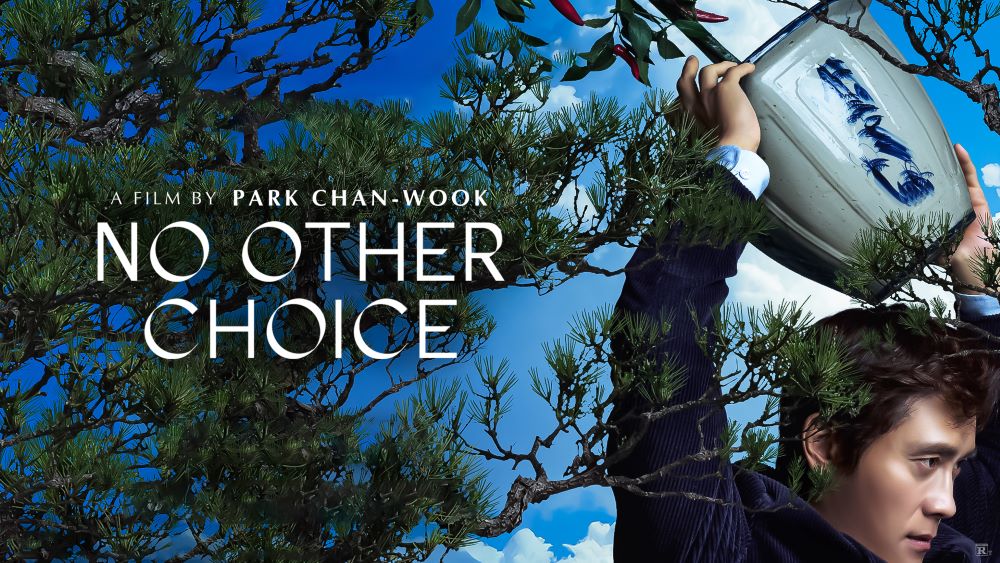
Review: No Other Choice (dir. by Park Chan-wook)


“I have no other choice.” — Yoo Man-su

No Other Choice grabs you right away with its wild premise—a loyal company man gets canned and decides to literally eliminate his job competition to claw his way back up. It’s one of the standout international films from last year, popping up on countless top films of 2025 lists for its gutsy mix of workplace rage and murderous absurdity. Park Chan-wook delivers a dark, twisty ride blending sharp satire with outright farce, and while it doesn’t always stick the landing perfectly, that bold energy and uncomfortable laughs make it a must-watch.

The story kicks off in a picture-perfect suburban home where Man-su, a longtime paper factory manager played by Lee Byung-hun, basks in the comforts of a solid middle-class life. He’s got the big house, loving wife Mi-ri, two kids, and even those flashy dogs that scream success. Everything feels polished and stable, almost too good to be true, which is exactly the point. Then the axe falls—layoffs hit, and suddenly Man-su’s years of service mean nothing in a brutal job market stacked against him. Every opening has a ranked list of candidates, and he’s always near the bottom. Desperation sets in, and he hatches a grim plan: take out the guys ahead of him one by one.

What makes this setup pop is how Park turns a simple “what if” into a mirror for real-world frustrations. Man-su’s logic spirals from understandable rage to unhinged obsession, repeating his mantra of having “no other choice” like it’s gospel. Each target he stalks feels like a warped reflection of himself—aging has-beens clinging to relevance or eager young hotshots with families of their own. It’s not just about the kills; it’s the quiet horror of seeing your own fears staring back. The film nails that sinking feeling of obsolescence, where loyalty gets you nowhere and the system chews people up without a second thought.

The action sequences are where Park’s signature style shines brightest. That first murder attempt is a masterclass in chaos—a shaky standoff with an antique pistol turns into a frantic, slapstick melee in some oversized wooden house. Blood flies, furniture shatters, and it’s all choreographed with such precision it borders on balletic. He mixes genuine tension with cartoonish escalation, making you laugh even as things get gruesome. It’s the kind of over-the-top violence that recalls his classics like Oldboy, but lighter, almost playful in its excess. You never know if the next swing will end it or devolve into more absurdity, and that unpredictability keeps the pulse racing.

At home, though, the real damage unfolds. Mi-ri, brought to life by Son Ye-jin in a quietly devastating turn, starts as the supportive spouse but cracks under the strain. They cut back on luxuries like tennis lessons and fancy music classes, but it’s the growing paranoia that poisons everything. Snide arguments erupt, kids get tangled in cover stories for the police, and the once-idyllic house feels like a pressure cooker. Park smartly shifts focus here, showing how one man’s breakdown ripples out to fracture his family. Mi-ri’s mix of worry, resentment, and tough love grounds the madness, reminding us this isn’t just a lone wolf tale—it’s about collateral damage in the pursuit of “normalcy.”

As a jab at corporate culture, the movie lands some solid punches. Those sterile job interviews and endless applicant lists capture the dehumanizing grind perfectly, where workers are just numbers on a spreadsheet. Man-su’s humiliation builds layer by layer, from polite rejections to outright indifference, culminating in a factory scene that’s equal parts poetic and punishing. He ends up as the last human holdout amid a sea of machines, a stark symbol of misplaced faith in the grind. Park doesn’t pretend to offer solutions, but he forces you to confront how capitalism turns colleagues into rivals and dignity into a luxury good.

That said, the film isn’t content to just indict the system—it digs into Man-su’s flaws too. He’s no innocent victim; he’s vain, stubborn, and blinded by pride. Moments of potential redemption pop up—a heartfelt chat with a fellow job-seeker, a glimpse of empathy for a rival dad—but he barrels past them every time. This refusal to pivot makes him compellingly human, a portrait of wounded ego that stops short of full villainy. Lee Byung-hun sells it all with subtle shifts: the forced smile in interviews, the twitchy hands during stakeouts, the hollow justifications whispered to himself. He’s magnetic, drawing sympathy even as you root for his comeuppance.

Visually, Park pulls out all the stops. Bold camera moves, clever framing, and those vintage thriller tricks—fancy dissolves, sharp cuts—give it a retro flair amid modern polish. Conversations crackle with visual wit, turning mundane chats into tense standoffs. The color palette swings from warm domestic glows to cold, shadowy nights, mirroring Man-su’s slide. It’s indulgent stuff, the kind of filmmaking that demands a big screen, though it occasionally tips into showiness when the plot needs room to breathe.

The supporting cast fleshes out the world nicely. Victims aren’t faceless; each gets a quick, vivid sketch that humanizes the body count. Detectives poke around with dry humor, adding a procedural edge without stealing focus. Son Ye-jin steals scenes effortlessly, her Mi-ri evolving from enabler to antagonist in the subtlest ways— a raised eyebrow here, a weary sigh there. It’s ensemble work that elevates the whole, making the satire feel lived-in rather than preachy.

Where it stumbles is in the pacing and bloat. The cat-and-mouse games repeat a bit too faithfully—stalk, scheme, screw-up, repeat—and by the third or fourth loop, the formula shows. Subplots with cops and side characters tangle up the momentum, diluting the core spiral. Park juggles a lot: farce, thriller beats, family drama, economic allegory. It mostly coheres, but you sense he’s wrestling to tie it all together. The ending, while punchy, leans hard on irony, which might leave some wanting deeper catharsis or ambiguity.

Still, flaws and all, No Other Choice pulses with invention and earned its spot as one of 2025’s best international gems, racking up mentions across year-end top lists from critics worldwide. It’s a timely gut-punch for anyone who’s felt the job market’s cruelty, wrapped in enough dark humor and style to linger. Not Park’s tightest, but his wildest in years—a messy, mean-spirited blast that dares you to laugh at the abyss. If you’re up for a thriller that treats resumes like kill lists and HR as the true horror, dive in. Just don’t expect tidy morals or easy outs; this one’s as complicated as real desperation gets.

Horror Trailer: Send Help


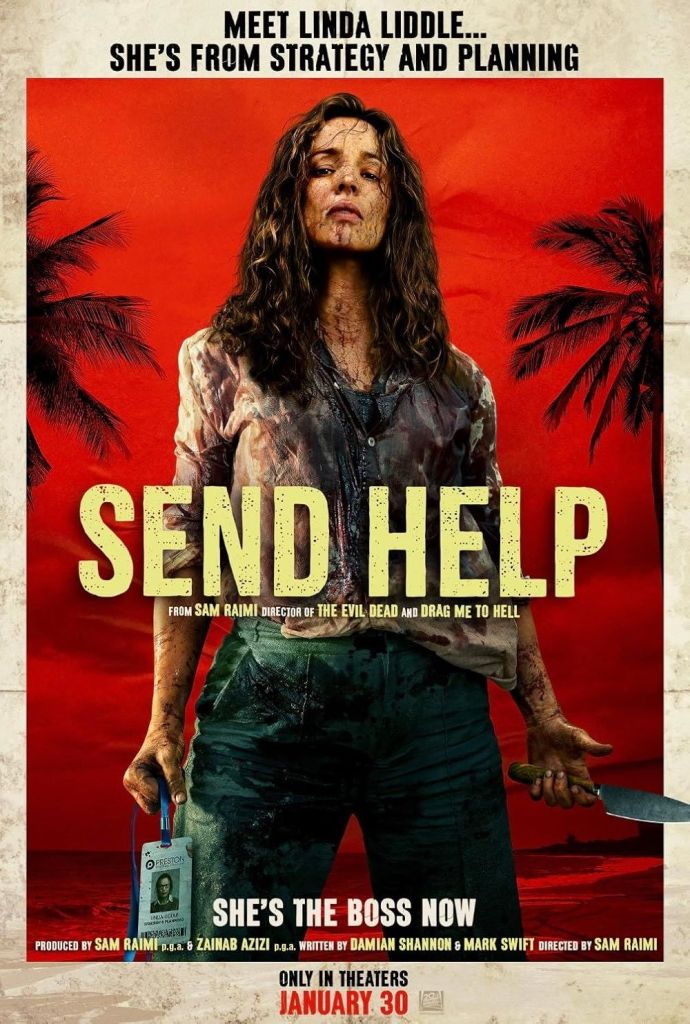
Send Help is a darkly comedic psychological thriller directed by Sam Raimi. The film centers on two coworkers, Linda Liddle and Bradley Preston, who are the only survivors of a plane crash that leaves them stranded on a deserted island. Two people who shouldn’t be together in the same room must now collaborate to survive. The film looks to play on the two characters darkly comedic battle of wills and wits to what looks like survival of the fittest. The film is a mix of survival drama, sharp psychological tension, and Raimi’s signature style, blending horror and black comedy elements.

The film stars Rachel McAdams as Linda Liddle and Dylan O’Brien as Bradley Preston, with a supporting cast including Edyll Ismail, Dennis Haysbert, Xavier Samuel, Chris Pang, Thaneth Warakulnukroh, and Emma Raimi. Send Help is produced by Sam Raimi and Zainab Azizi, with a screenplay by Damian Shannon and Mark Swift, and features music by frequent collaborator, Danny Elfman. It is scheduled for theatrical release nationwide on January 30, 2026, distributed by 20th Century Studios.

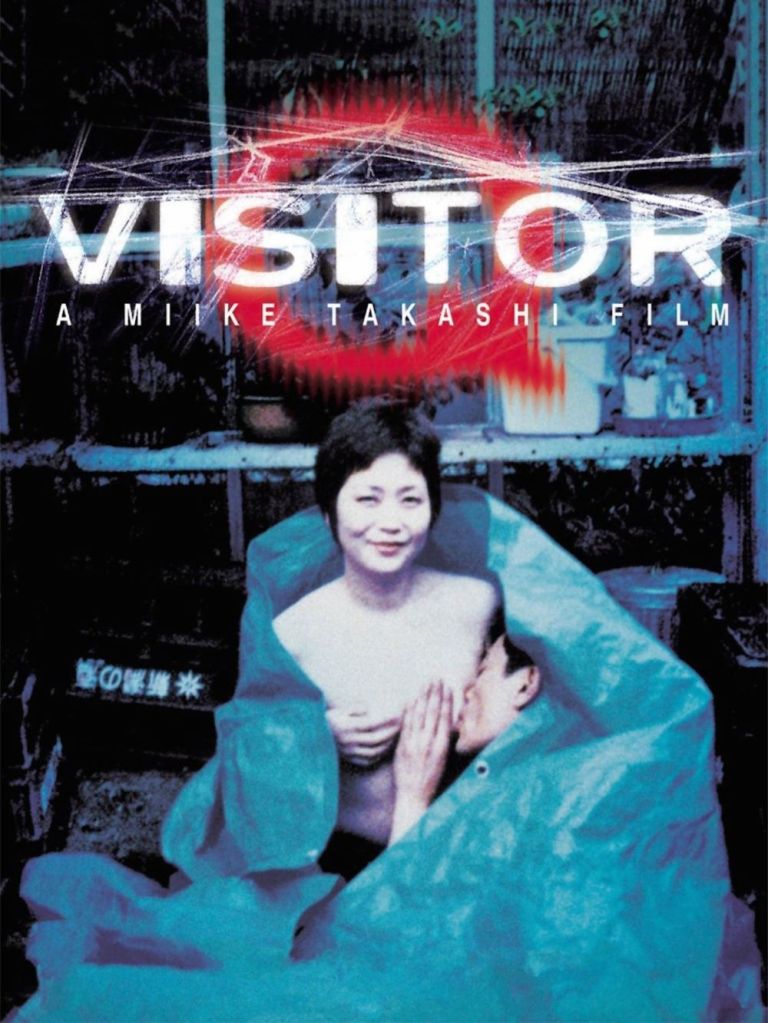
Horror Review: Visitor Q (dir. Miike Takashi)


Miike Takashi’s 2001 film Visitor Q (called Bizita Q in Japan) is definitely one of the most bizarre and disturbing movies out there. It often gets compared to the work of Quentin Tarantino, but that comparison really doesn’t do Miike justice. Tarantino’s style is all about showing violence in a flashy, stylized way that sometimes feels more like entertainment or homage than outright shock. Miike, on the other hand, takes a very different approach—his films are much more raw, unfiltered, and transgressive. Where Tarantino’s violence can almost feel like a performance, Miike’s hits you in a way that’s meant to provoke and unsettle on a deeper level.

Visitor Q is a wild, surreal ride that dives headfirst into the messy mix of violence and sex that’s so common in today’s media, with a cheeky nod toward reality TV culture. The film came out of Japan at a really interesting time, when the culture was pretty conflicted about Western influences. Japan often points fingers at the West for “decadence” and moral decline, but at the same time, it produces some of the most intense and boundary-pushing entertainment around—like anime and manga filled with everything from weirdly sexualized creatures (yes, tentacles, lots of tentacles) to ultra-violent stories that Western media would blush at.

The plot itself is maybe the simplest part of the whole thing. It’s about a down-on-his-luck former TV reporter named Q Takahashi who’s trying to support his dysfunctional family by filming a documentary about how violence and sex in media affects young people today. From there, the story quickly spins into something much darker and more uncomfortable, focusing on his family’s raw problems: drug abuse, emotional numbness, incest, necrophilia, and other twisted stuff that’s hard to even put into words.

What really makes Visitor Q stand out is how Miike doesn’t hold anything back. This film isn’t trying to make you comfortable or distract you with flashy effects. Instead, it confronts you with some very real, very uncomfortable issues. Miike has a fearless way of showing violence and sex that feels totally unfiltered and even brutal, forcing you to face parts of human nature and society that most movies would shy away from or sugarcoat.

It’s easy to see how this movie channels the spirit of the Marquis de Sade, that infamous figure known for embracing taboo and shock to criticize societal hypocrisy. Miike takes this spirit and uses it to spotlight the way media—and especially the voyeuristic culture of reality TV—turns personal pain and dysfunction into public spectacle. The movie asks us to think about how watching violence and sex over and over might warp not just society’s values, but how people actually relate to one another.

One thing Visitor Q pokes at pretty hard is voyeurism, the idea of watching other people’s lives like it’s entertainment. The former TV reporter filming his family for the documentary is both an observer and a participant, and the film forces viewers to question the ethics of watching intimate, often tragic moments unfold just for the sake of entertainment. It’s a powerful reminder of what media voyeurism can do to real lives.

Another theme that hits home is how desensitized people have become to violence and sex. The family in the movie often reacts to brutal, horrible things with complete indifference—almost like they’re numb from being exposed to this stuff all the time. Miike seems to be saying that when we see violence and sex as everyday entertainment, it dulls our emotions and disconnects us from the human suffering behind those images. This is especially relevant for young people growing up in a media-saturated world, which is exactly what the film’s documentary narrator is trying to get at.

Some of the film’s more extreme themes, like incest and necrophilia, are obviously shocking, but Miike uses them to highlight just how broken the family is. These aren’t just there for shock value—they’re symbols of how far relationships can fall apart when love, respect, and communication break down entirely. The film uses these taboos as metaphors for emotional neglect and societal decay, asking us to look hard at the dark corners of family life and human nature that most media avoids.

Watching Visitor Q is definitely not an easy ride. At first, most people find themselves looking away or flinching because the content is so wild and graphic. But it’s interesting how, over time, viewers start watching the movie without turning away, even if what they see is still deeply disturbing. The film somehow pulls you in with its surreal style and brutal honesty, making you confront just how far you’re willing to go in understanding these messed-up family dynamics and cultural critiques.

Stylistically, the film bounces between stark realism and surreal, almost absurd imagery. This gives it a rollercoaster tone that keeps you off balance—one moment it’s brutally raw, the next it’s almost darkly comedic or bizarre. This mix mirrors the instability of the family and the unpredictable nature of their world. Miike really embraces both the artistic and the extreme exploitation sides of filmmaking here, unapologetically pushing boundaries with each scene.

Despite all the shocking stuff, the film comes with a clear message about the relationship between media, sex, and violence. It’s not just reflecting society’s problems; it’s suggesting that media actually shapes how we think, feel, and behave—especially for kids. The film also takes a swipe at reality TV, highlighting how people get a twisted sense of pleasure from watching others’ suffering and humiliation. This is even more relevant today with social media and constant livestreams making all aspects of life a public show.

Miike’s gritty and unfiltered take makes it clear he isn’t just copying Western transgressive directors—he’s got his own voice and style that’s as challenging as it is unique. Where Tarantino’s films entertain and provoke with wit and style, Miike’s work disturbs and pushes, asking viewers to get uncomfortable and reflect. Comparisons to Pasolini, the Italian filmmaker known for his raw and provocative films, fit well here. Like Pasolini, Miike straddles the line between art and exploitation, using shock to force deeper questions about society.

In the end, Visitor Q isn’t a movie for casual watching or easy enjoyment. It’s intense, often repugnant, and demands a tough kind of attention. But for those willing to dive into its messy, surreal, and disturbing world, it offers a powerful look at how media influences family, society, and morality. Miike Takashi is definitely not Japan’s Tarantino—he’s a far more transgressive filmmaker who dares to challenge audiences by taking them into the most uncomfortable and raw parts of human experience. If one has the courage and curiosity, Visitor Q is an unforgettable, provocative film that forces us to think hard about voyeurism, media excess, and just how dark and strange life can get behind closed doors.

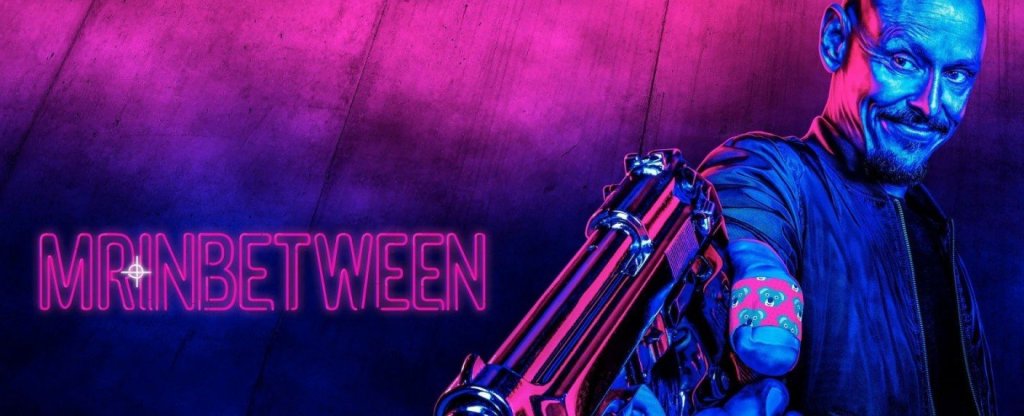
Scenes I Love: Mr Inbetween


There’s something to say about an individual who follows a code of behavior and has a moral compass that may seem archaic for today’s sensibilities, but when one really thinks about it…well, they’re not wrong.

We may hate that such people may be correct in their way of thinking and that it may offend certain sensibilities but that doesn’t necessarily means its wrong.

And on that note let me introduce you to Ray Shoesmith aka Mr Inbetween. This scene of him attending an anger management class best describes not just who Ray is but sets the tone for what this series is all about.

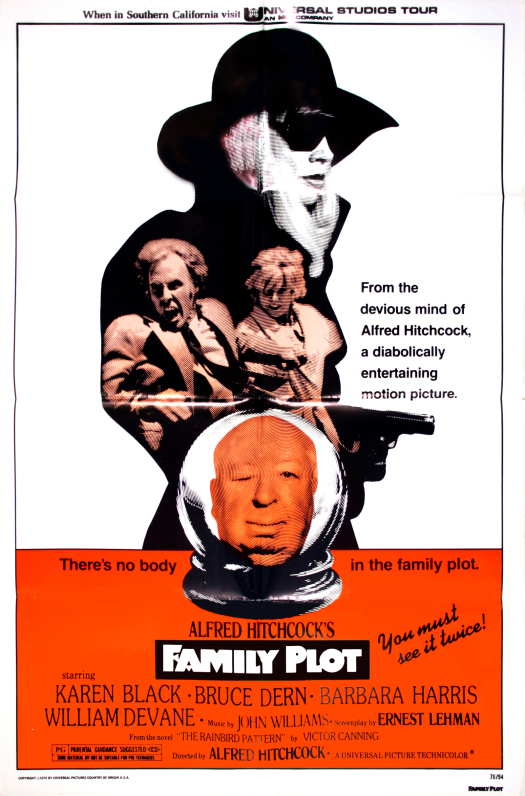
Alfred Hitchcock’s Last Ride: FAMILY PLOT (Universal 1976)


gary loggins's avatarcracked rear viewer

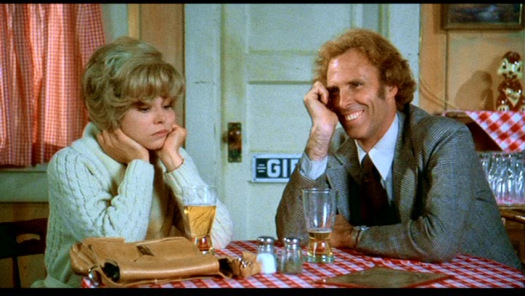
Critics in 1976 were divided over Alfred Hitchcock’s FAMILY PLOT, which turned out to be his final film. Some gave it faint praise, in an “it’s okay” kinda way; others decried it as too old-fashioned, saying the Master of Suspense had lost his touch – and was out of touch far as contemporary filmmaking goes. Having recently viewed the film for the first time, I’m blessed with the gift of hindsight, and can tell you it’s more than “okay”. FAMILY PLOT is a return to form, and while it may not be Top Shelf Hitchcock, it certainly holds up better than efforts made that same year by Hitch’s contemporaries George Cukor (THE BLUE BIRD), Elia Kazan (THE LAST TYCOON), and Vincente Minnelli (A MATTER OF TIME).

Hitchcock reunited with screenwriter Ernest Lehman (NORTH BY NORTHWEST) to concoct a devilishly clever black comedy about phony psychic Blanche Tyler who, along with…

View original post 469 more words

Necktie Party: Alfred Hitchcock’s FRENZY (Universal 1972)


gary loggins's avatarcracked rear viewer


Alfred Hitchcock’s  previous two films, TORN CURTAIN (1966) and TOPAZ (1969) weren’t well received by critics, who claimed The Master of Suspense was too old-fashioned and had lost his touch. One wag even suggested that, after fifty years in films, it was time to put Hitch out to pasture! But Hitchcock wasn’t quite ready for a life of tea and crumpets in the garden, and came back with 1972’s FRENZY, complete with all the blatant sex, nudity, gore, and profanity of other early 70’s auteurs, proving he could not only keep up with the times, but surpass them by giving us the blackest of horror comedies.

Hitchcock had returned to his native England before to make a few films, but always with actors who had box office appeal in America (Ingrid Bergman and Joseph Cotten in UNDER CAPRICORN, Marlene Dietrich and Jane Wyman in STAGE FRIGHT). This time around, he…

View original post 608 more words

Boldly Going Indeed! : PRETTY MAIDS ALL IN A ROW (MGM 1971)


gary loggins's avatarcracked rear viewer

maids1

Gene Roddenberry’s post-STAR TREK career  had pretty much gone down the tubes. The sci-fi series had been a money loser, and Roddenberry wasn’t getting many offers. Not wanting to be pigeonholed in the science fiction ghetto, he produced and wrote the screenplay for PRETTY MAIDS ALL IN A ROW, a black comedy skewering the sexual revolution, with French New Wave director Roger Vadim making his first American movie. The result was an uneven yet entertaining film that would never get the green light today with its theme of horny teachers having sex with horny high school students!

maids2

All-American hunk Rock Hudson was in the middle of a career crisis himself. After spending years as Doris Day’s paramour in a series of fluffy comedies, his box office clout was at an all-time low. Taking the role of Tiger McGrew, the guidance counselor/football coach whose dalliances with the cheerleading squad leads to murder…

View original post 463 more words

The Preacher Is About To Begin Mass


Preacher

Preacher the comic book that came out in 1995 and became the title that everyone gravitated to to balance out all the superhero titles that were coming out from Marvel, DC, Image and every small publisher in-between. The book was written by Garth Ennis and drawn by Steve Dillon. It was the book that took on the institutions of the Church, government and family in the most irreverent and blasphemous way one could think of at the time.

The book had been talked of within Hollywood since it’s release as one title that producers (seems all of them at one time or another) wanted to adapt for the big-screen. It wasn’t a superhero title so there was no need to worry about trying to adapt tights-wearing heroes and villains. Yet, the book’s subject matter which tended to go into the extreme at times became something that kept the title from being adapted.

After almost two decades of futile attempts to get Preacher up onto the big-screen it took the star-power of one big-screen star (Seth Rogen) to finally get the book adapted, but not on the big-screen, but on the small-screen to become part of AMC’s stable of unique series titles (The Walking Dead, Better Call Saul, Into the Badlands).

So, fans of the books only have until 2016 to wait for their dreams of Preacher finally coming to live-action life and non-readers will finally see what all the hype has been all about.