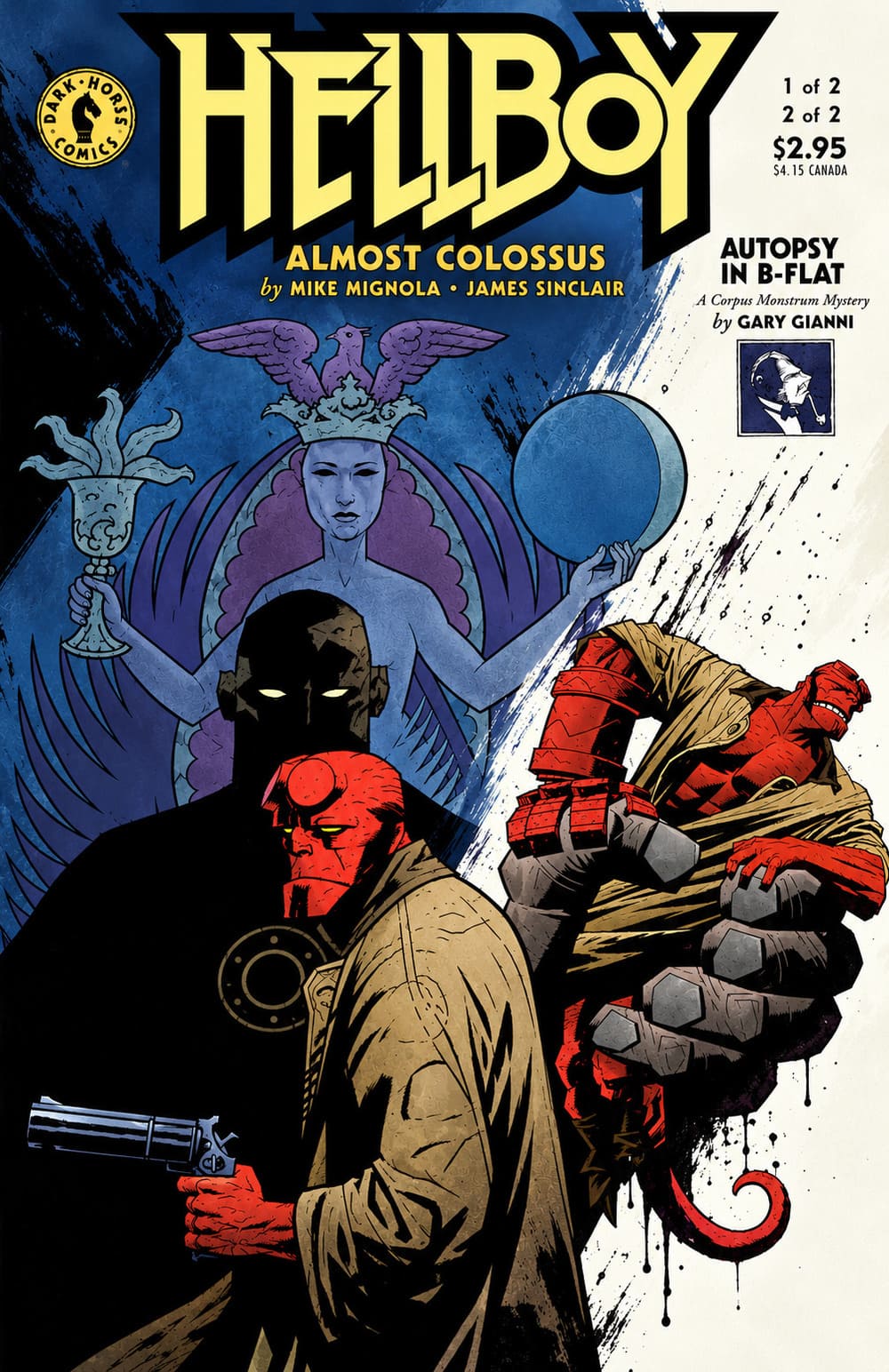
Hellboy: Almost Colossus (by Mike Mignola) Horror Review


“I pray to God to kill me.” — Roger

Mike Mignola’s Hellboy: Almost Colossus gets its best mileage out of a simple question: what makes someone a monster once you look past the body they were born—or built—into? This two-issue miniseries takes the unfinished business of Hellboy: Wake the Devil and turns it into a compact Gothic adventure with a surprisingly tender center. There are disturbed graves, shadowy ruins, unnatural bodies, and a villain whose ambitions are considerably bigger than his conscience. But underneath that familiar horror setup is a story about two artificial beings who respond to their existence in very different ways. One wants to make the world suffer. The other barely knows how to face it.

The immediate problem is Liz Sherman’s deteriorating condition. During Hellboy: Wake the Devil, her fire brought an ancient homunculus to life, but the transfer left her without the powers that had sustained her. Now Hellboy and Kate Corrigan need to find the creature and discover whether that process can be reversed. It is a clean, urgent premise that gives the story direction without requiring another elaborate explanation of Hellboy’s destiny. The stakes are personal rather than cosmic. Liz is dying, and Hellboy is not about to stand around waiting for someone else to fix it.

That smaller scale is one of the comic’s biggest strengths. Hellboy: Wake the Devil has the pleasure of watching several supernatural threats overlap, but Hellboy: Almost Colossus benefits from having less to juggle. Mignola takes an incident that could have remained a disturbing subplot and follows its consequences. Liz’s awakening of the homunculus was not just another strange encounter in a haunted castle. It created a life while endangering another, and the people involved now have to deal with that imbalance. The supernatural events feel consequential because they leave emotional damage behind.
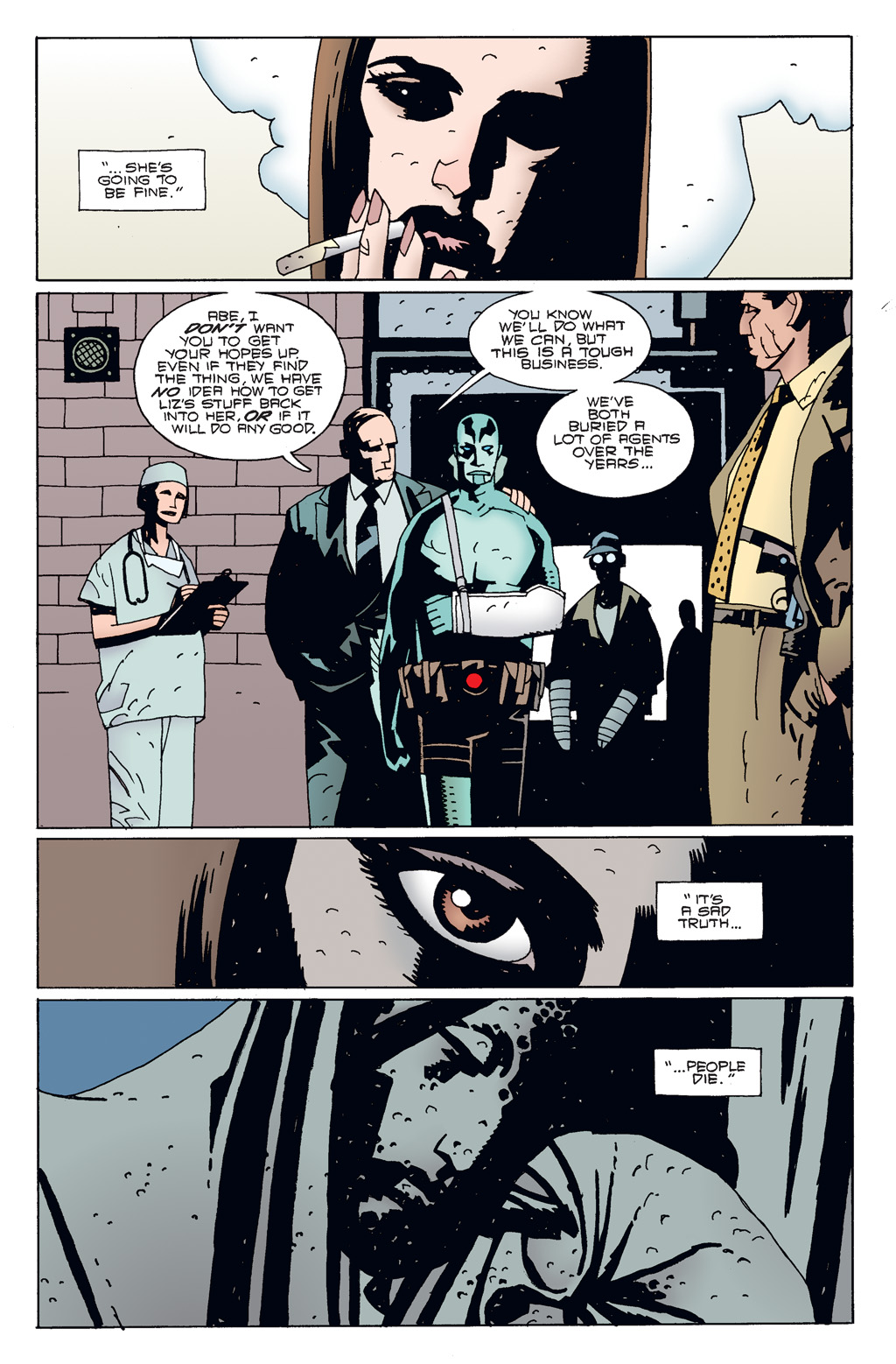
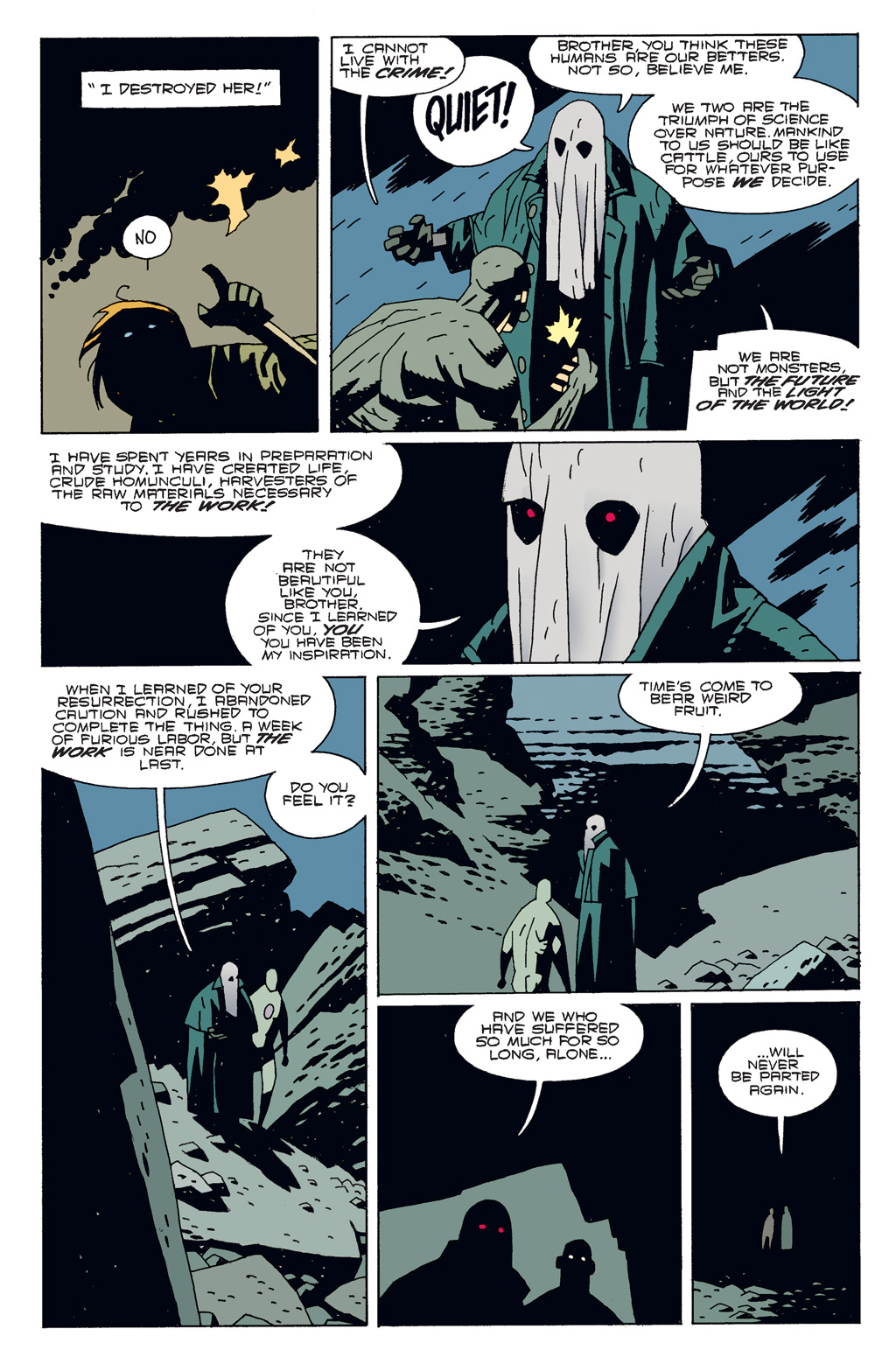
The homunculus, Roger, is the heart of the story. His physical appearance initially places him within the familiar territory of the lumbering artificial monster, but Mignola quickly complicates that impression. Roger is not thrilled to be alive. He is frightened, confused, and overwhelmed by guilt over the suffering connected to his awakening. His desire for death gives the story an unsettling sadness. Life has arrived before understanding, and he has no idea what to do with either. Rather than making him immediately lovable, Mignola allows his distress to remain awkward and uncomfortable, which makes his eventual choices more affecting.

Roger’s older brother provides the nasty counterpoint. Another homunculus created through alchemy, he has responded to his origins with resentment and grandiosity. His solution to feeling wronged is to build himself into something powerful enough to dominate everyone else. Other bodies become material for his ambitions, and other lives become expendable. He is grotesque not simply because of what he is, but because of how casually he reduces people to things. The contrast with Roger is sharp: one brother is horrified by the possibility of causing harm, while the other treats harm as a necessary step toward greatness.

That distinction gives the comic its moral backbone. Mignola does not suggest that unnatural creation automatically produces evil, nor does he make suffering an excuse for cruelty. Both brothers have reasons to feel alienated, but they still make different decisions. Roger’s brother converts his grievances into a claim of superiority. Roger must learn that guilt does not have to end in surrender or self-destruction. It can become responsibility. That is a substantial idea for such a short adventure, and the story makes it tangible through the brothers’ behavior rather than stopping to explain its own message.

The Frankenstein influence is easy to recognize, particularly in the loneliness and resentment surrounding manufactured life. What makes this more than a familiar variation is how naturally those concerns fit Hellboy himself. His appearance suggests danger, and his origins carry implications he refuses to accept as instructions. Roger’s predicament echoes that larger conflict without turning the miniseries into another extended discussion of prophecy. Hellboy becomes an example of the difference between what someone looks like and what someone chooses to do. He is not delivering inspirational speeches, either. He is simply trying to save a friend.
His blunt attitude helps keep the material from becoming too mournful. Hellboy can move through an ancient horror as though it is an especially irritating assignment, and that practical impatience gives the comic some welcome personality. The humor does not erase the danger; it makes his concern feel less theatrical. Kate also helps ground the investigation. Her presence supplies a human perspective beside Hellboy’s familiarity with the bizarre, and her vulnerability gives the confrontation immediate stakes beyond the brothers’ argument. Their partnership makes the supernatural setting feel inhabited rather than merely arranged for atmosphere.

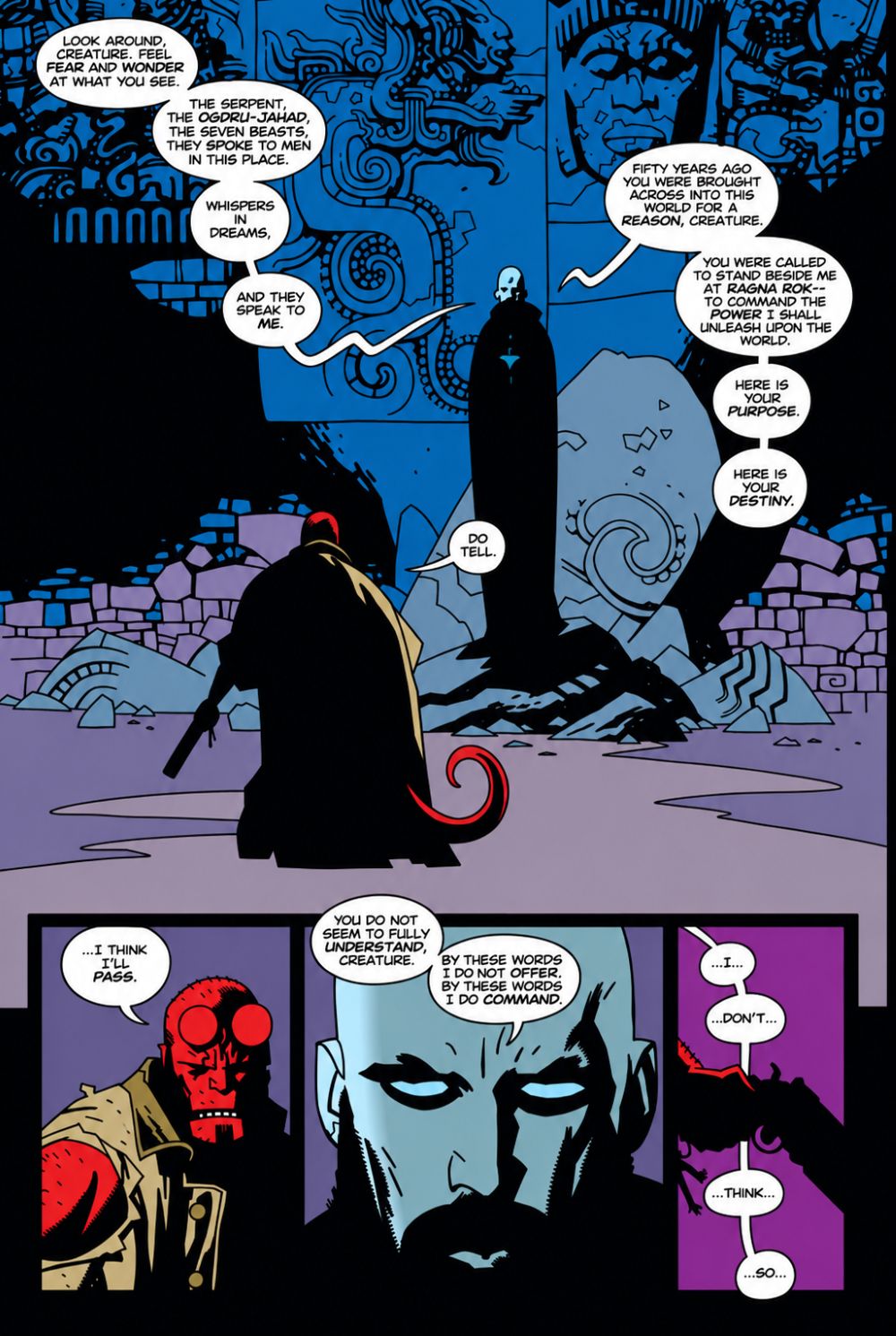
Visually, Mignola makes the ruins and artificial bodies feel like parts of the same uneasy world. His heavy blacks and simplified forms give stonework a looming presence, while the homunculi look assembled, weighty, and uncomfortable in their own shapes. The pages do not need elaborate detail to suggest history. A dark opening or a fragment of architecture can imply whole rooms of forgotten experiments. James Sinclair’s coloring supports that starkness, allowing the drawing’s silhouettes and shadows to carry the mood. The result feels closer to a grim illustrated folktale than a glossy superhero adventure.

The two-issue format does leave some limitations. Liz functions mainly as the reason for the mission, and the older brother’s ambitions could have supported more development. Reading Hellboy: Wake the Devil first also gives the opening greater emotional weight. Still, the brevity keeps the story from diluting its strongest material. The climax matters because Roger has to decide what kind of being he will become, not simply because something enormous needs to be punched. Hellboy: Almost Colossus delivers the Gothic spectacle, but its real achievement is making compassion feel like an active choice. The most human figure in the story may be the one who has the least idea how to be human.

Hellboy Saga
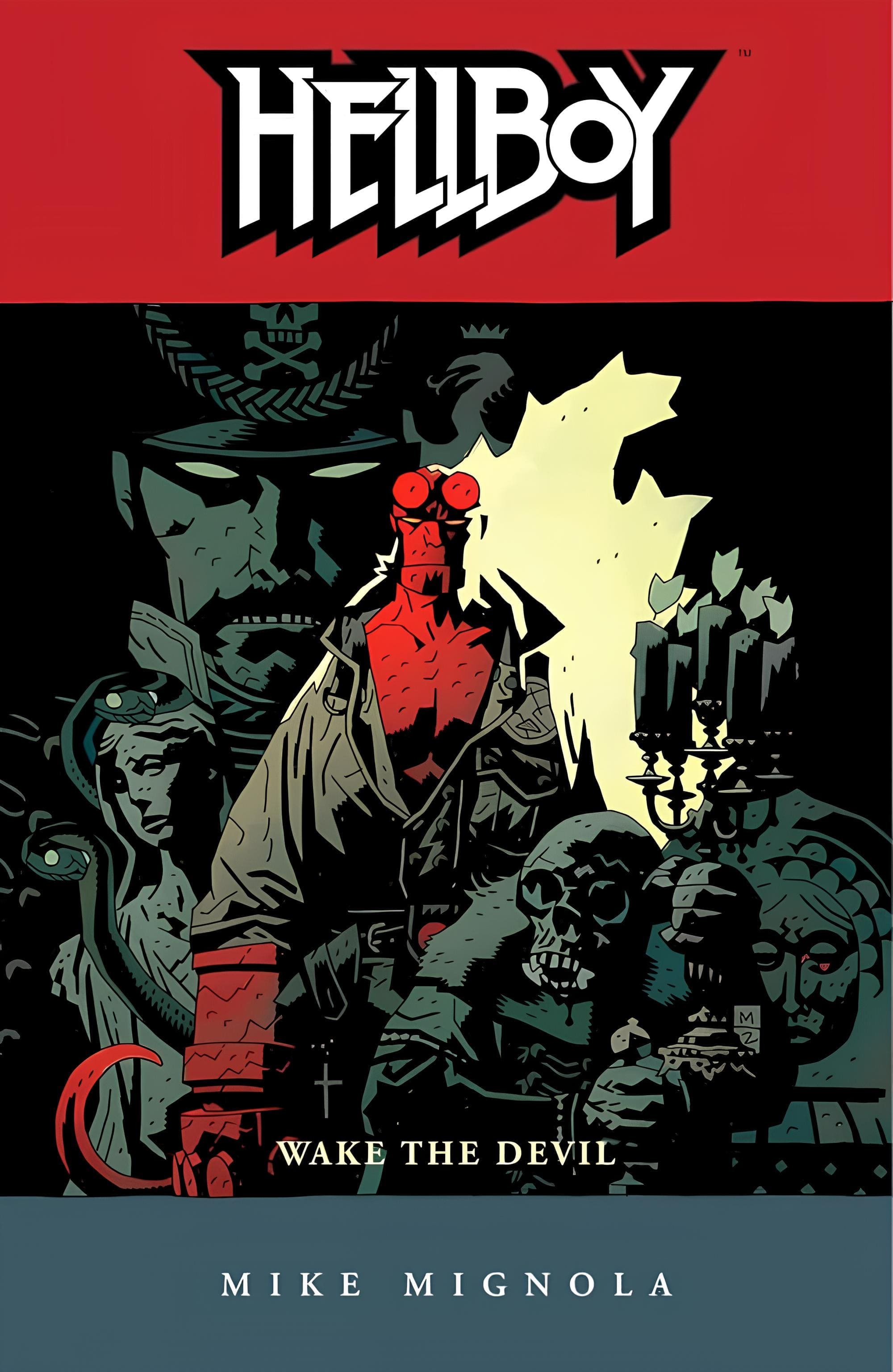
Hellboy: Wake the Devil (by Mike Mignola) Horror Review


“We are not enemies. We are the agents of change. To that end we are bound together.” — Hecate

By the time Hellboy: Wake the Devil begins, Mike Mignola has already made clear that Hellboy’s world is not one where the dead stay buried or where ancient evils remain confined to history. Building on the groundwork established in Hellboy: Seed of Destruction, this graphic novel moves deeper into the peculiar mixture of pulp adventure, Gothic horror, occult conspiracy, folklore, and apocalyptic myth that makes Hellboy so distinctive. It is a darker, stranger, and more confident continuation, one that expands Hellboy’s world through vampires, witches, ancient ruins, Russian legends, Nazi occultists, and the ever-present suggestion that the past is not buried so much as waiting to rise again.

Where Hellboy: Seed of Destruction had to introduce readers to Hellboy, the B.P.R.D., Rasputin, and the ominous question of the hero’s intended destiny, Hellboy: Wake the Devil benefits from being able to assume some familiarity with the larger premise. It does not waste time reintroducing every concept or explaining Hellboy’s origin in exhaustive detail. Instead, Mignola plunges directly into another supernatural crisis, trusting the reader to follow the fragments of history, prophecy, and folklore that emerge along the way. That confidence gives the book a more distinctive identity than the first graphic novel, which was highly entertaining but still carried some of the structure of a traditional early-1990s superhero adventure.

This difference also reflects Mignola’s greater control over the material. While Hellboy: Seed of Destruction was co-plotted and scripted by John Byrne, Wake the Devil feels more purely shaped by Mignola’s own creative instincts. The writing is leaner, stranger, and more willing to leave mysteries partially unresolved. The plot remains accessible, but it is not interested in handing readers a complete guidebook to its mythology. Rather than explaining every occult reference, historical figure, or supernatural artifact, Mignola presents them as pieces of a much larger hidden world. That approach gives the story a dreamlike quality, as if Hellboy has stumbled into a folktale that has been unfolding for centuries without him.

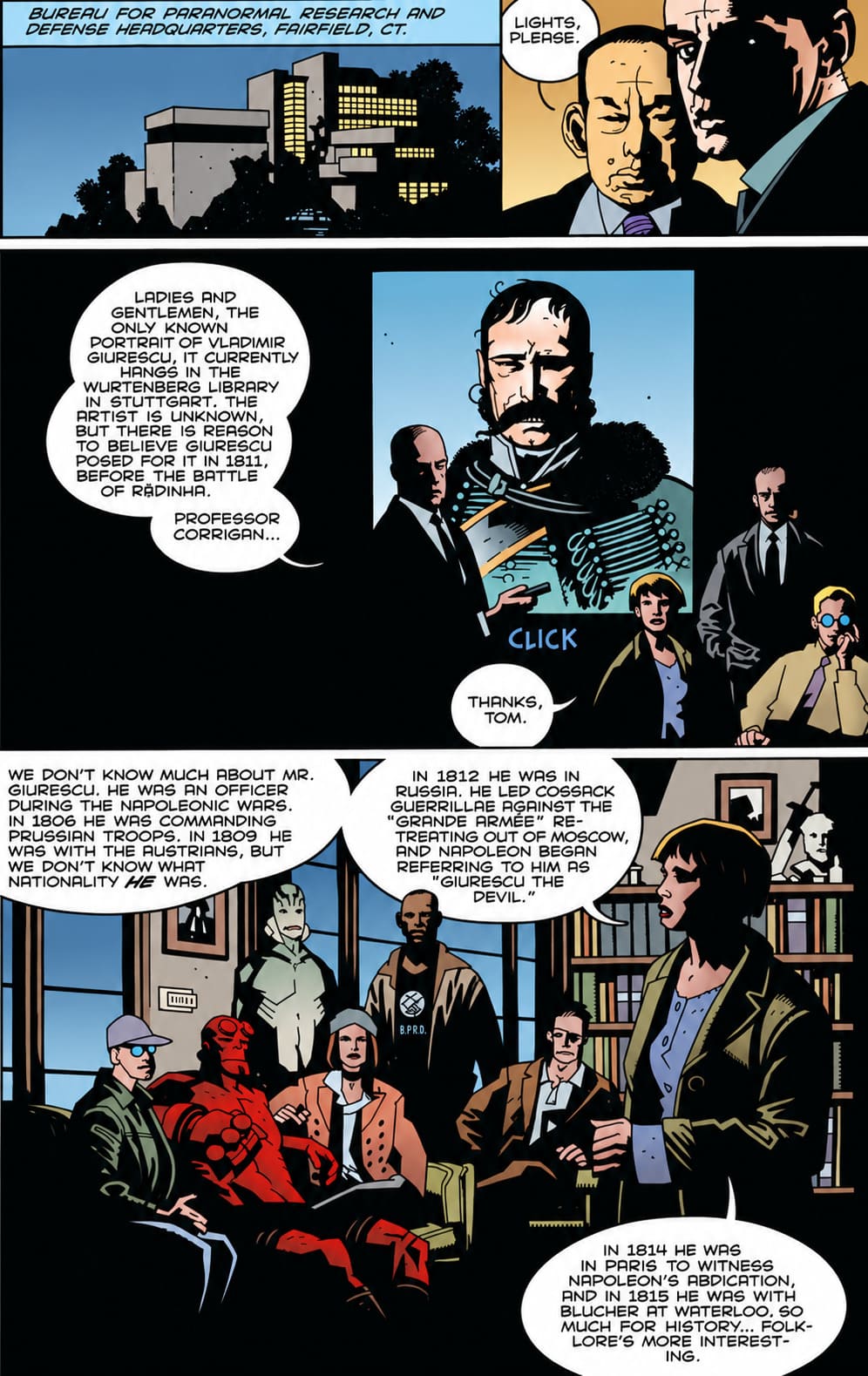
The story begins with a stolen corpse, an opening that immediately establishes the book’s grim tone. This theft is connected to Vladimir Giurescu, an ancient vampire whose resurrection becomes the central threat of the graphic novel. Giurescu is not presented as a familiar, romantic version of Dracula, nor is he simply another monster for Hellboy to punch through a wall. He is an old-world figure tied to European violence, occult ritual, aristocratic power, witchcraft, and death. Mignola makes him feel ancient in the best sense: not merely old, but connected to a past so deep and cruel that modern people cannot fully comprehend it.

Giurescu’s presence is one of the book’s greatest strengths because he embodies the kind of villain Mignola handles especially well. He is frightening not because he constantly performs elaborate acts of violence, although the story has no shortage of monstrous imagery, but because he carries the weight of history with him. His return does not feel like the arrival of a single antagonist. It feels like a buried nightmare opening its eyes. Mignola’s supernatural villains often possess this quality. They are dangerous as individuals, but they are even more dangerous as evidence that Hellboy’s world is built over ancient horrors that have never truly disappeared.

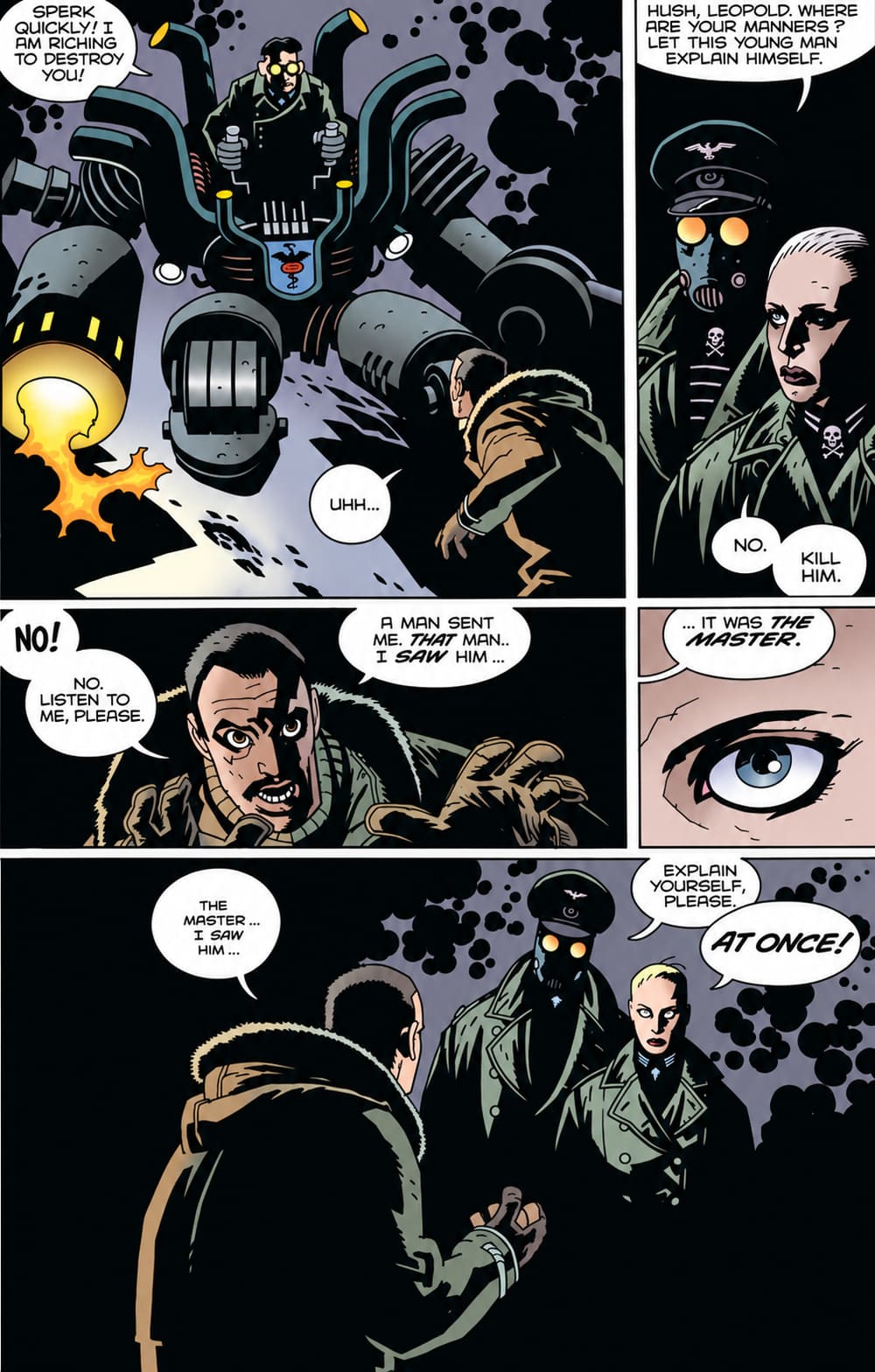
The plot also brings back Ilsa Haupstein, one of the Nazi occultists introduced in Hellboy: Seed of Destruction. Her involvement gives Wake the Devil a direct link to the previous story without making the book feel like a repetitive sequel. The Nazi occult material remains important, but Mignola wisely expands the scope beyond it. The conspirators and occultists are no longer the entire center of the story. They become one part of a wider mythology involving vampires, witches, old relics, secret histories, and supernatural forces that existed long before the twentieth century. The result is a story that feels more expansive without becoming bloated.

The title carries an interesting irony, since Hellboy himself is constantly associated with the devil because of his red skin, horns, tail, and demonic appearance. People who encounter him often assume that he must be monstrous, dangerous, or connected to evil. Yet Wake the Devil again makes clear that Hellboy’s appearance has little to do with his moral character. He may look like a demon, but he is still the person trying to stop the resurrection of an ancient vampire and the spread of occult evil. The real devils in the story are the people and creatures who seek power through murder, ritual, resurrection, and the exploitation of forbidden knowledge.

Hellboy’s moral simplicity is one of the series’ most enduring strengths. He is not simple in the sense of being a shallow character, but he is direct about what matters. He does not spend pages agonizing over whether monsters should be stopped. If something evil is threatening innocent people, he goes after it. He complains, gets irritated, takes a beating, delivers a dry joke, and keeps moving. That makes him an ideal protagonist for Mignola’s world. The setting is filled with cryptic prophecies, ancient names, hidden archives, and supernatural mysteries, but Hellboy gives the reader someone grounded to follow through it all.

His humor remains especially important. Wake the Devil is a dark book, full of graves, corpses, ruined buildings, occult rites, and creatures whose existence seems to violate the natural order. Without Hellboy’s blunt attitude, the material could become overly solemn. He does not make light of the danger, but his presence keeps the graphic novel from collapsing under the weight of its own mythology. Hellboy has the energy of a hardboiled detective dropped into a nightmare, even though his methods usually involve a massive stone fist rather than a revolver and a fedora.

The B.P.R.D. supporting cast also becomes more meaningful in this story. Abe Sapien and Liz Sherman are not merely background teammates, even if Hellboy remains the main focus. Abe’s intelligence and aquatic strangeness make him a natural fit for a universe filled with lost civilizations, secret knowledge, and evolutionary mysteries. Liz, meanwhile, carries a more tragic and dangerous presence because of her pyrokinetic powers. She is not simply a character who can shoot fire at monsters. Her abilities are tied to fear, isolation, and trauma, which gives her a vulnerability that contrasts sharply with Hellboy’s more durable and outwardly confident persona.

The relationship between these characters reinforces the unusual nature of the B.P.R.D. It is not a brightly polished superhero team assembled to save the world in matching costumes. It is an organization of people who have been pushed outside ordinary society, whether by their appearance, their powers, or the bizarre things they have experienced. Hellboy, Abe, and Liz are united less by traditional comic-book camaraderie than by shared alienation. They understand dangers that ordinary people would struggle to believe, and that creates a quieter emotional bond beneath the monster fights and supernatural investigations.

Visually, Hellboy: Wake the Devil is a major achievement. Mignola’s artwork is not built around realism or dense anatomical detail. Instead, it relies on dramatic shapes, bold shadows, exaggerated silhouettes, and a masterful sense of composition. His pages can make a single doorway, tomb, hallway, or distant figure feel ominous. A black shape against a pale background becomes threatening because Mignola knows precisely how much information to withhold. His art frequently suggests that the real terror is not necessarily what readers can see, but what might be waiting inside the darkness beyond the panel.

The book’s use of architecture is especially striking. Castles, crypts, underground chambers, cemeteries, churches, and ruined interiors are not just places where the action happens. They feel like extensions of the story’s ancient dread. Heavy stone walls, towering doorframes, deep corridors, and massive areas of black create the impression that Hellboy is moving through a physical landscape built by history itself. The settings seem to contain memories. Every abandoned room and buried chamber implies that something dreadful once happened there, and perhaps never truly stopped happening.

Matt Hollingsworth’s color work adds enormously to this atmosphere. The palette is often muted and moody, dominated by dark blues, sickly greens, faded browns, purples, and deep black shadows. This restraint makes the bursts of red more powerful, whether the red comes from Hellboy himself, blood, fire, or supernatural violence. The colors give the pages an aged, almost storybook texture. It can feel as though the reader is looking at a collection of old illustrations from some forbidden European folktale rather than a conventional comic book.

Mignola’s pacing is equally important. Wake the Devil knows when to pause and let the mood settle. There are moments where a character simply stands before an open grave, explores a silent corridor, or confronts an object that hints at a terrible history. Those quieter scenes make the action scenes more forceful. Hellboy does not fight with the slick agility of a typical superhero. He crashes through doors, falls through floors, gets thrown into walls, and responds to impossible threats with the stubborn endurance of someone who has spent his whole life being sent into terrible places.

That physicality helps make Hellboy feel vulnerable even when he is clearly superhuman. He is powerful, but he is not untouchable. He gets hurt, overwhelmed, deceived, and placed in situations where brute strength alone is not enough. The Right Hand of Doom is visually iconic, but it is not a solution to every problem. Hellboy survives because he is resilient, practical, and unwilling to give up when the supernatural situation becomes more complicated than expected.

The story’s deeper theme is the danger of seeking power through forbidden knowledge. Nearly every major threat in Wake the Devil grows out of someone trying to revive, exploit, or control something that should have remained lost. Characters pursue immortality, occult strength, revenge, or access to secret history, only to discover that ancient evil does not become manageable merely because someone has learned its name. Mignola draws heavily from Gothic vampire fiction, but the story also has the broader cosmic unease that defined Seed of Destruction. The horrors here are not merely monsters with weaknesses. They are fragments of a much bigger darkness.

At times, the book can seem deliberately cryptic, particularly for readers unfamiliar with the expanding mythology of Hellboy. Mignola introduces artifacts, historical references, mystical forces, and supernatural figures without always providing a detailed explanation. Yet that ambiguity is largely part of the appeal. The comic does not make its world feel small enough to be completely explained in a few captions. Instead, it invites readers to feel the weight of a hidden history that Hellboy can only partially understand.

Ultimately, Hellboy: Wake the Devil is an essential chapter in Mike Mignola’s larger saga. It confirms that Hellboy is not merely a clever premise about a demon who fights monsters for a government agency. It is a singular world of pulp adventure, folklore, Gothic horror, vampire mythology, wartime conspiracy, and dark fantasy, all filtered through Mignola’s unmistakable visual imagination. The graphic novel deepens the mythology while preserving the straightforward pleasure of watching Hellboy enter a supernatural disaster, trade a sarcastic remark with a monster, and refuse to let ancient evil dictate his fate.

If Hellboy: Seed of Destruction introduced a hero resisting the destiny imposed upon him, Hellboy: Wake the Devilreveals the scale of the haunted world surrounding that struggle. It is eerie, violent, funny, mysterious, and visually beautiful. Most importantly, it shows that Hellboy’s greatest strength is not the Right Hand of Doom or his ability to survive battles with creatures from nightmare. His true strength is his refusal to let monsters, prophecies, occult conspiracies, or his own infernal appearance determine who he is.

Hellboy Saga

Hellboy: Seed of Destruction (by Mike Mignola) Review


“Imagine the good this boy could do. I know what he is, what he might grow into, maybe even what he’s meant to be. But I also see what he can be. He just needs a little guidance and someone to set a proper example.” — Trevor Bruttenholm

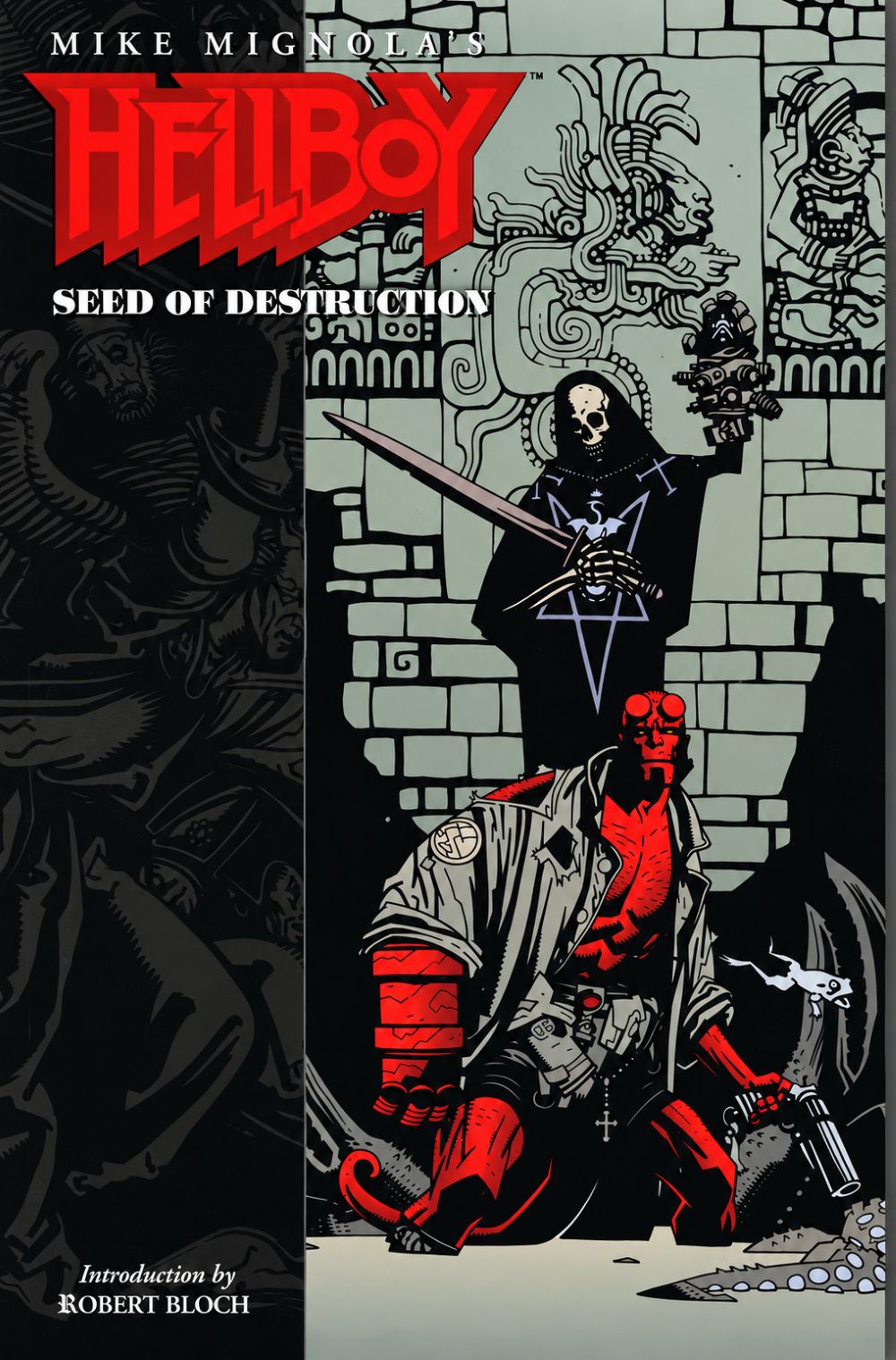
Mike Mignola’s Hellboy: Seed of Destruction is more than the opening chapter of a popular comic-book universe. It is a foundational work of supernatural adventure, combining pulpy monster fiction, wartime conspiracy, Gothic imagery, Lovecraftian apocalypse, and a surprisingly human story about identity and free will. First published as a four-issue miniseries in 1994 and co-plotted with John Byrne, the graphic novel introduces Hellboy with striking confidence. The mythology already feels vast, the visual identity is fully recognizable, and the title character arrives as one of the most distinctive heroes in modern comics: a cigar-smoking red demon with a stone right hand, a sarcastic sense of humor, and a stubborn refusal to become the monster everyone expects him to be.

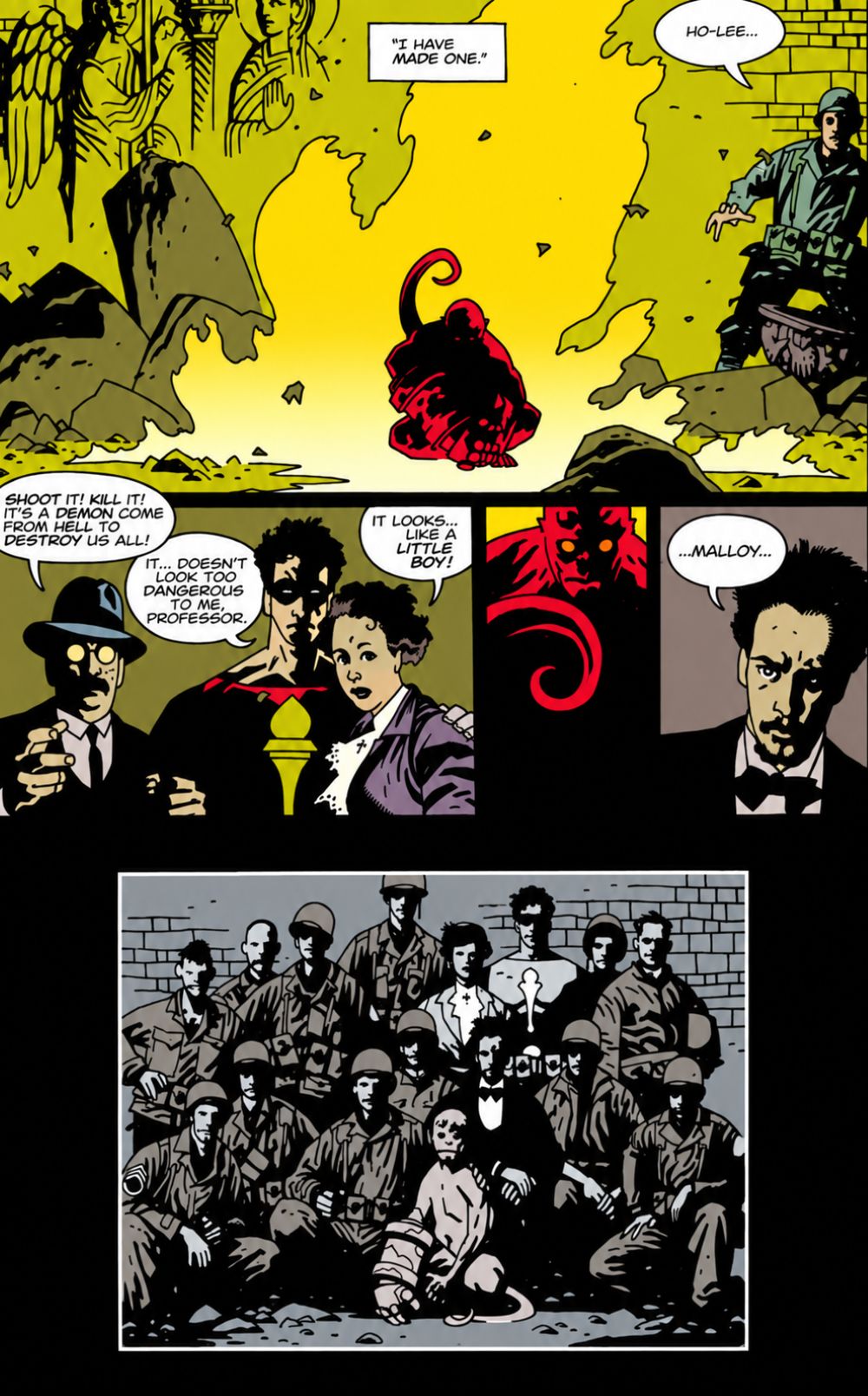
The premise is immediately compelling. In the final days of World War II, Nazi occultists conduct an elaborate ritual intended to summon a weapon powerful enough to alter the war’s outcome. The ceremony is overseen by Grigori Rasputin, who is reimagined here not simply as the notorious Russian mystic but as a servant of ancient, world-ending forces. Allied soldiers disrupt the ritual, but instead of the apocalypse the Nazis hoped to unleash, they discover a small red-skinned demon child transported to Earth. That child becomes Hellboy. He is taken in by Professor Trevor Bruttenholm, founder of the Bureau for Paranormal Research and Defense, and raised not as a weapon or scientific specimen, but as a son.

That decision gives Hellboy: Seed of Destruction its emotional center. Hellboy looks like the obvious villain of his own story. He has red skin, filed-down horns, a tail, cloven feet, and the massive stone right hand known as the Right Hand of Doom. He appears as though he should stand alongside Dracula, Frankenstein’s monster, or Satan himself. Yet Mignola’s central idea is that origin does not have to determine destiny. Hellboy may have entered the world through an act of evil, and powerful supernatural forces may expect him to fulfill an apocalyptic role, but he chooses another path. As an adult, he works for the B.P.R.D., investigating paranormal threats and protecting humanity from the very kinds of monsters he might be expected to join.

The main story takes place decades after Hellboy’s arrival and begins when a death close to him forces the past back into the present. The loss gives the investigation a personal urgency and propels Hellboy toward the hidden truth behind his own origins. As he follows the trail, he becomes entangled in a conspiracy involving Rasputin’s return, surviving Nazi occultists, forgotten rituals, buried secrets, and the terrifying possibility that Hellboy himself may have a role in an event far greater than any single monster attack. The plot steadily expands from a personal mystery into a threat with apocalyptic implications, but it never completely loses sight of Hellboy as a character caught between the person he has chosen to be and the fate others want to impose upon him.

Hellboy is joined by fellow B.P.R.D. agents Abe Sapien and Liz Sherman. Abe, an amphibious investigator with a calm, analytical nature, provides an effective contrast to Hellboy’s bluntness and impatience. Liz, a pyrokinetic woman whose connection to fire comes with emotional burdens of its own, brings a more vulnerable and tragic element to the team. In this first volume, they are not yet as richly developed as they would become in later stories, but their presence establishes the B.P.R.D. as something more interesting than an ordinary superhero team. These are not polished celebrity heroes in colorful costumes. They are unusual, damaged, and often isolated people employed to confront dangers that the public cannot know exist.

Mignola’s art is the graphic novel’s defining achievement. Even among the strongest comics of the 1990s, Hellboy: Seed of Destruction feels visually singular. At a time when much of mainstream superhero art emphasized intricate rendering, oversized muscles, and hyperactive action, Mignola worked through silhouette, shadow, stark design, and carefully controlled negative space. His figures are often blocky and stylized, but they are never lifeless. A few lines can convey fear, exhaustion, anger, or resignation. A large black shape can become a doorway, a corridor, an abyss, or a threat the reader cannot fully see.

Mignola does not use darkness merely to make the comic look moody. His shadows are active storytelling tools. Characters disappear into them, monsters emerge from them, and entire environments seem to exist only partially in the light. A seemingly empty room can become frightening because its far wall is swallowed by blackness. A frozen landscape can feel ominous because it leaves its characters exposed beneath an enormous blank sky. His layouts often evoke old pulp-horror illustrations, German Expressionist cinema, Gothic architecture, folklore engravings, and vintage monster movies. Rather than presenting a sleek modern superhero world, Mignola creates a universe that feels ancient, secretive, and half-buried under centuries of superstition.

The color work deepens that atmosphere. The pages use earthy browns, faded blues, icy whites, sickly greens, and vivid flashes of red to create a world that feels both dreamlike and decayed. Hellboy’s red skin makes him instantly recognizable within Mignola’s compositions, especially when he stands against a field of black shadow. He often resembles a burning ember in a world of darkness: visually connected to the supernatural realm around him, yet refusing to be extinguished by it. That visual contrast captures the character’s place in the story. Hellboy belongs to the darkness in a literal sense, but he continually chooses to stand against it.

The writing is more exposition-heavy than some later Hellboy stories, but it serves an understandable purpose. Hellboy: Seed of Destruction has to introduce Hellboy, the B.P.R.D., Rasputin, the Nazi occultist threat, the supernatural cosmology, and the significance of the Right Hand of Doom in a relatively short space. John Byrne’s scripting helps organize the material and gives the narrative forward momentum. Certain explanations have the recognizable rhythm of early-1990s genre comics, but the story’s atmosphere remains strong enough that the mythology rarely feels like a dry information dump. Mignola and Byrne create the impression that readers are seeing only a small piece of an immense occult history, one filled with ancient gods, forgotten disasters, and forces that have been waiting in darkness for centuries.

The pacing is deliberate rather than relentlessly action-driven. Mignola allows scenes to breathe, lingering over ruined architecture, old artifacts, empty corridors, haunted chambers, and moments of tense silence. The dread accumulates gradually. When action erupts, it tends to be sudden, heavy, and physical. Hellboy is not an acrobatic hero who glides through combat with effortless grace. He breaks through doors, trades blows with monsters, absorbs punishment, and keeps moving forward. His heroism has a blue-collar quality. He treats fighting the impossible as difficult, unpleasant work that nevertheless needs to be done.

That quality makes him especially effective within the story’s Lovecraftian framework. Traditional cosmic horror often centers on human helplessness in the face of forces too vast, ancient, and indifferent to comprehend. Hellboy: Seed of Destruction preserves that feeling, particularly in its suggestions of ancient beings and apocalyptic forces beyond normal understanding. However, it gives readers a protagonist willing to confront that terror rather than collapse before it. Hellboy cannot necessarily understand every supernatural threat, and he cannot erase the ominous circumstances of his birth, but he can refuse to cooperate with the fate laid out for him. His defiance is not naïve optimism. It is a hard-earned, practical moral stance: he will not let anyone turn him into a weapon, and he will not stand aside while innocent people are endangered.

The relationship between Hellboy and Bruttenholm gives that moral stance its weight. Bruttenholm represents the compassion that allowed Hellboy to become something other than an instrument of destruction. He does not deny Hellboy’s demonic origins, but he refuses to treat those origins as a permanent verdict. Their bond lends real emotion to the graphic novel without overwhelming it with melodrama. Mignola’s best moments of feeling are often restrained, expressed through silence, body language, or a brief line rather than a lengthy speech. This restraint suits Hellboy himself. He is not a character who easily verbalizes grief, fear, or tenderness, but those feelings are present beneath his rough exterior.

The graphic novel also has an important place in Hellboy’s larger cultural legacy because it served as the basis for Guillermo del Toro’s live-action film Hellboy. The adaptation draws from the comic’s wartime origin, B.P.R.D. framework, Rasputin-centered occult threat, and larger supernatural mythology, helping bring Mignola’s character and visual world to a wider audience. Even so, Hellboy: Seed of Destruction stands firmly on its own as the original expression of that world: darker, quieter, and more reliant on the power of shadow, silence, and graphic design than any adaptation could fully reproduce.

Hellboy: Seed of Destruction is not entirely flawless. The exposition can occasionally be dense, and Abe and Liz are not yet given the emotional complexity they receive in later Hellboy stories. The book also has the understandable burden of establishing a great deal of lore in a short opening arc. Yet those limitations are minor beside its achievements. Mignola creates a complete aesthetic universe from the beginning, one populated by ancient horrors, occult conspiracies, cryptic prophecies, and damaged people trying to do the right thing in a world that often seems hostile to human life.

Ultimately, Hellboy: Seed of Destruction remains a landmark graphic novel because it places mood, design, and character above conventional superhero spectacle. It is not simply about a demon punching monsters, even though it delivers that pleasure exceptionally well. It is about a creature born under the shadow of evil who insists on defining himself through his choices. Hellboy’s greatest strength is not his stone fist, supernatural durability, or ability to survive encounters with horrors beyond human comprehension. It is his refusal to become what he was made to be.

Review: Transmetropolitan Vol. 3 – Year of the Bastard


“Journalism is just a gun. It’s only got one bullet in it, but if you aim right, that’s all you need. Aim it right, and you can blow a kneecap off the world.” — Spider Jerusalem

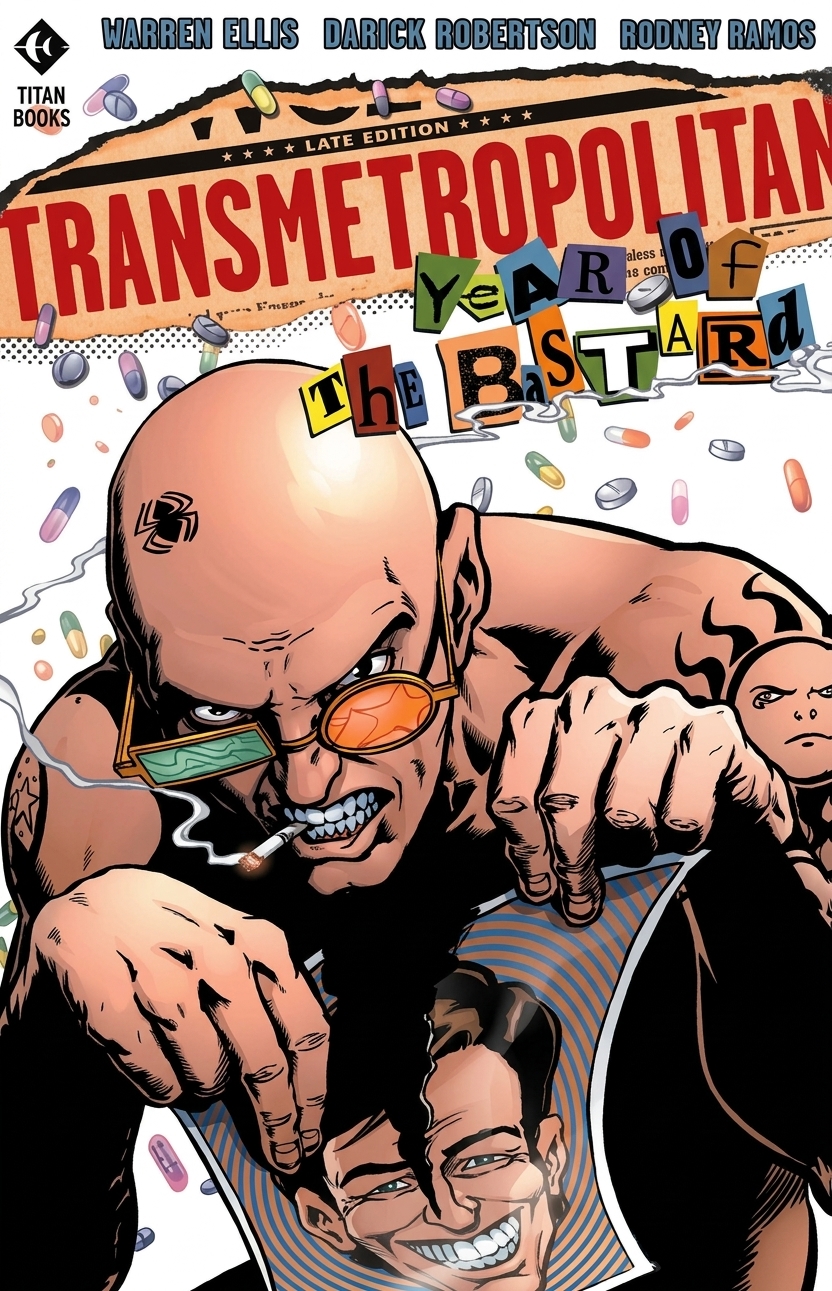
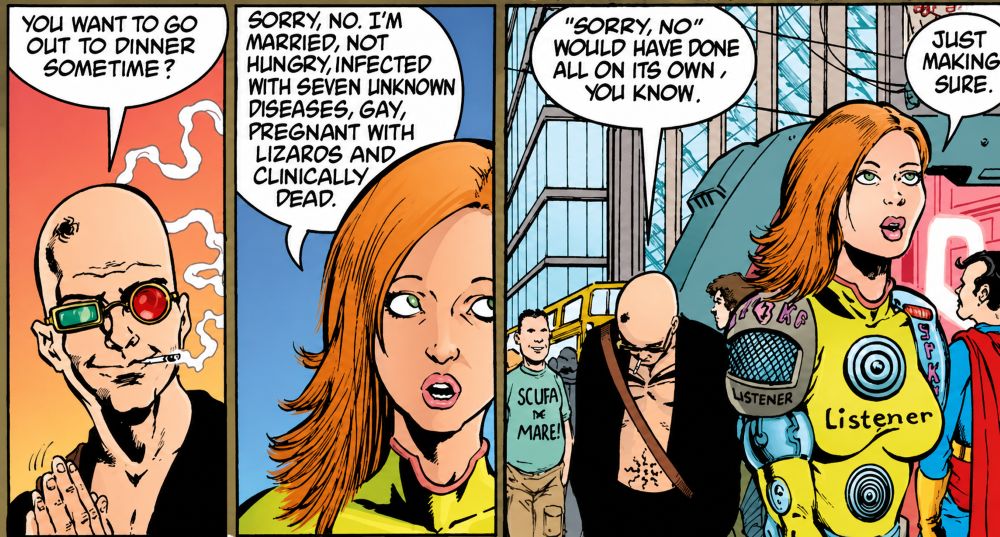
Transmetropolitan Vol. 3: Year of the Bastard is where Warren Ellis and Darick Robertson’s series fully locks into its political purpose. The earlier volumes establish the wild, filthy, hilarious, and relentlessly overstimulating future world of the City, while also introducing Spider Jerusalem as one of comics’ most aggressive and unconventional protagonists. This third collection gives that chaos a more direct target. Spider’s reporting increasingly centers on President Gary Callahan, known as “the Beast,” and the book becomes a sharper examination of political corruption, media manipulation, public apathy, and the ugly necessity of speaking truth to power.

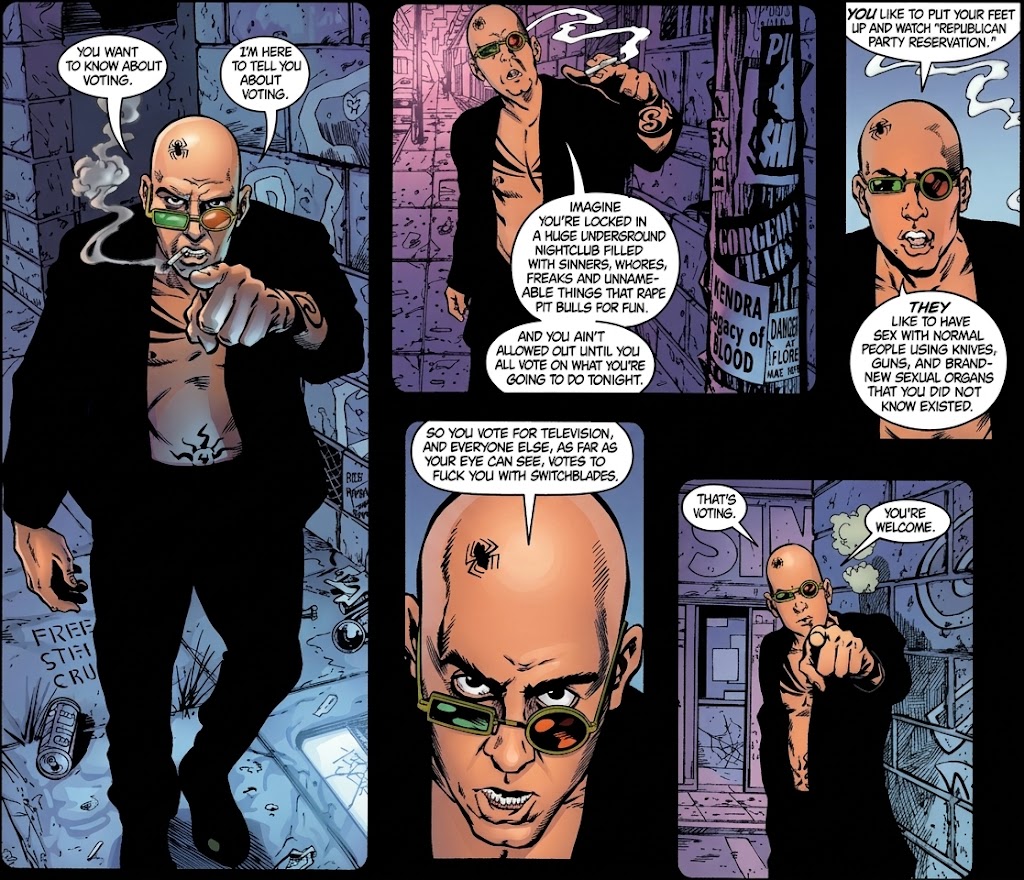
Spider remains the main reason Transmetropolitan works as well as it does. He is not a conventionally likable hero, and the series has no interest in sanding down his worst edges. Spider is arrogant, filthy, confrontational, casually cruel, and frequently unbearable to everyone around him. He insults his assistants, attacks people with little warning, abuses his position as an employer, and seems to approach most conversations as though they are a competition he needs to win. His anger is not performative, though. Spider is furious because he sees how the City works, how easily people are exploited, and how often institutions that are meant to serve the public instead exist to preserve wealth, influence, and power.

That is what separates Spider from a standard rebellious antihero. He does not simply dislike authority because it tells him what to do. He hates authority when it becomes insulated from consequence. His journalism is not neutral in the shallow sense of pretending that every side of an issue deserves equal moral consideration. Spider believes that facts matter, that evidence matters, and that powerful people deserve aggressive scrutiny. He wants documents, interviews, proof, and a story solid enough to survive legal threats and political spin. But he also wants that story to make its target feel exposed. For Spider, journalism is both a public service and an act of combat.

Year of the Bastard makes that approach feel especially urgent through the arrival of Gary Callahan. The Beast is an amalgamation of all the worst traits associated with the fictional politician: narcissistic, shameless, opportunistic, cruel, dishonest, charismatic when it suits him, and utterly willing to use ordinary people as tools in his pursuit of power. He is the kind of leader who can speak in a language of public service while treating the public as disposable, who can turn fear into political currency, and who can rely on supporters to dismiss his most obvious sins as either necessary strength or a conspiracy against him.

Callahan is exaggerated in the way that much of Transmetropolitan is exaggerated, but that does not make him feel safely distant from reality. The series filters him through dystopian satire, giving him the monstrous nickname, the heightened rhetoric, and the almost grotesque confidence of a villain who believes consequences are for other people. Yet the deeper qualities behind him are painfully familiar. He thrives on division, contempt for truth, resentment, spectacle, and the belief that accountability is something to be attacked rather than accepted. In recent memory, that has only made the Beast feel more unsettling. Political figures with traits that once seemed too bluntly villainous for anything but fiction have repeatedly demonstrated how easily cruelty can be reframed as authenticity, dishonesty as strategy, and public anger as a route to power. The book’s details are futuristic and extreme, but its political instincts feel less like prediction than recognition.

Spider recognizes Callahan for what he is long before the system is ready to confront him. That is where the volume’s central conflict becomes stronger than a simple “reporter versus corrupt president” story. Spider is not just investigating a bad man; he is fighting the machinery that allows bad men to flourish. The City’s citizens are overwhelmed by media noise, consumer distractions, social trends, technological novelty, and the endless stream of minor scandals competing for their attention. In such an environment, truth can be buried not only by censorship but by excess. A revelation does not have to be disproven if it can simply be drowned beneath louder, stupider, more entertaining material.

The City continues to be one of the series’ best creations because it is more than a colorful science-fiction backdrop. It is a civilization that has commodified every aspect of life. Identity can be altered, sold, copied, upgraded, discarded, and turned into another lifestyle product. Entertainment is invasive and often grotesque. Technology has expanded human possibility without necessarily expanding human empathy. Politics has become entertainment as well, reduced to personality contests, public outrage, tribal loyalties, and marketable images. The City is often funny in a deliberately ridiculous way, but the humor always has a sour edge. Its people are not simply stupid targets for Spider’s contempt. They are citizens living under a system designed to exhaust their attention and turn their frustration into something profitable.

That context complicates Spider’s relationship to the public. He clearly cares about people, especially the people who are harmed by the City’s power structures, but he also finds people maddening. Spider’s rage at ignorance, conformity, and complacency can make him seem almost as contemptuous of the public as the politicians he despises. The difference is that Spider’s contempt is not rooted in a desire to dominate them. He wants them to wake up, pay attention, and demand better, even when he expresses that desire through insults, threats, and spectacularly unhealthy behavior. His empathy is real, but it is buried beneath layers of cynicism and hostility.

That is why Channon Yarrow and Yelena Rossini remain so important to the book. They keep Spider from becoming a purely self-contained force of rage. Channon often brings a more immediate human response to the stories they cover. She can be tough and sarcastic, but she has not completely absorbed Spider’s defensive habit of treating emotional vulnerability as weakness. Her presence highlights the people behind the headlines, which is essential in a series where the main character can sometimes become so consumed by the larger fight that he risks forgetting the individual lives at stake.

Yelena offers a different kind of balance. As Spider’s editor, she understands the importance of his work, but she also has to deal with the consequences of his methods. She recognizes his talent and his instincts, while refusing to indulge every destructive impulse as if it were a sign of genius. Their relationship is built on tension, professional respect, and mutual exasperation. Yelena knows that Spider can find the story nobody else wants to touch, but she also knows that his self-destructive behavior can jeopardize the very work he believes in. She is one of the few people capable of treating him as both an indispensable journalist and a deeply difficult human being.

The visual side of Year of the Bastard remains a major strength. Darick Robertson makes the City feel constantly alive, crowded, unpleasant, and funny in equal measure. Every street scene suggests a thousand strange subcultures, consumer products, body modifications, and private disasters unfolding at once. Robertson’s detail is not merely there to make the book look weird. It reinforces the idea that this is a society drowning in visual information. The City is so busy that horror can pass as background decoration, and the reader has to look closely to notice what its inhabitants have learned to ignore.

Robertson’s Spider is equally effective. The sunglasses, tattoos, bald head, cigarettes, and permanent scowl make him immediately recognizable, but the art also captures how tired he is. Spider does not look like a sleek futuristic revolutionary. He looks worn down, unhealthy, and held together by stimulants, spite, and a professional obligation he cannot escape. That physical exhaustion matters because it keeps him from becoming an invulnerable fantasy figure. For all his bravado, Spider is a man who is being consumed by the same world he is trying to expose.

The volume still carries the abrasive humor and deliberately offensive energy that define Transmetropolitan, and that will remain a dividing line for readers. Ellis often pushes jokes, imagery, and dialogue to extremes. Sometimes that excess adds to the punk-rock force of the series, making the City feel like a place where every cultural impulse has been turned up beyond the point of sanity. At other times, the shock-heavy approach can feel like it is fighting for attention with the book’s more serious political and emotional material. Even so, Year of the Bastard benefits from its willingness to be ugly. A story about corruption, exploitation, and media spectacle would lose something if it presented its world too cleanly.

Ultimately, Transmetropolitan Vol. 3: Year of the Bastard is a strong escalation of the series because it gives Spider Jerusalem a political enemy worthy of his fury. The Beast represents the worst kind of public figure: someone who turns cruelty into strength, dishonesty into strategy, and division into a campaign platform. Spider, for all his cruelty and instability, becomes compelling because he refuses to accept that kind of power as normal. He may be an awful boss, a reckless friend, and a man whose personal life is largely a disaster, but he understands that journalism has to do more than politely record the world’s failures. Sometimes it has to expose the bastards responsible for them.

Transmetropolitan Volume Reviews

Review: Transmetropolitan Vol. 2 – Lust for Life


“You people don’t know what the truth is! It’s there, just under their bullshit, but you never look! That’s what I hate most about this fucking city—lies are news and the truth is obsolete!” — Spider Jerusalem

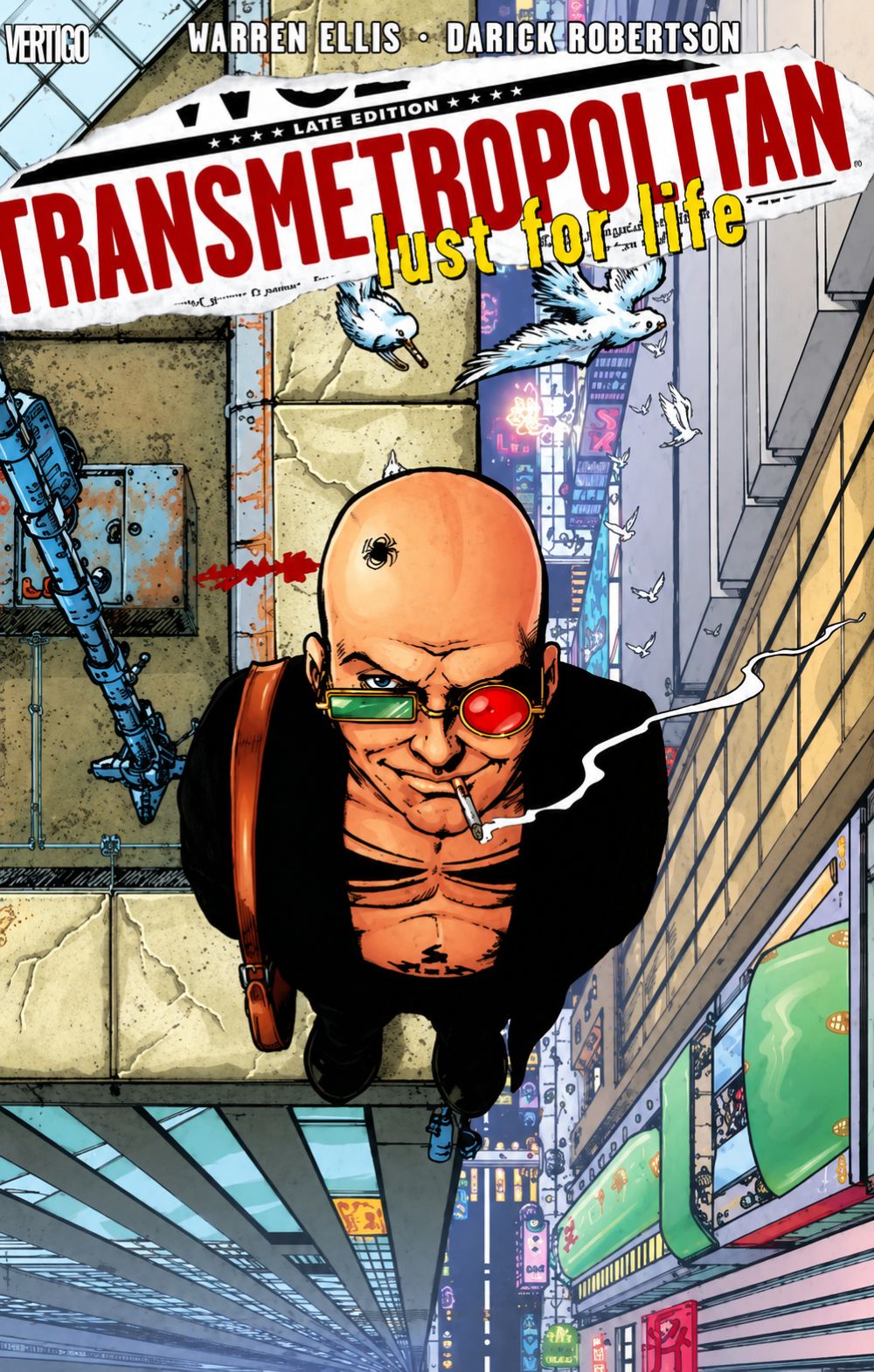
When you crack open the second volume of Warren Ellis and Darick Robertson’s Transmetropolitan, collected as Lust for Life, you’re not just getting another fix of cyberpunk chaos. You’re getting a book that solidifies exactly why this series is so brutally timeless. The first volume, Back on the Street, introduced us to the magnificent, drug-fueled trainwreck that is Spider Jerusalem and the grotesque, sprawling City he calls home. The second volume, however, is where the series finds its real footing. It’s not just about the loud, visceral shock value—though there’s plenty of that—but about deepening the world and its characters in a way that hits uncomfortably close to home.

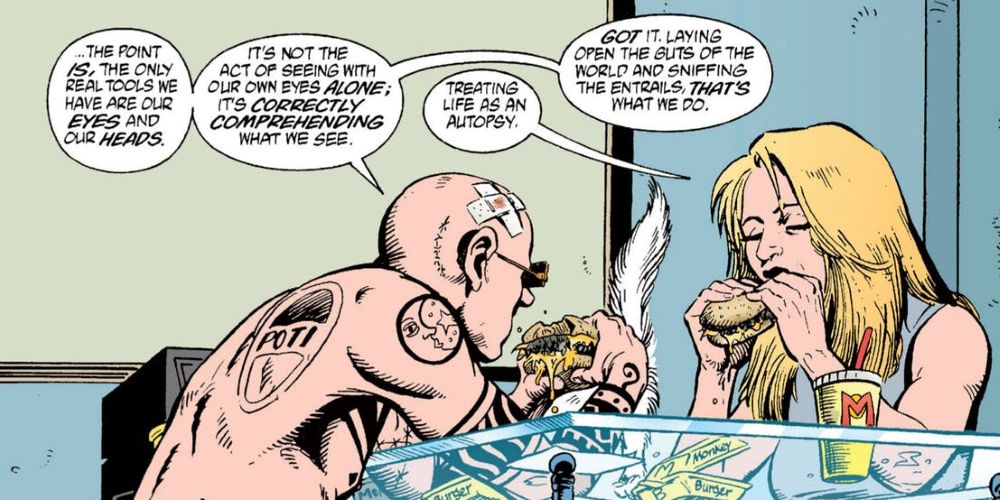
Spider Jerusalem is, and always will be, the heart of this series. He’s a chain-smoking, drug-abusing, perpetually enraged journalist in the mold of Hunter S. Thompson, armed with a bowel disruptor and a vicious tongue. He’s a complete and utter bastard to almost everyone he meets, prone to violent outbursts and scatological tirades. And yet, he’s our hero because he’s one of the few people in this future who actually gives a damn. His entire reason for being is his unwavering, almost religious, dedication to “The Truth.” He despises the apathy of the masses as much as the corruption of the powerful, and he’s willing to burn his life down to expose both. This volume showcases that beautifully, adding a layer of vulnerability that prevents him from becoming a one-note caricature. He’s a misanthrope who somehow still cares, and that tension is what makes him so compelling.

Lust for Life collects issues thirteen through twenty-four, and it’s structured more as a series of vignettes than a single, driving narrative. This is actually its greatest strength, as it allows Ellis and Robertson to expand the world and build the supporting cast in ways a more focused plot wouldn’t allow. A major chunk of the book is dedicated to the insane adventure of the frozen head of Spider’s ex-wife being stolen. It’s a gloriously bizarre plot, full of the kind of absurd, high-stakes chaos that Transmetropolitan does so well.

But the real emotional heft of Lust for Life comes from the quieter, more tragic stories woven between the gunfights and drug-induced rants. One of the most powerful sequences focuses on Channon, Spider’s long-suffering assistant. She’s a pillar of strength, constantly cleaning up Spider’s messes, but this volume shows her vulnerability. Her boyfriend decides to undergo a process to become a “gaseous vapor,” leaving his body behind for a formless existence. It’s a concept that sounds completely outlandish, but the execution is devastating. Ellis writes it not as a sci-fi gimmick but as a heartbreaking exploration of letting go, of watching someone you love choose a path you can’t follow. Channon’s pain and helplessness are palpable, grounding the over-the-top world in real human emotion.

Then there’s the story of Mary, a woman from our recent past who was cryogenically frozen and wakes up in the City. She’s presented as a historical relic, a simple photographer from the twentieth century who is completely out of her depth in this frantic, hyper-consumerist future. This is where the book delivers its most potent gut-punch. Mary is us. She’s the reader, trying to make sense of this alien world, and she fails. The City is a claustrophobic nightmare even for the people who were born into it, but for Mary, it’s a terrifying prison of isolation and confusion. Her story is a bleak reminder that this “progress” we’re supposedly heading toward often comes at the cost of our humanity. It’s a deeply existential and sad tale that serves as a harsh critique of the very future we might be trying to build.

Now, while Transmetropolitan is set in a hyper-exaggerated, grotesque future, the reason it remains so relevant is that the satire has proven to be uncomfortably prophetic. The City is a sprawling, neon-drenched hellscape where the line between news and entertainment has completely dissolved, where handheld devices connect everyone to a digital stream of information, and where journalism has devolved into a race for ratings and eyeballs. It’s a world where media personalities are more influential than politicians, and political leaders are cynical, manipulative populists who are experts at gaming the system. Sound familiar?

The landscape of modern journalism feels like a grim step toward this world. The “Death of Truth” that Spider rails against is a concept that has become a cornerstone of our current political and media discourse. The Beast and The Smiler, the corrupt politicians in the series, aren’t just cartoon villains; they’re mirrors reflecting a world of political spin, gerrymandering, and where the “villains” are often the ones controlling the narrative. Spider’s constant, violent struggle to get the real story feels less like a sci-fi fantasy and more like a desperate wish-fulfillment for anyone frustrated with the spin and half-truths of modern politics.

When Spider writes his column, “I Hate It Here,” he’s speaking for a populace that feels powerless and manipulated, a populace nicknamed “The New Scum” by the establishment. This social commentary hits hard because you can see its echoes everywhere today. The series suggests that technology has advanced, but human nature—our greed, our apathy, our susceptibility to manipulation—has not. It’s a bitter pill to swallow, but it’s what gives the book its power.

Transmetropolitan Vol. 2: Lust for Life might be a little light on overarching plot for some readers’ tastes. It’s not a major political arc; it’s more of a character study of the city and its inhabitants. But that’s precisely why it’s so effective. It proves that the series isn’t just a one-trick pony of cyberpunk fury. It has a heart, a soul, and a searing intelligence that cuts to the bone of our own societal failings. It’s a book that will make you laugh at its absurdity one minute and then leave you staring at the wall in quiet contemplation the next. It reinforces that even a nihilistic, drug-addled, foul-mouthed bastard like Spider Jerusalem is exactly the kind of hero we need to remind us of what we’re losing.

Transmetropolitan Volume Reviews

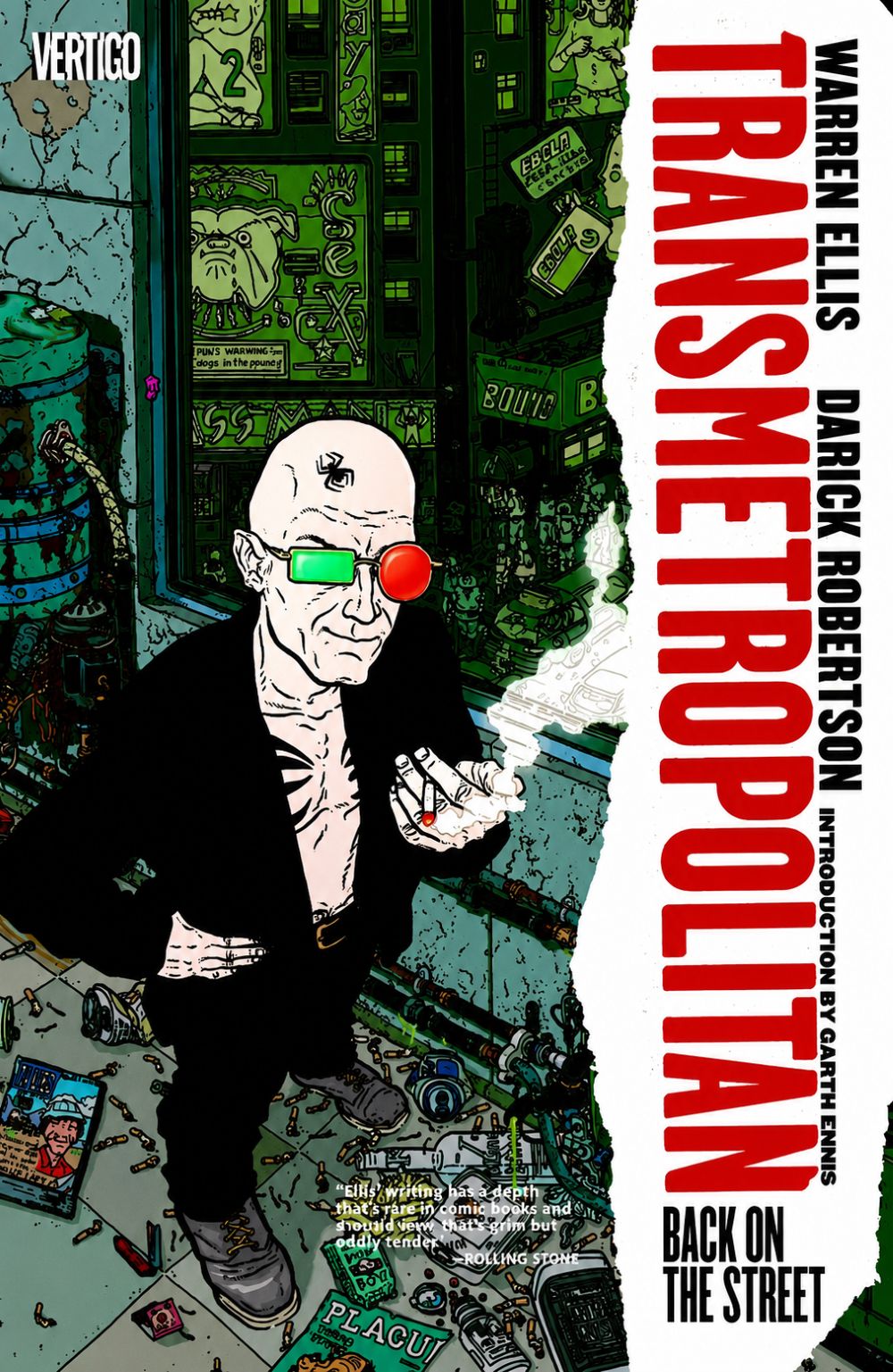
Review: Transmetropolitan Vol. 1 – Back on the Street


“Journalism is just a gun. It’s only got one bullet in it, but if you aim right, that’s all you need. Aim it right, and you can blow a kneecap off the world.” — Spider Jerusalem

There is a particular kind of jolt that comes from revisiting a story written decades earlier and realizing it was not so much predicting the future as identifying a sickness already taking hold. Written by Warren Ellis and illustrated by Darick Robertson, Transmetropolitan Vol. 1: Back on the Street is exactly that kind of book. It is loud, filthy, hilarious, and vicious in all the ways it needs to be, and it lands differently now than it likely did in the late nineties. What once read primarily as a wild, hyperbolic satire of politics, media, consumerism, and public numbness now can feel unnervingly close to reportage with the names changed. Its 23rd-century City remains an over-the-top cyberpunk nightmare, but the institutions, personalities, and manufactured distractions running it feel very familiar.

The volume begins with Spider Jerusalem living in isolation, hiding in the mountains after abandoning the City and the career that made him famous. He has a book contract to fulfill, a pile of debts to settle, and no actual desire to rejoin civilized life. Unfortunately for him, the people financing his escape have had enough. Spider is forced back into the City, a vast, overcrowded cyberpunk metropolis that seems to have taken every bad impulse of contemporary society and pushed it beyond all reasonable limits. His return is not a heroic homecoming. It is more like dropping an angry, drug-addled, heavily armed journalist into the middle of a garbage fire and asking him to write a column about the smoke.

Spider’s immediate appeal is that he has no interest in performing respectability. He is rude, vindictive, profane, selfish, and fully capable of treating even his friends terribly. He uses violence too casually, insults everyone around him, and carries a bowel disruptor gun that can incapacitate people in the most humiliating manner imaginable. In another book, these traits might make him an unbearable edgelord. Back on the Street, however, understands that Spider’s ugliness is part of a larger contradiction. He is not cruel because he does not care; he is cruel because he cares too much and has no healthy way of processing how badly the world fails ordinary people.

That is what makes him more than a Hunter S. Thompson imitation with futuristic sunglasses. Spider is a gonzo journalist, but his journalism is not merely an excuse for a manic lifestyle or a stage for his personality. At his best, he is driven by an almost old-fashioned moral belief that the truth matters, that citizens deserve to know what is being done in their name, and that powerful people should not be allowed to bury their crimes under public-relations language. The series positions journalism as something active rather than passive. Spider does not just report what happens; he investigates, provokes, exposes, and refuses to let the comfortable look away.

His column, “I Hate It Here,” captures the character’s relationship with the City. Spider hates it because he sees it clearly. He sees the absurdity of its consumer culture, the cruelty hiding behind political slogans, and the way people are taught to accept exploitation as normal. Yet he also understands the City in a way that few other characters do. It is full of strange, desperate, damaged people trying to survive in a system that is too big, too loud, and too indifferent to care whether they live with dignity. Spider’s contempt is not aimed equally at everyone. He has little patience for complacency, hypocrisy, and stupidity, but he shows genuine anger when vulnerable people are victimized by police, politicians, corporations, or public indifference. His idealism is twisted, abrasive, and buried beneath several layers of chemical abuse, but it is still idealism.

The City itself is the book’s other major character. Robertson’s art sells its overwhelming scale and ugliness. Every street looks packed with signs, body modifications, crowds, trash, strange fashion, predatory businesses, and people whose lives have been reshaped by technology in ways both liberating and grotesque. The future is not sleek in the familiar science-fiction sense. It is grubby, crowded, commercial, and deeply human. People can alter their bodies, change their identities, pursue bizarre new faiths, and live inside an endless stream of media stimulation, but none of those developments have solved poverty, loneliness, corruption, or abuse of power.

That is why the book has aged more effectively than many stories set in a supposedly distant future. Its technology is exaggerated, but its social anxieties feel much closer now. The City is saturated with information, yet its people are often less informed than ever. Everyone has access to spectacle, outrage, personality-driven media, and instant distractions, but the institutions shaping their lives remain opaque and unaccountable. The comic’s dystopia is not based on the idea that technology automatically destroys humanity. Instead, it suggests that technology amplifies the priorities already built into society. If a culture values profit, spectacle, division, and convenience over empathy and truth, more advanced technology simply gives those impulses more efficient tools.

The political material in this first volume is especially pointed. Ellis is interested in the gap between public image and actual power. Politicians do not need to be secretly subtle or brilliant to be dangerous; they only need to understand how to manipulate fear, identity, frustration, and media attention. The institutions around them—police, corporate media, wealthy interests, and political operatives—help sustain the illusion that ordinary people have meaningful control while making sure the system remains insulated from consequences. The book’s vision of power can be blunt, but bluntness is part of its style. Transmetropolitan does not whisper its anger. It shouts because it believes politeness is often one of the tools that lets abuse continue unchallenged.

At the same time, Back on the Street is not flawless. Its satire can be so broad that it occasionally feels like the story is pointing at a target with both hands and yelling until the reader gets it. Some of the shock humor and sexual material carry an intentionally trashy late-nineties edge that may feel juvenile or dated. The supporting cast is still taking shape, so many people primarily exist as foils for Spider’s verbal attacks or examples of the City’s bizarre social landscape. The book’s relentless attitude can also wear readers down if they need a more emotionally grounded entry point.

Still, the excess is usually purposeful. This is a world where the boundaries between entertainment, propaganda, commerce, and personal identity have all but collapsed, so subtle world-building would almost be dishonest. The visual and verbal overload puts the reader in Spider’s position: constantly assaulted by nonsense, constantly asked to separate meaningful horror from everyday noise. The absurdity makes the real injustice sharper. A city can be full of outrageous fashion, talking animals, hallucinogens, and body-modification trends, yet its most disturbing feature remains how easily human suffering is turned into content, data, or a political talking point.

Ultimately, Transmetropolitan Vol. 1: Back on the Street works because Spider Jerusalem is not presented as a clean solution to a corrupt society. He is a mess, an irritant, and sometimes a monster in miniature. But he is also someone who refuses to be numb. In a world built to keep people distracted, passive, and exhausted, that refusal has real value. The book’s cyberpunk future remains wildly over-the-top, but its central warning feels uncomfortably familiar: the most dangerous dystopias are not always the ones with impossible technology. Sometimes they are the ones where the public is flooded with noise, the powerful face no consequences, and telling the truth becomes an act of open rebellion.

Guilty Pleasure No. 113: Cherry (by Larry Welz)


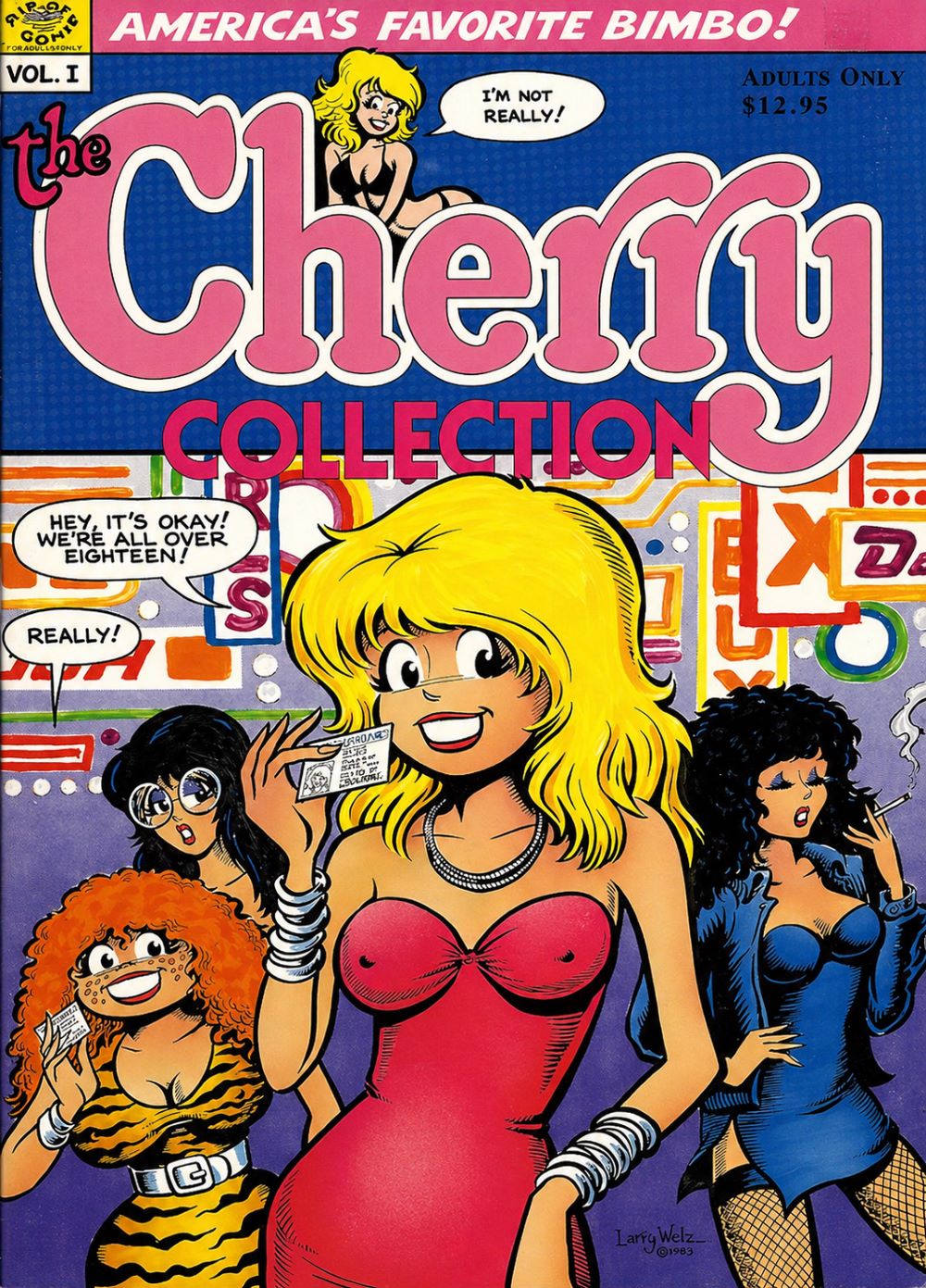
In the sprawling, often grimy landscape of underground comics, few characters have managed to carve out as distinct—or as controversial—a niche as Cherry, the perpetually eighteen-year-old protagonist born from the mind of cartoonist Larry Welz. Originally debuting in 1971 under the moniker Cherry Poptart, the character became a fixture of counter-culture erotica, eventually settling into a self-titled series that would span decades. Welz’s work was instrumental in helping to usher in the vibrant, anarchic underground comics movement in San Francisco during the tumultuous social and political landscape of the 1960s and 1970s. Engaging with Cherry today is an exercise in complex appreciation; it is the definition of a “guilty pleasure,” a work that exists at the intersection of satirical wit, overt hedonism, and a stylistic homage to the quintessential American comic book aesthetic.

At the core of the series’ appeal is the striking contrast between its visual presentation and its mature, often raunchy subject matter. Welz famously adopted an art style that directly mirrored the work of Dan DeCarlo, the legendary artist who defined the iconic look of the Archie comics. By utilizing the clean, “happy teenager” lines of mid-century Americana—often associated with the wholesome, classic adventures of Riverdale—and infusing them with unrestrained, sex-positive, and frequently explicit content, Welz created a powerful visual dichotomy. This deliberate juxtaposition of a quintessential teen comic aesthetic with an adults-only narrative creates a jarring, transgressive experience that makes the work particularly effective as a guilty pleasure. There is an undeniable, subversive thrill in seeing character designs that evoke the innocent charm of Betty or Veronica placed in scenarios that would have sent the strict mid-century Comics Code Authority into a tailspin.

The character of Cherry herself is a fascinating, if problematic, focal point. Defined by her insatiable curiosity, liberal attitude, and complete lack of inhibitions, she is less of a traditional narrative character and more of an agent of chaos who wanders through various high-school-adjacent tropes. Because she remains eighteen, the series avoids the weight of traditional character growth, opting instead for an episodic format where the pleasure is derived entirely from the immediate situation—be it a pop-culture parody, a bizarre social commentary, or a sexual escapade. While the series is categorized as erotica, to dismiss it solely as such is to overlook the sharp satirical edge that occasionally pokes through the panels. Fans of the underground and transgressive culture scene often point out that Cherry frequently served as a vehicle for Welz to comment on the broader socio-political zeitgeist of the era. By utilizing the “anything goes” freedom of the underground press, the series tackled issues and social norms that mainstream comics dared not touch, masking biting critiques within its provocative and irreverent framing.

This thematic depth, however, exists in tension with the repetitive nature of the stories. As a guilty pleasure, the series relies on a specific cadence: the setup of a conventional trope, the predictable introduction of sexual absurdity, and the punchline. For the dedicated reader, this repetition is comforting and familiar, but it is also the source of the series’ main weakness. There are moments where the narrative feels like it is running on fumes, and the reliance on sexual shock value can feel stagnant compared to more modern or structurally daring indie comics. Furthermore, admitting to enjoying Cherry in a contemporary landscape is complicated by how the series has—or hasn’t—aged. Much of the humor and the treatment of gender dynamics feel firmly rooted in the specific, often male-gaze-dominated world of mid-century underground comix.

Consequently, it is a work that requires a reader to compartmentalize; one can admire the historical significance of Welz’s contribution to erotic art and the audacity of his stylistic parody while simultaneously acknowledging that the execution of certain themes feels archaic. This is why Cherry remains a quintessential guilty pleasure. It does not aim for the lofty aspirations of a graphic novel masterpiece, nor does it try to serve as a beacon of progressive morality. Instead, it succeeds as a piece of “low-brow” entertainment that is proud of its own transgression. The inclusion of guest work, such as a rare script by Neil Gaiman in Cherry Deluxe, highlights that the series was often respected within its own subculture as a legitimate, if edgy, playground for creative expression.

Looking back, the series acts as a testament to the “anything goes” ethos of the underground press era. While there are certainly other adult-oriented comics that might offer more robust character arcs or sophisticated storytelling, few manage to balance the specific blend of nostalgia, irreverence, and raw, unapologetic hedonism that defines the Cherry universe. It is a series that invites the reader to lean into the discomfort and find humor in the sheer absurdity of the scenarios. For those who enjoy exploring the fringes of comic history, Cherry remains a vital, if occasionally flawed, artifact. It represents a time when comics were a battlefield for free speech and a canvas for uninhibited adult fantasy. As a guilty pleasure, it holds up because it never pretends to be anything other than what it is: a fun, slightly reckless, and undeniably bold experiment in the possibilities of the medium.

Previous Guilty Pleasures

  1. Half-Baked
  2. Save The Last Dance
  3. Every Rose Has Its Thorns
  4. The Jeremy Kyle Show
  5. Invasion USA
  6. The Golden Child
  7. Final Destination 2
  8. Paparazzi
  9. The Principal
  10. The Substitute
  11. Terror In The Family
  12. Pandorum
  13. Lambada
  14. Fear
  15. Cocktail
  16. Keep Off The Grass
  17. Girls, Girls, Girls
  18. Class
  19. Tart
  20. King Kong vs. Godzilla
  21. Hawk the Slayer
  22. Battle Beyond the Stars
  23. Meridian
  24. Walk of Shame
  25. From Justin To Kelly
  26. Project Greenlight
  27. Sex Decoy: Love Stings
  28. Swimfan
  29. On the Line
  30. Wolfen
  31. Hail Caesar!
  32. It’s So Cold In The D
  33. In the Mix
  34. Healed By Grace
  35. Valley of the Dolls
  36. The Legend of Billie Jean
  37. Death Wish
  38. Shipping Wars
  39. Ghost Whisperer
  40. Parking Wars
  41. The Dead Are After Me
  42. Harper’s Island
  43. The Resurrection of Gavin Stone
  44. Paranormal State
  45. Utopia
  46. Bar Rescue
  47. The Powers of Matthew Star
  48. Spiker
  49. Heavenly Bodies
  50. Maid in Manhattan
  51. Rage and Honor
  52. Saved By The Bell 3. 21 “No Hope With Dope”
  53. Happy Gilmore
  54. Solarbabies
  55. The Dawn of Correction
  56. Once You Understand
  57. The Voyeurs 
  58. Robot Jox
  59. Teen Wolf
  60. The Running Man
  61. Double Dragon
  62. Backtrack
  63. Julie and Jack
  64. Karate Warrior
  65. Invaders From Mars
  66. Cloverfield
  67. Aerobicide 
  68. Blood Harvest
  69. Shocking Dark
  70. Face The Truth
  71. Submerged
  72. The Canyons
  73. Days of Thunder
  74. Van Helsing
  75. The Night Comes for Us
  76. Code of Silence
  77. Captain Ron
  78. Armageddon
  79. Kate’s Secret
  80. Point Break
  81. The Replacements
  82. The Shadow
  83. Meteor
  84. Last Action Hero
  85. Attack of the Killer Tomatoes
  86. The Horror at 37,000 Feet
  87. The ‘Burbs
  88. Lifeforce
  89. Highschool of the Dead
  90. Ice Station Zebra
  91. No One Lives
  92. Brewster’s Millions
  93. Porky’s
  94. Revenge of the Nerds
  95. The Delta Force
  96. The Hidden
  97. Roller Boogie
  98. Raw Deal
  99. Death Merchant Series
  100. Ski Patrol
  101. The Executioner Series
  102. The Destroyer Series
  103. Private Teacher
  104. The Parker Series
  105. Ramba
  106. The Troubles of Janice
  107. Ironwood
  108. Interspecies Reviewers
  109. SST — Death Flight
  110. Undercover Brother
  111. Out for Justice
  112. Food Wars!

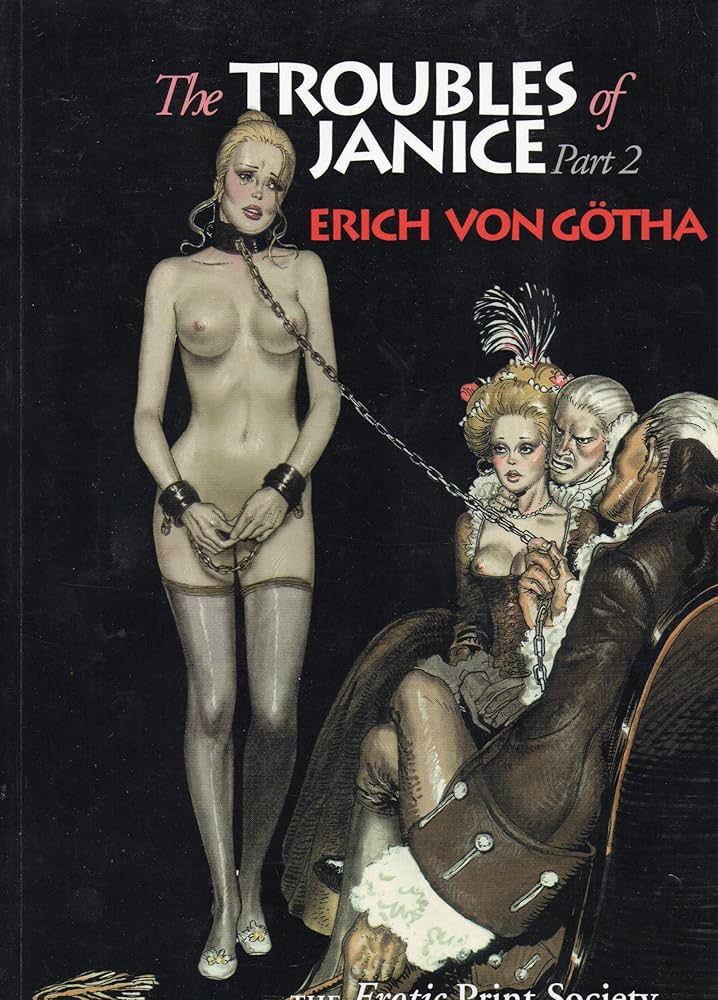
Guilty Pleasure No. 106: The Troubles of Janice (by Erich von Götha)


The Troubles of Janice by Erich von Götha remains one of the most infamous works in erotic comics, a multi-volume series spanning 1987 to 1996 that draws readers into a vivid world of sadomasochistic intrigue amid the lavish decay of 18th-century England. Janice McCormick, a curvaceous young woman released from Newgate Prison, soon finds herself ensnared by the sadistic Duke Viscount Vauxhall of Nether Wallop, whose experiments in female discipline propel her through a cascade of blackmail, assassinations, and sensual escapades—from the clandestine Hellfire Club to the shimmering waterways of Venice. Serialized initially in French magazines and later compiled into albums such as Parts 1 through 4, the narrative echoes the spirit of the Marquis de Sade’s Philosophy in the Bedroom, pitting innocence against unbridled authority in panels brimming with exaggerated forms and explicit encounters that straddle the edge of terror and desire.

This series thrives squarely in guilty pleasure territory, offering a procession of BDSM scenarios tailored for indulgent, after-hours reading—Janice bound and enduring floggings, group violations, and ceremonial degradations at the hands of depraved aristocrats, clergy, and a imposing black servant named Horace, whose prominence marks the early chapters. The artwork begins with a raw, straightforward style, its stark lines accentuating phallic prominence and voluptuous contours, but evolves across the run into more refined techniques, incorporating nuanced shading, occasional full-color pages, and fluid compositions that convey genuine motion. Under the pseudonym of British artist Robin Ray, von Götha refined his craft from earlier projects like the sporadic Torrid comic of the 1980s, achieving here a theatrical intensity that elevates rote erotica into something akin to a decadent opera. Janice’s subjugation under Vauxhall builds to extravagant bacchanals, her figure a stage for boundless transgression, sustained by slender plotlines: a doomed union with Lord Mitchcombe, clerical extortion of her fortune, and a desperate flight to Venice. It delivers unvarnished pornographic fantasy, where non-consent heightens the illicit allure, interwoven with dated racism, sexism, and brutality that clash with contemporary standards.

Nevertheless, amid its sensationalism, The Troubles of Janice carries a sly undercurrent that resonates as guilty pleasure, while dedicated admirers in specialized erotica and Sadean circles regard it as elevated art for its bold dissection of dominance and moral corruption. Enthusiasts praise von Götha’s fidelity to historical particulars—powdered periwigs, flickering chambers, and rigid social strata—which grounds the excess in authenticity, recasting Janice’s sufferings as a pictorial meditation on control and yielding. The work’s longevity, evidenced by deluxe reprints into 2008 via publishers like Dynamite and Priaprism/Last Gasp, underscores this devoted following, as initial stark visuals mature into polished depictions of perspiration, anguish, and rapture rendered with technical finesse. Partnership with writer Bernard Joubert lends philosophical weight reminiscent of Sade’s justifications for indulgence, complemented by von Götha’s advertising and design heritage, which infuses each frame with compelling, voyeuristic magnetism.

The episodic structure fosters escalating drama without pause: Janice’s journey from captive to bereaved inheritor to elusive temptress parallels gothic archetypes, her physique weathering not only corporal trials but subtle emotional fissures that suggest deeper psyche amid the torment. Venetian interludes in subsequent volumes add worldly elegance, with Janice alluring period luminaries amid carnivalesque revels and canal rendezvous, a momentary reprieve prior to recapture. Visually, the shift from monochrome austerity to vivid palettes enlivens flesh tones and intensifies ominous depths. Fair assessment reveals shortcomings, however: proportions veer toward the grotesque, recurring motifs dull the initial impact, and pervasive misogyny, though fitting the fantastical milieu, borders on excess even for 1980s sensibilities. Stereotypes such as Horace’s portrayal jar in modern light, affirming its roots in London’s pre-PC erotic underbelly.

Within insular communities, such elements paradoxically enhance its stature—collectors and forums acclaim von Götha as a virtuoso of restraint, his standalone prints and mythic illustrations perpetuating the legacy, bolstered by exhibitions in Bologna and Paris that confer artistic validity. To the broader audience, it embodies quintessential guilty pleasure—discreetly concealed material that fulfills taboo yearnings sans apology. The Troubles of Janice persists by unflinchingly engaging the subconscious, compelling confrontation with shadowed impulses through line and shade. Whether approached for its carnality or its Sadean resonances, The Troubles of Janice endures as a divisive masterpiece, ideally encountered with caution.

Previous Guilty Pleasures

  1. Half-Baked
  2. Save The Last Dance
  3. Every Rose Has Its Thorns
  4. The Jeremy Kyle Show
  5. Invasion USA
  6. The Golden Child
  7. Final Destination 2
  8. Paparazzi
  9. The Principal
  10. The Substitute
  11. Terror In The Family
  12. Pandorum
  13. Lambada
  14. Fear
  15. Cocktail
  16. Keep Off The Grass
  17. Girls, Girls, Girls
  18. Class
  19. Tart
  20. King Kong vs. Godzilla
  21. Hawk the Slayer
  22. Battle Beyond the Stars
  23. Meridian
  24. Walk of Shame
  25. From Justin To Kelly
  26. Project Greenlight
  27. Sex Decoy: Love Stings
  28. Swimfan
  29. On the Line
  30. Wolfen
  31. Hail Caesar!
  32. It’s So Cold In The D
  33. In the Mix
  34. Healed By Grace
  35. Valley of the Dolls
  36. The Legend of Billie Jean
  37. Death Wish
  38. Shipping Wars
  39. Ghost Whisperer
  40. Parking Wars
  41. The Dead Are After Me
  42. Harper’s Island
  43. The Resurrection of Gavin Stone
  44. Paranormal State
  45. Utopia
  46. Bar Rescue
  47. The Powers of Matthew Star
  48. Spiker
  49. Heavenly Bodies
  50. Maid in Manhattan
  51. Rage and Honor
  52. Saved By The Bell 3. 21 “No Hope With Dope”
  53. Happy Gilmore
  54. Solarbabies
  55. The Dawn of Correction
  56. Once You Understand
  57. The Voyeurs 
  58. Robot Jox
  59. Teen Wolf
  60. The Running Man
  61. Double Dragon
  62. Backtrack
  63. Julie and Jack
  64. Karate Warrior
  65. Invaders From Mars
  66. Cloverfield
  67. Aerobicide 
  68. Blood Harvest
  69. Shocking Dark
  70. Face The Truth
  71. Submerged
  72. The Canyons
  73. Days of Thunder
  74. Van Helsing
  75. The Night Comes for Us
  76. Code of Silence
  77. Captain Ron
  78. Armageddon
  79. Kate’s Secret
  80. Point Break
  81. The Replacements
  82. The Shadow
  83. Meteor
  84. Last Action Hero
  85. Attack of the Killer Tomatoes
  86. The Horror at 37,000 Feet
  87. The ‘Burbs
  88. Lifeforce
  89. Highschool of the Dead
  90. Ice Station Zebra
  91. No One Lives
  92. Brewster’s Millions
  93. Porky’s
  94. Revenge of the Nerds
  95. The Delta Force
  96. The Hidden
  97. Roller Boogie
  98. Raw Deal
  99. Death Merchant Series
  100. Ski Patrol
  101. The Executioner Series
  102. The Destroyer Series
  103. Private Teacher
  104. The Parker Series
  105. Ramba

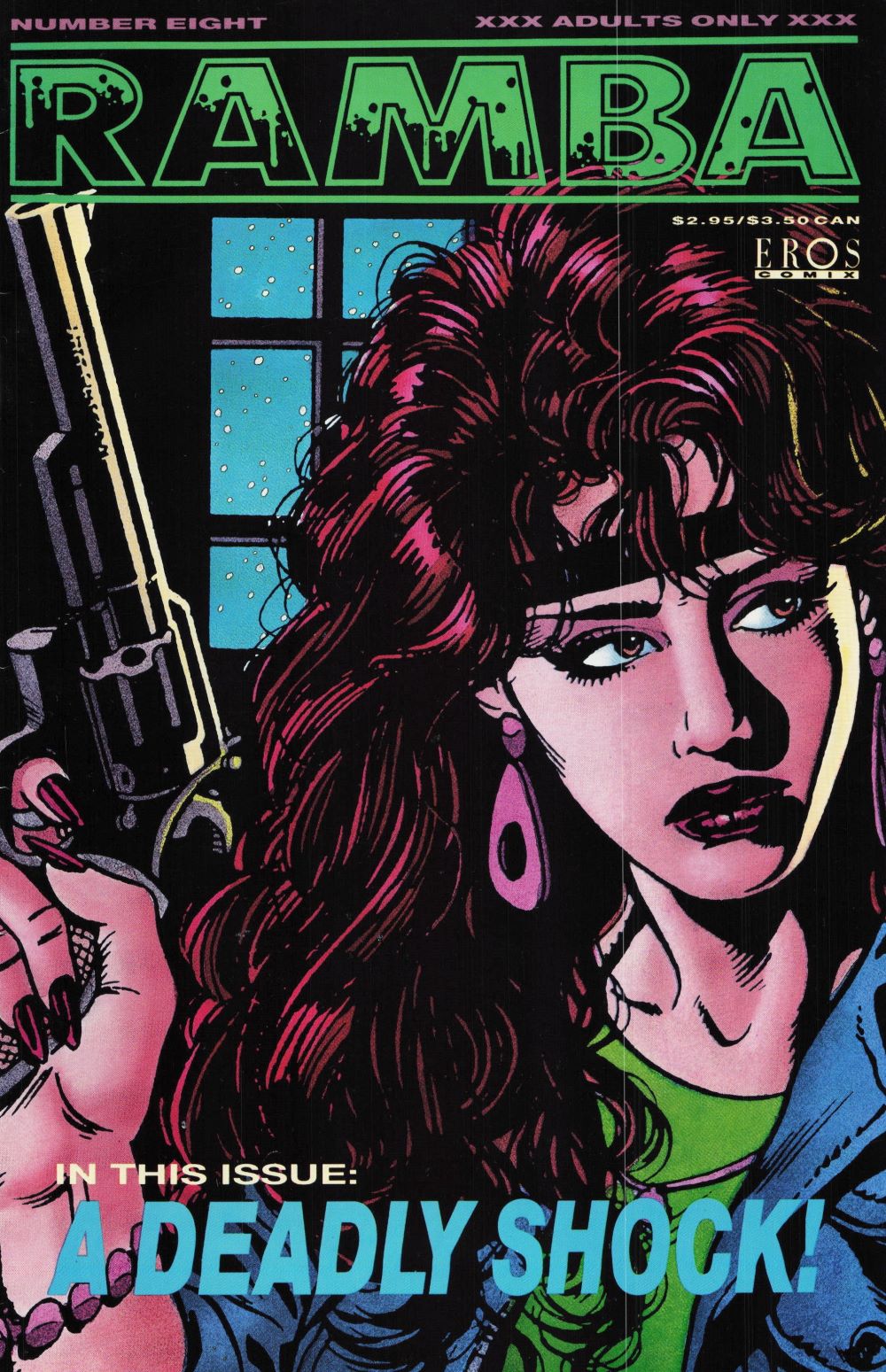
Guilty Pleasure No. 105: Ramba (by Rossano Rossi & Marco Bianchini)


Ramba is one of those books you probably don’t proudly display on the coffee table, but you also don’t quite forget once you’ve read it. On the surface it’s an Italian erotic comic about a hyper-sexualized hitwoman, yet under all the sweat, sleaze, and gun smoke there’s a surprisingly solid crime engine humming along, which is what makes it feel like such an unapologetic guilty pleasure.

Created by Rossano Rossi and collaborators and published in English by Eros Comix in the 1990s, Ramba follows its titular assassin—loosely inspired by Italian porn star Ramba/Ileana Carisio—as she takes on murder-for-hire jobs that inevitably twist into elaborate scenarios of sex and violence. Every assignment is essentially built on a three-part rhythm: seduction, escalation, execution. Ramba beds clients, enemies, bystanders, women, men, and sometimes even corpses, and that’s not an exaggeration; necrophilia, watersports, and a running thread of sadomasochistic games are part of the fabric here. That whirl of anything-goes content is where the series earns its notoriety, but it’s also where a lot of readers will tap out, because Ramba never pretends to be tasteful or restrained.

What keeps the book from collapsing into pure shock-for-shock’s-sake is that it does, in fact, function as a crime comic in the European erotica tradition. Rossi structures most chapters as compact revenge or hit-job dramas, the kind of tight little potboilers you might see in a hardboiled anthology if you stripped out the explicit content—or, in this case, added a lot more of it. There is an internal logic to the way jobs are set up, double-crosses emerge, and Ramba problem-solves her way out of bad situations, even as she pauses mid-escape for a quick tryst in a stairwell. That constant cross-cutting between sex and violence, between carnal excess and professional precision, gives the series a strangely propulsive energy; you may not approve of what it’s doing, but it’s rarely dull.

Still, you can’t talk about Ramba without acknowledging just how aggressively transgressive it is. The book happily checks off an entire “so wrong it’s right” playbook: everybody seems perpetually horny, gender is more a preference slider than a barrier, and taboos are treated as toys to be scattered across the floor. Ramba herself will “try anything that moves,” to borrow the fandom shorthand, and the comic keeps pushing her into situations that blur consent, pain, humiliation, and pleasure to a degree that many readers will reasonably find grotesque. Some sequences—like the infamous scene where she urinates into a dying man’s mouth and then exploits his post-mortem arousal—are deliberately pitched to provoke, and they succeed perhaps a little too well.

That blend of sex and brutality is the core ethical sticking point. The series clearly wants to critique brutality against women—Ramba cannot stand seeing other women victimized and often redirects violence back at abusers—but at the same time it eroticizes that very violence, staging assaults and torture in a way that’s unavoidably titillating for its target audience. The result is an uneasy tension: on one page, Ramba is a feminist avenger cutting down misogynists, and on the next she’s participating in a scenario that looks uncomfortably like torture porn. Whether you see this as frank, messy exploration of dark fantasies or just sleaze wrapped in a wafer-thin moral fig leaf will depend entirely on your own threshold and politics.

Visually, Ramba lands much closer to craftsmanship than throwaway smut. Artists Marco Delizia and Fabio Valdambrini give the series a sharply observed, high-contrast look that elevates it beyond bargain-bin erotica. Delizia’s pages are dense with black ink, detailed anatomy, and an almost fetishistic focus on physical textures—leather, sweat, shadowed skin—which reinforces the grittier, urban crime vibe. Valdambrini, by contrast, leans into an older adventure-strip style with looser figures and more traditional shading, evoking 1940s newspaper serials updated with NC-17 sensibilities. That stylistic tug-of-war, between pulp sophistication and outright porn, mirrors the writing: the art insists on giving this material a veneer of legitimacy even when the content is at its most extreme.

Narratively, the book occasionally steps outside its grounded crime lane into fully pulp territory, dabbling in supernatural elements such as a black magic coven and demons in stories like “Vendetta From Hell.” These arcs introduce “hunting humans as sport” riffs and occult enemies that feel, frankly, like a different series wandered in from the next shelf over. On one hand, they add variety and show Ramba operating in wildly different contexts; on the other, they dilute the gritty hitwoman angle that is easily the comic’s strongest hook. When Ramba stays focused on mob bosses, crooked cops, and revenge killings, it feels like a filthy cousin to Euro-crime cinema; when it veers into demon-summoning cults, it plays more like an anything-goes anthology that happened to keep the same lead character.

For all the shock value, there is a certain honesty to how Ramba approaches sexual fantasy. It doesn’t posture as an art-house deconstruction or wrap its extremes in academic language; it stands there, naked and grinning, saying: this is what some people fantasize about when no one is looking. That directness can be disarming. You get the sense the creators understand that erotic fantasy often lives in a space that’s not meant to be aspirational or “healthy,” and they lean into that forbidden-zone appeal. If you’ve ever rolled your eyes at glossy, sanitized “sexy” comics that pretend to be above the id, Ramba feels like the brazen counterargument, all id with just enough structure to hold it together.

Of course, that’s also what makes it so specifically a guilty pleasure, even for readers who might be predisposed to like transgressive material. It is possible to admire the storytelling economy, the craftsmanship of the art, and the boldness of its content while simultaneously feeling that some sequences cross into outright mean-spirited nastiness. The books have been praised in some circles as a kind of high watermark of explicit sex comics in English—highly competent, unabashedly filthy, and influential in their niche—but that gold comes smudged with plenty of grime. If you’re not prepared to wade through the muck, you’re better off steering clear.

Ultimately, Ramba is best approached with clear eyes and a strong stomach. If you’re curious about the boundaries of 1990s European-style erotic comics, the series offers a vivid snapshot of what could be done when an imprint like Eros Comix let creators run wild, combining solid noir plotting with maximalist sexual excess. It’s exploitative, sometimes disturbingly so, but it’s also more thoughtfully constructed and visually ambitious than its lurid premise suggests. For some, it will be a hard pass; for others, it will sit firmly in that private, slightly embarrassing corner of the collection where guilty pleasures live, dusted off once in a while with a mix of discomfort and undeniable fascination.

Previous Guilty Pleasures

  1. Half-Baked
  2. Save The Last Dance
  3. Every Rose Has Its Thorns
  4. The Jeremy Kyle Show
  5. Invasion USA
  6. The Golden Child
  7. Final Destination 2
  8. Paparazzi
  9. The Principal
  10. The Substitute
  11. Terror In The Family
  12. Pandorum
  13. Lambada
  14. Fear
  15. Cocktail
  16. Keep Off The Grass
  17. Girls, Girls, Girls
  18. Class
  19. Tart
  20. King Kong vs. Godzilla
  21. Hawk the Slayer
  22. Battle Beyond the Stars
  23. Meridian
  24. Walk of Shame
  25. From Justin To Kelly
  26. Project Greenlight
  27. Sex Decoy: Love Stings
  28. Swimfan
  29. On the Line
  30. Wolfen
  31. Hail Caesar!
  32. It’s So Cold In The D
  33. In the Mix
  34. Healed By Grace
  35. Valley of the Dolls
  36. The Legend of Billie Jean
  37. Death Wish
  38. Shipping Wars
  39. Ghost Whisperer
  40. Parking Wars
  41. The Dead Are After Me
  42. Harper’s Island
  43. The Resurrection of Gavin Stone
  44. Paranormal State
  45. Utopia
  46. Bar Rescue
  47. The Powers of Matthew Star
  48. Spiker
  49. Heavenly Bodies
  50. Maid in Manhattan
  51. Rage and Honor
  52. Saved By The Bell 3. 21 “No Hope With Dope”
  53. Happy Gilmore
  54. Solarbabies
  55. The Dawn of Correction
  56. Once You Understand
  57. The Voyeurs 
  58. Robot Jox
  59. Teen Wolf
  60. The Running Man
  61. Double Dragon
  62. Backtrack
  63. Julie and Jack
  64. Karate Warrior
  65. Invaders From Mars
  66. Cloverfield
  67. Aerobicide 
  68. Blood Harvest
  69. Shocking Dark
  70. Face The Truth
  71. Submerged
  72. The Canyons
  73. Days of Thunder
  74. Van Helsing
  75. The Night Comes for Us
  76. Code of Silence
  77. Captain Ron
  78. Armageddon
  79. Kate’s Secret
  80. Point Break
  81. The Replacements
  82. The Shadow
  83. Meteor
  84. Last Action Hero
  85. Attack of the Killer Tomatoes
  86. The Horror at 37,000 Feet
  87. The ‘Burbs
  88. Lifeforce
  89. Highschool of the Dead
  90. Ice Station Zebra
  91. No One Lives
  92. Brewster’s Millions
  93. Porky’s
  94. Revenge of the Nerds
  95. The Delta Force
  96. The Hidden
  97. Roller Boogie
  98. Raw Deal
  99. Death Merchant Series
  100. Ski Patrol
  101. The Executioner Series
  102. The Destroyer Series
  103. Private Teacher
  104. The Parker Series