Retro Television Review: Crime Story 1.15 “Torello on Trial”


Welcome to Retro Television Reviews, a feature where we review some of our favorite and least favorite shows of the past!  On Mondays, I will be reviewing Crime Story, which ran on NBC from 1986 to 1988.  The entire show can be found on Tubi!
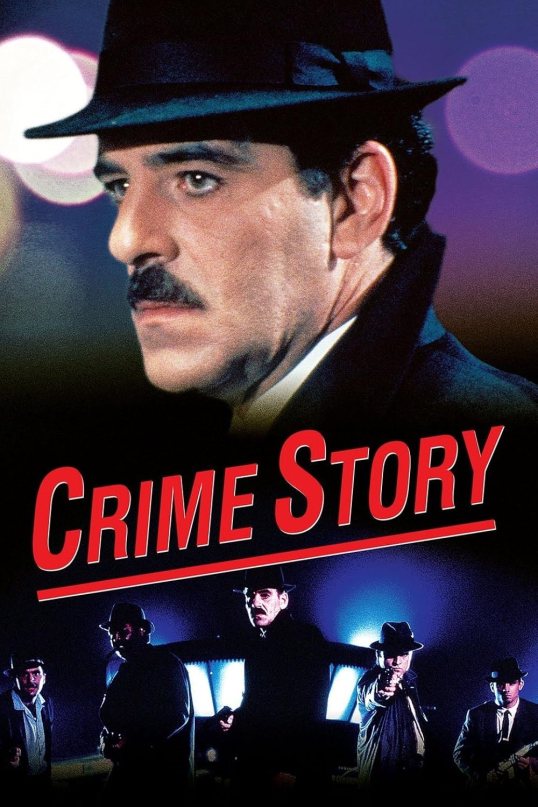
This week, Luca prepares for Vegas.

Episode 1.15 “Torello On Trial”

(Dir by Gary Sinise, originally aired on January 16th, 1987)

Buh-bye, Chicago!

Seriously, this is a huge episode.

It doesn’t start out as a huge episode.  It starts out as just another courtroom drama.  Mike Torello has been called by Ray Luca’s defense attorney to testify about the accusations that Frank Homan made against him.  By defending himself against Homan’s false claim that Torello was on the take, Torello will also be destroying the credibility of the state’s case against Luca, Phil Bartoli, and Paulie.  Torello’s not happy about it.  He’s even less happy when U.S. Attorney Brietel’s aggressive cross-examination reveals that Torello actually does have several acquaintances who are connected to the mob.  Of course, most of those acquaintances have been killed over the past few episodes.  As Brietel puts it, violence tends to follow Torello around.

Fortunately, the next day, David Abrams requests to be allowed to cross-examine Torello.  David reveals that Torello was a decorated soldier in Korea.  He reveals the Torello has been given regular commendations by the Chicago Police Department.  David makes Torello look like a saint.

As a result, the jury decides that Homan is not a credible witness.  Luca, Paulie, and Bartoli are all acquitted.  Brietel is told that the Justice Department has decided to drop the indictment against Torello.  Torello tells Brietel that the blood of anyone killed by Luca will be on his hands.  Brietel is not having a good day.

The first 35 minutes or so of this episode were solid but still felt like a standard and slightly predictable episode of Crime Story.  It wasn’t until the last 10 minutes or so that this episode really took off.

At a conference held immediately after Luca and company are acquitted, Manny Weisbrod convinces Chicago gangster Dom Tranchita (Joseph Ragno) to agree to invest ten million dollars in Luca’s plan to take over Las Vegas.  In return for the money, Manny agrees to allow Dom to continue to deal drugs in Chicago.  Luca and Paulie make plans to immediately head to Las Vegas to start their new lives.

The night, before leaving town, Luca drops in on Tranchita and shoots him dead.  Then, Luca goes over to Bartoli’s house and kills him as well.  We’re reminded that Luca is someone who can kill without hesitation.  It doesn’t matter that he and Bartoli worked together.  Luca is cleaning up all of the loose ends before he leaves Chicago.

Meanwhile, Torello is invited to a meeting in a hotel.  U.S. Deputy Attorney General Patrick Hallahan (Jann Wenner) tells him that the Justice Department is setting up a national task force to take down Luca and that it’s going to be headquartered in Chicago and Las Vegas.  He asks Torello to be in charge of it.  Torello says that he has no interest in working with the same Justice Department that tried to throw him in prison.  Hallahan reveals that Brietel has been “reassigned to Anchorage” and that David Abrams will be working with Torello.  The members of the Major Crimes Unit will be reassigned to the strike force.

There’s only one condition.  As much as Torello wants to take Luca down, he’s going to have to wait until he has enough evidence to take down the entire organization with him.

Torello nods.  He’s going to Vegas!

It makes sense really.  Torello has nothing left in Chicago.  He’s divorced, he has no real friends outside of the other members of the Major Crimes Unit.  Torello’s only purpose in life is to stop Ray Luca.  What choice does Torello have but to follow him to Vegas?  Torello is obsessed and, if he had to stay in Chicago while Luca went to Vegas, he would have been miserable.  It’s good for the government and good for the show that Torello agreed to take charge of the task force.  But, as the episode ends, it’s hard not to feel that it won’t be good for Torello’s mental health.

This turned out to be a great episode,  To be honest, I was starting to get a little bit bored with Crime Story.  But now, with the story heading in a new direction, I can’t wait to see what happens!

Retro Television Review: Crime Story 1.14 “Fatal Crossroads”


Welcome to Retro Television Reviews, a feature where we review some of our favorite and least favorite shows of the past!  On Mondays, I will be reviewing Crime Story, which ran on NBC from 1986 to 1988.  The entire show can be found on Tubi!

This week, guess who screws up?

Episode 1.14 “Fatal Crossroads”

(Dir by Gary Sinise, originally aired on January 9th, 1987)

As much as I want to like David Abrams — and I did like him for the first few episodes — he’s just dumb.  Offended by the fact that Luca is using his legal advice to try to beat his indictment, David starts this episode out by approaching Luca in public and announcing that he’s not only quit the public defenders office but that he’s also decided to join the D.A.’s office, specifically so he can take guys like Luca down.  Then, later on in the episode, David approaches Luca again and, this time, he brings along his father (Nathan Davis).  David’s father, a former low-level gangster, brags about how smart David is and how he’s going to take Luca down.

So, of course, Luca has someone put a bomb underneath David’s car.

And, of course, it’s David’s father who decides to borrow the car to go to the store and who ends up getting blown up.

And yes, it’s a terrible thing that David’s father got blown up.  BUT WHAT DID DAVID THINK WAS GOING TO HAPPEN!?  He knows who Luca is!  He knows that Luca will kill people without a second thought.  So why the Hell is David walking up to Luca and basically daring him to try to kill him?  I mean, David’s father was in the rackets!  David should have known better and, for that matter, David’s father should have known better.

I’m sorry but David Abrams is a moron.

For some reason, Luca also tries to take a hit out on Torello, despite the fact that Luca’s entire legal strategy depends on Torello denying Homan’s claims that Torello is crooked.  Fortunately, Torello is somehow brilliant enough to realize that Luca is going to take a hit out on him and the members of the Crime Squad are smart enough to take a look at a building and somehow figure out exactly which room a sniper would be hiding in.  If only David Abrams was as smart!

This episode featured a few too many coincidences and a bit too much of David Abrams suddenly acting like an idiot.  It was directed by Gary Sinise, who is one of my favorite people.  Sinise does a good job of capturing the drizzly gangster movie atmosphere but the script could have used a bit more work.

April Noir: Thief (dir by Michael Mann)


1981’s Thief tells the story of Frank (James Caan).

Frank is a professional diamond thief, one of the best in the business.  He’s so cool that he even has his own Tangerine Dream soundtrack.  After doing a stint in prison, Frank lives his life very carefully and with discipline.  He’s determined not to return to prison.  His mentor (played by Willie Nelson) is still behind bars and will probably die there.  In fact, Frank has even found himself thinking about abandoning his criminal lifestyle.  He’s got two front businesses, both of which are doing well.  (Frank’s used car lot looks like some sort of alien world.)  He’s fallen in love with a cashier named Jessie (Tuesday Weld) and it’s starting to seem like now would be a good time to settle down and become a family man.  The only problem is that Frank is working for Leo (Robert Prosky) and Leo has absolutely no intention of allowing Frank to walk away.  As Leo puts it, Frank belongs to him.  That’s not a smart thing to say to someone like Frank.

Frank’s an interesting character.  He’s the film’s hero, not because he’s a good guy but because he’s a smidgen better than most of the other bad guys.  He’s a professional, one who goes out of his way avoid unnecessary complications.  When we see him on the job, it’s impossible not to admire just how good he is at stealing stuff.  When he uses a blowtorch to break into a store or a safe, the screen is full of sparks and, for a few minutes, Frank looks like some sort of cosmic super hero brought to life.  We admire Frank but we discover early on that he’s willing to get violent.  He’s willing to pull a gun and threaten his way out of a situation.  Frank is loyal.  He visits his mentor in prison.  He takes care of his partner-in-crime, Barry (Jim Belushi, making his film debut).  He truly loves Jessie.  But, at heart, he’s a criminal who doesn’t hesitate to pull the trigger when he has to.  The question the film asks is whether one can just go straight, after years of breaking the law and living in the shadows.  Can Frank abandon the lifestyle, even for love?  Or is he destined to always be a thief?

Thief was Michael Mann’s feature film debut.  (The Jericho Mile was Mann’s directorial debut but it was made for television.)  Thief is full of the usual Mann themes and also Mann’s signature style, showing that Mann knew exactly what type of films he wanted to make from the start of his career.  The nights are full of shadows.  The days are deceptively calm.  The neon of Frank’s car lot glows like another dimension.  The final bloody shoot out takes place at night, in the type of suburban neighborhood in which most people would probably love to live.  And holding the film together is James Caan, giving a coolly centered performance as a man who has learned to hold back his emotions and who won’t be controlled by anyone.  Halfway through the film, Caan delivers a seven-minute monologue about life in prison and it’s an amazing moment, one in which Caan shows just how good of an actor he truly was.  Thief is an effective and stylish neo-noir, one that sticks with you as the end credits roll.


A Movie A Day #304: Code of Silence (1985, directed by Andrew Davis)


It’s life and death in the Windy City.  It’s got Chuck Norris, Henry Silva, Dens Farina, and a robot, too.  It’s Code of Silence.

Chuck plays Eddie Cusack, a tough Chicago policeman who is abandoned by his fellow officers when he refuses to cover for an alcoholic cop who accidentally gunned down a Hispanic teenager and then tried to place a gun on the body.  This the worst time for Cusack to have no backup because a full-scale gang war has just broken out between the Mafia and the Comachos, a Mexican drug gang led by Luis Comacho (Henry Silva).  When a cowardly mobster goes into hiding, Luis targets his daughter, Diana (Molly Hagan).  Determined to end the drug war and protect Diana, Eddie discovers that he may not be able to rely on his brothers in blue but he can always borrow a crime-fighting robot named PROWLER.

Despite the presence of a crime-fighting robot, Code of Silence is a tough, gritty, and realistic crime story.  Though Chuck only gets to show off his martial arts skills in two scenes (and one of those scenes is just Eddie working out in the gym), Code of Silence is still Norris’s best film and his best performance.  The film draws some interesting comparisons between the police’s code of silence and the Mafia’s omerta and director Andrew Davis shows the same flair for action that he showed in The Fugitive and Above the LawCode of Silence‘s highlight is a fight between Chuck and an assassin that takes place on top of a moving train.  Norris did his own stunts so that really is him trying not to fall off that train.

Davis surrounds Norris with familiar Chicago character actors, all of whom contribute to Code of Silence‘s authenticity and make even the smallest roles memorable.  (Keep an eye out for the great John Mahoney, playing the salesman who first introduces the PROWLER.)  Norris’s partner is played by Dennis Farina, who actually was a Chicago cop at the time of filming.  After Code of Silence, Farina quit the force to pursue acting full time and had a busy career as a character actor, playing cops and mobsters in everything from Manhunter to Get Shorty.  As always, Henry Silva is a great villain but the movie is stolen by Molly Hagan, who is feisty and sympathetic as Diana.  To the film’s credit, it doesn’t try to force Eddie and Diana into any sort of contrived romance.

Unfortunately, none of Chuck Norris’s other films never came close to matching the quality of this one.  Code of Silence is a hint of what could have been.