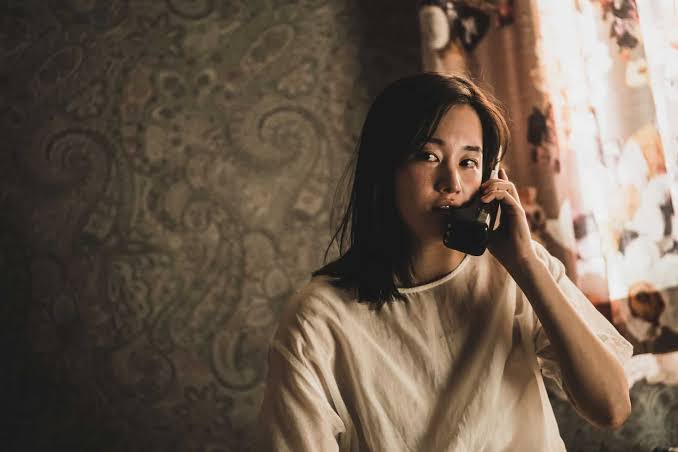
Brad reviews the South Korean horror film, THE CALL (2020)!


There’s a movie podcast I love to listen to called the “Podcast on Fire.” Kenny B and his various co-hosts focus on Asia, especially the films of Hong Kong and South Korea. They have a large back catalogue, and I’ve been catching up on their episodes related to South Korean horror. In the middle of a show on the WHISPERING CORRIDORS series, co-host Paul Quinn mentioned THE CALL, a film that was released on Netflix during the pandemic. I’m usually not a consumer of freaky horror, but his enthusiasm for the film proved infectious, so I decided I’d check it out when I got home from work.

THE CALL centers on two 28 year old women. There’s Seo-yeon (Park Shin-hye), who’s visiting her childhood home in the country when she receives a series of phone calls from 28 year old Young-sook (Jeon Jong-seo). They soon realize that Young-sook is calling Seo-yeon from the same house… just from 20 years in the past. Both with severe mommy issues, the two ladies initially seem to form a friendship. They even use their knowledge of events in the past to help each other in ways that change the future. But as you might guess, these changes come with severe consequences, and the story eventually turns into one of bloody survival!

I wasn’t expecting it, but I kept thinking of one of my favorite movies, FREQUENCY (2000), while watching THE CALL. In FREQUENCY, an adult son is able to talk to his deceased dad from 30 years in the past on their family’s old ham radio. We may not really understand the science behind it all, but we just accept it. Their discussions start out as heartwarming, and their actions that change the future seem good at first, but then eventually bad things happen. That’s pretty much what takes place in THE CALL, with the exception that these ladies are not family and the radio has been replaced by one of those late 20th century cordless phones. The heartwarming early moments eventually devolve into a lot of crying, screaming, and gaping neck wounds.

While the concept has been done before, the filmmakers do a good job of building genuine suspense. It’s one of those movies where the stakes keep getting raised, and when you think they’re as high as they can go, they’re ramped up another notch. There are a few effective jump scares here, but the primary tension is in the growing sense of dread concerning how the actions in the past will affect the present. Let’s just say that some of the characters in the present aren’t allowed to enjoy their newfound health and well-being for very long.

I wasn’t familiar with either of the lead actresses going in, but they’re both excellent. In the present time, Park Shin-hye invests enough vulnerability in her character of Seo-yeon that you can’t help but pull for her, especially as her world is continuously turned upside down. And I can’t say enough about Jeon Jong-seo, who gets the showier role in the past timeline. Her character starts out as sympathetic, but she doesn’t stay that way. It’s an unnerving character and performance.

At the end of the day, I had a good time with THE CALL. It’s been awhile since I watched a film from South Korea, so it was fun for me to jump back in. If you enjoy a good horror-suspense-thriller, this one’s an easy recommendation!

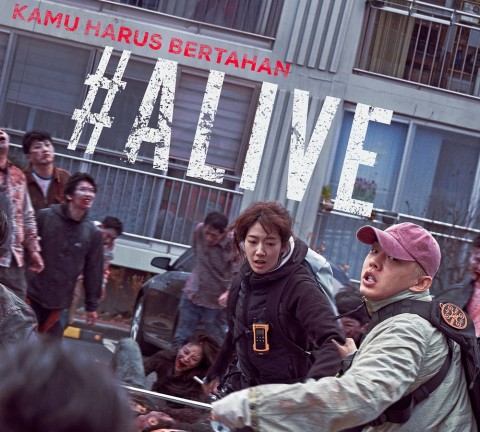
International Horror Film Review: #Alive (dir by Cho Il-hyung)


My feelings on the zombie genre are so mixed.

On the one hand, zombies are scary and zombie movies, when done well, can be genuinely disturbing.  Zombie movies deal with the inevitably of death.  Whenever someone dies, we always say that they’re at peace.  “At least, they’re not suffering anymore,” we say.  Zombie movies suggest that there is no peace after death.  Instead, the suffering of life is just replaced with nonstop hunger and savagery of death.  Meanwhile, the living don’t even get a chance to mourn their dead before they’re forced to kill them again.  Zombies are relentless and they used to be our friends and family.  That’s one reason why zombies haunt us in a way that certain other monsters never will.

At the same time, when it comes to zombie movies, there’s just so many of them!  Seriously, it seems like there must be at least a hundred zombie movies released every year.  We’ve seen so many scenes of the dead running through empty city streets that it’s hard not to get cynical.  The first time you see a reanimated corpse eat its parents, it’s disturbing.  But, by the hundredth time you’ve seen it, it’s just expected.  We now live in an age where every disaster is compared to a “zombie apocalypse.”  Even non-horror fans know about zombies.  The days of zombies being obscure are over.  They’re now firmly a part of pop culture and, as a result, they’ve become a bit annoying.

I say all this because, in many ways, #Alive is a standard zombie film.  This South Korean film opens with Joon-woo
(Yoo Ah-in) in his apartment, playing video games.  When reports come in of something strange happening in the streets of Seoul, Joon-woo goes out to his balcony to see what’s happening.  What he sees is a world gone mad, one in which hordes of growling people run through the streets, biting down and feeding on anyone who gets to close to them.  Yes, the zombie apocalypse has begun and Seoul is apparently right in the middle of it.

And don’t get me wrong.  The zombies are indeed frightening and there’s an exciting sequence where Joon-woo has to force one out of his apartment.  It’s all very well-directed and well-acted by Yoo Ah-in but it’s not anything that we haven’t seen before.  At this point, audiences have seen so many zombie rampages that if a real one ever breaks out, the uninfected will probably start bitching about how different it is from what the movies led them to expect.

What sets #Alive apart is the way it captures the feeling of being totally isolated and alone.  Trapped in his apartment with only a limited amount of food and with no way of knowing whether or not his family is still alive, Joon-woo tries to maintain his sanity.  Joon-woo is isolated from the outside world.  He’s quarantied himself.  Occasionally, he steps out on the balcony and sees if the zombies are still outside.  (They are.)  Occasionally, he checks the news to see if there’s an end in sight.  (There’s not.)  As the days pass, Joon-woo finds himself tempted to surrender to his despair.

But what if Joon-woo isn’t the only person left alive in his apartment complex?  What if, on the other side of the complex, there’s a woman named Kim Yoo-bin (Park Shin-hye) who is trying to catch Joon-woo’s attention so that he’ll know that he’s not alone and that she’s willing to help?  And just how much of a risk is Joon-woo willing to take to end his isolation?

That’s a question that feels especially relevant today, at a time when so many people are isolated, either voluntarily or by doctor’s orders.  When a newscaster describes the zombies as being infected, it’s impossible not to think about what’s currently going on in the world.  When Joon-woo discovers how truly difficult it is to be alone and unable to leave your home …. well, that’s the way many people have felt this entire year.  Though #Alive was filmed before the pandemic lock-downs, it feels like a movie about our current times.  As such, it has a power to it that it might not have had if it had been released at a different time.  Like everyone, Joon-woo struggles with fear and despair.  But, at the same time, he never allows himself to forget that he’s not dead yet.  He’s still alive and there’s still hope.

#Alive is a film about how difficult it can be to live while everyone around you is obsessing on death but it’s also a film that encourages its viewers to embrace life, no matter how difficult or frightening the situation.  It’s a film about the dead that ultimately has a lot to say about what it means to be alive.