Retro Television Review: Homicide: Life On The Street 5.20 “Narcissus”


Welcome to Retro Television Reviews, a feature where we review some of our favorite and least favorite shows of the past!  On Sundays, I will be reviewing Homicide: Life On The Street, which aired from 1993 to 1999, on NBC!  It  can be viewed on Peacock.
This week’s episode was written by none other than Yaphet Kotto!

Episode 5.20 “Narcissus”

(Dir by Jean de Segonzac, originally aired on May 2nd, 1997)

A shooting at four in the morning leads to a group of white patrolmen chasing a black suspect across West Baltimore until he ducks into a building that they’ve been told not to enter.  The building is the headquarters of the African Revival Moment, a militant group that is led by a former cop who goes by the name of Burundi Robinson (Roger Robinson).  Robinson is one of the most powerful men in West Baltimore, a hero to the community and also someone who has connections to Baltimore’s police commissioner, James Harris.

As Robinson explains to Lt. Giardello, he and Harris were once partners.  When he and Harris busted a heroin dealer, Harris sold the drugs back to the dealer for $10,000.  When it was discovered that the drugs were missing from the evidence lock-up, Harris and Robinson flipped a coin with the understanding that the loser would resign from the force and take the fall.  Robinson lost the coin toss.  Robinson went on to start ARM and Harris became the police commissioner.

At first, Harris (who doesn’t appear in this episode but instead is simply a background figure of menace) protects Robinson and sends Col. Barnfather to the scene to order Detectives Pembleton and Munch to back off.  However, when a member of ARM comes forward to say that Robinson ordered the shooting because the victim was going to expose Robinson’s history of taking sexual improprieties with his followers, Harris suddenly starts ordering the police to get more aggressive with Robinson and ARM.  Harris does this with the full knowledge that the police raiding ARM headquarters and attempting to arrest Robinson will lead to a violent confrontation.  When the police eventually do bust into the headquarters, they discover that Robinson and all of his followers have committed suicide.  Giardello understands that was Harris’s hope all along.  He was willing to risk a riot just to silence the one man who could prove his corruption.

This episode was written by Yaphet Kotto and, not surprisingly, Giardello is at the center of the action.  The lengthy scene where he meets with Robinson is the highlight of the episode as both Giardello and Robinson have a unique understanding of how things work in Baltimore.  Giardello has had first-hand experience with Harris’s corruption and he’s not in the least bit surprised by either Robinson’s story or Harris’s heavy-handed attempts to control the investigation.  In a bit of wonderful irony, when Harris initially tries to protect the African Revival Moment, he uses the racist Captain Gaffney to interfere with Munch and Pembleton’s investigation.  Gaffney, one of the most loathsome characters on the show, is suddenly the one who is telling a suspect to demand a lawyer and leaking the name of the informant to Robinson.

This episode was a strong one all the way around, with Kotto, Andre Braugher, and Roger Robinson all playing proud men who each had their own unique view on how to best deal with the issue of race in Baltimore.  (One thing that sets Homicide apart from so many other shows is not just the diversity of the cast but also the diversity of personalities and opinions.)  The ending carries a punch.  When Giardello says that there will be Hell to pay, you believe him.
Retro Television Review: Homicide: Life On The Street 5.17 “Kaddish”


Welcome to Retro Television Reviews, a feature where we review some of our favorite and least favorite shows of the past!  On Sundays, I will be reviewing Homicide: Life On The Street, which aired from 1993 to 1999, on NBC!  It  can be viewed on Peacock.

This week, both Munch and Pembleton go on an inner journey.

Episode 5.17 “Kaddish”

(Dir by Jean de Segonzac, originally aired on February 21st, 1997)

When Munch and Kellerman investigate a crime scene in which a woman has been found murdered, Munch is stunned when the woman is revealed to be Helen Rosenthal, his high school crush.  In between flashbacks to Munch’s awkward teen years, Munch and Kellerman investigate the crime.  At first, it seems like the murderer might be one of two former classmates, one of whom was Helen’s ex-husband.  Ultimately, the truth turns to be much simpler.  As if so often the case, Helen was the victim of stranger.  She was in the wrong place at the wrong time.

During the investigation, Munch bonds with Helen’s daughter, Sarah (Jean Louisa Kelly).  Per Jewish law, Helen is buried within 24 hours and Munch and Kellerman later attend her shiva, where Munch begs out of being a part of the minyan.  Because Kellerman has apparently never met a Jewish person in his life, Munch has to explain to him the concept of sitting shiva and reciting the Kaddish.  On the one hand, I wish this episode didn’t resort to making Kellerman into a total doofus.  (At one point, he even asks what a “shiksa” is,) but, on the other hand, I did appreciate that it dealt with a side of Munch that we really haven’t seen before.  As a viewer, I’m so used to seeing Munch as just being the squad’s resident cynic that it was interesting to see him dealing with issues of faith.

Speaking of faith, Pembleton is continually to struggle with his.  He even goes to Mass in this episode and remember a debate he once had with a nun about whether or not any signs of God can be found while working as a homicide detective.  Pembleton does find a sign towards the end of the episode.  Called in when a woman dies in home hospice care, Bayliss and Pembleton discover that no murder occurred.  Instead, the woman has passed with a look of peace on her face and a crucifix on her nightstand.  Having lost his family and nearly his life, Pembleton finally seems to have found his faith.  And I’m glad about that because Pembleton the Heretic was getting to be a bit of a slog.

This was a good episode, one that used death as a way to shine a light on life.  Richard Belzer gave one of his better performances in the role of John Munch and, as always, Andre Braugher was outstanding as Pembleton.  I’m also happy to say that Pembleton and Bayliss are once again partners.  That’s the way it should be.

Retro Television Review: Homicide: Life on the Street 5.9 “Control”


Welcome to Retro Television Reviews, a feature where we review some of our favorite and least favorite shows of the past!  On Sundays, I will be reviewing Homicide: Life On The Street, which aired from 1993 to 1999, on NBC!  It  can be viewed on Peacock.

Pembleton’s back!

Episode 5.9 “Control”

(Dir by Jean de Segonzac, originally aired on December 6th, 1996)

A drug dealer named Reggie Copeland has been murdered and word on the street is that the killing was set up by Junior Bunk (Mekhi Phifer), who just happens to be the nephew of drug lord Luther Mahoney (Erik Todd Dellums).  When Lewis and Detective Stivers (Toni Lewis) arrest Junior, he immediately starts crying.

That certainly makes Lewis happy.  He’s obsessed with taking down Mahoney.  Junior gives the detectives the name of the man who he hired, on Luther’s behalf, to assassinate Copeland.  Munch and Lewis take a trip to the worst city on Earth (Philadelphia, if you had to ask) and arrest the gunman.  Even Ed Danvers thinks that they’re finally on the verge of nailing Luther….

Luther, it turns out, has got friends everywhere.  Even while sitting in a holding cell, he is able to find out the name of the hotel where the police are hiding Junior.  When the cops order room service, Junior makes sure that a baggie with two gold stars is included in Junior’s sandwich.  (All of Luther’s heroin comes in baggies with two stars.)  Junior realizes that Luther knows exactly where he is.  Junior refuses to testify and recants his previous confession.  And Luther … Luther goes free again!

Kellerman would be upset, except for the fact that he’s still under suspension.  (They’re really dragging this story out, aren’t they?)  Kellerman is in such a bad mood that he even kicks Brodie off of his house boat for being too happy.  However, at the end of the episode, Dr. Cox shows up at Kellerman’s houseboat.  I’m going to guess that she’ll be allowed to stay on the boat.

However, the main event of this episode is that Pembleton is working his first case since his stroke.  A woman has been found dead in her home, stabbed twenty times.  Meanwhile, her two young sons were both shot execution style.  Bayliss may be the primary but Pembleton is determined to take charge.  Pembleton thinks that the murderer was the woman’s boyfriend, a sleazy musician named Jimmy Sutter (Andrew DeAngelo).  Bayliss thinks that the murderer was the woman’s rigid ex-husbad, Lt. Commander Alex Clifton (Michael Gaston).

From the start, it’s pretty obvious that Clifton’s the murderer.  He’s too cold and unemotional when he is told about the murderers.  He’s very tightly wound.  The fact that the woman was killed in a fury but her children were killed “cleanly and efficiently,” (as Pembleton put it) indicated to me that the murderer was driven by rage against the mother but, in his twisted way, he felt he was sparing the children an even worse fate.  Clifton is obviously the killer and Pembleton, to his credit, eventually comes to realize it.

Unfortunately, the case nearly falls apart in the Box.  Pembleton and Bayliss have lost their rhythm as partners.  Bayliss gets frustrated when Pembleton suddenly starts asking Clifton about the blood pressure medicine he takes.  “Do you get any side effects?” Pembleton asks.  Outside of the interrogation room, Bayliss admits that he’s scared Pembleton is going to “stroke out” and die.  “Everyone dies!” Pembleton says.

Finally, Bayliss and Pembleton make it work.  They turn up the heart in the Box and when Clifton takes off his jacket and very carefully folds it, Bayliss presumes to sit down on the jacket.  Clifton keeps taking the jacket back and refolding it.  Bayliss spills water on the jacket.  Clifton finally loses it, yelling and admitting that he killed his ex-wife and his two sons.

Wow, this was a good episode.  Michael Gaston give a chillingly believable performance as Clifton.  Erik Todd Dellums was, as usual, magnetically evil as Luther.  Best of all, it was good to see Kyle Secor and Andre Braugher working a case together.  Pembleton is back and it’s about time!

Retro Television Review: Homicide: Life on the Street 4.22 “Work Related”


Welcome to Retro Television Reviews, a feature where we review some of our favorite and least favorite shows of the past!  On Sundays, I will be reviewing Homicide: Life On The Street, which aired from 1993 to 1999, on NBC!  It  can be viewed on Peacock.

Oh my God, this episode….

Episode 4.22 “Work Related”

(Dir by Jean de Segonzac, originally aired on May 17th, 1996)

At first, the fourth season finale of Homicide: Life On The Street feels like a typical episode of Homicide.

Lewis, having just returned from his honeymoon, obsesses on a case in which a man was killed by a bowling ball dropped from an overpass.  Kellerman doesn’t feel that the case can be solved.  The murder was just too random.  Lewis, however, refuses to let it go.  As Kellerman soon deduces, Lewis doesn’t want to go home because he and his new wife are already fighting.

Meanwhile, Bayliss is frustrated by Pembleton’s refusal to act like a sentimental new father.  While Bayliss talks about the wonder of life, Pembleton coldly talks about how expensive it’s going to be to raise a child.  It’s the typical Bayliss/Pembleton dynamic.  Bayliss wants his partner to open up.  Pembleton wants to keep things strictly business.  Bayliss wants to find the deeper meaning of every event.  Pembleton wants to remain rational and focused on doing his job.  They’re both spiritual men, in their way.  It’s just that Bayliss is a seeker whereas Pembleton is a man on a mission.

Bayliss and Pembleton investigate a shooting at a fast food restaurant.  It doesn’t take much of an investigation to realize that the shooter was a recently fired employee and that his accomplice was a friend who still worked there.  When Pembleton and Bayliss get the friend into the box, it seems like it’s going to be an easy investigation.

That’s until Pembleton suddenly yells out, grabs his head, and has a violent seizure.  He collapses into the lap of a venal defense attorney who quickly shoves Pembleton away.  Pembleton is rushed to the hospital.  He’s had a stroke.  The rest of the Homicide squad sees a comatose Pembleton lying in bed.  But the viewer has seen the inside of Pembleton’s mind, where Pembleton is currently lying in a coffin and screaming to be released.

Agck!

I knew this episode was coming.  Ever since I started reviewing Homicide, people have told me about the stroke episode.  That said, it still took me by surprise when Pembleton collapsed.  Pembleton has always been the strongest character on the show, the one who never lost control and whose mind could unravel any alibi and solve any mystery.  Pembleton crashing to the ground, helpless and unable to speak, was not easy to witness.  Andre Braugher was a great actor and he proved it in this episode.

That was how the fourth season ended, with Pembleton lying in a hospital bed and Giardello trying to keep the squad focused on doing their job while Bayliss — poor Bayliss! — found himself once again trying to understand the cruelty of fate.  It was powerful, it was disturbing, it was sad, and I think it was the type of thing that only a show as good as Homicide could have pulled off.

Next week, we begin season 5.  I’m almost scared to see what happens.

4 Shots From 4 Film: Special John McNaughton Edition


4 Shots From 4 Films is just what it says it is, 4 shots from 4 of our favorite films. As opposed to the reviews and recaps that we usually post, 4 Shots From 4 Films is all about letting the visuals do the talking.

Today is the birthday of director John McNaughton!  It’s time for….

4 Shots From 4 John McNaughton Films

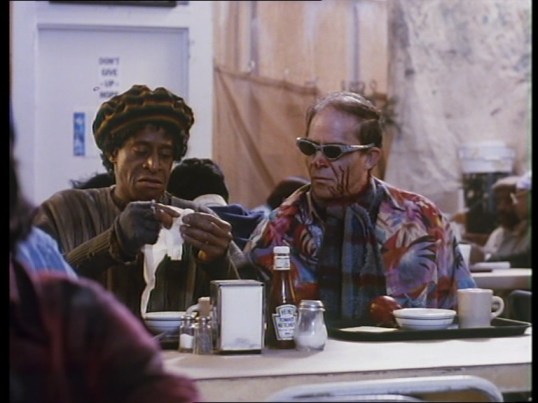
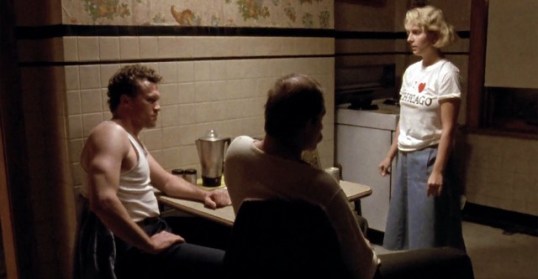
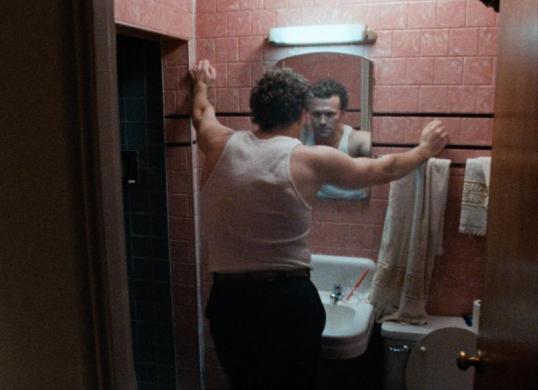
Henry: Portrait of a Serial Killer (1986, dir by John McNaughton, DP: Charles Lieberman)

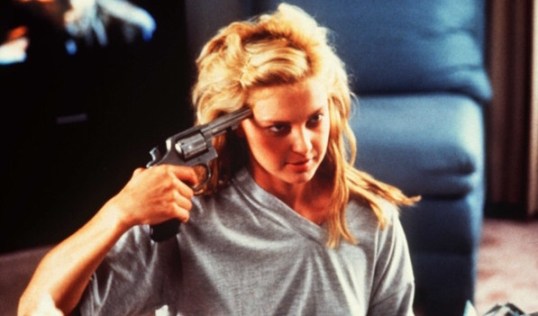
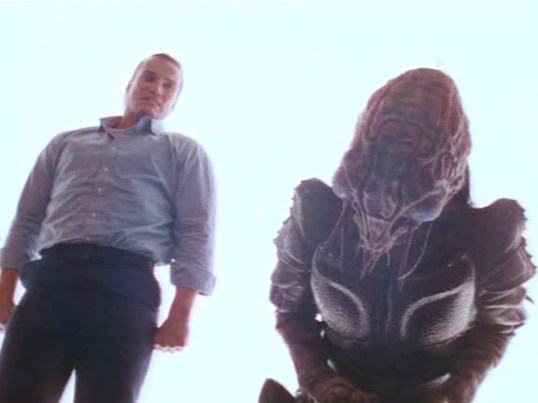
The Borrower (1991, dir by John McNaughton, DP: Julio Mucat and Robert C. New)

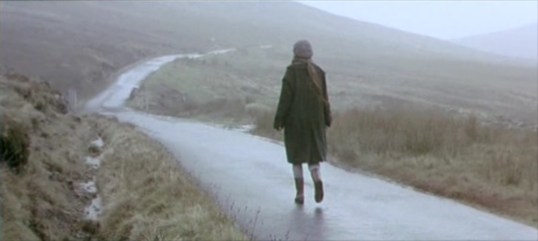
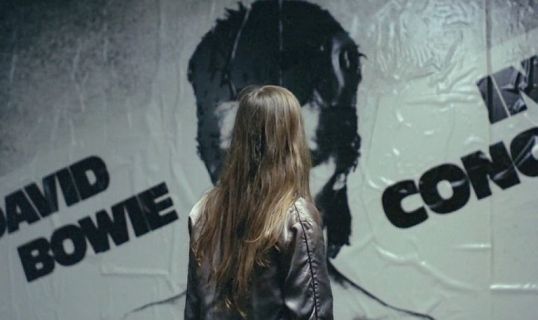
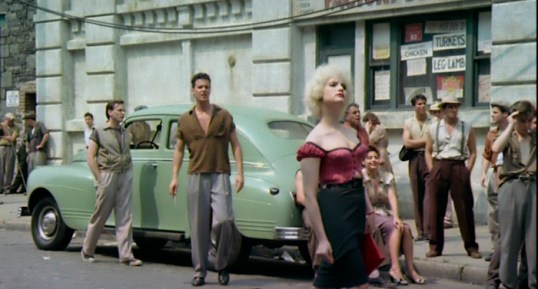
Normal Life (1996, dir by John McNaughton, DP: Jean de Segonzac)

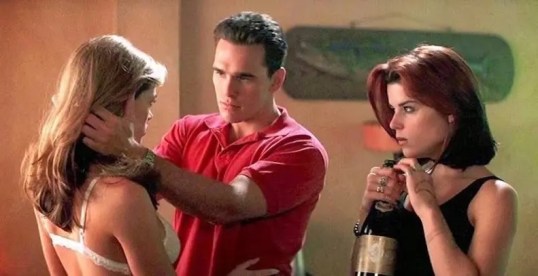
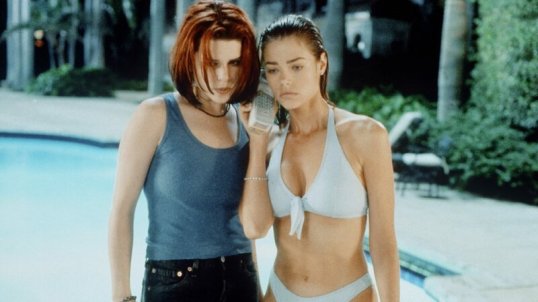
Wild Things (1998, dir by John McNaughton, DP: Jeffrey L. Kimball)

Retro Television Review: Homicide: Life on the Street 4.8 “Sniper, Part One”


Welcome to Retro Television Reviews, a feature where we review some of our favorite and least favorite shows of the past!  On Sundays, Lisa will be reviewing Homicide: Life On The Street, which aired from 1993 to 1999, on NBC!  It  can be viewed on Peacock.

This week, a sniper terrorized Baltimore.

Episode 4.8 “Sniper, Part One”

(Dir by Jean de Segonzac, originally aired on January 5th, 1996)

This week, Bayliss investigates a red ball!

Actually, the case turns out to be a red ball within a red ball!

And then it turns into a third red ball!

A red ball is a term used for a case that is going to draw a lot of media attention and which is going to result in pressure from the guys in command.  It’s an actual term, one that was introduced in the David Simon book that served as the inspiration for Homicide.  I’m pretty sure that the term was also used in The Wire, though perhaps not as much as it was used in Homicide.

It’s hard not to notice that, starting with the third season, there have been a lot of red balls on Homicide.  If one were to judge solely based on seasons 3 and 4, one might be justified in thinking that Baltimore was the serial killer capitol of the world.  That’s not really a complaint because most of the red ball episodes have been pretty entertaining.  Still, it’s very much a contrast to the first two seasons, where the emphasis was always put on gritty realism and the recurring theme was that, outside of the Homicide detectives, the media didn’t really care about the majority of the murders taking place in Baltimore because the victims were almost always minorities in economically disadvantaged neighborhoods.

This latest red ball involves a sniper who is gunning down people at random and leaving behind a hangman game at each location.  He’s trying to figure out a 9-letter word.  It’s an odd motivation but serial killers are odd people.  Bayliss, who is suffering from back pain and popping muscle relaxants like candy, gets the case because, as he continually reminds us, he was the one who answered the phone.  (Somehow, Bayliss does manage to get through the investigation without bringing up Adena Watson.)

While Bayliss tries to find a killer who shoots people at random, Russet deals with the brass.  Colonel Barnfather, who was originally quite enthusiastic about promoting her, now suddenly hates her and the episode ends with Russert getting demoted back down to being a detective.  (So, I guess that Giardello’s homicide squat will be getting a new investigator.)  Russert’s demotion felt like it came out of nowhere but, from a dramatic point of view, it made sense.  This show already has Giardello as the beloved boss.  It didn’t also need Russert in the role.

As for the killer, he is tracked down by his signature on the receipt that he signed when he purchased his chalk.  He turns out to be a nervous insurance agent who has a big house in the suburbs and who is playing a hangman game in his study.  When Bayliss attempts to negotiate with him and asks him to leave the study, the insurance agent asks for a letter.  “Uhmm …. B,” Bayliss says.  B turns out to be just the letter that was needed and the insurance agent promptly shoots himself in the head.

The word that he was trying to come up with turns out to be Eromitlab.  Look at in a mirror.

This was a good episode, even if it did sometimes go a bit over the top with everyone shouting, “We’ve got a red ball!” and the nonstop montages of the detectives swarming the streets of Baltimore.  I’ve really grown to love Kyle Secor’s performance as Tim Bayliss and this episode featured Bayliss at his loopy best.  For an episode about a serial sniper who ended up killing eight people, there was a rather odd sense of humor running through it.  This is an episode that started with Jay Leno coming in the Waterfront Bar.  (Munch tells Bayliss that Leno is probably sick of people treating him like he’s famous so they decide to ignore him until Leno gets mad and leaves the bar.)  When the first shooting is called in, the phone rings several times before anyone is able to answer, leading to Munch to question whether a murder has actually occurred if no one answers the phone.  Bayliss obsesses on his upcoming back surgery.  “Its says a possible side effect is death!” Bayliss exclaims, looking over the information about the operation.  Meanwhile, Brodie gets on everyone’s nerves with his big video camera.

Ominously, this episode with a second sniper climbing up to the roof of the building.  The red balls continue.


6 Shots From 6 Films: Special 1996 Edition


6 Shots From 6 Films is just what it says it is, 6 shots from 6 of our favorite films. As opposed to the reviews and recaps that we usually post, 6 Shots From 6 Films lets the visuals do the talking!

Today, we take a look at a classic cinematic year.  It’s time for….

6 Shots From 6 1996 Films

Breaking the Waves (1996, dir by Lars Von Trier, DP: Robby Muller)

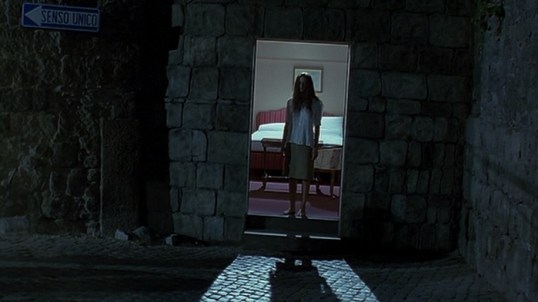
The Stendhal Syndrome (1996, dir by Dario Argento, DP: Giuseppe Rotunno)

Fargo (1996, dir by the Coen Brothers, DP: Roger Deakins)

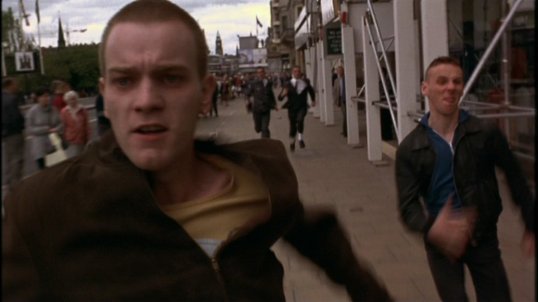
Trainspotting (1996, dir by Danny Boyle, DP: Brian Tufano)

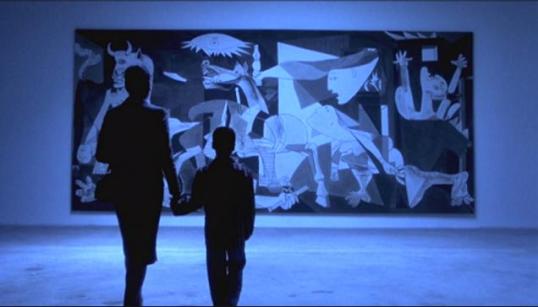
Basquiat (1996, dir by Julian Schnabel, DP: Ron Fortunato)

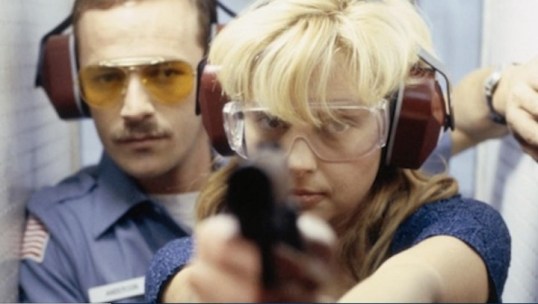
Normal Life (1996, dir by John McNaughton, DP: Jean de Segonzac)

4 Shots From 4 Film: Special John McNaughton Edition


4 Shots From 4 Films is just what it says it is, 4 shots from 4 of our favorite films. As opposed to the reviews and recaps that we usually post, 4 Shots From 4 Films is all about letting the visuals do the talking.

Today is the birthday of director John McNaughton!  It’s time for….

4 Shots From 4 John McNaughton Films

Henry: Portrait of a Serial Killer (1986, dir by John McNaughton, DP: Charles Lieberman)

The Borrower (1991, dir by John McNaughton, DP: Julio Mucat and Robert C. New)

Normal Life (1996, dir by John McNaughton, DP: Jean de Segonzac)

Wild Things (1998, dir by John McNaughton, DP: Jeffrey L. Kimball)

4 Shots From 4 Film: Special John McNaughton Edition


4 Shots From 4 Films is just what it says it is, 4 shots from 4 of our favorite films. As opposed to the reviews and recaps that we usually post, 4 Shots From 4 Films is all about letting the visuals do the talking.

Today is the birthday of director John McNaughton!  It’s time for….

4 Shots From 4 John McNaughton Films

Henry: Portrait of a Serial Killer (1986, dir by John McNaughton, DP: Charles Lieberman)

The Borrower (1991, dir by John McNaughton, DP: Julio Mucat and Robert C. New)

Normal Life (1996, dir by John McNaughton, DP: Jean de Segonzac)

Wild Things (1998, dir by John McNaughton, DP: Jeffrey L. Kimball)

4 Shots From 4 Films: Special Uli Edel Edition


4 Or More Shots From 4 Or More Films is just what it says it is, 4 shots from 4 of our favorite films. As opposed to the reviews and recaps that we usually post, 4 Shots From 4 Films lets the visuals do the talking!

Today, the Shattered Lens wishes a happy 76th birthday to German director, Uli Edel!  It’s time for….

4 Shots from 4 Uli Edel Films

Christiane F. (1981, dir b Uli Edel, DP: Justus Pankau and Jürgen Jürges)

Last Exit to Brooklyn (1989, dir by Uli Edel, DP: Stefan Czapsky)

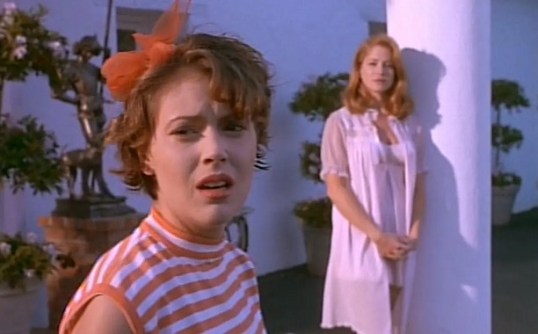
Confessions of a Sorority Girl (1994, dir by Uli Edel, DP: Jean de Segonzac)

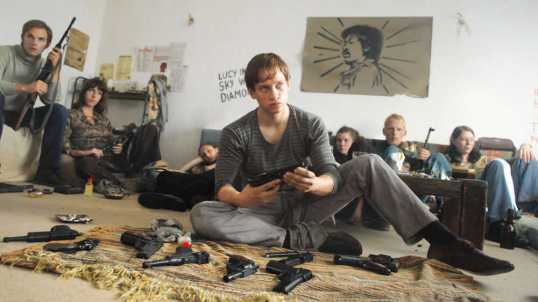
The Baader Meinhof Complex (2008, dir by Uli Edel, DP: Rainer Klausmann)