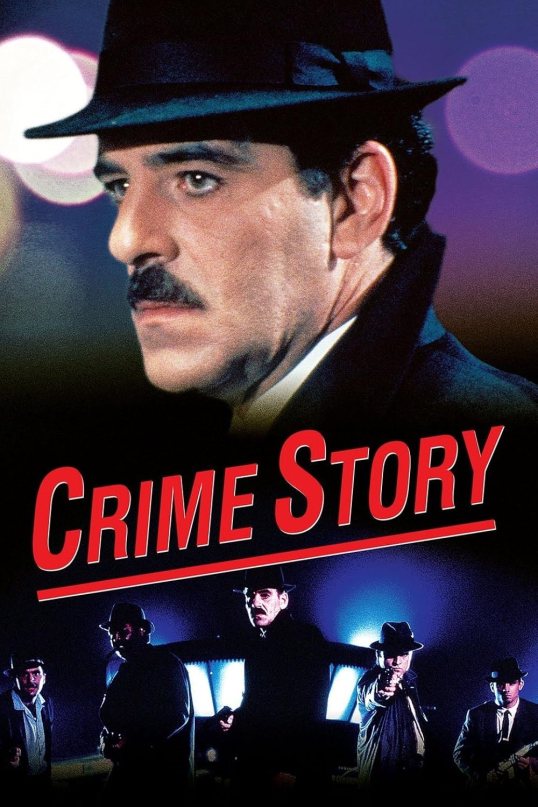
Welcome to Retro Television Reviews, a feature where we review some of our favorite and least favorite shows of the past! On Mondays, I will be reviewing Crime Story, which ran on NBC from 1986 to 1988. The entire show can be found on Tubi!
This week, Michael Mann directs the downfall of Luca!
Episode 1.20 “Top of the World”
(Dir by Michael Mann, originally aired on March 6th, 1987)
Luca has taken control of Vegas, and now he’s out of control. He’s gambling nonstop and cheating to win. While his wife spends all of her time watching The Price Is Right, Luca is carrying on affairs with both Bambi (Debbie Harry) and Max Goldman’s wife, Joanne (Debra Stipe). Luca has everything that he’s spent this entire season saying that he wanted: money, legitimacy, and power. But at heart, he’s still the same Chicago gangster that he’s always been. As Torello deduces, he needs the risk and the danger that come with being a criminal. Without it, he doesn’t know what to do with himself.
At the beginning of this episode, Torello tells the demoralized members of the MCU that they can do one of two things. They can either track down Luca’s parents and shoot them for having him, or they can start over with their attempt to build a case against him. (Torello, as intense as ever, doesn’t seem to be joking about tracking down Luca’s parents.) Torello’s plan is to sow dissension among Luca’s troops. When dapper courier Tony Dio (Paul Anka) is spotted leaving Luca’s casino with a suitcase full of skimmed cash for Manny Weisbord, he’s stopped by Torello and essentially kidnapped. They then let Max know that Luca has been sleeping with his wife and insinuate that Luca killed Tony and took the money for himself.
Meanwhile, Luca is temporarily barred from working at his casino by the Nevada Gaming Commission. He can’t even step into any of the places that he owns. Stuck at home with his wife, Luca starts to go stir-crazy. When Steve Kordo tells Luca that Weisbord is asking where his money is, Luca decides that Max is trying to stab him in the back. Luca has Frank Holman plant a car bomb in Max’s car. Though the bomb goes off, Max survives. At the hospital, a severely burned Max tells Torello that he has no intention of being a rat.
However, someone else is, and it’s exactly who you would least expect. Luca, high on pills and self-pity, rapes Pauli’s girlfriend, Donna (Audrey Matson). Pauli grabs a shotgun and starts wandering around Vegas, searching for Luca. Torello is able to arrest Pauli in a diner. Pauli tells Torello the details of every murder that Luca committed over the season, including the murder of David Abrams’s father.
After a shoot-out with Luca’s bodyguards at the casino, Torello, Abrams, and the MCU track Luca down to a restaurant where he’s having dinner with Bambi. (They’re celebrating because an appellate court has stayed the order keeping Luca out of his casinos.) At first, Luca is smug. But when he hears that Pauli is the one who betrayed him, his smile disappears. The episode ends as Luca is taken into custody.
This episode was directed by the show’s executive producer, Michael Mann. Mann does a great job keeping the action moving and showing both Luca’s rapid rise and his just-as-rapid descent. Visually, Mann plays up the darkness in which all the characters live. Nearly every scene takes place at night. When we see Torello sitting in his office, the shadows are so heavy that they almost seem to be swallowing him. This episode reminds us that, just as Luca will always be a Chicago gangster, Torello will always be a Chicago cop. Luca and Torello live in the same darkness, and it’s threatening to devour them both.
“The thing that’s always worried me about being one of the few is the way we keep on getting fewer.” — Flight Officer David Campbell
You could be forgiven for thinking that a three-hour black-and-white war epic from 1962 about the D-Day landings might feel like homework. The Longest Day sounds exactly like the kind of movie your history buff uncle would insist you watch, and you’d brace yourself for stiff acting, dated effects, and a flag-waving tone that hasn’t aged well. But here’s the surprise: this thing still cooks. It’s massive, messy in the best way, and surprisingly modern in its storytelling. Directed by a quartet of filmmakers—Ken Annakin for the British sequences, Andrew Marton for the Americans, Bernhard Wicki for the Germans, and with uncredited help from John Wayne’s own ego (more on that later)—The Longest Day isn’t one movie. It’s five or six movies crammed into a single sprawling canvas, and somehow that chaotic energy works perfectly for a story about the chaos of June 6, 1944.
First, let’s talk about the elephant in the room: the cast. It’s absurd. John Wayne, Robert Mitchum, Henry Fonda, Sean Connery, Richard Burton, Rod Steiger, Robert Wagner, Curt Jürgens, and a young Gert Fröbe (the future Goldfinger) are just the headliners. There are about forty other recognizable faces popping up for two minutes of screen time. You half expect a narrator to say “and that guy from that thing.” But here’s the trick: The Longest Day uses star power not as distraction but as shorthand. When you see John Wayne playing Lt. Col. Benjamin Vandervoort, you don’t need a backstory. You just know he’s the tough, unkillable leader. When you see Henry Fonda as Brig. Gen. Theodore Roosevelt Jr., you read quiet dignity and grit. The movie trusts that you’ll fill in the blanks, which allows it to jump between American, British, French, and German perspectives without pausing for emotional handholding. That’s a bold gamble, and it mostly pays off, though Wayne’s scenes are a prime example of the film’s one real weakness: occasionally, it lets the star overpower the story. His Vandervoort breaks his ankle jumping into Normandy and still leads his men—cool story, historically accurate—but Wayne plays it with that trademark swagger that feels more Rio Bravo than WWII. It doesn’t ruin the film, but it does remind you you’re watching a movie star, not a soldier.
Where The Longest Day truly earns its reputation is in its structure. The film opens with a ground-level view of the German defenders—foggy, tired, complacent. Rommel (Curt Jürgens) is home for his wife’s birthday. Junior officers are skeptical of the “invasion threat.” Then we cut to the Allied side, from Eisenhower’s agonized “go” decision to the paratroopers floating down into French nightmares. The film refuses to pick a hero. It bounces between a German machine-gunner mowing down Americans on Omaha Beach and a French Resistance fighter getting captured and executed. There’s no swelling music to tell you who to root for—the score by Maurice Jarre is often tense, percussive, or eerily quiet. That evenhandedness is shocking for an early-60s war film. The Germans aren’t cackling villains. They’re professionals, some cynical, some naive, all trapped in a bad situation. One scene shows a German officer calmly reporting the invasion to higher command while another weeps because his men have no air support. You don’t sympathize with them exactly, but you understand them. That’s rare for any war movie, let alone one starring John Wayne.
The set pieces remain jaw-dropping. Because this was made before CGI, every paratrooper you see actually jumped (with stuntmen and low altitudes). Every landing craft ramp dropping on Omaha Beach is filled with real extras who had to swim ashore in cold water. The famous shot of a lone French commando running across a bridge under fire? That’s a real explosion, real bullets (blanks, but still). The production employed thousands of military advisors and actual veterans as extras. You can feel that authenticity in the grain of the film. When American soldiers fumble with wet ammunition or a British glider crash-lands through a fence, it’s not slick Hollywood heroism. It’s clumsy, loud, and terrifying. The movie’s most quoted line—“The greatest thing about the greatest generation is they didn’t know they were the greatest”—isn’t in the film, but the spirit is everywhere. These guys aren’t quoting Shakespeare. They’re vomiting from seasickness, losing their gear, and crying for their mothers. Then they get up and climb a cliff. That contrast is what makes The Longest Day so effective: it’s a blockbuster that respects the small, undignified human moments.
If the film has a flaw beyond occasional star vanity, it’s pacing. The first hour is deliberately slow—building tension through radar stations, weather reports, and a French priest’s bicycle ride. That might bore viewers raised on Saving Private Ryan’s opening twenty minutes. But hang with it, because when the invasion starts, the deliberate pace pays off. You’ve been inside the German bunkers, heard their debates, seen their confidence. So when paratroopers land behind their lines with toy clickers (the actual “cricket” device from history), every crack of a twig feels tense. The other flaw is the film’s treatment of the French Resistance and civilians. They get a few noble moments—a girl running through gunfire to deliver a message—but overall, the French are sidelined. The movie is fundamentally Anglo-American, with German scenes as the “other” perspective. That’s honest to the command structure of D-Day, but it does mean the country being liberated mostly watches from the margins.
Still, The Longest Day achieves something that most war epics don’t: it’s a genuine ensemble piece without a single protagonist, and it never loses its moral clarity. There’s a scene where a German colonel (the wonderful Werner Hinz) looks at an American prisoner and says, “We fight for a monster. You fight for your homes.” That’s the whole movie in one line. It doesn’t demonize the Germans as evil—it shows them as humans who made terrible choices and are now paying for them. And it doesn’t sanctify the Allies—it shows them as scared kids with a just cause. The final image of the film is a lingering shot of the beach, littered with bodies and wreckage, as a narrator tells you the exact number of casualties on both sides. No music. No kiss. No flag. Just the silent aftermath. For 1962, that’s audacious. For today, it’s heartbreaking.
So should you watch The Longest Day? Yes, but not as a history lesson. Watch it as a time capsule of how we used to make movies: with real explosions, real extras, and a willingness to let a story breathe across three hours without a superhero or a snappy one-liner. It’s old-fashioned, sure. Some of the acting is stagey, and the black-and-white photography might feel like a relic. But once the landing craft doors drop and the bullets start kicking up water, you’ll forget the runtime. It’s not Saving Private Ryan’s visceral nightmare, and it’s not Band of Brothers’ intimate character study. It’s a reporter’s notebook of a film—raw, sprawling, and full of names you’ll never remember but faces you won’t forget. For a movie that’s over sixty years old, The Longest Day still has legs. And for a story about the longest day, it earns every single minute.
… And now, the end is near And so I face the final curtain My friend, I’ll say it clear I’ll state my case, of which I’m certain I’ve lived a life that’s full I traveled each and every highway And more, much more than this I did it my way
… Regrets, I’ve had a few But then again, too few to mention I did what I had to do And saw it through without exemption I planned each charted course Each careful step along the byway And more, much more than this I did it my way
… Yes, there were times, I’m sure you knew When I bit off more than I could chew But through it all, when there was doubt I ate it up and spit it out I faced it all, and I stood tall And did it my way
… I’ve loved, I’ve laughed and cried I’ve had my fill, my share of losing And now, as tears subside I find it all so amusing To think I did all that And may I say, not in a shy way Oh, no, oh, no, not me I did it my way
… For what is a man, what has he got? If not himself, then he has naught To say the things he truly feels And not the words of one who kneels The record shows I took the blows And did it my way
… Yes, it was my way
Songwriters: Paul Anka / Gilles Thibaut / Claude Francois / Jacques Revaux
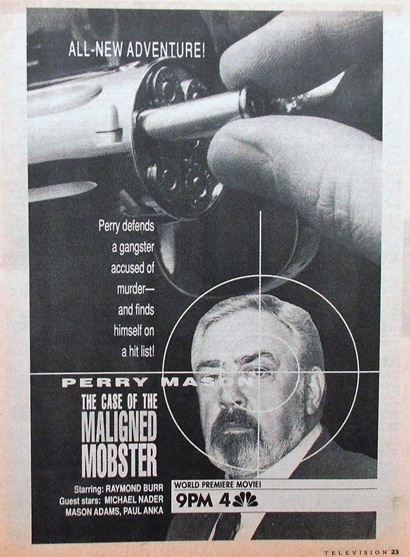
Despite being asked to take the case by an old friend (Mason Adams), Perry Mason (Raymond Burr) is reluctant to defend Johnny Sorrento (Michael Nader) in court. Johnny is a former gangster who has been credibly accused of murder in the past. Now, he’s on trial for killing his wife and not even Perry is totally convinced that he’s innocent.
Of the 18 Perry Mason films that I’ve watched so far, this was definitely the best. This is the first time that I’ve seen Perry defend someone who he both dislikes and, even more importantly, distrusts and Raymond Burr was really convincing whenever he got angry at Johnny. For once, the case wasn’t wrapped up as neatly as usual. Solving the murder of Johnny’s wife meant delving into a past murder and it uncovered a lot of dark secrets. The identity of the killer was a real surprise but there was a lot more going on than just solving the mystery of who killed Johnny’s wife. At the end of this movie, Perry looked like he was about to cry, no matter how much Della (Barbara Hale) tried to comfort him.
Sharing much more would be the same as spoiling all of the movie’s twists and turns so I’ll just repeat that this is the best of the Perry Mason movies that I’ve seen so far. The guest cast is great, especially Mason Adams and Paul Anka. The Perry Mason films always follow the same plot and sometimes, they can blend together but this one made a real impression and really took me by surprise.
… And now, the end is near And so I face the final curtain My friend, I’ll say it clear I’ll state my case, of which I’m certain I’ve lived a life that’s full I traveled each and every highway And more, much more than this I did it my way
… Regrets, I’ve had a few But then again, too few to mention I did what I had to do And saw it through without exemption I planned each charted course Each careful step along the byway And more, much more than this I did it my way
… Yes, there were times, I’m sure you knew When I bit off more than I could chew But through it all, when there was doubt I ate it up and spit it out I faced it all, and I stood tall And did it my way
… I’ve loved, I’ve laughed and cried I’ve had my fill, my share of losing And now, as tears subside I find it all so amusing To think I did all that And may I say, not in a shy way Oh, no, oh, no, not me I did it my way
… For what is a man, what has he got? If not himself, then he has naught To say the things he truly feels And not the words of one who kneels The record shows I took the blows And did it my way
… Yes, it was my way
Songwriters: Paul Anka / Gilles Thibaut / Claude Francois / Jacques Revaux
1992’s Captain Ron opens with Martin Harvey (Martin Short) suffering through another day as a corporate drone in Chicago. What is Martin’s job like? It’s the type of job where there’s broken glass on the sidewalk because someone jumped out a window. Martin is ready for an escape and he gets it when he’s informed that his deceased uncle has left him a yacht that once belonged to Clark Gable. The only catch is that the yacht is on a Caribbean island and Martin will need to sail it to Miami if he wants to sell it. Martin decides this will be a great opportunity get away from cold Chicago with his wife (Mary Kay Place), daughter (Meadow Sisto), and son (Benjamin Salisbury).
It turns out that the yacht is in terrible shape. And so, for that matter, is the sailor who has been assigned to help the Harveys set sail. Ron “Everyone calls me Captain Ron” Rico (Kurt Russell) is a somewhat slovenly drunk who wears sunglasses over his eyepatch and who is in debt to some dangerous people. It also turns out that, despite talking a big game, Captain Ron is fairly incompetent as a navigator. He knows how the boat works. He knows how to keep the engine from overheating. He knows how to borrow Martin’s video camera so he can film Marin’s wife and daughter while they walk around top deck. What Captain Ron can’t do is actually get the boat to where it needs to go. Instead, Captain Ron takes the family to a number of islands, gets them into trouble with pirates, and also becomes the surrogate father-figure that the family needs.
There’s a lot to criticize about Captain Ron. The script cannot quite decide just who exactly it wants these characters to be. Moments of sentimental family comedy are mixed with scenes of Captain Ron leering at Martin’s wife and daughter. Martin and his wife get stuck in the boat’s shower and I’ll admit that I laughed at the scene because something similar happened to me in college but it still felt as if it was included solely to get the movie up to a PG-13. The film has the making of being a wild comedy but it never quite goes as far as it could. Martin gets upset but he never gets truly frantic, which is a waste of Martin Short’s talents. Ron has the makings to be a true force of chaos but the film instead just makes him incompetent. There’s an odd scene where Martin considers shooting Captain Ron with a flare gun. It comes out of nowhere and it’s not ever mentioned again. It hints at a film that could have been a lot more subversive than it turned out to be.
That said, I did enjoy Captain Ron. The island scenery is lovely. The shots of that dilapidated yacht on the ocean do, almost despite themselves, achieve a sort of grandeur. And then you’ve got Kurt Russell, wearing a red speedo and apparently having the time of his life as the incompetent yet rather cocky Captain Ron. It’s a fun performance, even if the film sometimes doesn’t seem to be sure what to do with it. That the film remains watchable is a testament to the charm of Kurt Russell. Much like the title character, Captain Ron is a film that’s likable even when it shouldn’t be.
Five thieves show up in Vegas to rob a casino. The casino is also hosting an Elvis convention so the criminals all dress up like Elvis before trying to pull off their heist. Since one of the criminals is played by Kurt Russell and Russell famously played Elvis in a made-for-TV movie, it’s a meta joke. The worst of the criminals is played by Kevin Costner because, in 2001, Costner’s career was dead in the water and he was trying to reinvent himself as some sort of badass character actor.
As a result of a shootout and series of personal betrayals, Russell and Costner are the only two thieves who survive the heist. Kurt Russell ends up taking all of the money for himself and running off with single mother Courteney Cox. (Yes, Cox’s then-husband, David Arquette, does have a small role in the movie.) Costner pursues them, killing anyone who he comes in contact with until it all leads to one final shoot out.
3000 Miles to Graceland is a stupid, stupid movie that was made at the time when every director was still trying to remake Reservoir Dogs and The Usual Suspects. If you need any proof of how bad this movie is, just consider that it is one of the few Kurt Russell films to never develop a cult following. There are people who would jump into the mouth of a volcano if Kurt Russell told them to and even they won’t watch 3000 Miles to Graceland. Even the worst 90s crime films have at least a few people willing to defend them but 3000 Miles to Graceland has been abandoned on the ash heap of crime film history. Despite having a once-in-a-lifetime supporting cast — Christian Slater, Bookeem Woodbine, Kevin Pollack, Jon Lovitz, Howie Long, Ice-T, and even Paul Anka — 3000 Miles to Graceland has never even received a direct-to-video sequel.
Why is 3000 Miles to Graceland so forgettable? The heist storyline has been done to death and this film doesn’t bring anything new to the genre. The only new wrinkle that 3000 Miles to Graceland brings to its familiar story is that the thieves are all dressed like Elvis and that gets old pretty quick. The other problem is that Kevin Costner is miscast as the psycho villain. Michael Madsen could have handled the role. So could Tom Sizemore or Woody Harrelson or just about other actor out there. But Kevin Costner, who first found fame as a sort of modern-day Gary Cooper, never seems comfortable playing a cold-hearted sociopath. He makes up for this discomfort by trying too hard. Comparing his performance here to his more nuanced turn as another criminal in A Perfect World shows just how miscast he was in 3000 Miles To Graceland.
Fortunately, better things were ahead for almost everyone involved in this movie. Kevin Costner has recently returned to playing the type of roles that made him a star to begin with and Kurt Russell has become an American idol. Fortunately, 3000 Miles to Graceland is remembered, if at all, as just an unfortunate detour in their otherwise distinguished careers.
Christopher Lee recorded this version of My Way for Revelation, a 2006 album of covers. This video features Lee at his home in London’s Tufnell Park.
My Way was originally written by Paul Anka, who based the song on a French song called Comme d’habitude. The song, of course, was made famous by Frank Sinatra but it’s also been recorded by everyone from Elvis to Sid Viscous to Jay-Z. As for Lee’s version — well, whatever he may have lacked in vocal range was made up for by the fact that he was Christopher Lee! As for the music video, how could any Hammer horror fan resist the chance to see the inside of Christopher Lee’s home?
There is a strain of melancholy running through Lee’s version but then again, I don’t know if it’s possible to record a non-melancholy version of My Way. On the one hand, it’s a song of triumph. On the other hand, it’s a song that acknowledges that we’re all mortal, even those of us who refuse to compromise and who maintain our independence.
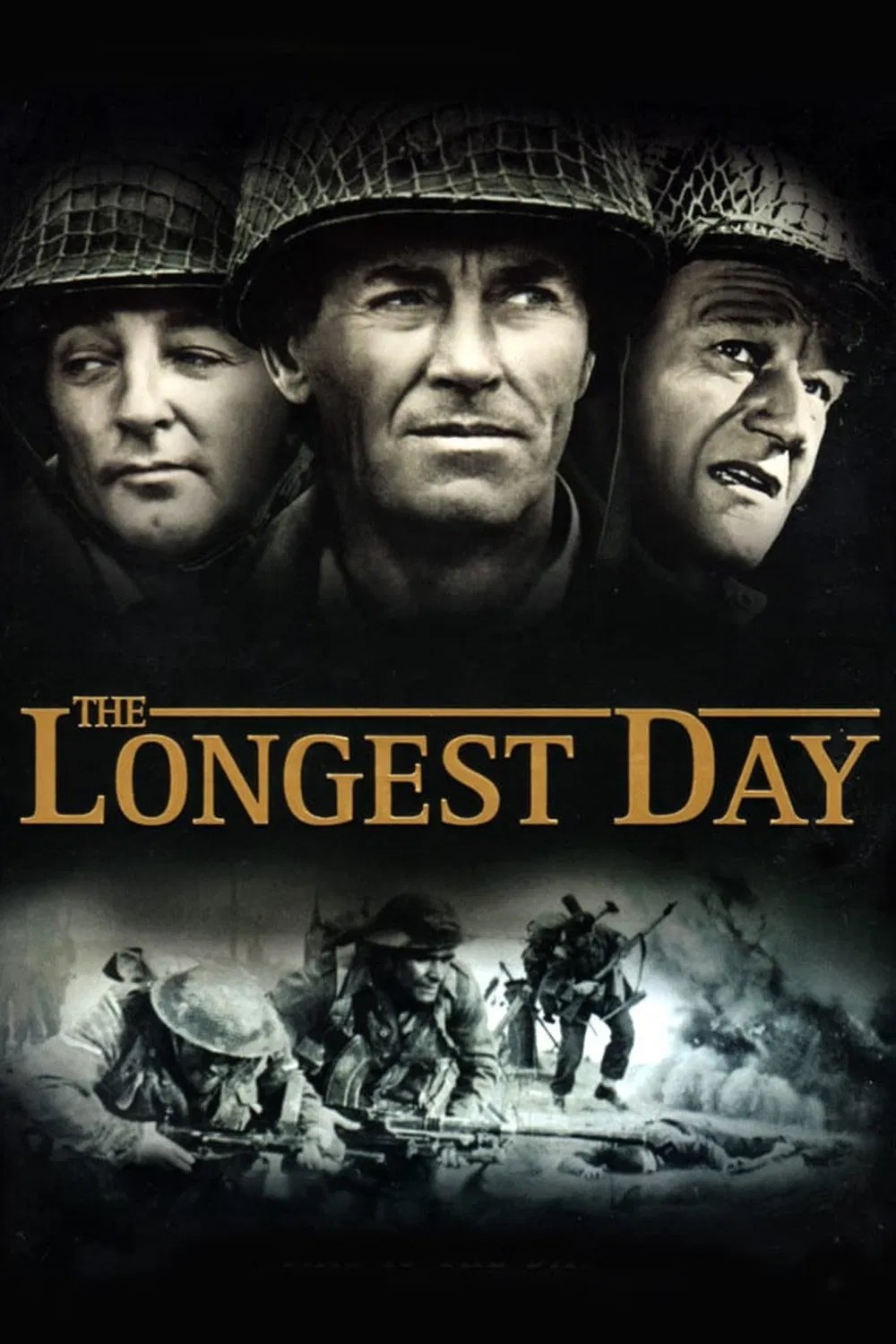
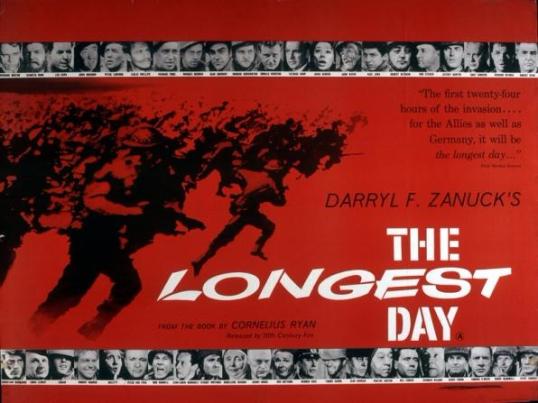
The Longest Day is a pain-staking and meticulous recreation of invasion of Normandy, much of it filmed on location. It was reportedly something of a dream project for the head of the 20th Century Fox, Darryl F. Zanuck. Zanuck set out to make both the ultimate tribute to the Allied forces and the greatest war movie ever. Based on a best seller, The Longest Day has five credited screenwriters and three credited directors. (Ken Annakin was credited with “British and French exteriors,” Andrew Marton did “American exteriors,” and the German scenes were credited to Bernhard Wicki. Oddly, Gerd Oswald was not credited for his work on the parachuting scenes, even though those were some of the strongest scenes in the film.) Even though he was not credited as either a screenwriter or a director, it is generally agreed that the film ultimately reflected the vision of Darryl F. Zanuck. Zanuck not only rewrote the script but he also directed a few scenes as well. The film had a budget of 7.75 million dollars, which was a huge amount in 1962. (Until Steven Spielberg’s Schindler’s List, The Longest Day was the most expensive black-and-white film ever made.) Not only did the film tell an epic story, but it also had an epic length. Clocking in at 3 hours, The Longest Day was also one of the longest movies to ever be nominated for best picture.
The Longest Day also had an epic cast. Zanuck assembled an all-star cast for his recreation of D-Day. If you’re like me and you love watching old movies on TCM, you’ll see a lot of familiar faces go rushing by during the course of The Longest Day. American generals were played by actors like Robert Mitchum, Robert Ryan, Henry Fonda, and John Wayne. Peter Lawford, then the brother-in-law of the President of the United States, had a memorable role as the Scottish Lord Lovat, who marched through D-Day to the sounds of bagpipes. When the Allied troops storm the beach, everyone from Roddy McDowall to Sal Mineo to Robert Wagner to singer Paul Anka can be seen dodging bullets. Sean Connery pops up, speaking in his Scottish accent and providing comic relief. When a group of paratroopers parachute into an occupied village, comedian Red Buttons ends up hanging from the steeple of a church. When Richard Beymer (who is currently playing Ben Horne on Twin Peaks) gets separated from his squad, he stumbles across Richard Burton. Among those representing the French are Arletty and Christian Marquand. (Ironically, after World War II, Arletty was convicted of collaborating with the Germans and spent 18 months under house arrest. Her crime was having a romantic relationship with a German soldier. It is said that, in response to the charges, Arletty said, “My heart is French but my ass is international.”) Meanwhile, among the Germans, one can find three future Bond villains: Gert Frobe, Curt Jurgens, and Walter Gotell.
It’s a big film and, to be honest, it’s too big. It’s hard to keep track of everyone and, even though the battle scenes are probably about an intense as one could get away with in 1962 (though it’s nowhere near as effective as the famous opening of Saving Private Ryan, I still felt bad when Jeffrey Hunter and Eddie Albert were gunned down), their effectiveness is compromised by the film’s all-star approach. Often times, the action threatens to come to a halt so that everyone can get their close-up. Unfortunately, most of those famous faces don’t really get much of a chance to make an impression. Even as the battle rages, you keep getting distracted by questions like, “Was that guy famous or was he just an extra?”
Among the big stars, most of them play to their personas. John Wayne, for instance, may have been cast as General Benjamin Vandervoort but there’s never any doubt that he’s playing John Wayne. When he tells his troops to “send them to Hell,” it’s not Vandervoort giving orders. It’s John Wayne representing America. Henry Fonda may be identified as being General Theodore Roosevelt II but, ultimately, you react to him because he’s Henry Fonda, a symbol of middle-American decency. Neither Wayne nor Fonda gives a bad performance but you never forget that you’re watching Fonda and Wayne.
Throughout this huge film, there are bits and pieces that work so well that you wish the film had just concentrated on them as opposed to trying to tell every single story that occurred during D-Day. I liked Robert Mitchum as a tough but caring general who, in the midst of battle, gives a speech that inspires his troops to keep fighting. The scenes of Peter Lawford marching with a bagpiper at his side were nicely surreal. Finally, there’s Richard Beymer, wandering around the French countryside and going through the entire day without firing his gun once. Beymer gets the best line of the film when he says, “I wonder if we won.” It’s such a modest line but it’s probably the most powerful line in the film. I wish The Longest Day had more scenes like that.
The Longest Day was nominated for best picture of 1962 but it lost to an even longer film, Lawrence of Arabia.
Remember how, in the 1990s, every aspiring indie director tried to rip off Quentin Tarantino by making a gangster film that mixed graphic violence with quirky dialogue, dark comedy, and obscure pop cultural references? That led to a lot of terrible movies but not a single one (not even Amongst Friends) was as terrible as Mad Dog Time.
That Mad Dog Time was terrible should come as no surprise. Most directorial debuts are. What made Mad Dog Time unique was the sheer amount of talent that was assembled and wasted in the effort to bring this sorry movie to life. As the son of Joey Bishop, director Larry Bishop was Hollywood royalty and was able to convince several ridiculously overqualified actors to play the thinly drawn gangsters and rouges who populated Mad Dog Time. Much like the Rat Pack movies that his father once starred in, Larry Bishop’s debut film was full of familiar faces. Some of them only appeared for a few seconds while others had larger roles but they were all wasted in the end. Hopefully, everyone was served a good lunch in between filming their scenes because it is hard to see what else anyone could have gotten out of appearing in Mad Dog Time.
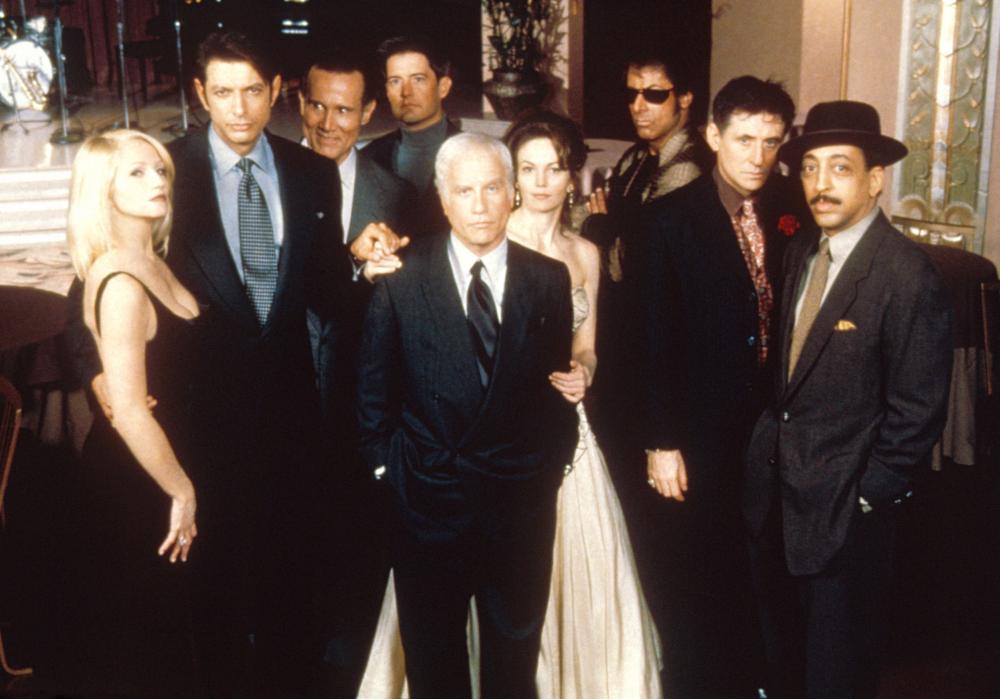
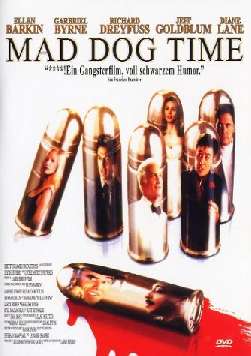
Mob boss Vic (Richard Dreyfuss) has just been released from a mental hospital. With the help of his main enforcer, Mick (Jeff Goldblum), and a legendary hitman named Nick (Larry Bishop, giving not only the worst performance in the film but also the worst performance of the 1990s), Vic is going to reassert his control over the rackets. Vic also wants to find his former mistress, Grace Everly (Diane Lane) but he doesn’t know that Grace is now with Mick and that Mick is also having an affair with Grace’s sister, Rita (Ellen Barkin).
(Grace and Rita are the Everly Sisters! Ha ha, between that and all the rhyming names, are you laughing yet?)
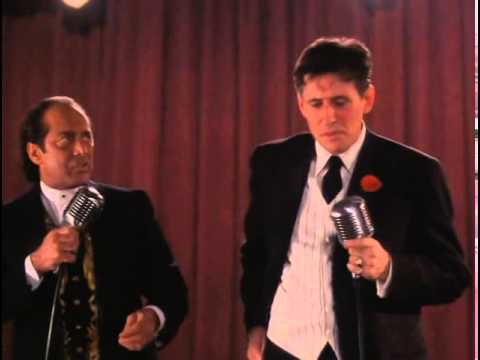
Ben London (Gabriel Byrne) has taken over Vic’s nightclub and, while singing My Way with Paul Anka, tells Vic that he should take an early retirement because he’s a paranoid schizophrenic. Before he can deal with Ben, Vic has to kill all of his other rivals, all of whom are played by actors like Michael J. Pollard, Billy Idol, Kyle MacLachlan, Gregory Hines, and Burt Reynolds. The bodies start to pile up but Jimmy the Undertaker (Richard Pryor, looking extremely frail in one of his final roles) is always around to make sure that everyone gets a proper burial.
And there are other cameos as well. Joey Bishop is the owner of a mortuary. Henry Silva is wasted as one the few gangsters to stay loyal to Vic. Christopher Jones, who previously co-starred with Larry Bishop and Richard Pryor in Wild In The Streets before dropping out of a society, plays a hitman who pretends to be Nick Falco. Even Rob Reiner shows up a limo driver who talks too much.
Almost every poorly paced scene in Mad Dog Time plays out the same way. Three or more men confront each other in a room. Hard-boiled dialogue is exchanged for an interminable length of time until someone finally gets shot. You would think, at the very least, it would be watchable because of all the different people in the cast but none of the actors really seem to be into it. Richard Dreyfuss and Jeff Goldblum resort to smirking through their scenes while Gabriel Byrne often appears to be drunk. Whenever he’s in a scene, Burt Reynolds seems to be trying to hide his face and it is hard to blame him. There were many terrible movies released in the 90s but none were as bad as Mad Dog Time.

 Remember how, in the 1990s, every aspiring indie director tried to rip off Quentin Tarantino by making a gangster film that mixed graphic violence with quirky dialogue, dark comedy, and obscure pop cultural references? That led to a lot of terrible movies but not a single one (not even Amongst Friends) was as terrible as Mad Dog Time.