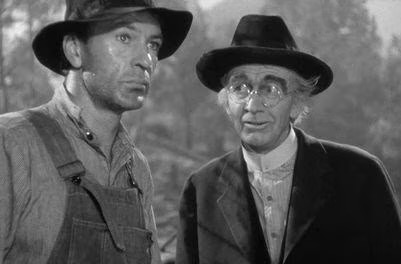
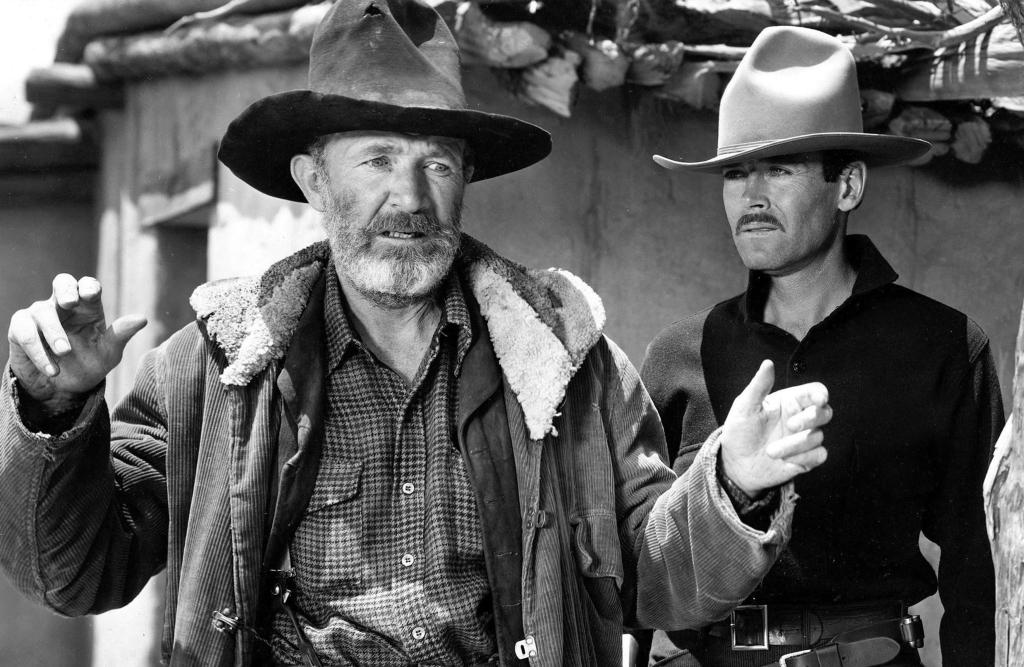
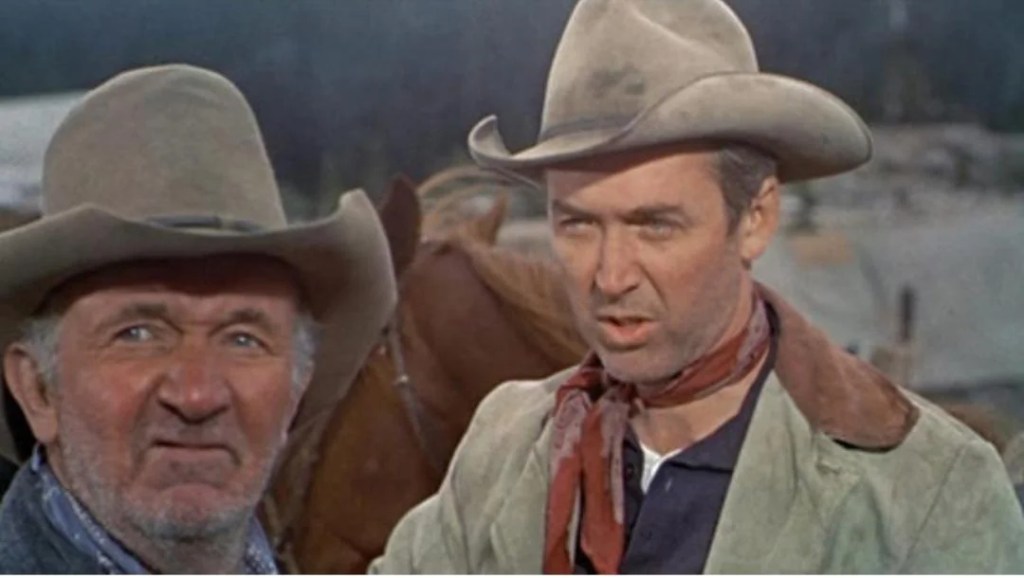
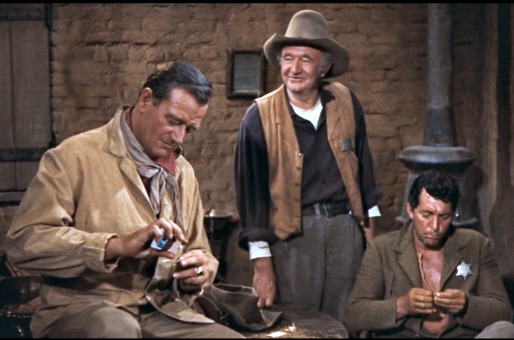
Legendary character actor Walter Brennan was born on July 25th, 1894. Brennan had one of the most recognizable voices in the history of cinema, and he won three Oscars for his incredible body of work. He’s simply one of the best!
Here are my 4 personal favorite Walter Brennan films:
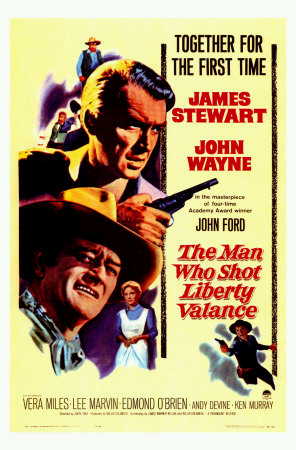
Walter Brennan & Gary Cooper in SERGEANT YORK (1941)Walter Brennan & Henry Fonda in MY DARLING CLEMENTINE (1946)Walter Brennan & Jimmy Stewart in THE FAR COUNTRY (1954)Walter Brennan with John Wayne & Dean Martin in RIO BRAVO (1959)
We’re only a few hours away from America’s 250th birthday! And what would an American birthday party be without some American celebrities of the present and the past?
Joan Crawford by Ruth Harriet Louise
Bobby Darin and Sandra Dee by Leo Fuchs
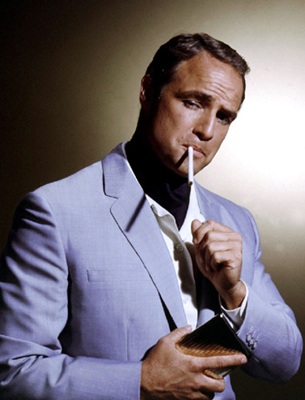
Marlon Brando by Leo Fuchs
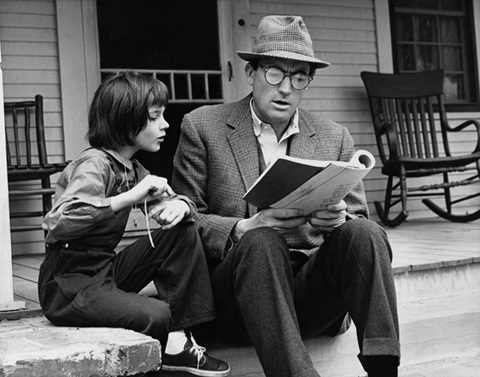
Mary Badham and Gregory Peck by Leo Fuchs
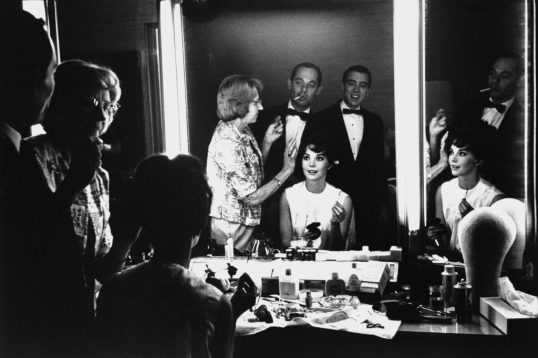
Natalie Wood by Alan Grant
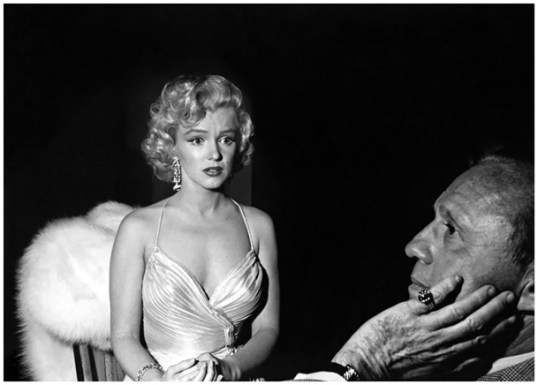
Marilyn Monroe and Jack Benny by Phil Stern
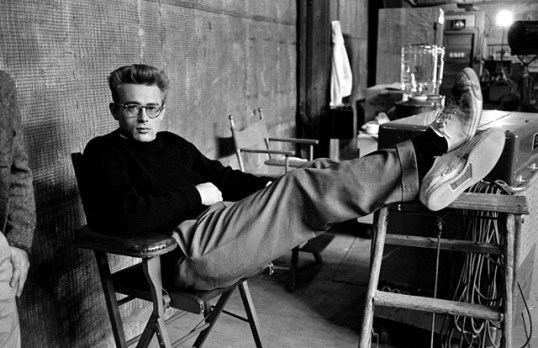
James Dean by Phil Stern
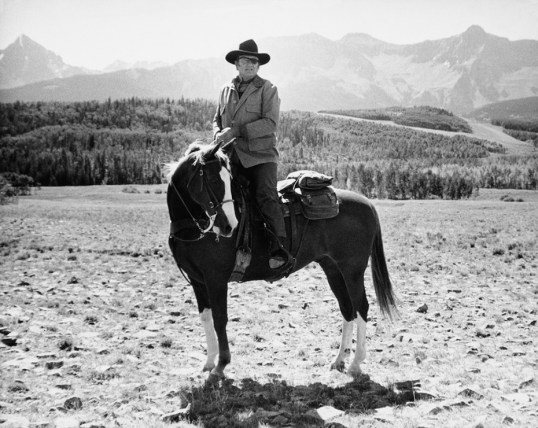
John Wayne by Phil Stern
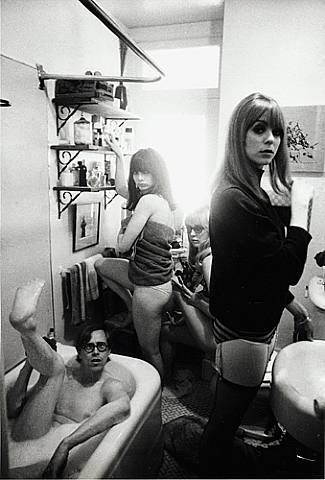
Bruce Conner, Toni Basil, and Teri Garr by Dennis Hopper
“The thing that’s always worried me about being one of the few is the way we keep on getting fewer.” — Flight Officer David Campbell
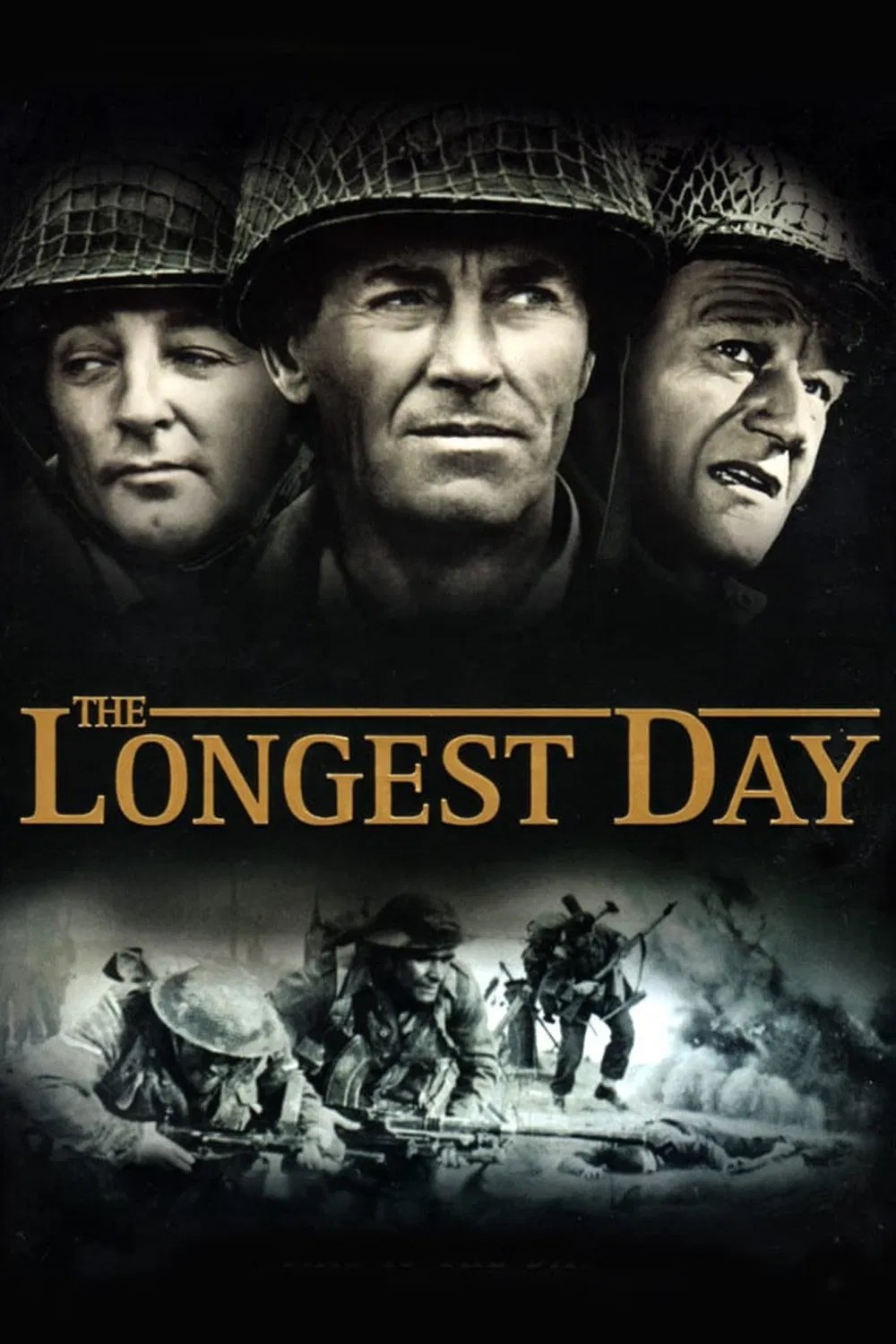
You could be forgiven for thinking that a three-hour black-and-white war epic from 1962 about the D-Day landings might feel like homework. The Longest Day sounds exactly like the kind of movie your history buff uncle would insist you watch, and you’d brace yourself for stiff acting, dated effects, and a flag-waving tone that hasn’t aged well. But here’s the surprise: this thing still cooks. It’s massive, messy in the best way, and surprisingly modern in its storytelling. Directed by a quartet of filmmakers—Ken Annakin for the British sequences, Andrew Marton for the Americans, Bernhard Wicki for the Germans, and with uncredited help from John Wayne’s own ego (more on that later)—The Longest Day isn’t one movie. It’s five or six movies crammed into a single sprawling canvas, and somehow that chaotic energy works perfectly for a story about the chaos of June 6, 1944.
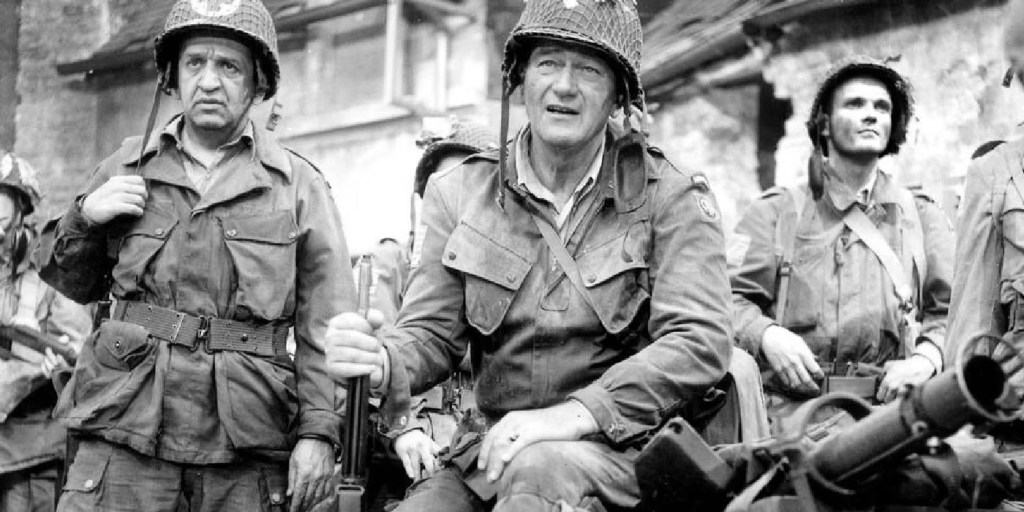
First, let’s talk about the elephant in the room: the cast. It’s absurd. John Wayne, Robert Mitchum, Henry Fonda, Sean Connery, Richard Burton, Rod Steiger, Robert Wagner, Curt Jürgens, and a young Gert Fröbe (the future Goldfinger) are just the headliners. There are about forty other recognizable faces popping up for two minutes of screen time. You half expect a narrator to say “and that guy from that thing.” But here’s the trick: The Longest Day uses star power not as distraction but as shorthand. When you see John Wayne playing Lt. Col. Benjamin Vandervoort, you don’t need a backstory. You just know he’s the tough, unkillable leader. When you see Henry Fonda as Brig. Gen. Theodore Roosevelt Jr., you read quiet dignity and grit. The movie trusts that you’ll fill in the blanks, which allows it to jump between American, British, French, and German perspectives without pausing for emotional handholding. That’s a bold gamble, and it mostly pays off, though Wayne’s scenes are a prime example of the film’s one real weakness: occasionally, it lets the star overpower the story. His Vandervoort breaks his ankle jumping into Normandy and still leads his men—cool story, historically accurate—but Wayne plays it with that trademark swagger that feels more Rio Bravo than WWII. It doesn’t ruin the film, but it does remind you you’re watching a movie star, not a soldier.
Where The Longest Day truly earns its reputation is in its structure. The film opens with a ground-level view of the German defenders—foggy, tired, complacent. Rommel (Curt Jürgens) is home for his wife’s birthday. Junior officers are skeptical of the “invasion threat.” Then we cut to the Allied side, from Eisenhower’s agonized “go” decision to the paratroopers floating down into French nightmares. The film refuses to pick a hero. It bounces between a German machine-gunner mowing down Americans on Omaha Beach and a French Resistance fighter getting captured and executed. There’s no swelling music to tell you who to root for—the score by Maurice Jarre is often tense, percussive, or eerily quiet. That evenhandedness is shocking for an early-60s war film. The Germans aren’t cackling villains. They’re professionals, some cynical, some naive, all trapped in a bad situation. One scene shows a German officer calmly reporting the invasion to higher command while another weeps because his men have no air support. You don’t sympathize with them exactly, but you understand them. That’s rare for any war movie, let alone one starring John Wayne.
The set pieces remain jaw-dropping. Because this was made before CGI, every paratrooper you see actually jumped (with stuntmen and low altitudes). Every landing craft ramp dropping on Omaha Beach is filled with real extras who had to swim ashore in cold water. The famous shot of a lone French commando running across a bridge under fire? That’s a real explosion, real bullets (blanks, but still). The production employed thousands of military advisors and actual veterans as extras. You can feel that authenticity in the grain of the film. When American soldiers fumble with wet ammunition or a British glider crash-lands through a fence, it’s not slick Hollywood heroism. It’s clumsy, loud, and terrifying. The movie’s most quoted line—“The greatest thing about the greatest generation is they didn’t know they were the greatest”—isn’t in the film, but the spirit is everywhere. These guys aren’t quoting Shakespeare. They’re vomiting from seasickness, losing their gear, and crying for their mothers. Then they get up and climb a cliff. That contrast is what makes The Longest Day so effective: it’s a blockbuster that respects the small, undignified human moments.
If the film has a flaw beyond occasional star vanity, it’s pacing. The first hour is deliberately slow—building tension through radar stations, weather reports, and a French priest’s bicycle ride. That might bore viewers raised on Saving Private Ryan’s opening twenty minutes. But hang with it, because when the invasion starts, the deliberate pace pays off. You’ve been inside the German bunkers, heard their debates, seen their confidence. So when paratroopers land behind their lines with toy clickers (the actual “cricket” device from history), every crack of a twig feels tense. The other flaw is the film’s treatment of the French Resistance and civilians. They get a few noble moments—a girl running through gunfire to deliver a message—but overall, the French are sidelined. The movie is fundamentally Anglo-American, with German scenes as the “other” perspective. That’s honest to the command structure of D-Day, but it does mean the country being liberated mostly watches from the margins.
Still, The Longest Day achieves something that most war epics don’t: it’s a genuine ensemble piece without a single protagonist, and it never loses its moral clarity. There’s a scene where a German colonel (the wonderful Werner Hinz) looks at an American prisoner and says, “We fight for a monster. You fight for your homes.” That’s the whole movie in one line. It doesn’t demonize the Germans as evil—it shows them as humans who made terrible choices and are now paying for them. And it doesn’t sanctify the Allies—it shows them as scared kids with a just cause. The final image of the film is a lingering shot of the beach, littered with bodies and wreckage, as a narrator tells you the exact number of casualties on both sides. No music. No kiss. No flag. Just the silent aftermath. For 1962, that’s audacious. For today, it’s heartbreaking.
So should you watch The Longest Day? Yes, but not as a history lesson. Watch it as a time capsule of how we used to make movies: with real explosions, real extras, and a willingness to let a story breathe across three hours without a superhero or a snappy one-liner. It’s old-fashioned, sure. Some of the acting is stagey, and the black-and-white photography might feel like a relic. But once the landing craft doors drop and the bullets start kicking up water, you’ll forget the runtime. It’s not Saving Private Ryan’s visceral nightmare, and it’s not Band of Brothers’ intimate character study. It’s a reporter’s notebook of a film—raw, sprawling, and full of names you’ll never remember but faces you won’t forget. For a movie that’s over sixty years old, The Longest Day still has legs. And for a story about the longest day, it earns every single minute.
On Jun 6th, 1944, Allied forces invaded Normandy, France, in the largest amphibious invasion in military history. This action laid the foundation for the liberation of Western Europe from Nazi control.
There have been some incredible cinematic portrayals based on and around that historic day. Here are some of my favorites.
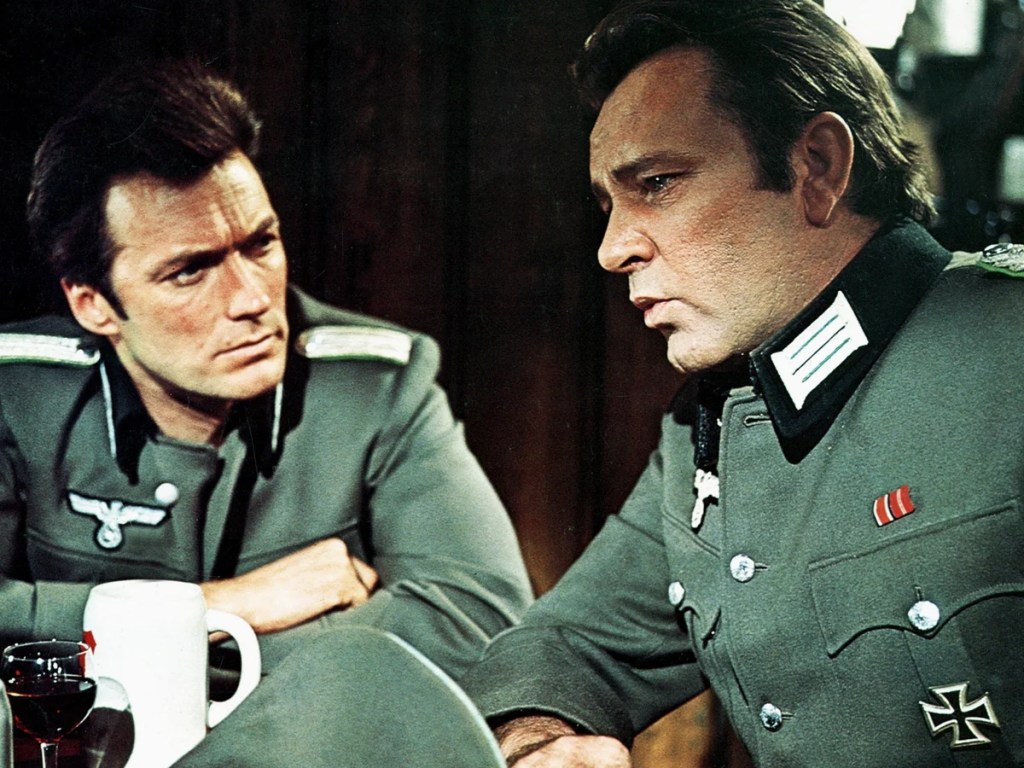
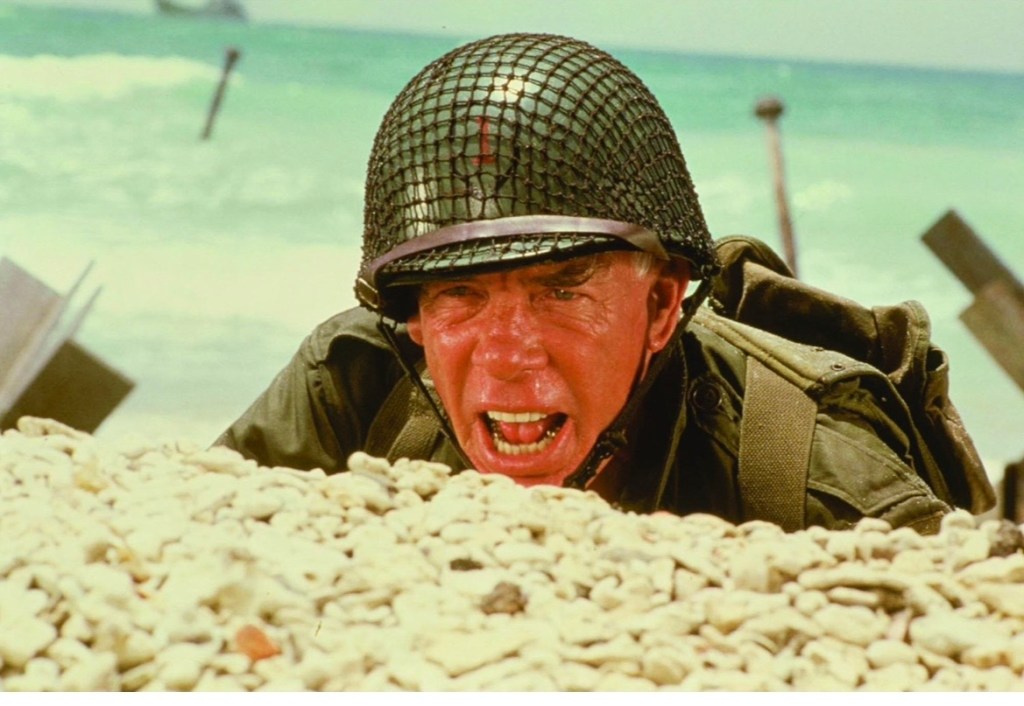
The Longest Day (1962)Where Eagles Dare (1969)The Big Red One (1980)Saving Private Ryan (1998)
Since today is the 119th anniversary of the birth of John Wayne, it only seems right that today’s scene should come from the 1962 classic, The Man Who Shot Liberty Valance!
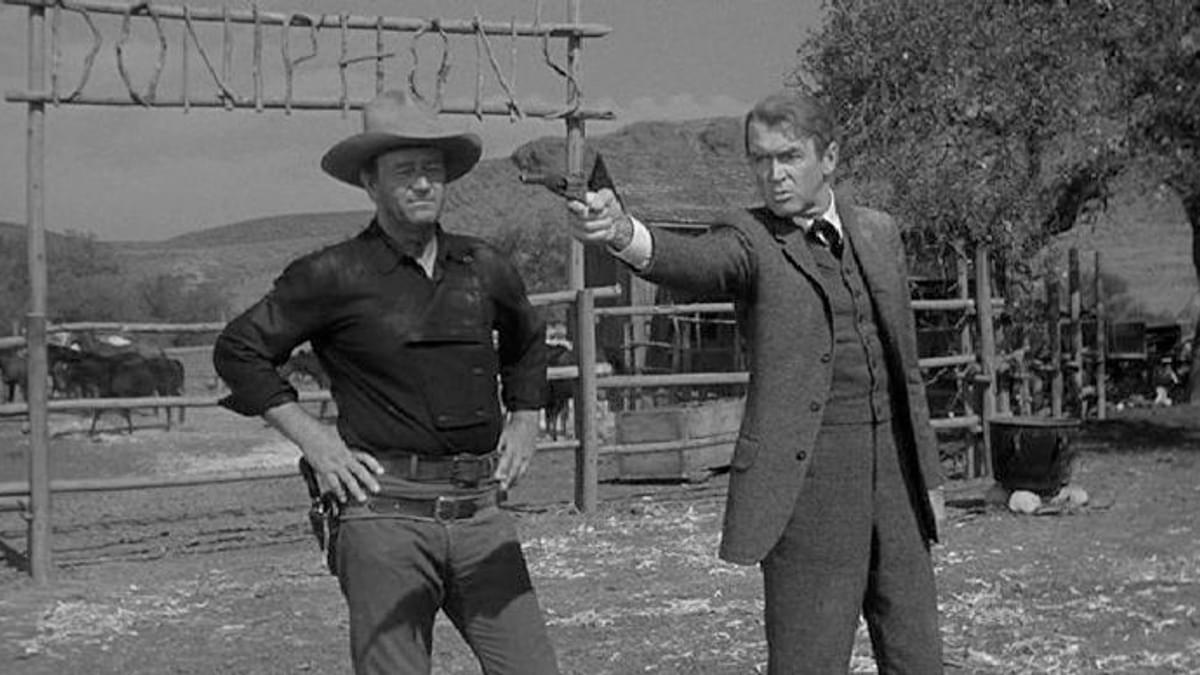
The famous steak scene features three of the greatest screen icons of Hollywood’s golden age: James Stewart, John Wayne, and Lee Marvin. Lee Marvin is the bully who is terrorizing the entire town. James Stewart is the idealist who thinks that the law, and not violence, is the answer. And John Wayne is …. well, he’s John Wayne. He’s the only man in town who can stand up to Lee Marvin but, at the same time, he’s also aware that his time is coming to a close. In the scene below, all three of the characters display their different approaches to life and a disagreement with steak nearly leads to violence.
This scene — and really, the entire film — features these three actors at their best. John Wayne is an actor who is often described as having “just played himself” but that’s really not quite fair. While Wayne’s outsized persona definitely does influence how the audience reacts to any character that he plays, he was a better actor than he’s often given credit for being. That’s especially evident in The Man Who Shot Liberty Valance, in which Wayne plays a confident man’s man who knows that fate is closing in on him. The coming of civilization (represented by James Stewart) will be great for the town of Shinbone but it will also leave men like Wayne’s Ton Doniphon with nowhere to go. The coming of civilization means that the heroes of the past are destined to become obsolete.
Enjoy this scene from The Man Who Shot Liberty Valance:
4 Shots From 4 Films is just what it says it is, 4 shots from 4 of our favorite films. As opposed to the reviews and recaps that we usually post, 4 Shots From 4 Films lets the visuals do the talking!
John Wayne’s birthday is just a few days away! Here’s 4 shots from the Duke’s unforgettable career.
4 Shots From 4 Films
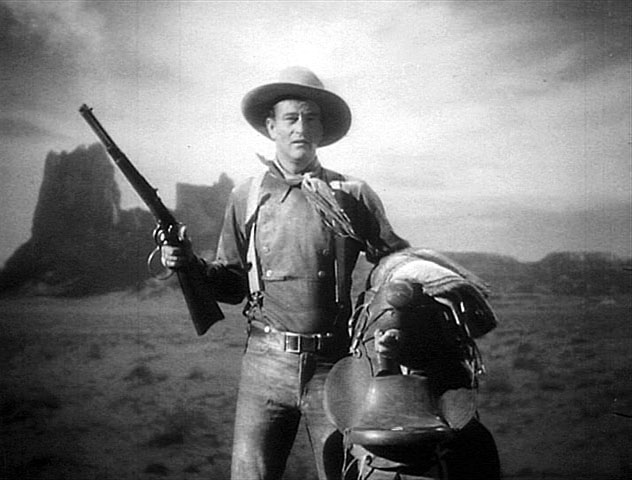
Stagecoach (1939, directed by John Ford)
Sands of Iwo Jima (1949, directed by Allan Dwan)
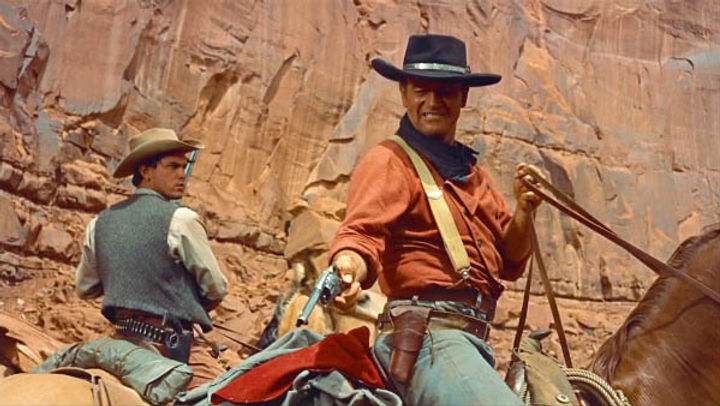
The Searchers (1956, directed by John Ford)
The Man Who Shot Liberty Valance (1962, directed by John Ford)
In the early 1900s, the town of Rainbow Valley is trying to complete a road that will connect it to another town. Outlaw Rogers (LeRoy Mason) doesn’t want that road finished because he wants to buy up all the land around Rainbow Valley. He brings in a hired gun named Galt (Jay Wilsey) to intimidate the townspeople. When a traveler named John Martin (John Wayne) saves mail carrier George Hale (George “Gabby” Hayes) from the outlaws, the townspeople ask Martin to serve as their marshal and to help finish the road. Martin agrees but it turns out that he and Galt have a history.
This was one of the B-westerns that John Wayne made before Stagecoach made him a major star. Wayne gives a confident performance as John Martin. It’s about as close to a traditional John Wayne performance as you are likely to find in his early films. It’s a good and short western, with enough gunfire and tough talk to appeal to fans of the genre.
The most interesting thing about this film is that it takes place at the turn of the century, when the old west was being replaced by the modern world. Everyone in town is amazed that George Hale drives a car. John says that it’s the first car that he’s ever actually seen. Of course, this is a western and all the important work is done on horseback. The best part of the movie is when George realizes that he and Miss Eleanor (Lucille Brown) can’t drive to warn John about an ambush because the car is out of gas and there’s not a filling station to be found. Eleanor can’t ride a horse so he does the next best thing. He has the horses pull his Model T like a wagon!
Four years after this movie came out, John Wayne starred as The Ringo Kid in Stagecoach. In Rainbow Valley, he showed that he was already a star.
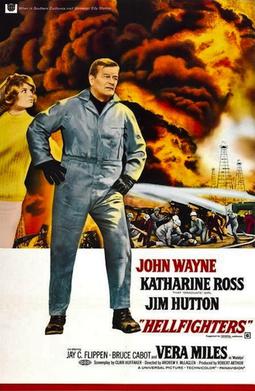
Chance Buckman (John Wayne) is the best there is when it comes to fighting oil fires. Along with Greg Parker (Jim Hutton), Joe Horn (Bruce Cabot), and George Harris (Edward Faulkner), Chance travels the world and puts out fires that the regular authorities can’t handle. Chance loves his job but he also loves his ex-wife, Madelyn (Vera Miles). When Madelyn indicates that she wants to remarry Chance but only if he pursues a less dangerous line of work, Chance retires from firefighting and becomes an oil executive. He leaves his firefighting company to his new son-in-law, Greg. When Greg and Chance’s daughter (Katharine Ross) head down to Venezuela to battle a fire and find themselves not only having to deal with the flames but also with a band of revolutionaries, Chance is the only one who can help them.
When I was growing up, Hellfighters was one of those movies that seemed to turn up on the local stations a lot. The commercials always emphasized the idea of John Wayne almost single-handedly fighting fires and made it seem as if the entire movie was just the Duke staring into the flames with that, “Don’t even try it, you SOB” look on his face. As a result, the sight of John Wayne surrounded by a wall of fire is one of the defining images of my childhood, even though I didn’t actually watch all the way through until recently. When I did watch it, I discovered that Hellfighters was actually a domestic drama, with an aging Wayne passing the torch to youngster Jim Hutton but then taking it back.
The fire scenes are the best part of Hellfighters and I wish there had been more of them. The movie gets bogged down with all of Chance’s family dramas but it comes alive again as soon as John Wayne and his crew are in the middle of a raging inferno, putting their lives at risk to try to tame the fire. Wayne was always at his best when he was playing strong, no-nonsense men who were the best at what they did. Hellfighters is slow in spots but the fire scenes hold up well. There’s no one I’d rather follow into an inferno than Chance Buckman.
Hey hey!! Before you read this, know that this isn’t the only review for The Longest Day. Lisa Marie also wrote about it. Read that first, and then double back here if you like.
With June 6th being the 81st Anniversary of D-Day, I decided to write about 1962’s The Longest Day, a film often discussed in my family, but surprisingly, I don’t recall ever fully watching it until today. I’ll try to get a hold of a hard copy of this in the future. The film is currently available to watch (with ads) on YouTube. This was a film my Aunt adored, as she liked seeing the Military come to the rescue in any situation (which happened often in most classic sci-fi films). This, They Died With Their Boots On, and All Quiet on the Western Front were films she raved about.
According to the National WWII Museum, “The Allies suffered over 10,300 total casualties (killed, wounded, or missing), of which approximately 2,400 were on Omaha Beach.” it was also an incredible offensive achievement, with nations gathering together to take the fight to a common enemy.
I don’t have a whole lot to say about this. As this is a film based on actual events (which takes some movie related liberties), I can’t complain or state I loved the “story”. As my boss at my Dayjob sometimes says, “It is what it is.” In terms of presentation, however, I highly recommend it. The film never really falters, nor does it give you too much time to relax. There’s a quiet tension with all of the characters you meet (all of the Allied ones, anyway), wondering if they may make it through by the end. If nothing else, watching it reminds one of the sacrifices made and the courage of anyone deciding to run head first into battle like that.
The film is epic in scope, with a runtime of 3 hours and an all star cast that includes Robert Mitchum (Cape Fear), Eddie Albert (Dreamscape), John Wayne (The Quiet Man), Henry Fonda (Once Upon a Time in the West) Curt Jurgens (The Spy Who Loved Me), Red Buttons and Roddy McDowall (who would later work together in The Poseidon Adventure), Richard Beymer (West Side Story), Frank Findlay (Lifeforce), Gert Frobe and Sean Connery (both two years shy of working together in Goldfinger), Richard Burton (Cleopatra) and Robert Ryan (The Wild Bunch) among others.
Much like 1970’s Tora!Tora!Tora! (which my Dad often talked about), there were multiple directors for The Longest Day. Bernhard Wiki captured the German scenes, Andrew Marton handled the American ones, and Ken Annakin handled both the English and French sequences. This is all brought together in a seamless and pretty amazing tapestry. Unlike Steven Spielberg’s Saving Private Ryan, The Longest Day only covers the time leading up to and through the Omaha Beach assault, using the bulk of the film’s 3rd hour for the event. The entire film makes wonderful use of the time with all the alternate views, and by the time the first combat starts near the start of the 2nd hour, it continues to flow from interaction to interaction. There are also some wonderful arial shots over the battles, including an classic one shot that’s pretty marvelous given the time period.
The film takes place just before the invasion. American troops are already in the water on boats. Others are ready to parachute in. The French are ready to fight, waiting for the right phrase to hit the radio to put them into action. all are waiting to hear from the Britians on when the Allied Assault should begin. The weather isn’t optimal, but with the operation already delayed once before, President Eisenhower (Henry Grace) decides the 6th is the drop date. The Germans assume nothing will happen assaults are supposedly not done in harsh weather, but this proves to be quite the mistake.
It was wonderful to see everything come together. From the French sabotaging communications, to the strange comedy of soldier toting bagpipes to lead the Scottish into battle, or the Nuns who walked right through battle to save lives, it’s quite a sight to behold.
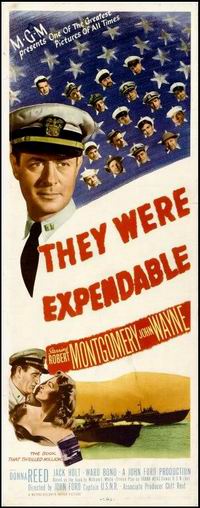
In December of 1941, Lt. John Brickley (Robert Montgomery) commands a squadron of Navy PT boats, based in the Philippines. Brickley is convinced that the small and agile PT Boats could be used in combat but his superior officers disagree, even after viewing a demonstration of what they can do. Brickley’s second-in-command, Rusty (John Wayne), is frustrated and feels that he will never see combat. That changes when the Japanese attack Pearl Harbor and then turn their attention to the Philippines. Brickley gets his chance to show what the PT boats can do but both he and his men must also deal with the terrible risks that come with combat. Brickley and his men have been set up to fight a losing battle, only hoping to slow down the inevitable Japanese onslaught, because both they and their boats are considered to be expendable. The hot-headed Rusty learns humility when he’s sidelined by blood poisoning and he also falls in love with a nurse, Sandy (Donna Reed). However, the war doesn’t care about love or any other plans that its participants may have. With the invasion of the Philippines inevitable, it just becomes a question of who will be sent with MacArthur to Australia and who will remain behind.
One of John Ford’s best films, They Were Expendable is a tribute to the U.S. Navy and also a realistic look at the realities of combat. The movie features Ford’s trademark sentimentality and moments of humors but it also doesn’t deny that most of the characters who are left behind at the end of the movie will not survive the Japanese invasion. Even “Dad’ Knowland (Russell Simpson), the fatherly owner of a local shipyard who does repair work on the PT boats, knows that he’s expendable. He resolves to meet his fate with a rifle in hand and a jug of whiskey at his feet. Rusty, who starts out thirty for combat, comes to learn the truth about war. Ford was one of the many Hollywood directors who was recruited to film documentaries during World War II and he brings a documentarian’s touch to the scenes of combat.
Robert Montgomery had previously volunteered in France and the United Kingdom, fighting the Axis Powers before America officially entered the war. After the war began, he entered the Navy and he was a lieutenant commander when he appeared in They Were Expendable. Montgomery brought a hardened authenticity to the role of Brickley. (Montgomery also reportedly directed a few scenes when Ford was sidelined with a broken leg.) John Wayne is equally good in the role of the hot-headed Rusty, who learns the truth about combat and what it means to be expendable. The cast is full of familiar faces, many of whom were members of the John Ford stock company. Keep an eye out for Ward Bond, Cameron Mitchell, Leon Ames, Jack Holt, and Donald Curtis.
They Were Expendable is one of the best of the World War II movies. It’s a worthy film for Memorial Day and any other day.