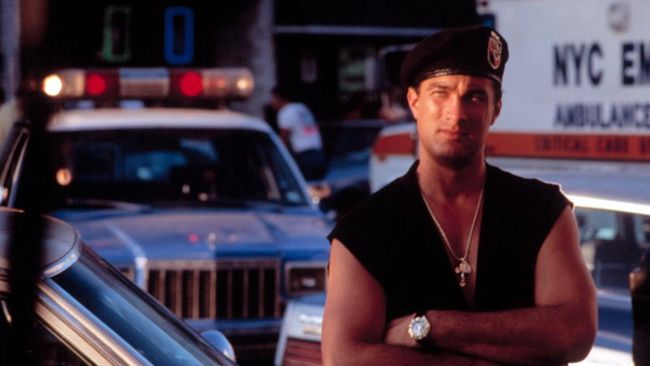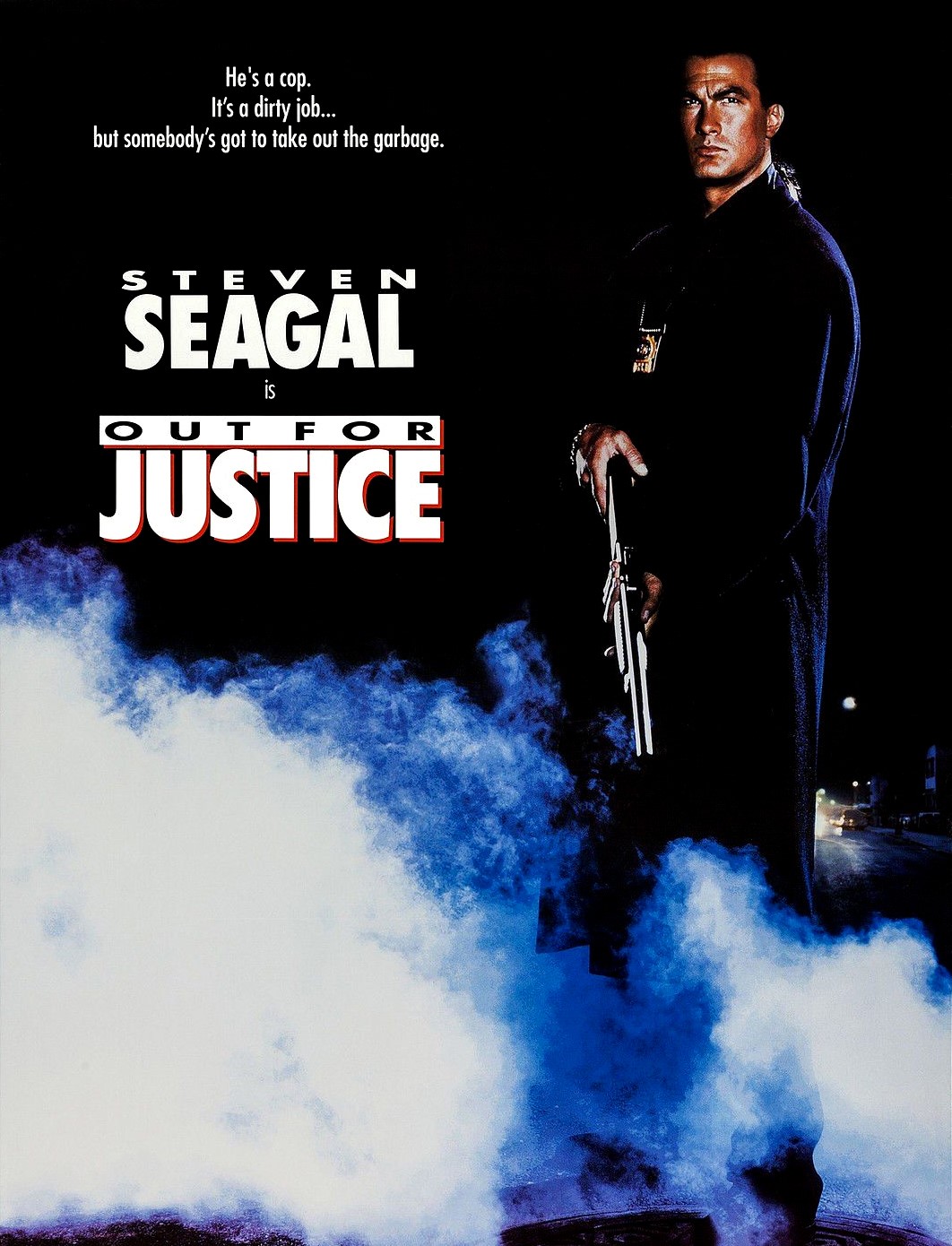
Guilty Pleasure No. 111: Out for Justice (dir. by John Flynn)


Out for Justice is the kind of movie that leans so heavily on its star’s ridiculous swagger that it stops being merely bad and ridiculous and becomes entertaining in a “can’t‑look‑away from the car‑crash” sort of way. It’s not a polished or especially sophisticated action film, but it has a rough, gleefully over‑the‑top energy that makes it a perfect guilty pleasure, the kind of early ’90s action crime movie that works less because of craft and more because of attitude, bruises, and sheer confidence.

At its core, Out for Justice is a revenge story so simple it barely bothers pretending to be anything else. Steven Seagal plays Gino Felino, a Brooklyn cop chasing the man responsible for his partner’s death, and the plot mostly functions as a chain of excuses to send him from one grimy neighborhood stop to the next, collecting broken noses and wounded pride along the way. That stripped‑down structure is part of the movie’s charm, because there’s no attempt to dress it up with complicated twists or emotional depth; it’s all forward momentum, all hard stares, all macho problem‑solving by fist and elbow.

One of the things that gives Out for Justice its off‑kilter charm is how every actor in the cast seems to have read the script as an invitation to extremes. Performances swing violently between scenery‑chewing over‑the‑top theatrics and barely‑there, almost sleepwalking subtlety, with almost nothing in the middle. Either you’re shouting, staring down suspects inches from their faces, or you’re slouched in the background mugging in silence. It shouldn’t work, but the sheer imbalance in energy somehow makes the film feel like a live wire instead of a flat ’90s programmer.

Nowhere is that more obvious than with William Forsythe’s villain, Richie Madano, who plays the role so far “out there” that it’s hard not to wonder if he was actually on a lot of coke like the character was written to be. He leans into every sneer, every twitch, and every unhinged stare until he starts to look less like a character and more like a walking drug‑induced nightmare. There’s a manic, unpredictable edge to his performance that makes him feel genuinely dangerous, even when the dialogue around him is pure tough‑guy parody. It’s a kind of commitment that could easily tip into self‑parody, but Forsythe owns it so completely that he ends up grounding the film’s madness instead of derailing it.

What really makes Out for Justice memorable is how fully it leans into Seagal’s absurd screen persona. He’s at his best here when he’s acting like a man who believes every room belongs to him, and that attitude gives the movie a weird, shameless energy that a lot of his later work lacked. Even when the dialogue is clunky or the Brooklyn swagger feels more imagined than lived‑in, Seagal’s self‑serious delivery turns the whole thing into a performance art piece of tough‑guy certainty. The film is unintentionally funny at times, but that only adds to the appeal, because it makes the movie feel even more like a relic from a time when action stars could be gloriously excessive without irony.

The action is the main draw, and this is where Out for Justice earns most of its reputation. The fights have that satisfying, bone‑crunching roughness that makes the violence feel tangible instead of slick, and the movie keeps finding excuses to escalate from intimidation to outright brutality. Seagal’s style here is less flashy than some of his contemporaries, but that works in the film’s favor because the choreography has a mean, close‑quarters edge to it. The result is a movie that often feels like it’s trying to win by sheer stubbornness, and honestly, that suits it perfectly.

There’s also a strong sleaze factor running through the whole thing, and that’s another reason it works as a “bad but good” movie. The neighborhoods feel dirty, the criminals are exaggerated to the point of cartoonish menace, and the film’s idea of atmosphere is basically to keep everything sweaty, smoky, and angry. Forsythe’s villain, in particular, leans so extravagantly into that sleaze that he ends up giving the film a properly nasty center. A lot of the supporting characters are basically there to be insulted, questioned, or thrown into a wall, but the movie gets enough mileage out of that rhythm that it never really becomes boring.

Still, there’s no reason to pretend Out for Justice is secretly elegant. The script is thin, the character work is mostly functional, and the movie often feels like it was assembled to move from one confrontation to the next as efficiently as possible. Some of the scenes drag, and the film’s macho posturing can wear thin if you’re not already in the mood for this kind of energy. It also has that peculiar Seagal‑era problem where the movie wants him to be a street‑level man of the people, but the character sometimes comes across more like a self‑mythologizing neighborhood warlord than an actual human being. That disconnect is part of the fun, but it is still a disconnect.

What keeps Out for Justice from becoming a throwaway is the confidence behind the nonsense. It feels like a movie made by people who believed that attitude could substitute for sophistication, and in this case, they were mostly right. The pacing may be uneven, the story may be paper‑thin, and the acting may veer into laughable territory, but the movie never loses its nerve, and that gives it a strange kind of integrity. It doesn’t apologize for being dumb, and that unashamed commitment is exactly why it has aged into cult‑status entertainment instead of disappearing into the pile of generic action forgettables.

That’s why Out for Justice works so well as a guilty pleasure. It’s violent, ridiculous, and very much stuck in its own macho time capsule, but those flaws are inseparable from the appeal. The movie’s “bad but good” vibe comes from the way it accidentally becomes bigger and funnier than it likely intended, while still delivering enough real action‑movie satisfaction to justify the ride. It’s the kind of film that invites eye‑rolling and cheers in almost equal measure, and that balancing act is what makes it such a durable little cult object.

In the end, Out for Justice is not a masterpiece, and it doesn’t need to be. It’s a bruised, swaggering, over‑confident slab of early ’90s action cheese that knows how to sell its own nonsense with just enough force to make it lovable. To borrow from film reactor EOM Reacts (who is hilarious, by the way), “This whole movie screams cocaine.” If you want clean storytelling or nuanced performances, it will probably frustrate you. If you want a hard‑edged, trashy, surprisingly watchable Seagal vehicle that embodies the “bad it’s good” spirit—including a cast that either chews every morsel of the scenery or fades into the wallpaper—Out for Justice hits the mark.

Also, be on the look out for a quick cameo of Kane Hodder (who played Jason Voorhees for many of the franchise’s many sequels) as a gang member and for Dan Inosanto (teacher to Bruce Lee and Chuck Norris) as a character named “Sticks.”

Previous Guilty Pleasures

  1. Half-Baked
  2. Save The Last Dance
  3. Every Rose Has Its Thorns
  4. The Jeremy Kyle Show
  5. Invasion USA
  6. The Golden Child
  7. Final Destination 2
  8. Paparazzi
  9. The Principal
  10. The Substitute
  11. Terror In The Family
  12. Pandorum
  13. Lambada
  14. Fear
  15. Cocktail
  16. Keep Off The Grass
  17. Girls, Girls, Girls
  18. Class
  19. Tart
  20. King Kong vs. Godzilla
  21. Hawk the Slayer
  22. Battle Beyond the Stars
  23. Meridian
  24. Walk of Shame
  25. From Justin To Kelly
  26. Project Greenlight
  27. Sex Decoy: Love Stings
  28. Swimfan
  29. On the Line
  30. Wolfen
  31. Hail Caesar!
  32. It’s So Cold In The D
  33. In the Mix
  34. Healed By Grace
  35. Valley of the Dolls
  36. The Legend of Billie Jean
  37. Death Wish
  38. Shipping Wars
  39. Ghost Whisperer
  40. Parking Wars
  41. The Dead Are After Me
  42. Harper’s Island
  43. The Resurrection of Gavin Stone
  44. Paranormal State
  45. Utopia
  46. Bar Rescue
  47. The Powers of Matthew Star
  48. Spiker
  49. Heavenly Bodies
  50. Maid in Manhattan
  51. Rage and Honor
  52. Saved By The Bell 3. 21 “No Hope With Dope”
  53. Happy Gilmore
  54. Solarbabies
  55. The Dawn of Correction
  56. Once You Understand
  57. The Voyeurs 
  58. Robot Jox
  59. Teen Wolf
  60. The Running Man
  61. Double Dragon
  62. Backtrack
  63. Julie and Jack
  64. Karate Warrior
  65. Invaders From Mars
  66. Cloverfield
  67. Aerobicide 
  68. Blood Harvest
  69. Shocking Dark
  70. Face The Truth
  71. Submerged
  72. The Canyons
  73. Days of Thunder
  74. Van Helsing
  75. The Night Comes for Us
  76. Code of Silence
  77. Captain Ron
  78. Armageddon
  79. Kate’s Secret
  80. Point Break
  81. The Replacements
  82. The Shadow
  83. Meteor
  84. Last Action Hero
  85. Attack of the Killer Tomatoes
  86. The Horror at 37,000 Feet
  87. The ‘Burbs
  88. Lifeforce
  89. Highschool of the Dead
  90. Ice Station Zebra
  91. No One Lives
  92. Brewster’s Millions
  93. Porky’s
  94. Revenge of the Nerds
  95. The Delta Force
  96. The Hidden
  97. Roller Boogie
  98. Raw Deal
  99. Death Merchant Series
  100. Ski Patrol
  101. The Executioner Series
  102. The Destroyer Series
  103. Private Teacher
  104. The Parker Series
  105. Ramba
  106. The Troubles of Janice
  107. Ironwood
  108. Interspecies Reviewers
  109. SST — Death Flight
  110. Undercover Brother

Brad reviews OUT FOR JUSTICE (1991), starring Steven Seagal!


17 year-old Brad Crain was at the movie theater in April of 1991 to see Steven Seagal’s latest action film, OUT FOR JUSTICE! Seagal’s career had shot out of a cannon with his first three films being the highly successful movies ABOVE THE LAW (1988), HARD TO KILL (1990), and MARKED FOR DEATH (1990). As a guy who loved action movies, Seagal (with his pony tail) was a cool new action star, and I was down for it.

Steven Seagal plays Detective Gino Felino, a Brooklyn cop called into duty when a guy who grew up with him in their neighborhood, mob enforcer Richie Madano (William Forsythe), goes completely off the rails. Hooked on drugs and looking to settle some personal scores, Richie murders Gino’s partner, and begins turning their neighborhood into a war zone, even pulling a woman out of her car and blowing her away in broad daylight over a simple traffic incident. Convinced that Richie will not leave the neighborhood he grew up in, Gino talks Captain Ronnie Danziger (Jerry Orbach) into letting him have an unmarked police car, a shotgun, and his approval to engage in a manhunt for the drugged out psycho. From that point forward, Gino shakes down Richie’s family members and associates to try to find out where he is. As bodies and broken bones pile up, Gino is determined to do whatever it takes to bring Richie to justice!

I’ll just say up front that OUT FOR JUSTICE is my personal favorite Steven Seagal film. It’s not the crowd pleaser or the box office champ that the next year’s UNDER SIEGE (1992) would be, and film critics largely blew it off when it first hit cinemas, but it does feature the star at his most charismatic, something that would all but disappear after the mid-90’s. I love the way Seagal plays Gino. Sure he’s tough, but he talks more, he laughs more, and it feels like he’s actually enjoying himself. His Gino isn’t just a badass cop, he’s a neighborhood guy, a former street punk who grew up and made something positive out of himself. Seagal’s performance here truly works, and he plays the role with so much confidence that it’s a shame that he didn’t remain this engaged in future performances.

OUT FOR JUSTICE is a badass action film. After it opens with Richie’s horrific murders, it then follows Gino’s hunt for the killer into smoky bars filled with wannabe tough guys who know more than they’re letting on. They get their asses handed to them. It follows Gino as Richie’s goons attack him at various places, from meat shops to apartment buildings, and he dispatches them with calm precision, but often in gruesome ways. I still wince when I see the results of meat cleaver fights and close quarter shotgun blasts. OUT FOR JUSTICE is a throwback to an era when action films featured men with integrity who kick ass and take names. While the movie does have some melodrama and humor, at the end of the day, this is tough-guy cinema done right. 

I did want to shout out a few other things about OUT FOR JUSTICE that helps put it over the top for me. William Forsythe is incredible as Richie Madano. He’s sweaty, twitchy, cruel, and completely unhinged. He makes you believe that he’s literally capable of doing anything, and it seems like his goons may be following more out of fear than anything else. His Richie is a man who doesn’t expect that he’ll be alive that much longer, so he’s willing to cross every line that may have once mattered in his life. Director John Flynn captures the urgency of the film’s action very well, and we can feel the tension as Gino tries to locate the crazy Richie as quickly as possible before more innocent people are killed. He isn’t afraid to show the brutality of the violence as part of Gino’s quest, either. This shouldn’t be surprising when you recognize that Flynn directed the revenge classic ROLLING THUNDER (1977) about fifteen years earlier. The one last thing I wanted to point out about OUT FOR JUSTICE is that it was written by R. Lance Hill, who wrote the brutal Charles Bronson hitman film THE EVIL THAT MEN DO (1984). These are talented guys who know how to tell tough stories about even tougher men who are willing to do what it takes to get justice when no one else can. 

At the end of the day, Steven Seagal would go on to make a lot more movies, but I don’t think he ever quite recaptured the balance of charisma and toughness that he shows here. And OUT FOR JUSTICE is a badass action movie that doesn’t really care what movie critics think, either. Buoyed by Seagal’s performance, the film’s action is angry, focused, unapologetic, and still hits hard over thirty years after it was originally released.

Retro Television Review: Homicide: Life On The Street 2.4 “A Many Splendored Thing”


Welcome to Retro Television Reviews, a feature where we review some of our favorite and least favorite shows of the past!  On Sundays, I will be reviewing Homicide: Life On The Street, which aired from 1993 to 1999, on NBC!  It  can be viewed on Peacock.

This week, season 2 of Homicide comes to a close with an episode directed by John McNaughton, of Henry: Portrait of A Serial Killer fame.

Episode 2.4 “A Many Splendored Thing”

(Dir by John McNaughton, originally aired on January 27th, 1994)

The second season finale of Homicide opens with Bolander in a good mood and Munch feeling that life is pretty much pointless.  It’s a reversal from what we’ve seen over the last few episodes of Homicide and, as annoyed as I got with all the storylines about Bolander’s private life, I was still happy to see Bolander happy in this episode.  As an actor, Ned Beatty’s performance is a lot interesting when Bolander is looking forward to the future.  By that same token, Richard Belzer always seemed to be trying to hard whenever it came to playing Munch’s happiness.  Belzer was born to play a cynic and, in this episode, he delivers his lines with a bitterness that is both funny and authentic.

Bolander is dating Linda and I have to admit that, despite my initial weariness, I really like Ned Beatty and Julianna Margulies as a couple.  Bolander and Linda go on a double date with Kay and Danvers.  Awwww, two couples in love and having dinner together!  How sweet!  Uh-oh, here comes Munch….

While Munch is ruining Bolander’s date, Bayliss is getting in touch with his own dark side.  An investigation into the S&M-related death of a young woman leads to Bayliss and Pembleton arresting a man who killed her during rough (but consensual) sex.  Bayliss and Pembleton spend their investigation in Baltimore’s red light district.  Bayliss claims to be disgusted by the whole scene, leading to Pembleton calling him out for being judgmental.  Pembleton tells Bayliss that he can’t be a good detective unless he’s really in touch with every aspect of his existence.  After the murder is solved, the woman’s co-worker, Tanya, gives Bayliss the gift of a leather jacket.  Tanya is played, in a very good performance, by the actress Adrienne Shelley.  Tragically, Shelley herself would, 12 years later, be murdered in her New York apartment.  And while it’s tempting to write about the irony of Shelley appearing on a show like Homicide, I’d rather recommend that everyone see Waitress instead.  It was the second feature film that Shelley directed and it is very good.

Finally, Lewis investigates a man who committed murder because he felt someone had taken his favorite pen.  Lewis searches for a deeper motive but in the end, it really was all about a pen.  Lewis, I’ve noticed, always seems to get the cases that show just how random life and death can truly be.

The second season of Homicide ends with Lewis giving Felton a pen, Bayliss putting on his new leather jacket and walking the streets of Baltimore, and Munch, Bolander, and Linda watching fireworks explode over the harbor.  It’s a good way to end a season.  As dark as the show was (and as dark as this particular episode was), the season ends on a note of hope.  There is happiness out there for those willing to look for it.


Retro Television Review: Homicide: Life on the Street 2.3 “Black and Blue”


Welcome to Retro Television Reviews, a feature where we review some of our favorite and least favorite shows of the past!  On Sundays, I will be reviewing Homicide: Life On The Street, which aired from 1993 to 1999, on NBC!  It  can be viewed on Peacock.

This week, Pembleton gets a confession.

Episode 2.3 “Black and Blue”

(Dir by Chris Menaul, originally aired on January 20th, 1994)

In this week’s episode, Pembleton manipulates a man into confessing to a murder that he didn’t commit.  Pembleton does it with the full knowledge that the man is innocent and that, if the man is indicted and goes to trial, he will undoubtedly be found guilty as a result of that coerced confession.  Pembleton does it to prove a point to Giardello.

The man is Lane Staley (Isaiah Washington), who has been identified (by his grandmother, who was just trying to be helpful) as an eyewitness to the shooting of Charles Courtland Cox.  Pembleton is convinced that Cox was shot by a policeman and he only wants to interrogate Staley as a witness.  Giardello, who feels that Pembleton is to obsessed with his cop theory and who, as a proud member of the police force, does not want Pembleton to be right, insists that Pembleton treat Staley as a suspect.  Pembleton responds by going into the Box and pretending to be sympathetic to Staley’s situation.  He and Staley talk about how they’re both expected to always be polite and careful about what they say around white detectives.  Pembleton jokes that he always has to be extra polite when he comes to work.

Staley starts to open up to Pembleton and eventually admits that he was present when Cox was shot.  That’s when Pembleton starts shouting at Staley, accusing him of being responsible and basically browbeating Staley until Staley is in tears.  Pembleton makes Staley feel guilty for not doing more to protect Cox and continues to yell at him until, eventually, Staley feels that Cox’s murder was his fault.  Staley finally signs a confession, even though it’s obvious that the sobbing man is not a murderer.  Pembleton hands Giardello the confession and reminds him that’s the way that the police have been getting confessions out of young black suspects for years.

It’s a powerful moment and one that took me totally by surprise.  Andre Braugher and Yaphet Kotto both gave excellent performances in this episode.  The dynamic between Pembleton and Giardello has always been one of the more interesting parts of the show.  The fact that both of them are black and both of them are portrayed as being fully aware of the racism surrounding them brings an extra edge to their debate as to whether or not the black Cox was shot by a white policeman. (At one point, Giardello snaps at Pembleton to speak to him as respectfully as he speaks to the white lieutenants and it’s the exact type of moment that most shows would never have the courage or insight to portray.)  Pembleton is a great detective because he’s laser-focused on getting a confession, to the exclusion of worrying about anything else.  Giardello is a great lieutenant because he’s enough of a pragmatist to understand that some battles are not worth the price of victory.  In the end, Giardello comes to realize that Pembleton is right about the shooting but one still has to wonder what would have happened in Giardello hadn’t torn up Staley’s confession.  The murder of Cox would have disappeared from the headlines but the innocent Staley would have disappeared into the system.

The scenes with Pembleton and Staley were so electrifying that it made up for the fact that this is yet another episode that features Bolander feeling sorry for himself after his divorce.  Fortunately, for Bolander, he meets and befriends a young waitress named Linda (Julianne Margulies) who mentions that she plays the violin.  Bolander reveals that he plays the cello — WHAT!?  Since when has Bolander, someone who has expressed no interest in art or creativity or even music during his entire time of the show, become a cello player?  The episode ends with Bolander and Linda playing their instruments together and it’s a sweet scene but it’s still a bit hard to buy that apparently every woman in Baltimore is instantly attracted to a middle-aged, balding cop who spends all of his time talking about his divorce.  Ned Beatty was one of the great character actors but it sometimes feels like Homicide wasn’t sure what to do with his character.

But, hey, maybe Bolander will finally stop being so whiny.  That’s my hope.  This episode found Munch breaking up with his girlfriend after he accidentally gave her a carnivorous fish that ate all of her other fish.  At one point, Munch says that he can’t accept the idea of Bolander being happier than him.  Seriously, Munch, don’t jinx this.  I’ve been listening to Bolander complain nonstop for 15 episodes.  If he’s happy now, let him have it!

Next week …. life on the street continues!

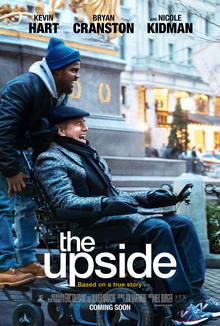
Film Review: The Upside (dir by Neil Burger)


There’s a lot of opera in The Upside.

That, in itself, is not a surprise.  The Upside is about a wealthy, emotionally repressed white man and, if there’s anything we’ve learned from the movies, it’s that wealthy, repressed white people always love opera.

Another things that we’ve learned from the movies is that wealthy, emotionally repressed white people always hire a streetwise person of color to help them learn to appreciate life.  This person  of color will inevitably not care for all of the opera and will then introduce the wealthy, emotionally repressed white person to their own type of music.  If the movie’s a comedy, that music will be rap.  If it’s a drama, that music will be jazz.  The Upside is a dramedy so the music of emotional liberation is Aretha Franklin.

There’s not a single cliche that goes unused in The Upside.  Actually, I take that back.  As opposed to so many other films of this short, Phillip (Bryan Cranston) does not start the film as a politically incorrect bigot, which means that we’re spared of any cringey scenes of Philip trying to bait Dell (Kevin Hart) by being casually racist.  Otherwise, every cliche imaginable is present in The Upside and it all gets to be a bit much after a while.  I’m sure that the film means well and there’s a part of me that felt a little bit guilty about not liking it but seriously, this is one of those movie’s that just keeps coming at you.

Phillip is a paraplegic who wants to die, though not before listening to a lot of opera.  Dell is an ex-con who needs to find a job so his parole doesn’t get revoked.  Yvonne (Nicole Kidman) is Phillip’s personal assistant.  She’s obviously in love with Phillip, though for some reason this fact is never acknowledged until the end of the film.

Together …. they solve crimes!

No, actually, they all become friends and learn the importance of celebrating life.  It’s a good lesson to learn, make no mistake.  But it’s just all so predictable that it’s hard not to resent just how thoroughly and blatantly the film insists on trying to manipulate you.  You get the feeling that the filmmakers didn’t have any faith in their audience’s capability to feel empathy.  Director Neil Burger did such a great job with Limitless but, with this film, he seems to have lost his sense of pacing.  The movie drags from one heartwarming cliche to another, without any hints of the type of quirky self-awareness that would help to make those cliches easier to digest.

Bryan Cranston’s a great actor but, perhaps realizing that he’s merely playing a more a benign version of Walter White, he seems a bit bored here while Nicole Kidman is sabotaged by a script that doesn’t allow her to do much other than reproachfully shake her head.  Kevin Hart, however, actually gives a pretty good performance, one that suggests that he actually has a lot of potential as a dramatic actor.  The character may be a stereotype but Hart at least brings a bit of energy to the film.

The Upside came out this January and it was actually a modest box office hit.  I imagine that a lot of people loved this film for the exact reason that I disliked it.  The film’s just too predictable for me to embrace The Upside.

Horror Film Review: Ghost Ship (dir by Steve Beck)


Way back when we first started this year’s horrorthon, Arleigh shared a horror scene that he loved.  That scene was the opening few minutes of the 2002 horror-at-sea film, Ghost Ship.

That scene featured a few dozen wealthy cruise ship passengers all getting bisected by a thin wire cord.  While a young girl named Kate (Emily Browning) watches, everyone on the ship’s dance floor literally falls to pieces.  Torsos slip off of legs.  Bodies split in half.  The captain’s head literally splits in two.  While gallons of blood gush everywhere, people vainly try to reattach their limbs.  Actually, some of them can’t even figure out which limb belongs to them.  By the time everyone’s collapsed, there’s a lot of arms and legs to sort through.

In short, it’s an absolute mess.  I wouldn’t want to be the person assigned to clean up after all that.

It’s also a rather brilliant opening, one that only takes a minute to go from romance and sophistication to bloody dismemberment.  It’s definitely the one moment that everyone remembers about Ghost Ship, which is a bit of a problem because, once that scene is done, there’s still 85 minutes of film to sit through.  Ghost Ship‘s opening is so shocking and visceral that there’s no way that the rest of the film can live up to it.

As for the rest of the film, it deals with a boat salvage crew.  Gabriel Byrne is Murphy, the captain.  Julianne Margulies is Maureen Epps, whose name might as well be Ellen Ripley.  Ron Eldard is Dodge, who is in love with Epps.  And then there’s Karl Urban, Isiah Washington, and Alex Dimitriades, who are all playing characters who you know are going to be doomed as soon as you see them.  When they’re told by a pilot named Jack Ferriman (Desmond Harrington) that he’s spotted a ghost ship in international waters, they set out to claim it for themselves.

Of course, what Jack has spotted is the same cruise ship where, forty years before, everyone was chopped in half.  After Murphy, Epps, and the crew board the ship, they discover a large amount of gold.  They also end up seeing a lot of ghosts, including the young girl from the start of the movie.  To their credit, the crew decides to leave the ship as quickly as they can.  Unfortunately, after their tugboat explodes, escape appears to be impossible and it becomes obvious that they have been lured to the cruise ship for a very specific purpose.

The film encourages us to wonder what the ship wants from the salvage crew but the answer to that question is never really in doubt.  For that matter, it’s not really a shock when it turns out that one member of the boarding party isn’t what he claims to be.  Despite being a bit predictable, Ghost Ship isn’t a bad film.  It has a reputation for being disappointing but actually it’s an atmospheric and competently directed horror film.  Though the characters are all thinly drawn, the talented cast does their best to try to bring them to life.  If the film ultimately doesn’t seem to work as well as it should, it’s largely because nothing that follows can match the power of that opening.  You watching the film waiting for a scene that’ll match that opening scene and when it never comes, it’s hard not to be disappointed.


Here Are The Very Confusing SAG Nominations!


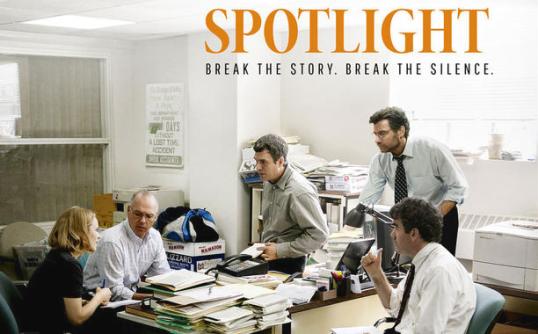
Spotlight

The nominees for the SAG Awards were announced earlier today!  The SAG Awards are usually one of the more accurate of the various Oscar precursors.  Because so many members of the Academy are also members of the Screen Actors Guild, the SAG Awards are usually a pretty good indication of what films are on the Academy’s radar and which ones aren’t.  Occasionally, an actor will be nominated by SAG and then snubbed by the Academy.  Last year, for instance, SAG nominated Jake Gyllenhall for Nightcrawler, Jennifer Aniston for Cake, and Naomi Watts for St. Vincent.  None of those three received any love from the Academy.  But, for the most part, SAG is one of the most reliable precursors out there.

And that’s why so many of us are in shock today!  The SAG Awards in no way resembled what many of us were expecting.  Other than Spotlight, none of the film’s that many of us expected to be nominated for best ensemble (the SAG’s equivalent of the Academy’s best picture) were nominated (and even Spotlight only received one other nomination, for Rachel McAdams who, up to this point, hasn’t really figured into the Oscar discussion).  The Martian was not nominated for best ensemble or anything else for that matter.  Creed was totally snubbed.  Brooklyn was nominated for actress but not ensemble.  Mad Mad: Fury Road was nominated for its stunt work and nothing else.  Helen Mirren received two nominations, for films that hardly anyone (outside of the SAG, obviously) was really paying any attention to.  Sarah Silverman received a best actress nomination for I Smile Back, which I hadn’t even heard of until about a week ago.  It’s an unexpected and strange group of nominees.

Keep in mind, it’s not necessarily a bad thing that the nominees are unexpected.  Beasts of No Nation and Straight Outta Compton will both receive deserved boosts in their hunt for Oscar gold.  At the same time, I have to admit that I wasn’t happy to see either The Big Short or Trumbo nominated for best ensemble because I know I’m going to feel obligated to see them and they both look so freaking tedious and blandly political!  But consider this: if The Big Short and Trumbo are both huge Oscar contenders, we may face a situation where both Jay Roach and Adam McKay are nominated for best director in the same year.  I think that’s one of the signs of the apocalypse and, at this point, I’m kind of ready to welcome the end of the world.

Anyway, here are the SAG nominations!  Look them over and, after the Golden Globe nominations are announced tomorrow, update your Oscar predictions accordingly.

Best Performance by a Cast Ensemble in a Motion Picture

Best Performance by a Male Actor in a Leading Role

Best Performance by a Female Actor in a Leading Role

  • Cate Blanchett – Carol
  • Brie Larson – Room
  • Helen Mirren – Woman in Gold
  • Saoirse Ronan – Brooklyn
  • Sarah Silverman – I Smile Back

Best Performance by a Male Actor in a Supporting Role

Best Performance by a Female Actor in a Supporting Role

  • Rooney Mara – Carol
  • Rachel McAdams – Spotlight
  • Helen Mirren – Trumbo
  • Alicia Vikander – The Danish Girl
  • Kate Winslet – Steve Jobs

Best Performance by a Stunt Ensemble in a Motion Picture

Best Performance by an Ensemble in a Drama Series

  • Downton Abbey
  • Game of Thrones
  • Homeland
  • House of Cards
  • Mad Men

Best Performance by a Male Actor in a Drama Series

  • Peter Dinklage – Game of Thrones
  • Jon Hamm – Mad Men
  • Rami Malek – Mr. Robot
  • Bob Odenkirk – Better Call Saul
  • Kevin Spacey – House of Cards

Best Performance by a Female Actor in a Drama Series

  • Claire Danes – Homeland
  • Viola Davis – How to Get Away with Murder
  • Julianna Marguilles – The Good Wife
  • Maggie Smith – Downton Abbey
  • Robin Wright – House of Cards

Best Performance by an Ensemble in a Comedy Series

  • The Big Bang Theory
  • Key and Peele
  • Modern Family
  • Orange is the New Black
  • Transparent
  • Veep

Best Performance by a Male Actor in a Comedy Series

  • Ty Burrell – Modern Family
  • Louis CK – Louie
  • William H. Macy – Shameless
  • Jim Parsons – The Big Bang Theory
  • Jeffrey Tambor – Transparent

Best Performance by a Female Actor in a Comedy Series

  • Uzo Aduba – Orange is the New Black
  • Edie Falco – Nurse Jackie
  • Ellie Kemper – Unbreakable Kimmy Schmidt
  • Julia Louis-Dreyfus – Veep
  • Amy Poehler – Parks and Recreation

Best Performance by a Male Actor in a TV Movie or Mini-Series

  • Idris Elba – Luther
  • Ben Kingsley – Tut
  • Ray Liotta — Texas Rising
  • Bill Murray – A Very Murray Christmas
  • Mark Rylance – Wolf Hall

Best Performance by a Female Actor in a TV Movie or Mini-Series

Best Performance by a Stunt Ensemble in a Comedy or Drama Series

  • Blacklist
  • Game of Thrones
  • Homeland
  • Marvel’s Daredevil
  • The Walking Dead

My 2012 Emmy Nominations


So, for the past few days, I’ve been happily hopping around my section of the Shattered Lens Bunker and do you know why? 

Because it’s awards season, that’s why!  With the conclusion of the 2011-2012 TV season, Emmy ballots have been mailed and votes are being cast and, come July, we’ll know which shows and performers have been nominated for the 2012 Emmys. 

Before that happens, however, I would like to play a little game called “What if Lisa Was Solely Responsible For Picking the Nominees.”  Here’s how it works — I looked over and studied the complete list of the shows and performances that have been submitted this year for Emmy consideration.  And then, from that list, I picked my personal nominees.

(A complete list of every show and performer that’s been submitted for Emmy consideration can be found here.)

Below are my personal nominations in the major Emmy categories.  Again, note that these are not necessarily the shows and performers that I believe will be nominated.  Instead, these are the shows and performers that I would nominate if I was solely responsible for picking the nominees.

A complete list of my nominations in every single Emmy category can be found here.  (And yes, there’s a lot of Lifetime on the list.  There’s also a lot of Community.)

Best Comedy Series

Bored to Death (HBO)

Community (NBC)

Girls (HBO)

It’s Always Sunny In Philadelphia (FX)

Parks and Recreation (NBC)

Raising Hope (Fox)

Veep (HBO)

Best Drama Series

Boardwalk Empire (HBO)

Breaking Bad (AMC)

The Client List (Lifetime)

Downton Abbey (PBS)

Game of Thrones (HBO)

Homeland (Showtime)

Pan Am (ABC)

Ringer (The CW)

True Blood (HBO)

The Walking Dead (AMC)

Outstanding Miniseries or Movie

Blue-Eyed Butcher (Lifetime)

Cyberbully (ABC Family)

Drew Peterson: Untouchable (Lifetime)

Five (Lifetime)

Girl Fight (Lifetime)

Hatfields & McCoys (History Channel)

The Hour (BBC America)

Of Two Minds (Lifetime)

Outstanding Variety Series

Conan (TBS)

Fashion Police (E)

Key and Peele (Comedy Central)

The Soup (E)

Tosh .O (Comedy Central)

Outstanding Variety Special

Betty White’s 90th Birthday Party (NBC)

Celtic Women: Believe (PBS)

The Comedy Central Roast of Charlie Sheen (Comedy Central)

TV Land Awards (TV Land)

Wendy Liebman: Taller on TV (Showtime)

Outstanding Nonfiction Special

Bobby Fischer Against The World (HBO)

Catholicism: Amazed and Afraid (PBS)

Crime After Crime (OWN)

God Is The Bigger Elvis (HBO)

6 Days To Air: The Making of South Park (Comedy Central)

Outstanding Nonfiction Series

America in Primetime (PBS)

American Masters (PBS)

America’s Most Wanted (Lifetime)

Beyond Scared Straight (A&E)

Inside Story (Biography)

Outstanding Reality Program

Antiques Roadshow (PBS)

Dance Moms (Lifetime)

Kitchen Nightmares (Fox)

Scouted (E)

Storage Wars (A&E)

Outstanding Reality-Competition Program

The Amazing Race (CBS)

The Bachelor (ABC)

Big Brother (CBS)

The Celebrity Apprentice (NBC)

Hell’s Kitchen (Fox)

Project Runway (Lifetime)

So You Think You Can Dance (Fox)

Survivor (CBS)

Outstanding Lead Actor In A Comedy Series

Larry David in Curb Your Enthusiasm (HBO)

Johnny Galecki in The Big Bang Theory (CBS)

Danny McBride in Eastbound and Down (HBO)

Joel McHale in Community (NBC)

Lucas Neff in Raising Hope (Fox)

Jason Schwartzman in Bored To Death (HBO)

Outstanding Lead Actor In A Drama

Steve Buscemi in Boardwalk Empire (HBO)

Bryan Cranston in Breaking Bad (AMC)

Jeffrey Donavon in Burn Notice (USA)

Damian Lewis in Homeland (Showtime)

Andrew Lincoln in The Walking Dead (AMC)

Timothy Olyphant in Justified (FX)

Outstanding Lead Actor In A Miniseries or Movie

Idris Elba in Luther (BBC America)

Rob Lowe in Drew Peterson: Untouchable (Lifetime)

Steven Weber in Duke (Hallmark Movie Channel)

Dominic West in The Hour (BBC America)

Ben Whishaw in The Hour (BBC America)

Outstanding Lead Actress In A Comedy

Zooey Deschanel in New Girl (Fox)

Lena Dunham in Girls (HBO)

Tina Fey in 30 Rock  (NBC)

Julia Louis Dreyfuss in Veep (HBO)

Mary-Louis Parker in Weeds (Showtime)

Martha Plimpton in Raising Hope (Fox)

Outstanding Lead Actress in a Drama

Claire Danes in Homeland (Showtime)

Sarah Michelle Gellar in Ringer (The CW)

Jennifer Love Hewitt in The Client List (Lifetime)

Julianna Margulies in The Good Wife (CBS)

Elizabeth McGovern in Downton Abbey (PBS)

Anna Paquin in True Blood (HBO)

Outstanding Lead Actress In A Miniseries or Movie

Kristin Davis in Of Two Minds (Lifetime)

Anne Heche in Girl Fight (Lifetime)

Rose McGowan in The Pastor’s Wife (Lifetime)

Emily Osment in Cyberbully (ABC Family)

Sara Paxton in Blue Eyed Butcher (Lifetime)

Outstanding Supporting Actor In A Comedy Series

Charlie Day in It’s Always Sunny in Philadelphia (FX)

Danny DeVito in It’s Always Sunny In Philadelphia (FX)

Donald Glover in Community (NBC)

Nick Offerman in Parks and Recreation (NBC)

Danny Pudi in Community (NBC)

Matt Walsh in Veep (HBO)

Outstanding Supporting Actor In A Drama

Bruce Campbell in Burn Notice (USA)

Peter Dinklage in Game of Thrones (HBO)

Giancarlo Espositto in Breaking Bad (AMC)

Michael Pitt in Boardwalk Empire (HBO)

Michael Shannon in Boardwalk Empire (HBO)

Alexander Skarsgard in True Blood (HBO)

Outstanding Supporting Actor In A Miniseries or Movie

Powers Boothe in Hatfields and McCoys (History Channel)

Justin Bruening in Blue-Eyed Butcher (Lifetime)

Mark-Paul Gosselaar in Hide (TNT)

Sir Roger Moore in A Princess For Christmas (Hallmark Movie Channel)

Tony Shalhoub in Five (Lifetime)

Outstanding Supporting Actress In A Comedy

Alison Brie in Community (NBC)

Kristen Chenoweth in GCB (ABC)

Anna Chlumsky in Veep (HBO)

Gillian Jacobs in Community (NBC)

Cloris Leachman in Raising Hope (Fox)

Aubrey Plaza in Parks and Recreation (NBC)

Outstanding Supporting Actress in Drama

Christine Baranski in The Good Wife (CBS)

Kristen Bauer Von Straten in True Blood (HBO)

Kelly MacDonald in Boardwalk Empire (HBO)

Christina Ricci in Pan Am (ABC)

Sophia Turner in Game of Thrones (HBO)

Deborah Ann Woll in True Blood (HBO)

Supporting Actress In A Miniseries or Movie

Tammy Blanchard in Of Two Minds (Lifetime)

Kaley Cuoco in Drew Peterson: Untouchable (Lifetime)

Lisa Edelstein in Blue-Eyed Butcher (Lifetime)

Jessica Lange in American Horror Story (FX)

Jena Malone in Hatfields and McCoy (History Channel)