What’s an Insomnia File? You know how some times you just can’t get any sleep and, at about three in the morning, you’ll find yourself watching whatever you can find on cable or streaming? This feature is all about those insomnia-inspired discoveries!
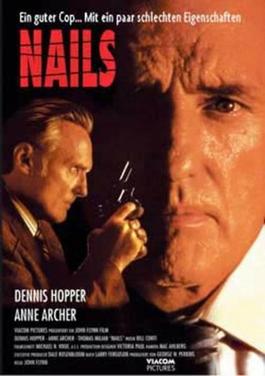
If you’re having trouble getting to sleep, you can always go over to YouTube and watch 1992’s Nails.
Dennis Hopper stars Harry “Nails” Nile, a cop who …. wait for it …. doesn’t go by the book! He’s just a few days away from retirement but before Nails turns in his badge and his gun, he has to track down the drug dealers responsible for the death of his partner (Earl Billings). His superior officer doesn’t like him. His wife (Anne Archer) doesn’t trust him. Both the cartel and a local political fixer want him taken down. But Nails isn’t going to give up. He’s going to solve the case and stop the bad guys and get revenge. And he’s going to do it …. wait for it …. HIS WAY!
As you can probably already guess, Nails features just about every cop cliche imaginable. Nails’s partner talks about how much he’s enjoying life right before he gets gunned down. Nails’s boss yells about how much Nails’s out-of-control antics are costing the city. There are car chases. There are foot chases. There are shoot-outs and one-liners. There’s even a moving van chase that features the sight of Dennis Hopper frantically running down the street. And, of course, Danny Trejo shows up in a small role. It’s predictable and mindless and kind of entertaining if that’s what you’re in the mood for.
The thing that sets this film apart — really, the only thing — is that Dennis Hopper gives such an over-the-top performance as Nails. He’s the type of cops who randomly yells at strangers, occasionally giggles, and has a habit of repeating back any threat that he happens to hear. When I watched the film, I originally thought a better title than Nails would be Method Cop because Hopper truly does seem to be going out of his way to bring the full weight of the Method onto the type of role that could have just as easily been played by Chuck Norris. However, as the film progressed, I realized that Hopper was basically giving the same performance that he gave in Blue Velvet, except he was now playing the good guy. What if Frank Booth was the hero? Nails answers the question.
Of course, once the film ended, I was reminded that Hopper’s villain in Speed was a former cop. Is it possible that Speed was actually a sequel to Nails?
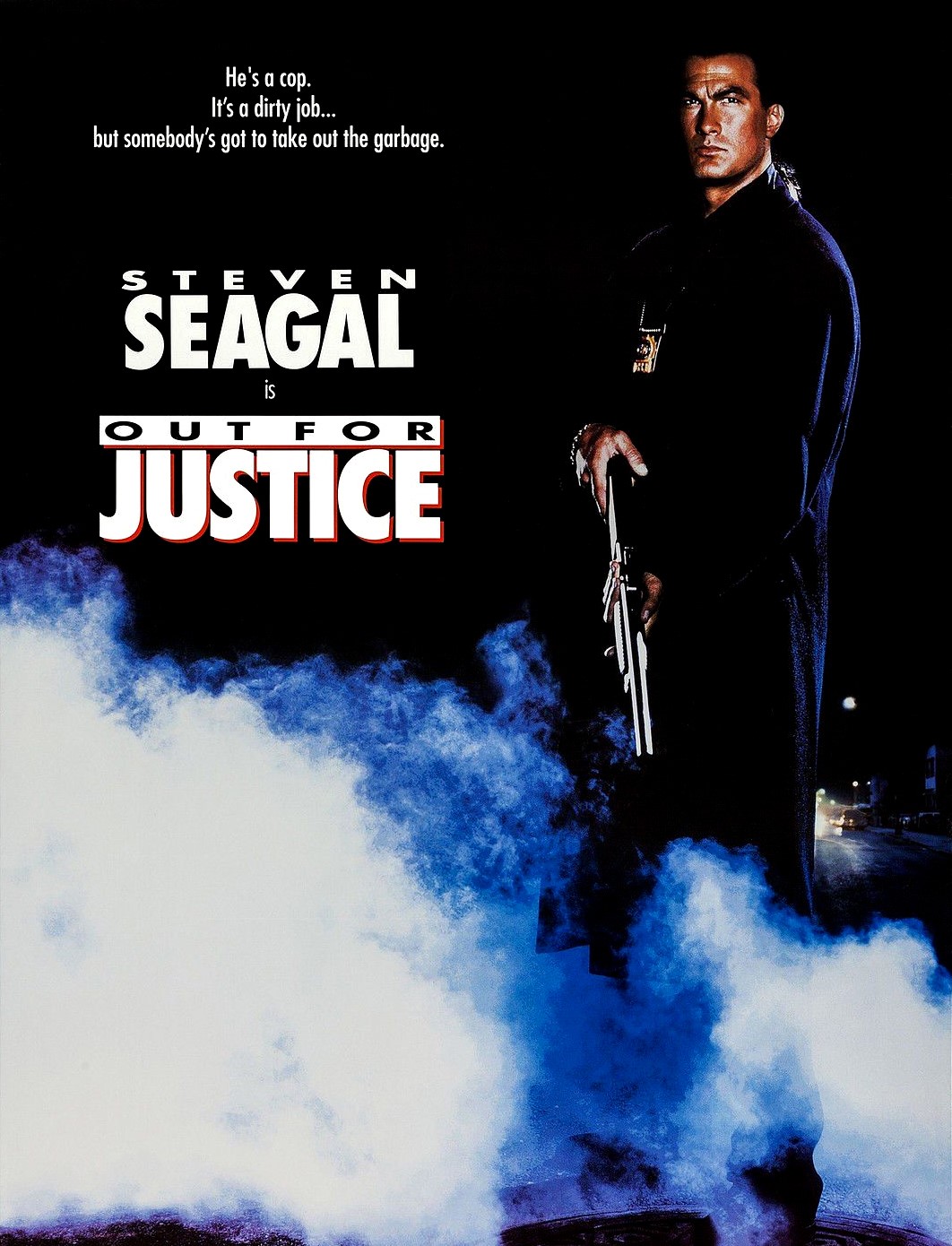
Out for Justice is the kind of movie that leans so heavily on its star’s ridiculous swagger that it stops being merely bad and ridiculous and becomes entertaining in a “can’t‑look‑away from the car‑crash” sort of way. It’s not a polished or especially sophisticated action film, but it has a rough, gleefully over‑the‑top energy that makes it a perfect guilty pleasure, the kind of early ’90s action crime movie that works less because of craft and more because of attitude, bruises, and sheer confidence.
At its core, Out for Justice is a revenge story so simple it barely bothers pretending to be anything else. Steven Seagal plays Gino Felino, a Brooklyn cop chasing the man responsible for his partner’s death, and the plot mostly functions as a chain of excuses to send him from one grimy neighborhood stop to the next, collecting broken noses and wounded pride along the way. That stripped‑down structure is part of the movie’s charm, because there’s no attempt to dress it up with complicated twists or emotional depth; it’s all forward momentum, all hard stares, all macho problem‑solving by fist and elbow.
One of the things that gives Out for Justice its off‑kilter charm is how every actor in the cast seems to have read the script as an invitation to extremes. Performances swing violently between scenery‑chewing over‑the‑top theatrics and barely‑there, almost sleepwalking subtlety, with almost nothing in the middle. Either you’re shouting, staring down suspects inches from their faces, or you’re slouched in the background mugging in silence. It shouldn’t work, but the sheer imbalance in energy somehow makes the film feel like a live wire instead of a flat ’90s programmer.
Nowhere is that more obvious than with William Forsythe’s villain, Richie Madano, who plays the role so far “out there” that it’s hard not to wonder if he was actually on a lot of coke like the character was written to be. He leans into every sneer, every twitch, and every unhinged stare until he starts to look less like a character and more like a walking drug‑induced nightmare. There’s a manic, unpredictable edge to his performance that makes him feel genuinely dangerous, even when the dialogue around him is pure tough‑guy parody. It’s a kind of commitment that could easily tip into self‑parody, but Forsythe owns it so completely that he ends up grounding the film’s madness instead of derailing it.
What really makes Out for Justice memorable is how fully it leans into Seagal’s absurd screen persona. He’s at his best here when he’s acting like a man who believes every room belongs to him, and that attitude gives the movie a weird, shameless energy that a lot of his later work lacked. Even when the dialogue is clunky or the Brooklyn swagger feels more imagined than lived‑in, Seagal’s self‑serious delivery turns the whole thing into a performance art piece of tough‑guy certainty. The film is unintentionally funny at times, but that only adds to the appeal, because it makes the movie feel even more like a relic from a time when action stars could be gloriously excessive without irony.
The action is the main draw, and this is where Out for Justice earns most of its reputation. The fights have that satisfying, bone‑crunching roughness that makes the violence feel tangible instead of slick, and the movie keeps finding excuses to escalate from intimidation to outright brutality. Seagal’s style here is less flashy than some of his contemporaries, but that works in the film’s favor because the choreography has a mean, close‑quarters edge to it. The result is a movie that often feels like it’s trying to win by sheer stubbornness, and honestly, that suits it perfectly.
There’s also a strong sleaze factor running through the whole thing, and that’s another reason it works as a “bad but good” movie. The neighborhoods feel dirty, the criminals are exaggerated to the point of cartoonish menace, and the film’s idea of atmosphere is basically to keep everything sweaty, smoky, and angry. Forsythe’s villain, in particular, leans so extravagantly into that sleaze that he ends up giving the film a properly nasty center. A lot of the supporting characters are basically there to be insulted, questioned, or thrown into a wall, but the movie gets enough mileage out of that rhythm that it never really becomes boring.
Still, there’s no reason to pretend Out for Justice is secretly elegant. The script is thin, the character work is mostly functional, and the movie often feels like it was assembled to move from one confrontation to the next as efficiently as possible. Some of the scenes drag, and the film’s macho posturing can wear thin if you’re not already in the mood for this kind of energy. It also has that peculiar Seagal‑era problem where the movie wants him to be a street‑level man of the people, but the character sometimes comes across more like a self‑mythologizing neighborhood warlord than an actual human being. That disconnect is part of the fun, but it is still a disconnect.
What keeps Out for Justice from becoming a throwaway is the confidence behind the nonsense. It feels like a movie made by people who believed that attitude could substitute for sophistication, and in this case, they were mostly right. The pacing may be uneven, the story may be paper‑thin, and the acting may veer into laughable territory, but the movie never loses its nerve, and that gives it a strange kind of integrity. It doesn’t apologize for being dumb, and that unashamed commitment is exactly why it has aged into cult‑status entertainment instead of disappearing into the pile of generic action forgettables.
That’s why Out for Justice works so well as a guilty pleasure. It’s violent, ridiculous, and very much stuck in its own macho time capsule, but those flaws are inseparable from the appeal. The movie’s “bad but good” vibe comes from the way it accidentally becomes bigger and funnier than it likely intended, while still delivering enough real action‑movie satisfaction to justify the ride. It’s the kind of film that invites eye‑rolling and cheers in almost equal measure, and that balancing act is what makes it such a durable little cult object.
In the end, Out for Justice is not a masterpiece, and it doesn’t need to be. It’s a bruised, swaggering, over‑confident slab of early ’90s action cheese that knows how to sell its own nonsense with just enough force to make it lovable. To borrow from film reactor EOM Reacts (who is hilarious, by the way), “This whole movie screams cocaine.” If you want clean storytelling or nuanced performances, it will probably frustrate you. If you want a hard‑edged, trashy, surprisingly watchable Seagal vehicle that embodies the “bad it’s good” spirit—including a cast that either chews every morsel of the scenery or fades into the wallpaper—Out for Justice hits the mark.
Also, be on the look out for a quick cameo of Kane Hodder (who played Jason Voorhees for many of the franchise’s many sequels) as a gang member and for Dan Inosanto (teacher to Bruce Lee and Chuck Norris) as a character named “Sticks.”
17 year-old Brad Crain was at the movie theater in April of 1991 to see Steven Seagal’s latest action film, OUT FOR JUSTICE! Seagal’s career had shot out of a cannon with his first three films being the highly successful movies ABOVE THE LAW (1988), HARD TO KILL (1990), and MARKED FOR DEATH (1990). As a guy who loved action movies, Seagal (with his pony tail) was a cool new action star, and I was down for it.
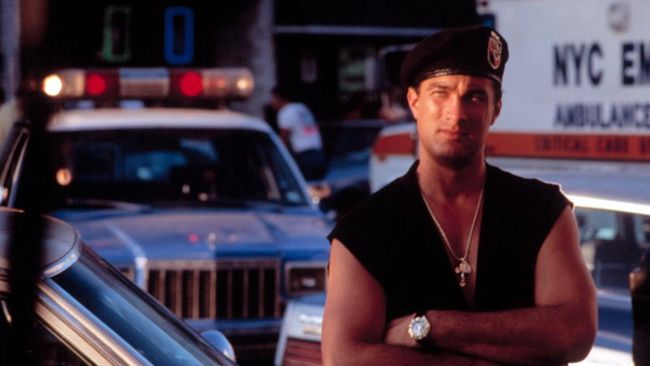
Steven Seagal plays Detective Gino Felino, a Brooklyn cop called into duty when a guy who grew up with him in their neighborhood, mob enforcer Richie Madano (William Forsythe), goes completely off the rails. Hooked on drugs and looking to settle some personal scores, Richie murders Gino’s partner, and begins turning their neighborhood into a war zone, even pulling a woman out of her car and blowing her away in broad daylight over a simple traffic incident. Convinced that Richie will not leave the neighborhood he grew up in, Gino talks Captain Ronnie Danziger (Jerry Orbach) into letting him have an unmarked police car, a shotgun, and his approval to engage in a manhunt for the drugged out psycho. From that point forward, Gino shakes down Richie’s family members and associates to try to find out where he is. As bodies and broken bones pile up, Gino is determined to do whatever it takes to bring Richie to justice!
I’ll just say up front that OUT FOR JUSTICE is my personal favorite Steven Seagal film. It’s not the crowd pleaser or the box office champ that the next year’s UNDER SIEGE (1992) would be, and film critics largely blew it off when it first hit cinemas, but it does feature the star at his most charismatic, something that would all but disappear after the mid-90’s. I love the way Seagal plays Gino. Sure he’s tough, but he talks more, he laughs more, and it feels like he’s actually enjoying himself. His Gino isn’t just a badass cop, he’s a neighborhood guy, a former street punk who grew up and made something positive out of himself. Seagal’s performance here truly works, and he plays the role with so much confidence that it’s a shame that he didn’t remain this engaged in future performances.
OUT FOR JUSTICE is a badass action film. After it opens with Richie’s horrific murders, it then follows Gino’s hunt for the killer into smoky bars filled with wannabe tough guys who know more than they’re letting on. They get their asses handed to them. It follows Gino as Richie’s goons attack him at various places, from meat shops to apartment buildings, and he dispatches them with calm precision, but often in gruesome ways. I still wince when I see the results of meat cleaver fights and close quarter shotgun blasts. OUT FOR JUSTICE is a throwback to an era when action films featured men with integrity who kick ass and take names. While the movie does have some melodrama and humor, at the end of the day, this is tough-guy cinema done right.
I did want to shout out a few other things about OUT FOR JUSTICE that helps put it over the top for me. William Forsythe is incredible as Richie Madano. He’s sweaty, twitchy, cruel, and completely unhinged. He makes you believe that he’s literally capable of doing anything, and it seems like his goons may be following more out of fear than anything else. His Richie is a man who doesn’t expect that he’ll be alive that much longer, so he’s willing to cross every line that may have once mattered in his life. Director John Flynn captures the urgency of the film’s action very well, and we can feel the tension as Gino tries to locate the crazy Richie as quickly as possible before more innocent people are killed. He isn’t afraid to show the brutality of the violence as part of Gino’s quest, either. This shouldn’t be surprising when you recognize that Flynn directed the revenge classic ROLLING THUNDER (1977) about fifteen years earlier. The one last thing I wanted to point out about OUT FOR JUSTICE is that it was written by R. Lance Hill, who wrote the brutal Charles Bronson hitman film THE EVIL THAT MEN DO (1984). These are talented guys who know how to tell tough stories about even tougher men who are willing to do what it takes to get justice when no one else can.
At the end of the day, Steven Seagal would go on to make a lot more movies, but I don’t think he ever quite recaptured the balance of charisma and toughness that he shows here. And OUT FOR JUSTICE is a badass action movie that doesn’t really care what movie critics think, either. Buoyed by Seagal’s performance, the film’s action is angry, focused, unapologetic, and still hits hard over thirty years after it was originally released.
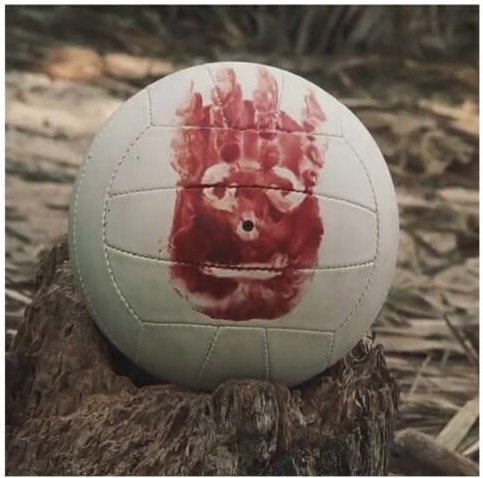
Seriously, I’m usually pretty well-behaved when I watch a movie but every time I see the 2000 film Cast Away, I find myself thinking, “Protect Wilson! You must protect Wilson!” And then, every time, I feel the sting of tears in my eyes as Wilson, with that red-face and that understanding attitude, goes floating away.
Wilson is a volleyball. When a FedEx executive named Chuck Noland (played by Tom Hanks) finds himself stranded on a desert island, Wilson becomes his only companion. A stain from Chuck’s bloody palm creates something that resembles a face on Wilson’s rubber surface and Chuck spends a lot of time talking to Wilson. It’s how Chuck maintains his sanity, even as he loses weight, sheds most of his clothes, and grows a beard.
Chuck learns how to make fire. He learns how to catch fish. He is able to survive due to the supplies that he gathers from the FedEx packages that were being carried on the plane that crashed into the island. But Chuck never stops dreaming of returning home to his girlfriend (Helen Hunt). Eventually, Chuck finds the courage to try to make the journey back to civilization. He brings Wilson with him but ultimately, this is something that Chuck is going to have to do on his own. Of course, Chuck has failed to consider that he’s been gone for years. He is presumed dead. On the Island, time seemed like it was frozen. For the rest of the world, life has continued.
CastAway is a film that a lot of people, especially online film commentators, tend to criticize. The complaint is usually that the film is essentially a commercial for FedEx, that it’s not believable that Tom Hanks could survive on that island for as long as he did, and that the film itself has a weak ending. I’ll concede that the film does make FedEx look like the nicest corporation on Earth. (FedEx’s CEO appears as himself, which should tell you something about how the company is presented.) And I will admit that the film’s time-advancing jump cut, which abruptly takes Hanks from being clean-shaven and husky to being thin and bearded, does leave a lot of unanswered questions. But I will always defend the film’s ending. The film ends on a note of ambiguity but how else could it have ended? Everyone thought Chuck Noland was dead. His girlfriend had every right to get on with her life and, in fact, it would have been psychologically unhealthy for her if she hadn’t. As for that final shot, it’s an acknowledgment that Chuck doesn’t know what lies ahead of him in the future. All he knows is that he life isn’t over yet. It’s a melancholy ending. It’s a frustrating ending. But it’s also the only way the film could have ended and therefore, it’s a perfect ending.
CastAway is a film that I will always defend and it’s also a film that really only could have worked with Tom Hanks in the lead role. He plays Chuck as being the ultimate everyman, an affable guy who was just trying to do his job and whose survival of the initial plane crash was largely due to luck. Hanks is one of those actors who is instantly sympathetic and CastAway uses his screen persona to good effect. You want him to survive because he’s Tom Hanks. He may be playing a character named Chuck Noland but ultimately, he’s Tom Hanks. He survived being trapped in space. Surely, he can survive being stranded on an island. The majority of the film is just Hanks talking to himself. This would have brought out the worst in so many actors but Tom Hanks makes it work. And yes, he’ll bring tears to your eyes as he watches Wilson float away. That’s the power of a good actor.
As for Wilson, I like to think that he washed up in Pensecola. Recently, I played a little volleyball on a beautiful Florida beach. Was that you, Wilson?