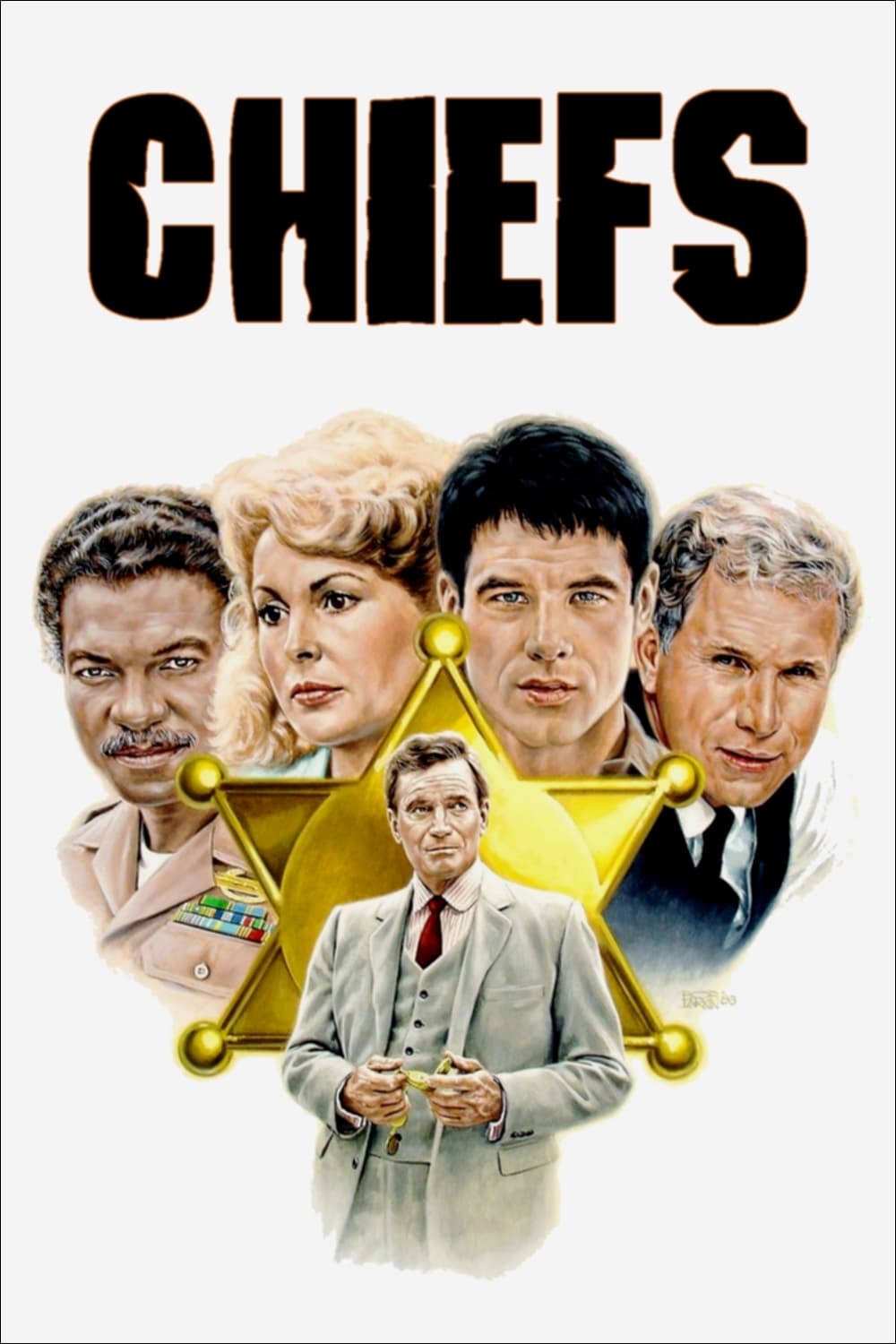
“It’s gonna take a lot of good people to make this place decent again.” — Hugh Holmes
Chiefs, the 1983 CBS miniseries adapted from Stuart Woods’ Edgar Award-winning novel, triumphs as a faithful yet inventive translation of a sprawling literary thriller into television’s constrained canvas. Unfolding across four decades in Delano, Georgia (1924-1963), it chronicles three generations of deeply flawed police chiefs pursuing a serial killer who targets young boys, their quest shadowed by the American South’s seismic shift from Jim Crow’s iron grip to the civil rights revolution.
Woods’ debut novel uses the murders as a piercing allegory for societal rot—Delano a claustrophobic organism where racism, class divides, and omertà-like codes nurture evil. The miniseries scores a major win by distilling this 400-page epic into six compelling hours, preserving the book’s generational rhythm and thematic spine while leveraging TV’s strengths in visual dread and ensemble intimacy. Yet, as a TV production, it inevitably stumbles under the medium’s inherent drawbacks: commercial interruptions, budgetary limits, network sanitization, and episodic structuring that blunt the novel’s novelistic nuance.
Performances drive Chiefs, with Keith Carradine and Brad Davis towering as the absolute standouts, breathing transcendent life into Woods’ most vivid creations and elevating the adaptation beyond its TV trappings. Carradine’s Foxy Funderburke, the killer—a vulpine everyman whose sly charm cloaks bottomless depravity—is nothing short of revelatory. Woods crafts him as Delano’s perfect predator, evading justice across decades because prejudice and small-town loyalty provide endless cover; the miniseries unleashes Carradine’s eerie genius, his lanky frame slinking through scenes with piercing eyes and smirks that chill deeper than any scream. Watch him whistle casually amid shadows or flash a fox-like grin during backyard chats—it’s understated psychopathy at its peak, a masterclass in menace that makes Foxy scarier than modern slashers, his longevity indicting the chiefs’ every failure. Carradine doesn’t just play the monster; he inhabits its everyday skin, sly pauses and folksy drawl turning every frame into taut wire. It’s career-best work, haunting long after credits, the performance that cements Chiefs as essential viewing.
Matching that blaze is Brad Davis as Sonny Butts, the post-WWII chief whose war-hero shine curdles into tyrannical fury—one of the most volcanic turns in ’80s TV. Woods luxuriates in Sonny’s hypocrisy: brutalizing Black neighborhoods, shaking down suspects, half-chasing the killer amid integration’s tremors, his “heart of darkness” blending trauma with bigotry. The adaptation amps kinetic brawls absent in prose, but Davis owns it all—brooding intensity erupting in guttural snarls, trauma-flashed eyes, coiled physicality that dominates every standoff. His Southern accent locks authentic, chortles flipping to wide-eyed betrayal in heart-stopping beats; Sonny becomes tragically magnetic, a damaged bully whose rage mirrors Delano’s resistance, derailing justice while stealing the show. Davis channels raw, Brando-esque power without caricature, making mid-century arcs electric—visceral theater that rivals Carradine’s creeps for MVP crown.
The supporting ensemble holds strong but orbits these twin suns. Wayne Rogers brings MASH-grit to Will Henry Lee, the 1920s everyman chief, his weary resolve fitting the book’s naive obsession amid lynch-mob shadows. Stephen Collins’ crisp poise suits Billy Lee, the ambitious son bridging eras with subtle unease. Billy Dee Williams layers charismatic fire into Tyler Watts, the trailblazing ’60s Black chief, urgent under threats. Charlton Heston’s gravelly narration as Hugh Holmes anchors the old guard. Solid work all, but Carradine and Davis are the revelation, their chemistry with the killer-chief dynamic supercharging Woods’ prose.
Thematically, Chiefs touts adaptive victory: murders scalpel Southern sins—killer’s span enabled by whitewash, chiefs’ flaws (naivety, rage, complacency) echoing Jim Crow’s throes. Woods’ restraint (dread over gore) translates via Jerry London’s direction: TV-budget grit evokes Roots-sweep—rally torches, unearthed graves—pruning romances tautens pace, foregrounds racism’s backbone.
Yet television’s pitfalls drag it earthward, exposing media frailties the novel evades. Network TV demands commercial breaks, fracturing tension—cliffhangers feel forced, mid-episode lulls kill momentum where Woods’ chapters flow seamless. Budget caps hobble scope: no sweeping location shoots, recycled sets make Delano static vs. book’s vivid evolution; period details (cars, garb) ring true but cheapen under fluorescent lighting. CBS sanitization softens edges—Woods’ grayer morals binarize (heroes nobler, Sonny’s bigotry punchier for prime time), racial arcs gain clunky exposition (“We can’t let ’em take our way of life!”) where prose implies slyly. Episodic format sags pacing: generational pivots drag with filler (subplots padded for hours), killer’s decades-long credulity strains more on screen, visuals exposing logistical gaps the page glosses. Accents waver under non-native casts, a TV-casting haste; direction, competent, lacks cinematic flair—static shots, TV-gloss lighting mute novel’s sweaty dread. Ensemble shines brightest via leads, but supporting roles flatten into types, ensemble dilution print sustains. Flaws compound: preachiness in ’60s beats (TV’s social-message itch), conveniences (plot devices for act breaks), and era-inaccurate tweaks (anachronistic attitudes) betray source fidelity.
In the end, Chiefs succeeds more than it fails as an adaptation—capturing Woods’ generational prisms and Southern reckonings with enough fidelity and flair to transcend its era’s TV limitations, delivering cathartic release amid rising dread, propelled by Carradine and Davis’ unforgettable peaks. Its triumphs in atmosphere, those two volcanic turns, and thematic resonance outweigh the medium’s drags: clunky pacing, sanitized nuance, and budgetary blandness. Remarkably, it presages the true-crime boom on television decades later, laying groundwork for anthology masterpieces like True Detective, The Killing, and Fargo. Like those, Chiefs blends procedural hunts with existential rot, flawed antiheroes navigating moral quagmires, and killers embodying societal fractures—here, racism as the true long-game predator, with Carradine’s Foxy as proto-Rust Cohle eerie. Where modern series revel in cinematic polish and nonlinear flair, Chiefs proves the blueprint: small-town secrets, generational hauntings, justice as bloody evolution.


Pingback: Lisa Marie’s Week In Review: 4/27/26 — 5/3/26 | Through the Shattered Lens