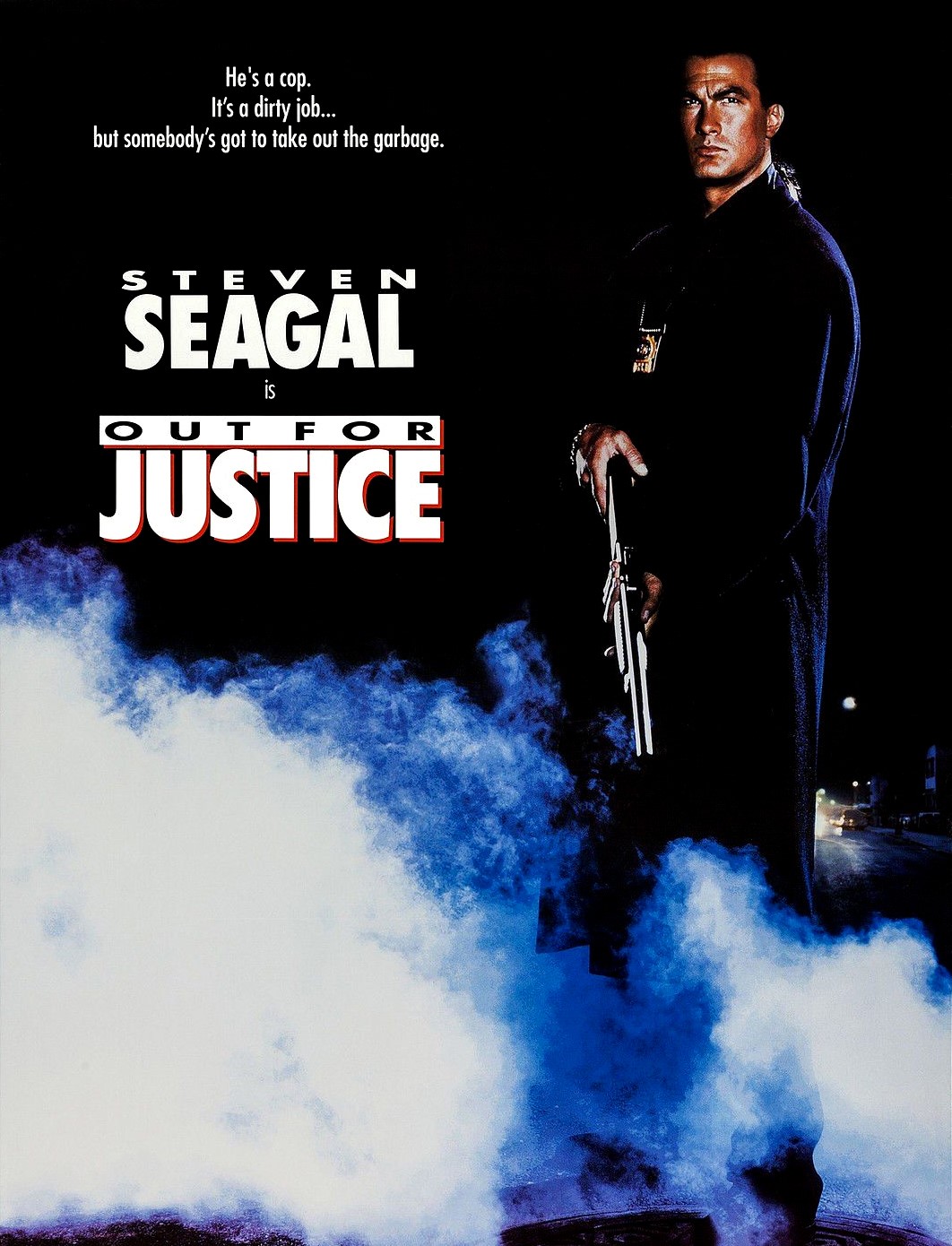
Guilty Pleasure No. 111: Out for Justice (dir. by John Flynn)


Out for Justice is the kind of movie that leans so heavily on its star’s ridiculous swagger that it stops being merely bad and ridiculous and becomes entertaining in a “can’t‑look‑away from the car‑crash” sort of way. It’s not a polished or especially sophisticated action film, but it has a rough, gleefully over‑the‑top energy that makes it a perfect guilty pleasure, the kind of early ’90s action crime movie that works less because of craft and more because of attitude, bruises, and sheer confidence.

At its core, Out for Justice is a revenge story so simple it barely bothers pretending to be anything else. Steven Seagal plays Gino Felino, a Brooklyn cop chasing the man responsible for his partner’s death, and the plot mostly functions as a chain of excuses to send him from one grimy neighborhood stop to the next, collecting broken noses and wounded pride along the way. That stripped‑down structure is part of the movie’s charm, because there’s no attempt to dress it up with complicated twists or emotional depth; it’s all forward momentum, all hard stares, all macho problem‑solving by fist and elbow.

One of the things that gives Out for Justice its off‑kilter charm is how every actor in the cast seems to have read the script as an invitation to extremes. Performances swing violently between scenery‑chewing over‑the‑top theatrics and barely‑there, almost sleepwalking subtlety, with almost nothing in the middle. Either you’re shouting, staring down suspects inches from their faces, or you’re slouched in the background mugging in silence. It shouldn’t work, but the sheer imbalance in energy somehow makes the film feel like a live wire instead of a flat ’90s programmer.

Nowhere is that more obvious than with William Forsythe’s villain, Richie Madano, who plays the role so far “out there” that it’s hard not to wonder if he was actually on a lot of coke like the character was written to be. He leans into every sneer, every twitch, and every unhinged stare until he starts to look less like a character and more like a walking drug‑induced nightmare. There’s a manic, unpredictable edge to his performance that makes him feel genuinely dangerous, even when the dialogue around him is pure tough‑guy parody. It’s a kind of commitment that could easily tip into self‑parody, but Forsythe owns it so completely that he ends up grounding the film’s madness instead of derailing it.

What really makes Out for Justice memorable is how fully it leans into Seagal’s absurd screen persona. He’s at his best here when he’s acting like a man who believes every room belongs to him, and that attitude gives the movie a weird, shameless energy that a lot of his later work lacked. Even when the dialogue is clunky or the Brooklyn swagger feels more imagined than lived‑in, Seagal’s self‑serious delivery turns the whole thing into a performance art piece of tough‑guy certainty. The film is unintentionally funny at times, but that only adds to the appeal, because it makes the movie feel even more like a relic from a time when action stars could be gloriously excessive without irony.

The action is the main draw, and this is where Out for Justice earns most of its reputation. The fights have that satisfying, bone‑crunching roughness that makes the violence feel tangible instead of slick, and the movie keeps finding excuses to escalate from intimidation to outright brutality. Seagal’s style here is less flashy than some of his contemporaries, but that works in the film’s favor because the choreography has a mean, close‑quarters edge to it. The result is a movie that often feels like it’s trying to win by sheer stubbornness, and honestly, that suits it perfectly.

There’s also a strong sleaze factor running through the whole thing, and that’s another reason it works as a “bad but good” movie. The neighborhoods feel dirty, the criminals are exaggerated to the point of cartoonish menace, and the film’s idea of atmosphere is basically to keep everything sweaty, smoky, and angry. Forsythe’s villain, in particular, leans so extravagantly into that sleaze that he ends up giving the film a properly nasty center. A lot of the supporting characters are basically there to be insulted, questioned, or thrown into a wall, but the movie gets enough mileage out of that rhythm that it never really becomes boring.

Still, there’s no reason to pretend Out for Justice is secretly elegant. The script is thin, the character work is mostly functional, and the movie often feels like it was assembled to move from one confrontation to the next as efficiently as possible. Some of the scenes drag, and the film’s macho posturing can wear thin if you’re not already in the mood for this kind of energy. It also has that peculiar Seagal‑era problem where the movie wants him to be a street‑level man of the people, but the character sometimes comes across more like a self‑mythologizing neighborhood warlord than an actual human being. That disconnect is part of the fun, but it is still a disconnect.

What keeps Out for Justice from becoming a throwaway is the confidence behind the nonsense. It feels like a movie made by people who believed that attitude could substitute for sophistication, and in this case, they were mostly right. The pacing may be uneven, the story may be paper‑thin, and the acting may veer into laughable territory, but the movie never loses its nerve, and that gives it a strange kind of integrity. It doesn’t apologize for being dumb, and that unashamed commitment is exactly why it has aged into cult‑status entertainment instead of disappearing into the pile of generic action forgettables.

That’s why Out for Justice works so well as a guilty pleasure. It’s violent, ridiculous, and very much stuck in its own macho time capsule, but those flaws are inseparable from the appeal. The movie’s “bad but good” vibe comes from the way it accidentally becomes bigger and funnier than it likely intended, while still delivering enough real action‑movie satisfaction to justify the ride. It’s the kind of film that invites eye‑rolling and cheers in almost equal measure, and that balancing act is what makes it such a durable little cult object.

In the end, Out for Justice is not a masterpiece, and it doesn’t need to be. It’s a bruised, swaggering, over‑confident slab of early ’90s action cheese that knows how to sell its own nonsense with just enough force to make it lovable. To borrow from film reactor EOM Reacts (who is hilarious, by the way), “This whole movie screams cocaine.” If you want clean storytelling or nuanced performances, it will probably frustrate you. If you want a hard‑edged, trashy, surprisingly watchable Seagal vehicle that embodies the “bad it’s good” spirit—including a cast that either chews every morsel of the scenery or fades into the wallpaper—Out for Justice hits the mark.

Also, be on the look out for a quick cameo of Kane Hodder (who played Jason Voorhees for many of the franchise’s many sequels) as a gang member and for Dan Inosanto (teacher to Bruce Lee and Chuck Norris) as a character named “Sticks.”

Previous Guilty Pleasures

  1. Half-Baked
  2. Save The Last Dance
  3. Every Rose Has Its Thorns
  4. The Jeremy Kyle Show
  5. Invasion USA
  6. The Golden Child
  7. Final Destination 2
  8. Paparazzi
  9. The Principal
  10. The Substitute
  11. Terror In The Family
  12. Pandorum
  13. Lambada
  14. Fear
  15. Cocktail
  16. Keep Off The Grass
  17. Girls, Girls, Girls
  18. Class
  19. Tart
  20. King Kong vs. Godzilla
  21. Hawk the Slayer
  22. Battle Beyond the Stars
  23. Meridian
  24. Walk of Shame
  25. From Justin To Kelly
  26. Project Greenlight
  27. Sex Decoy: Love Stings
  28. Swimfan
  29. On the Line
  30. Wolfen
  31. Hail Caesar!
  32. It’s So Cold In The D
  33. In the Mix
  34. Healed By Grace
  35. Valley of the Dolls
  36. The Legend of Billie Jean
  37. Death Wish
  38. Shipping Wars
  39. Ghost Whisperer
  40. Parking Wars
  41. The Dead Are After Me
  42. Harper’s Island
  43. The Resurrection of Gavin Stone
  44. Paranormal State
  45. Utopia
  46. Bar Rescue
  47. The Powers of Matthew Star
  48. Spiker
  49. Heavenly Bodies
  50. Maid in Manhattan
  51. Rage and Honor
  52. Saved By The Bell 3. 21 “No Hope With Dope”
  53. Happy Gilmore
  54. Solarbabies
  55. The Dawn of Correction
  56. Once You Understand
  57. The Voyeurs 
  58. Robot Jox
  59. Teen Wolf
  60. The Running Man
  61. Double Dragon
  62. Backtrack
  63. Julie and Jack
  64. Karate Warrior
  65. Invaders From Mars
  66. Cloverfield
  67. Aerobicide 
  68. Blood Harvest
  69. Shocking Dark
  70. Face The Truth
  71. Submerged
  72. The Canyons
  73. Days of Thunder
  74. Van Helsing
  75. The Night Comes for Us
  76. Code of Silence
  77. Captain Ron
  78. Armageddon
  79. Kate’s Secret
  80. Point Break
  81. The Replacements
  82. The Shadow
  83. Meteor
  84. Last Action Hero
  85. Attack of the Killer Tomatoes
  86. The Horror at 37,000 Feet
  87. The ‘Burbs
  88. Lifeforce
  89. Highschool of the Dead
  90. Ice Station Zebra
  91. No One Lives
  92. Brewster’s Millions
  93. Porky’s
  94. Revenge of the Nerds
  95. The Delta Force
  96. The Hidden
  97. Roller Boogie
  98. Raw Deal
  99. Death Merchant Series
  100. Ski Patrol
  101. The Executioner Series
  102. The Destroyer Series
  103. Private Teacher
  104. The Parker Series
  105. Ramba
  106. The Troubles of Janice
  107. Ironwood
  108. Interspecies Reviewers
  109. SST — Death Flight
  110. Undercover Brother

Brad reviews UNDER SIEGE (1992), starring Steven Seagal! 


I’ve always liked UNDER SIEGE. After his sudden emergence with a series of brutal action films in the late 80’s and early 90’s, like ABOVE THE LAW and OUT FOR JUSTICE, Steven Seagal entered the world of high concept action filmmaking when he starred in this “Die Hard on a Battleship.” Seagal would not be the underdog cop taking on drug dealers, coked up mafia hitmen, or crooked cops here. Rather, he emerges as a full blown movie star in a big budget studio action film. Directed by Andrew Davis, whose credits include Chuck Norris’ best movie CODE OF SILENCE (1985), Seagal’s debut ABOVE THE LAW (1988) and the next year’s global smash THE FUGITIVE (1993), this is the movie where everything came together for Seagal. I watched UNDER SIEGE at the movie theater myself in 1992 and had a great time with it. I didn’t realize at the time that this would be his career peak, with a global box office of over $156 million. No other film would really even come close. 

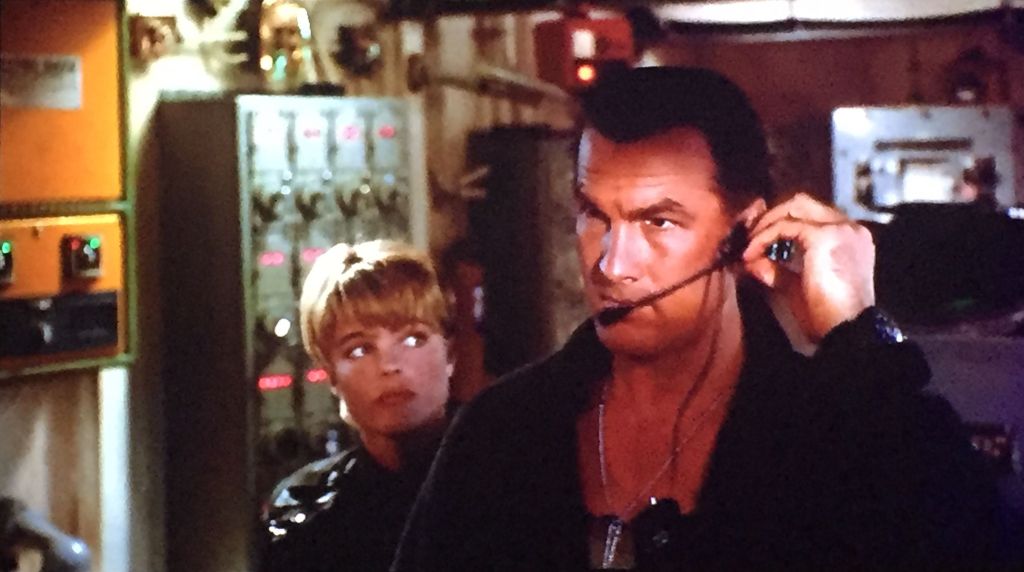
Casey Ryback (Seagal) is a “cook” aboard the USS Missouri, a battleship that is scheduled to be decommissioned. He’s also a former badass Navy SEAL who was demoted after punching out his commanding officer when a mission in Panama had gone wrong. When a group of mercenaries led by ex–CIA operative William Strannix (Tommy Lee Jones) seize control of the ship under the guise of a birthday celebration, they overlook Ryback. In classic John McClane style, Ryback goes on to become a fly in their ointment, a monkey in their wrench, and a big-time pain in their asses! Moving through the narrow corridors of the ship, and with the assistance of Playboy Playmate Jordan Tate (Erika Eleniak), Ryback begins taking out mercenaries one by one. But will he be able to stop Strannix and his partner Krill (Gary Busey) from stealing the ship’s nuclear Tomahawks and preserve the safety and security of the world? I’ll give you one guess!

First and foremost, UNDER SIEGE is a damn good action movie. It definitely helps that a director as talented as Andrew Davis is calling the shots. His film delivers on the entertainment front, with lots of well staged shootouts, violent scenes of close quarter, hand-to-hand combat, and a cake emergence sequence that still makes my head spin! I think the battleship makes for a great “movie” setting for this type of action. With its concoction of narrow hallways, engine rooms, and mess halls, there’s all kinds of interesting places for fighting and killing. Back in 2007, I was lucky enough to take a tour of the USS Alabama battleship, the primary filming location for UNDER SIEGE, which only enhances my appreciation for the work done here. On the heels of his confident and charismatic performance in the prior year’s OUT FOR JUSTICE, this is Steven Seagal at his most watchable. He’s in peak physical condition, so he can believably kick all the ass that’s necessary for this kind of film, and he’s also likable in his role as the underestimated “cook.” He will never be mistaken for Bruce Willis, but Seagal is good here.

Great action movies will usually have great villains, and UNDER SIEGE is especially blessed in this area. Tommy Lee Jones goes way over-the-top, chewing on scenery like he’s at a Golden Corral buffet, turning Strannix into the type of irrational lunatic that I love in my early 90’s action movies. And looking back now, Gary Busey seems to do what he does best. His traitorous Commander Krill comes off as goofy, disgusting, and unstable. In other words, he’s perfect. Even though Seagal does smile more in this film, Jones and Busey do bring an energy to the movie that balances out Seagal’s more stoic character, providing the type of spark not often found in the star’s movies. 

At the end of the day, I rank UNDER SIEGE as my second favorite Steven Seagal film, slightly below my preference for the more down and dirty OUT FOR JUSTICE. What it lacks in grit is more than made up with entertainment value, strong performances, and action on a scale that the star’s future films would never rise to again. If I were put in a position where I could only recommend one Steven Seagal film to a person who’d never seen one of his movies before, I’d probably go with this one. It’s an excellent, mainstream 90’s action movie. 

Brad reviews OUT FOR JUSTICE (1991), starring Steven Seagal!


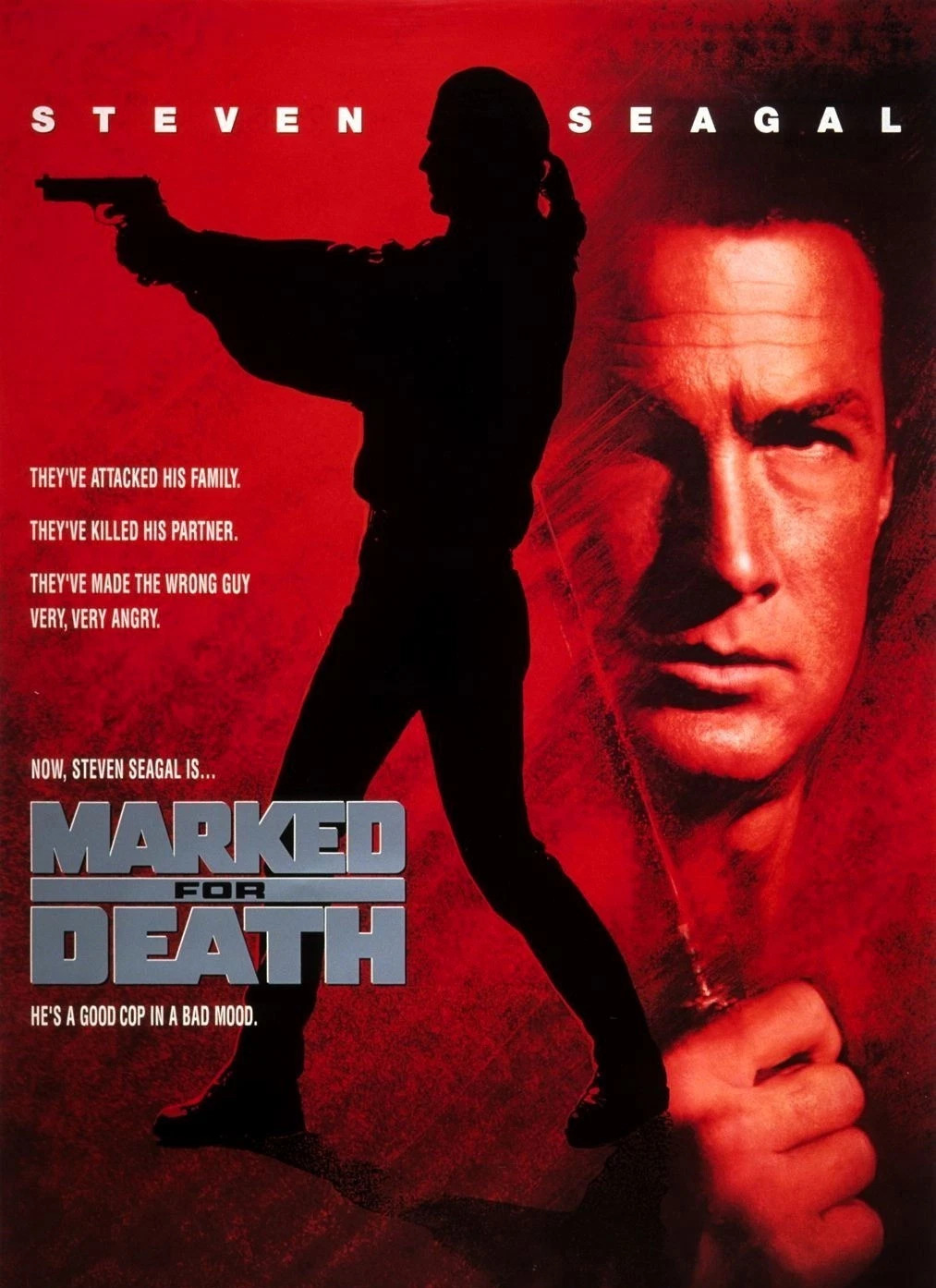
17 year-old Brad Crain was at the movie theater in April of 1991 to see Steven Seagal’s latest action film, OUT FOR JUSTICE! Seagal’s career had shot out of a cannon with his first three films being the highly successful movies ABOVE THE LAW (1988), HARD TO KILL (1990), and MARKED FOR DEATH (1990). As a guy who loved action movies, Seagal (with his pony tail) was a cool new action star, and I was down for it.

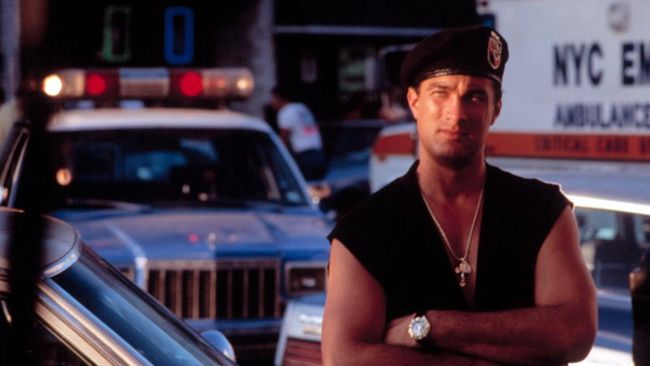
Steven Seagal plays Detective Gino Felino, a Brooklyn cop called into duty when a guy who grew up with him in their neighborhood, mob enforcer Richie Madano (William Forsythe), goes completely off the rails. Hooked on drugs and looking to settle some personal scores, Richie murders Gino’s partner, and begins turning their neighborhood into a war zone, even pulling a woman out of her car and blowing her away in broad daylight over a simple traffic incident. Convinced that Richie will not leave the neighborhood he grew up in, Gino talks Captain Ronnie Danziger (Jerry Orbach) into letting him have an unmarked police car, a shotgun, and his approval to engage in a manhunt for the drugged out psycho. From that point forward, Gino shakes down Richie’s family members and associates to try to find out where he is. As bodies and broken bones pile up, Gino is determined to do whatever it takes to bring Richie to justice!

I’ll just say up front that OUT FOR JUSTICE is my personal favorite Steven Seagal film. It’s not the crowd pleaser or the box office champ that the next year’s UNDER SIEGE (1992) would be, and film critics largely blew it off when it first hit cinemas, but it does feature the star at his most charismatic, something that would all but disappear after the mid-90’s. I love the way Seagal plays Gino. Sure he’s tough, but he talks more, he laughs more, and it feels like he’s actually enjoying himself. His Gino isn’t just a badass cop, he’s a neighborhood guy, a former street punk who grew up and made something positive out of himself. Seagal’s performance here truly works, and he plays the role with so much confidence that it’s a shame that he didn’t remain this engaged in future performances.

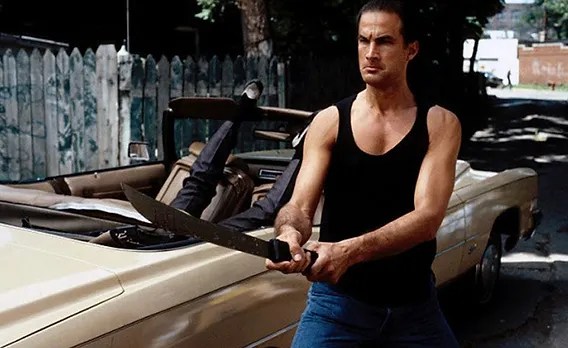
OUT FOR JUSTICE is a badass action film. After it opens with Richie’s horrific murders, it then follows Gino’s hunt for the killer into smoky bars filled with wannabe tough guys who know more than they’re letting on. They get their asses handed to them. It follows Gino as Richie’s goons attack him at various places, from meat shops to apartment buildings, and he dispatches them with calm precision, but often in gruesome ways. I still wince when I see the results of meat cleaver fights and close quarter shotgun blasts. OUT FOR JUSTICE is a throwback to an era when action films featured men with integrity who kick ass and take names. While the movie does have some melodrama and humor, at the end of the day, this is tough-guy cinema done right. 

I did want to shout out a few other things about OUT FOR JUSTICE that helps put it over the top for me. William Forsythe is incredible as Richie Madano. He’s sweaty, twitchy, cruel, and completely unhinged. He makes you believe that he’s literally capable of doing anything, and it seems like his goons may be following more out of fear than anything else. His Richie is a man who doesn’t expect that he’ll be alive that much longer, so he’s willing to cross every line that may have once mattered in his life. Director John Flynn captures the urgency of the film’s action very well, and we can feel the tension as Gino tries to locate the crazy Richie as quickly as possible before more innocent people are killed. He isn’t afraid to show the brutality of the violence as part of Gino’s quest, either. This shouldn’t be surprising when you recognize that Flynn directed the revenge classic ROLLING THUNDER (1977) about fifteen years earlier. The one last thing I wanted to point out about OUT FOR JUSTICE is that it was written by R. Lance Hill, who wrote the brutal Charles Bronson hitman film THE EVIL THAT MEN DO (1984). These are talented guys who know how to tell tough stories about even tougher men who are willing to do what it takes to get justice when no one else can. 

At the end of the day, Steven Seagal would go on to make a lot more movies, but I don’t think he ever quite recaptured the balance of charisma and toughness that he shows here. And OUT FOR JUSTICE is a badass action movie that doesn’t really care what movie critics think, either. Buoyed by Seagal’s performance, the film’s action is angry, focused, unapologetic, and still hits hard over thirty years after it was originally released.

Film Review: Executive Decision (dir by Stuart Baird)


In 1996’s Executive Decision, terrorists hijack an airplane.  Their leader, Nagi Hassan (David Suchet) demands that the U.S. government not only give him and his men safe passage but that they also release Hassan’s commander, Jaffa (Andreas Katsulas).

In Washington D.C., it is decide to use a stealth plane to transport Col. Austin Travis (Steven Seagal) and his men into the passenger plane.  Accompanying them will be Dr. David Grant (Kurt Russell), a consultant for U.S. Intelligence.  Dr. Grant is the world’s leading expert on Hassan, even though neither he nor anyone else is even sure what Hassan looks like.  Travis distrusts Grant because he’s a civilian and also because he holds Grant responsible for a botched raid on a Russian safehouse in Italy.  Dr. Grant is going to have to prove himself to Col. Travis because Travis doesn’t have any time for people who can’t get the job done.  And Travis is determined to get on that plane and save all those passengers.

In other words, Travis is a typical Steven Seagal character and, for the first fourth of this movie, Seagal gives a typical Steven Seagal performance.  He delivers his line in his trademark intimidating whisper, he glares at everyone else in the film, and essentially comes across as being a total douchebag who can still handle himself in a fight..  However, when it’s time to board the airplane through a docking tunnel, something goes wrong.  Everyone — even nervous engineer Dennis Cahill (Oliver Platt) is able to slip through the stealth plane’s docking tunnel and get into the hijacked airplane cargo hold without being detected.  But the two planes are hit by severe turbulence.  Suddenly, it becomes apparent the one man is going to have to sacrifice his life and close the hatch before the docking tunnel decompresses.

David, already in the cargo hold, looks down at Austin in the tunnel.  “We’re not going to make it!”

“You are!” Austin replies before slamming the hatch shut and getting sucked out of the tunnel.  (There’s your Oscar Cheers Moment of 1996!)  After all that build-up, Steven Seagal exits the film early and now, it’s up to Kurt Russell and what’s left of Austin Travis’s men to somehow stop the terrorists.  Not only do they have to stop Hassan but they also have to do it before the Air Force — which has no way of knowing whether or not any of their men were able to get on the plane before the tunnel fell apart — shoots down the airliner.

(If the airplane looks familiar, that’s because Lost used the same stock footage whenever it flashed back to the plane crash that started the show.)

It’s actually a rather brilliant twist.  When this film came out, Seagal was still a film star.  He played characters who always got the job done and who were basically infallible.  He wasn’t a very good actor but he did manage to perfect an intimidating stare and that stare carried him through a lot of movies.  No one would have expected Seagal to die within the first 30 minutes of one of his movies and when Col. Travis, who the film has gone out of its way to portray as being the consummate warrior, is suddenly killed, there really is a moment where you find yourself wondering, “What are they going to do now?”  In just a matter of minutes, Executive Decision goes from being a predictable Steven Seagal action film to a genuinely exciting and clever Kurt Russell thriller.  For once, Russell is not playing a man of action.  He’s an analyst, a thinker.  And, to the film’s credit, he uses his mind more than his brawn to battle Hassan’s terrorists.  With excellent support from Halle Berry (as a flight attendant who discreetly helps out David and the soldiers), Oliver Platt, B.D. Wong, Whip Hubley,  David Suchet, Joe Morton, and even John Leguizamo (as Travis’s second-in-command), Executive Decision reveals itself to be an exciting and ultimately rewarding thrill ride.

And to think, all it took was sacrificing Steven Seagal.

ABOVE THE LAW – Steven Seagal’s action star debut! 


Did any actor have a better opening act than Steven Seagal? His first five movies are all star turns in high quality, enjoyable action films, beginning with ABOVE THE LAW, and then moving forward to HARD TO KILL, MARKED FOR DEATH, OUT FOR JUSTICE and UNDER SIEGE. While UNDER SIEGE has been described as “Die Hard on a boat” and OUT FOR JUSTICE occupies the top spot as my personal favorite Steven Seagal film, today we will focus on the movie that started it all, ABOVE THE LAW, from 1988. 

ABOVE THE LAW begins with Nico Toscani (Steven Seagal) providing a voiceover of his early years as a kid in Chicago who became obsessed with the martial arts and who found himself studying with the masters in the orient by the age of 17. He’s clearly a badass. By 22, he’s been recruited by the CIA and is completing missions in Viet Nam. While on a mission, he runs into Zagon (Henry Silva), a CIA torturer, who seems to be able to do whatever he wants with no consequences. After knocking the crap out of Zagon, Toscani quits on the spot and heads back to Chicago to become a tough cop and marry Sara (Sharon Stone). While working a touchy family situation in the Windy City, he stumbles upon a potential drug deal going down soon in the city. He and his partner Delores (Pam Grier) set up the bust, but the product of choice turns out to be C4 explosives, not drugs. Wouldn’t you know that the folks behind these C4 explosives are the CIA and Toscani’s old pal Zagon. Can he stop his old adversary this time and still protect his family?!! 

My favorite Chuck Norris film is from 1985 and is called CODE OF SILENCE. I mention that because there are quite a few similarities between ABOVE THE LAW and CODE OF SILENCE. First, Andrew Davis directed both films. He’s a talented filmmaker who would later direct such solid action films as THE PACKAGE (Gene Hackman & Tommy Lee Jones), UNDER SIEGE (Seagal & Tommy Lee Jones), and THE FUGITIVE (Harrison Ford and an Oscar winning Tommy Lee Jones). I wonder now how this film was made without Tommy Lee Jones?!! Second, both films feature a tough cop who practices martial arts and beats the crap out of corruption within law enforcement. In the case of CODE OF SILENCE, it was the police force itself; in ABOVE THE LAW, it’s the Central Intelligence Agency. It’s my personal opinion that CODE OF SILENCE is Chuck Norris’ finest hour. Steven Seagal gets this same kind of bravado and credibility in his very first film role. That’s truly unique. And finally, both movies feature the awesome Henry Silva as the bad guy. Silva has been a bad guy in so many movies, and he’s just damn good at it. I recently watched him in THE TALL T with Randolph Scott from way, way back in 1957. Damn, his Chink’s a psycho. Combine that with his turn as Billy Score in SHARKY’S MACHINE with Burt Reynolds, and you have a guy who deserves to be in the villain hall of fame. These tried and true elements all help produce a fine feature film debut for Seagal! 

Just one final comment about the movie’s theme… we all would like to think that no one is above the law in the real world. Unfortunately, all we have to do is watch the news to know that’s simply not the case. Our world is full of people who actually are above the law. One of the best things about a movie like ABOVE THE LAW is that we can watch the movie, munch our popcorn, and just pretend for 100 minutes that justice does exist. It may not be completely realistic, but it’s definitely a satisfying thought!

Music Video of the Day: Ain’t No Sunshine, covered by DMX (2001, dir by Hype Williams)


This song and most of the footage in this video was taken from a Steven Seagal movie.  Exit Wounds was apparently Seagal’s last big studio film.  Both the song and the video make Seagal look cooler than he’s ever looked in any of his films but obviously, a lot of that is due to the power of DMX’s vocals.  DMX could make anything seem powerful.

Enjoy!

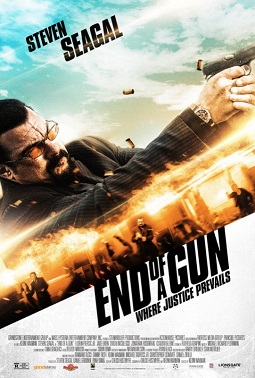
Monday Live Tweet Alert: Join Us For End of a Gun and White Lightning!


As some of our regular readers undoubtedly know, I am involved in hosting a few weekly live tweets on twitter.  I host #FridayNightFlix every Friday, I co-host #ScarySocial on Saturday, and I am one of the five hosts of #MondayActionMovie!  Every week, we get together.  We watch a movie.  We tweet our way through it.


Tonight, for #MondayActionMovie, the film will be 2016’s End of a Gun!  Selected and hosted by Matthew Titus, it features Steven Seagal being Steven Seagal.


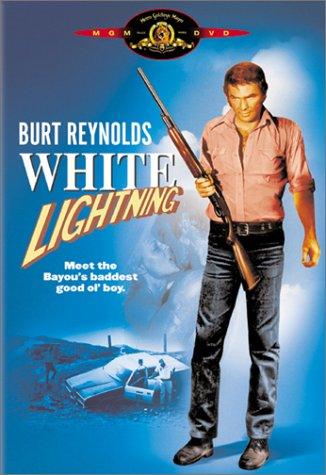
Following #MondayActionMovie, Brad and Sierra will be hosting the #MondayMuggers live tweet.  We will be watching 1973’s White Lightning, starring Burt Reynolds!  This film can be found on Prime and Tubi!

It should make for a night of fun viewing and I invite all of you to join in.  If you want to join the live tweets, just hop onto twitter, start End of a Gun at 8 pm et, and use the #MondayActionMovie hashtag!  Then, at 10 pm et, start White Lightning , and use the #MondayMuggers hashtag!  The live tweet community is a friendly group and welcoming of newcomers so don’t be shy.   

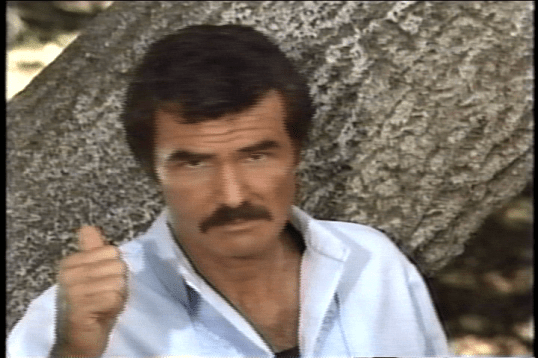
Burt says “Come on in!”

End of a Gun (2016, directed by Keoni Waxman)


Decker (Steven Seagal) is a former DEA agent who now lives in France.  Lisa Durant (Jade Ewen) is a stripper who Decker saves from getting beat up one night.  Decker and Lisa become lovers and Lisa recruits Decker to help her steal two million dollars from a sadistic drug lord named Gage (Florin Piersic, Jr.).  Gage doesn’t like having his money stolen so he has his men kidnap Lisa.  Decker eventually gets around to trying to do something about it.

First question: Why is this movie set in France?  There’s nothing notably French about the story or any of the characters.  According to Wikipedia, End of a Gun was filmed in Romania, New Orleans, and Atlanta.  The movie does include stock footage of the Eiffel Tower and there’s a French flag in one scene.

Second question: who was this movie made for?  Will Seagal fans want to see their man Steve standing in a corner while his stunt double handles all of the action?  I know Seagal has claimed that he did all of his own stunts in End of a Gun but it’s hard not to notice that Decker’s face is never visible whenever he fights anyone.  Even though Seagal is not as heavy as he’s been in some of his direct-to-video films, he still seems out of breath for much of the film.  Seagal still whispers all of his lines.

Seagal is not in much of End of a Gun.  Most of the movie is about Gage looking for Decker and Lisa.  That works to the film’s advantage.  The more Seagal is in a film, the more difficult it gets not to focus on his deficiencies as an actor.  Steve showed up long enough to pick up his paycheck and probably sat in on the stripper casting call.  It’s all in a day’s work.

Against The Dark (2009, directed by Richard Crudo)


Legend has it that Steven Seagal’s film career was the result of a bet. The story goes that, in the late 80s, superagent Michael Ovitz, who was then the most powerful man in Hollywood, bet a studio exec that he could make the least appealing man he knew into a movie star. That man was Ovitz’s self-defense instructor, Steven Seagal.

I don’t know if that story is true but it’s as good an explanation as we’re going to get at to why Seagal was ever asked to star in a movie. Despite being a terrible actor who was universally disliked by everyone who worked with him, Steven Seagal was briefly a star in the 90s. Along with Jean-Claude Van Damme and Dolph Lundgren, he was one three top B-action stars around. Lundgren’s appeal was that he could actually act. Van Damme’s appeal was that he was a true athlete and actually could do all of his own stunts. As for Seagal, he was packaged to be a star. He appeared in movie with actors who were talented enough to carry the drama while Seagal whispered his lines. He also worked with talented action director like Andrew Davis. For a while there, Seagal had it all.

It fell apart, of course. Seagal was his own worst enemy, fabricating details of his biography and acting like an ass whenever the cameras weren’t rolling. He was notorious for being difficult and every young actress trying to make it in the 90s had at least one horror story about Seagal harassing them at an audition. His appearance on Saturday Night Live was so bad that it’s still talked about as an example of what can happen when the show gets stuck with a terrible host.  According to the show’s then-cast members, Seagal insisted that the writers come up with a skit in which he would play a therapist who raped his patients. (Check out Tom Shales’s Live From New York for the details on Seagal’s time as host.) He directed two awful movies. Audiences cheered when his character was blown up in Executive Decision.  People stopped showing up for his movies and, for the past few years, Seagal has been better known as a tireless advocated for Vladimer Putin than for his work as a direct-to-video action star.

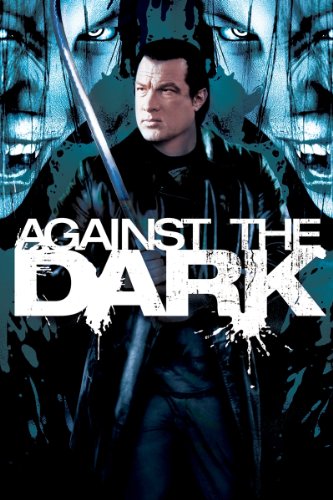
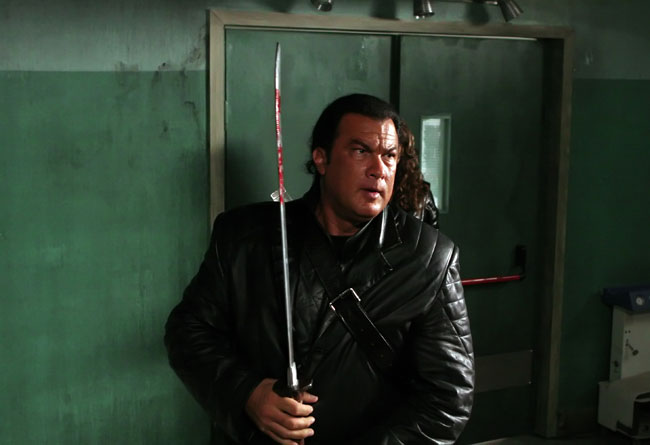
Against The Dark is one of Seagal’s many direct-to-video movies.  It’s also his first horror movie.  The movie takes place in the future, when vampire/zombie hybrids have taken over the city.  The film misses a major opportunity by not casting Steven Seagal as the head vampire.  When this film was made, Seagal was nearly 60, overweight, and out-of-shape.  He had the right look to play a decadent vampire king but instead, he was just plays his regular Seagal role.  He and his squad patrol the city with samurai swords, hacking up any vampires that they come across.  Seagal’s not actually in much of the film and his stunt double does most of the work.  When Seagal does appear, he looks like he’s trying to catch his breath.  It’s obvious that this film was just a paycheck for him.  There’s no speeches about protecting the environment.  He doesn’t even get out his guitar and sing.

Most of the movie deals with a separate group of survivors, who are stranded in a hospital and who are trying to find a way to escape before the military blows up the city.  Some of the fight scenes, especially the ones that don’t involve Seagal, are not terrible but the film itself is so badly lit that you usually can’t tell who is fighting whom.  There is one memorably weird scene of a female vampire filing down her fans so that she can pass as human but the movie doesn’t really follow up on it.  The movie doesn’t do much with any of it ideas.  Its obvious that vampires and zombies were used because they were hot and someone figured out that even Seagal’s fans were getting bored with him just fighting drug dealers and mercenaries.

Against the Dark is bad, even by the standards of late era Seagal.  Shortly after the movie was released, Seagal tried to reinvent himself as a reality TV star with Steven Seagal: Lawman.  When that and a subsequent threat to run for governor of Arizona didn’t do much for his career, Seagal went to Russia and, after receiving Russian citizenship, declared that he considered Vladimer Putin to be “like a brother” to him.  When asked about Seagal’s claim, Putin’s spokesman replied, “”I wouldn’t necessarily say he’s a huge fan, but he’s definitely seen some of his movies.”  Hopefully, the movie was Under Siege and not Against The Dark.


The Onion Movie (2008, directed by James Kleiner)


From some of the funniest people on Earth comes one of the least funny films ever made.

That was, at least, my initial reaction to watching The Onion Movie.  Written by two of the founders of the world’s premiere satirical news sight, The Onion Movie is a collection of skits that are almost all based on Onion headlines.  Some of the skits are amusing.  Most of them aren’t.  When it comes to the Onion, the headlines are often funnier than the details.  A headline about a murder mystery party switching over to a rape investigation party might be funny but having to sit through a lengthy skit about it is considerably less amusing.

Len Cariou plays an anchorman at the Onion News Network, who introduces each satirical story and who gets upset when his employers keep using his newscast to promote a new Stephen Seagal movie called Cock Puncher.  (Seagal, who appears as himself, punches people in the groin.  The joke would have been funnier if the fake movie had starred Dolph Lundgren.)  In between introducing absurd stories, Cariou yells at the network executives, who don’t care about the integrity of the news.  Len Cariou is the best thing in the film because he plays his role straight, never once smiling or winking at the camera.

The Onion Movie was written by two of the Onion’s founders and was originally filmed in 2003.  It sat on the shelf for five years before being released, without much fanfare, direct-to-video.  By the time it was released, The Onion itself had all but disowned the movie, announcing that they were no longer involved beyond the use of the site’s name.  (Something similar happened in the 80s when MAD Magazine briefly tried to branch out into films.)  Watching the film, it’s easy to see why The Onion distanced themselves from the final product.  It’s not just that, for the most part, it’s not very funny.  It’s also that the majority of the humor is shockingly racist and sexist.  (Halfway through the film, a black civil rights leader announces that he’s going to lead a walk-out to protest the way that blacks have been portrayed in the film.  It’s played as a joke but the man has a point.)  The Onion Movie wants credit for being politically incorrect but instead, most of the humor just feels lazy.  The Onion Movie is type of movie that, if it were released today, The A.V. Club would demand that it be banned.  Schadenfreude is nothing to brag about and I’m not proud that I felt some of that as I watched The Onion Movie.  If the people who created one of the funniest sites on Earth could create something this bad, I thought, that makes me feel better about every mistake I’ve ever made over the course of my entire life.

By the way, the film’s best joke is borrowed from Caddyshack but at least they got Rodney Dangerfield to come back and deliver it.  Dangerfield was always good, even in something like The Onion Movie.