Happy Birthday to Alicia Witt! Born on August 21st, 1975, I mainly know Alicia because my wife loves to watch Hallmark Christmas movies, and she was a mainstay on the channel for years. I’ll be honest, I love some of her Hallmark movies. Back in 2024, we went to the movie theater and watched her in the horror film LONGLEGS. I thought she was one of the best things about the movie.
In honor of her 51st birthday, I thought it might be fun to share this clip from LONGLEGS. It’s about as far from Hallmark as it gets!
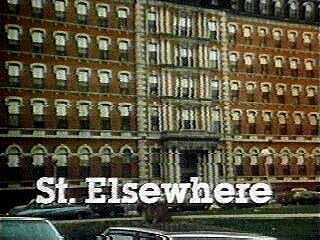
Welcome to Retro Television Reviews, a feature where we review some of our favorite and least favorite shows of the past! On Fridays, I will be reviewing St. Elsewhere, a medical show which ran on NBC from 1982 to 1988. The show can be found on Daily Motion.
This week, John Doe No. 6 returns.
Episode 4.7 “Close Encounters”
(Dir by Eric Laneuville, originally aired on November 20th, 1985)
This episode begins with a jolt. Dr. Victor Ehrlich is actually choosing to be ethical as opposed to just kissing up. Ehrlich is currently doing a rotation in plastic surgery, where he’s working with Bobby Caldwell. Caldwell already disliked Ehrlich before Ehrlich even joined the department. Caldwell’s opinion is not improved when he discovers that Ehrlich has talked a patient out of getting an eye tuck that Caldwell recommended. When Caldwell confronts him, Ehrlich argues that the surgery wasn’t necessary and that Caldwell manipulated the man into agreeing because Caldwell’s department is currently on the chopping block. When Ehrlich threatens to go to Dr. Craig, Caldwell sneers. Dr. Craig is the one who personally recruited Caldwell to come to St. Eligius. Ehrlich, on the other hand, is just “the hospital clown.”
Yikes. When Bobby Caldwell was introduced two seasons ago, he was mild-mannered and likable and clearly on the show because Mark Harmon looked good without a shirt on. This season, Caldwell has been arrogant and self-destructive. The fresh scar on his face has become a symbol for the scar on his soul. Personally, I think Bobby is a much more interesting character now. Every soap opera needs a villain and, by the time the fourth season started, St. Elsewhere had definitely become a soap opera.
As for Dr. Craig, he’s not there to talk to Ehrlich because he’s accompanied his daughter-in-law to her hometown in Clinton, New York. Yvonne (Suzanne Lederer) has been in a coma ever since Stephen Craig flipped their car. In this episode, she finally opens her eyes but she still isn’t speaking or mobile. Along with helping to transfer Yvonne to a new hospital, Craig has another reason for going to New York. He’s promised Ellen that he will return with their granddaughter, Barbara. However, when Dr. Craig spends the night there, he discovers that Yvonne’s parents aren’t the backward monsters that he assumed they were. He sees that they love Barbara and that they are taking care of her. Though he doesn’t say it, one gets the feeling that Dr. Craig realizes that Ellen mostly just wants custody of Barbara so she can have a part of Stephen. In New York, Dr. Craig finally starts to understand why Stephen and Yvonne designated Yvonne’s parents as Barbara’s legal guardians. Dr. Craig returns to Boston without Barbara. “I hate you for this, Mark,” Ellen says.
Meanwhile, astronaut Col. Chuck Cochrane (David Ackroyd) has decided that his seizure and subsequent dream were all signs from God telling him not to return to space. NASA, concerned that Cochrane is going to give the program a bad name, sends Captain Gloria Neal (Betty White) to the hospital. (Gloria mentions that she was sent by Major Healey, which is undoubtedly a reference to Roger Healey from I Dream of Jeannie.) Because Gloria went to medical school with Dr. Westphall, NASA thinks that she’ll be able to influence him to discharge Cochrane from the hospital so that he can be taken back to Walter Reed and forced to rejoin the space program. Westphall, however, decides to support Dr. Morrison’s decision not to discharge Cochrane. Westphall goes on to tell Gloria that she’s not much of a doctor anymore. She’s just a PR agent for the government. “So, I guess we won’t be sleeping together,” Gloria replies.
Ugh, Westphall. I know that I spent a lot of time complaining about Dr. Westphall, but this episode really epitomized everything that I dislike about the character. When he’s not depressed, he’s self-righteous. Whenever anyone disagrees with him, he starts talking about his experiences volunteering at a clinic in Ethiopia, as if that experience automatically makes his opinion superior to anyone else’s. In this episode, he decides that it’s his place to judge Gloria’s life decisions. Seriously, Westphall is the worst!
Finally, John Doe No. 6 (Oliver Clark) is back. He’s recovered from the surgery that initially left him comatose. He can speak and move again but he still has amnesia. He’s back in the psych ward. While watching television, he suddenly realizes who he is. He’s Mary Richards from The Mary Tyler Moore Show! He decides that a fellow patient, Mr. Carlin (Jack Riley), is Mary’s friend Rhoda. Dr. Auschlander is Mary’s co-worker, Murray. He tries to throw a party in the psych ward and it’s awful because Mary’s parties are always awful! When he sees Gloria Neal walking down the hospital hallway, he thinks that she’s Sue Ann Nivens, the happy homemaker! “Excuse me?” Gloria asks, confused.
Of course, Betty White did play Sue Ann Nivens on The Mary Tyler Moore Show. (St. Elsewhere itself was produced by Mary Tyler Moore’s production company.) Even more interesting, however, is that Jack Riley previously played Mr. Carlin on The Bob Newhart Show. Oliver Clark also appeared on The Bob Newhart Show, playing Mr. Herd, who was a member of the same therapy group as Mr. Carlin. As such, viewers who had previously seen The Bob Newhart Show (whether during its original run or, if you’re like me, via reruns) would have known that John Doe No. 6 was actually Mr. Herd. The episode’s biggest mystery is easily solved by those with a knowledge of television history. At the same time, it’s also interesting to note that Mr. Carlin presumably recognizes John Doe No. 6 but has yet to let anyone know.
It makes for a bizarre but enjoyable episode. Bobby is turning into a monster. The Craigs are headed for divorce. Dr. Westphall just insulted Betty White. But even with all that, it’s hard not to get caught up in John Doe No. 6’s joy. He’s going to make it after all!
“You people don’t know what the truth is! It’s there, just under their bullshit, but you never look! That’s what I hate most about this fucking city—lies are news and the truth is obsolete!” — Spider Jerusalem
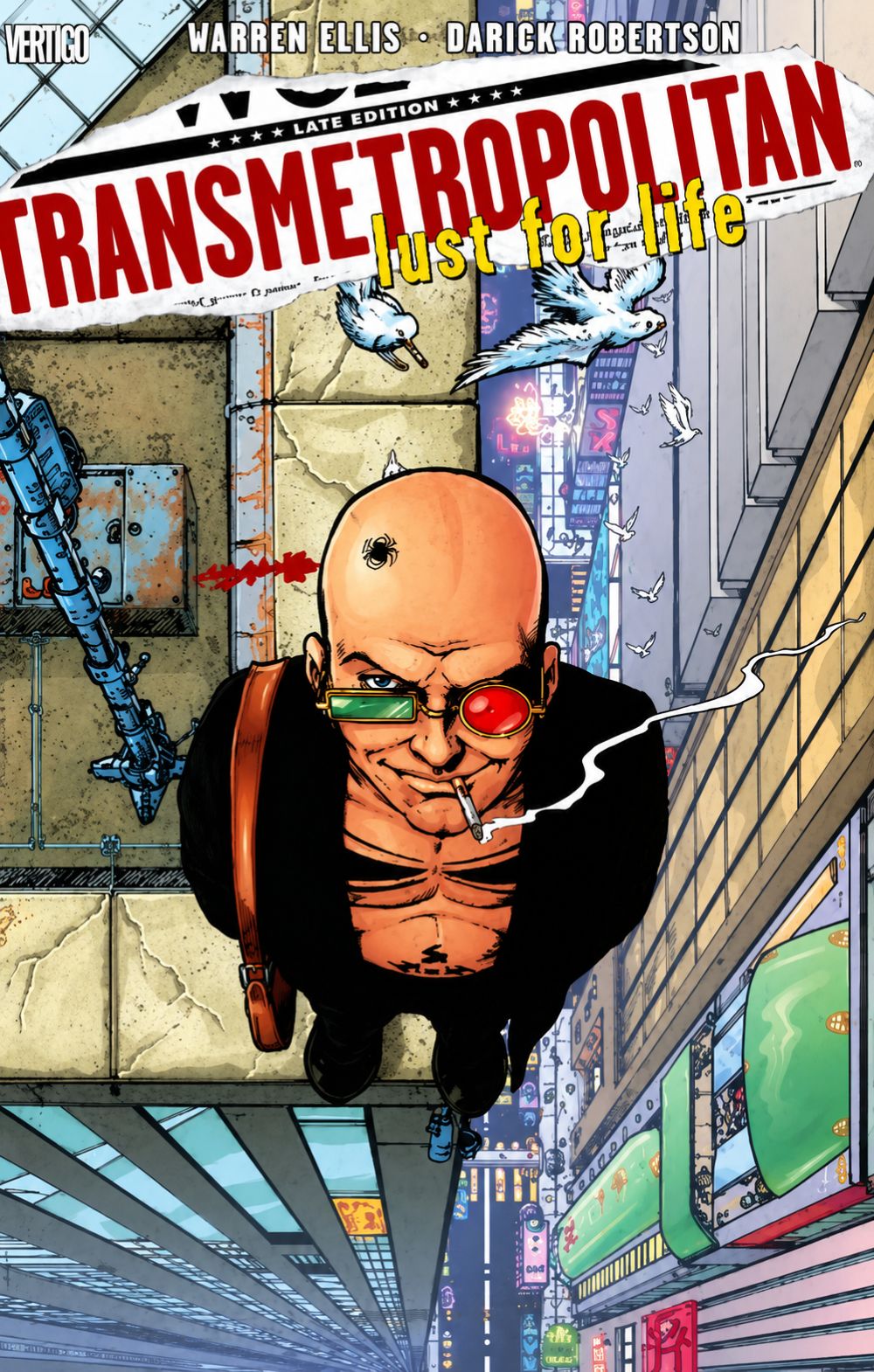
When you crack open the second volume of Warren Ellis and Darick Robertson’s Transmetropolitan, collected as Lust for Life, you’re not just getting another fix of cyberpunk chaos. You’re getting a book that solidifies exactly why this series is so brutally timeless. The first volume, Back on the Street, introduced us to the magnificent, drug-fueled trainwreck that is Spider Jerusalem and the grotesque, sprawling City he calls home. The second volume, however, is where the series finds its real footing. It’s not just about the loud, visceral shock value—though there’s plenty of that—but about deepening the world and its characters in a way that hits uncomfortably close to home.
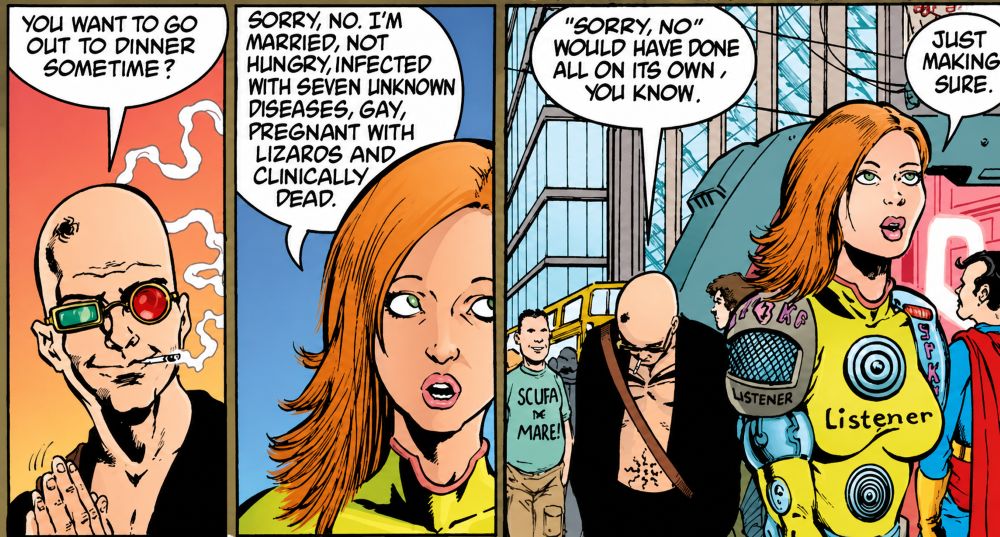
Spider Jerusalem is, and always will be, the heart of this series. He’s a chain-smoking, drug-abusing, perpetually enraged journalist in the mold of Hunter S. Thompson, armed with a bowel disruptor and a vicious tongue. He’s a complete and utter bastard to almost everyone he meets, prone to violent outbursts and scatological tirades. And yet, he’s our hero because he’s one of the few people in this future who actually gives a damn. His entire reason for being is his unwavering, almost religious, dedication to “The Truth.” He despises the apathy of the masses as much as the corruption of the powerful, and he’s willing to burn his life down to expose both. This volume showcases that beautifully, adding a layer of vulnerability that prevents him from becoming a one-note caricature. He’s a misanthrope who somehow still cares, and that tension is what makes him so compelling.
Lust for Life collects issues thirteen through twenty-four, and it’s structured more as a series of vignettes than a single, driving narrative. This is actually its greatest strength, as it allows Ellis and Robertson to expand the world and build the supporting cast in ways a more focused plot wouldn’t allow. A major chunk of the book is dedicated to the insane adventure of the frozen head of Spider’s ex-wife being stolen. It’s a gloriously bizarre plot, full of the kind of absurd, high-stakes chaos that Transmetropolitan does so well.
But the real emotional heft of Lust for Life comes from the quieter, more tragic stories woven between the gunfights and drug-induced rants. One of the most powerful sequences focuses on Channon, Spider’s long-suffering assistant. She’s a pillar of strength, constantly cleaning up Spider’s messes, but this volume shows her vulnerability. Her boyfriend decides to undergo a process to become a “gaseous vapor,” leaving his body behind for a formless existence. It’s a concept that sounds completely outlandish, but the execution is devastating. Ellis writes it not as a sci-fi gimmick but as a heartbreaking exploration of letting go, of watching someone you love choose a path you can’t follow. Channon’s pain and helplessness are palpable, grounding the over-the-top world in real human emotion.
Then there’s the story of Mary, a woman from our recent past who was cryogenically frozen and wakes up in the City. She’s presented as a historical relic, a simple photographer from the twentieth century who is completely out of her depth in this frantic, hyper-consumerist future. This is where the book delivers its most potent gut-punch. Mary is us. She’s the reader, trying to make sense of this alien world, and she fails. The City is a claustrophobic nightmare even for the people who were born into it, but for Mary, it’s a terrifying prison of isolation and confusion. Her story is a bleak reminder that this “progress” we’re supposedly heading toward often comes at the cost of our humanity. It’s a deeply existential and sad tale that serves as a harsh critique of the very future we might be trying to build.
Now, while Transmetropolitan is set in a hyper-exaggerated, grotesque future, the reason it remains so relevant is that the satire has proven to be uncomfortably prophetic. The City is a sprawling, neon-drenched hellscape where the line between news and entertainment has completely dissolved, where handheld devices connect everyone to a digital stream of information, and where journalism has devolved into a race for ratings and eyeballs. It’s a world where media personalities are more influential than politicians, and political leaders are cynical, manipulative populists who are experts at gaming the system. Sound familiar?
The landscape of modern journalism feels like a grim step toward this world. The “Death of Truth” that Spider rails against is a concept that has become a cornerstone of our current political and media discourse. The Beast and The Smiler, the corrupt politicians in the series, aren’t just cartoon villains; they’re mirrors reflecting a world of political spin, gerrymandering, and where the “villains” are often the ones controlling the narrative. Spider’s constant, violent struggle to get the real story feels less like a sci-fi fantasy and more like a desperate wish-fulfillment for anyone frustrated with the spin and half-truths of modern politics.
When Spider writes his column, “I Hate It Here,” he’s speaking for a populace that feels powerless and manipulated, a populace nicknamed “The New Scum” by the establishment. This social commentary hits hard because you can see its echoes everywhere today. The series suggests that technology has advanced, but human nature—our greed, our apathy, our susceptibility to manipulation—has not. It’s a bitter pill to swallow, but it’s what gives the book its power.
Transmetropolitan Vol. 2: Lust for Life might be a little light on overarching plot for some readers’ tastes. It’s not a major political arc; it’s more of a character study of the city and its inhabitants. But that’s precisely why it’s so effective. It proves that the series isn’t just a one-trick pony of cyberpunk fury. It has a heart, a soul, and a searing intelligence that cuts to the bone of our own societal failings. It’s a book that will make you laugh at its absurdity one minute and then leave you staring at the wall in quiet contemplation the next. It reinforces that even a nihilistic, drug-addled, foul-mouthed bastard like Spider Jerusalem is exactly the kind of hero we need to remind us of what we’re losing.
Today’s scene that I love comes from Peter Weir’s 1985 film, Witness. In this scene, the Amish come together and raise a barn. This scene celebrates community and also gives Harrison Ford a chance to show off his real-life carpentry skills.
As some of our regular readers undoubtedly know, I am involved in a few weekly watch parties. On Twitter, I host #FridayNightFlix every Friday and I co-host #ScarySocial on Saturday. On Mastodon, I am one of the five hosts of #MondayActionMovie! Every week, we get together. We watch a movie. We tweet our way through it.
Tonight, at 10 pm et, I will be hosting #FridayNightFlix! The movie? 1985’s To Live And Die In L.A!
If you want to join us this Friday, just hop onto twitter, find To Live and Die In L.A. on Prime, start the movie at 10 pm et, and use the #FridayNightFlix hashtag! I’ll be there happily tweeting. It’s a friendly group and welcoming of newcomers so don’t be shy.
4 Or More Shots From 4 Or More Films is just what it says it is, 4 shots from 4 of our favorite films. As opposed to the reviews and recaps that we usually post, 4 Shots From 4 Films lets the visuals do the talking!
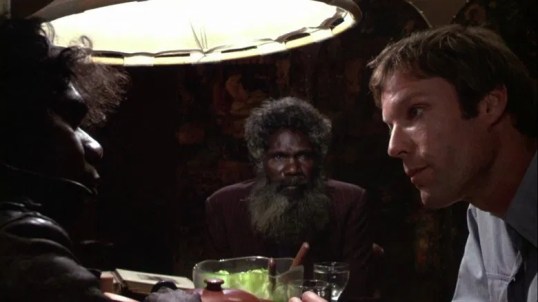
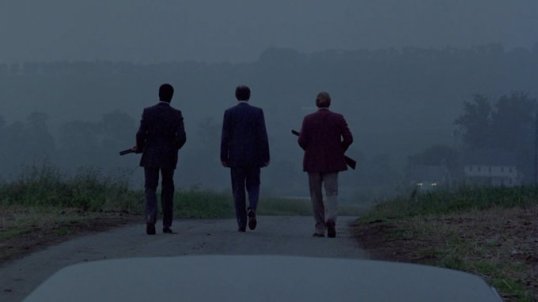
August 21st is the birthday of the great director Peter Weir. It’s time for….
4 Shots From 4 Peter Weir Films
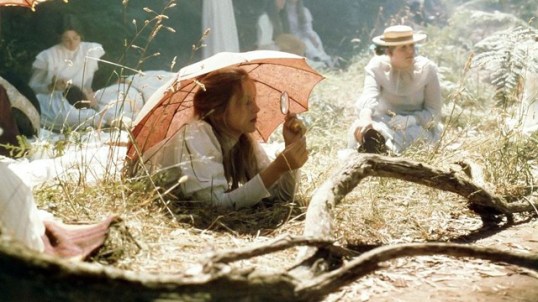
Picnic At Hanging Rock (1975, dir by Peter Weir, DP: Russell Boyd)
The Last Wave (1977, dir by Peter Weir, DP: Russell Boyd)
Witness (1985, dir by Peter Weir, DP: John Seale)
The Truman Show (1998, dir by Peter Weir, DP: Peter Biziou)
One of the first rap/metal songs, I’m The Man was originally meant to be a collaboration between Beastie Boys and Anthrax. However, because the two bands could never work out their schedules, Anthrax ended up just doing the song on their own, with Frank Bello, Charlie Benante, and Scott Ian tying to do their best Beastie Boy impersonation. Even though the band viewed the song as just being a joke between friends, it went on to become one of Anthrax’s most unexpected hits.
Most listeners will recognize a sample of Sam Kinison as the source of the song’s primal screams.
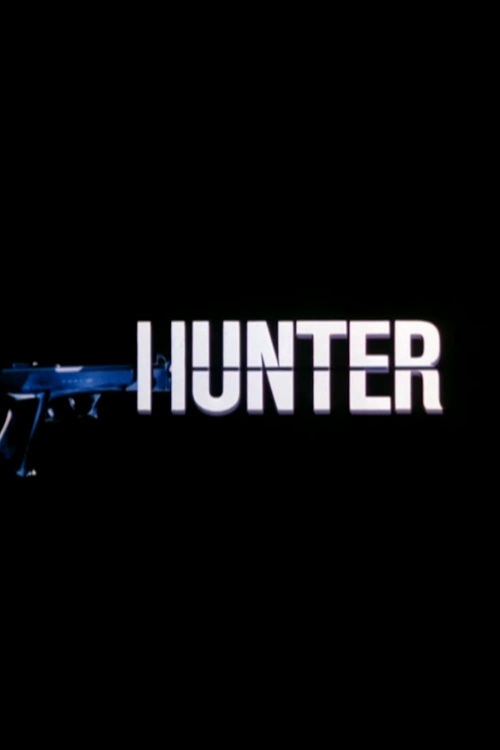
Welcome to Late Night Retro Television Reviews, a feature where we review some of our favorite and least favorite shows of the past! On Thursdays, I will be reviewing Hunter, which aired on NBC from 1984 to 1991. The entire show is currently streaming on Tubi and several other services!
This week, Hunter helps an ex-girlfriend.
Episode 1.17 “The Last Kill”
(Dir by Bruce Kessler, originally aired on April 20th, 1985)
Internationally famous model Christine Le Masters (Stephanie Blackmore) thinks that her husband, Kerry (Madison Mason), is cheating on her. Christine tells Kerry that she’s heading to the airport to catch a flight for Europe and a new ad campaign. Instead, she follows Kerry when he heads over to a cheap motel. Christine is expecting to catch her husband with his mistress. Instead, she finds a prostitute who has been shot in the back of the head by a hitman.
Not wanting her husband to know that she lied about leaving the country, Christine goes to an ex-boyfriend for help. The name of that ex-boyfriend? Rick Hunter.
Hunter and McCall do investigate and discover that the prostitute is just one of many low-level criminals who have apparently all been killed by the same assassin. Hunter uses his little-mentioned mob contacts to dig into the murders and finds out that there’s a hitman named George who has been killing everyone involved in a plot to blackmail a mob boss. However, George appears to be doing this out of the kindness of his heart. Hunter suspects that George is just trying to get close to the mob boss so that he can kill him. He also suspects that George is actually Kerry Le Masters!
Is Hunter just jealous that Kerry is married to his ex-girlfriend, or is he correct about Kerry being a killer? It turns out that both things can be true! Don’t worry, though. Even though Kerry is holding a gun at his wife’s head at the time, Hunter is still able to shoot him without hurting Christine. Hunter tells police dispatch to send “the coroner’s wagon.” The police dispatcher doesn’t sound surprised. Hunter kills an average of three people a day.
This episode never really made it clear why Kerry would decide to become a hitman in the first place. I mean, he’s already rich. But I did appreciate that the Hunter family’s mob ties were mentioned again and that we got to learn a little about his past. When Kerry told Hunter that the two of them were heading for a standoff that only one would survive, Hunter replied, “Works for me.” It was a cool moment on an otherwise standard episode of Hunter.