Today’s song of the day is the main theme from Peter Weir’s 1986 film, The Mosquito Coast, composed by Maurice Jarre.
Today’s song of the day is the main theme from Peter Weir’s 1986 film, The Mosquito Coast, composed by Maurice Jarre.
Today’s scene that I love comes from Peter Weir’s 1985 film, Witness. In this scene, the Amish come together and raise a barn. This scene celebrates community and also gives Harrison Ford a chance to show off his real-life carpentry skills.
4 Or More Shots From 4 Or More Films is just what it says it is, 4 shots from 4 of our favorite films. As opposed to the reviews and recaps that we usually post, 4 Shots From 4 Films lets the visuals do the talking!
August 21st is the birthday of the great director Peter Weir. It’s time for….
4 Shots From 4 Peter Weir Films
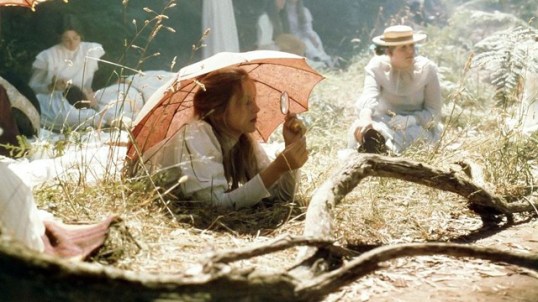
Picnic At Hanging Rock (1975, dir by Peter Weir, DP: Russell Boyd)
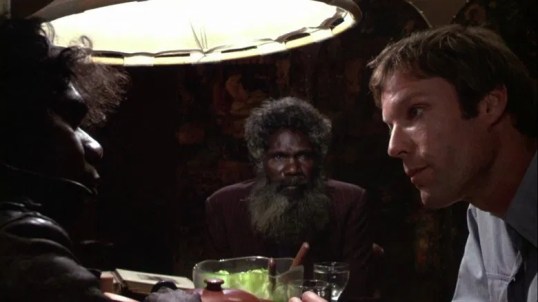
The Last Wave (1977, dir by Peter Weir, DP: Russell Boyd)
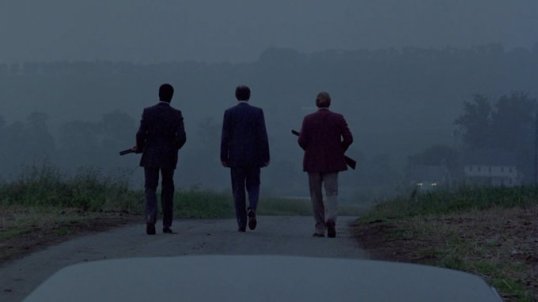
Witness (1985, dir by Peter Weir, DP: John Seale)

The Truman Show (1998, dir by Peter Weir, DP: Peter Biziou)
4 Or More Shots From 4 Or More Films is just what it says it is, 4 shots from 4 of our favorite films. As opposed to the reviews and recaps that we usually post, 4 Shots From 4 Films lets the visuals do the talking!
Today, the TSL wishes a happy birthday to Harrison Ford. It’s time for….
4 Shots From 4 Harrison Ford Films
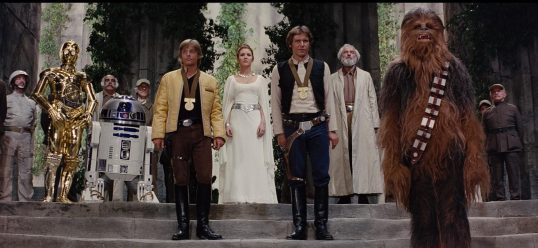
Star Wars: A New Hope (1977, dir by George Lucas)
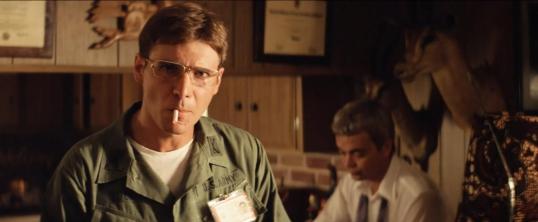
Apocalypse Now (1979, dir by Francis Ford Coppola)
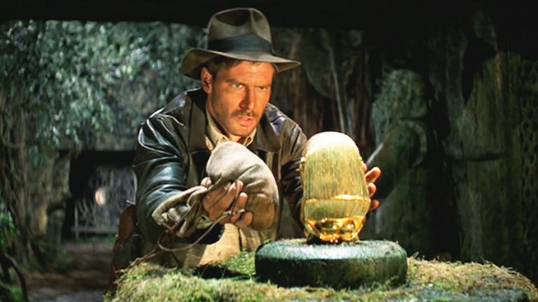
Raiders of the Lost Ark (1981, dir by Steven Spielberg)
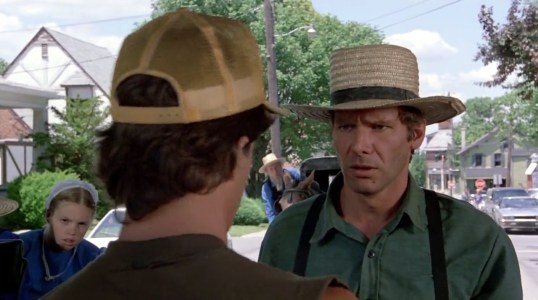
Witness (1985, dir by Peter Weir)
Today’s song of the day is the main theme from Peter Weir’s 1986 film, The Mosquito Coast, composed by Maurice Jarre.
Today’s scene that I love comes from Peter Weir’s 1985 film, Witness. In this scene, the Amish come together and raise a barn. This scene celebrates community and also gives Harrison Ford a chance to show off his real-life carpentry skills.
4 Or More Shots From 4 Or More Films is just what it says it is, 4 shots from 4 of our favorite films. As opposed to the reviews and recaps that we usually post, 4 Shots From 4 Films lets the visuals do the talking!
August 21st is the birthday of the great (and sadly retired) director Peter Weir. It’s time for….
4 Shots From 4 Peter Weir Films
Picnic At Hanging Rock (1975, dir by Peter Weir, DP: Russell Boyd)
The Last Wave (1977, dir by Peter Weir, DP: Russell Boyd)
Witness (1985, dir by Peter Weir, DP: John Seale)
The Truman Show (1998, dir by Peter Weir, DP: Peter Biziou)
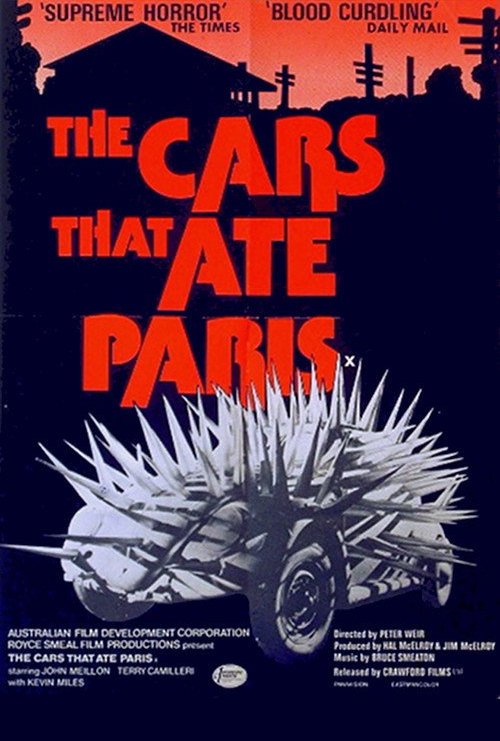
Taking place in a vaguely futuristic world, the 1974 Australian film, The Cars That Ate Paris, opens with an attractive and impossibly happy couple going for a drive in the countryside and getting killed in a truly horrific car accident, one that apparently was deliberately set up.
Meanwhile, two brothers — Arthur (Terry Camilleri) and George (Rick Scully) — are traveling across Australia, in search of work. Everywhere they go, they see long lines of desperate people looking for a way to make money, suggesting that the economy has basically collapsed. George does the driving, largely because Arthur’s license was taken away after he accidentally killed a pedestrian. Arthur is struggling with both the guilt and a phobia of cars in general.
That phobia only gets worse after Arthur and George are involved in a automotive accident of their own. George is killed but Arthur survives. Taken to the small, rural town of Paris, Arthur is adopted as a bit of a mascot by the town’s seemingly friendly mayor, Len Kelly (John Mellion). At first, Arthur is relieved to have survived but he soon comes to realize that the residents of Paris have no intention of ever letting him leave.
Paris, it turns out, is a bit of a strange place. The entire economy is based on collecting scrap metal from the many cars that crash within the city limits. The local hospital is full of car crash victims, the majority of whom end up getting lobotomized and used as test subjects for the local doctor. Indeed, the only thing that kept Arthur from a similar fate was that the mayor assured everyone that Arthur’s phobia of driving has rendered him “harmless.” (And just to make sure that Arthur doesn’t lose that phobia, he’s sent to a psychologist who spends nearly the entire session showing him grotesque pictures of car accident victims.) Though the mayor continually talks about how Paris represents the “pioneer spirit” that made Australia great, the town’s teenagers don’t seem to be too impressed with the place. They spend all of their time driving around in cars that they’ve modified into small tanks. (Their leader drives a compact car that has been covered in metal spikes, transforming it into a motorized porcupine.) Arthur wants to escape the town but can he conquer not only his own fears but also avoid being killed by the citizens who have adopted him?
The Cars That Ate Paris is a rather uneven film. It gets off to a good start and the town is memorably creepy but, once Arthur had been adopted by the mayor, it starts to drag and not much happens until the teens finally get around to turning on their elders during the final fifteen minutes of the film. Arthur is a frustratingly passive character and his car phobia never really feels credible. The film attempts to mix horror, science fiction, and satire but it comes across as being rather disjointed. Thematically, it’s probably most interesting as a precursor to the Mad Max films, having been inspired by the same Australian car culture that inspired George Miller. In fact, The Cars That Ate Paris almost feels like a prequel to the Mad Max films. One half expects a young Mel Gibson to pop up at the end, wearing Max’s patrolman uniform and shaking his head at the madness of it all.
That said, the film features a few striking images and Paris is a memorably desolate town. This really isn’t that surprising, given that The Cars That Ate Paris was directed by Peter Weir. This was Weir’s first feature film, though he had previously directed several shorts, and the film very much comes across as being the work of a talented artist who was still learning how to use those talents to tell a compelling story. In the end, Peter Weir’s involvement is the main reason to watch The Cars That Ate Paris. The film doesn’t really work but it does provide a chance to see an early effort from someone who would eventually become one of the most interesting directors of his time.
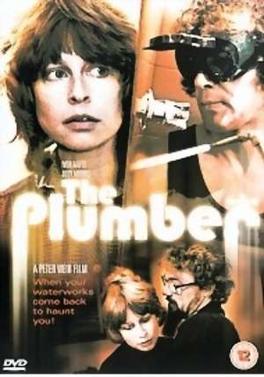
Peter Weir’s 1979 film, The Plumber, is essentially a battle of wills between two very different characters.
Jill Cowper (Judy Morris) is a masters student in anthropology. She’s educated, articulate, liberal-minded, and upper middle class. She’s married to Dr. Brian Cowper (Robert Coleby), a highly respected academic who is on the verge of being offered a position with the World Health Organization.
Max (Ivar Kants) is the plumber at the Cowpers’s building. We don’t find out much about his background, though it’s hinted that he’s had some previous trouble with the law. Max is friendly and talkative and, as soon becomes clear, amazingly determined. When he shows up at the Cowpers’s apartment, he tells Judy that he’s simply doing a check on all the building’s bathrooms. When Judy lets him in to do his inspection, Max announces that he needs to fix something with the plumbing. It should only take a day or two.
Except, of course, it takes more than a day or two. Max continually shows up at the apartment, usually waiting until Brian has left for the day. His comments to Jill become more and more intrusive and, whenever Jill takes offense, Max says that she’s misinterpreting him and that he’s just trying to be friendly. When Jill tells Brian that she thinks Max is intentionally destroying the plumbing so that he’ll have an excuse to be in the apartment, Brian refuses to believe her. When Jill tells her best friend, Meg (Candy Raymond), about what’s going on, Meg says that Max seems handsome and harmless.
Meanwhile, Max continues to work in the apartment’s bathroom, eventually turning it into a maze of pipes that seems to be constructed specifically to trap anyone unfortunate enough to enter the room….
The Plumber was originally made for Australian television. Though it was given a limited theatrical release in the United States (largely due to the arthouse success of Peter Weir’s previous films, The Last Wave and Picnic at Hanging Rock), The Plumber feels very much like a made-for-TV movie or perhaps an extended episode of an anthology series. It has a brisk 76-minute running time and visually, it features none of the striking imagery that one typically associates with Weir’s cinematic work. There’s no beautiful or majestic shots of the outback (like in Picnic at Hanging Rock) or the ocean (like in Master and Commander: Far Side of the World). Instead, the film takes place in the type of ugly and soulless cityscape that Harrison Ford was escaping from in Witness.
That said, The Plumber is still a memorable piece of work, one that feels perhaps more relevant today than when it was first released. Anyone who has ever dreaded having to take their car in for repairs or having to call someone out to fix an appliance will be able to relate to what Judy goes through with Max. The film is a reminder that, as much as we tell ourselves otherwise, we really are at the mercy of strangers. Judy may be better educated than Max and she may have more money than Max but what she doesn’t have, at least until the end of the film, is Max’s animal cunning. Max knows exactly what to say to get inside of the apartment and, once he’s inside, he knows exactly what to do to make it impossible for Judy to keep him from returning.
As upsetting as Max’s actions are, what’s even more upsetting is how everyone refuses to believe Judy when she tries to tell them what’s going on. Judy is told she is overreacting. Judy is told that she just doesn’t understand how these things work. Max gets offended that Judy doesn’t appreciate all of the hard work that he’s doing for her, despite the fact that she never asked him to do any of it. He does everything short of telling her that she needs to smile more. He’s the ultimate toxic presence, invading Judy’s life and refusing to leave. Everyone has had to deal with a Max but, for women, he’s an especially familiar and loathsome figure. The film may have clearly been made for Australian television but its themes are universal.
Because almost all of the action takes place in one small apartment, The Plumber is undeniably stagey. (It’s easy to imagine it as being a two-act play.) However, it’s also very well-acted and occasionally even darkly humorous. (As loathsome as Max is, it’s hard not to laugh a little when you see the maze of pipes he’s constructed in the bathroom.) It occasionally shows up on TCM so keep an eye out.
 For whatever reason, I’ve lately found myself very much enjoying films about the end of the world. Who knows why. Maybe it’s because I’m dreading having to sit through another election year. Seriously, if the world just ended now, we could all be saved a lot of trouble.
Add to that, the weather’s been weird this year (and please do not take that statement to mean that I want to hear about climate change because seriously, that crap bores me to death). We got hit by snow earlier in the year. (I live in Texas, where snow is a big deal.) It rained more than usual during spring. Summer started late but when it did, it was hot and dry and there was not a rain cloud to be seen. Two days ago, out of nowhere, it started raining and right now, we are under a flash flood warning. Since I believe that existence is random chaos with no rhyme or meaning, I don’t necessarily think there’s any huge meaning behind the strange weather. But still…
The 1977 film The Last Wave is all about strange weather and, in many ways, it’s the perfect film to watch while you’re stuck inside, waiting for the rain to stop. (Watch it with Take Shelter and have a watery apocalypse double feature.) The film opens in the Australian outback. The sky is blue and clear. And yet the children at a small schoolhouse hear thunder rumbling in the distance. When it suddenly starts to pour down rain, the kids are excited. Their soaked teacher manages to herd them back into the schoolhouse. As the teacher struggles to calm the children down, we suddenly hear something pounding down on the schoolhouse’s tin roof. Suddenly, the windows are shattering as huge chunks of ice crash through them. Looking outside, the teacher is confronted with the sight of torrential rain, gigantic hail, and a perfectly blue and cloudless sky.
Meanwhile, in Sydney, three Aborigines are accused of murdering a fourth outside of a bar. Assigned, by legal aid, to defend them is David Burton (Richard Chamberlain), a complacent upper middle class attorney. Since David usually deals with tax law, he doesn’t understand why he has been assigned the case. However, he take is because he feels a strange link to one of the accused men, Chris Lee (David Gulpilil).
Much like Michael Shannon in the previously mentioned Take Shelter, David has been visions and dreams in which he sees the world flooded. As he researches the case, he begins to suspect that he may be seeing visions of the future….
Well-acted and visually stunning, The Last Wave is a thought-provoking meditation on nature of reality, the end of the world, the “old ways” vs the “new ways,” and whether or not humanity is even worth saving. On top of all that, it features an absolutely brilliant final scene!
All in all, it’s not a bad way to pass the time on a rainy afternoon.

