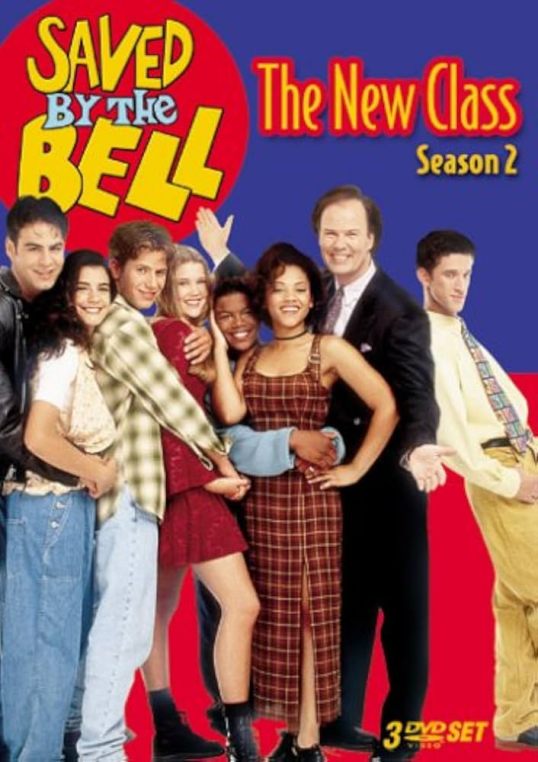
Welcome to Retro Television Reviews, a feature where we review some of our favorite and least favorite shows of the past! On Tuesdays, I will be reviewing Saved By The Bell: The New Class, which ran on NBC from 1993 to 2o00. The show is currently on Prime.
This week, it’s a 4th of July episode that aired in September.
Episode 2.6 “Brian’s Girlfriend”
(Dir by Don Barnhart, originally aired on September 24th, 1994)
Oh Hell, it’s another country club episode.
The country club is having a tip competition for the 4th of July. Whoever gets the most tips will have their earnings matched by the club. Megan wants to win so she can send her parents on a cruise. (How did Bayside go from being a school full of wealthy trust fund brats to one full of poor people?) Bobby decides to give her all of his tips so she can win. That sounds like cheating to me.
Meanwhile, due to Screech’s stupidity, Mr. Belding ends up with a terrible sunburn. (Screech was supposed to bring the sunscreen but he brought salad dressing instead.) This leads to countless scenes of Screech slapping Belding on the back and causing him agonizing pain. Ha ha, I guess.
Meanwhile, Brian makes Rachel jealous by pretending to like the new tennis instructor (Brittney Powell). She likes him too, even though he’s like 16. When a guilt-stricken Brian finally admits that he was only pretending to like her, the tennis instructor says, “You’re a jerk!” and she’s right. But I guess it doesn’t matter because Brian’s plan works and he and Rachel end up sharing a kiss while watching the 4th of July fireworks.
What type of show airs their 4th of July episode in September?
The country club episodes are so annoying. If I wanted to watch people work, I could just go hang out at Target for 30 minutes.
Okay, so you’ve probably heard Any Way You Want It by Journey at a sports game, a movie, or blasting from someone’s car with the windows down. And yeah, it’s a classic rock anthem, but let me tell you why you need to actually listen to it like it’s your new favorite song. First off, that opening riff? Pure adrenaline. It kicks in with this chugging, joyful energy that doesn’t let up. Steve Perry’s vocals are famously sky-high and smooth, but the real secret weapon here is how the whole band locks into this unstoppable groove. It’s not complicated—it’s just fun. If you’re in a bad mood, hit play. I guarantee you’ll be tapping your steering wheel by the ten-second mark.
Now, let’s talk about the guitar solo, because that’s where Neal Schon earns his legend status. It starts at 1:34, right after the second chorus when the song pulls back just for a breath. And then—bam. Schon doesn’t waste time with flashy nonsense. He comes in with this biting, melodic line that feels like a conversation. It’s not about showing off speed (though he’s got plenty); it’s about attitude. The solo builds with these perfect bends and a little wah pedal flavor, then climbs higher and higher until it just explodes into a fiery run that hands the energy right back to Perry for the final chorus. From 1:34 to about 2:00, it’s pure rock and roll perfection.
What I love most is how the solo doesn’t overpower the song—it serves it. So many guitar heroes try to steal the spotlight, but Schon is playing like he’s part of a team. You can hear him weaving in and out of the rhythm section, almost dancing with the bass and drums. And that tone? Crisp, a little overdriven, but never muddy. It’s the sound of someone who knows exactly when to let a note ring out and when to smash into the next one. If you’ve ever thought Journey was just a “ballads band,” this solo will change your mind fast.
Bottom line: Any Way You Want It is a shot of pure joy, and the guitar solo from 1:34 to 1:45 is the heart of the whole thing. Put on headphones, crank the volume, and just focus on how Schon makes his guitar sing, shout, and then whisper all in under thirty seconds. Then hit replay, because I promise you’ll miss something the first time. Give it two listens—one for the vocals, one for the solo—and you’ll wonder how you ever slept on this track. It’s not deep, it’s not complicated. It’s just perfect. Any way you want it, that’s the way you’ll need it. Trust me.
Any Way You Want It
Any way you want it That’s the way you need it Any way you want it
She loves to laugh She loves to sing She does everything She loves to move She loves to groove She loves the lovin’ things
Ooh, all night, all night Oh, every night So hold tight, hold tight Ooh baby, hold tight
Oh, she said Any way you want it That’s the way you need it Any way you want it She said, any way you want it That’s the way you need it Any way you want it
I was alone I never knew What good love could do Ooh, then we touched Then we sang About the lovin’ things
Ooh, all night, all night Oh, every night So hold tight, hold tight Ooh baby, hold tight
Oh, she said Any way you want it That’s the way you need it Any way you want it I said, any way you want it That’s the way you need it Any way you want it
[guitar solo]
She said ohh, hold on, hold on, hold on Oh, she said any way you want it That’s the way you need it Any way you want it
Any way you want it That’s the way you need it Any way you want it
She said any way you want it That’s the way you need it Any way you want it
Any way you want it That’s the way you need it Any way you want it
Any way you want it That’s the way you need it Any way you want it
Any way you want it That’s the way you need it Any way you want it
Any way you want it That’s the way you need it Any way you want it
Any way you want it That’s the way you need it Any way you want it
Any way you want it That’s the way you need it Any way you want it
4 Shots From 4 Films is just what it says it is, 4 shots from 4 of our favorite films. As opposed to the reviews and recaps that we usually post, 4 Shots From 4 Films lets the visuals do the talking!
Today, we pay tribute to the legendary cinematographer, Vilmos Zsigmond. Born 91 years ago today in Hungary, Zsigmond got his start in the 60s with low-budget films like The Sadist but he went on to become one of the most in-demand cinematographers around. In fact, of all the people who started their career working on a film that starred Arch Hall, Jr., it’s hard to think of any who went on to have the type of success that Zsigmond did.
Zsigmond won one Oscar, for his work on Close Encounters of Third Kind. He was nominated for three more. He also received a BAFTA award for his work on The Deer Hunter and was nominated for an Emmy for his work on Stalin. He’s considered to be one of the most influential cinematographers of all time.
In honor of the legacy of Vilmos Zsigmond, here are….
4 Shots From 4 Films
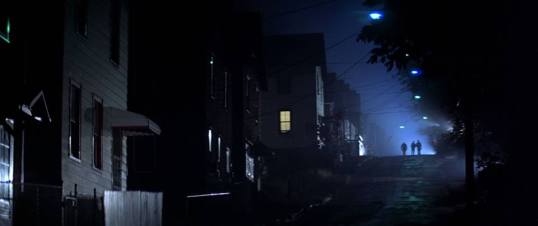
Deliverance (1972, dir by John Boorman, DP: Vilmos Zsigmond)
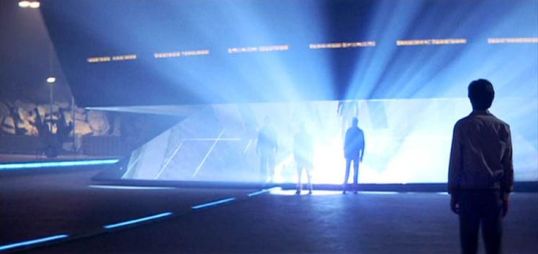
Close Encounters of the Third Kind (1977, dir by Steven Spielberg, DP: Vilmos Zsigmond)
The Deer Hunter (1978, dir by Michael Cimino, DP: Vilmos Zsigmond)
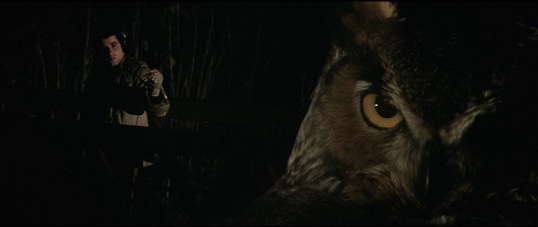
Blow Out (1981, dir by Brian De Palma, DP: Vilmos Zsigmond)
This music video comes from a time long ago, when Aerosmith still had their edge and weren’t best-known for movie ballads. Director Marty Callner filmed this video in New Orleans because he wanted to capture the feeling of Mardi Gras and he succeeded. Previously dismissed as washed-up, Aerosmith made a huge comeback in the late 80s. This video definitely helped.
As for Marty Callner, he was one of those directors who worked with everyone who was someone. He also went on to direct several stand-up specials, working with the likes of Jerry Seinfeld and Chris Rock.
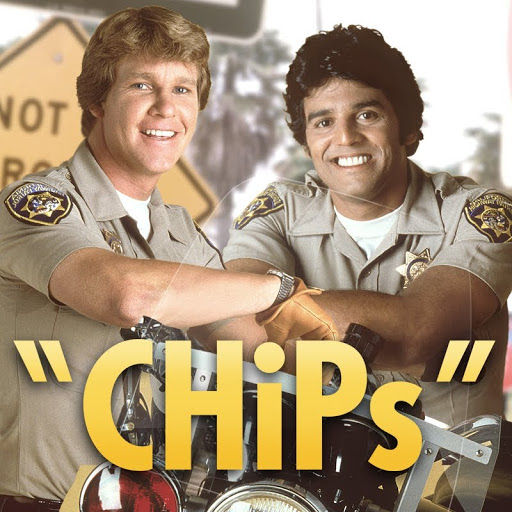
Welcome to Late Night Retro Television Reviews, a feature where we review some of our favorite and least favorite shows of the past! On Mondays, I will be reviewing CHiPs, which ran on NBC from 1977 to 1983. The entire show is currently streaming on Prime!
This week, there’s an interesting crime spree but nothing is more important than Ponch’s feelings.
Episode 5.23 “Trained For Trouble”
(Dir by Barry Crane, originally aired on April 4th, 1982)
Animals have been trained to steal money! A hawk swoops down and steals a bag of cash from an armored car. Chimpanzees rob a bank! It’s madness and the Highway Patrol has its work cut out for them as they attempt to catch whoever has trained these criminal animals. (The minute that one sees Don Stroud’s name in the guest star list, it’s pretty easy to guess who is responsible.)
That may sound like a cute idea for a show and, to be honest, it is. However, this episode is somehow less concerned with the animals robbing banks than it is with every woman in Los Angeles mistaking Ponch for a Chippendale’s dancer. It turns out that one of the male strippers — “Officer Richard” — looks like just like Ponch. Richard is credited as being played by “Angelo Bernardi.” Seeing as how Bernardi has no other credits on the imdb other than this episode, I’m not convinced that wasn’t Erik Estrada stripping off his uniform.
Consider this to be your weekly reminder that, during the fifth seasos, CHiPs was….
From what I’ve read, Larry Wilcox left this show after the fifth season specifically because he felt Erik Estrada was getting all of the good storylines and had basically become the producer’s pet. Watching this episode, you can see why he would be upset. While Estrada spends the episode being chased by every woman in Los Angeles, Wilcox gets a handful of forgettable lines.
On a positive note, this episode did feature the character actor Dan Hedaya, playing someone who chronically confesses to unsolved crimes. His character was, at least, a little interesting. He also got more lines than Larry Wilcox in this episode which, again, perhaps explains why Jon Baker returned to Wyoming after the fifth season.
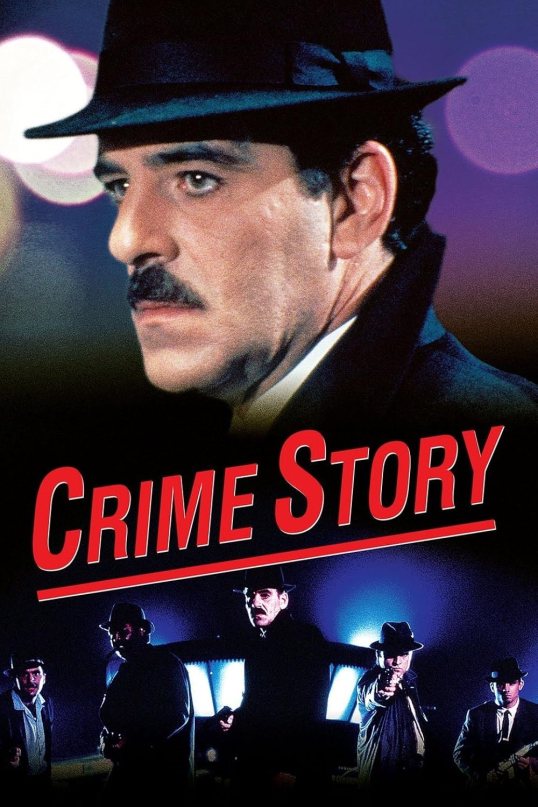
Welcome to Retro Television Reviews, a feature where we review some of our favorite and least favorite shows of the past! On Mondays, I will be reviewing Crime Story, which ran on NBC from 1986 to 1988. The entire show can be found on Tubi!
This week, the Torello marriage falls apart.
Episode 1.7 “Pursuit of a Wanted Felon”
(Dir by Aaron Lipstadt, originally aired on October 28th, 1986)
Last week, a recently acquitted man named Hector (Ving Rhames) was arrested after murdering his landlord. Torello, Danny, and David Abrams were all upset.
This week, they’ve all moved on. Sorry, Ving Rhames, you were only a one-episode guest star.
David is pursuing his relationship with Suzanne Terry (Pam Grier). At a cocktail party, Detective Walter Clemmons (Paul Butler), the black member of the Crime Squad, approaches Suzanne and warns her that she shouldn’t be pursuing a relationship with “that white boy.” Seriously, this is the first time that Walter’s gotten any real dialogue since the show began and it’s basically to tell Suzanne not to pursue an interracial relationship. “We’re only seven years out from integration,” Clemmons says, an awkward piece of dialogue that is meant to remind viewers that this show takes place in 1963. The show actually deserves some credit for being realistic about how many people would have viewed David and Suzanne’s budding romance in 1963. I just find it interesting that the show’s only regular black character is the one who is shown objecting while all of the white Chicago cops don’t have a problem with it. Who knew the Chicago police force was so progressive in the early 60s?
(I really want to like Stephen Lang’s performance as David but something feels off about it. It’s not a bad performance. I stand by my earlier praise. It’s just that David is such a caricature of an early 60s liberal that it is sometimes hard for me to tell if his character is supposed to be satirical or not. In episodes like this, where David is portrayed as being a cool hipster, Lang can seem a bit stiff and miscast. He’s much better when he’s giving an emotional speech in court.)
Luca continues to prove himself indispensable to Manny Weisbrod. In this episode, he blows up a union leader who doesn’t want to take orders from the mob.
Finally, Mike and Julia Torello split up in this episode. It’s not really a shock. Mike Torello is extremely intense and obsessed with his job. He’s tightly wound, to the point where he seems like he might just randomly shoot someone at any given moment. An attempt to take a relaxing vacation with Julie is a disaster. (The motel is tacky. The service is mediocre. Mike spends the entire time threatening the staff and complaining.) As soon as Torello returns to Chicago, he hops on a plane for Cleveland in an unsuccessful attempt to capture Frank Holman. When Torello returns home, he finds that Julie is preparing to go out with another man.
“You are not going to watch my TV,” Torello says, before grabbing the TV and leaving the apartment with it.
Does that scene sounds familiar? That’s probably because Michael Mann later reused the scene, almost word-for-word, in Heat. It’s a good scene. It’s certainly the most memorable moment in this episode.
Otherwise, this episode felt a bit bland. Torello’s doomed marriage isn’t really that interesting and I actually kind of got annoyed with David and Suzanne going to a cocktail party when they really should have been trying to get Hector out of prison. I laughed at Torello’s irritation at the hotel and his line about the TV. Those were the highlights. The rest of this installment was forgettable.
Demi Moore plays the first woman ever to be accepted for Navy SEAL training. Anne Bancroft plays the senator who sponsored her but secretly wants her to fail. Viggo Mortensen is the hardass drill sergeant who I think is secretly in love with Demi Moore even though he doesn’t admit it during the movie. Ridley Scott directed, so the movie looks and sounds great. Demi shaves her head and tells Viggo to “Suck my dick.” All the other SEALS-in-training start shouting, “Suck my dick!” at each other. It becomes their rallying cry. That will put the fear in the hearts of America’s enemies.
When I first saw G.I. Jane, I really liked it. I got really caught up in whether or not Demi Moore would complete her training and prove all the chauvinists wrong. Rewatching the movie today, I realized that it was silly for me to worry about whether or not Demi Moore would become a SEAL. Of course she does! If she didn’t, the movie would be a real downer. This movie was made back when Demi Moore was always cast as serious women who never laughed and who were always intense. If they didn’t let Demi Moore become a SEAL, she would have burned down the entire Navy.
Rewatching, I still liked the movie. Demi Moore and Viggo Mortensen having a glare-off? Be still my beating heart! Demi Moore wants to become a SEAL but Sen. Anne Bancroft betrays her. So much for sisterhood! Is the movie saying that women belong in combat but not the Senate? It better not be! Maybe we need a sequel where Demi Moore takes down the new Ayatollah and then runs for the Senate.
I wanted to end this review by telling you about the real first woman to complete Navy SEAL training but I discovered that hasn’t happened yet. Hopefully, it will soon. Demi Moore didn’t shave her head for nothing.
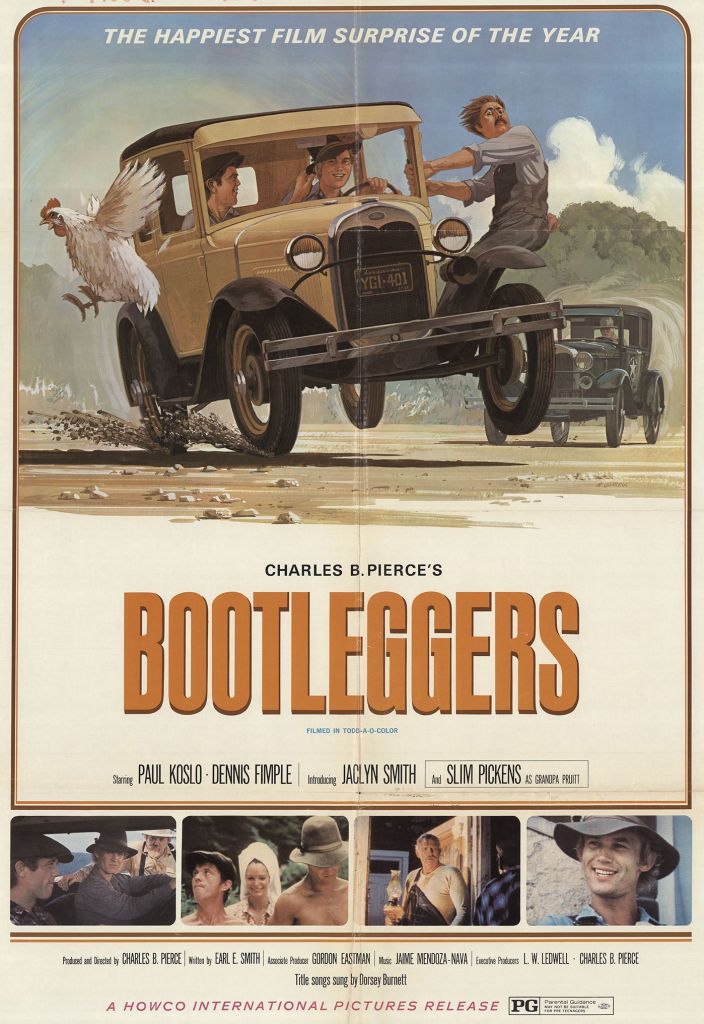
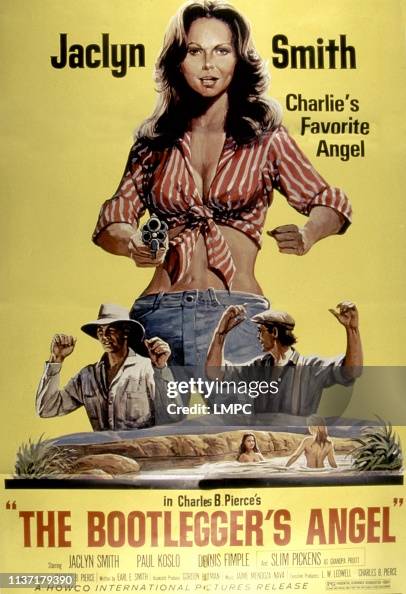
All my life, my Dad has told me that Roger Corman’s BLOODY MAMA (1970), which was filmed completely in Arkansas, contained scenes filmed along the beautiful white bluffs of Calico Rock, Arkansas. Dad and I watched it today, and we didn’t see any such scenes. I did some quick internet research, and it turns out my dad has been spreading misinformation all these years. He had mistaken the film for a different movie called BOOTLEGGERS (1974). It was filmed in and around the Ozark town of Calico Rock, and it was directed by B-movie maestro Charles B. Pierce (THE LEGEND OF BOGGY CREEK, THE TOWN THAT DREADED SUNDOWN). I was very happy to see that it was streaming on Amazon Prime, so I decided to give it a watch.
Set in rural Arkansas during the Prohibition era, the movie follows Othar Pruitt (Paul Koslo) and his moonshine-running buddy Dewey Crenshaw (Dennis Fimple) as they manufacture high quality moonshine whiskey and battle their local business rivals, the Woodalls, led by their vicious patriarch Rufus (Seamon Glass). When he’s not battling the Woodall’s, Othar finds time to hang out with his grandpa (Slim Pickens) and romance the tough but beautiful Sally Fannie (Jaclyn Smith, who receives an “introducing” credit). If you’ve seen many southern redneck movies, you probably know where this is all heading, but the fun is watching how it gets there!
BOOTLEGGERS is not a traditionally great movie, but there is a lot of fun to be had if you’re in the right frame of mind for some crude regional filmmaking. Director Charles B. Pierce clearly understood rural Arkansas in a way most filmmakers don’t. The dusty roads, cave-based moonshine stills, and run down old homes feel more authentic since they are actually filmed on location. I’ve been through that area many times, and he gets it right. Heck, a lot of the extras look like they wandered into the scenes straight off the local streets and fields. The print I watched looks like a really bad VHS copy, but Tak Fujimoto’s cinematography still manages to capture the beautiful nature of the area with its beautiful mountains and limestone cliffs hanging over the White River. One gripe though… the characters keep referring to the river as the Buffalo River, which is another beautiful river in Arkansas, but it is not the river in this movie.
Another element of the film that I found interesting is the casting of Paul Koslo as the lead and good guy of the film, Othar Pruitt. Koslo almost always plays a slimy bad guy, at least he did in Charles Bronson’s 70’s films THE STONE KILLER, MR. MAJESTYK and LOVE AND BULLETS. The German born actor is actually pretty good as an Arkansas redneck, and he seems more comfortable handling the revenge sections of the film than he does the romance and comedy.
As far as the other cast members, Dennis Fimple steals most of his scenes as Othar’s friend Dewey. He’s the goofy but lovable hillbilly friend that these types of movies almost always have. He’s fun here. I always love seeing Slim Pickens and he’s pretty much exactly what you’d expect as an old moonshiner with plenty of homespun wisdom. Jaclyn Smith, a couple of years before her CHARLIE’S ANGELS fame, has a few fun scenes as a pistol-packing local hairdresser who takes a liking to Othar. Needless to say, when she did hit it big, the producers shamelessly repackaged the film to make it seem she was much more important to the plot than she actually is. All part of the 70’s fun of trying to make a buck at the drive-in!
At the end of the day, BOOTLEGGERS isn’t as professionally made as a movie like the Arkansas set WHITE LIGHTNING with Burt Reynolds. What it is though, is a solid southern redneck film, set in a beautiful location, with good performances and a violent ending that should please its intended audience. It certainly did me!