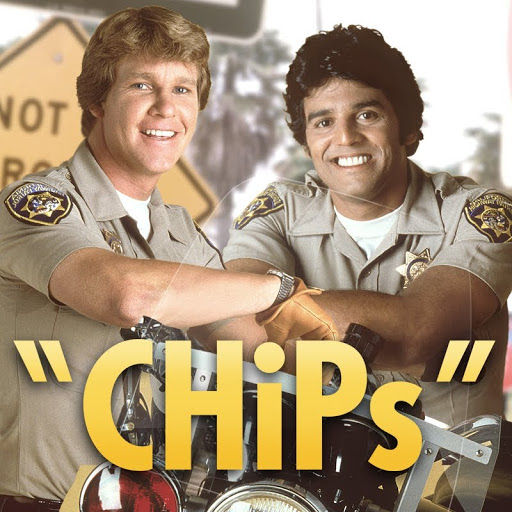
Welcome to Late Night Retro Television Reviews, a feature where we review some of our favorite and least favorite shows of the past! On Mondays, I will be reviewing CHiPs, which ran on NBC from 1977 to 1983. The entire show is currently streaming on Prime!
This week, a cop-turned-criminal tries to prove that he’s gone straight. Will he able to convince Ponch?
Episode 5.24 “Ice Cream Man”
(Dir by Leslie H. Martinson, originally aired on April 18th, 1982)
Tom Corey (Robert Walker, Jr.) used to be a top member of the Highway Patrol until he was caught breaking the law himself. Tom Corey was a car thief, not because he needed the money but just because he needed the thrill. Tom was sent to prison. His wife (Karen Jennings) divorced him. His son (Noah Hathaway) was told that Tom had died shortly after he was born. Now, nearly six years later, Tom is out of prison and he’s working as an ice cream man. He insists that he’s gone straight and all he cares about now is keeping a distant eye on the son who doesn’t know who he is.
Baker is willing to give Tom the benefit of the doubt but not Ponch. When a rash of vehicle thefts break out, Ponch suspects that Tom is involved. To an extent, Ponch is right. The ringleader of the thieves is a businessman named Reno Hale (James Wainwright). Hale wants Tom to work for him. Tom sees an opportunity to redeem himself by taking Reno down.
This was an interesting episode, in that the focus was not on Ponch or Baker but instead on Tom and his efforts to prove that he had gone straight. In fact, this episode almost felt like a backdoor pilot for a series that would have focused on Tom’s life outside of prison. It’s easy to imagine Tom spending each week foiling criminals while trying not to violate the terms of his parole. Robert Walker, Jr. gave a strong performance as Tom and the scenes between him and the cops were filled with an energy that reminded me of the first two seasons of CHiPs, before the whole thing became the Ponch Show.
This was a good episode. Tom was an interesting character and there was one spectacular accident that actually made me jump a little. (It looked like Randi Oakes barely avoid getting seriously injured.) This was a nice throwback to what the show used to be.
Alright, let’s talk about Nine Lives. If you were an Aerosmith fan in the spring of 1997, you were probably in one of two camps. Camp One: you were still riding the high of the Get a Grip era, cranking “Livin’ on the Edge” in your hand-me-down Camry, and you couldn’t wait to see what the Toxic Twins would do next. Camp Two: you were a grizzled, old-school devotee who thought they’d sold their soul to MTV back in ’89, and you viewed any new album with the skeptical squint of a man watching his favorite dive bar turn into a Hard Rock Cafe. I landed somewhere in the middle, which might be the perfect vantage point for Nine Lives, because this record is a glorious, baffling, overstuffed, and surprisingly scrappy cat of an album. It’s not the sleek panther of Pump or the cuddly but commercially declawed kitten of Get a Grip. No, this is a half-feral tomcat with a crooked tail, a chipped tooth, and nine lives’ worth of attitude to burn.
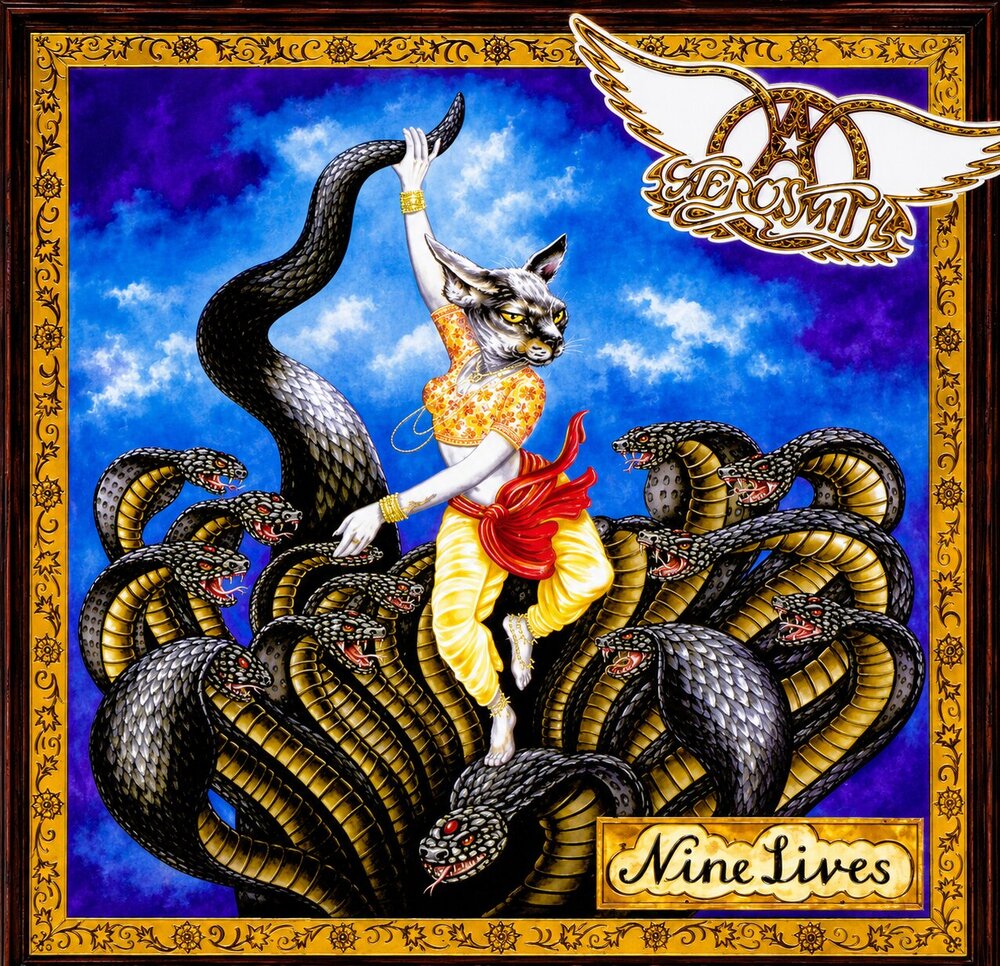
First, let’s get the elephant—or rather, the cat—out of the room: the cover. That bizarre, Kabuki-meets-Dali cat face with the third eye and the psychedelic swirls is your first warning that this isn’t going to be a straightforward rock record. And that’s because the making of Nine Lives was famously a disaster. They fired their long-time producer, Bruce Fairbairn, after cutting a whole album’s worth of material, brought in Kevin Shirley, who was known for his harder, rawer sound with bands like Diamond Head and Slayer’s Divine Intervention, and then proceeded to spend a fortune in studio time and label anxiety. You can hear that tension in the grooves. It’s not a polished, radio-manufactured product; it’s a band fighting with each other, fighting with their label, and fighting with their own legacy, and somehow, that ugly, beautiful struggle is what makes Nine Lives so endlessly listenable.
The album kicks off with “Nine Lives,” the title track, and it’s a mission statement disguised as a glam-stomp barnburner. That opening riff is pure, swaggering Joe Perry, all bluesy grease and garage-rock crunch, but then Steven Tyler comes in with that almost rapped, spoken-word verse that sounds like he’s reciting a beat poem about reincarnation inside a biker bar. It’s weird. It’s catchy. And by the time that “meow” hits in the chorus, you’re either cringing or grinning ear to ear. I’m firmly in the grinning camp. It’s a bold, goofy, and utterly confident opener that sets the table for an album that refuses to take the safe route.
Then comes “Falling in Love (Is Hard on the Knees),” which was the lead single, and man, did that song divide the fanbase. On one hand, it’s classic Aerosmith—sleazy, double-entendre lyrics, a hip-shaking groove, and that trademark Tyler yelp. On the other hand, it’s so deliberately, almost parodically sexy that it borders on self-satire. But here’s the thing: it rocks. That riff is a chainsaw, and the bridge where the tempo lurches and Tyler starts wailing about his “love gun” is pure, unfiltered nonsense genius. It’s not Dream On, but it’s not supposed to be. It’s a party track for a band that knows exactly how ridiculous they can be and leans into it with a wink.
But the real heart of Nine Lives isn’t in the singles; it’s in the deep cuts that show Aerosmith still had teeth. “Taste of India” is the first gut-punch. Clocking in at over five minutes, it’s a mid-tempo, Eastern-tinged blues-rock odyssey that features some of Tyler’s most evocative, cryptic lyrics about a woman who tastes like “chai and cardamom.” The sitar-like guitar work from Perry is hypnotic, and the rhythm section—Tom Hamilton’s chunky bass and Joey Kramer’s tribal, pounding drums—locks into a trance-like groove that feels more Led Zeppelin III than Permanent Vacation. It’s the sound of a band stretching their legs, and it’s magnificent. Similarly, “Full Circle” is the unsung hero of the entire record. That acoustic intro is deceptively gentle, but when the full band crashes in, it transforms into a soaring, gospel-tinged rock anthem about karma and survival. The harmonies between Tyler and Perry are some of the best they’ve ever laid down, and that chorus—“I’ve been around and I’ve come full circle”—feels like a genuine moment of reflection from a band that had seen every high and low imaginable.
Of course, you can’t talk about Nine Lives without addressing the power-ballad elephant, “Hole in My Soul.” Oh boy. This is the song that makes the purists reach for the skip button. It’s slick, it’s adult-contemporary, it’s got that Diane Warren-ish sheen that screams “soundtrack to a romantic montage in a 90s movie.” And yet… I have a soft spot for it. Is it cheesy? Absolutely. Is Tyler oversinging the hell out of it? You bet. But that bridge, where he goes “I’m a fool with a hole in my soul,” is delivered with such desperate conviction that I can’t help but buy in. It’s not Cryin’ or Angel, but it’s a perfectly fine power ballad for a band that had earned the right to be a little sappy. Plus, the guitar solo is pure Perry fire, which saves it from being a total snooze.
But then, just when you think they’ve gone soft, they drop “The Farm.” This is the weirdest, most underrated track in their entire 90s catalog. It’s a sludgy, grungy, almost industrial-tinged stomper about a mental institution, with a lyric that goes “They’re coming to take me away / To the funny farm.” It’s dark, it’s paranoid, and it features Tyler doing this manic, whispered vocal that sounds like he’s lost his last marble. The guitar tone is filthy, and the breakdown in the middle is pure chaos. It’s the closest Aerosmith ever came to sounding like Nine Inch Nails, and it works shockingly well. It’s proof that even in their commercial peak, they were still willing to get their hands dirty.
Elsewhere, “Crash” is a straight-up, high-octane rocker that sounds like it could have been a B-side from Permanent Vacation, all revved-up riffs and Tyler’s car-crash metaphors. It’s fun, it’s dumb, and it’s over in three minutes flat. “Kiss Your Past Good-Bye” is another deep-cut gem, a shuffling, bluesy kiss-off that features some slick harmonica and a chorus that begs to be sung along to with a whiskey in hand. And then there’s “Pink,” the second big single, which is pure pop-rock confection—a bouncy, funk-lite ode to, well, you know what. It’s clever, it’s silly, and the video was a masterpiece of 90s MTV absurdity. It doesn’t have the weight of “Janie’s Got a Gun,” but it’s not supposed to; it’s a sugar rush, and it’s delicious.
The album closes with “Fall Together,” a moody, atmospheric number that builds from a quiet piano intro into a swirling, psychedelic crescendo, and “Ain’t That a Bitch,” which is a bittersweet, acoustic-driven closer that finds Tyler reflecting on love and loss with a weary, world-weary rasp. It’s a surprisingly tender way to end an album that’s been so over-the-top and manic. It’s like the cat finally curls up on the windowsill and goes to sleep.
So, is Nine Lives a masterpiece? No. It’s too long, too bloated, and too inconsistent for that. The production, while rawer than Fairbairn’s work, can feel muddy in places, and there’s a sense that they threw every idea at the wall—ballads, hard rock, psychedelia, funk, grunge—to see what stuck. But that’s also its charm. This is the sound of a band that had absolutely nothing to prove commercially—they’d already sold millions—so they decided to get weird, get loud, and get a little dangerous again. It’s the album where Aerosmith remembers they used to be a dirty bar band from Boston, even if that bar now has a cocktail menu and a velvet rope. If you come to it expecting Toys in the Attic, you’ll be disappointed. But if you come to it with an open mind and a tolerance for glorious messiness, you’ll find an album full of character, muscle, and heart. It’s not their best life, but it’s certainly one of their most interesting ones. And frankly, nine lives in, who wouldn’t want to get a little scratchy?
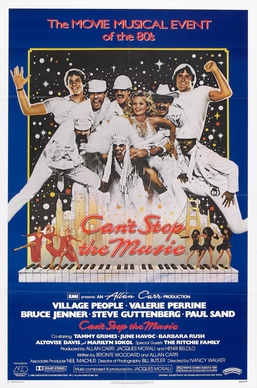
1980’s Can’t Stop The Music opens with Jack Morrell (young Steve Guttenberg) working in a record store. However, he’s got bigger plans that just standing behind a cash register. He quits his job and then roller skates around New York with a big goofy grin on his face. Everyone he passes is charmed. And why not? New Yorkers are famous for their good-humor and polite manners.
Jack is a songwriter but he doesn’t have the voice necessary to sell his songs. His platonic roommate, former supermodel Sam Simpson (Valerie Perrine), decides that what Jack needs is a band to sing his lyrics. Luckily, Sam knows a singer named Felipe Rose. He spends all of his time dressed like an Indian brave. There’s no specific reason given for his costume choice, it’s just something that he does. Sam and Jack are also able to recruit a construction worker (David Hodo), a “leatherman” (Glenn Hughes), a cowboy (Randy Jones), a G.I. (Alex Briley), and a singing cop (Ray Simpson). The name of the band? The Village People!
Yes, Can’t Stop The Music is fictionalized story of how The Village People came together. It was directed by TV actress Nancy Walker. It was a major studio production, one that was expected to build on the popularity of disco and bring in a lot of money. Unfortunately, it was released at the same moment that disco stopped being trendy. Can’t Stop The Music has a reputation for being bad and campy. Both of those things are true but I should point out that it’s also a remarkably boring film. The movie is full of characters who are constantly coming and going. Sam has a large collection of friends and former co-workers, all of whom just tend to randomly pop up. Most of them don’t really add much to the overall plot and, indeed, it’s hard not to resent being expected to keep track of all of them when there’s really no reason for many of them to be in the film. A pre-transition Caitlyn Jenner plays Ron White, a lawyer who is mugged while delivering a cake and who ends up as Sam’s boyfriend. As much as I made fun of Jenner as a performerwhile reviewing CHiPs, Jenner is even worse in You Can’t Stop The Music. In fact, Jenner’s performance is one of the worst that I have ever seen. If Ron angry? Is Ron sad? Is Ron in love? Is Ron an alien from outer space? You never really can tell, largely because Caitlyn Jenner’s performance is so inept. It’s not so much that Jenner can’t show emotion and one gets the feeling that Jenner isn’t even sure what emotion is.
As for the Village People themselves …. well, this film leaves little doubt that none of them were professional actors. Felipe Rose probably comes the closest to giving a credible performance but, as individuals, the members of the Village People aren’t that interesting and it takes forever for them to actually become a group. Even after they become a group, they still can’t generate enough on-screen charisma to really hold our attention. Who knew the Village People were so boring?
The majority of the film plays coy as far as the subtext of the Village People’s song are concerned. Steve Guttenberg’s character is definitely gay-coded without the film actually coming out and saying so.. The construction worker gets a fantasy in which he imagines being lusted after by several female groupies. The first few performances of the Village People are rather bland and it’s almost as if the film is trying to avoid the fact that the Village People’s songs and the personas of the performers all paid tribute to gay culture in the 1970s. But then the film hits the YMCA production number and suddenly, the Village People are frolicking with half-naked, muscular men while joyfully singing about everything that’s available at the YMCA. For that brief moment, the film embraces the campiness of the Village People and this major studio production actually becomes a bit subversive. It’s also one of the few moments in the film in which anyone seems to be genuinely happy. The Village People seem to be having fun. Unfortunately, the YMCA sequence is the exception instead of the rule.
Can’t Stop The Music‘s sin isn’t that it’s boring as much as it’s just bland. It’s an incredibly blah film. No film about New York in the 70s has any right to be so forgettable.
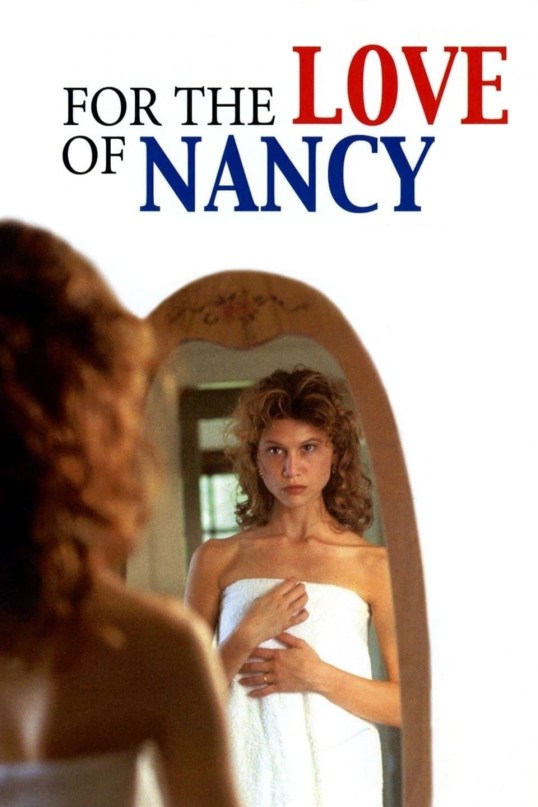
Last night, Lisa and I were looking for something to watch. She told me that if I let her pick the movie, then she would let me write the review. I’m not really sure that I got the better end of the deal but I still agreed. We ended up watching For The Love Of Nancy, a made for television movie about a girl with an eating disorder.
Nancy (Tracey Gold) is looking forward to going to college. Everyone comments on how thin she is but no one ever seems to notice that she hardly ever eats. That’s because she’s hiding her food underneath her bed and throwing it out whenever she gets a chance. Nancy is anorexic but her mother (Jill Clayburgh) and her father (William Devane) are too caught up in their own lives to notice. Even when a friend tells Nancy’s mother that Nancy is showing all the signs of being anorexic, her mother refuses to believe it. Eventually, things get so bad that her parents have no choice but to accept that Nancy needs help. Nancy is checked into a clinic and put on a feeding tube but even then, she still tries to get away without eating. When Nancy is told that she’s gained 6 pounds, she freaks out.
I’m pretty sure that I saw this movie in a health class when I was younger. I remember it freaked me out when Nancy tore a hole in a wall just so she could have a new place to hide food. Tracey Gold also struggled with anorexia and was in recovery when she filmed this movie. At the start of the film, there are a few scenes where she is so thin that it’s scary. The movie really got to me when i saw it in class and it still got to me watching it today. One thing I liked about the movie was that it was pretty realistic when it showed how other people reacted to Nancy’s eating disorder. Her parents started off in denial, went to panic, and eventually got angry and frustrated that Nancy couldn’t just magically get better. Nobody was portrayed as being perfect. I felt so bad for Nancy, who didn’t want to hurt anyone but who also couldn’t defeat her eating disorder alone.
This was a good movie but it was depressing. Tomorrow night, I’m picking the movie!
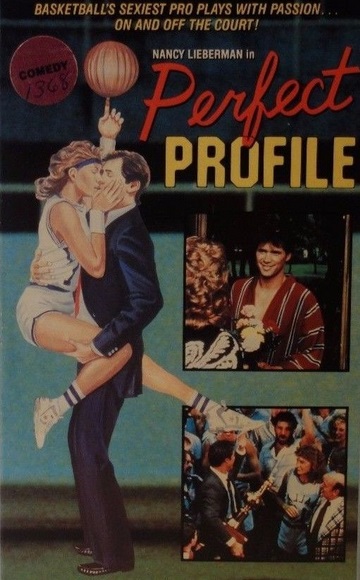
Brad Johnson (Tom Campitelli) is the millionaire owner of a manufacturing company and also the owner of Dallas’s basketball team. (Even though this film was shot in Dallas, the team is never specifically referred to as being the Mavericks). Brad’s company is a success and has just signed a contract with the Pentagon. However, Brad is more concerned with why his team keeps losing games. He goes to the “Fourth Floor,” the section of his corporate headquarters where nerdy Doc Alvins (Mike O’Dell) can use his computer, Delphi, to predict the future. Brad has Mike program Delphi to compute what is wrong with his basketball team. Delphi reports that the team needs a new point guard and that Brad should sign Terry Williams (Nancy Lieberman). Terry becomes the first woman to play in the NBA! She also sleeps with the team owner but she’s probably not the first player to do that.
Perfect Profile is a strange film. Depending on the source, it was released in either 1989 or 1991 but it has the aesthetics of a film that was shot a few ears earlier, maybe around 1984 or 1985. The boxy computers and the cheap graphics come straight from the late 70s and early 80s and, with his taped glasses and pocket protector, Dr. Alvins is a dead ringer for Robert Carradine in Revenge of the Nerds. The film is technically a comedy but a scene in which the computer suggests that the ideal point guard would be a black version of Larry Bird is about as edgy as things get. With one key exception, the actors often seem to be lost. I’m going to guess this was a regional production and that the majority of the cast and crew were locals.
Nancy Lieberman, who played Terry, is considered to be one of the greatest players in the history of women’s basketball. She played for the Dallas Diamonds in 1984, which is how she probably ended up in this movie. Lieberman is likable as Terry and she brings some authenticity to the basketball scenes. The film may not have been good but Nancy Lieberman did her best.
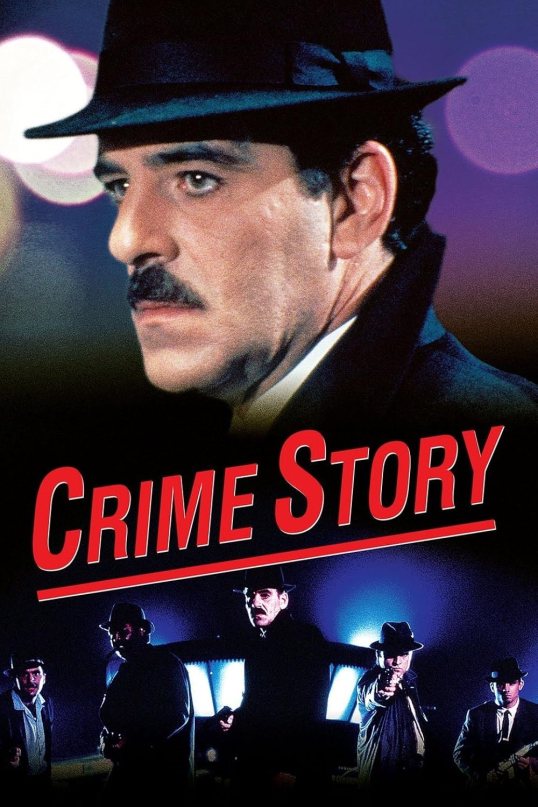
Welcome to Retro Television Reviews, a feature where we review some of our favorite and least favorite shows of the past! On Mondays, I will be reviewing Crime Story, which ran on NBC from 1986 to 1988. The entire show can be found on Tubi!
This week, Torello discovers some disturbing facts about an old friend.
Episode 1.8 “Old Friends, Dead Ends”
(Dir by Bobby Roth, originally aired on November 4h, 1986)
Luca has bought a controlling interest in a bottling company so that he can borrow from the pension fund and use that money to purchase casinos in Las Vegas. He’s brought a reluctant Bartoli in as his partner. The owner of the company is Ted Kehoe (Mark Hutter), who just happens to be an old friend of Mike Torello’s. When Kehoe’s business partner, Marilyn Stewart (Dana Wheeler-Nicholson), becomes suspicious of Kehoe’s arrangement with Luca, Bartoli starts to wonder if it’s really worth it to keep Marilyn and Ted around.
This is especially the case after Bartoli’s attorney, Dee (a youngish Eric Bogosian), informs Bartoli that U.S. Attorney Harry Brietel (Ray Sharkey) is planning on indicting both him and Luca for money laundering. Looking to end Brietel’s case before it can even get started, Luca murders Marilyn Stewart. Marilyn’s body is later found by two teenagers and–
HEY, IT’S CHRISTIAN SLATER!
This episode does indeed feature an early performance from Christian Slater. He pays a teenager who is trying to convince his girlfriend to “do it” when they happen to spot Marilyn’s body floating in the river. Slater’s girlfriend is played by Kim Walker, who was later co-star with Slater in Heathers.
Torello is not happy. Well, that’s not a surprise. Torello is never happy. But this episode gives him even more reasons than usual to be in a foul mood. Because of his childhood friendship with Ted Kehoe, Brietel suspects that Torello might be corrupt. After Marilyn is murdered, Brietel seems more interested in trying to pin the murder on Torello than going after Luca.
As for Ted Kehoe, he tells Luca that he’s done working for him. Kehoe is going to tell the cops everything! And what is Luca going to do about it? This episode ends with Kehoe getting thrown out the window of his penthouse and falling several stories down to his death….
Piece of advice: If you’re going to turn on the mob, don’t tell them ahead of time.
This was a good episode! Torello’s friendship with Kehoe brought some real stakes the story and, once again, we got to see just how ruthless an adversary Ray Luca truly is. Luca, Bartoli, and the other mobsters can occasionally seem a bit buffoonish. This episode reminded us that, in Luca’s case, it’s always a mistake to underestimate him.
As for now, Kehoe is dead and Torello is under suspicion. I look forward to seeing what happens next week!
And if you have any doubt about whether or not that statement is true, just consider the recent Lifetime film, Murder In Music City.
Jimmy Stone (Ty Trumbo) is a handsome young singer/songwriter who is trying to make it big in Nashville. When we first see him, he’s taking a shower because this is a movie that knows what its audience wants. Jimmy then sits down and works on a song that he’s been writing about a woman named Stephanie. It sounds …. well, actually it sounds terrible. But it’s terrible in that way that gets stuck in your head, kind of like that “Take Me To Church” song by Hozier. Hey, Jimmy might have a hit on his hands! Unfortunately, Jimmy is then beaten death with a guitar.
Because Jimmy was a guest of country superstar Aiblene Tucker (Deena Dill), she is arrested for his murder. Abilene’s estranged daughter, Caroline (Madison Crawford), comes to Nashville to try to prove that her mother is innocent. Caroline’s investigation leads her to everyone from one of Abilene’s ex-husbands to the president of Abilene’s fan club. It turns out that Abilene always had a lot of people around her and they all had a motive for killing Jimmy. Working with Abilene is Jimmy’s brother, Kyle (Brigdon York). Abilene starts to fall for Kyle but it turns out that Kyle has some secrets of his own.
This film features an unusual twist on the typical Lifetime plot by having someone get arrested for the murder about halfway through the film. With the real murderer apparently in jail, Abilene is free to resume her life and prepare for her comeback special. However, Caroline comes to suspect that perhaps the wrong person was arrested and that the real murderer is still out there. It all leads to secrets being revealed and songs being sung. There’s a lot of songs sung in this film. Perhaps too many, to be absolutely honest.
Despite not being a country music fan, I have to say that I absolutely loved Murder In Music City. It was a film that cheerfully embraced the melodrama and celebrated all the excess that went along with it. It was the type of fun, “I don’t believe that just happened” film that used to dominate the Lifetime airwaves. This is one of those films where you don’t really worry too much about narrative logic or whether or not all of the clues really add up. Instead, you just enjoy the ride. And it is a very enjoyable ride. There’s nothing more fun that watching someone have to both solve a murder mystery and deal with an egocentric parent.
In the role of the self-absorbed Abilene, Deena Dill gives a wonderful performance. She’s not going to let a little thing like being accused of murder get in the way of her lavish lifestyle and her upcoming show. Deena Dill plays Abilene as a force of nature and she brings a lot of humor to the role. Also giving a good performance is Madison Crawford, who is very likable and relatable as Caroline. You can see how having a mother like Abilene has shaped her but you also see the inner strength that has allowed Caroline to build a life of her own.
A terrifically entertaining film, Murder In Music City is what Lifetime should be all about!
Nuremberg opens the day before the official surrender of Nazi Germany. Hermann Goering (Russell Crowe), widely considered to have been the second-most powerful person in the Third Reich, surrenders to American soldiers in Austria. A war hero before he joined the Nazi Party and a long-revered figure in Germany, Goering is haughty even when surrendering. He is someone who is obviously used to being in charge and being treated with respect. In fact, he demands it.
Goering is one of the handful of high-ranking Nazis who have been captured after the fall of Germany. Many of the leaders of the Third Reich and the architects of the Holocaust, including Hitler himself, have committed suicide. Others have headed to South America or the Middle East, where they have assumed false identities and live in hiding. As for Goering and his fellow prisoners, they are going to be tried for War Crimes but no one is quite sure how to go about doing that. American Supreme Court Justice Robert Jackson (Michael Shannon) finds himself in charge of trying the Nazis. His solution is an international tribunal. Not only will men like Goering be put on trial but the world will also see the evidence of their crimes. The trial will take place at Nuremberg, Germany. Those on trial will face the prospect of execution, if convicted.
Lt. Col. Douglas Kelley (Rami Malek), a psychiatrist, is brought in to examine the Nuremberg defendants. Though he meets with and examines all of them, he finds himself fascinated by Goering, who turns out to be highly intelligent, highly charismatic, and highly manipulative. Goering even helps Kelley to win the trust of some of the other defendants. Kelley, who is originally only interested in writing a book about his experiences, finds himself falling for Goering’s claims of just being a patriot who didn’t truly know the full extent of Hitler’s crimes. However, once the trial begins, Kelley is confronted with not only the atrocities committed by the Nazis but also Goering’s role in them.
As a self-confessed history nerd, Nuremberg was a film that I was curious about. Director James Vanderbilt previously gave us Truth, a film that basically whitewashed the efforts of Dan Rather and Mary Mapes to push a verifiably false story about George W. Bush during the 2004 election. Since Truth was one of the most dishonest films that I’ve ever seen, I had my concerns with the idea of Vanderbilt directing Nuremberg. I’m happy to say that Nuremberg is a much better film than Truth. The film doesn’t shy away from documenting the crimes of the Nazis and it also makes clear that anti-Semitism was at the heart of the Third Reich. Considering that Holocaust denialism is on the rise and that, in America, anti-Semitism has been normalized to the extent that we have members of Congress and mayors of major cities who openly traffic in the type of anti-Jewish conspiracy theories that were previously exiled to the fringiest regions of the Internet, Nuremberg provides a history lesson that many would do well to learn.
(That said, some have no interest in learning. After he went on social media to accuse the Jews of controlling the weather, DC councilman Trayon White agreed to visit the Holocaust Museum but reportedly left after only a few minutes. He stayed long enough so he could claim to have been there but obviously had no interest in learning anything.)
That said, Nuremberg’s ambitions are occasionally beyond the scope of James Vanderbilt’s capabilities. Ending with a title card telling us that the Nuremberg tribunal later served as a model for the International Criminal Court would be more effective if the ICC itself hadn’t turned out to be such a joke. Visually, the film is well-crafted and has a good eye for historical detail but the it moves slowly and, at times, Vanderbilt seems to be more concerned with trying to craft Oscar moments than with holding the audience’s attention. The film’s strength lies with its cast, especially Russell Crowe, Michael Shannon, and Leo Woodall. (Rami Malek sometimes seems to be miscast but he’s still convincingly disillusioned.) It’s not a great film but it is a good one and, ultimately, an important one.
Hi, everyone! Tonight, on twitter, I will be hosting one of my favorite films for #MondayMania! Join us for 2019’s Fallen Queen!
You can find the movie on Prime and then you can join us on twitter at 9 pm central time! (That’s 10 pm for you folks on the East Coast.) See you then!