Retro Music Review: Escape (by Journey)


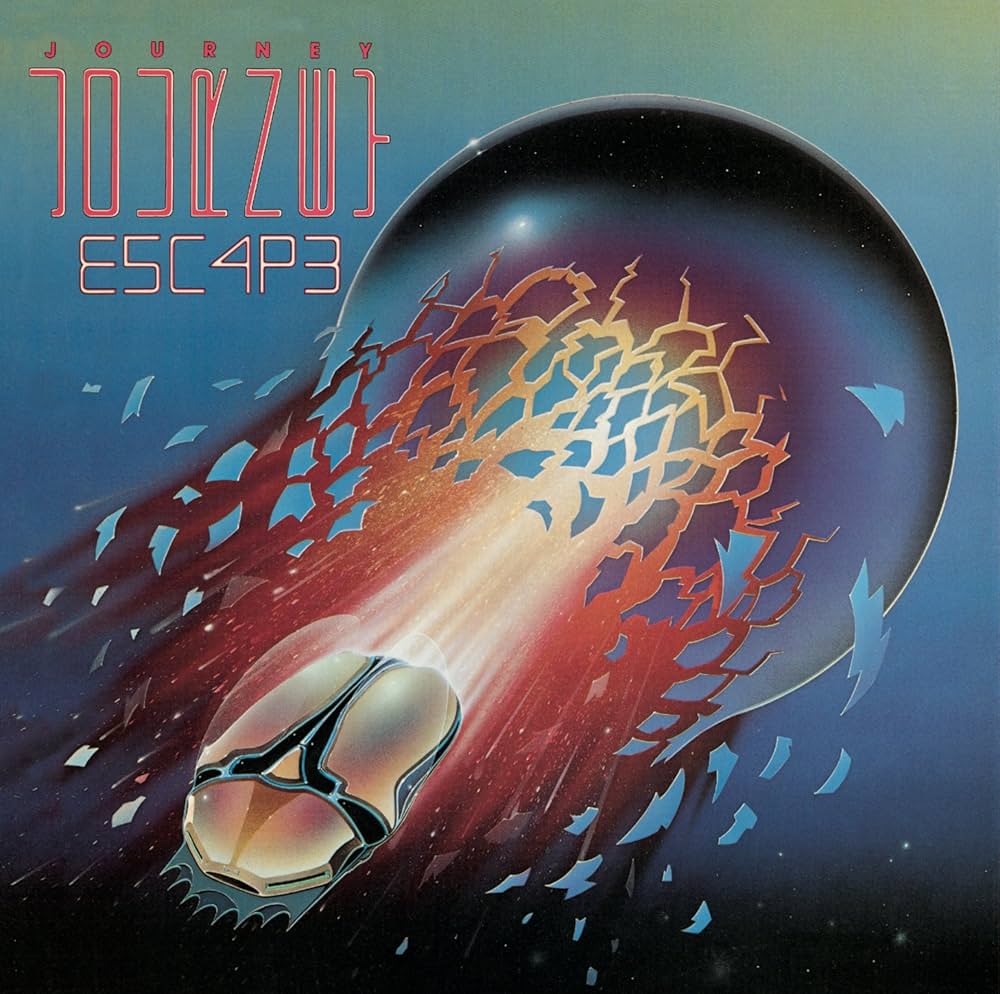
Let’s be real for a second: if you had to pick one single album that perfectly encapsulates the moment arena rock shook off its 70s blues-rock hangover and planted its flag square in the middle of the 1980s, it’s Escape. Journey’s seventh studio album, dropped in the sweltering summer of 1981, wasn’t just a commercial smash—it was a cultural re-calibration. It’s the record that took a band of former San Francisco prog-rockers, gave them a glossy sheen, and turned them into the house band for every stadium, coliseum, and municipal auditorium from coast to coast. This wasn’t a sellout; this was a breakthrough. Escape didn’t just ride the wave of arena rock—it basically built the wave, grabbed a surfboard, and rode it straight to diamond-certified immortality.

The secret to Escape’s world-conquering power starts with the lineup, plain and simple. This was the first full album with keyboardist Jonathan Cain fully integrated into the songwriting engine, and his arrival cannot be overstated. Before Cain, Journey had a more progressive, meandering sound—great musicianship, sure, but lacking that killer hook that could stop a radio dial in its tracks. Cain, alongside guitar virtuoso Neal Schon and the golden-throated Steve Perry, formed a triumvirate that just clicked. They started writing songs that were lean, mean, and built for maximum emotional impact. Cain’s keyboard riffs became the melodic anchor, Schon’s guitar work shifted from noodly solos to these wide, shimmering power-chord landscapes, and Perry? Man, Perry just did what he did best—singing his lungs out with that raspy, soulful tenor that could make a breakup feel like a Shakespearean tragedy and a triumph feel like winning the lottery. The production, helmed by the legendary Kevin Elson and Mike Stone, was pristine, layering every synth pad and backing vocal until it sounded like a cathedral of rock sound. It was expensive, it was ambitious, and it worked like a charm.

Now, let’s talk about the hits, because you literally cannot escape them—pun absolutely intended. The opening salvo of Don’t Stop Believin’ is arguably the most iconic album opener in rock history, and I’ll fight anyone who disagrees. That plinking piano intro, the creeping bass line, the way it builds and builds until Perry finally explodes with that “streetlight people” chorus—it’s pure adrenaline in musical form. It peaked at number nine on the Billboard Hot 100, but that statistic is laughable considering it’s become a karaoke national anthem for multiple generations. Then you’ve got Open Arms, the ultimate power ballad that sat at number two for six agonizing weeks, kept from the top spot by Olivia Newton-John’s Physical. But honestly? Open Arms is the one that still makes grown adults tear up at weddings and funerals alike. It’s tender without being saccharine, huge without being bombastic. And you can’t forget Who’s Crying Now, the first single, which kicks off with that unforgettable synth hook and rides a funky, almost new-wave groove that proved Journey could adapt without losing their identity. Still They Ride rounds out the hit parade, a more melancholic, bluesy number that showed they had range beyond the stadium anthems.

But here’s the thing that makes Escape a true landmark: the deep cuts are just as vital as the singles. This isn’t a two-hit wonder padded with filler. The title track, Escape, is a turbo-charged rocker that might actually be the most inspiring song on the whole record, a call to break free from whatever’s holding you down. Stone in Love became a massive FM radio staple in its own right, a nostalgic trip back to teenage summers that feels both specific and universal. Keep on Runnin’ and Lay It Down bring the raw energy, with Schon’s guitar biting harder than anywhere else on the album, while Mother, Father closes out the A-side with a dramatic, almost cinematic sweep that hints at the band’s prog-rock past. Every single track clocks in under five minutes, every chorus is built for a crowd of twenty thousand people to shout back, and every guitar solo feels like it was recorded in an echo chamber the size of a football field. It’s a record that was deliberately, meticulously designed for live performance, and it shows in every note.

So how did Escape usher in the 80s arena rock era? Let’s break it down. Before this album, the arena rock landscape was dominated by the bombastic blues of Led Zeppelin, the theatrical metal of Van Halen, and the working-class heartland rock of Bruce Springsteen. Those were all massive acts, sure, but they were holdovers from the 70s. Journey, with Escape, offered something different: a sound that was cleaner, brighter, and more synth-forward, yet still packed enough guitar muscle to satisfy the headbangers. They basically invented the template that bands like Bon Jovi, Def Leppard, and REO Speedwagon would ride to glory for the rest of the decade. The massive, layered backing vocals, the anthemic “whoa-oh” choruses, the gleaming keyboard patches that sounded like they were beamed in from a sci-fi future—all of that became the default setting for 80s rock. Escape proved that you didn’t need gritty distortion or bluesy swagger to fill a stadium; you just needed a killer hook, a relatable lyric about love or dreams, and a chorus that could be heard over the roar of twenty thousand screaming fans. It was rock music that was aspirational, not confrontational—music for the masses, not the misfits. And the industry took notice. Suddenly, every major label was hunting for their own Steve Perry, their own Jonathan Cain, their own glossy production team to replicate that Escape magic.

Looking back over forty years later, Escape hasn’t aged a day. It still sounds massive, still sounds fresh, and still sounds like the definitive blueprint for 80s arena rock. It’s the album that made Journey a household name, that turned Don’t Stop Believin’ into an eternal anthem, and that showed the world how to marry melody with muscle in a way that filled seats and sold records. Sure, you can argue that Infinity or Departure had more adventurous moments, but neither of those albums had the cultural reach, the radio dominance, or the sheer, unadulterated swagger of Escape. This was the moment when Journey stopped being a band and started being an institution. Escape didn’t just capture the sound of 1981—it predicted the sound of the next decade. It’s a time capsule, a greatest-hits collection in its own right, and a masterclass in how to build a rock album that’s built to last. Put it on, turn it up, and try not to sing along. I dare you.

Song of the Day: Any Way You Want It (by Journey)


Okay, so you’ve probably heard Any Way You Want It by Journey at a sports game, a movie, or blasting from someone’s car with the windows down. And yeah, it’s a classic rock anthem, but let me tell you why you need to actually listen to it like it’s your new favorite song. First off, that opening riff? Pure adrenaline. It kicks in with this chugging, joyful energy that doesn’t let up. Steve Perry’s vocals are famously sky-high and smooth, but the real secret weapon here is how the whole band locks into this unstoppable groove. It’s not complicated—it’s just fun. If you’re in a bad mood, hit play. I guarantee you’ll be tapping your steering wheel by the ten-second mark.

Now, let’s talk about the guitar solo, because that’s where Neal Schon earns his legend status. It starts at 1:34, right after the second chorus when the song pulls back just for a breath. And then—bam. Schon doesn’t waste time with flashy nonsense. He comes in with this biting, melodic line that feels like a conversation. It’s not about showing off speed (though he’s got plenty); it’s about attitude. The solo builds with these perfect bends and a little wah pedal flavor, then climbs higher and higher until it just explodes into a fiery run that hands the energy right back to Perry for the final chorus. From 1:34 to about 2:00, it’s pure rock and roll perfection.

What I love most is how the solo doesn’t overpower the song—it serves it. So many guitar heroes try to steal the spotlight, but Schon is playing like he’s part of a team. You can hear him weaving in and out of the rhythm section, almost dancing with the bass and drums. And that tone? Crisp, a little overdriven, but never muddy. It’s the sound of someone who knows exactly when to let a note ring out and when to smash into the next one. If you’ve ever thought Journey was just a “ballads band,” this solo will change your mind fast.

Bottom line: Any Way You Want It is a shot of pure joy, and the guitar solo from 1:34 to 1:45 is the heart of the whole thing. Put on headphones, crank the volume, and just focus on how Schon makes his guitar sing, shout, and then whisper all in under thirty seconds. Then hit replay, because I promise you’ll miss something the first time. Give it two listens—one for the vocals, one for the solo—and you’ll wonder how you ever slept on this track. It’s not deep, it’s not complicated. It’s just perfect. Any way you want it, that’s the way you’ll need it. Trust me.

Any Way You Want It

Any way you want it
That’s the way you need it
Any way you want it

She loves to laugh
She loves to sing
She does everything
She loves to move
She loves to groove
She loves the lovin’ things

Ooh, all night, all night
Oh, every night
So hold tight, hold tight
Ooh baby, hold tight

Oh, she said
Any way you want it
That’s the way you need it
Any way you want it
She said, any way you want it
That’s the way you need it
Any way you want it

I was alone
I never knew
What good love could do
Ooh, then we touched
Then we sang
About the lovin’ things

Ooh, all night, all night
Oh, every night
So hold tight, hold tight
Ooh baby, hold tight

Oh, she said
Any way you want it
That’s the way you need it
Any way you want it
I said, any way you want it
That’s the way you need it
Any way you want it

[guitar solo]

She said ohh, hold on, hold on, hold on
Oh, she said any way you want it
That’s the way you need it
Any way you want it

Any way you want it
That’s the way you need it
Any way you want it

She said any way you want it
That’s the way you need it
Any way you want it

Any way you want it
That’s the way you need it
Any way you want it

Any way you want it
That’s the way you need it
Any way you want it

Any way you want it
That’s the way you need it
Any way you want it

Any way you want it
That’s the way you need it
Any way you want it

Any way you want it
That’s the way you need it
Any way you want it

Any way you want it
That’s the way you need it
Any way you want it

Any way you want it
That’s the way you need it

Great Guitar Solos Series

Song of the Day: Faithfully (by Journey)


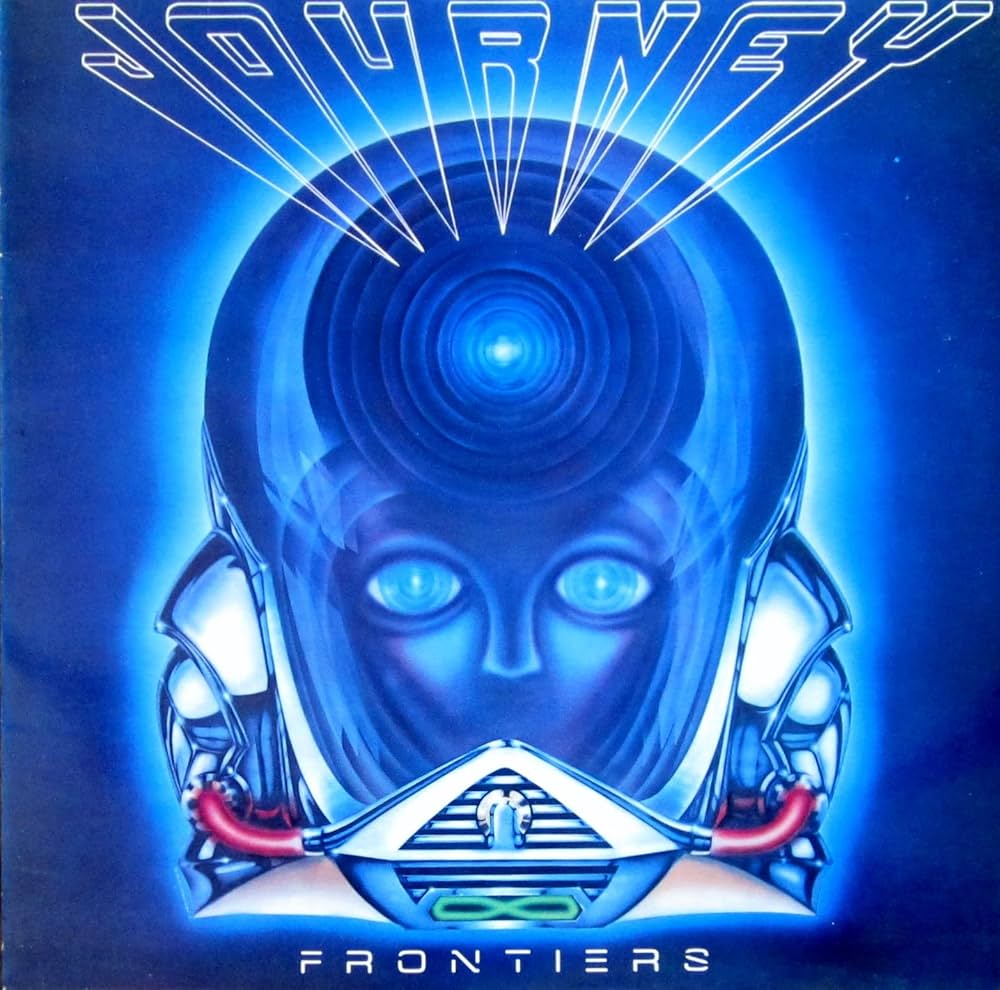
Back in junior high in the early ’80s, Faithfully dropped in 1983 on Journey’s Frontiers album, and those haunting piano chords instantly hooked us during slow skates or late-night mix tapes. Steve Perry’s raw, soaring voice captured the ache of young love stretching across town, turning everyday pangs into something profound. Even by 1988, deep into high school, it had evolved into a staple power ballad at dances and teen parties, standing tall among the era’s anthems.

What elevated it to one of Journey’s all-time greatest was its blend of emotional depth and universal appeal—highways symbolizing distance, hearts straining but vowing “to be there faithfully,” all without the bombast of hair metal excess. It felt authentic, perfect for those fog-shrouded bus rides home, fueling dreams amid neon-lit awkwardness. Rock historians often hail it as the pinnacle of ’80s power ballads, outshining peers with its sincerity and that unforgettable guitar climb.

Hearing it today still transports me to cassette decks and feathered hair, a true time capsule of innocence. Journey mastered crafting songs that promised soul-deep connection against all odds, cementing Faithfully as their crown jewel and the era’s ballad benchmark.

Faithfully

Highway run into the midnight sun
Wheels go ’round and ’round, you’re on my mind
Restless hearts sleep alone tonight
Sendin’ all my love along the wire

They say that the road ain’t no place to start a family
Right down the line it’s been you and me
And lovin’ a music man ain’t always what it’s supposed to be
Oh, girl you stand by me, I’m forever yours, faithfully

Circus life under the big top world
We all need the clowns to make us smile
Through space and time, always another show
Wondering where I am lost without you

And bein’ apart ain’t easy on this love affair
Two strangers learn to fall in love again
I get the joy of rediscovering you
Oh girl, you stand by me, I’m forever yours, faithfully

Faithfully, I’m still yours
I’m forever yours, ever yours
Faithfully

Music Video of the Day: Separate Ways (Worlds Apart) by Journey (1983, directed by Tom Buckholtz)


The song is an anthem but the music video is widely considered to be one of the worst of all time.  What happened to Journey when they gathered on a wharf in New Orleans and shot the video for Separate Ways (Worlds Apart)?  Let’s break it down:

0:00 — The video starts with a shot of the Louisa Street Wharf in New Orleans.  Where’s Journey?

0:03 — There, they are.  But where are their instruments?

0:04 — Yes, Jonathan Cain is playing air keyboards.

0:08 — Journey has their instruments now so they look a lot less ridiculous.  Still, Jonathan Cain will never live down those air keyboards.

0:21 — A woman in a black leather skirt walks down the wharf.  The members of Journey jump out at her.  This will prove to be a reoccurring theme throughout the video.  The woman was played by a local girl named Margaret Olmstead.

0:35 — Again, Journey has lost their instruments and Jonathan Cain is forced to play air keyboards.

0:41 — If Steve Perry looks more annoyed than usual here, it is probably because he wasn’t happy while shooting this video.  This was the first Journey video to have a “storyline,” as opposed to just being edited footage of the band performing.  Perry was opposed to the idea.  According to Cain, Perry said, “We’re performers, we’re entertainers, but we’re not actors.”

0:51 — Who has stolen Journey’s instruments?

0:54 — At this point, Jonathan Cain’s air keyboards are truly out of control.  Is he playing an imaginary synthesizer or is he pretending to be a tiger stalking his prey?  Your guess is as good as mine.

0:58 — Not only has Journey lost their instruments but Steve Perry has lost his sleeves.

1:13 — Eagle-eyed viewers will notice that Journey is performing in front of a mattress warehouse.  This detail will pay off at the end of the video.

1:27 — At least Jonathan finally found his keyboards.

1:32 — The salesman who sold me my very first used car looked just like Ross Valory.

1:47 — The video was shot on a very cold morning.  In between takes, Perry would rush into his camper to try to get warm.

1:57 — The shoot was also tense because of the presence of Perry’s then-girlfriend, Sherri Swafford.  Swafford took an intense dislike to Margaret Olmstead and demanded that she be removed from the video.

2:22 — I worked in a warehouse one summer and I can tell you that one thing you never want to do is walk backwards through a maze of palettes.

2:29 — Do you think Steve Smith likes foosball?

2:34 — The members of Journey jumping back and forth and singing while Margaret ignores them is my favorite part of the video.

3:04 — What did they do to Steve’s drums?

3:37 — As if the video hadn’t already flown off the rails, here’s a few minutes of gratuitous slow motion.

4:15 — Say what you will about the video, no one could belt it out like Steve Perry.

4:18 — It was all a dream!  That explains so much.

In 1999, MTV named this video as the 13 worst video of all time.

Enjoy!

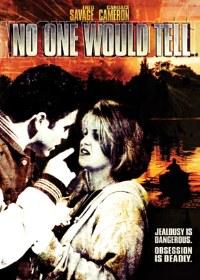
Back to School Part II #33: No One Would Tell (dir by Noel Nosseck)


no_one_would_tell

Do you remember when Chris Brown performed The Man In The Mirror at the 2010 BET Awards?  It was during a tribute to Michael Jackson and Brown broke down crying while singing the song.  Afterwards, he accepted an award and he said, “I let you all down before, but I won’t do it again.  I promise you.”

This, of course, was about a year after Brown had pled guilty to physically abusing Rihanna.  I remember being on twitter during Brown’s performance and seeing literally thousands of tweets from people talking about how brave Chris Brown was and how amazing his performance had been.  Chris Brown was looking at the man in the mirror and asking him to change his ways.  Chris Brown was promising not to let anyone else down by nearly killing any future girlfriends.  A lot of people on twitter claimed this was amazing.  I thought it was disgusting and I tweeted out my opinion.  I really didn’t give a fuck if Chris Brown was asking the man in the mirror to change his ways.  The man in the mirror was (and is) an abusive asshole.  The man in the mirror beats women.  The man in the mirror is not capable of changing his ways.  “FUCK THE MAN IN THE MIRROR!” I tweeted.

And, oh my God, the reaction my little twitter rant inspired.  What was especially disturbing was that the majority of people who tweeted me in Brown’s defense were other women.  Yes, they all agreed, Chris Brown had beat Rihanna but he admitted what he had done, he was asking the man in the mirror to change his ways, and hey, Rihanna probably deserved it.

My favorite excuse — and this was used by quite a few of Brown’s defenders — was this: “Only God can judge Chris Brown.”  Well, you know what?  I asked God and he says Chris Brown’s an abusive asshole.

I’m tempted to say that it amazes me that Chris Brown still has fans but actually, it doesn’t.  Sadly, when it comes to a celebrity, people are willing to make excuses for almost anything.  If you ask most people, they’ll say that they’re against domestic abuse and they think abusers should suffer the worst punishment imaginable.  But when the abuser is someone who they know (or, in the case of a celebrity like Chris Brown, someone who they feel they know), the excuses start.  The equivocations are heard.  The blame is assigned to everyone but the abuser.  We start hearing bullshit about how people make mistakes and only God can judge.

In short, people are willing to talk but when it matters, they rarely act.

That’s also the theme of a powerful and sad movie called No One Would Tell.  No One Would Tell was originally made for television in 1996 and it still shows up fairly regularly on Lifetime.  Though the names and certain details have been changed, it’s based on a true story.  In fact, the film feels like it’s based on several true stories.  The plot of No One Would Tell is one that has occurred and continues to occur on far too regular of a basis.

Stacy Collins (played by Candace Cameron, before she added the Bure to her name) is a 16 year-old high school student.  She’s quiet, shy, and insecure.  When she first starts to date a popular jock named Bobby Tennison (Fred Savage), it seems like a dream come true.  But soon, Bobby starts to show another side.  He’s controlling and possessive.  He grabs her wrist hard enough to leave bruises.  He shoves her into a wall when they have an argument.  When she wears a skirt that he thinks is too short, he grabs her in the school hallway and demands that she change immediately.  When she isn’t home to answer his calls, he assumes that she most be cheating on him.  And, when she finally breaks up with him, he kills her.

What’s infuriating is that, throughout the film, Bobby’s abuse is witnessed by all of his and Stacy’s friends.  Everyone sees him push her.  Everyone sees the bruises.  Everyone knows that Bobby is unstable and that Stacy is afraid of him.  And yet, nobody says a word.  Nobody does a thing.  Instead, they just make excuses for Bobby’s behavior.  Some of them even blame Stacy.  No one is willing to get involved and it eventually costs Stacy her life.

For a TV movie from the mid-90s, No One Would Tell holds up surprisingly well.  Admittedly, Fred Savage overacts in the role of Bobby (and maybe it would have been better if the role had been played by Eric Balfour, who appears as Bobby’s best friend) but Candace Cameron does a perfect job as the tragic Stacy, capturing both her insecurity and her vulnerability.  Some of the film’s best moments are the ones shares by Cameron and Michelle Phillips.  In those scenes, we see how Stacy learned how to make excuses for Bobby’s behavior from watching the way that her mother made excuses for the men who similarly abused her.  No One Would Tell is a powerful film, one that offers an unflinching look at abuse and one that dares to demand that its audience take a stand.

No One Would Tell is a film that should be watched by anyone who thinks that the man in the mirror can change his ways.