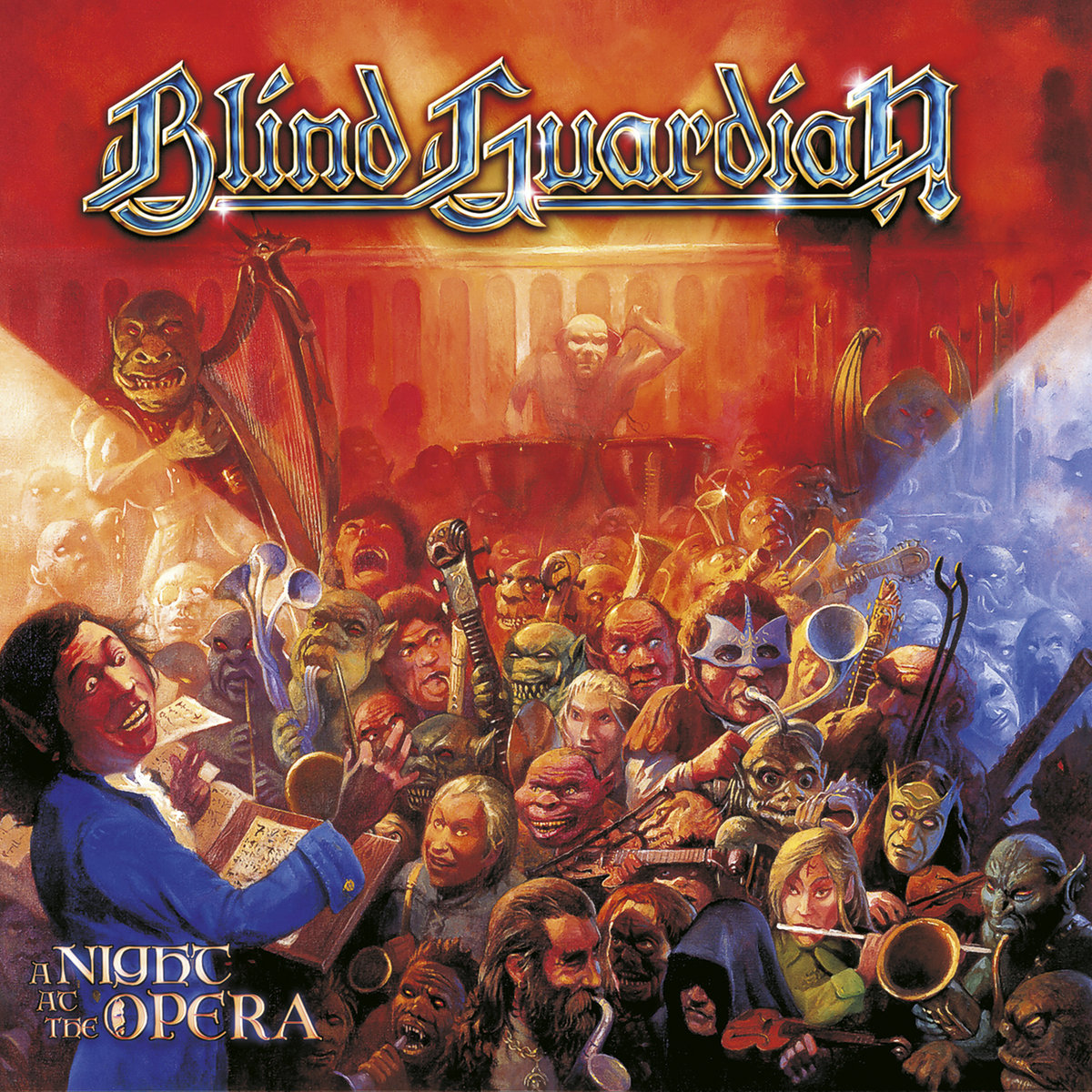
Retro Music Review: A Night at the Opera (by Blind Guardian)


Before getting into it, a little context: this album was my first introduction to Blind Guardian, courtesy of TSL writer necromoonyeti — the same person responsible for putting Boris on my radar. So if this review reads like someone who came in completely cold and got their face melted off, that’s because that’s exactly what happened.

Let’s get one thing straight right away: A Night at the Opera is not a casual listen. It’s not something you throw on while you’re folding laundry or zoning out on the commute home. This is the kind of album that demands you sit down, maybe pour yourself something nice, and just let it completely steamroll you for about an hour. And honestly? That’s exactly the kind of album Blind Guardian needed to make at that point in their career.

Released in 2002, A Night at the Opera is the German power metal legends’ seventh studio album, and it arrived after the already-enormous Somewhere Far Beyond and Imaginations from the Other Side had already cemented the band as giants of the genre. So naturally, Hansi Kürsch and company decided to throw the rulebook entirely out the window. The result is one of the most ambitious, over-the-top, maximalist records in the history of metal — and it rules, even when it’s utterly overwhelming.

The album opens with Precious Jerusalem, and within about thirty seconds you understand exactly what kind of ride you’ve signed up for. The layered vocals, the orchestral bombast, the sheer density of the production — it all comes crashing in like a wall of sound that somehow never feels muddy. Hansi’s voice is front and center, soaring over a choir that sounds like it’s made up of about four hundred people, and it sets the tone perfectly. This isn’t metal with some orchestral elements sprinkled on top. This is something else entirely — something almost operatic in the truest sense of the word.

From there, Battlefield kicks in with a bit more aggression and momentum, which is a welcome shift. André Olbrich and Marcus Siepen’s guitar work throughout the record is phenomenal, but Battlefield is one of the spots where the riffs really get a chance to breathe and cut through the orchestral layering. It’s not quite the straightforward power metal banger you might want it to be, but it’s driving and epic in all the right ways.

Then there’s Under the Ice, which slows things down into something that almost feels mournful. It’s one of the quieter moments on the record, but it’s deceptively powerful. Hansi’s vocal performance here is genuinely moving, and the restraint the band shows — relative to literally everything else on this album — makes it stand out in a really effective way.

If there’s a centerpiece that most people point to when discussing A Night at the Opera, it’s almost certainly And Then There Was Silence. Clocking in at nearly fifteen minutes, it is an absolute monster of a track — a prog-metal epic that tells the story of the fall of Troy through the eyes of Cassandra. Yes, really. And somehow it doesn’t feel self-indulgent. Well, okay, it does feel self-indulgent, but in the best possible way. The track builds and shifts and spirals through so many phases that by the time it reaches its climactic final stretch, you’ve completely forgotten where it started. It’s one of the most impressive things Blind Guardian have ever put to tape, and that’s saying something.

The Maiden and the Minstrel Knight is probably the most accessible thing on the record — a more traditional Blind Guardian ballad that sits comfortably alongside tracks from their earlier work. It’s a bit of a breather in the middle of all the chaos, and it’s genuinely gorgeous. The vocal harmonies are lush and warm, and it’s one of those songs that reminds you how good Hansi Kürsch is at pure melody when he wants to be.

Sadly Sings Destiny and Wait for an Answer keep the epic atmosphere rolling in the back half of the album, though they can start to feel a little dense if you’re not fully locked in. That’s perhaps the one honest criticism of A Night at the Opera— it’s a lot. The production, helmed by Charlie Bauerfeind and the band themselves, is incredibly thick. There are reportedly hundreds of vocal overdubs on some tracks, and while that creates an incredible sound, it can also make the album feel like it’s working very hard to impress you, all the time, without pause. By the time you hit the later tracks, the sheer weight of everything can start to feel a little exhausting if you’re not in the right headspace.

But then The Soulforged comes along and reminds you why you’re here. Inspired by the Dragonlance fantasy series — classic Blind Guardian territory — it’s one of the most energetic tracks on the album, and the chorus is an absolute earworm. It’s big, it’s bright, and it shows that even buried under all the orchestral grandeur, the band still knows how to write a hook that sticks with you for days.

Closing things out, Age of False Innocence and Punishment Divine bring the album home in suitably dramatic fashion. By this point, you’ve been through the full experience, and the record ends feeling genuinely complete — like a proper album with a beginning, middle, and end, rather than just a collection of songs.

So where does A Night at the Opera land in the Blind Guardian catalog? Honestly, it’s one of those records that rewards the people willing to meet it on its own terms. If you go in expecting Somewhere Far Beyond or Imaginations from the Other Side, you might come out a little shell-shocked. But if you give it the time and attention it demands, you’ll find one of the most unique and daring records in power metal history — a band swinging for the absolute fences and largely connecting. It’s not always easy listening, but it’s always worth it.
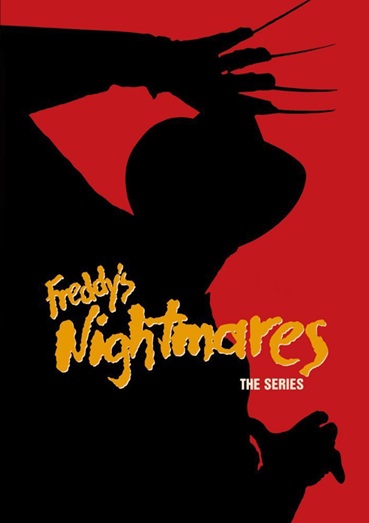
Late Night Retro Television Review: Freddy’s Nightmares 2.18 “Funhouse”


Welcome to Late Night Retro Television Reviews, a feature where we review some of our favorite and least favorite shows of the past! On Fridays, I will be reviewing Freddy’s Nightmares, a horror anthology show which ran in syndication from 1988 to 1990. The entire series can be found on Tubi!

This week, a mansion is full of …. well, one surprise.

Episode 2.18 “Funhouse”

(Dir by Gilbert Adler, originally aired on February 11th, 1990)

Turk (Todd Allen), the moving man, is busy this week.

In our first story, Turk helps a young married couple, Emma (Robin Greer) and Robert Palmer (Clayton Landey), move into an old mansion.  Turk talks about how the previous owners came to a bad end.  Emma finds herself having dreams in which both Turk and her former lover, Colin (Joseph Brutsman), come aftter her.  She comes to realize that the house is not haunted by a ghost but instead by a man looking for revenge.  As is often the case with these type of stories, it all ends with a booby trap involving a bed of nails.  Yikes!

In our second story, Turk helps another couple move into the house, Evelyn (Valerie Wildman) and her much older husband, Victor Hall (Robert Dowdell).  This time, it’s Turk who ends up getting seduced by both Evelyn and the maid, Jillian (Laura Austin).  However, it all turns out to be an elaborate game tht Evelyn, Victor, and Jillian enjoy playing.  The bed of spikes booby trap makes yet another appearance and it’s so cool that it doesn’t even matter that Freddy’s Nightmares basically just repeated the twist from the first story in the second story.

This episode was fun.  There really wasn’t anything supernatural going on but the cast of both stories seemed to enjoy playing up the noirsh aspects of their characters and Todd Allen was amusing as the cocky but stupid Turk.  The bed of nails was an enjoyable macabre little twist.

Even at its best, Freddy’s Nightmares tended to be incredibly uneven but this was actually an enjoyable little episode.


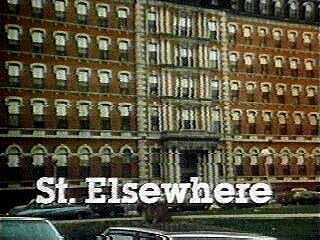
Retro Television Review: St. Elsewhere 4.1 “Remembrance Of Things Past”


Welcome to Retro Television Reviews, a feature where we review some of our favorite and least favorite shows of the past! On Fridays, I will be reviewing St. Elsewhere, a medical show which ran on NBC from 1982 to 1988.  The show can be found on Daily Motion.

This week, we begin season 4 of St. Elsewhere!

Episode 4.1 “Remembrance of Things Past”

(Dir by Bruce Paltrow, originally aired on September 18th, 1985)

This week, we start a new season of St. Elsewhere!

Dr. Cavenero is no longer listed in the opening credits.  She’s not even mentioned in this episode, leaving her absence as a mystery.  The last time we saw her during the third season, she was suffering from a cold so maybe she died.  From what I’ve read, the real reason that she’s gone is because Cynthia Sikes, the actress who played her, objected to a season three storyline that would have featured her coming out as a lesbian.

From the start of this epiosde, St. Eligius seems like a happier place.  A lot of that is because Dr. Westphall is gone.  (That said, he’s still listed in the opening credits so we know, from the start, that will return.)  Doctors Craig and Aushlander are a bit overworked having to cover Westphall’s duties but still, the residents seem to be a bit more hopeful than usual in this episode.  Westphall’s perpetual glumness is no longer there to drag everyone down.

Morrison and Chandler have a conflict over a Vietnamese patient.  Morrison wants to give the patient the best care possible.  Chandler is upset because his older brother died in Vietnam and he feels like the patient doesn’t appreciate the sacrifice that Americans made during the Vietnam War.  Morrison, of course, was an anti-war teenager.  (There’s a reason why Helen Hunt calls him “boomer.”)

The whole Morrison/Chandler storyline felt a bit too heavy-handed to be effective.  While I can believe that Chandler would have his own strongly-held opinions about the war, I have a hard time believing he would be as unprofessional as he was in this episode.  Still, all of this does lead to a great scene where Morrison goes to Craig for the type of advice that he would usually get from Westphall and Craig responds by telling Morrison to get over it and concentrate on his job.

Seriously, I’ve been waiting for three seasons for someone to tell Morrison that.

Alfre Woodward joins the cast as Dr. Roxanne Turner, an OB-GYN.  In this episode, she counsels an infertile couple.  Dr. Turner wasn’t in much of the episode (and Alfre Woodard is not included in the opening credits) but I get the feeling that both she and the couple she was counseling are going to be around for a while.

The episode’s main storyline featured an amnesiac known as Joe Doe No. 6 (Oliver Clark).  After John Doe escapes from the psychiatric ward and steals a suit, he’s mistaken for Dr. Jonas Wisner, who has beent sent to St. Eligius to evaluate its teaching program.  John Doe No. 6 has a great time pretending to be Dr. Wisner and the doctors enjoy spending time with him.  Unfortunately, the real Dr. Wisner (Joseph Ruskin) shows up and the fun ends.

Oh, how I loved watching John Doe No. 6 interact with the staff.  Not only did it allow me to see the show’s characters through someone else’s eyes but it was also just an enjoyable storyline.  It was a reminder that the hospital can be an entertaining place when Westpall isn’t wandering around the hallways.

However, towards the end of this episode, Westphall showed up at the hospital.  Craig and Auschlander were happy to see him.  Westphall asked if he could have his old job back.  Of course, he can!  Really?  Didn’t Westphall walk off the job?  But apparently, he can just wander back into the hospital while wearing his hobo cap and all is forgiven.

The episode ends with Chandler taking an impromptu trip to Washington D.C. and visiting the Vietnam War Memorial.  As I watched this, it occuured to me that the memorial was still fairly new when this episoe aired.  Once I realized that, I understood why the show included the Morrison/Chandler storyline.  It pays to know history.

Season 4 is off to a good start!  I just hope Dr. Westphall doesn’t drag everyone back down.


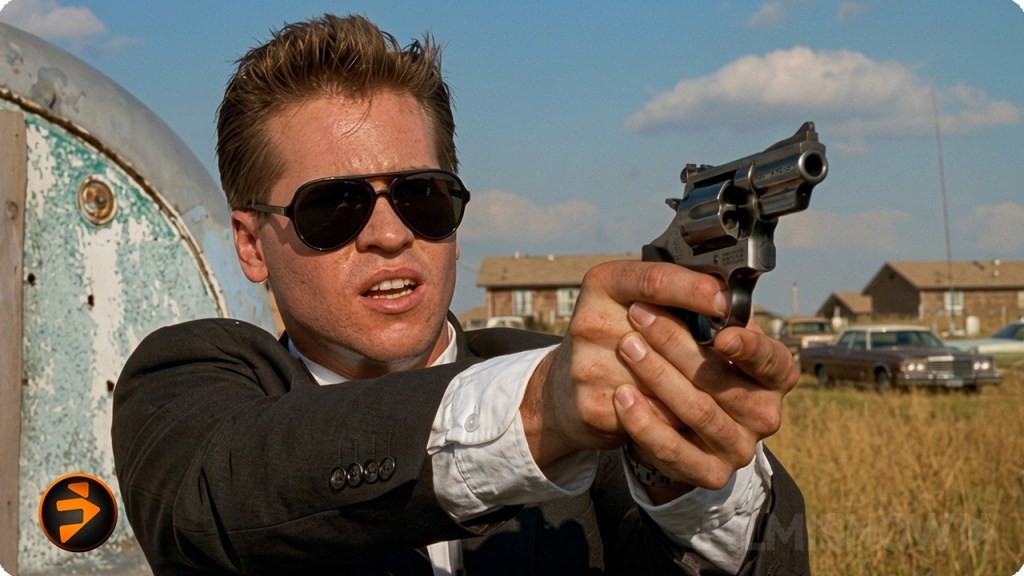
Brad reviews THUNDERHEART (1992), starring Val Kilmer!


THUNDERHEART came out back in 1992, when I was a mere 18-year-old and trying to go to the movies any time I possibly could. I already liked Val Kilmer based on his performances in such diverse films as TOP SECRET (1984), REAL GENIUS (1985), TOP GUN (1986), and WILLOW (1988). I also liked the director Michael Apted, who had directed the underrated Gene Hackman courtroom drama CLASS ACTION the year before. I figured THUNDERHEART would have to at least be pretty good…

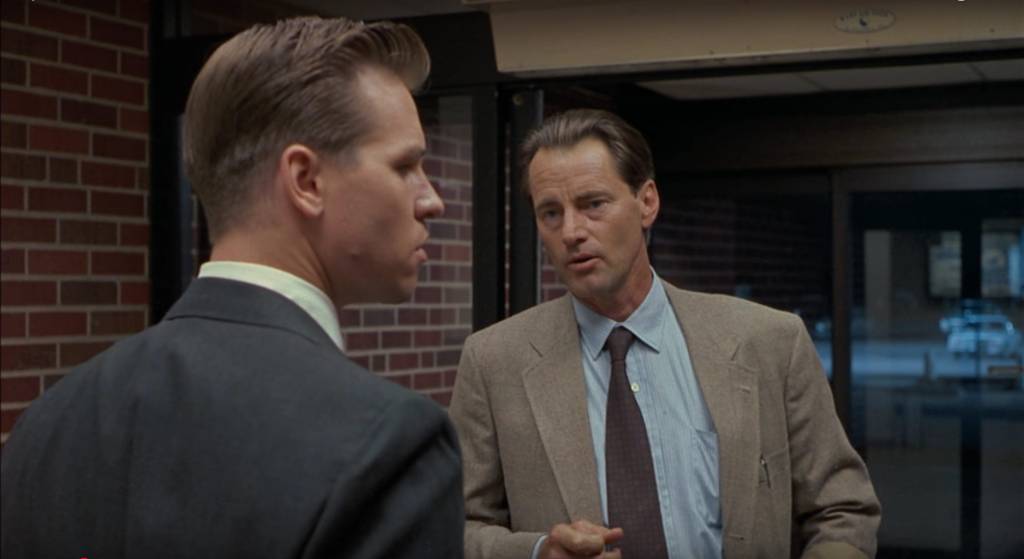
Val Kilmer stars as the young FBI agent Ray Levoi, who’s sent to a Sioux reservation in South Dakota to assist veteran agent Frank “Cooch” Coutelle (Sam Shepard) in a murder investigation. You see, Levoi is “part” Indian, so the thought is that his family heritage will at least give him some credibility when dealing with the Indians on the res. At first overly confident and cocky, he begins to change as the investigation uncovers a history of corruption, violence and broken political promises that have had a tragic impact on the people of the reservation. By the film’s thrilling conclusion, Levoi has been forced to question his own identity and decide who his loyalties truly belong to!  

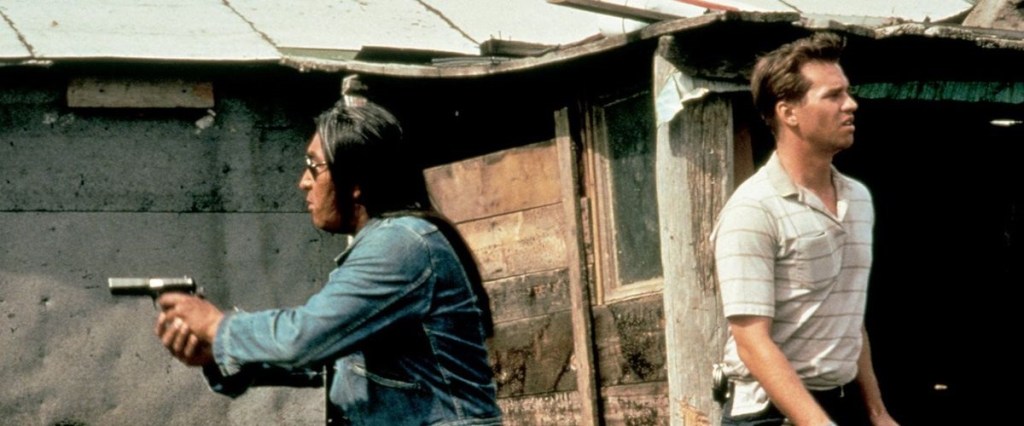
I’m a big fan of THUNDERHEART. I really enjoy the arc that Kilmer’s character undergoes in the film. At first, he’s extremely cynical and doesn’t want to have anything to do with being the special “Washington redskin” in the FBI’s murder investigation. When he gets stuck with the job, though, he just wants to get it over with as soon as possible. But as the story moves along and he meets various characters like Walter Crow Horse (Graham Greene), Maggie Eagle Bear (Sheila Tousey) and Grandpa (Ted Think Elk), he begins to see the truth behind their situation. By the end, he’s willing to give up everything to solve the crime and bring those responsible to justice. Kilmer allows this 180-degree turnaround to happen naturally, and I personally believe that this is one of the more underrated performances of his career.

The primary supporting cast deserves a lot of credit as well. Graham Greene brings wisdom and an engaging sense of humor to his character of Walter Crow Horse, the tribal police officer who starts out as a pain in the butt to Levoi prior to becoming a trusted ally. And I’ve always loved Sam Shepard, who plays the grizzled veteran agent Frank Coutelle. He’s completely believable as a man who’s seen it all, maybe a little too much, over the course of his career. The dusty South Dakota landscapes become a character all its own and provide the perfect backdrop to the story. This is a movie that feels authentic instead of like some staged Hollywood production.

I also like that this movie isn’t afraid to take its time with the story, a story that’s based on real events and that feels very relevant to this day. Stop me if you’ve heard any of these themes lately: governmental distrust, cultural identity, justice… THUNDERHEART’s entire storyline is wrapped up in these ideas. If anything, the film seems even more meaningful today than it did in 1992. There are times that Apted may operate with a bit of a heavy hand, but this movie isn’t interested in serving up cardboard villains or easy answers. Rather, we’re treated to an engaging mystery-thriller that never overshadows its characters and eventually rewards us for our patience.

At the end of the day, THUNDERHEART is a film that I highly recommend. It’s not going to blow you away with its action, although there are several exciting sequences. But I do encourage you to give this film your attention and settle in with the plot and the characters. Inside this crime thriller, there’s a strong human story about a man who comes to terms with his identity while gathering the courage to fight for the truth, no matter where that may lead. Although there were a lot of good options, when I read that Val Kilmer had passed away, THUNDERHEART is the film I watched to come to terms with the moment.  

Live Tweet Alert: Join #FridayNightFlix for Toxic Shark!


As some of our regular readers undoubtedly know, I am involved in a few weekly watch parties.  On Twitter, I host #FridayNightFlix every Friday and I co-host #ScarySocial on Saturday.  On Mastodon, I am one of the five hosts of #MondayActionMovie!  Every week, we get together.  We watch a movie.  We tweet our way through it.

Tonight, at 10 pm et, I will be hosting #FridayNightFlix!  The movie?  Toxic Shark!

If you want to join us this Friday, just hop onto twitter, find Toxic Shark on Prime, start the movie at 10 pm et, and use the #FridayNightFlix hashtag!  I’ll be there happily tweeting.  It’s a friendly group and welcoming of newcomers so don’t be shy.

See you there!


Scenes That I Love: Freddie and Dodd’s Final Meeting From Paul Thomas Anderson’s The Master


Today’s scene that I love comes from 2012’s The Master, written and directed by Paul Thomas Anderson (who is celebrating his birthday today).

Philip Seymour Hoffman and Joaquin Phoenix were never better than they were in Anderson’s enigmatic story of two very different men who become unlikely friends.  Phoenix plays Freddie Quill, a World War II veteran who has never figured out how to adjust to life during peacetime.  Hoffman plays Lancaster Dodd, a writer who claims to have all the answers but who is actually a charlatan.  In this scene, Freddie and Dodd meet for one last time and, though they are both characters about who most viewers will have mixed feelings, there’s something undeniably poignant about their final moments together.  Both of them realize that the time they had is over.  And indeed, watching this scene today is all the more difficult because it reminds us of what a talent we lost when we lost Philip Seymour Hoffman.

From Paul Thomas Anderson’s The Master:

4 Shots From 4 Films: Special Paul Thomas Anderson Edition


4 Shots From 4 Films is just what it says it is, 4 shots from 4 of our favorite films. As opposed to the reviews and recaps that we usually post, 4 Shots From 4 Films lets the visuals do the talking.

Today is the birthday of one of our greatest filmmakers, Paul Thomas Anderson!  This edition of 4 Shots From 4 Films is dedicated to him and his brilliant career!

4 Shots From 4 Paul Thomas Anderson Films

Boogie Nights (1997, dir by Paul Thomas Anderson, DP: Robert Elswit)

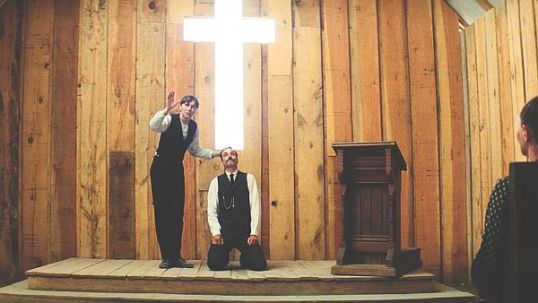
The Will Be Blood (2007, dir by Paul Thomas Anderson, DP: Robert Elswit)

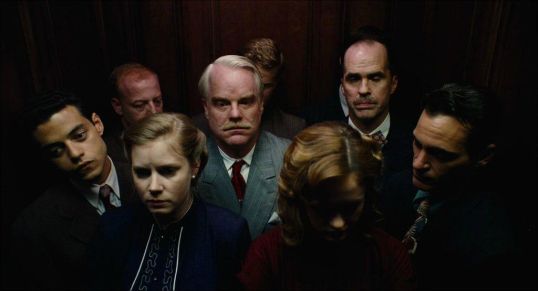
The Master (2012, dir by Paul Thomas Anderson, DP: Mihai Mălaimare Jr.)

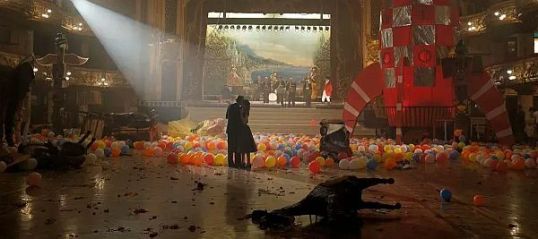
Phantom Thread (2017, dir by Paul Thomas Anderson)