Retro Music Review: Escape (by Journey)


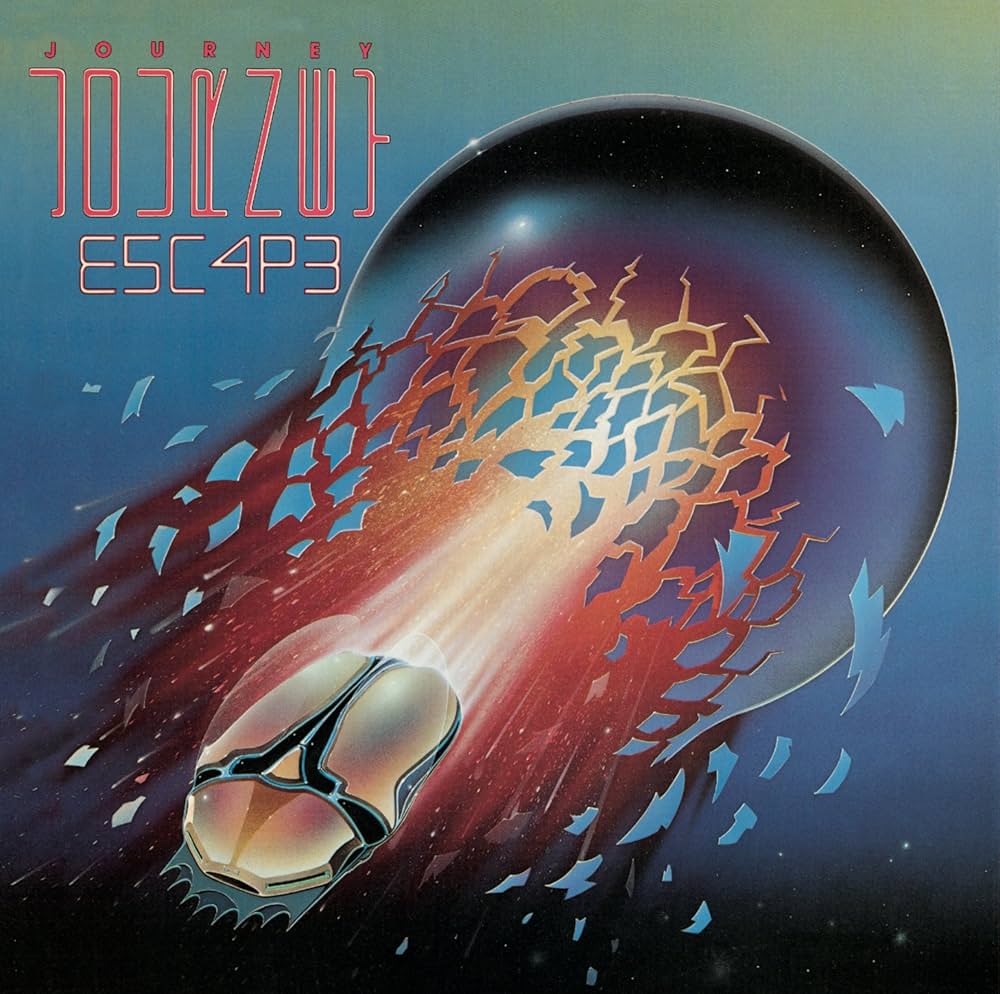
Let’s be real for a second: if you had to pick one single album that perfectly encapsulates the moment arena rock shook off its 70s blues-rock hangover and planted its flag square in the middle of the 1980s, it’s Escape. Journey’s seventh studio album, dropped in the sweltering summer of 1981, wasn’t just a commercial smash—it was a cultural re-calibration. It’s the record that took a band of former San Francisco prog-rockers, gave them a glossy sheen, and turned them into the house band for every stadium, coliseum, and municipal auditorium from coast to coast. This wasn’t a sellout; this was a breakthrough. Escape didn’t just ride the wave of arena rock—it basically built the wave, grabbed a surfboard, and rode it straight to diamond-certified immortality.

The secret to Escape’s world-conquering power starts with the lineup, plain and simple. This was the first full album with keyboardist Jonathan Cain fully integrated into the songwriting engine, and his arrival cannot be overstated. Before Cain, Journey had a more progressive, meandering sound—great musicianship, sure, but lacking that killer hook that could stop a radio dial in its tracks. Cain, alongside guitar virtuoso Neal Schon and the golden-throated Steve Perry, formed a triumvirate that just clicked. They started writing songs that were lean, mean, and built for maximum emotional impact. Cain’s keyboard riffs became the melodic anchor, Schon’s guitar work shifted from noodly solos to these wide, shimmering power-chord landscapes, and Perry? Man, Perry just did what he did best—singing his lungs out with that raspy, soulful tenor that could make a breakup feel like a Shakespearean tragedy and a triumph feel like winning the lottery. The production, helmed by the legendary Kevin Elson and Mike Stone, was pristine, layering every synth pad and backing vocal until it sounded like a cathedral of rock sound. It was expensive, it was ambitious, and it worked like a charm.

Now, let’s talk about the hits, because you literally cannot escape them—pun absolutely intended. The opening salvo of Don’t Stop Believin’ is arguably the most iconic album opener in rock history, and I’ll fight anyone who disagrees. That plinking piano intro, the creeping bass line, the way it builds and builds until Perry finally explodes with that “streetlight people” chorus—it’s pure adrenaline in musical form. It peaked at number nine on the Billboard Hot 100, but that statistic is laughable considering it’s become a karaoke national anthem for multiple generations. Then you’ve got Open Arms, the ultimate power ballad that sat at number two for six agonizing weeks, kept from the top spot by Olivia Newton-John’s Physical. But honestly? Open Arms is the one that still makes grown adults tear up at weddings and funerals alike. It’s tender without being saccharine, huge without being bombastic. And you can’t forget Who’s Crying Now, the first single, which kicks off with that unforgettable synth hook and rides a funky, almost new-wave groove that proved Journey could adapt without losing their identity. Still They Ride rounds out the hit parade, a more melancholic, bluesy number that showed they had range beyond the stadium anthems.

But here’s the thing that makes Escape a true landmark: the deep cuts are just as vital as the singles. This isn’t a two-hit wonder padded with filler. The title track, Escape, is a turbo-charged rocker that might actually be the most inspiring song on the whole record, a call to break free from whatever’s holding you down. Stone in Love became a massive FM radio staple in its own right, a nostalgic trip back to teenage summers that feels both specific and universal. Keep on Runnin’ and Lay It Down bring the raw energy, with Schon’s guitar biting harder than anywhere else on the album, while Mother, Father closes out the A-side with a dramatic, almost cinematic sweep that hints at the band’s prog-rock past. Every single track clocks in under five minutes, every chorus is built for a crowd of twenty thousand people to shout back, and every guitar solo feels like it was recorded in an echo chamber the size of a football field. It’s a record that was deliberately, meticulously designed for live performance, and it shows in every note.

So how did Escape usher in the 80s arena rock era? Let’s break it down. Before this album, the arena rock landscape was dominated by the bombastic blues of Led Zeppelin, the theatrical metal of Van Halen, and the working-class heartland rock of Bruce Springsteen. Those were all massive acts, sure, but they were holdovers from the 70s. Journey, with Escape, offered something different: a sound that was cleaner, brighter, and more synth-forward, yet still packed enough guitar muscle to satisfy the headbangers. They basically invented the template that bands like Bon Jovi, Def Leppard, and REO Speedwagon would ride to glory for the rest of the decade. The massive, layered backing vocals, the anthemic “whoa-oh” choruses, the gleaming keyboard patches that sounded like they were beamed in from a sci-fi future—all of that became the default setting for 80s rock. Escape proved that you didn’t need gritty distortion or bluesy swagger to fill a stadium; you just needed a killer hook, a relatable lyric about love or dreams, and a chorus that could be heard over the roar of twenty thousand screaming fans. It was rock music that was aspirational, not confrontational—music for the masses, not the misfits. And the industry took notice. Suddenly, every major label was hunting for their own Steve Perry, their own Jonathan Cain, their own glossy production team to replicate that Escape magic.

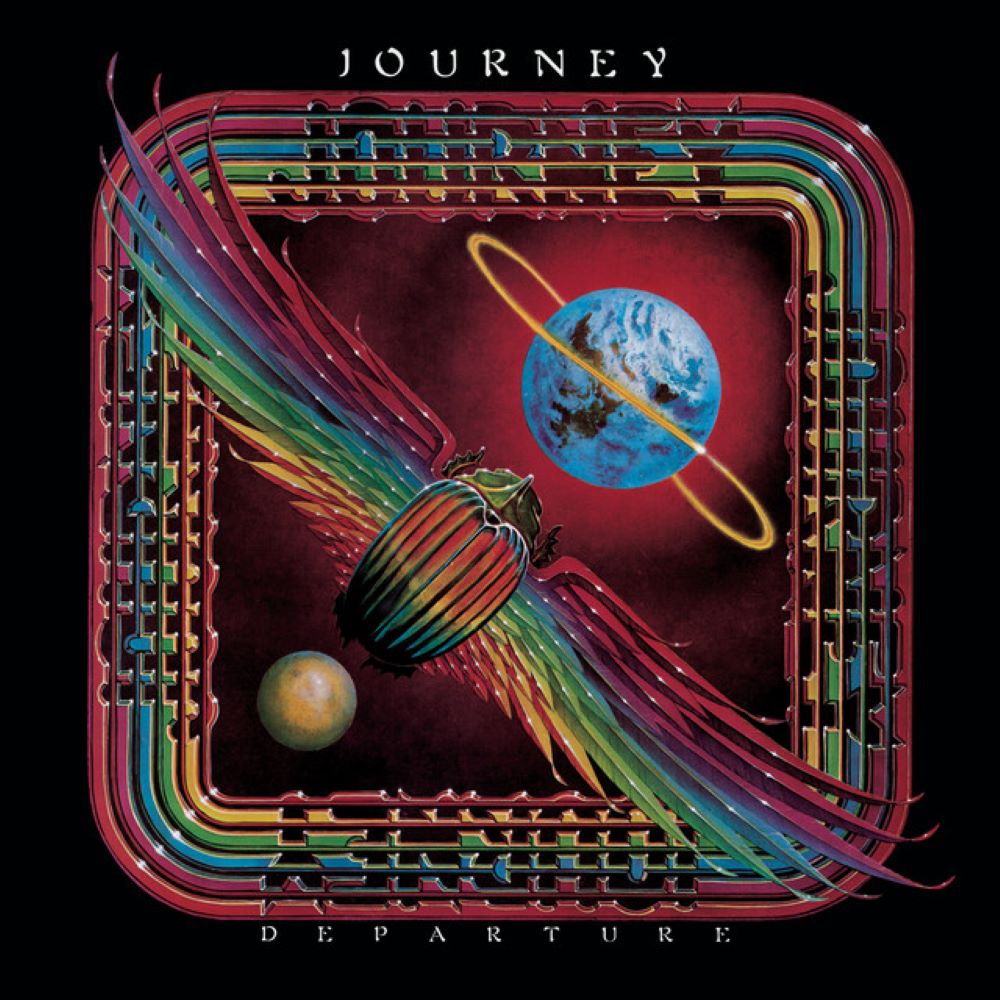
Looking back over forty years later, Escape hasn’t aged a day. It still sounds massive, still sounds fresh, and still sounds like the definitive blueprint for 80s arena rock. It’s the album that made Journey a household name, that turned Don’t Stop Believin’ into an eternal anthem, and that showed the world how to marry melody with muscle in a way that filled seats and sold records. Sure, you can argue that Infinity or Departure had more adventurous moments, but neither of those albums had the cultural reach, the radio dominance, or the sheer, unadulterated swagger of Escape. This was the moment when Journey stopped being a band and started being an institution. Escape didn’t just capture the sound of 1981—it predicted the sound of the next decade. It’s a time capsule, a greatest-hits collection in its own right, and a masterclass in how to build a rock album that’s built to last. Put it on, turn it up, and try not to sing along. I dare you.
Song of the Day: Any Way You Want It (by Journey)


Okay, so you’ve probably heard Any Way You Want It by Journey at a sports game, a movie, or blasting from someone’s car with the windows down. And yeah, it’s a classic rock anthem, but let me tell you why you need to actually listen to it like it’s your new favorite song. First off, that opening riff? Pure adrenaline. It kicks in with this chugging, joyful energy that doesn’t let up. Steve Perry’s vocals are famously sky-high and smooth, but the real secret weapon here is how the whole band locks into this unstoppable groove. It’s not complicated—it’s just fun. If you’re in a bad mood, hit play. I guarantee you’ll be tapping your steering wheel by the ten-second mark.

Now, let’s talk about the guitar solo, because that’s where Neal Schon earns his legend status. It starts at 1:34, right after the second chorus when the song pulls back just for a breath. And then—bam. Schon doesn’t waste time with flashy nonsense. He comes in with this biting, melodic line that feels like a conversation. It’s not about showing off speed (though he’s got plenty); it’s about attitude. The solo builds with these perfect bends and a little wah pedal flavor, then climbs higher and higher until it just explodes into a fiery run that hands the energy right back to Perry for the final chorus. From 1:34 to about 2:00, it’s pure rock and roll perfection.

What I love most is how the solo doesn’t overpower the song—it serves it. So many guitar heroes try to steal the spotlight, but Schon is playing like he’s part of a team. You can hear him weaving in and out of the rhythm section, almost dancing with the bass and drums. And that tone? Crisp, a little overdriven, but never muddy. It’s the sound of someone who knows exactly when to let a note ring out and when to smash into the next one. If you’ve ever thought Journey was just a “ballads band,” this solo will change your mind fast.

Bottom line: Any Way You Want It is a shot of pure joy, and the guitar solo from 1:34 to 1:45 is the heart of the whole thing. Put on headphones, crank the volume, and just focus on how Schon makes his guitar sing, shout, and then whisper all in under thirty seconds. Then hit replay, because I promise you’ll miss something the first time. Give it two listens—one for the vocals, one for the solo—and you’ll wonder how you ever slept on this track. It’s not deep, it’s not complicated. It’s just perfect. Any way you want it, that’s the way you’ll need it. Trust me.

Any Way You Want It

Any way you want it
That’s the way you need it
Any way you want it

She loves to laugh
She loves to sing
She does everything
She loves to move
She loves to groove
She loves the lovin’ things

Ooh, all night, all night
Oh, every night
So hold tight, hold tight
Ooh baby, hold tight

Oh, she said
Any way you want it
That’s the way you need it
Any way you want it
She said, any way you want it
That’s the way you need it
Any way you want it

I was alone
I never knew
What good love could do
Ooh, then we touched
Then we sang
About the lovin’ things

Ooh, all night, all night
Oh, every night
So hold tight, hold tight
Ooh baby, hold tight

Oh, she said
Any way you want it
That’s the way you need it
Any way you want it
I said, any way you want it
That’s the way you need it
Any way you want it

[guitar solo]

She said ohh, hold on, hold on, hold on
Oh, she said any way you want it
That’s the way you need it
Any way you want it

Any way you want it
That’s the way you need it
Any way you want it

She said any way you want it
That’s the way you need it
Any way you want it

Any way you want it
That’s the way you need it
Any way you want it

Any way you want it
That’s the way you need it
Any way you want it

Any way you want it
That’s the way you need it
Any way you want it

Any way you want it
That’s the way you need it
Any way you want it

Any way you want it
That’s the way you need it
Any way you want it

Any way you want it
That’s the way you need it
Any way you want it

Any way you want it
That’s the way you need it

Great Guitar Solos Series

Song of the Day: Open Arms (by Journey)


There’s something about nostalgia that hits differently. It gets a bad rap sometimes—mostly because it can make us label anything from our past as a “classic” just because it’s tied to some fond memory. But when it’s genuine, nostalgia can feel like stepping back into a moment you never wanted to end.

That’s exactly what today’s “Song of the Day” does—it stirs up those feelings of the past and reminds me why some songs never lose their magic. I’m talking about one of the all-time great power ballads: Journey’s “Open Arms.”

Released in 1982 on Journey’s seventh album, Escape, the song was an instant hit, both on the radio and in their arena shows. “Open Arms” quickly became the rock power ballad—the one all others get compared to. Like any good ballad, it’s about losing love and finding it again. Honestly, I don’t know anyone—no matter their music taste—who hasn’t slow danced to this song at least once.

It wasn’t exactly the go-to tune at my high school dances, but I definitely heard it plenty once I was older—at weddings, anniversaries, and other celebrations. The song’s staying power comes from more than just its lyrics—it’s Steve Perry’s voice. His delivery is powerful without feeling overdone or corny. There’s this sincerity in his singing, like he’s sharing something deeply personal, and that’s what gives the song its timeless emotional pull.

Open Arms

Lying beside you
here in the dark
Feeling your heart beat with mine

Softly you whisper
you’re so sincere
How could our love be so blind
We sailed on together
We drifted apart
And here you are by my side

So now I come to you
with open arms
Nothing to hide
believe what I say
So here I am with open arms
Hoping you’ll see what your love means to me
Open arms

Living without you
living alone
This empty house seems so cold

Wanting to hold you
wanting you near

How much I want you home
But now that you’ve come back
Turned night into day
I need you to stay

So now I come to you
with open arms
Nothing to hide
believe what I say
So here I am with open arms
Hoping you’ll see what your love means to me
Open arms

Song of the Day: Faithfully (by Journey)


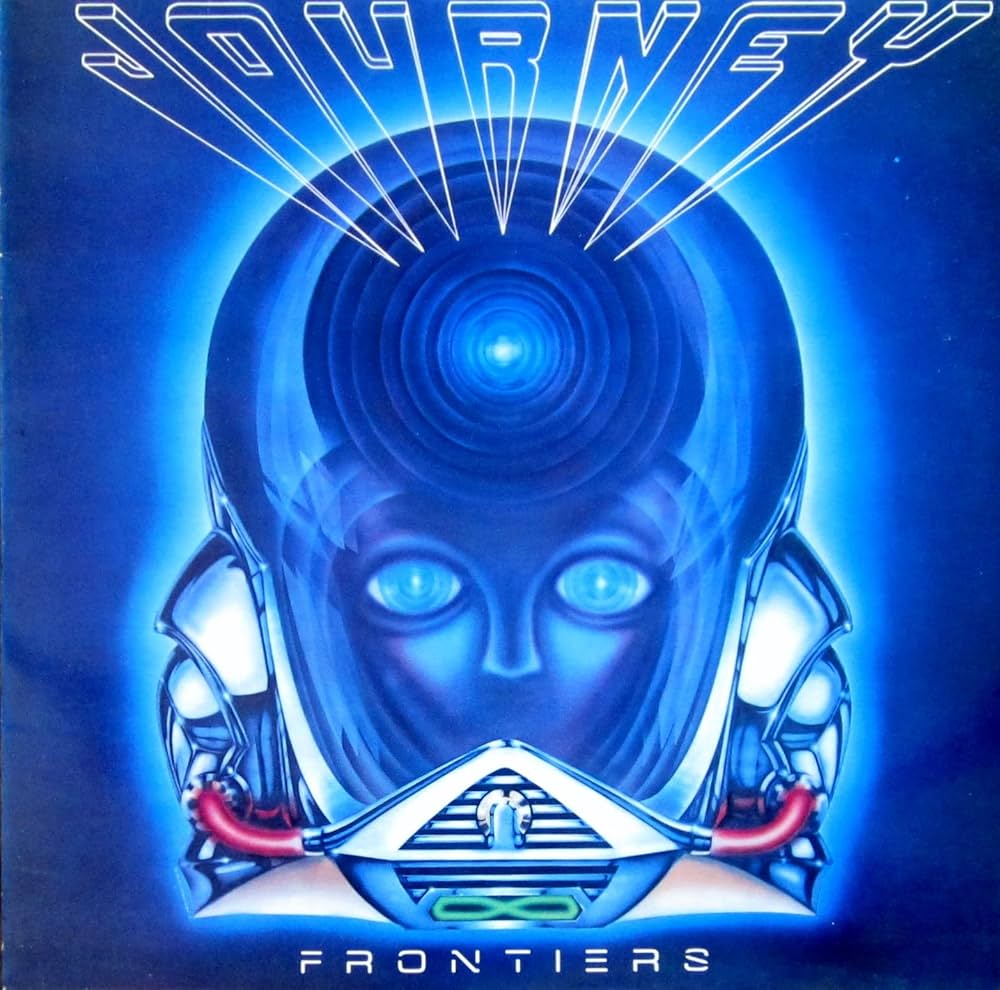
Back in junior high in the early ’80s, Faithfully dropped in 1983 on Journey’s Frontiers album, and those haunting piano chords instantly hooked us during slow skates or late-night mix tapes. Steve Perry’s raw, soaring voice captured the ache of young love stretching across town, turning everyday pangs into something profound. Even by 1988, deep into high school, it had evolved into a staple power ballad at dances and teen parties, standing tall among the era’s anthems.

What elevated it to one of Journey’s all-time greatest was its blend of emotional depth and universal appeal—highways symbolizing distance, hearts straining but vowing “to be there faithfully,” all without the bombast of hair metal excess. It felt authentic, perfect for those fog-shrouded bus rides home, fueling dreams amid neon-lit awkwardness. Rock historians often hail it as the pinnacle of ’80s power ballads, outshining peers with its sincerity and that unforgettable guitar climb.

Hearing it today still transports me to cassette decks and feathered hair, a true time capsule of innocence. Journey mastered crafting songs that promised soul-deep connection against all odds, cementing Faithfully as their crown jewel and the era’s ballad benchmark.

Faithfully

Highway run into the midnight sun
Wheels go ’round and ’round, you’re on my mind
Restless hearts sleep alone tonight
Sendin’ all my love along the wire

They say that the road ain’t no place to start a family
Right down the line it’s been you and me
And lovin’ a music man ain’t always what it’s supposed to be
Oh, girl you stand by me, I’m forever yours, faithfully

Circus life under the big top world
We all need the clowns to make us smile
Through space and time, always another show
Wondering where I am lost without you

And bein’ apart ain’t easy on this love affair
Two strangers learn to fall in love again
I get the joy of rediscovering you
Oh girl, you stand by me, I’m forever yours, faithfully

Faithfully, I’m still yours
I’m forever yours, ever yours
Faithfully

Music Video of the Day: Any Way You Want It by Journey (1980, directed by ????)


To me, there is no better way to close out the year than with this classic song from Journey!  Have a happy and safe New Year’s Eve!

Ever since I first saw Caddyshack (not to mention the episode of The Simpsons were Rodney Dangerfield played Mr. Burns’ son), Any Way You Want It has always been my favorite Journey song.  The video is also Journey at its best, simple, without pretension, and rocking!

Music Video of The Day: Don’t Stop Believin’ by Journey (1981, directed by ????)


Don’t Stop Believin’ is now probably destined to be forever associated with The Sopranos but the song itself had established itself as a classic long before it was used in the finale of HBO’s famous show about the New Jersey mafia.

In fact, the song means so much to Journey’s Steve Perry that he was hesitant to give HBO permission to use the song until it was explained to him exactly how the song was going to be used and he was assured that it wouldn’t be played over any type of violence.  Other than the members of the cast and the production crew, Steve Perry was one of the few people to know, in advance, how The Sopranos was going to end.

While Perry has said that the majority of the lyrics were inspired by his own early struggles to find success in the music industry, keyboardist Jonathan Cain says that the name was inspired by something that his father told him when Cain was thinking about leaving Hollywood and returning to Chicago.  Cain’s father told him, ‘No, son. Stay the course. We have a vision. It’s gonna happen. Don’t stop believin’.”

As for the video, it was filmed in Houston and features Journey performing the song as a part of their Escape tour.  With the exception of the infamous video for Separate Ways, Journey was known for keeping things simple and straight-forward when it came to their music videos.  This one is no exception.

Music Video of the Day: Send Her My Love by Journey (1983, directed by Phil Tuckett)


 Like so many of Journey’ videos (with the notable exception of Separate Ways), the video for Send Her My Love is a no-nonsense performance clip.  This video was directed by Phil Tuckett, who also directed videos for Slayer, Def Leppard, Europe, The Black Crowes, and others.

Enjoy!

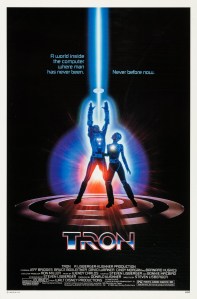
Tron (dir. by Steven Lisberger)


Many years ago in Southern Oregon, I had a conversation with friends about some of our favorite films growing up. Movies like The Goonies, The Dark Crystal, Watership Down and The Secret of Nimh were all on the list, as well as Disney’s Tron. In our excitement for all these movies, we ended up renting the films from a local video store to relive our childhood. While the nostalgia was nice, we all ended falling asleep halfway through Tron, despite our love for it.

I guess one’s enjoyment of Tron is based on how it’s viewed. I caught the film two years ago at the Museum of the Moving Image, in 70MM. The first thing that caught my attention was the film grain. I’ve grown so used to the clarity of digital film presented in 4K that I couldn’t help but catch the little flicks and “cigarette burns” in at the start. This was life before digital, and it was beautiful to revisit. In a theatre, the film’s 96 minutes blazed by for me. The early 1980s was basically made up of bike rides and video arcades. The little boedga on the corner of my block back home even had a few arcade machines in the front of the store in the first half of the 80s. The Bodega’s still there, the arcade’s now a deli/hot meal area. Times can and do change.

Tron is the story of Kevin Flynn (Jeff Bridges, Bad Times at the El Royale), a former employee at Encom, a major computing and videogame company. Encom’s made some wonderful strides in technology as of late, by 1980’s standards. Encom performs special matter tests in a specialized lab, while the programmers grind away code in their cubicles. All of their work is overseen by the Master Control Program, an operating system of sorts. Granted, the workforce at Encom isn’t too pleased about having the MCP monitor their applications. Alan Bradley (Bruce Boxleitner, Kuffs) and Lori Baines (Cindy Morgan, Caddyshack) also have programs and projects of their own that are being culled. Alan’s program, Tron (also played by Boxleitner) is of particular interest to the MCP, as it acts an a security threat that could bring some serious problems. Kevin tries to hack his way into Encom with the use of a program he created called Clu (also Bridges), but the MCP and the Senior Vice President of Encom, Ed Dillinger (David Warner, The Omen, Teenage Mutant Ninja Turtles II: The Secret of the Ooze) keep Flynn at bay. When Alan and Lori discover what Flynn’s up to, they confront him at his arcade, where he explains that he was the actual creator of Encom’s top games. He only needs the data as proof. This leads to the team breaking into Encom, where the MCP digitizes Flynn and brings him into the computer world. Can Flynn escape and help liberate the programs enslaved by the MCP and its henchman, Sark (both also played by Warner)? Can Flynn find the proof to exonerate him? And just who is this Tron fellow, anyway?

The plot for Tron inside the machine becomes a bit theological. The programs believe in the Users, and that they were each created for a particular purpose. From Ram (Dan Shor, Bill & Ted’s Excellent Adventure) being an Actuarial Program to Tron being a defense against the MCP, it’s kind of interesting once Flynn shows up. As a User, he doesn’t have much more power than a program, save that he can’t really be derezzed and that he can mimic the neon glow of anyone he touched. I always thought they could have given him something cooler to do, though for 1982, repurposing machines does have some benefits. The story slows down a bit in the middle, feeling like it’s somewhat unsure of itself, but picks up in the final act with Tron vs. Sark and the MVP. Though Flynn is important to the outcome, he’s more like Big Trouble in Little China’s Jack Burton, kind of just watching this happen around him. He does have his moments, though.

When I was little, my dad owned a Commodore 64 and a Floppy Disk Drive. He would regularly pick up magazines like Byte! to catch up on new innovations. In most of these magazines, they’d have a program that you could enter in at home to create various effects like making a balloon fly across your screen. Those programs were usually written over a number of pages with hundreds of lines of code. For Tron, there were 3 teams dedicated for the Visual Effects. According to the behind the scenes documentary on the disc, Information International Inc., known as Triple-I, was brought in to handle the major work along with Mathematic Applications Group Inc. (MAGI), who director Steven Lisberger worked for at one point early in his career. Digital Effects of New York handled some of the responsible for some of the original CGI work used in Michael Crichton’s Westworld (considered one of the first CGI movie uses ever) and it’s sequel, Futureworld. For the time, the effects were groundbreaking. Mind you, most of this was all before we ever hit the 8-bit era of Nintendo, the Commodore Amiga or even the high resolution arcade games of Sega’s heyday like Space Harrier, Outrun or Afterburner. In an actual arcade in 1982 had games like Q-Bert or Dig Dug with the kind of graphics you’d never see on home systems.

Kevin Flynn (Jeff Bridges) and others (including a young Michael Dudikoff to his right) watch Tron fight for the users. This would inspire Dudikoff to become an American Ninja.

The designs for the look and feel of the computer world came from Lisberger himself, with a bit of assistance from both futurist Syd Mead and legendary artist Jean “Mobius” Giraud. Both men were extremely popular. Mead was the equivalent of Apple’s former Chief Design Officer Jony Ive, having created the “V’ger” model for Star Trek:The Motion Picture. Ironically, Mead’s work (both on the set design and the flying cars) would be seen by audiences watching Ridley Scott’s Blade Runner just a month shy of Tron’s release. Having worked on Alien years prior, Giraud helped to design and inspire both the clothing and some of the vehicles, such as the weird cradle for Dumont (Bernard Hughes, The Lost Boys) and the Light Cycles.

Jean "Mobius" Giraud's sketches for Dumont in Tron.

A film dealing with computers needed a composer familiar with electronic music.It seemed fitting that Wendy Carlos(A Clockwork Orange, The Shining) took on the challenge. Having built a computer at 14, Carlos’ love for music over the years lead her (with Robert Moog) to help develop the Moog synthesizer system. The Moog would go on to be used by Kraftwerk, Giorgio Mororder, Nine Inch Nails, The Prodigy Daft Punk and even J Dilla, among others. The Tron Soundtrack was a mix of orchestra, choir and electronic music. Although the sound may not be as dark and digital as Daft Punk’s score for Tron: Legacy, I felt it worked for the time and moves well with the film. In addition to Carlos’ score, Journey wrote the song “Only Solutions” for the film, which also happens to be a line uttered by Kevin Flynn.

Overall, Tron is one of those movies I can happily rewatch without much in the way of expectation. I enjoy it for its place in Sci-Fi cinema, and the memories it awakens. I don’t think Disney ever fully recognized the full potential of where they could take the story, though the animated Tron: Uprising was a great part of the saga. I’m just hoping Tron: Ares doesn’t stray too far from the fold.

AMV Of The Day: Don’t Stop Believing (Various)


An AMV set to Journey?  How can I not share it?

Song: Don’t Stop Believing by Journey

Anime-Dance in the Vampire Bund, -Spice and Wolf ,-Fullmetal Alchemist Brotherhood, -Durarara, -Toradora, -Attack on Titan, -Soul Eater ,-A Certain Scientific Railgun S, -Vampire Knight, -Higurashi When They Cry, -Deadman Wonderland, -Bleach, -Death Note, -Shuffle, -Maid Sama, -Free!, -B Gata H Kei, -Black Butler, -Nana, -Rosario Vampire -,demon king daimao, -yoko you’re my star

Creator: Katherine Dickinson (KatiePandas)

Past AMVs of the Day