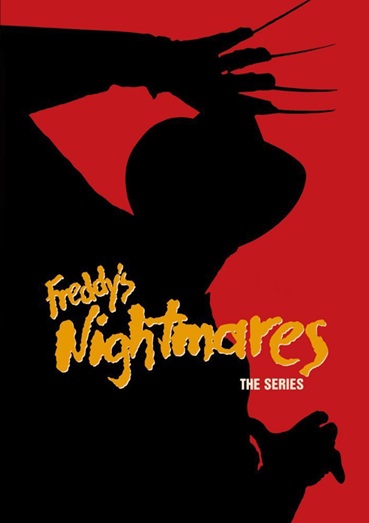
Welcome to Late Night Retro Television Reviews, a feature where we review some of our favorite and least favorite shows of the past! On Fridays, I will be reviewing Freddy’s Nightmares, a horror anthology show which ran in syndication from 1988 to 1990. The entire series can be found on Tubi!
This week, a loft sees a lot of action!
Episode 2.17 “Interior Loft Later”
(Dir by Ken Wiederhorn, originally aired on February 4th, 1990)
The loft is now home to sculptor Alex McFain (Robert F. Lyons). Alex spends most of his time sitting and sleeping in a bath tub and complaining about the fact that his work doesn’t make him much money. When his wife, Fabina (Fabiana Udenio) accidentally kills one of Alex’s models, Alex comes up with a brilliant plan. He’ll fake his own death so his work will become valuable!
At first, the plan works. The only problem is that Alex can no longer leave the loft. With Fabina constantly going outside to sell his work, Alex starts to worry that she’s having an affair with another man. It tuns out that he’s half-right. Fabina is having an affair but it’s with another woman. Alex is shocked but he’s then killed by decorative sword that falls off of the ceiling. Now, his work will be really valuable!
Months later, Fabina’s former boy toy, Art (Dean Fortunato), shows up at the apartment and discovers that it is now occupied by Stacy (Leslie Bega) and Gina (Tory Polone). Art moves in with them and proceeds to seduce both of them. He tells one that he’s an environmental activist being pursued by a cartel of fishermen. He tells the other that he’s being chased by the mob. When Stacy and Gina compare notes, it’s bad news for both Art.
Freddy doesn’t do anything in either one of these stories, other than introduce them. Both stories follow the familiar pattern where anything overly dramatic that happens is ultimately revealed to be a dream. Neither story is all that interesting but Robert F. Lyons does his best to bring some life to his role of the sculptor pretending to be dead. As has so often been the case with the second season, this episode isn’t great or even memorable but it’s still a hundred times better than the majority of the first season.
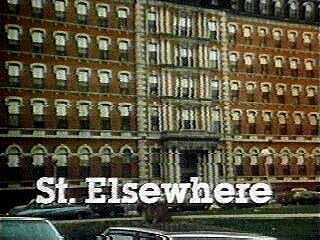
Welcome to Retro Television Reviews, a feature where we review some of our favorite and least favorite shows of the past! On Fridays, I will be reviewing St. Elsewhere, a medical show which ran on NBC from 1982 to 1988. The show can be found on Daily Motion.
This week, season 3 comes to an end.
Episode 3.24 “Cheers”
(Dir by Bruce Paltrow, originally aired on March 27th, 1985)
It’s Easter at St. Eligius and, of course, everyone is a bit depressed. While the patients in the Children’s Ward prepare for the annual Easter egg hunt (and are told about the magic Golden Egg), a man who dresses like Jesus is attacked by a bunch of vagrants and wheeled into the Emergency Room. Meanwhile, Dr. Craig is shaken to learn that his mentor, Dr. David Domedion (Dean Jagger), is suffering from dementia and Dr. Auschlander worries about his wife as she undergoes heart surgery.
And yet somehow, Dr. Westphall still manages to be the most depressed person in the hospital.
I have to admit that, over the course of this season, I’ve grown a bit frustrated with Dr. Westphall and his nonstop depression. At least one terrible thing has happened to every character on the show but they’ve all managed to continue on with their lives and their careers. Dr. Westphall is selling his house and, as a result, he’s spent a year having an existential crisis. Dr. Asuchlander is terminally ill and he still manages to smile occasionally. I realize that I’m probably being too hard on Westphall but seriously …. cheer up, old man! People love you!
This rather dark and depressing episode features an odd moment when Westphall, Crag, and Auschlander go to a neighborhood bar and talk about life. Their conversation is serious but the bar is Cheers, which was the setting of a popular sitcom of the same name in the 80s. (Dr. Frasier Crane first appeared on Cheers, though he’s sadly not present in this episode.) While the doctors wrestle with their misery, the bar regulars make jokes.
Barmaid Carla (Rhea Pearlman) gives them a hard time when she discovers that they work at St. Eligius. In fact, the entire bar seems to groan at the hospital’s name.
Bar regular Norm (George Wendt) is also Auschlander’s former accountant. Norm apologizes for losing Auschlander a good deal of money. Then Norm goes back to drinking. Maybe don’t hire an alcoholic to be your accountant.
Postman Cliff (future PIXAR regular John Ratzenberger) tries to get free medical advice. The doctors aren’t in the mood.
It’s an odd scene but there’s still a definite charm to it. It’s as if the show’s writers were acknowledging how difficult it can be to take Westphall’s nonstop glumness and they were puncturing his self-absorption a little by having the cast of another show attempt to steal the spotlight from all of his problems. This episode seems to be saying, “There’s a world outside of St. Eligius and it’s full of day drinkers.”
Still, the scene is ultimately about Dr. Westphall. At the end of it, he announces that he’s done with being a doctor. He’s going to retire. He’s going to leave St. Eligius and presumably find a new group of people to depress. Well, good for him.
The episode ends with Westphall leaving the hospital, perhaps for the last time. As he leaves, he spots and picks up the Golden Easter Egg.
“A true warrior doesn’t need a sword.” — Thors Snorresson
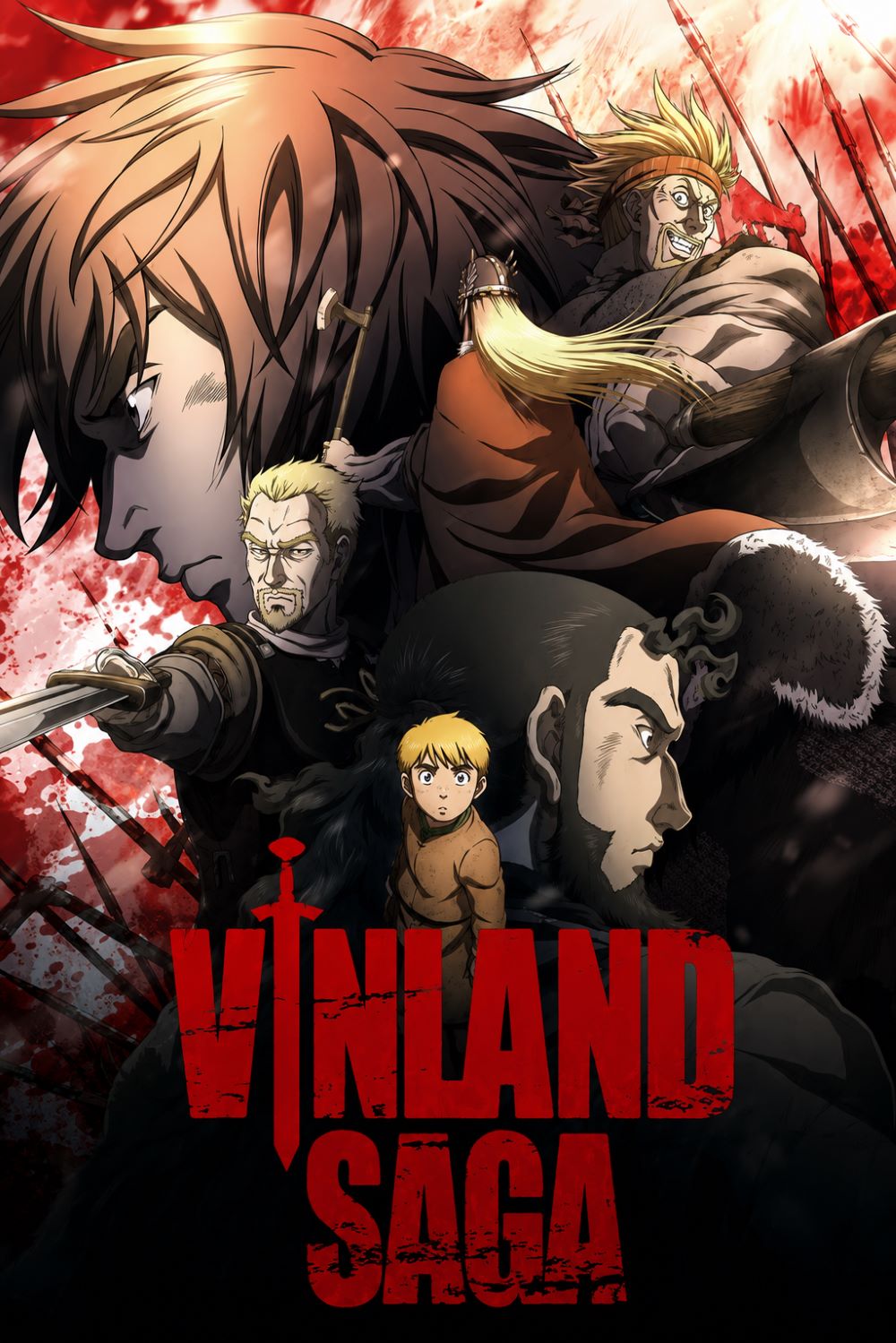
When people talk about the greatest historical fiction in anime, Vinland Saga usually storms the conversation like a Viking longship breaking through a thick morning fog. Adapting Makoto Yukimura’s sweeping manga masterpiece, Wit Studio and later Studio MAPPA created something that transcends the typical boundaries of the shonen and seinen demographics. It starts out looking like a brutal, blood-drenched revenge thriller set during the 11th-century Danish invasion of England, but it morphs into a profoundly moving philosophical epic about pacifism, trauma, systemic violence, and what it truly means to be a warrior. If you came for the hyper-violent axe fights, you will stay for the agonizing, beautiful deconstruction of why those fights shouldn’t happen in the first place.
To understand why Vinland Saga hits so hard, you have to look at how it builds its protagonist, Thorfinn. When we first meet him as a young boy in Iceland, he is bright-eyed, energetic, and eager to prove his worth. His world is shattered when his father, Thors—a legendary warrior who abandoned the Jomsvikings to live a peaceful life—is foully assassinated by a mercenary leader named Askeladd. Driven by blind rage, Thorfinn joins Askeladd’s crew, surviving in the harsh wilds of war-torn Europe for a decade just to earn formal duels against his father’s killer. For the entirety of the first season, Thorfinn is a feral, screaming ball of spite. He doesn’t care about politics, the crown of England, or the suffering of the villages he helps raid. He only cares about revenge. It is a brilliant, uncomfortable framing because the narrative doesn’t glorify his skill; it treats his obsession as a tragic wasting of his youth.
But as great as Thorfinn is, the first season is utterly stolen by Askeladd. He is easily one of the most complex, magnetic antagonists in all of anime. Askeladd is a cynical, brilliant tactician who loathes the very Vikings he leads. He is a man caught between his secret royal Welsh heritage and his current reality as a ruthless mercenary captain. His relationship with Thorfinn is deeply twisted—he is simultaneously the boy’s mortal enemy, employer, and twisted surrogate father figure. Watching Askeladd manipulate kings, generals, and his own men like chess pieces is a masterclass in writing. When the first season reaches its shocking, chaotic climax, Askeladd’s actions fundamentally break Thorfinn’s entire reality, setting the stage for one of the greatest tonal shifts in anime history.
That shift happens in the second season, often referred to by fans as the Slave Arc. If the first season is a roaring fire, the second season is the slow, aching process of clearing away the ash. Stripped of his purpose after the events of the season one finale, Thorfinn is sold into slavery and ends up clearing forests on a massive farm owned by a man named Ketil. Here, the show sheds its battle-shonen pacing entirely and becomes a slow-burning character study. Thorfinn is hollowed out, plagued by nightmarish visions of the people he slaughtered during his mercenary days. Alongside a fellow slave named Einar, Thorfinn has to learn how to farm, how to connect with other human beings, and how to carry the crushing weight of his sins without letting them destroy him.
This second season is where Vinland Saga cements itself as a masterpiece. It takes incredible narrative bravery to take a show known for jaw-dropping action animation and turn it into a quiet drama about crop yields and emotional vulnerability. The bond that grows between Thorfinn and Einar is incredibly moving, built on shared grief and mutual labor. The series uses the micro-cosmos of Ketil’s farm to explore how the violence of the Viking age wasn’t just a problem for kings and warriors on battlefields, but a systemic rot that trickled down to affect slaves, farmers, and women. When Thorfinn finally makes his vow to never hurt anyone again unless absolutely necessary, it feels earned in a way few anime character developments ever do. His realization that a true warrior needs no sword is a direct echo of his father’s words from the very first episode, bringing the emotional arc full circle.
The production values across both seasons are nothing short of stellar, despite a studio handoff. Wit Studio handled the first season with their trademark cinematic flair, giving the action sequences an incredible sense of weight, momentum, and visceral impact. Every swing of an axe or spray of blood feels heavy and dangerous. When Studio MAPPA took over for the second season, they seamlessly maintained the visual continuity while leaning heavily into the quiet, rustic beauty of the agricultural setting. The changing of the seasons on the farm, the play of light through the trees, and the hauntingly expressive close-ups of characters experiencing profound grief or joy are animated with breathtaking care. The soundtracks, composed by Yutaka Yamada, are equally phenomenal, mixing booming, Norse-inspired war chants with melancholic strings that will absolutely tear at your heartstrings during the show’s more tender moments.
It is also worth praising how the show handles its historical setting. While Vinland Saga takes plenty of dramatic liberties, it weaves its fictional narrative into real history with remarkable skill. Real-world historical figures like King Canute the Great, Thorkell the Tall, and Leif Erikson are major players in the plot. Canute, in particular, undergoes a fascinating parallel development to Thorfinn. While Thorfinn goes from a violent warrior to a peaceful farmer, Canute goes from a timid, deeply religious prince to a cold, calculating king willing to stain his hands with blood to build a peaceful utopia on earth. The philosophical clashes between Thorfinn’s personal pacifism and Canute’s grand political ambitions create an incredible, intellectual tension that elevates the final acts of the story far above standard good-versus-evil narratives.
Ultimately, Vinland Saga is an unforgettable experience because it asks incredibly difficult questions and refuses to give cheap answers. It asks how a person can find redemption after doing terrible things, and whether true peace can ever exist in a world built on conquest and subjugation. It is a rare story that respects its audience’s intelligence and emotional maturity, delivering a narrative that is as intellectually stimulating as it is emotionally devastating. Whether you are a die-hard anime fan or someone who usually sticks to prestige live-action television, this series demands your time. It is a monumental achievement in storytelling, an epic that starts with a roar of vengeance and ends with a quiet, beautiful plea for peace.
The only real sting left for fans is the agonizing wait for the next chapter of Thorfinn’s journey. Makoto Yukimura, the brilliant creator of the original manga, has openly expressed how much he looks forward to a third season of the adaptation, fully sharing the audience’s enthusiasm to see the Eastern Expedition arc brought to life. Unfortunately, the anime adaptation and the studio haven’t officially confirmed a third season yet, leaving passionate fans clamoring for news into silence. It is important to note that this delay isn’t because the studio dislikes the property or lacks interest in continuing it. Rather, it comes down to a massive, heavily stacked backlog of massive projects that the studio has to completely finish and clear out before they can even realistically allocate the core creative team to begin working on a third season of Vinland Saga. Until then, the community holds onto the hope that the patient wait will mirror the slow, rewarding pacing of the story itself.
As some of our regular readers undoubtedly know, I am involved in a few weekly watch parties. On Twitter, I host #FridayNightFlix every Friday and I co-host #ScarySocial on Saturday. On Mastodon, I am one of the five hosts of #MondayActionMovie! Every week, we get together. We watch a movie. We tweet our way through it.
Tonight, at 10 pm et, I will be hosting #FridayNightFlix! The movie? 1995’s Hackers!
If you want to join us this Friday, just hop onto twitter, find Hackers on Prime, start the movie at 10 pm et, and use the #FridayNightFlix hashtag! I’ll be there happily tweeting. It’s a friendly group and welcoming of newcomers so don’t be shy.
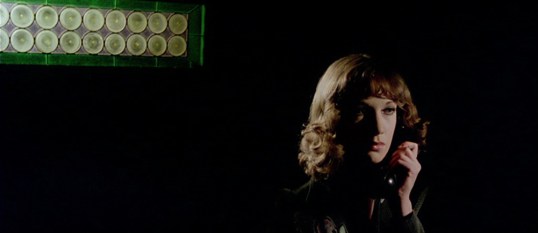
Today would have been Daria Nicolodi’s birthday so what better time than now to share a scene that I love from Dario Argento’s 1975 masterpiece, Deep Red?
Now, this might seem like a strange scene to love but you have to understand it in context of the overall film. (And yes, the scene is in Italian but surely you can figure out that it’s a scene of two people flirting.) Deep Red is often thought as being merely a superior giallo film but it’s also, in its way, a rather sweet love story. David Hemmings and Daria Nicolodi may investigate a murder but they also fall in love and the two of them have a very sweet chemistry, which is fully displayed in this scene and which elevates the entire film. Deep Red is a giallo where you care about the characters as much as you care about the murders.
While making this film, Daria Nicolodi and Dario Argento also fell in love and they went on to have a rather tumultuous relationship. Personally, I think that Argento’s most recent films are underrated but it’s still hard to deny that the ones that he made with Nicolodi have a heart to them that is missing from some of his later work.
So, in honor of Daria Nicolodi and her important role in the history of Italian horror, here she is with David Hemmings in Deep Red!
4 Shots From 4 Films is just what it says it is, 4 shots from 4 of our favorite films. As opposed to the reviews and recaps that we usually post, 4 Shots From 4 Films is all about letting the visuals do the talking.
Today would have been Daria Nicolodi’s birthday!
Daria Nicolodi has been called the “unsung hero of Italian horror” and it’s an apt description. Along with starring in several of the films that Dario Argento directed during the first half of his legendary career, Nicolodi also was responsible for the story of and co-wrote the script for Suspiria. (Nicolodi always said that Suspiria was based on a true story involving one of her ancestors.) Argento’s decision to give the lead role in Suspiria to Jessica Harper, instead of Nicolodi, is often cited as the beginning of the end of their relationship.
Nicolodi also appeared in films directed by Mario Bava, Luigi Cozzi, Michele Soavi, and several other distinguished Italian directors.
Slow an’ Easy was Whitesnake’s first big hit in the United States and the video, which featured the band, a car crash, and an act of strangulation, was Whitensake’s first big video on MTV. It’s certainly much darker than the video for Here I Go Again.
Slow an’ Easy, by the way, appeared on an album called Slide It In. Whitesnake was never particularly subtle but they still rocked.


 Through the Shattered Lens