Dune: Part Two (dir. by Denis Villeneuve) Review


“The Mahdi is too humble to say he is the Mahdi. Even more reason to know he is!” — Stilgar

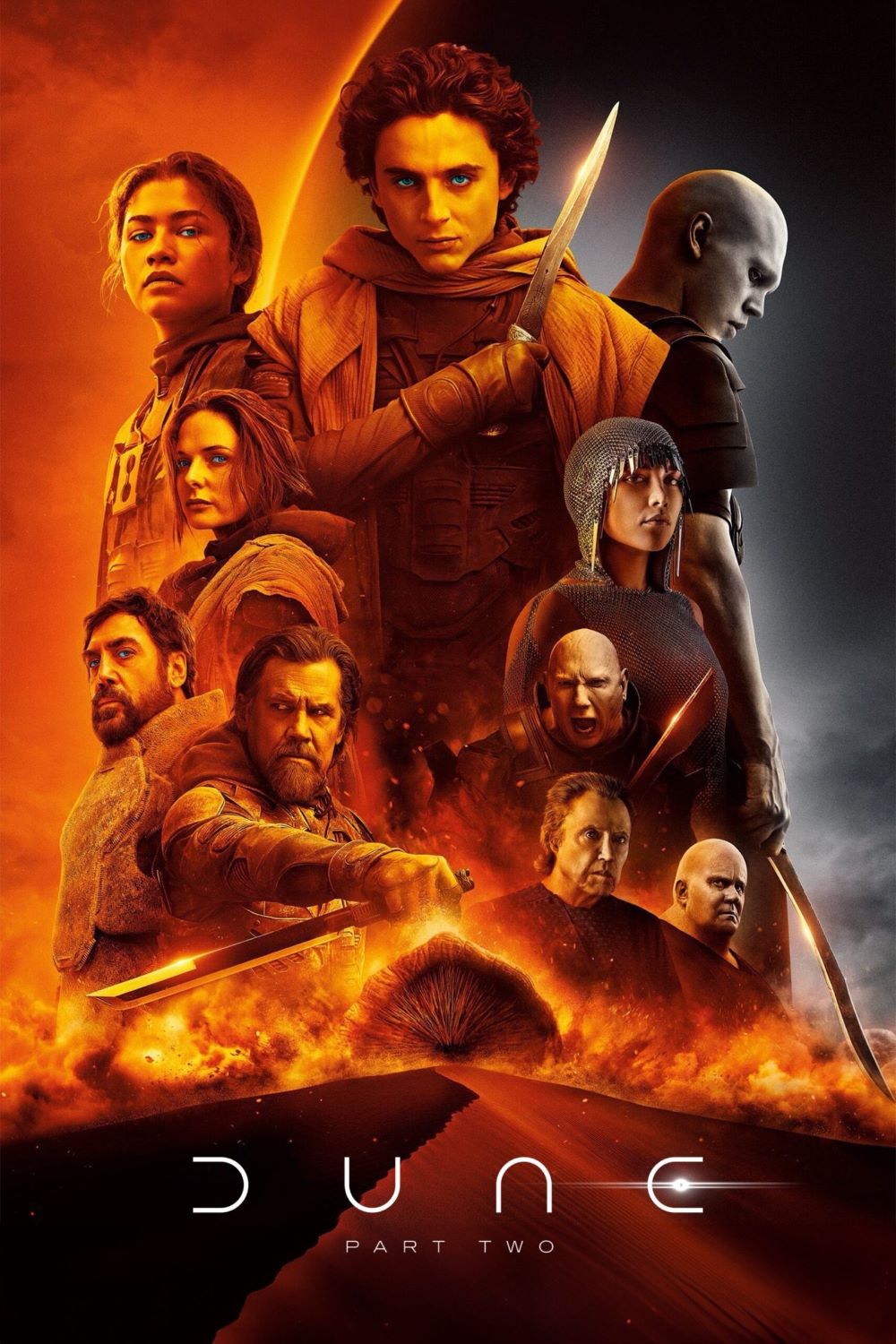
Dune: Part Two picks up right where the first film left off, diving headfirst into Paul Atreides’ quest for revenge on the desert world of Arrakis, and it absolutely delivers on the epic, operatic scale the setup promised. The first movie was all mood and table-setting; this one cashes in that patience with a story that’s bigger, louder, and way more emotionally volatile, without totally ditching the cerebral, slow-burn vibe that makes Dune feel different from other sci-fi tentpoles. Denis Villeneuve isn’t just continuing a story; he’s doubling down on the idea that this whole saga is less about a hero’s rise and more about the terrifying consequences of people begging for a savior and then getting exactly what they asked for.

Narratively, the film tracks Paul and his mother Jessica as they embed deeper into Fremen culture while House Harkonnen tightens its stranglehold on Arrakis. Paul trains, raids spice convoys, and slowly evolves from accepted outsider to full-on messianic figure, even as he keeps insisting he doesn’t want that role. The emotional throughline is his relationship with Chani, who acts as both partner and conscience, pushing back against the religious fervor gathering around him. At the same time, you’ve got Baron Harkonnen scheming from his grotesque oil-bath throne and Feyd-Rautha unleashed as the house’s rabid attack dog, chewing through enemies in gladiatorial arenas and on the battlefield. The stakes are clear and simple—control of Arrakis and its spice—but the film keeps twisting that into something more existential: control of the future itself and who gets to write it.

Visually, Dune: Part Two is just ridiculous in the best way. Arrakis still feels harsh and elemental, like the planet itself is a character that occasionally decides to eat people via sandworm. The desert exteriors are shot with that hazy, golden brutality where every wide shot makes the Fremen look tiny against an uncaring landscape. When Paul finally rides a sandworm, it’s not played as some clean, heroic moment but as a thrashing, chaotic stunt that looks legitimately dangerous—he’s clinging to this titanic creature, sand exploding in sheets around him, the camera swinging wide so you feel both the scale and the sheer lunacy of what he’s doing. The Harkonnen world, by contrast, is stark and stylized, all cold geometry and void-like skies, leaning into monochrome to make it feel like you’ve stepped into some industrial underworld. Villeneuve’s obsession with scale and texture pays off; every frame feels like it was composed to be stared at.

The action this time is more frequent and more brutal. Where Dune: Part One held back, this one goes for full war-movie energy. You get Fremen ambushes out of sand, night raids lit by explosions, and a final battle that’s basically holy war meets desert cavalry charge. Sandworms surf through shield walls, ornithopters slam into the ground, and a sea of troops gets swallowed by sand and fire. The choreography stays clean enough that you can track who’s doing what, but it never loses that messy, grounded feel—knife fights still feel close and ugly, even when they’re surrounded by massive spectacle. The duel between Paul and Feyd is the peak of that: sweaty, vicious, and personal, more about willpower and ideology than just skill.

Performance-wise, the film runs on the tension between Timothée Chalamet’s Paul and Zendaya’s Chani. Chalamet gets to shift from haunted survivor to someone who realizes he can pull the strings of history—and chooses to do it anyway. He plays Paul as a guy who genuinely hates what he sees in his visions but can’t stomach losing, which gives the final act a bitter edge. Zendaya finally gets the screen time the first film teased, and she makes the most of it. Chani isn’t just “the love interest”; she’s the one person in the story who consistently calls bullshit on prophecy, seeing how Fremen belief is being turned into a weapon. That skepticism, that refusal to be swept up, becomes the emotional counterweight to everything Jessica and the Bene Gesserit are engineering.

Rebecca Ferguson’s Jessica goes full political operator here, and it’s honestly one of the most interesting arcs in the film. Once she takes on the role of Reverend Mother, she leans into manipulating Fremen faith, playing up visions, symbols, and omens to lock in Paul’s status. She’s terrifyingly pragmatic about it, and the movie doesn’t let that slide as a “necessary evil”—it’s part of how this whole situation curdles into fanaticism. Austin Butler’s Feyd-Rautha is pure menace: feral, theatrical, and oddly charismatic, like a rock star who decided to become a warlord. He feels like the dark mirror of Paul, another bred product of a toxic system, but one who embraces cruelty instead of burden.

Then you’ve got Florence Pugh’s Princess Irulan and Christopher Walken’s Emperor Shaddam IV, introduced with real weight as the heir to the throne and the man who greenlit House Atreides’ betrayal—but then largely sidelined as bit characters rather than the shadowy power brokers they should be. On paper, they’re the architects of galactic order, pulling levers from opulent palaces while Paul scrambles in the sand. The film gives them poised entrances and sharp dialogue, but parks them as observers to Paul’s whirlwind, more like well-dressed cameos than forces reshaping the board. Walken nails the Emperor’s weary calculation, and Pugh hints at Irulan’s future scheming, but without deeper scenes of imperial intrigue, they orbit Paul’s story instead of challenging it head-on, underscoring how his rise eclipses even the old guard.

Hans Zimmer’s score keeps pushing that strange, alien soundscape he built in the first film and then amps it up. The music leans hard on percussion, guttural vocals, and warped instruments that feel half-organic, half-industrial, like you’re listening to the desert itself breathing. The score doesn’t really do the classic “themes you hum on the way out of the theater” thing; instead, it sits in your bones. During the big set pieces, it’s almost overwhelming—drones, chants, and pounding rhythms layering on top of each other until your seat feels like it’s vibrating. In quieter scenes, Zimmer pulls back just enough to let a harsh little motif peek through, usually when Paul is weighing his choices or when Chani realizes how far things are slipping away from what she hoped for.

Thematically, Dune: Part Two sinks its teeth deepest into the dangers of blind faith and the double-edged sword of prophecy—how it can shatter chains of oppression only to forge far heavier ones in their place. Frank Herbert’s original warning pulses through every frame: belief isn’t just a comfort or a spark for revolution; it’s a weapon that smart people wield to hijack desperate hearts. The Fremen, crushed under imperial boot and environmental hell, latch onto their Lisan al-Gaib legend like a lifeline, and figures like Jessica and the Bene Gesserit are all too happy to fan those flames. Lines like Stilgar’s “The Mahdi is too humble to say he is the Mahdi. Even more reason to know he is!” twist logic into a pretzel, showing how faith devours reason—Paul’s every hesitation or miracle just “proves” his divinity more. Chani’s gut-punch retort, “This prophecy is how they enslave us!” lays it bare: what starts as liberation from Harkonnen greed morphs into submission to a new myth, one engineered off-world to keep Arrakis in check.

Paul embodies this tragedy most painfully. His spice-fueled visions reveal futures of jihad consuming the stars, yet the “narrow path” he chooses—embracing the prophecy—breaks the Fremen’s subjugation to outsiders while binding them to him as unquestioning soldiers. It’s not accidental heroism; it’s a calculated gamble where prophecy empowers the oppressed to topple one empire, only for Paul to birth a deadlier one, fueled by the very zeal that freed them. Princess Irulan’s cool observation, “You underestimate the power of faith,” chills because it’s the Emperor admitting belief outstrips blades or thrones—faith doesn’t just win wars; it rewrites reality, turning Fremen riders into galaxy-scouring fanatics. Even the Reverend Mother Mohiam’s “We don’t hope. We plan” unmasks prophecy as cold manipulation, a multi-generational con that breakers colonial chains today while guaranteeing control tomorrow.

Villeneuve doesn’t glorify this cycle; he revels in its horror. The final rally, with Fremen chanting “Lisan al-Gaib!” as Paul seizes the throne, thrills like a rock concert and curdles like a cult initiation. Chani riding off alone isn’t defeat—it’s the last gasp of clear-eyed doubt in a tide of delusion. Faith topples the Baron and humbles Shaddam, sure, but it installs Paul as its high priest-emperor, proving Herbert right: saviors don’t save; they scale up the suffering. The film tweaks the book to amplify this, giving Chani more agency to voice the peril, making the “victory” feel like a velvet trap. It’s prophecy as breaker of chains—smashing Harkonnen spice rigs and imperial ornithopters—then creator of new ones, with Paul’s jihad looming not as triumph, but inevitable apocalypse.

If the film has a real sticking point, it’s that tension between being a massive, audience-pleasing sci-fi epic and being a deeply cynical story about the cost of belief. On a surface level, it totally works as a grand payoff: you get your worm rides, your duels, your big speeches, your villains being humbled. But underneath, Villeneuve keeps threading in this idea that what we’re watching isn’t a happy ending; it’s the start of something worse. The sidelining of Irulan and Shaddam reinforces how Paul’s myth-centered rise devours old powers, prophecy steamrolling politics.

As a complete experience, Dune: Part Two feels like the rare blockbuster that respects its audience’s patience and intelligence. It assumes you remember part one, assumes you’re willing to sit with long, quiet moments and sudden bursts of violence, and assumes you’ll notice that the “hero’s journey” here is more of a slow moral collapse dressed up as triumph. It’s messy in spots—some pacing jolts, some underused heavy hitters in the cast—but it swings so hard and with such confidence that the rough edges end up feeling like part of its personality. The result is a movie that works both as an immediate, visceral ride and as something you keep chewing on afterward, wondering if you were supposed to be as excited as you were by the sight of a new god-king being crowned in the desert.

Dune: Part One (dir. by Denis Villeneuve) Review


“I said I would not harm them and I shall not. But Arrakis is Arrakis and the desert takes the weak. This is my desert. My Arrakis. My Dune.” — Baron Vladimir Harkonnen

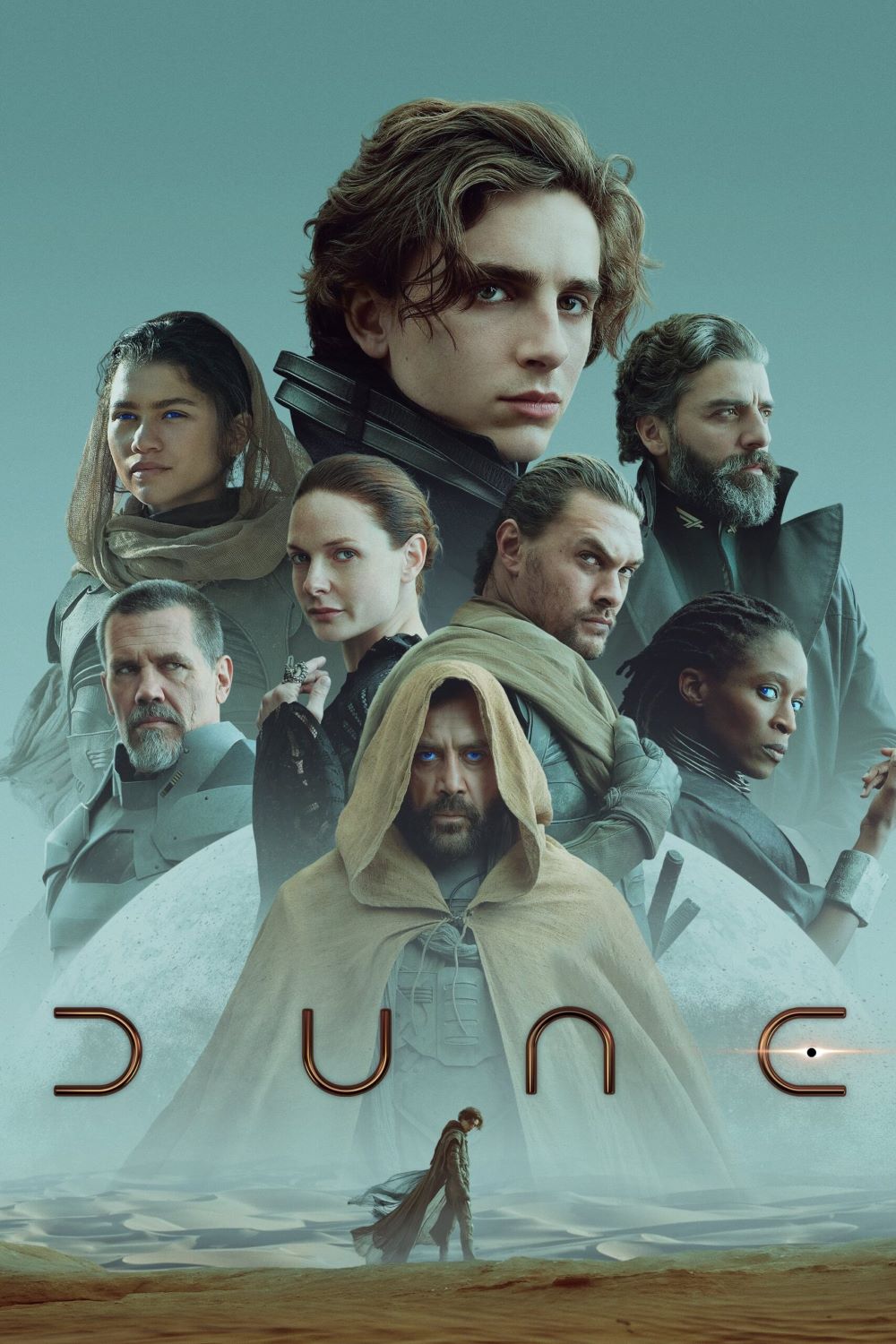
Denis Villeneuve’s Dune: Part One is one of those big, monolithic blockbusters that feels less like a movie night and more like being slowly lowered into someone else’s dream. It’s massive, deliberately paced, and sometimes emotionally chilly, but when it hits, it really hits, and you can feel a director absolutely obsessed with getting this universe right. The film adapts roughly the first half of Frank Herbert’s novel, following Paul Atreides, heir to House Atreides, as his family accepts control of the desert planet Arrakis, the only source of the spice melange that powers space travel and heightens human abilities. The setup is pure operatic space-feudalism: the Emperor orders House Atreides to take over Arrakis from their bitter rivals, House Harkonnen, in what is basically a beautifully staged death trap. Villeneuve leans into the political trap aspect; even if you’ve never read Dune, you can tell from minute one that this is not an opportunity, it’s a setup, and that sense of doom hangs over everything.

What Villeneuve really nails is the “ancient future” texture that people always talk about with Dune but rarely pull off on screen. The technology looks advanced but worn, ritualized, and heavy, from the gargantuan starships to the dragonfly-like ornithopters that rattle and pitch like actual aircraft instead of sleek sci-fi toys. The production design and Greig Fraser’s cinematography go all-in on scale: Caladan’s stormy oceans, Arrakis’s endless dunes, cavernous fortresses that make the human figures look insignificant. It’s not just pretty—it’s doing character work for the universe, selling you on the idea that people here live under forces (political, religious, environmental) that absolutely dwarf them. In theme terms, this is Villeneuve visually translating Herbert’s obsession with ecology and power structures, but he externalizes it more than the book: instead of living inside characters’ heads, you’re constantly being reminded how small they are against their environment.

All of that is backed by Hans Zimmer’s aggressive, sometimes overwhelming score, which sounds like someone trying to invent religious music for a civilization that doesn’t exist yet. It’s not subtle; there are bagpipes blaring on Caladan, guttural chants over Sardaukar warriors being ritually baptized in mud, and wailing voices that basically scream “destiny” every time Paul has a vision. But it syncs with Villeneuve’s approach: this is myth-making by way of blunt force, and the sound design and music are part of the same strategy of immersion and awe. Compared to the novel’s intricate, almost clinical tone, the film leans much harder into a mythic, quasi-religious mood. That means some of Herbert’s more sardonic or critical edges get smoothed out, but it also lets Villeneuve foreground the feeling of a civilization that already half-believes its own prophecies.

Narratively, Dune: Part One walks a weird tightrope. On one hand, this is a story about prophecies, chosen ones, and a messiah in the making, but on the other, the film quietly undercuts that fantasy. Villeneuve and his co-writers emphasize the Bene Gesserit’s centuries-long manipulation of bloodlines and myths, including seeding prophecies among the Fremen, so Paul’s “chosen one” status comes prepackaged with a lot of moral unease. That’s one of the places where Villeneuve stays very faithful to Herbert: the idea that religious belief can be engineered and weaponized. At the same time, by stripping out so much of the book’s interior commentary, the movie makes that critique more atmospheric than explicit. You feel that something is off about Paul’s destiny—the visions of holy war help with that—but you don’t hear the narrative voice outright interrogating the myth the way the novel does. It’s like Villeneuve wants the audience to experience the seduction of the messiah narrative first, and only slowly realize how poisonous it is.

Timothée Chalamet’s performance takes advantage of that approach by playing Paul as a kid who has been trained his whole life for greatness but absolutely does not want the role he’s being handed. Early on, he’s soft-spoken, almost recessive, but you see flashes of arrogance and temper, especially in the Gom Jabbar test and the later tent breakdown after his visions of a holy war in his name. Villeneuve doesn’t try to turn him into an instant charismatic leader; instead, he feels like a thoughtful, scared teenager caught in a machine that’s been running for centuries. That divergence from the source material is subtle but important: book-Paul, with all his internal analysis and mentat-like processing, comes off almost superhumanly composed. Film-Paul is less in control, more overwhelmed, which shifts the theme from “a superior mind learning to navigate fate” toward “a boy being crushed into a role he might never have truly chosen.”

The supporting cast is absurdly stacked, and the film uses them more as archetypes orbiting Paul than as fully fleshed-out characters, which is both a feature and a bug. Oscar Isaac’s Duke Leto radiates tired nobility, a man who knows he is walking into a trap but refuses to show fear because he needs his people to believe. Rebecca Ferguson’s Lady Jessica might be the most compelling presence in the movie: a Bene Gesserit trained in manipulation and control, visibly torn between her loyalty to the order and her love for her son. Ferguson gives Jessica a constant undercurrent of panic; even when she’s composed and commanding the Voice, you can feel the guilt and fear simmering underneath. In Herbert’s text, Jessica carries a heavy burden of calculation and self-critique through internal monologue; Villeneuve replaces that with rawer, more visible emotion. That choice makes Jessica more immediately relatable on screen but also shifts the theme slightly—from a cold, almost chess-like examination of breeding programs and long-term plans to a more intimate conflict between institutional programming and maternal love.

On the more purely fun side, Jason Momoa’s Duncan Idaho brings some sorely needed looseness and warmth. He’s one of the only characters who feels like he exists outside the grim political machinery, which makes his relationship with Paul read as genuinely affectionate instead of court-mandated mentorship. His big stand against the Sardaukar is shot like a mythic warrior’s last stand, and it sells Duncan as the kind of legend people would sing about after the fact. The tradeoff is that Duncan’s characterization leans into straightforward heroism; some of the book’s emphasis on the complexities and limits of loyalty gets compressed into a single grand gesture. Josh Brolin’s Gurney Halleck mostly glowers and shouts in this installment, but there’s enough there—especially in the training scene—that you get a sense of this gruff soldier-poet without the film ever stopping to spell it out. What’s missing, though, is the more overt sense of Atreides culture and camaraderie that the novel lingers on; Villeneuve sketches it, then moves on.

If the heroes lean archetypal, the villains almost go minimalistic to a fault. Stellan Skarsgård’s Baron Harkonnen is an imposing, bloated specter, more a presence than a personality; he spends a lot of time floating, brooding, and letting the makeup and lighting do the talking. In the book, the Baron is a much more talkative schemer, constantly plotting and vocalizing his nastiness, which underlines Herbert’s theme of decadence rotting the powerful from within. Here he’s closer to a horror-movie monster, which works visually but makes the political conflict feel a bit less textured. It’s a conscious trade: Villeneuve sacrifices some of Herbert’s satirical bite for a cleaner, more archetypal good-house-versus-evil-house dynamic. The Mentats, like Thufir Hawat and Piter de Vries, also get sidelined, and with them goes a lot of the book’s focus on human computation and the consequences of tech bans; the movie nods to that world-building but clearly doesn’t prioritize those themes.

Where Dune: Part One really shines is in its set-pieces that double as worldbuilding lessons. The spice harvester rescue sequence isn’t just about a sandworm attack; it’s a crash course in how dangerous Arrakis is, how unwieldy the spice operation can be, and how Paul reacts when the spice hits his system and his visions start intensifying. The hunter-seeker assassination attempt in his room does something similar for palace intrigue and surveillance, even if the staging (Paul standing unnervingly still as the device inches toward him) has rubbed some viewers the wrong way. These scenes make Arrakis feel like a living trap: environmental, political, and spiritual all at once. Compared to the novel’s detailed ecological and economic exposition, Villeneuve’s version is more experiential—you feel sandstorms and worm sign before you fully understand the larger ecological philosophy that Herbert spells out. That keeps the film more cinematic, but it also means the deeper environmental thesis is only hinted at rather than explored.

The downside of Villeneuve’s devotion to mood and worldbuilding is pacing. This is a two-and-a-half-hour movie that very much feels like “Part One,” and you can sense the absence of a conventional third-act climax. The story peaks emotionally with the fall of House Atreides—Leto’s death, Duncan’s sacrifice, Kynes’s end—but then keeps going, drifting into the deep desert with Paul and Jessica. The final duel with Jamis is thematically important—Paul’s first deliberate kill, a step toward becoming the kind of leader his visions imply—but as a closer for a blockbuster, it’s quiet and off-kilter. What’s interesting is how that duel distills one of Herbert’s key themes—the cost of survival and leadership—down to a single, intimate moment. The book wraps that in a ton of cultural detail and internal reflection; the film pares it down to body language, breath, and a few lines of dialogue. Villeneuve keeps the moral weight of the act but narrows the lens, trusting the audience to sit with what it means for Paul to cross that line without spelling it out.

If you come in as a Dune novice, the film is surprisingly navigable but not always emotionally generous. Villeneuve strips away the novel’s dense internal monologues and replaces them with visual suggestion and sparse dialogue, which keeps the movie from turning into a two-hour voiceover but also makes some motivations feel opaque. Characters like Dr. Yueh suffer the most from this approach; his betrayal happens so quickly and with so little setup that it plays more as a plot requirement than a tragic inevitability. That’s a clear case where the film discards a major thematic thread: Herbert uses Yueh to dig into ideas of conditioning, trauma, and the limits of “programmed” loyalty, but Villeneuve mostly uses him to push the plot into the Harkonnen attack. The tradeoff is understandable in a two-part film structure, but it’s a noticeable hollow spot for viewers who care about the story’s psychological underpinnings.

Still, as an opening movement, Dune: Part One feels like a deliberate choice to build the cathedral before lighting the candles. It’s more concerned with making Arrakis, its politics, and its religious machinery feel tangible than with delivering a neatly wrapped narrative. That can make it frustrating if you want a self-contained story, but it pays off in atmosphere: by the time Paul and Jessica join Stilgar’s Fremen and we get that final image of a sandworm being ridden across the dunes, you believe this is a place where myths can walk around as real people. Villeneuve stays true to Herbert’s broad thematic architecture—power, religion as control, ecology as destiny—but he discards a lot of the author’s density and interior commentary in favor of a more streamlined, sensory-driven experience. As a result, the film feels less like reading a dense political text and more like standing inside the legend that text would later be written about.

As a complete film, it’s imperfect—sometimes emotionally distant, sometimes so in love with its own scale that character beats get swallowed—but it’s also one of the rare modern blockbusters that feels handcrafted rather than committee-engineered. As an adaptation, it respects the spirit of Dune while making sharp, cinematic choices about what to emphasize and what to streamline, even if that means some beloved book moments get reduced or reconfigured. And as a foundation for a larger saga, it does exactly what “Part One” says on the label: it sets the board, crowns no clear winners, and leaves you with the distinct feeling that the real story—the dangerous one—is only just beginning.

October Hacks: L.A. Slasher (dir by Martin Owen)


In 2016’s L.A. Slasher, an androgynous killer wearing a white suit and a mask decides that reality stars are the worst people in the world so he starts kidnapping them and torturing them and live-streaming their murders.  Even worse, he talks to them and talks to us about how he feels about them.  I say “even worse” because the voice of the Slasher is provided by Andy Dick.  Andy Dick’s nasal voice is even more whiny than usual in this film and it left me wondering what if perhaps death would preferable to listening to Dick speak.

L.A. Slasher is meant to be a satire and I will give it some credit.  It hits its targets and there’s even some bite to the scenes in which people on social media start talking about how much they love the slasher.  In many ways, this film predicted the Cult of Luigi.  Unfortunately, the film itself is so overdirected and cartoonishly-staged that it’s never quite as effective as it wants to be.  It’s essentially a live action cartoon and a fairly exhausting one of that.  The flashing lights, the constantly prowling camera, the jump cuts, the neon, it’s meant to be overwhelming but instead it’s just annoying.

There are a lot of familiar faces in the cast.  Dave Bautista and Danny Trejo shows up as drug dealers.  Mischa Barton is the Actress.  Drake Bell is the Popstar.  Brooke Hogan is the Reality Star.  And, of course, Eric Roberts shows up very briefly as The Mayor.  Personally, I think the film would have worked better if Andy Dick had played the Mayor and if Roberts had been the voice of the Slasher.  Roberts has a much better voice and, with Dick playing the Mayor, it would be easy to just leave his scenes on the cutting room floor.

In the end, I think the main problem is that L.A. Slasher is a film from 2016 that acts as if it’s the first film to ever criticize reality television and the people who populate it.  Even in 2016, that argument was hardly new or original.  It certainly didn’t need to be made in the voice of Andy Dick.

Previous Eric Roberts Films That We Have Reviewed:

  1. Paul’s Case (1980)
  2. Star 80 (1983)
  3. Runaway Train (1985)
  4. To Heal A Nation (1988)
  5. Best of the Best (1989)
  6. Blood Red (1989)
  7. The Ambulance (1990)
  8. The Lost Capone (1990)
  9. Best of the Best II (1993)
  10. Love, Cheat, & Steal (1993)
  11. Voyage (1993)
  12. Love Is A Gun (1994)
  13. Sensation (1994)
  14. Dark Angel (1996)
  15. Doctor Who (1996)
  16. Most Wanted (1997)
  17. Mercy Streets (2000)
  18. Raptor (2001)
  19. Rough Air: Danger on Flight 534 (2001)
  20. Strange Frequency (2001)
  21. Wolves of Wall Street (2002)
  22. Border Blues (2004)
  23. Mr. Brightside (2004)
  24. Six: The Mark Unleased (2004)
  25. We Belong Together (2005)
  26. Hey You (2006)
  27. Depth Charge (2008)
  28. Amazing Racer (2009)
  29. The Chaos Experiment (2009)
  30. In The Blink of an Eye (2009)
  31. Bed & Breakfast (2010)
  32. Enemies Among Us (2010)
  33. The Expendables (2010) 
  34. Sharktopus (2010)
  35. Beyond The Trophy (2012)
  36. The Dead Want Women (2012)
  37. Deadline (2012)
  38. The Mark (2012)
  39. Miss Atomic Bomb (2012)
  40. Assault on Wall Street (2013)
  41. Bonnie And Clyde: Justified (2013)
  42. Lovelace (2013)
  43. The Mark: Redemption (2013)
  44. The Perfect Summer (2013)
  45. Self-Storage (2013)
  46. Sink Hole (2013)
  47. A Talking Cat!?! (2013)
  48. This Is Our Time (2013)
  49. Bigfoot vs DB Cooper (2014)
  50. Doc Holliday’s Revenge (2014)
  51. Inherent Vice (2014)
  52. Road to the Open (2014)
  53. Rumors of War (2014)
  54. Amityville Death House (2015)
  55. Deadly Sanctuary (2015)
  56. A Fatal Obsession (2015)
  57. Las Vegas Story (2015)
  58. Sorority Slaughterhouse (2015)
  59. Stalked By My Doctor (2015)
  60. Enemy Within (2016)
  61. Hunting Season (2016)
  62. Joker’s Poltergeist (2016)
  63. Prayer Never Fails (2016)
  64. Stalked By My Doctor: The Return (2016)
  65. The Wrong Roommate (2016)
  66. Dark Image (2017)
  67. The Demonic Dead (2017)
  68. Black Wake (2018)
  69. Frank and Ava (2018)
  70. Stalked By My Doctor: Patient’s Revenge (2018)
  71. Clinton Island (2019)
  72. Monster Island (2019)
  73. The Reliant (2019)
  74. The Savant (2019)
  75. Seven Deadly Sins (2019)
  76. Stalked By My Doctor: A Sleepwalker’s Nightmare (2019)
  77. The Wrong Mommy (2019)
  78. Exodus of a Prodigal Son (2020)
  79. Free Lunch Express (2020)
  80. Her Deadly Groom (2020)
  81. Top Gunner (2020)
  82. Deadly Nightshade (2021)
  83. The Elevator (2021)
  84. Just What The Doctor Ordered (2021)
  85. Killer Advice (2021)
  86. Megaboa (2021)
  87. Night Night (2021)
  88. The Poltergeist Diaries (2021)
  89. The Rebels of PT-218 (2021)
  90. Red Prophecies (2021)
  91. A Town Called Parable (2021)
  92. Bleach (2022)
  93. Dawn (2022)
  94. My Dinner With Eric (2022)
  95. 69 Parts (2022)
  96. The Rideshare Killer (2022)
  97. D.C. Down (2023)
  98. Aftermath (2024)
  99. Bad Substitute (2024)
  100. Devil’s Knight (2024)
  101. Insane Like Me? (2024)
  102. The Wrong Life Coach (2024)
  103. Broken Church (2025)
  104. When It Rains In L.A. (2025

Brad reviews THE NAKED GUN (2025), starring Liam Neeson!


When I first saw that THE NAKED GUN was being rebooted with Liam Neeson as Frank Drebin, Jr., I must admit that I was quite skeptical. You see, the original THE NAKED GUN (1988) with Leslie Nielsen came out when I was 15 years old, and I remember watching it at the movie theater on a field trip with our high school’s Future Business Leaders of America (FBLA) club. I loved it so much! I eagerly watched THE NAKED GUN 2 1/2 (1991) and NAKED GUN 33 1/3 (1994) at the theaters as well. To be completely honest, this series is one of my favorites of my “growing into an adult” years, and I didn’t want to see it screwed up. When the trailer was released a couple of months ago my reaction was cautious optimism as I must admit it looked quite funny, and I decided that I would go watch it in the theater when it came out. Well, tonight my wife and I headed to the Cinemark in Little Rock to see what director Akiva Schaffer and his crew had come up with…

In THE NAKED GUN (2025), dedicated Detective Lt. Frank Drebin Jr. (Liam Neeson) follows in his father’s footsteps by leading Police Squad and causing an endless array of problems for Police Chief Davis (CCH Pounder). When a bank heist is staged by Sig Gustafson (Kevin Durand) in order to obtain a mysterious P.L.O.T. Device, Drebin teams up with his partner, Captain Ed Hocken Jr. (Paul Walter Hauser), and the beautiful crime novelist Beth Davenport (Pamela Anderson) to investigate. Their subsequent probe leads them to tech mogul Richard Cane (Danny Huston) and his sinister plot to use the device to revert humanity to a base barbaric state as the balls drop on New Year’s Eve. With the help of his deceased father’s spirit that’s being housed in the body of a large owl, Drebin goes all out to foil Cane’s plans while simultaneously falling in love with Beth! 

I’m going to go ahead and alleviate any suspense and state that I love the new NAKED GUN movie. I laughed out loud throughout the entire film, including the end credits, and I wasn’t the only one as there were people in our showing that were laughing much louder than me. It was a fun “crowd experience,” and I’m so glad we caught it in the theater. Not every joke is funny, but in the tradition of the original series, they come so fast and furious that there’s a good chance the next joke will be hilarious. Liam Neeson does a great job as Frank Drebin, Jr., infusing the character with just the right amount of seriousness to allow the absurdity all around him to be played for laughs. I told a friend a few months ago that I’d be really impressed if Neeson was able to pull this role off, and I’m glad to report that he passes with flying colors. He doesn’t make you forget the comedic genius of Leslie Nielsen, but he’s darn good. And Pamela Anderson is perfect in the crime novelist / love interest role. I haven’t seen her in anything in a long time, but she’s truly hilarious in the film. After watching her performance, I honestly don’t think any actress could have done any better. The rest of the game cast, including Paul Walter Hauser, Danny Huston and Kevin Durand each have good moments that add to the fun. I also enjoyed some of the specific throwbacks to the original series, including brief appearances by Priscilla Presley, Weird Al Yankovic, and especially the stuffed beaver, which got a big laugh out of me, just like it did when I was 15! 

Overall, I had a great time at the movie theater with THE NAKED GUN (2025). Director Akiva Schaffer delivers a hilarious, 85 minute film that’s a worthy follow-up to the original Zucker-Abrahams-Zucker / Leslie Nielsen classics. What else could you ask for?!!

Insomnia File #67: Heist (dir by Scott Mann)


What’s an Insomnia File? You know how some times you just can’t get any sleep and, at about three in the morning, you’ll find yourself watching whatever you can find on cable or streaming? This feature is all about those insomnia-inspired discoveries!

If you find yourself awake later tonight, you can always go over to Tubi and watch the 2015 direct-to-video action thriller, Heist.

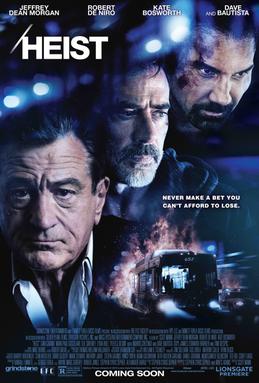
Heist takes place in Louisiana.  Francis “The Pope” Silva (Robert De Niro) is a mobster and businessman who owns a riverboat casino.  The Pope lives his life according to a set of simple but very specific rules.  He doesn’t lend money.  He doesn’t forgive people who betray him.  If you steal from him, he will track you down and he will get his money back and he will make you regret your decision.  Working as his main henchman is the sadistic Dog (Morris Chestnut).  The Pope’s former main henchman was a man named Luke Vaughn (Jeffrey Dean Morgan) but Luke grew tired of the violence and walked away from it all.  Now, Luke works as a dealer in The Pope’s casino.  His daughter is sick and Luke desperately needs $300,000 to pay her medial bills.  When The Pope refuses to give him the money, Luke teams up with security guard Jason Cox (Dave Bautista) and sets out to rob the place.

The robbery is carefully planned by Luke but, inevitably, things go wrong.  A security guard shows up earlier than he was supposed to.  A shootout leads to Jason’s best friend, Dante (Stephen Cyrus Sepher), getting shot.  The getaway driver panics and drives off, leading to Luke, Cox, and Dante hijacking a bus.  Cox orders the bus driver (D.B. Sweeney) to take them to Galveston but Luke is more concerned with getting the money to his daughter.  Meanwhile, two police officers — Kris Bajos (Gina Carano) and Detective Marconi (Mark-Paul Gosselaar) — follow the bus, each pursuing their own agenda.

Considering that this film is basically a low budget rip-off of Speed (albeit without a bomb threatening to take out the cast), Heist has an impressive cast and they all do a good job of elevating the film above its B-movie origins.  Don’t get me wrong.  There are hundreds of plot holes to be found in Heist.  The film’s big twist really doesn’t make much sense when you think about it.  But, in the end, Heist is an entertaining thrill ride that moves quickly enough that most viewers really won’t have time to obsess on all the lapses of logic.  Morgan plays his role with just enough heart that you want his criminal to succeed.  De Niro brings some extra layers to a role that could have been a caricature.  There’s a brief scene in which he meets his estranged daughter (Kate Bosworth) and, as a result, you suddenly see his character in an entirely new light.  As a character who seems like a much more sinister version of Zach Morris, Mark-Paul Gosselaar keeps you guessing.  And finally, Gina Carano — years before her cancellation — gives an earnest performance that works despite her character being rather inconsistently written.

Heist is an entertaining and fast-paced action film with a good cast and an interesting story.  If you can’t sleep, you might as well be entertained.

Previous Insomnia Files:

  1. Story of Mankind
  2. Stag
  3. Love Is A Gun
  4. Nina Takes A Lover
  5. Black Ice
  6. Frogs For Snakes
  7. Fair Game
  8. From The Hip
  9. Born Killers
  10. Eye For An Eye
  11. Summer Catch
  12. Beyond the Law
  13. Spring Broke
  14. Promise
  15. George Wallace
  16. Kill The Messenger
  17. The Suburbans
  18. Only The Strong
  19. Great Expectations
  20. Casual Sex?
  21. Truth
  22. Insomina
  23. Death Do Us Part
  24. A Star is Born
  25. The Winning Season
  26. Rabbit Run
  27. Remember My Name
  28. The Arrangement
  29. Day of the Animals
  30. Still of The Night
  31. Arsenal
  32. Smooth Talk
  33. The Comedian
  34. The Minus Man
  35. Donnie Brasco
  36. Punchline
  37. Evita
  38. Six: The Mark Unleashed
  39. Disclosure
  40. The Spanish Prisoner
  41. Elektra
  42. Revenge
  43. Legend
  44. Cat Run
  45. The Pyramid
  46. Enter the Ninja
  47. Downhill
  48. Malice
  49. Mystery Date
  50. Zola
  51. Ira & Abby
  52. The Next Karate Kid
  53. A Nightmare on Drug Street
  54. Jud
  55. FTA
  56. Exterminators of the Year 3000
  57. Boris Karloff: The Man Behind The Monster
  58. The Haunting of Helen Walker
  59. True Spirit
  60. Project Kill
  61. Replica
  62. Rollergator
  63. Hillbillys In A Haunted House
  64. Once Upon A Midnight Scary
  65. Girl Lost
  66. Ghosts Can’t Do It

Bless the Maker – The Dune Part Two trailer has arrived!


The trailer for Denis Villeneuve’s Dune Part Two was just released. We’re seeing some new faces in Florence Pugh as Princess Irulan, Austin Butler as Feyd, Lea Seydoux as Lady Margot and Christopher Walken as the Padishah Emperor Shaddam IV. I like Javier Bardem’s Stilgar telling Paul to “Keep things simple.” here. So far, it’s looking good!

Dune Part Two will be released on November 3rd.

Film Review: Avengers: Endgame (dir by the Russo Brothers)


(Minor Spoilers Below!  Read at your own risk.)

So, how long does the no spoiler rule for Avengers: Endgame apply?  There’s so much that I want to say about this film but I know that I shouldn’t because, even though it had a monstrous opening weekend, there are still people out there who have not had a chance to see the film.  And while this review will have minor spoilers because, otherwise, it would be impossible to write, I’m not going to share any of the major twists or turns.

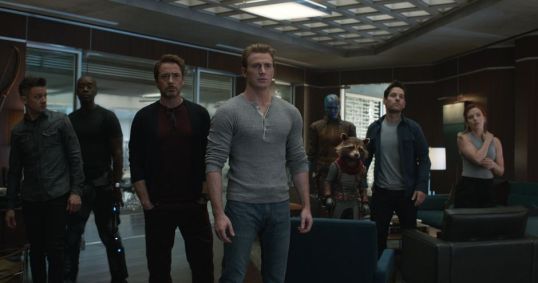
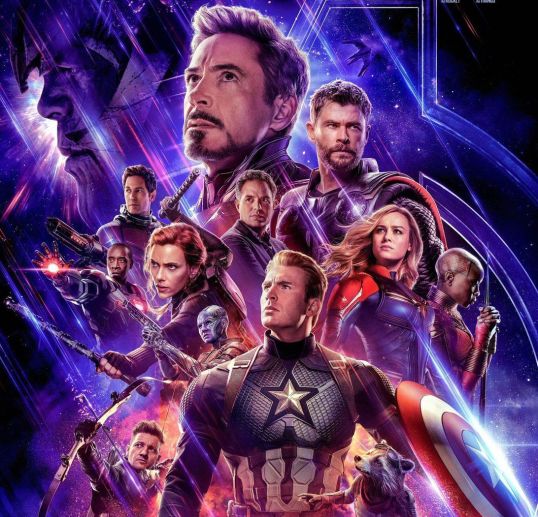
I will say this.  I saw Avengers: Endgame last night and it left me exhausted, angry, sad, exhilarated, and entertained.  It’s a gigantic film, with a plot that’s as messy and incident-filled as the cinematic universe in which it takes place.  More than just being a sequel or just the latest installment in one of the biggest franchises in cinematic history, Avengers: Endgame is a monument to the limitless depths of the human imagination.  It’s a pop cultural masterpiece, one that will make you laugh and make you cheer and, in the end, make you cry.  It’s a comic book film with unexpected emotional depth and an ending that will bring a tear to the eye of even the toughest cynic.  By all logic, Avengers: Endgame is the type of film that should collapse under its own weight but instead, it’s a film that thrives on its own epic scope.  It’s a three-hour film that’s never less than enthralling.  Even more importantly, it’s a gift to all of us who have spent the last ten years exploring the Marvel Cinematic Universe.

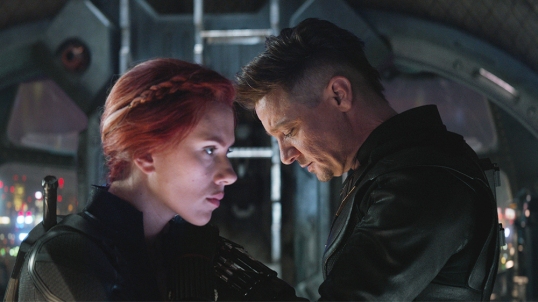
The film itself starts almost immediately after the “Snap” that ended Avengers: Infinity War and we watch as Clint Barton (Jeremy Renner, returning to the franchise after being absent in the previous film) finds himself powerless to keep his family from disintegrating.  After often being dismissed as the Avengers’s weak link, both Clint Barton and Jeremy Renner come into their own in the film.  As one of two members of the Avengers who does not have super powers, Clint serves as a everyperson character.  He’s a reminder that there’s more at stake in Endgame than just the wounded pride of a few super heroes.  When Thanos wiped out half the universe, he didn’t just wipe out Spider-Man, Doctor Strange, and Groot.  He also left very real wounds that will never be healed.

When the film jumps forward by five yeas, we discover that the world is now a much darker place.  When we see New York, the once vibrant city is now gray and deserted.  Our surviving heroes have all dealt with the Snap in their own way.  Clint is now a vigilante, killing anyone who he feels should have been wiped out by Thanos but wasn’t.  Thor (Chris Hemsworth) drinks and eats and feels sorry for himself.  Captain America (Chris Evans) attends support groups and, in one nicely done scene, listens as a man talks about his fear of entering into his first real relationship in the years since “the Snap.”  Tony Stark (Robert Downey, Jr.) is living as a recluse and is still blaming himself.  Hulk (Mark Ruffalo) is now an avuncular, huge, and very green scientist.  Only Natasha (Scarlett Johansson) remains convinced that the Snap can somehow be undone.  She’s right, of course.  But doing so will involve some unexpected sacrifices and a lot of time travel….

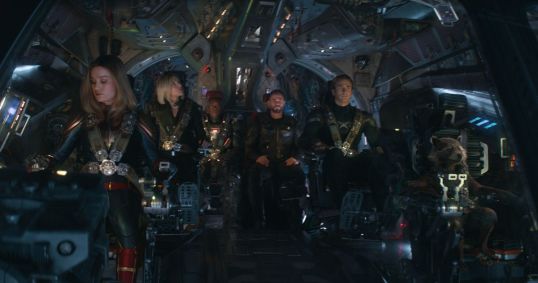
And that’s as much as I can tell you, other than to say that the film takes full advantage of both the time travel aspects (yes, there are plenty of Back to the Future jokes) and its high-powered cast.  With our heroes — which, along with the usual Avengers, also include Ant-Man (Paul Rudd) and Rocket Racoon (Bradley Cooper) — hopping through time and space, we get a chance to revisit several of the films that led up to Endgame and it’s a thousand times more effective than it has any right to be.  Yes, one could argue that the cameos from Robert Redford, Tom Hiddleston, Hayley Atwell, and others were essentially fan service but so what?  The fans have certainly earned it and the MCU has earned the chance to take a look back at what it once was and what it has since become.

Indeed, Avengers: Endgame would not work as well as it does if it hadn’t been preceded by 21 entertaining and memorable movies.  It’s not just that the MCU feels like a universe that it as alive as our own, one that is full of wonder, mystery, sadness, and love.  It’s also that we’ve spent ten years getting to know these characters and, as a result, many of them are much more than just “super heroes” to us.  When Tony Stark and Captain America argue over whether it’s even worth trying to undo the Snap, it’s an effective scene because we know the long and complicated history of their relationship.  When the Avengers mourn, we mourn with them because we know their pain.  We’ve shared their triumphs and their failures.  Tony Stark may be a guy in an iron suit but he’s also a man struggling with his own demons and guilt.  Steve Rogers may be a nearly 100 year-old super solider but he’s also every single person who has struggled to make the world a better place.  As strange as it may be to say about characters known as Iron Man, Captain America, and the Black Widow, we feel like we know each and every one of them.  We care about them.

Needless to say, the cast is huge and one of the great things about the film is that previously underused or underestimated performers — like Jeremy Renner, Scarlett Johansson, Paul Rudd, Don Cheadle, and Karen Gillan — all finally get a chance to shine.  As always, the heart of the film belongs to Chris Evans while Robert Downey, Jr. provides just enough cynicism to keep things from getting to superficially idealistic.  Chris Hemsworth and Mark Ruffalo get most of the film’s big laughs, each playing their borderline ludicrous characters with just the right combination of sincerity and humor.  Of course, Josh Brolin is back as well and he’s still perfectly evil and arrogant as Thanos.  But whereas Thanos was the focus of Infinity War, Endgame focuses on the heroes.  If Infinity War acknowledged that evil can triumph, Endgame celebrates the fact that good never surrenders.

As Endgame came to an end, I did find myself wondering what the future is going to hold for the MCU.  A part of me wonders how they’re going to top the past ten years or if it’s even possible to do so.  Several mainstays of the MCU say goodbye during Endgame and it’s hard to imagine the future films without their presence.  It’s been hinted that Captain Marvel is going to be one of the characters holding the next phase of the  MCU together and, fortunately, Brie Larson is a quite a bit better in Endgame than she was in her previous MCU film.  Hopefully, regardless of what happens in the future, Marvel and Disney will continue to entrust their characters to good directors, like the Russo Brothers, James Gunn, and Taika Waititi.  (Wisely, Disney reversed themselves and rehired James Gunn for the next Guardians of the Galaxy film.  Of course, Gunn never should have been fired in the first place….)

And that’s really all I can say about Avengers: Endgame right now, other than to recommend that you see it.  In fact, everyone in the world needs to hurry up and see it so we can finally start talking about the film without having to post spoiler warnings!

For now, I’ll just say that Avengers: Endgame is a powerful, emotional, and entertaining conclusion to one of the greatest cinematic sagas ever.

Film Review: Hotel Artemis (dir by Drew Pearce)


Oh, Hotel Artemis.

I had such high hopes for you.

Hotel Artemis, you may remember, was initially released way back in June and, at the time, it was advertised as being some sort of nonstop action thrill ride.  The commercials made it look totally over-the-top and exciting, which was I wanted to see it.  Of course, I didn’t see it because …. well, actually I don’t remember what was happening in June that kept me from going to the movies.  But there had to have been something going on because I not only missed seeing Hotel Artemis in the theaters but I also missed Ocean’s 8 and Hereditary as well.

Well, regardless of why I missed it the first time, I did finally get a chance to watch Hotel Artemis earlier this week and, unfortunately, it turned out to not be anything special.  It’s certainly not terrible.  It has its moments and the film looks great but, at the same time, it’s hard not to feel somewhat let down by the film.  Hotel Artemis has promise but much of its goes unrealized.

The film takes place in one of those vaguely defined futures where there’s a lot of rioting and a lot of militaristic cops.  In fact, the film opens with Los Angeles in the middle of one such disturbance.  The riot scenes attempt to go for a Purge-style intensity but, for the most part, they just kind of fall flat.  There’s a lot of scenes of people yelling and occasionally, a police transport rolls by but, for the most part, there’s no danger to the film’s riot.  It’s all just a bit too obviously choreographed.  You never get the feeling that things could just randomly explode.

The Hotel Artemis is a combination of a hotel and a hospital.  It’s run by Jean Thomas, who is better known as Nurse and who is played by Jodie Foster.  Jean was once a doctor but, haunted by the death of her son, she became an alcoholic and lost her license to practice medicine.  Severely agoraphobic, Jean has spent 22 years inside of the Hotel.  She only treats criminals and other people on the fringes of society.  Helping her is Everest (Dave Bautista), who helps to keep order in the often chaotic hotel.

All of Jean’s patients are given codenames, based on which room their occupying in the hotel.  There’s Acapulco (Charlie Day), who is wealthy and short-tempered and who is waiting for a helicopter to come pick him up.  And then there’s Nice (Sofia Boutella), an international assassin who gets to beat people while wearing this red gown that is absolutely to die for.  There’s also Wakiki (Sterling K. Brown), who is a bank robber who is worried that his partner, Honolulu (Brian Tyree Henry), is going to die from the wounds that he suffered during a robbery-gone-wrong.  Further complicating things is a gangster named The Wolf King (Jeff Goldblum) and Morgan (Jenny Slate), who needs Jean’s help but who also happens to be a cop.  Zachary Quinto is also in this film, playing the Wolf King’s son, because you really can’t make a pretentious genre film without giving a role to Zachary Quinto.

Anyway, there’s a pretty good action sequence towards the end of the film but it takes Hotel Artemis forever to get there.  Before that, you have to deal with a lot of talking but, unfortunately, none of the conversations are particularly interesting.  Hotel Artemis may clock in at 94 minutes but it feels considerably longer.  On the plus side, the cast is big and interesting but, on the negative side, nobody really seems to be that invested in their role.  It’s fun to watch Charlie Day play a bad guy but otherwise, the majority of the actors struggle with their thinly drawn (though certainly verbose) characters.  The majority of them struggle to convince us that they’re anything more than a group of talented actors slumming it in an action movie.  The fact that Jodie Foster received a good deal of praise for her performance in this film has everything to do with the fact that she’s Jodie Foster and little to do with anything that actually happens in the movie.

On a positive note, the movie looks great.  Visually, the Hotel Artemis is a fantastic creation that combines the decaying luxury of The Shining with the claustrophobic sterility of an underground bunker in a Romero zombie film.  (I’m thinking of the original Day of the Dead in particular.)  The Hotel itself is so fascinating that you can’t help but kinda resent that the film seems to be more interested in the boring people inside of the building than with the building itself.

Despite the superior production design, the film itself is slackly paced and never quite as a clever as it seems to think that it is.  Hotel Artemis is not a terrible film but it is a rather forgettable one.  It’s hard not to feel that it could and should have been a hundred times better than it actually was.

Check Out These Avengers: Infinity War Character Posters!


With the release of Avengers: Infinity War right around the corner, Marvel has released a whole new collection of character posters!  Just in case you were wondering who, from the MCU, is going to show up in Infinity War, here’s a partial reminder!

(By the way, the answer  would appear to be just about everyone who has ever appeared in an MCU film!)

Iron Man (Robert Downey, Jr)

Hulk (Mark Ruffalo)

Thor (Chris Hemsworth)

War Machine (Don Cheadle)

Black Widow (Scarlett Johansson)

Captain America (Chris Evans)

White Wolf (Sebastian Stan)

Falcon (Anthony Mackie)

Star-Lord (Chris Pratt)

Rocket and Groot (Bradley Cooper and Vin Diesel)

Gamora (Zoe Saldana)

Nebula (Karen Gillan)

Drax (Dave Bautista)

Scarlet Witch (Elizabeth Olsen)

Vision (Paul Bettany)

Black Panther (Chadwick Boseman)

Spider-Man (Tom Holland)

Doctor Strange (Benedict Cumberbatch)

Wong (Benedict Wong)

Mantis (Pom Klementieff)

Okoye (Danai Gurira)

Shuri (Letitia Wright)


Film Review: Guardians of the Galaxy Vol. 2 (dir by James Gunn)


(MINOR SPOILERS!  SPECIFICALLY, THE IDENTITY OF THIS FILM’S MAIN VILLAIN WILL BE REVEALED)

The Guardians of the Galaxy are back!

And this time, they’ve brought some new friends with them, friends with names like Kurt Russell, Sylvester Stallone, and … David Hasselhoff?

That’s right.  David Hasselhoff is now a part of the Marvel Cinematic Universe and somehow, it feels totally appropriate.  For all the words that have been written comparing Guardians of the Galaxy to the Star Wars franchise, it’s true ancestor is the 1978 Italian film, Starcrash.  (Perhaps not coincidentally, Starcrash was Hasselhoff’s film debut.)  Watch the trailer below and just try to tell me that you can’t imagine Chris Pratt and Zoe Saldana in the lead roles.

But enough about my obsession with Italian exploitation films.  I know the question that you want answered.  Is Guardians of the Galaxy Vol. 2 as good as the first one?

Well, it depends on how you look at it.  Guardians of the Galaxy Volume 2 is an absolute blast, a wonderfully entertaining film that mixes subversive comedy with sci-fi action.  Everyone from the first film — Chris Pratt, Zoe Saldana, Dave Bautista, Karen Gillan, Michael Rooker, and the voices of Bradley Cooper and Vin Diesel — is back and they’ve still got the same winning chemistry that made the first film so much fun.  Everyone is still committed to their roles, delivering even the strangest of dialogue with undeniable flair.  Nobody’s gotten bored with saving the universe yet.  The new additions to the cast are all well selected.  Kurt Russell totally disproves the assumption that MCU villains are never as interesting as their heroic opponents but, then again, it helps that he’s playing a character who has a memorable and odd backstory.  Once again, director James Gunn combines crowd-pleasing moments with his own sharp sense of humor.  If the pompous tone of Man of Steel and Batman v Superman made you sick, Guardians of the Galaxy Volume 2 is the perfect antidote.

Unfortunately, Volume 2 doesn’t provide the same thrill of discovery as the first film.  It’s easy to forget that, before the first film came out, a lot of people were predicting that Guardians of the Galaxy would be the first MCU film to flop at the box office.  The conventional wisdom was that, as opposed to a character like Captain America, no one, outside of a few comic book readers, knew who the Guardians of the Galaxy were.  Chris Pratt was just the goofy guy from Parks and Recreation.  A talking raccoon?  A walking tree?  It was all way too weird, the naysayers proclaimed, to appeal to a mainstream audience.

However, James Gunn proved them wrong.  Guardians of the Galaxy was not only the most successful MCU film to that date but it was also my pick for the best film of 2014.  I can still remember watching it for the first time and immediately falling in love with both the film’s skewered sensibility and Chris Pratt’s funny but soulful performance.  As opposed to a lot of films that were nominated for and won Oscars that year, Guardians of the Galaxy actually holds up after repeat viewings.

(Seriously, has anyone tried to rewatch Birdman lately?)

Going into the sequel, everyone now knows who the Guardians are and Chris Pratt is now a beloved film star.  Volume 2 has a lot to live up to and, for the most part, it succeeds.  It’s a tremendous amount of fun and, at the same time, it has a heart.  (The heart at the center of the Guardian of the Galaxy films is perhaps the biggest heart in the MCU.)

What is the film about?  Much like the first film, it’s about family.  After years of telling everyone that his father was David Hasselhoff, Peter Quill (Chris Pratt) finally meets his real father (Kurt Russell), a God-like figure named Ego.  Charismatic, cheerful, and just a little bit odd, Ego seems like the perfect father figure but he has some secrets of his own.  Russell gives a wonderful performance, making Ego one of the few MCU villains to be as interesting as the heroes.

While Peter is bonding with his dad, he is also being pursued by his adoptive father, the blue-skinned space pirate named Yondu (Michael Rooker).  Yondu has been rejected by both his adopted son and the rest of his adopted family.  The other space pirates are no longer loyal to him.  His former boss (Sylvester Stallone) wants nothing to do with him.  As silly as it all may sound, it’s also unexpectedly poignant, thanks to Michael Rooker’s performance.  Rooker has appeared in several of Gunn’s films.  He’s almost the Cary Grant to Gunn’s Alfred Hitchcock.  Rooker gives one of the best performances of his careeer in the role of Yondu.  It’s tempting to be dismissive of Yondu, with his blue-skin and his Alabama accent, but Rooker makes him one of the most compelling characters to ever be found in an MCU film.

Meanwhile, Rocket Raccoon (voiced again by Bradley Cooper) has become a surrogate father figure to Groot (voice by Vin Diesel), who is still just a baby tree.  (Groot, a living tree, was reduced to just a twig at the end of the first film.  Fortunately, Rocket planted the twig and, in another few movies, we’ll hopefully have a fully grown Groot.)  Yes, Baby Groot does get to dance, again.  At one point, one of the film’s villains forbids any of his henchmen from attacking Baby Groot because he’s just too adorable to destroy.  And he’s right!  After this movie, everyone will want a Baby Groot of their own.

Gamora (Zoe Saldana) has been reunited with her sister, Nebula (Karen Gilliam) and, once again, they spend most of the movie trying to kill each other.  I have three older sisters so I related to their relationship.

And finally, Drax (Dave Bautista) is still mourning his family.  Fortunately, he gets to spend some quality time with Ego’s odd assistant, an empath named Mantis (Pom Klementieff).  Drax and Mantis both have no idea how social interaction is supposed to work and their scenes together are definitely a highlight of the film.  Bautista and Klementieff share a really likable chemistry.  Bautista is one of those actors who can make you laugh just be giving the camera a quizzical look.  Drax may not be as a complicated as the other Guardians but that simplicity often makes him as interesting as his more complex compatriots.

The film’s not only about family.  It’s also a strike against elitism and a celebration for freedom.  Over the course of two films, the Guardians have battled against both an actual god and a fanatic who claimed to speak for God.  At a time when so many movie heroes are tools of authoritarianism, the Guardians of the Galaxy stand for freedom.  In many ways, Peter Quill is as much of a symbol for liberty as Captain America.  Captain America makes his point with a shield while Peter Quill makes his case by dancing.

As might be expected from an MCU film, Guardians of the Galaxy Volume 2 is full of thrilling visuals, exciting battles, and quotable one liners.  Even if it never reaches the heights of the first one, it’s a blast of a film and, as Arleigh told me it would, the finale brought tears to my mismatched eyes.  See it and have a good time.

Also, be sure to stick around through the entire end credits.  Along with a lot of clues about what might happen in the future of the MCU, there’s also one final Groot joke that made me laugh out loud.

Enjoy!