In this scene from 1967’s Barefoot in the Park, Robert Redford and Jane Fonda show us how to enjoy a honeymoon.
In this scene from 1967’s Barefoot in the Park, Robert Redford and Jane Fonda show us how to enjoy a honeymoon.
4 Shots From 4 Films is just what it says it is, 4 shots from 4 of our favorite films. As opposed to the reviews and recaps that we usually post, 4 Shots From 4 Films lets the visuals do the talking!
Today, TSL wishes a happy birthday to cinematographer Robert Richardson. It’s time for….
4 Shots From 4 Robert Richardson Films
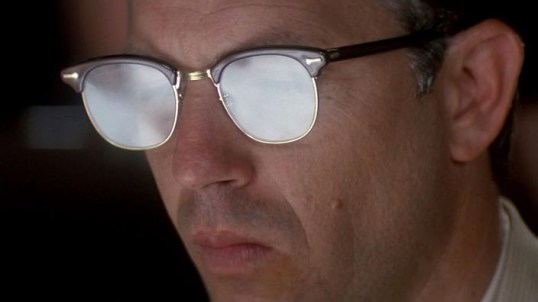
JFK (1991, dir by Oliver Stone, DP: Robert Richardson)
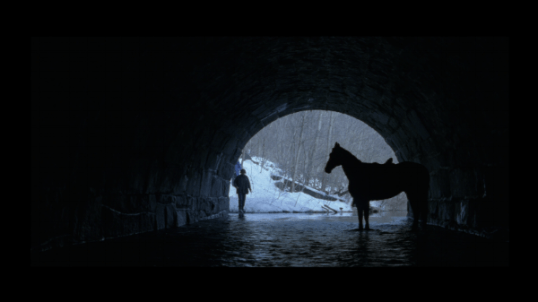
The Horse Whisperer (1998. dir by Robert Redford, DP: Robert Richardson)
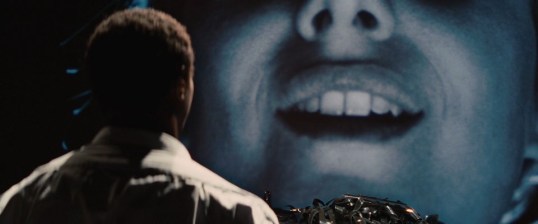
Inglourious Basterds (2009, dir by Quentin Tarantino, DP: Robert Richardson)
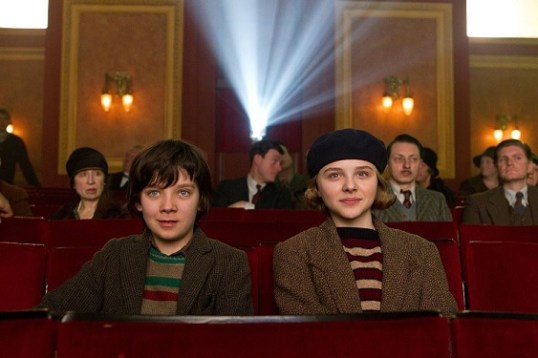
Hugo (2011, dir by Martin Scorsese, DP: Robert Richardson)
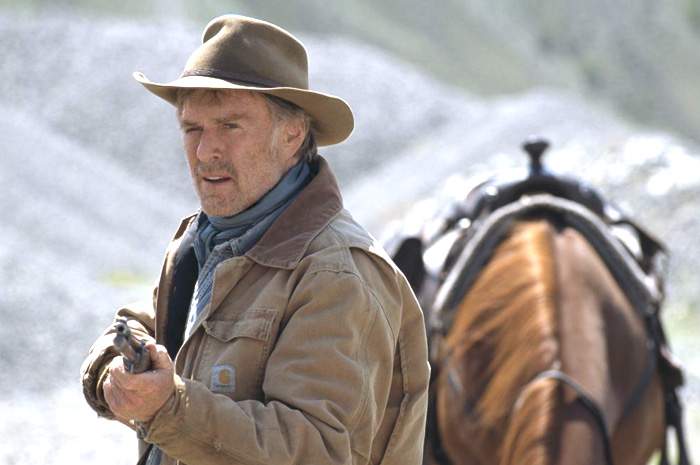
Recently, I was sitting on the back deck of my parents’ house visiting with my family. Of course, when I’m around movies are always a topic of conversation, and my sister brought up the fact that she had just watched AN UNFINISHED LIFE and really liked it. My sister has always loved Robert Redford, and when she brought him up, it was fun hearing my mom get on her case about her long-ago recommendation of UP CLOSE AND PERSONAL, that came without the appropriate warning of the movie’s tearjerker of an ending. That’s a no-no with my mom, and we all had a good laugh. When my wife and I got home, we were browsing the Paramount Plus streaming service, and lo and behold, there was AN UNFINISHED LIFE, so it just seemed like the right time to watch it!
The movie centers in on Einar Gilkyson (Redford), a Wyoming rancher who still hasn’t properly dealt with the death of his son about a decade earlier. He blames his daughter-in-law Jean (Jennifer Lopez) for the accident that killed him. When Jean shows up at his ranch, because she’s on the run from her abusive boyfriend Gary (Damian Lewis), Einar tells her that he doesn’t want her there. His heart softens though as she introduces him to Griff (Becca Gardner), the granddaughter that he never knew he had. This sounds like a setup for big-time melodrama, but director Lasse Hallstrom is able to keep things somewhat grounded as we watch this broken family attempt to reconnect.
It’s time for a confession… I’ve never been the biggest fan of Robert Redford. Now don’t get me wrong, that doesn’t mean that I don’t like him. It’s just that he’s so perfect, maybe too perfect?! My favorite actors are not perfect looking human beings, but they do have an undeniable charisma and screen presence. Actors like Charles Bronson, Roy Scheider, and James Woods immediately come to mind. As such, I’ve never made it a priority to watch all of Redford’s movies, although I’ve watched most of his best at some point in my life. I will say that I think he’s excellent in AN UNFINISHED LIFE. He’s still undeniably “Redford,” but age has a way of evening up the playing field, and this performance relies on his ability to embody a character slowly opening his heart after years of shutting himself off. His scenes with his granddaughter are especially strong, without seeming excessively manipulative. I may look more closely into his later career based on his work here.
I’m also not the biggest fan of Jennifer Lopez. I loved her in SELENA, the film that kickstarted her career, but other than OUT OF SIGHT and ANACONDA, I haven’t enjoyed much else in her filmography. With that said, I think she’s good here. Her character has made one bad decision after another since her husband died, but I can’t help but root for her to find some happiness. In real life, it would have taken a lot of courage to ask someone like Einar for help, and I do appreciate that she’s willing to humble herself for her daughter’s sake.
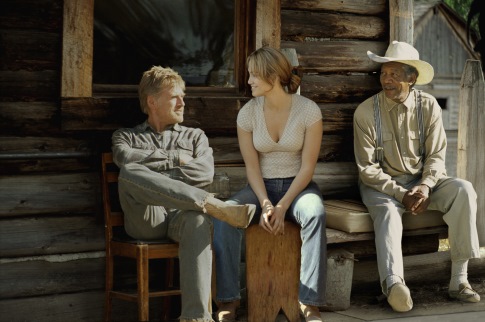
Have I mentioned that Morgan Freeman is also in the film in the role of Mitch Bradley, Einar’s injured ranch hand and closest friend? He brings his warmth and wisdom to the proceedings even though his character’s unique storyline, which revolves around being mauled by a bear, doesn’t always work. The characters played by Damian Lewis and Josh Lucas also don’t land that strongly. Lewis is Lopez’s abusive boyfriend, but his awful behavior is ultimately dealt with in a way that’s more cartoonish than you might expect in a serious drama. Lucas, who was born in my home state of Arkansas, is fine here as “Crane” Curtis, but he doesn’t have that much to do.
The Wyoming setting for our story is beautiful, but it was actually filmed in British Columbia. My wife spent 18 years of her life in Wyoming, and it’s generally not as green as the “Wyoming” presented here. That’s just a minor nitpick, because for the uninitiated, the setting is beautiful and makes you feel like you’re part of a modern day western. There’s just something romantic and comforting about that, and the wide-open spaces seem to offer endless chances for a new beginning.
Overall, while I don’t think AN UNFINISHED LIFE is a great movie, I enjoyed watching it. It’s a movie that understands the importance of forgiveness by showing us wounded characters who are willing to open themselves up to imperfect people who are just trying to be better. At the end of the day, if any of us want meaningful connections to the people in our lives, we’d better be willing to do the same.
Today would have been Max von Sydow’s 97th birthday. In today’s scene that I love, von Sydow plays a disarmingly polite assassin.
From 1975’s Three Days of the Condor:
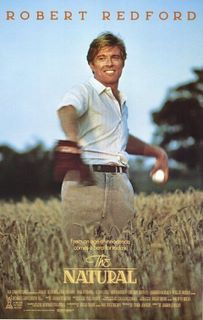
Earlier today, I finally watched The Natural.
As a baseball fan, it feels like heresy to admit that it took me this long to watch The Natural. I had seen plenty of scenes from the film. I knew the music because there’s no way you can watch as much as baseball as I do without hearing it at least a few times every scene. I knew about Wonderboy and the big home run and how Roy Hobbs came out of nowhere to lead the perennially last-place New York Knights to the championship series but I had never actually watched the entire film from beginning to end.
Until this afternoon.
When the movie started, I was worried. Robert Redford plays Roy Hobbs, an outstanding hitter whose promising career appears to be over when a mysterious woman (Barbara Hersey) shoots him in the gut. At the start of the movie, Roy and his girlfriend Iris (Glenn Close) are supposed to be teenagers but Redford was nearly 50 and Glenn Close was close to 40. The whole point of the first part of the movie is that Roy and Iris are young and they have their whole future ahead of them but the actors were both clearly middle-aged. There was a scene where Roy strikes out the best batter in the league (Joe Don Baker) and the batter kept calling Roy a kid but Redford looked like he was older than Baker.
The good thing is that you only have to buy Redford as being a teenager for about 15 minutes. After he gets shot, Roy stops playing for several years. By the time Roy makes it to the major leagues, he’s supposed to be older than everyone else. No one gives Roy much of a chance when he’s first signed to the New York Knights. The other players (including Michael Madsen) don’t respect him and the manager (Wilford Brimley) refuses to play him. But when Roy Hobbs finally does get a chance to swing his home-made bat, he hits homer after homer. Roy is a natural, the next great player even if he is at an age when most players retire. A journalist (Robert Duvall) tries to uncover his background. A seductress (Kim Basinger) tries to lead him astray. A gambler (Darren McGavin) and the team’s owner (Robert Prosky) try to get him to throw the big game. Anyone who has watched a baseball game knows how it ends because we’ve all heard the music and seen that clip. But even if everyone knows how the story concludes, it’s impossible not to cheer when Roy gets a hit and to feel bad when he takes a strike. Redford may have been old for a baseball player but he looked good out there, swinging that bat and throwing that ball.
I loved The Natural. It’s extremely sentimental movie. Sometimes, it feels old-fashioned. That’s perfect for baseball, though. Baseball is a sentimental, old-fashioned game and the story of Roy Hobbs is what baseball is all about. The Knights are behind for most of the season. Roy hits a slump. But neither he nor the team ever give up because they know that baseball is a game of endurance. It’s not like football, where you just have to win 9 games to make it to the playoffs. Baseball is about never giving up, no matter what the score is. Even the movie’s supernatural aspects — the sudden storms, a lightning bolt hitting a tree and creating Wonderboy, and even Glenn Close looking like an angel in the stands — work because baseball is a mystical sport. It’s the closest thing we have to a spiritual sport.
You couldn’t make a movie like The Natural about football or basketball. Only the game of baseball could have given us The Natural.
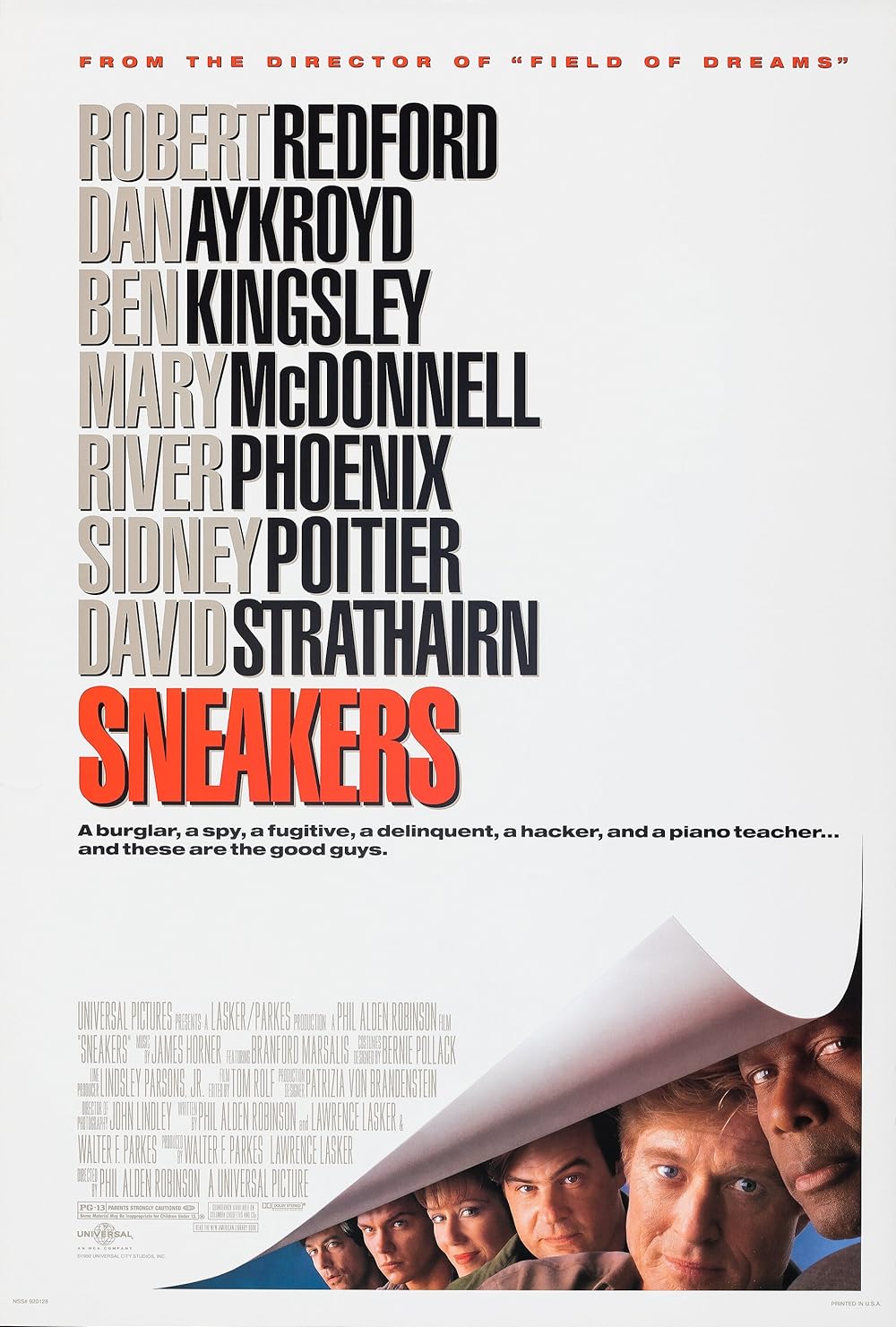
“The world isn’t run by weapons anymore, or energy, or money. It’s run by little ones and zeroes, little bits of data. It’s all just electrons.” — Cosmo
Sneakers is one of those early-’90s studio thrillers that feels oddly cozy for a movie about global surveillance and information control. It plays like a hangout movie that just happens to revolve around a world-breaking black box, and whether that balance works for you will pretty much decide how much you click with it.
Set in San Francisco, Sneakers follows Martin Bishop (Robert Redford), a one-time radical hacker now leading a boutique team that gets paid to break into banks and corporations to test their security. When a pair of supposed NSA agents lean on him about a skeleton in his past, they strong-arm him into stealing a mysterious “black box” from a mathematician, which turns out to be a codebreaker capable of cracking pretty much any system on Earth. From there, the crew gets pulled into a bigger conspiracy involving shady figures and high stakes, with Martin confronting echoes from his activist days.
The first thing that jumps out about Sneakers is the cast, which is frankly stacked even by modern standards. Redford brings an easy, weathered charm to Bishop; there’s a low-key joke baked into the movie that this legendary leading man is now playing a guy who looks like he spends more time worrying about his back pain than saving the world, and it works. He’s surrounded by a motley crew: Sidney Poitier’s ex-CIA operative Crease, Dan Aykroyd’s conspiracy-addled tech nut Mother, David Strathairn’s blind audio savant Whistler, and River Phoenix’s eager young hacker Carl. Mary McDonnell rounds things out as Liz, Martin’s ex, who gets roped back into his orbit and ends up doing some of the film’s most memorable social-engineering work.
What makes this lineup click—and really shine—is how effortlessly the ensemble works together, especially with Robert Redford and Sidney Poitier anchoring it as the team’s leaders. Redford’s Bishop is the steady, pragmatic brain, always one step ahead but grounded by his regrets, while Poitier’s Crease brings that sharp-edged authority from his CIA days, barking orders with a mix of gruffness and loyalty that keeps everyone in line. Their dynamic is electric: you get these moments where Bishop’s quiet scheming bounces off Crease’s no-nonsense intensity, like when they’re coordinating a break-in and trading barbs mid-scheme, and it sells the years of trust they’ve built. It elevates the whole group, giving the younger or quirkier members—Mother’s wild theories, Whistler’s uncanny ears, Carl’s fresh energy—a solid foundation to riff off, turning what could be chaos into a tight, believable unit. Phil Alden Robinson directs the film almost like an ensemble comedy interrupted by bursts of espionage, so the banter and the little grace notes between jobs end up being as memorable as the heists themselves. There’s a looseness to the way the team bickers, teases, and riffs on each other that sells the idea they’ve been doing this for years, long before the plot kicked in. You feel that especially in scenes where they’re all huddled around some piece of tech or puzzling out a clue; the script allows them to overlap, crack side jokes, and be fallible instead of treating them like slick super-spies who never misstep.
Tonally, the movie walks an interesting line. On one hand, this is very much a tech thriller about the power of information, with the ominous “Setec Astronomy” anagram (“too many secrets”) tying it all together. On the other, this is a film where an extended sequence revolves around tricking a socially awkward engineer on a date so they can steal his voice patterns and credentials, and the whole thing plays like a romantic caper more than anything. Robinson leans hard into suspense in key stretches—most notably toward the end, where tension builds through clever set pieces involving motion sensors, improvised skills, and closing threats—but even then the movie never loses its sense of mischief.
That playfulness can be both a strength and a limitation. The upside is obvious: Sneakers is fun. It’s easy to watch, easy to rewatch, and it rarely drowns you in jargon for the sake of sounding smart. Instead, it abstracts the tech into clear stakes—this box breaks codes, this system controls money and power—so you always understand the “why” behind every scheme even if you don’t follow every “how.” The downside is that, for a movie nominally about the terrifying implications of a universal decryption key, it doesn’t dig as deeply into the horror of that idea as it could. It gestures at themes of privacy, state overreach, and the weaponization of data, but it’s more interested in using those ideas as a playground than as something to rigorously interrogate.
Viewed from 2026, the tech is obviously dated—landlines, old terminals, magnetic cards—but that almost works in the film’s favor now. There’s a retro-futurist charm to seeing characters talk about “ones and zeroes” and the power of information as if they’re whispering forbidden knowledge, when today that conversation is basically the nightly news. At the time, the film was praised for being ahead of the curve on the idea that whoever controls data controls everything, and you can still feel that prescience. The irony is that what was once cutting-edge has softened into a kind of warm nostalgia, which might be why the movie has quietly settled into cult-favorite status rather than staying in the mainstream conversation.
On a craft level, the movie is sturdy across the board. John Lindley’s cinematography keeps things bright and clean rather than shadow-saturated, which reinforces that lighter tone; San Francisco looks lived-in and slightly mundane, not like a glossy cyber-noir playground. James Horner’s score is a big asset: a jazz-inflected, airy sound that gives scenes a sense of cool rather than danger, which again nudges things toward caper more than hard thriller. It’s the kind of soundtrack that sneaks into your head and quietly sets the mood without demanding too much attention, and a lot of fans single it out as one of his more underappreciated efforts.
If there’s a major weak spot, it’s probably in how the film handles its big ideas and antagonists. The central conflict draws on ideological clashes from the characters’ pasts, but it mostly serves as a charismatic foil rather than a fully fleshed-out debate. The story doesn’t push too hard on challenging cautious pragmatism versus radical change, or probe deeply into who benefits from the status quo. For a tale built on “too many secrets,” the moral landing feels predictable rather than revelatory.
The film also shows its age in how it uses certain characters, especially Liz and Carl. McDonnell gets moments to shine—her date with Werner Brandes is a highlight—but Liz is often pushed to the side once the plot machinery gets going, which is a shame given the sparks between her and Redford. River Phoenix’s Carl is similarly underused; he’s the young blood in a team of older pros, and you can see hints of a more emotionally grounded arc there, but the film keeps him mostly in comic-relief mode. It doesn’t derail the movie, but it does contribute to the sense that Sneakers is more interested in being a breezy ensemble hang than in fully developing everyone it introduces.
Still, it’s hard to deny the movie’s overall charm. The central heist beats are cleanly staged, the reversals are satisfying without being overcomplicated, and the script gives almost every member of the team at least one clutch contribution so it feels like a true group effort. The later stretches cleverly tie together the tech setup and character dynamics, ending on a light coda that underscores the film’s affection for its quirky crew over global intrigue.
As for how it holds up, Sneakers isn’t an untouchable classic, but it’s a very easy film to recommend if you have any affection for ’90s thrillers, ensemble casts, or tech-adjacent stories that don’t drown you in circuitry diagrams. Some of its politics feel glib, some of its gadgets are charmingly antique, and its big questions about Information Age ethics are more backdrop than deep dive. But the film’s mix of laid-back humor, light suspense, and grounded, slightly rumpled characters gives it a distinct flavor that a lot of modern, hyper-slick hacker movies lack.
If you go in wanting a serious, hard-edged exploration of cyber-warfare and state power, Sneakers will probably feel like it’s only skimming the surface. If you’re in the mood for a smart, lightly twisty caper that lets you spend two hours with a killer cast tossing around clever dialogue amid escalating capers, it’s still a very satisfying watch.
In this scene from 1967’s Barefoot in the Park, Robert Redford and Jane Fonda show us how to enjoy a honeymoon.
4 Shots From 4 Films is just what it says it is, 4 shots from 4 of our favorite films. As opposed to the reviews and recaps that we usually post, 4 Shots From 4 Films lets the visuals do the talking!
RIP, Robert Redford. He was not just an actor but a director as well.
4 Shots From 4 Robert Redford Films
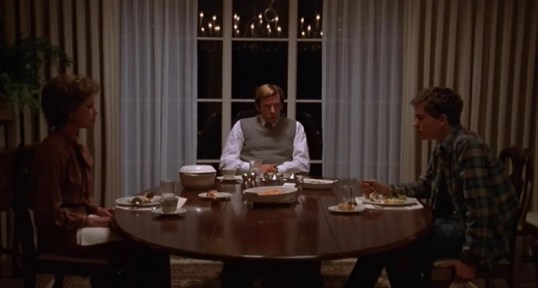
Ordinary People (1980, dir by Robert Redford, DP: John Bailey)
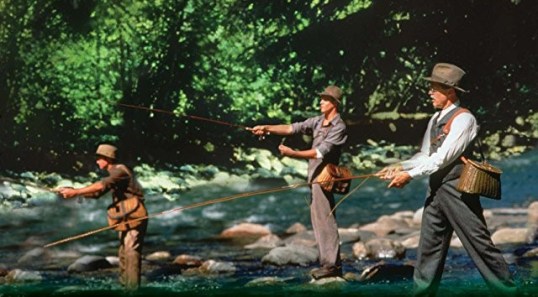
A River Runs Through It (1992, dir by Robert Redford. DP: Philippe Rousselot)
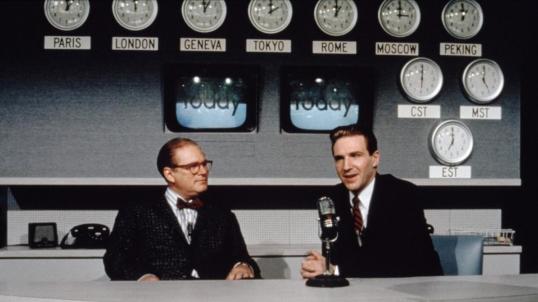
Quiz Shown (1994, dir by Robert Redford, DP: Michael Balhaus)
The Horse Whisperer (1998. dir by Robert Redford, DP: Robert Richardson)
4 Shots From 4 Films is just what it says it is, 4 shots from 4 of our favorite films. As opposed to the reviews and recaps that we usually post, 4 Shots From 4 Films lets the visuals do the talking!
Today, TSL wishes a happy birthday to cinematographer Robert Richardson. It’s time for….
4 Shots From 4 Robert Richardson Films
JFK (1991, dir by Oliver Stone, DP: Robert Richardson)
The Horse Whisperer (1998. dir by Robert Redford, DP: Robert Richardson)
Inglourious Basterds (2009, dir by Quentin Tarantino, DP: Robert Richardson)
Hugo (2011, dir by Martin Scorsese, DP: Robert Richardson)
4 Shots From 4 Films is just what it says it is, 4 shots from 4 of our favorite films. As opposed to the reviews and recaps that we usually post, 4 Shots From 4 Films lets the visuals do the talking!
Today, I’m using this feature to take a look at the history of the Academy Award for Best Picture. Decade by decade, I’m going to highlight my picks for best of the winning films. To start with, here are 4 shots from 4 Films that won Best Picture during the 1980s! Here are….
4 Shots From 4 Best Picture Winners: The 1980s
Ordinary People (1980, dir by Robert Redford, DP: John Bailey)

Chariots of Fire (1981, dir by Hugh Hudson, DP: David Watkin)
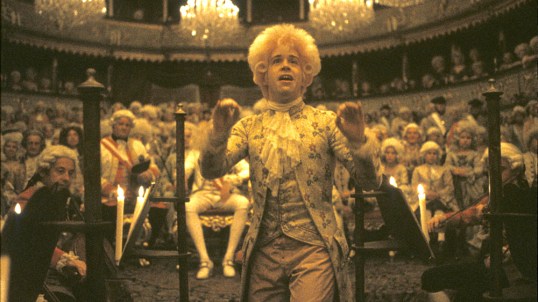
Amadeus (1984, dir by Milos Forman, DP: Miroslav Ondříček)
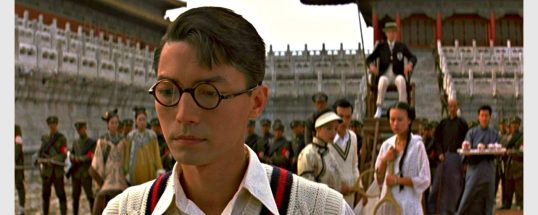
The Last Emperor (1987, dir by Bernardo Bertolucci, DP: Vittorio Storaro)

