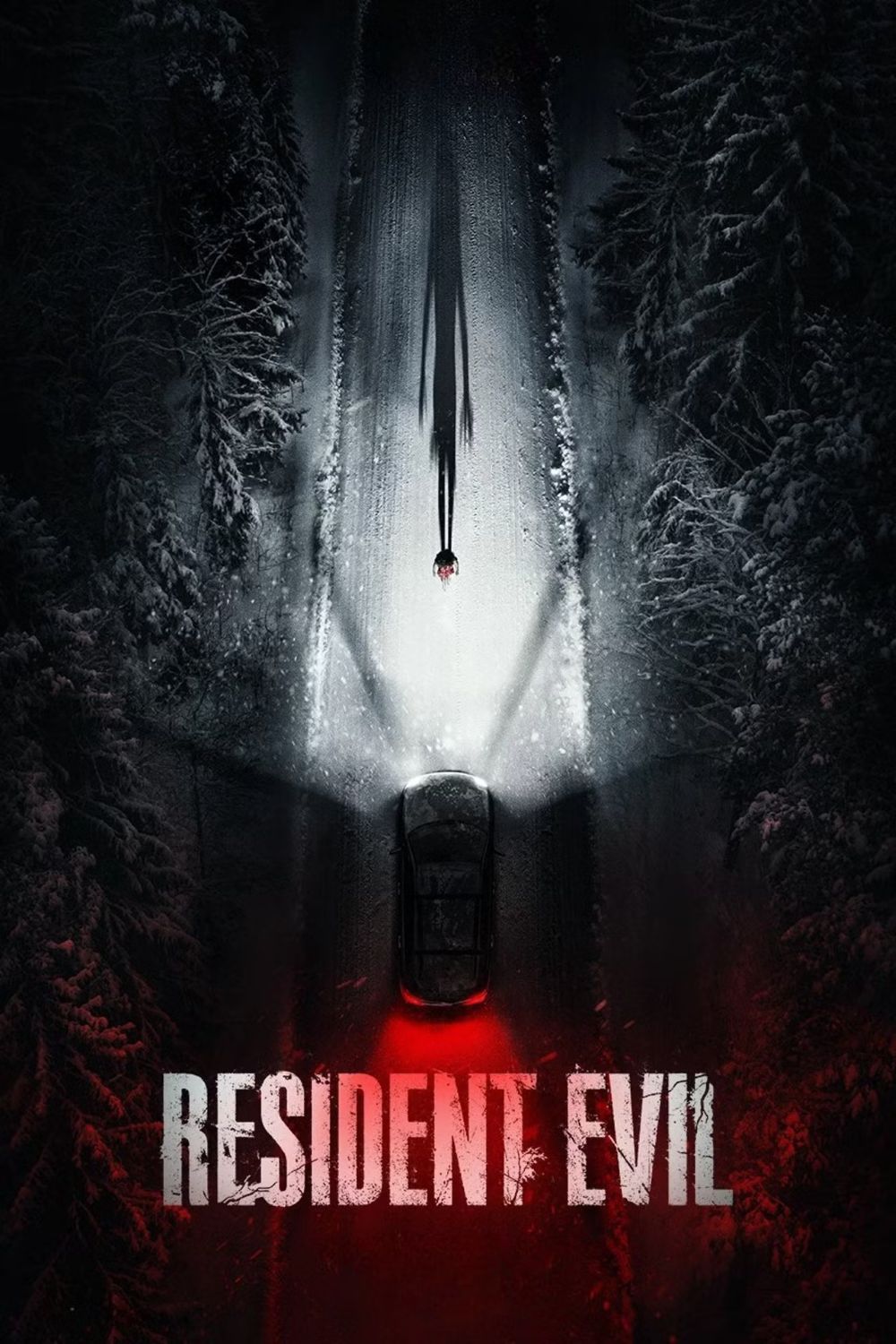
Review: Resident Evil (dir. by Zac Cregger)


“I’ve only used a gun in video games.” — Bryan

Resident Evil is a smart, tense, and surprisingly faithful reinvention of Capcom’s long-running survival-horror series—not because it tries to copy a single game beat for beat, but because it understands what makes the games unnerving in the first place. Written and directed by Zac Cregger, the film uses the world of Resident Evil as its foundation while telling a new story during the Raccoon City outbreak. Its main character is Bryan, played by Austin Abrams, an ordinary medical courier whose attempt to complete a delivery to Raccoon City General Hospital drops him into the early stages of a biological disaster. He is not a S.T.A.R.S. officer, a government agent, or a pre-established franchise hero. He is simply a guy trying to finish a job and survive a night that becomes more horrifying, chaotic, and impossible with every block he crosses.

That basic setup proves to be one of the movie’s smartest choices. Resident Evil has no shortage of iconic protagonists, from Chris Redfield and Jill Valentine to Leon S. Kennedy and Claire Redfield, but Bryan gives the film a fresh perspective on its apocalypse. He is not entering Raccoon City with a gun, years of training, or inside knowledge of Umbrella. He starts as someone who does not understand why parts of the city are suddenly locked down, why emergency rooms are overwhelmed, or why ordinary people are behaving with terrifying violence. That makes him a natural audience surrogate, but he is not just a blank stand-in. Austin Abrams gives Bryan a nervous, tightly wound energy that fits someone constantly trying to keep pace with a situation that has already moved beyond anyone’s control.

The decision to center an everyman is also a strong way of translating the vulnerability of the games. In a great Resident Evil game, the player might eventually find a shotgun, healing items, and enough ammunition to handle a dangerous enemy, but the first hours are defined by instability. There is never quite enough ammo. There is never a guarantee that the room ahead is safe. You learn the layout of a location because you have to, not because exploration is relaxed. Cregger’s movie cannot reproduce the exact tension of an inventory screen or the anxiety of deciding whether to use a green herb now or save it for later, but it captures the emotional logic behind those mechanics. Bryan makes choices with incomplete information, moves through increasingly hostile spaces, and keeps going even when every instinct tells him to turn around and run.

What makes the film especially interesting is that it does not adapt any one game in the series. This is not a straight retelling of the Spencer Mansion incident from Resident Evil, Leon and Claire’s first night in Resident Evil 2, or Jill’s escape from Nemesis in Resident Evil 3. Instead, Cregger uses the games as backdrop and inspiration for an original story set in the franchise’s universe. The film takes place alongside the Raccoon City outbreak associated with Resident Evil 2, but Bryan’s journey is separate from the established storylines that fans already know. That may disappoint viewers who want an exact cinematic recreation of every familiar character and location, but it is ultimately the movie’s greatest advantage.

A strict adaptation would have to navigate an almost impossible set of fan expectations. If the movie directly followed Resident Evil 2, viewers would be waiting for the exact arrival at the Raccoon City Police Department, the exact early meetings between Leon and Claire, the exact role of Ada Wong, the exact appearances of William Birkin and Mr. X, and the exact descent into Umbrella’s underground facilities. A direct version of the original Resident Evil would carry the same burden with the Spencer Mansion, the S.T.A.R.S. team, the laboratory, and the Tyrant. That approach can quickly make a movie feel less like a story and more like a checklist. Cregger avoids that trap by taking the series’ atmosphere, visual identity, rules, and mythology, then building a new nightmare around them.

That freedom restores a sense of uncertainty. Even viewers who know Resident Evil 2 inside and out cannot assume they know where Bryan’s route will take him, who can be trusted, or when the next threat will appear. The film can nod toward familiar Resident Evil concepts without making them feel like obligatory fan-service stops. A locked facility, an Umbrella insignia, a contaminated corridor, or the emergence of a more elaborate biological threat carries weight because it serves the story first. The pleasure comes from seeing the franchise’s DNA interpreted in a fresh way, not from watching the movie pause so the audience can recognize a collectible reference.

Umbrella is treated as much more than a logo or a few bits of background lore. The company remains the central force behind the horror, and that gives the film a more specific personality than a typical zombie outbreak story. Umbrella is terrifying because it represents private power with no moral limit: a corporation able to hide experiments, manipulate information, weaponize biology, and treat ordinary people as expendable collateral. Its infected victims and bio-organic weapons are not random monsters wandering into the story. They are products. Someone designed them, approved them, tested them, and determined that whatever potential value they offered was worth the risk. That is the darker edge of Resident Evil: the monsters are terrible, but the systems that created them are worse.

Cregger understands that this corporate horror needs to feel physical. A zombie is frightening because it is a person reduced to a violent, decaying shell. A more advanced creature is frightening because it reveals experimentation that has pushed life beyond recognizable limits. The body horror works best when it does not feel ornamental. It should make the audience imagine the research process behind the mutation, the human cost of the experimentation, and the awful combination of arrogance and indifference that allowed it to happen. Resident Evil does not need to constantly escalate into larger monsters merely for spectacle. Its creatures matter when they feel like increasingly disturbing evidence of what Umbrella has been building in secret.

Cregger’s background makes him an unusually strong fit for this material. Barbarian worked because it transformed a familiar location into a space of escalating dread. The house at the center of that film is not just a setting; it becomes a trap, a maze, and a place with its own buried history. Cregger knows how to make architecture feel dangerous. He understands that a corridor, a basement, an unlit stairwell, or a locked door can generate more tension than an explosion if the audience believes something might be waiting just outside the frame. That is basically the visual language of Resident Evil.

The games have always relied on locations that feel compromised. The Spencer Mansion in Resident Evil, the Raccoon City Police Department in Resident Evil 2, and the ruined streets in Resident Evil 3 turn places that should represent order, security, or civilization into traps. A police station becomes a fortress that cannot protect anyone. A hospital becomes a source of infection. A laboratory becomes proof that the disaster was not an accident. Cregger’s film channels that environmental fear well. Bryan’s path through Raccoon City is not just a string of monster encounters. It becomes a worsening descent through spaces that are failing one after another, with every new location offering a possible route forward while also revealing another level of the catastrophe.

The basic premise involving Bryan’s medical delivery gives the movie a focused sense of movement without spoiling the larger story. He has a practical objective, but each step toward completing it pushes him deeper into Raccoon City’s outbreak. The film lets the audience learn alongside him through half-understood warnings, panicked strangers, sealed-off areas, fragments of information, and signs that the official story does not add up. Cregger does not rush to explain every piece of Umbrella’s involvement immediately. He lets the mystery build around Bryan’s immediate need to survive, which is exactly how the strongest Resident Evil games turn scattered notes, hidden rooms, and locked pathways into part of their storytelling.

The influence of Weapons is especially clear in that willingness to let confusion and dread hang in the air. Cregger has shown an interest in narratives where the audience slowly pieces together a larger horror from incomplete perspectives and disturbing details. Resident Evil applies that instinct to a world built around secrecy. Umbrella does not announce itself with a complete explanation. Its presence is felt through the consequences: infected civilians, closed facilities, experiments that have slipped into the open, and the growing realization that Raccoon City’s crisis has roots much deeper than a random medical emergency. That approach turns exposition into suspense. The audience wants answers, but it also understands that every answer is likely to lead somewhere worse.

The film’s tone is another area where Cregger’s sensibility helps. Resident Evil should be scary, but it should not pretend that the series is grounded, ordinary horror. The franchise has always mixed genuine survival dread with B-movie science fiction, action-movie intensity, melodrama, and moments of pure, glorious weirdness. The same series that can make a player afraid of opening a narrow hallway door can also introduce giant mutant reptiles, insects, experimental super-soldiers, and outlandish biological mutations. Cregger seems comfortable operating in that space. Barbarian showed that he can move between dark humor, disgust, shock, and legitimate tension without flattening the experience into parody. That balance is crucial for Resident Evil, which should be intense without becoming embarrassed by its own pulp imagination.

The film is strongest when it lets the strange material land through the characters’ reactions rather than making a joke of it. Bryan does not become an instant action hero who dispatches monsters with effortless confidence. His fear, exhaustion, and disbelief help ground the increasingly bizarre developments around him. When the story introduces threats beyond the initial infected, those moments work because they feel like the next horrible stage of Umbrella’s hidden program rather than a required entry in a franchise encyclopedia. Cregger understands that a recognizable monster or concept only matters if it changes the stakes for the character in front of it.

There is also welcome restraint in the scale of the movie. Raccoon City’s outbreak is huge, but Resident Evil keeps the experience close to the ground. It is not mainly about elite military units, globe-spanning conspiracies, or invincible heroes fighting through armies of infected. It is about one man trying to get through a city that has become a death trap. A blocked street becomes a serious obstacle. A working car becomes a lifeline. A few infected people can be overwhelming when Bryan has limited ammunition, no clear escape route, and no way to know who has already turned. That survival focus lets the film preserve the essential question behind every good Resident Evil scenario: not “How can the hero kill everything?” but “How can the hero make it through the next room?”

Cregger’s narrative choices will probably alienate a certain segment of the fanbase, and that is understandable. Some viewers will want a movie built around Leon, Claire, Chris, Jill, or another established character. Others will want a cleaner adaptation of a specific game, with its canonical set pieces, key relationships, and familiar story beats intact. Those are reasonable desires, especially because Resident Evil has such an enormous cast of beloved characters and such a rich backlog of stories that have never been adapted faithfully. Cregger’s movie is taking a chance by prioritizing an original protagonist and a separate narrative over direct adaptation.

But that risk is also what makes the film work. Fans who go in with open expectations may be surprised by how naturally it fits inside the Resident Evil universe. It does not need to repeat every event from the games to understand their identity. The movie has the oppressive spaces, the escalating survival pressure, the corporate conspiracy, the infection-driven horror, and the feeling that any new revelation will only lead deeper into a nightmare. Bryan’s story feels like a side route through Raccoon City’s catastrophe—a story that could exist in the margins of the games without contradicting the dread, danger, and bizarre biohazard logic that define them. The film asks fans to accept that it is not trying to replace the games they love. It is trying to tell another story that could only happen in this universe.

Ultimately, Zac Cregger’s Resident Evil succeeds because it recognizes that the franchise’s appeal is not limited to familiar names, costumes, creatures, or Umbrella logos. It is about the sickening feeling of being trapped in a hostile place with too little information, too few resources, and no guarantee that the person beside you will still be alive—or human—by the next scene. By making Bryan an ordinary medical courier caught in an outbreak, Cregger gives the audience a vulnerable and compelling guide through Raccoon City. By using the games as inspiration instead of adapting a single title word for word, he gives the story space to surprise viewers who already know the series inside and out.

As a fan of the games, the film more than hits the mark of what a Resident Evil movie should feel like. It has the oppressive locations, slow-burn conspiracy, grotesque biological horror, corporate corruption, and sense of escalating hopelessness that define the series at its best. More importantly, it captures the survival-horror tension that has always been at the heart of the games: the dread of stepping into an unfamiliar room, the suspicion that supplies will not last, and the sinking realization that every answer leads deeper into Umbrella’s nightmare.

As a horror fan, Resident Evil also confirms that Zac Cregger is one of the best filmmakers currently working in the genre. After Barbarian and Weapons, this makes him three for three. Each film has its own identity, but all three display the same gifts: command of suspense, strikingly unsettling imagery, a feel for dark humor that never entirely breaks the danger, and the confidence to take an audience somewhere more disturbing than it expects. Resident Evil turns Raccoon City into a living maze of infection, secrecy, and panic, where every locked door feels like it might lead to an escape—or to the worst possible decision. It is not merely a strong video-game adaptation. It is another major win for Cregger, and a reminder that the right filmmaker can make even one of horror gaming’s most familiar worlds feel frighteningly new.

A chill in the air comes with Zach Cregger’s Resident Evil trailer!


Constantin Film really could use a win when it comes to the Resident Evil movies. Despite veering off the path of most Capcom’s video game franchise, their movies were both successful (to a degree) and enjoyable. Though I didn’t catch 2021’s Resident Evil: Welcome to Raccoon City, my cousin tells me it’s pretty awful. 

I woke up this morning to find Zach Cregger’s developed his own entry to the series, and his name alone is enough to spur a bit of excitement. As the director of 2022’s Barbarian and 2025’s Academy Award Winner (for Amy Madigan), Weapons, he has an idea of how to bring a bit of horror on the screen. Add to that, Darius Wolski (The CrowDark CityAlien: Covenant) is handling the cinematography. Maybe they’re on to something here? 

It looks like the film takes place in a snowy area, and I’m not entirely sure it has any real connection to the games (or prior films), but honestly, perhaps a fresh start is the way to go here. The film reunites Cregger with his Weapons star Austin Abrams (that tent fellow), along with Paul Walter Hauser (Fantastic Four: First Steps), Kali Reis (Mercy) and Zach Cherry (Amazon’s Fallout). We’ll find out when Resident Evil premieres in cinemas on September 18th. 

Catching Up With The Films of 2025: The Fantastic Four: First Steps (dir by Matt Shankman)


I have to admit that I groaned when Marvel’s The Fantastic Four: First Steps opened with a title card informing me that it was taking place on “Earth-828.”

You have to understand that all of the multiverse nonsense is the one of the main things that led to me losing interest in both the Marvel and the DC films.  The idea that there are multiple Earths out there and they’ve all got different versions of the same heroes and villains just feels incredibly lazy to me.  It’s like a get out of jail free card.  If you make a bad movie, you can just claim that it was took place on another Earth.  If a character dies on one Earth, it doesn’t really matter because there’s another version out there.  What are the actual stakes when there’s a million different Earths to choose from?  For that matter, if I’m presumably living on Earth-1, why should I care about Earth-828?  Earth-828 has nothing to do with me.

Imagine my surprise, then, when one of the best things about the film was that it turned out to be that it was taking place on an alternate Earth, one that mixes the culture of the 1960s with advanced technology and a retro-futuristic style.  This is a rare Marvel film that is enjoyable just to look at.  The production design is top-notch, mixing the past with the future in a very playful way.  As much as I dislike the whole multiverse thing, Earth-828 does seem like it would be a fun place to visit.

Earth-828 has advanced technology because of its only team of super heroes, the Fantastic Four.  Fortunately, Marvel seems to understand that 1) origin stories tend to be bland in general and 2) viewers have already had to sit through two disappointing and presumably unrelated Fantastic Four films that centered around them getting their powers.  So, First Steps opens with the team having already taken their trip into space, the one that led to them returning with altered DNA.  Reed Richards (Pedro Pascal) can stretch himself.  His wife, Susan Storm Richards (Vanessa Kirby), can turn invisible and knock things around with …. invisibility rays, I guess.  Susan’s brother, Johnny (Joseph Quinn), can burst into flame and fly.  (Wow, DNA is amazing!)  And their friend, Ben Grimm (Ebon Moss-Bachrach), has skin that has been transformed into a layer of orange rock.  Ben can knock holes in walls but he can’t seem to get the world to understand that there is an intelligent and kind-hearted soul underneath the fearsome exterior.  The citizens of Earth-828 are worshipful of the Fantastic Four and the team has ushered in an era of peace.

When a naked silver woman on a surfboard (Julia Garner) appears in Times Square, she announces that Earth has been selected as the latest feast for Galactus (Ralph Ineson), a giant creature who is so powerful that he must consume planets in order to satisfy his appetite.  Galactus offers to spare Earth but only if he is given Reed and Susan’s baby, Franklin.  Galactus says that Franklin possesses the “power cosmic,” which is something that I assume we’re going to be hearing a lot about over the next few MCU films.

As far as later phase Marvel productions are concerned, The Fantastic Four: First Steps is an entertaining-enough film.  Vanessa Kirby is a bit on the dull side as Sue but it should be noted that, in all of the various film versions of The Fantastic Four, Sue has always been the least interesting member of the group.  Pascal is likable as Reed, even if his stretchy superpower feels a bit silly.  Ebon Moss-Bachrach and Joseph Quinn both give strong performances, with Quinn especially bringing some depth to a character who, in lesser hands, could come across as being shallow.  Ralph Ineson is a properly intimidating villain and Julia Garner has just the right amount of sad-eyed intensity for the role of the morally ambiguous Silver Surfer.  The film looks great, the retro style holds the viewer’s attention, and there are a few moments of genuine wit that harken back to the best moments of the 1st phase of the MCU.  That said, it’s hard to ignore that this is yet another Marvel movie where the whole thing ends with a fairly predictable battle and a healthy dose of Dues Ex Machina.  The film is entertaining but it definitely sticks to the established MCU formula.

The film ends with a mid-credits scene and a promise that the story will continue in Avengers: Doomsday.  I wonder what Earth that one will take place on.

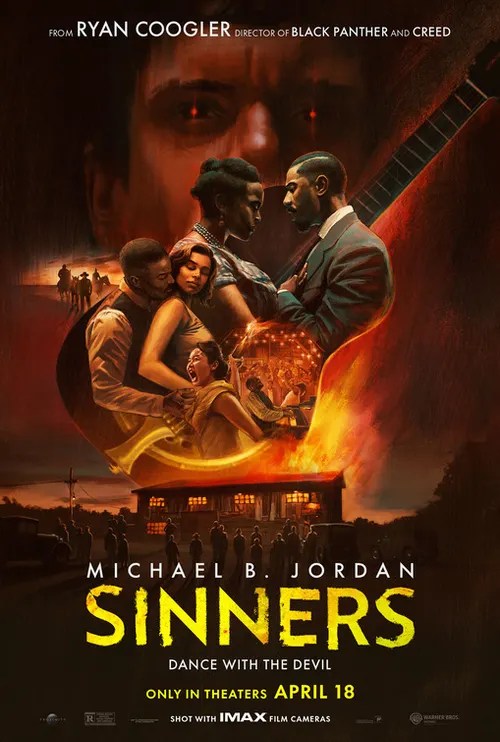
Sinners Wins In Michigan


The Michigan Movie Critics Guild has announced it picks for the best of 2025.  The winners are listed in bold!

Best Picture
Frankenstein
Hamnet
Marty Supreme
One Battle After Another
Sinners

Best Director
Paul Thomas Anderson – One Battle After Another
Ryan Coogler – Sinners
Guillermo del Toro – Frankenstein
Josh Safdie – Marty Supreme
Chloé Zhao – Hamnet

Best Actor
Timothée Chalamet – Marty Supreme
Joel Edgerton – Train Dreams
Leonardo DiCaprio – One Battle After Another
Brendan Fraser – Rental Family
Michael B. Jordan – Sinners

Best Actress
Rose Byrne – If I Had Legs I’d Kick You
Chase Infiniti – One Battle After Another
Cynthia Erivo – Wicked: For Good
Jessie Buckley – Hamnet
Emma Stone – Bugonia

Best Supporting Actor
Miles Caton – Sinners
Jacob Elordi – Frankenstein
Benicio del Toro – One Battle After Another
Paul Mescal – Hamnet
Sean Penn – One Battle After Another

Best Supporting Actress
Ariana Grande – Wicked: For Good
Inga Ibsdotter Lilleaas – Sentimental Value
Wunmi Mosaku – Sinners
Hailee Steinfeld – Sinners
Teyana Taylor – One Battle After Another

Best Animated Film
Arco
Dog Man
K-Pop Demon Hunters
Little Amélie or the Character of Rain
Zootopia 2

Best Documentary
Orwell: 2+2=5
Pee-Wee as Himself
Put Your Soul on Your Hand and Walk
The Perfect Neighbor
The Tale of Silyan

Best Ensemble
Avatar: Fire And Ash
Marty Supreme
One Battle After Another
Sinners
Wake Up Dead Man
Wicked: For Good

Best Screenplay
Hamnet
Marty Supreme
One Battle After Another
Sorry, Baby
Sinners

Best Cinematography
Avatar: Fire And Ash
Frankenstein
One Battle After Another
Sinners
Train Dreams

Breakthrough
Miles Caton – (Actor) Sinners
Chase Infiniti – (Actress) One Battle After Another
Jacob Elordi – (Actor) Frankenstein
Jacobi Jupe – (Actor) Hamnet
Eva Victor – (Writer, Director, Actor) Sorry, Baby

Best Stunts
Avatar: Fire And Ash
Ballerina
Mission: Impossible – The Final Reckoning
Nobody 2
One Battle After Another

The MMCG Award for Film Excellence
Paul Feig – (Director) The Housemaid / Another Simple Favor
Judy Greer – (Actress) The Long Walk
Paul Walter Hauser – (Actor) The Naked Gun / Fantastic Four: First Steps
Tim Robinson – (Actor/Writer) Friendship
J.K. Simmons – (Actor) The Accountant 2

Here Are The Michigan Movie Critic Guild Nominations For 2025


The 2025 nominations of the Michigan Movie Critics Guild were announced on Friday.  And here they are:

Best Picture
Frankenstein
Hamnet
Marty Supreme
One Battle After Another
Sinners

Best Director
Paul Thomas Anderson – One Battle After Another
Ryan Coogler – Sinners
Guillermo del Toro – Frankenstein
Josh Safdie – Marty Supreme
Chloé Zhao – Hamnet

Best Actor
Timothée Chalamet – Marty Supreme
Joel Edgerton – Train Dreams
Leonardo DiCaprio – One Battle After Another
Brendan Fraser – Rental Family
Michael B. Jordan – Sinners

Best Actress
Rose Byrne – If I Had Legs I’d Kick You
Chase Infiniti – One Battle After Another
Cynthia Erivo – Wicked: For Good
Jessie Buckley – Hamnet
Emma Stone – Bugonia

Best Supporting Actor
Miles Caton – Sinners
Jacob Elordi – Frankenstein
Benicio del Toro – One Battle After Another
Paul Mescal – Hamnet
Sean Penn – One Battle After Another

Best Supporting Actress
Ariana Grande – Wicked: For Good
Inga Ibsdotter Lilleaas – Sentimental Value
Wunmi Mosaku – Sinners
Hailee Steinfeld – Sinners
Teyana Taylor – One Battle After Another

Best Animated Film
Arco
Dog Man
K-Pop Demon Hunters
Little Amélie or the Character of Rain
Zootopia 2

Best Documentary
Orwell: 2+2=5
Pee-Wee as Himself
Put Your Soul on Your Hand and Walk
The Perfect Neighbor
The Tale of Silyan

Best Ensemble
Avatar: Fire And Ash
Marty Supreme
One Battle After Another
Sinners
Wake Up Dead Man
Wicked: For Good

Best Screenplay
Hamnet
Marty Supreme
One Battle After Another
Sorry, Baby
Sinners

Best Cinematography
Avatar: Fire And Ash
Frankenstein
One Battle After Another
Sinners
Train Dreams

Breakthrough
Miles Caton – (Actor) Sinners
Chase Infiniti – (Actress) One Battle After Another
Jacob Elordi – (Actor) Frankenstein
Jacobi Jupe – (Actor) Hamnet
Eva Victor – (Writer, Director, Actor) Sorry, Baby

Best Stunts
Avatar: Fire And Ash
Ballerina
Mission: Impossible – The Final Reckoning
Nobody 2
One Battle After Another

The MMCG Award for Film Excellence
Paul Feig – (Director) The Housemaid / Another Simple Favor
Judy Greer – (Actress) The Long Walk
Paul Walter Hauser – (Actor) The Naked Gun / Fantastic Four: First Steps
Tim Robinson – (Actor/Writer) Friendship
J.K. Simmons – (Actor) The Accountant 2

Brad reviews THE NAKED GUN (2025), starring Liam Neeson!


When I first saw that THE NAKED GUN was being rebooted with Liam Neeson as Frank Drebin, Jr., I must admit that I was quite skeptical. You see, the original THE NAKED GUN (1988) with Leslie Nielsen came out when I was 15 years old, and I remember watching it at the movie theater on a field trip with our high school’s Future Business Leaders of America (FBLA) club. I loved it so much! I eagerly watched THE NAKED GUN 2 1/2 (1991) and NAKED GUN 33 1/3 (1994) at the theaters as well. To be completely honest, this series is one of my favorites of my “growing into an adult” years, and I didn’t want to see it screwed up. When the trailer was released a couple of months ago my reaction was cautious optimism as I must admit it looked quite funny, and I decided that I would go watch it in the theater when it came out. Well, tonight my wife and I headed to the Cinemark in Little Rock to see what director Akiva Schaffer and his crew had come up with…

In THE NAKED GUN (2025), dedicated Detective Lt. Frank Drebin Jr. (Liam Neeson) follows in his father’s footsteps by leading Police Squad and causing an endless array of problems for Police Chief Davis (CCH Pounder). When a bank heist is staged by Sig Gustafson (Kevin Durand) in order to obtain a mysterious P.L.O.T. Device, Drebin teams up with his partner, Captain Ed Hocken Jr. (Paul Walter Hauser), and the beautiful crime novelist Beth Davenport (Pamela Anderson) to investigate. Their subsequent probe leads them to tech mogul Richard Cane (Danny Huston) and his sinister plot to use the device to revert humanity to a base barbaric state as the balls drop on New Year’s Eve. With the help of his deceased father’s spirit that’s being housed in the body of a large owl, Drebin goes all out to foil Cane’s plans while simultaneously falling in love with Beth! 

I’m going to go ahead and alleviate any suspense and state that I love the new NAKED GUN movie. I laughed out loud throughout the entire film, including the end credits, and I wasn’t the only one as there were people in our showing that were laughing much louder than me. It was a fun “crowd experience,” and I’m so glad we caught it in the theater. Not every joke is funny, but in the tradition of the original series, they come so fast and furious that there’s a good chance the next joke will be hilarious. Liam Neeson does a great job as Frank Drebin, Jr., infusing the character with just the right amount of seriousness to allow the absurdity all around him to be played for laughs. I told a friend a few months ago that I’d be really impressed if Neeson was able to pull this role off, and I’m glad to report that he passes with flying colors. He doesn’t make you forget the comedic genius of Leslie Nielsen, but he’s darn good. And Pamela Anderson is perfect in the crime novelist / love interest role. I haven’t seen her in anything in a long time, but she’s truly hilarious in the film. After watching her performance, I honestly don’t think any actress could have done any better. The rest of the game cast, including Paul Walter Hauser, Danny Huston and Kevin Durand each have good moments that add to the fun. I also enjoyed some of the specific throwbacks to the original series, including brief appearances by Priscilla Presley, Weird Al Yankovic, and especially the stuffed beaver, which got a big laugh out of me, just like it did when I was 15! 

Overall, I had a great time at the movie theater with THE NAKED GUN (2025). Director Akiva Schaffer delivers a hilarious, 85 minute film that’s a worthy follow-up to the original Zucker-Abrahams-Zucker / Leslie Nielsen classics. What else could you ask for?!!

Brad’s “Trailer of the Day” – THE NAKED GUN (2025), starring Liam Neeson!


When I first heard that Liam Neeson would be playing Frank Drebin, Jr. in a reboot of THE NAKED GUN series, I thought it might be a joke. Turns out it was the absolute truth! I’ll admit that I love the original NAKED GUN movies starring Leslie Nielsen. I watched every one of them at the movie theater and proudly own the DVD box set. Based on that love, I certainly hope that Neeson’s version will be a fun movie, and I’ll probably watch it at the movie theater sometime after it opens on August 1st as well. Check out the trailer for THE NAKED GUN (2025) below!

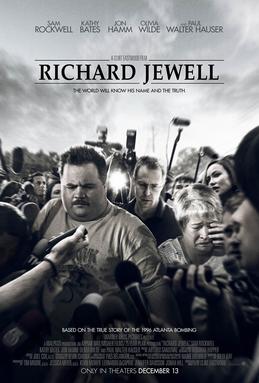
Richard Jewell (2019, directed by Clint Eastwood)


In 1996, a security guard named Richard Jewell should have been proclaimed a hero.  He spotted an abandoned backpack in Centennial Park during the Atlanta Summer Olympics.  Thinking that it could be a bomb, Jewell, insisting the proper security protocols be followed even though there was a concert going on, moved as many people as he could away from the backpack before it exploded.  Two people died as a result of the explosion and 111 were injured.  The number would have been much more catastrophic if not for Jewell’s actions.

Jewell saved lives but he soon found himself the number one suspect.  Overweight, a little bit nerdy, Southern accented and possessing a spotty work history, Richard Jewell did not fit the popular conception of a hero.  After the FBI leaked that Jewell was their number one suspect, the press literally reported as if Jewell’s arrest was imminent.  I’m old enough to remember the way that, for a month, the nightly news seemed like the counting the days until Jewell was charged.  Jewell, however, was never arrested and eventually, he sued several media outlets for libel.  After anti-abortion fanatic Eric Rudolph emerged as the number one suspect in the bombing, the three FBI agents who attempted to railroad Jewell were disciplined.  One was suspended for five days without pay, which seems a light punishment for ruining a man’s life.

Clint Eastwood’s Richard Jewell was about the persecution of the title character, with Paul Walter Hauser playing Jewell, Kathy Bates playing his mother, Jon Hamm playing the arrogant FBI agent, Olivia Wilde playing the unethical journalist who first reported that Jewell was a suspect, and Sam Rockwell playing Jewell’s attorney.  When Richard Jewell was released in 2019, there was a lot of debate about the way it presented both the media and the FBI.  This was during the first Trump presidency and many critics felt that it was not the right time for a film about an irresponsible reporter and a corrupt FBI agent.  But Eastwood’s film isn’t about the reporter or the FBI.  Instead, like many of his films, it’s about a loner who does the right thing, refuses to compromise, and suffers for it.  If the FBI and the media didn’t want to be presented as being villains in a movie about Richard Jewell, they should have thought twice before announcing to the the world that they thought he was a murderer.

Because of the controversy, Richard Jewell is one of Eastwood’s unfairly overlooked films.  Along with directing in his usual straightforward manner, Eastwood gets a great performance out of Paul Walter Hauser and reminds us that not every hero looks like the Man With No Name.  Even more importantly, Eastwood pays tribute to a man who deserved better than he was given by the world.  Richard Jewell died 12 years before the film that was named after him was released.  A lot of people wanted to sweep what happened to Richard Jewell under the rug.  Eastwood, in one of the best of his later films, refused to let that happen.

Paul Walter Hauser and Clint Eastwood

The Films of 2024: Orion and the Dark (dir by Sean Charmatz)


In 1995, an 11 year-old boy named Orion (voiced by Jacob Tremblay) lives in Philadelphia.

He has two loving parents.  He lives in a nice house.  He has his fist crush, on his classmate Sally (voiced by Shino Nakamichi).  He has a bully (voiced by Jack Fisher) who enjoys giving him a hard time and he has several notebooks full of his thoughts and drawings.  He also has a lot of fears.

Indeed, it’s his fears that largely define Orion.  Some of his fears are understandable.  I don’t like wasps or murder clowns either.  Some of his other fears are a bit more elaborate.  He’s scared of his bully but he’s even more scared of fighting his bully because he might accidentally break the bully’s nose and drive a piece of bone into the bully’s brain, therefore killing him.  His biggest fear, however, is his fear of the Dark.

In fact, Orion spends so much time talking about how much he hates the dark and how scared he is of the dark that Dark (Paul Walter Hauser) appears to him in human form and explain that he’s getting tired of Orion blaming him for anything.  Dark takes Orion with him as he travels across the world, bringing darkness to various countries and overseeing various other elements, like Sweet Dreams (Angela Bassett), Unexplained Noises (Golda Rosheuvel), Insomnia (Nat Faxon), Quiet (Aparna Nancherla), and Sleep (Natasia Demetriou).  Dark shows Orion that there’s no need to scared of the dark and that everyone involved is just doing their job.  Orion comes to understand and appreciate Dark but, when he makes the mistake of saying that he still kind of likes Light (voice by Ike Barinholtz) better, it leads to a lot of hurt feelings and resignations….

If this sounds a bit weird, one should keep in mind that the story is being told by the adult Orion (voiced by Colin Hanks) to his daughter, Hypathia (Mia Akemi Brown).  Adult Orion is telling the story to help Hypathia deal with her own fears and it soon becomes obvious that he’s making it up as he goes along.  Hypathia is aware of this and has no hesitation about calling out the stuff that doesn’t make any sense.  And when Orion proves incapable of coming up with a satisfactory ending for his story, Hypathia jumps into the story herself in an attempt to bring it all to a proper conclusion.  But once she’s in the story, can she get back out?

Orion and the Dark may sound like a standard “conquer your fears and believe in yourself” animated film but the script was written by Charlie Kaufman and, in typical Kaufman fashion, the story is full of twists and turns and more than a few moments of commentary on the whole act of storytelling itself.  There’s actually a lot going on in Orion and the Dark, with the film ultimately becoming a tribute to the power of imagination and to all of the parents-turned-storytellers in the world.

I’m a bit notorious for crying while watching animated films and I will say that Orion and the Dark brought tears to my eyes more than a few times.  It’s an incredibly sweet movie, one that can be appreciated by both children and adults.  It’s a movie about not just conquering fears but also using those fears to make oneself stronger.  The final message is that light cannot exist without the dark and vice versa but that’s okay.  There’s much to love in the light but the dark can be lovable too.  Fear is a part of life but it’s not the only part of life.

Creatively-animated and featuring a strong cast of voice actors, Orion and the Dark is definitely one to check out.

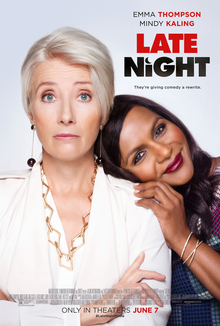
Catching Up With The Films of 2019: Late Night (dir by Nisha Ganatra)


Molly Patel (Mindy Kaling) has just gotten a new job.  A struggling comedienne who, up until now, has been forced to test out her best material on her coworkers at a chemical plant, Molly is hired to join the writing staff of late night talk show host, Katherine Newbury (Emma Thompson).  Even though Molly knows that she was largely hired so that the show could claim to have a diverse writing staff (all of the other writers are white males), she is still thrilled to be working for Katherine.  Why wouldn’t she be?  Katherine is a notoriously difficult boss who can’t even be bothered to learn the names of most of the people working for her but Katherine is also a legend, one of the first women to ever host her own late night talk show.

Of course, all legends have to come to an end and Katherine’s career as a late night talk show host appears to be in its final days.  Katherine’s rating have been in a steep decline for several years and her nonthreatening monologues and habit of booking guests like Doris Kearns Goodwin are not doing much to reverse the trend.  Safely hidden away in her mansion and continually worried about the health of her Parkinson’s-stricken husband, Walter (John Lithgrow), Katherine has grown out of touch.  Making matters even worse, the president of the network (played by Mindy Kaling’s Office co-star, Amy Ryan) hates Katherine and is eager to replace her with an obnoxious, Dane Cook-style comedian named Daniel Tennant (Ike Barinholtz).

Molly’s new job is a struggle at first.  The other writers dismiss Molly as merely being a “diversity hire” while Katherine often seems to be put off by Molly’s cheerful earnestness.  Over time, Molly proves herself and soon, she’s inspiring Katherine to refuse to leave her show without a fight.  Gone are bland monologues and boring presidential historians, replaced by politically charged humor and YouTube stars.

Late Night, as you may remember, was a huge hit at Sundance back in January.  Amazon Studios paid 13 million for the distribution rights.  The film was released in June to generally positive reviews and …. well, it made very little money.  Despite an extensive advertising campaign and a deluge of think pieces that literally begged audiences to see the film, Late Night flopped at the box office and it is estimated that, taking into account the film’s ad campaign, Amazon lost about 40 million dollars on the film.

Why wasn’t Late Night a bigger success at the box office?  At the time, the popular answer was misogyny.  While one should never discount that, I think that the film’s failure had more to do with the fact that the ad campaign made Late Night look more like the latest Netflix series than an actual cinematic experience.  Like a lot of movies about TV, Late Night was a film that seemed like it could wait for television.  I mean, I am the film’s target audience and even I waited to watch the film on Prime.

As for the film itself, it’s flawed but likable.  Along with co-starring in the film, Mindy Kaling wrote the script and the dialogue is consistently witty, even if the plot occasionally struggles to keep up.  At its best, this is a fun movie to listen to.  Visually, the film’s a bit flat and there’s a big third act development that feels a bit forced but, for the most part, the film works.  Not surprisingly, Emma Thompson is perfectly cast as Katherine and she delivers her razor sharp lines with the right mix of scorn and pathos.  Mindy Kaling effortlessly holds her own opposite Thompson and even John Lithgow, who can usually be counted upon to chew every piece of scenery available to him, is effective in his small but important role.  In the end, it’s kind of a sweet film and there’s something touchingly naive about the film’s steadfast belief that a late night talk show can actually be worth all the trouble.

Late Night is available on Prime so check it out.