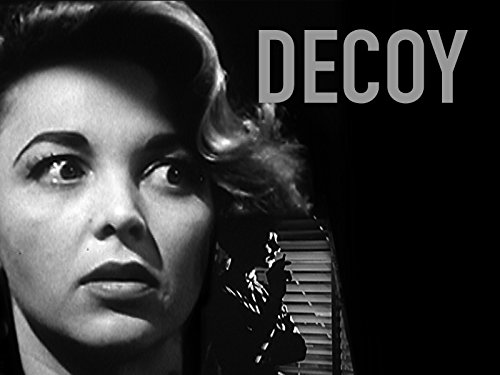
Welcome to Retro Television Reviews, a feature where we review some of our favorite and least favorite shows of the past! On Thursdays, I will be reviewing Decoy, which aired in Syndication in 1957 and 1958. The show can be viewed on Tubi!
This week, Casey goes undercover …. again!
Episode 1.36 “Blind Date”
(Dir by Stuart Rosenberg, originally aired on June 16th, 1958)
When Gladys (Mary Finney) and her niece Millie (Irene Dailey) are involved in a car accident, the police discover that they are transporting a large amount of stolen money. Millie, who has been transporting drugs, had a meeting with a money launderer to exchange the money for clean bills. Casey goes undercover, pretending to be Millie when she and Gladys meet with the launderer. However, when Millie’s boyfriend (Elliott Sullivan) shows up, the entire operation falls apart. Can Casey convince Millie’s boyfriend to turn on the criminals?
This is yet another episode where Casey’s carefully constructed cover is destroyed by something that the police should have been prepared for. Not only is Casey pretending to be a real person (which increases the risk that she’ll run into someone who actually knows the person that Casey is pretending to be) but she’s also accompanied by the increasingly hysterical Gladys. Usually, Casey is at least convincing when she goes undercover. This time, she comes across as way to calm and collected to be believable as someone committing her first crime.
To be honest, after 36 of these episodes, I’m amazed that Casey has survived for as long as she has. The New York police department seems to be truly incompetent.
Despite all of that, this was a good episode. There was plenty of on-location New York footage and Beverly Garland did a good job of portraying Casey’s growing realization that 1) she was in over her head and 2) it was a mistake to bring Aunt Gladys along. Lou Polan was also well-cast as the avuncular but still menacing money launderer. He may have been a criminal but he was also very proud of his boat. Who can blame him?
This episode ended up on vaguely upbeat note, one that really didn’t feel as it had been earned. Decoy was always at its best when it was downbeat and realistic. New York was a tough city, even back in 1958.
Welcome to Retro Television Reviews, a feature where we review some of our favorite and least favorite shows of the past! On Thursdays, I will be reviewing Decoy, which aired in Syndication in 1957 and 1958. The show can be viewed on Tubi!
Casey goes under cover at yet another cocktail lounge.
Episode 1.21 “The Showplace”
(Dir by David Alexander, originally aired on March 3rd, 1958)
There’s been a murder at a cocktail lounge. One of the girls who worked there has been found in alley, strangled. That means that it’s time for Casey to go undercover as a clip-joint girl, convincing men to buy her drinks. It’s a sleazy place, run by two brothers (Bill Hayes and Lewis Troy) and featuring a sad-eyed bartender (Lou Polan) with a mysterious past. Casey’s investigation uncovers all sorts of nefarious dealings. In the end, the murderer is revealed and it’s not who you might have thought. In a cocktail lounge full of largely ugly people, the murderer is the one handsome man. Casey mentions that he may have been handsome on the outside but, on the inside, there was nothing.
This was a great episode, a moody slice of downbeat noir that featured Casey doing actual undercover work. The cocktail lounge was a wonderfully atmospheric location, the supporting cast was full of strong character actors, and Beverly Garland did a great job as Casey both empathized and suspected the men with whom she was working.
This episode ended, as the best ones always did, with Casey talking about the tragedy of it all. Casey’s New York is a city of dreams but it can also be a nightmare.
I’m guessing it started with JAWS (1975) and JAWS 2 (1978) since they played often on Fox-16 out of Little Rock when I was a kid, but I’ve been a fan of actor Roy Scheider for as long as I can remember. He’s one of those actors who has his own section in my massive collection of physical movie media. I’ve read about every film he’s ever made, and I’ve watched most of them. Surprisingly, THE SEVEN-UPS is the first Roy Scheider film I’ve written about on The Shattered Lens.
NYPD detective Buddy Manucci (Roy Scheider) leads a team of elite cops, known as the “seven-ups.” They’ve acquired this nickname because most of the criminals they arrest receive sentences that are 7 years and longer, which makes their superiors on the force very happy. Granted, the team does use a variety of unorthodox methods to find and arrest the criminals, which can also rub their superiors and some of their fellow cops the wrong way. Buddy’s childhood friend Vito Lucia (Tony Lo Bianco), an undertaker by trade who has his finger on the pulse of the criminal activities in his community, serves as an important snitch for the team, with his information often leading to major busts. Unbeknownst to Buddy, prominent members of various organized crime families and other white-collar criminals start getting kidnapped and held for ransom in the community. Buddy’s unaware of the full extent of the kidnappings, but he asks his old friend / snitch Vito about this when he actually witnesses the abduction of a crooked bail bondsman he’s following named Festa. We know that Vito is the mastermind behind all of the kidnappings, and his two main henchmen, Moon (Richard Lynch) and Bo (Bill Hickman), are impersonating cops just long enough to confuse and abduct the various criminals. When the Seven-Ups stake out a funeral meeting of various mobsters in the area, squad member Ansel (Ken Kercheval) is killed as part of a screwed-up abduction attempt. Buddy spots Moon and Bo trying to flee the area and tries to chase them down in an incredible car chase that ends when Buddy is almost decapitated in a violent collision with a parked 18-wheeler. With one of their own dead and with the wild chases through the streets, the members of the team are placed on suspension and even investigated as suspects for the kidnappings. Not content to just lay low during their suspensions, the seven-ups continue to try to figure out what’s going on, doing whatever it takes to get the information they need. When Buddy and his group start applying incredible pressure to some of the local mobsters about who shot Ansel, he gets information that ties the killing and the kidnappings to his friend Vito. This time when he meets with Vito, Buddy feeds him false information, thus setting a trap to bring the whole operation down.
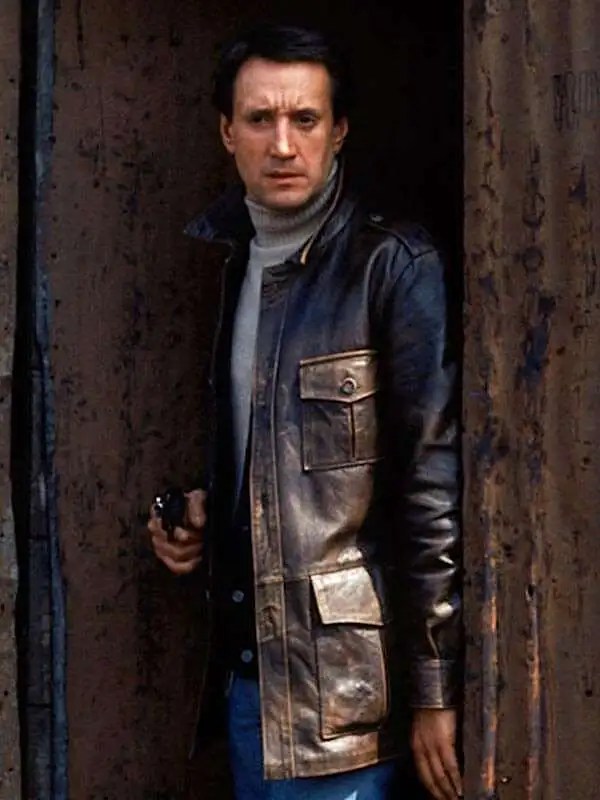
After viewing THE SEVEN-UPS again for the first time in a while, it continues to be my opinion that this movie is severely underrated. It’s a great cop film from the early 70’s, anchored by an excellent lead performance from Roy Scheider, who’s wearing one of the coolest leather jackets in the history of cinema. Coming in hot off the heels of THE FRENCH CONNECTION (1971), and with many connections to the Oscar winner, it seems that somehow this great film has fallen through the cracks over the years. I mean, how often do you hear people talk about this movie? THE SEVEN-UPS is directed by Philip D’Antoni, his only directorial credit, although he did serve as the Producer for both BULLITT (1968) and THE FRENCH CONNECTION. D’Antoni clearly values a good car chase sequence. THE SEVEN-UPS contains a thrilling car chase, which really isn’t that big of a surprise when you learn that stunt coordinator Bill Hickman, who plays the bad guy Bo in this film, coordinated the car chase sequences in BULLITT and THE FRENCH CONNECTION. This film features my personal favorite car chase sequence from any film that I’ve seen to date. Don Ellis composed the memorable musical score, a service that he also provided in THE FRENCH CONNECTION. I point out all of these ties to THE FRENCH CONNECTION because, in my humble opinion, the talent behind that film created another classic in THE SEVEN-UPS.
Complimenting Roy Scheider’s lead performance, THE SEVEN-UPS has a strong supporting cast. Tony Lo Bianco, Ken Kercheval (of DALLAS fame), Bill Hickman, and Richard Lynch are all quite memorable in their respective roles. I also like the 1973 New York City setting for the film. In movies like this and the following year’s DEATH WISH, we get to see a New York that no longer exists. To me, this only adds to the gritty realism of the film.
Overall, THE SEVEN-UPS is a movie I recommend without any reservations. If you’re a fan of 70’s cop thrillers, you simply can’t go wrong with this one.