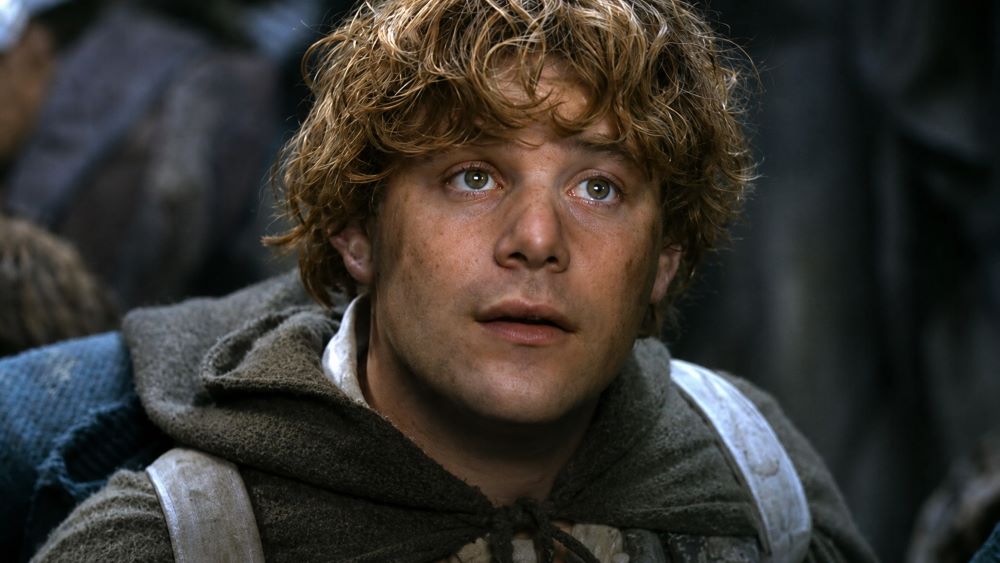
“Don’t you leave him, Samwise Gamgee. And I don’t mean to.” — Samwise Gamgee
Samwise Gamgee stands as one of the most compelling and deeply human characters in J.R.R. Tolkien’s The Lord of the Rings, a figure whose quiet strength and unwavering loyalty redefine the very notion of heroism. Unlike the noble Aragorn or the wise Gandalf, Sam is an ordinary hobbit—grounded, humble, and devoid of grand ambitions. His heroism does not stem from swordplay or sorcery, but from his steadfast devotion to Frodo Baggins and the simple, unshakable belief that even the smallest person can change the course of the future. Tolkien uses Sam to illustrate that true courage is not the absence of fear, but the resolve to act despite it, a theme that resonates throughout the epic narrative of The Lord of the Rings.
Traditional fantasy heroes are often defined by their extraordinary abilities or grand destinies, but Sam’s greatness is rooted entirely in his profound normalcy. He is not driven by a prophetic calling or a desire for glory; rather, his initial motivation is simply the fear of losing his master and friend, Frodo Baggins. Tolkien uses Sam to demonstrate that heroism is not the absence of fear, but the choice to push forward in spite of it. When Sam is forced to temporarily take up the burden of the One Ring in The Return of the King, his inherent simplicity becomes his greatest weapon. Unlike the great lords of Men, Sam lacks the ambition and desire for power that the Ring exploits, allowing him to willingly surrender it back to Frodo—a testament to the incorruptible nature of the common folk.
At the heart of Samwise’s character is an unparalleled loyalty that elevates him from a mere sidekick to the true savior of the quest. As Frodo is progressively broken down by the physical and psychological toll of the journey to Mordor, it is Sam who serves as the emotional anchor preventing his total collapse. Sam’s devotion reaches its zenith on the slopes of Mount Doom, where his refusal to let Frodo fail results in one of literature’s most iconic declarations: “I can’t carry it for you, but I can carry you.” In this moment, Sam embodies the purest form of love and sacrifice. He does not save Middle-earth by striking down a dark lord, but by literally carrying the weight of his friend’s despair when Frodo can no longer stand.
Furthermore, Sam provides a vital, grounded perspective that prevents the narrative from becoming lost in its own high-fantasy majesty. His deep connection to the Shire, to the soil, and to the simple joys of life—like a good meal or a smoke—acts as a tether to goodness in a world being consumed by shadow. This “salt of the earth” wisdom allows Sam to perceive the true horror of Mordor and the Ring not in abstract, philosophical terms, but as a direct threat to the innocent, everyday life he holds dear. By viewing the apocalyptic conflict through the eyes of a gardener, Tolkien makes the stakes feel remarkably intimate, reminding the reader that the ultimate goal of the quest is not to establish a new empire, but to preserve the quiet beauty of the natural world.
Ultimately, Samwise Gamgee endures as one of literature’s greatest heroes because he represents the best of what ordinary people can achieve under extraordinary circumstances. He begins the story as a timid, provincial hobbit terrified of leaving his hometown, yet he ends it as a resilient warrior, a loving husband, and a civic leader. Tolkien, a veteran of the brutal trenches of World War I, understood that the world is often saved not by brilliant generals or chosen ones, but by the quiet courage of everyday people doing their duty. Through Sam, The Lord of the Rings delivers a timeless and deeply moving message: that in the face of insurmountable darkness, the most powerful force in the world is a stubborn, unassuming love.
Hero of the Day


Pingback: Hero of the Day: Haven Hamilton (Nashville) | Through the Shattered Lens
Pingback: Brad’s “Hero of the Day” – Bernardo O’Reilly (THE MAGNIFICENT SEVEN)! | Through the Shattered Lens
Pingback: Lisa Marie’s Week In Review: 6/29/26 — 7/5/26 | Through the Shattered Lens
Pingback: Hero of the Day: Maj. Motoko Kusanagi (Ghost in the Shell) | Through the Shattered Lens
Pingback: Hero of the Day: Spike Spiegel (Cowboy Bebop) | Through the Shattered Lens
Pingback: Brad’s “Hero of the Day” – Chief Martin Brody (JAWS) | Through the Shattered Lens
Pingback: Hero of the Day: Raylan Givens (Justified) | Through the Shattered Lens
Pingback: Hero of the Day: Ash Williams (Evil Dead Series) – Through the Shattered Lens
Pingback: Hero Of The Day: John Nada (They Live) – Through the Shattered Lens