Welcome to Late Night Retro Television Reviews, a feature where we review some of our favorite and least favorite shows of the past! On Thursdays, I will be reviewing Hunter, which aired on NBC from 1984 to 1991. The entire show is currently streaming on Tubi and several other services!
This week, two special guest stars appear on Hunter!
Episode 2.8 “Million Dollar Misundestanding”
(Dir by Michael Peerce, originally aired on November 16th, 1985)
Hey, it’s Robert Englund!
In this episode, Englund appears as Vaughn. Vaughn is in charge of both the motor pool and the police impound lot. He’s been given orders not to let Hunter ever have a nice car because Hunter inevitably ends up destroying every car that he’s given. Vaughn takes his job seriously. That said, he still gets tricked by Hunter’s old “snatch a key while Vaughn isn’t looking” trick. “HUNTER!” Vaughn shouts as Hunter drives off in a new car that will be totally destroyed by the end of the episode.
It was nice to see Robert Englund. This episode aired in 1985, a year after the release of A Nightmare on Elm Street. This is probably one of the last roles that Englund played that was not, in some way, written to capitalize on him being a horror icon. Instead, he’s just a normal guy who gets annoyed with Hunter. Even when he’s yelling, there’s just something innately likable about Robert Englund.
This episode also features the great Robert Davi. Not surprisingly, Davi plays the main bad guy. He’s a security guard who masterminds the robbery of an armored car. He nets a million dollars in the robbery, kills his co-workers, and then kills his partners-in-crime. He puts the money in the trunk of a stolen Trans Am and then drives off. However, when he stops to make a call from a payphone, the Trans Am is stolen once again, this time by two teenage car thieves. Hunter and McCall crash into the Trans Am, totaling it.
At the police impound lot, the owner of the Trans Am is not happy to see that her car has been destroyed, However, she is happy to discover a million dollars in the trunk. Later, when Hunter and McCall go to her house to personally apologize for destroying her car, they discover her floating dead in her swimming pool. The money is missing.
Believe it or not, Robert Davi is not the murderer here. Instead, the woman was killed by her employer, club owner Tito Constantine (Phil Rubinstein). He has the money hidden on his boat. Davi, who has previously attacked both McCall and Hunter in his search for the cash, hijacks the boat. Hunter and McCall show up and chase after him. It all leads to Hunter and McCall recovering the money and two bad guys ending up all wet. Remarkably, neither one of the bad guys is killed in this episode. That’s a rare event for Hunter.
This was an enjoyably chaotic episode. Hunter is at its best when it focuses on gun fights and car chases and that’s what this episode was all about. Toss in Robert Englund and Robert Davi and you have pure 80s excitement! This episode worked for me.
“I keep seeing these people, all recognizing each other.” — Elizabeth Driscoll
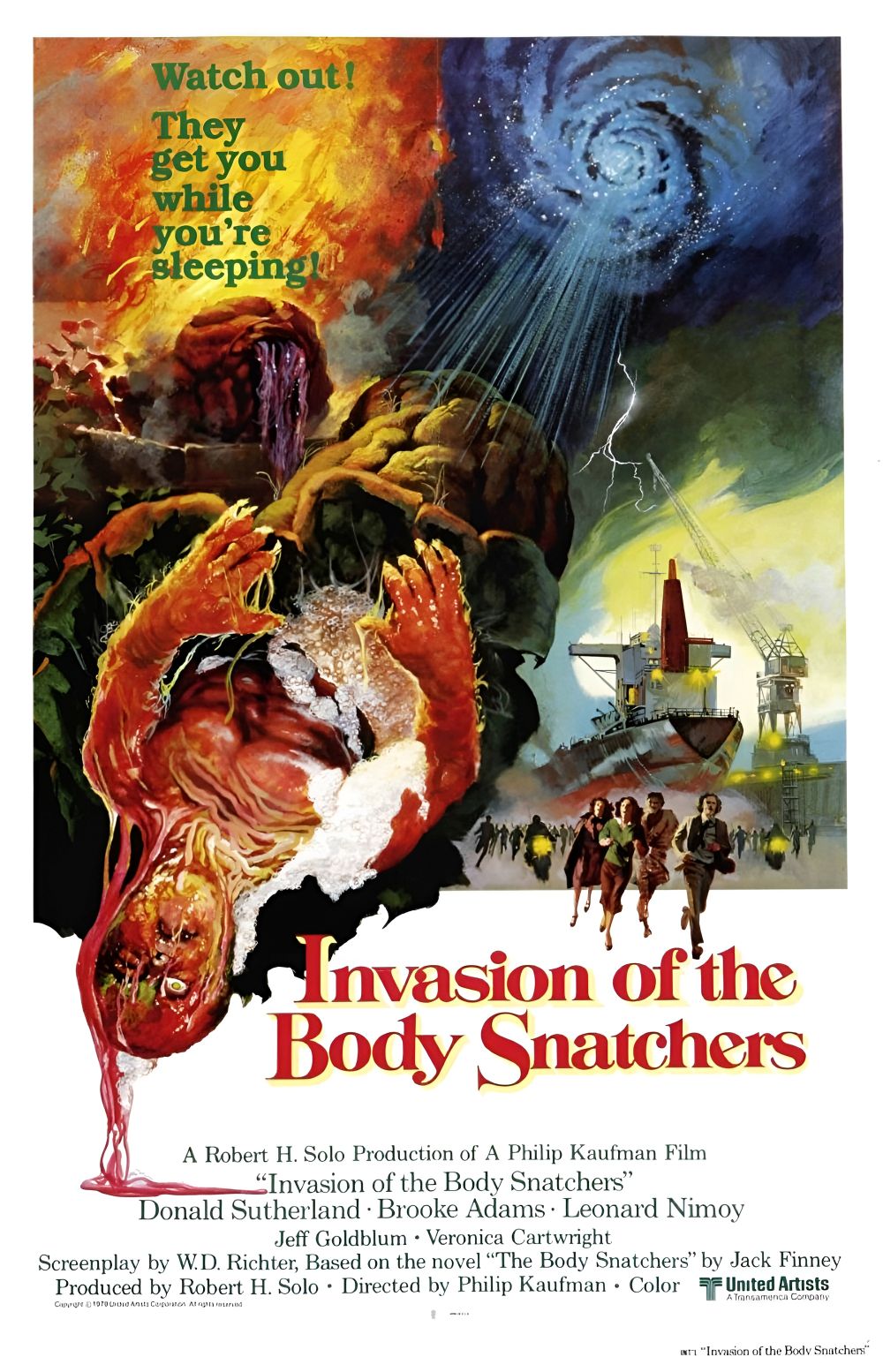
Most alien-invasion movies give you something obvious to fear: a flying saucer, a ruined skyline, a creature that clearly doesn’t belong here. Philip Kaufman’s Invasion of the Body Snatchers goes after something more uncomfortable. What happens when the person beside you looks perfectly normal, but you can’t shake the feeling that they’re gone? Released in 1978, this remake of Don Siegel’s 1956 film of the same name turns that question into a funny, disgusting, and increasingly desperate nightmare. Its greatest weapon isn’t an alien organism. It’s the possibility that being human is something you can lose while the rest of the world carries on as if nothing has happened.
That fear takes hold through Elizabeth Driscoll, played by Brooke Adams, who notices an unsettling change in her boyfriend. Nothing about his appearance explains it; he simply no longer seems like himself. Her colleague Matthew Bennell, a San Francisco health inspector played by Donald Sutherland, listens sympathetically but initially searches for a reasonable explanation. Unfortunately, reason has some catching up to do. Alien life forms are duplicating people while they sleep, leaving behind replacements who possess familiar faces but none of the emotional attachments. Adapted, like the original, from Jack Finney’s The Body Snatchers, the story turns an outrageous premise into a horribly intimate problem.
What’s especially effective is that Elizabeth’s concern resembles something people might ordinarily dismiss. Relationships change. Partners become distant. A person who once seemed attentive can suddenly appear distracted or cold. How do you explain that someone isn’t themselves when you have no physical evidence and can’t point to a single decisive incident? Adams makes that uncertainty convincing. Elizabeth isn’t immediately trying to prove an alien invasion; she’s trying to get someone to understand an experience she can barely describe. The science-fiction concept works because the emotional situation already makes sense. Before the movie asks us to believe in replacement bodies, it asks us to recognize the discomfort of feeling shut out by someone familiar.
Kaufman gets plenty of mileage out of the gap between noticing a problem and understanding it. Early scenes contain little disturbances that don’t immediately announce themselves as clues. Background figures behave strangely, conversations feel slightly off, and people seem to be moving according to instructions the main characters haven’t received. You begin watching the edges of the image, wondering who belongs there and who has already changed. That’s where the film’s paranoia takes root. Rather than simply telling us that Matthew and Elizabeth are frightened, Kaufman encourages us to adopt their increasingly suspicious way of looking at everyone. Watching becomes a form of anxious detective work.
The nice thing about this approach is that the film doesn’t need every suspicious detail to become a dramatic revelation. Sometimes a strange person is simply strange, and sometimes an awkward interaction remains unexplained. That uncertainty makes the environment feel less predictable than a straightforward series of planted clues would. We’re never comfortably ahead of the characters, checking off signs of an invasion we already understand. Instead, we share their problem of deciding what matters. Once the possibility of replacement enters the picture, practically any behavior can look incriminating. Someone is too calm, too hurried, too distracted, or too interested in what you’re doing. There’s no useful baseline anymore.
San Francisco is essential to that effect. A crowded city should offer anonymity and plenty of places to disappear, but here it gradually becomes a network of observers. Restaurants, offices, streets, and public facilities stop feeling neutral. Even asking for help becomes risky when there’s no reliable way to know who is answering. The shift from the earlier film’s small California community gives the remake a different kind of claustrophobia. There’s more room to run, yet fewer reasons to believe running will help. Kaufman makes a recognizable city feel like a trap without needing to empty its streets. The ordinary activity is what makes it oppressive: everybody seems to have somewhere to go, and you’re increasingly certain you don’t want to follow them.
That change also helps distinguish the remake’s concerns from those of the 1956 original. Siegel’s film sits within the Cold War and Red Scare atmosphere, its replacement story lending itself to fears of Communist infiltration as well as the pressures of McCarthyist conformity. Kaufman’s version leans more heavily into the conspiracy-minded mood of the 1970s. Suspicion reaches beyond dangerous outsiders to institutions, professional authority, and the mechanisms of everyday life. The frightening question isn’t just whether someone has infiltrated society. It’s whether society is already organized around keeping you confused. Discovering the truth doesn’t restore control; it reveals how little control the characters have.
The setting adds another bitter layer: this is San Francisco after the idealism of the 1960s counterculture has started wearing thin. A city associated with freedom, experimentation, and communal possibility becomes the backdrop for the destruction of individuality. The film catches something unsettling in the distance between the promise of personal liberation and the emotional isolation that can follow it. People have ways to discuss feelings, relationships, and self-improvement, but that vocabulary doesn’t necessarily help them connect. The invasion feels less like a complete break with their world than a horrible extension of tendencies already taking shape within it. The old dream of everyone coming together returns in a form nobody should want.
That doesn’t mean the movie is simply sneering at countercultural ideals or suggesting that conformity is inevitable. Its sympathies remain with affection, eccentricity, and the difficult business of caring about other people. What it distrusts is the substitution of smooth language for genuine feeling. There’s a difference between understanding someone and talking them out of their own experience, and the film keeps poking at that distinction. The invaders offer an existence without emotional conflict, but removing pain also means removing the attachments that make pain possible. It’s an awful bargain disguised as a sensible solution. From that angle, the invasion is selling a particularly extreme version of peace of mind.
Leonard Nimoy makes that idea especially sharp as psychiatrist and self-help celebrity David Kibner. He speaks with the confidence of someone accustomed to explaining other people to themselves, and his calm manner initially seems comforting. Before long, though, that reassurance starts to feel oppressive. When someone insists that your terror is merely a misunderstanding, how do you tell compassion from dismissal? Nimoy keeps that question alive without overplaying it. His composure becomes a source of tension precisely because it’s so controlled. In a movie full of people struggling to articulate their distress, he always seems to have an answer ready. Eventually, that feels less like wisdom than a reason to worry.
Against that polished certainty, Sutherland’s rumpled warmth is a major asset. Matthew seems intelligent and attentive rather than exceptionally brave, which makes his growing desperation convincing. He’s willing to listen, but he also needs time to abandon the explanations that usually make his world manageable. Sutherland lets him be funny and slightly awkward without turning him into a lovable collection of quirks. You believe he has a life outside the plot. That matters because the movie isn’t simply threatening his physical survival. It’s dismantling the ordinary habits, professional confidence, and personal connections that allow him to function.
His relationship with Elizabeth gives that dismantling an emotional center. Adams and Sutherland build their closeness through looks, conversations, and small gestures rather than big romantic speeches. There’s warmth between them, but also hesitation, as though they’re still working out what they’re allowed to acknowledge. The restraint makes the relationship feel vulnerable even before the invasion closes in. In a story about bodies surviving while personalities disappear, their chemistry provides something the special effects can’t: a sense of what replacement would erase. A duplicate could repeat the right words, but the movie has already shown us how much communication happens in the spaces around them.
Jeff Goldblum and Veronica Cartwright bring welcome friction as Jack and Nancy Bellicec. Goldblum’s nervous, argumentative manner keeps Jack from becoming a generic supporting character, while Cartwright makes Nancy’s alarm feel immediate and physically exhausting. Together, the central group is messy in recognizably human ways. They interrupt, disagree, misjudge situations, and occasionally get on each other’s nerves. Their humor isn’t a distraction from the horror; it establishes the untidy individuality the invaders would eliminate. The prospect of a world without conflict might sound attractive in theory, but spending time with these people makes its emotional cost clear. An easier existence would also be a much emptier one.
When the physical horror arrives, it gives that emptiness a nasty material form. Developing duplicates look wet, unfinished, and unpleasantly organic, turning an abstract fear of lost identity into something you can practically smell. There’s something especially upsetting about seeing a recognizable human shape emerge without the person who should belong to it. Kaufman knows when to stop suggesting and show us the evidence, and those moments hit harder because the surrounding suspense has been so controlled. The effects aren’t merely punctuation between chase scenes. They make replacement feel like a biological process that has no interest in whether its victims understand or consent.
Sleep is an equally effective threat because there’s no sustainable way to avoid it. A locked door might keep someone outside, but it can’t keep you awake forever. As exhaustion takes over, the characters’ bodies become unreliable allies, and the movie’s rhythm grows more desperate. Brief moments of rest carry their own suspense because relief and surrender begin to resemble each other. That’s one of the film’s cruelest moves: something comforting and necessary becomes the condition that makes you vulnerable. Survival requires constant vigilance, while ordinary human limits guarantee that vigilance will eventually fail.
The film’s relentless pressure can make its later passages feel deliberately exhausting. Once the invasion becomes undeniable, there’s less room for the social comedy and ambiguity that make the opening so engaging. But that narrowing feels purposeful rather than merely repetitive. The characters lose options, and the movie loses breathing room with them. Places that once seemed distinct start to feel like extensions of the same hostile environment. By then, the question isn’t whether they can explain what’s happening. It’s whether knowing makes any practical difference at all.
By the time Invasion of the Body Snatchers reaches its brutal conclusion, its opening uneasiness has become a way of life. Every familiar face demands scrutiny, and every moment of relief feels borrowed. The famous ending brings that uncertainty to a devastating point without needing to explain away its power. What stays with me, though, is how much warmth the film puts at risk before it gets there. Kaufman makes humanity look awkward, argumentative, affectionate, and vulnerable—hardly an efficient arrangement, but one worth defending. The replacements can reproduce a face and move through the routines of a life. The horror is everything they leave out.
Tonight’s episode of One Step Beyond deals with a bellboy named Gerald Perkins (David Opatoshu). Gerald keeps telling everyone that there’s going to be an earthquake but no one’s willing to listen to him. Everyone knows that Gerald is a recovering alcoholic so they assume that he’s just drinking again. Needless to say, it’s far easier to fire someone than to listen to his insane ramblings, right?
Well, considering that this story takes place in San Francisco in 1906, perhaps they should have listened.
According to host John Newland, this is a true story. It originally aired on January 12th, 1960!
“Every man… every man has to go through hell to reach paradise.” — Max Cady
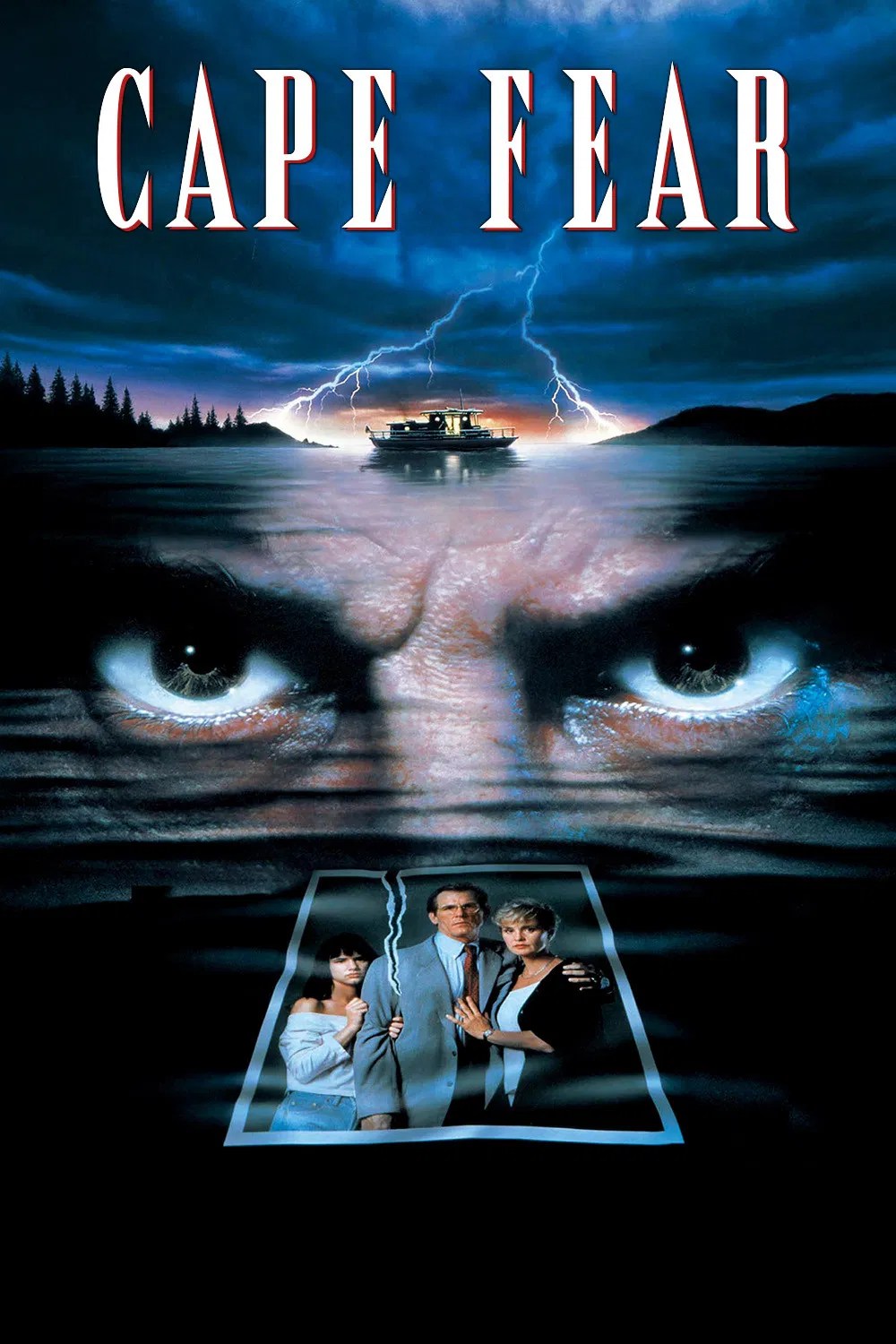
There’s nothing subtle about the way Martin Scorsese’s Cape Fear gets under your skin. The music announces an approaching apocalypse, the camera seems unable to sit still, and Robert De Niro looks ready to chew through the scenery before anyone can stop him. Yet beneath all that noise is a nasty question: what happens when someone discovers the secret that makes your respectable life possible? This 1991 horror-thriller builds its terror around that vulnerability, turning a revenge story into a nightmare about being exposed. It’s wildly entertaining, even when its determination to overwhelm you becomes a little much.
A remake of J. Lee Thompson’s 1962 film of the same name, itself adapted from John D. MacDonald’s novel The Executioners, Cape Fear follows convicted rapist Max Cady after his release from prison. Cady, played by De Niro, has spent fourteen years nursing a grudge against his former defense attorney, Sam Bowden. Nick Nolte’s Sam withheld evidence that might have helped his client’s case, deciding that his disgust justified compromising Cady’s defense. Now Cady has come looking for him, and he isn’t satisfied with an apology. He wants to dismantle Sam’s life slowly enough that Sam understands exactly who is doing it.
Making Sam morally compromised is the remake’s smartest move. Rather than simply asking us to root for an innocent family against an evil outsider, Scorsese gives us a man whose professional betrayal has returned to haunt him. That doesn’t make Cady’s campaign remotely justified, but it complicates Sam’s position. He wants the protection of rules he previously decided didn’t apply to him. Every attempt to present himself as the reasonable, law-abiding party becomes harder to accept without qualification. The suspense comes partly from wondering what Cady will do next and partly from watching Sam struggle to maintain his version of himself.
Casting Nolte in the role previously played by Gregory Peck makes that shift especially convincing. Where Peck’s authoritative presence suited the original’s more upright protector, Nolte brings a battered, irritable quality that makes Sam’s respectability feel less secure. You believe this man may regret living in the law’s moral gray areas without having learned to stay out of them. When protecting his family means employing criminal methods, including arranging an assault on Cady, the decision feels like an extension of his character rather than a sudden reversal. Nolte makes the contradiction work: Sam wants to be decent, but he’ll use dirty resources when he decides the circumstances demand it.
De Niro makes those circumstances as uncomfortable as possible. His Cady is all tattoos, muscle, exaggerated politeness, and a Southern drawl that turns ordinary conversation into a threat. It’s a performance built around excess, and you can practically feel De Niro enjoying how far he can push it. That might sound like a criticism, but Cady is performing, too. He wants Sam to notice him, fear him, and recognize his control over the situation. Every appearance becomes a demonstration of power, with each smile suggesting he knows something everyone else would rather leave unspoken.
The character becomes more interesting, and less believable, as the film continues. Initially, Cady is a dangerous convict with a personal grudge and a talent for exploiting legal boundaries. Eventually, he resembles a boogeyman: impossibly resilient, seemingly everywhere, and almost impossible to keep out. Here the remake embraces more recent slasher-film tropes, moving beyond intimidation toward an unstoppable-killer nightmare. Practically speaking, that transformation gets ridiculous. Psychologically, though, it fits. Cady becomes a manifestation of Sam’s guilt, something that can be denied, attacked, or temporarily escaped, but never comfortably buried again. His persistence makes emotional sense even when his physical endurance strains credibility.
That idea connects the horror to the story’s Southern Gothic roots, which Scorsese emphasizes even more heavily than the original. Religious obsession, sexual menace, family dysfunction, and corruption beneath respectable surfaces create an overheated atmosphere. Cady treats revenge as a sacred mission, dressing cruelty in scripture and self-righteous declarations. Sam has his own history of deciding that moral certainty excuses misconduct. The men aren’t equivalent, but the echoes matter. Cady doesn’t introduce darkness into an innocent household so much as drag existing darkness into the open, where nobody can politely ignore it.
The Bowdens are already miserable enough to make that process convincing. Nolte gives Sam a prickly defensiveness, while Jessica Lange, as his wife Leigh, conveys the exhaustion of someone living with unresolved resentment. Their marriage feels strained before Cady applies pressure, making his interference more destructive. Occasionally, their hostility becomes so relentless that the family scenes feel almost as punishing as the stalking. Still, the performances ground the tension. These aren’t symbolic victims waiting to be threatened; they’re people whose existing problems make the threat harder to manage.
Juliette Lewis is especially good as their teenage daughter, Danielle, whose uncertainty makes her vulnerable to Cady’s attention. Their encounter at her school is the most unsettling sequence because it trades spectacle for something horribly intimate. Cady listens, flatters, and presents himself as someone who understands her better than her parents do. Lewis captures the mixture of curiosity, discomfort, and a teenager’s desire to appear older. The scene exposes the predatory calculation beneath Cady’s theatrical behavior. He doesn’t need physical force to gain control, which makes him scarier than his muscles ever could.
Scorsese surrounds these performances with filmmaking that rarely lets anyone breathe. Working with cinematographer Freddie Francis, he uses distorted perspectives, oppressive close-ups, lurid lighting, and restless camera movements to make ordinary surroundings threatening. Bernard Herrmann’s original score, adapted by Elmer Bernstein, adds an operatic sense of disaster. Sometimes the style shouts over an already effective scene, and restraint might have made certain moments sharper. But the commitment is impressive. By the storm-battered houseboat climax, everyday realism has disappeared, and the setting feels like an extension of the characters’ psychological collapse.
What makes Cape Fear stick isn’t simply whether the Bowdens can survive Cady. It’s the uglier possibility that survival won’t restore the comfortable story they once told about themselves. Scorsese pushes that idea through a thriller so outrageous that its moral complications occasionally get swallowed by spectacle. Nevertheless, Nolte keeps Sam’s contradictions recognizable beneath the chaos: a man who regrets crossing lines but remains willing to cross them again. Cady may become too indestructible to believe in as a person, yet he’s persuasive as the reckoning Sam cannot shut out. The locks were never going to be enough.
A group of cartoon people are in a room and one lady leaves and now she’s in a tilted home and a person. Yeah, I’m confused too. The story flashes back and forth from cartoon to her as a person. Then, she has multiple hands.
I’m so confused that I’m not scared. I just don’t understand. I feel like I need to do math problems after this to return to some order.
You can watch this if you want to, but why? Who hurt you? You deserve love.
Yesterday, Elke Sommer passed away at the age of 85. One of the top international actresses of the 1960s, Sommer appeared in films like The Pink Panther, A Shot In The Dark, The Prize, and one of my favorites, The Oscar. She also did two films for the great Mario Bava (two and a half if you include House of Exorcism). My personal favorite is 1974’s Lisa and the Devil. Here she is as Lisa, a tourist who finds herself trapped inn a surreal nightmare.
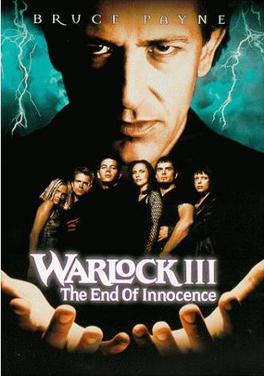
College student Kris (Hellraiser’s Ashley Laurence) is surprised to learn that she’s inherited a house that once belonged to her family. She and her friends, one of whom is a witch, go to check out the house. One of them accidentally releases Philip Covington (Bruce Payne), a warlock who was long ago imprisoned by Kris’s mother. Philip tried to sacrifice Kris when she was a child. Now that he’s free, he plans to finish the job but only after he takes care of all of her friends.
I had actually forgotten that there was a third Warlock film, mostly because this film has nothing to do with the other two movies. The warlock in this movie is not the same warlock from the other two movies and, while Bruce Payne isn’t bad in the role, he still doesn’t quite have the presence of Julian Sands. The tone of this movie is also different from the first Warlock films, which were basically low-budget version of films like The Omen and The Exorcist. The cover art for Warlock III’s DVD release was obviously designed to bring to mind films like Scream, I Know What You Did Last Summer, and Urban Legend. This more of a drawn-out slasher film than a metaphysical battle between good and evil.
Probably the main reason to see this film is because it stars Ashley Laurence, who really should have had a bigger career after Hellraiser. She’s as gorgeous as ever but she doesn’t get to do much until the movie’s final moments. Her actions do lead to a lot of innocent deaths but she seems gets over it quickly.
Warlock III is Warlock without the Warlock, which was almost as pointless as doing a Leprechaun movie without Warwick Davis. Surely, no one would ever be that stupid!
Welcome to Retro Television Reviews, a feature where we review some of our favorite and least favorite shows of the past! This Thursday, I will be reviewing the unaired pilot for The Elvira Show, which was produced in 1993. The show can be found on YouTube!
Episode 1.1 “Pilot”
(Dir by Peter Bonerz, never aired)
Elvira, the Mistress of the Dark (Cassandra Peterson), is living in the small town of Manhattan, Kansas. She lives with her eccentric aunt Minerva (Katherine Helmond) and their black cat, Renfield (voice of John Paragon). Renfield can speak, but only witches like Elvira and Minerva can hear him. Renfield has a sarcastic personality, as all cats do. Elvira makes her living by telling fortunes and selling love potions. No one in the small town ever seems to notice anything strange about her, despite the fact that she’s… well, she’s Elvira. She’s the Mistress of the Dark. She’s also very funny. Though this pilot never even aired, it’s a wonderful showcase for Peterson’s comedic timing. She’s one of those performers who can make even a weak or predictable joke funny.
Over the course of the pilot, Elvira’s niece Paige (Phoebe Augustine, who later had a small but pivotal role on Twin Peaks) shows up on her doorstep and explains that she’s been sent to live with Aunt Elvira and Great-Aunt Minerva. At first, Elvira and Minerva worry that Paige appears to be “normal.” She says that she likes to clean and study. But when Paige overhears Renfield talking, they realize she’s a witch as well. They’re definitely going to need Paige’s powers because Elvira has accidentally cast a spell on an undercover police officer and now the rest of the cops are coming. “You’ll never take me alive, coppers!” Minerva shouts, just because she’s always wanted to say it.
The show, with its talking cat and its two eccentric aunts, definitely brought to mind Sabrina the Teenage Witch, which would go into production three years after the Elvira pilot was filmed. That said, the presence of Elvira and her unapologetic way with a double entendre definitely gave this pilot a feel of its own. It was a good pilot, even if it seemed like the frantic pace would be difficult to maintain over an entire season. I’m surprised it didn’t lead to a series.
The pilot may not have led to a television series, but it’s now on YouTube for everyone to watch and enjoy.
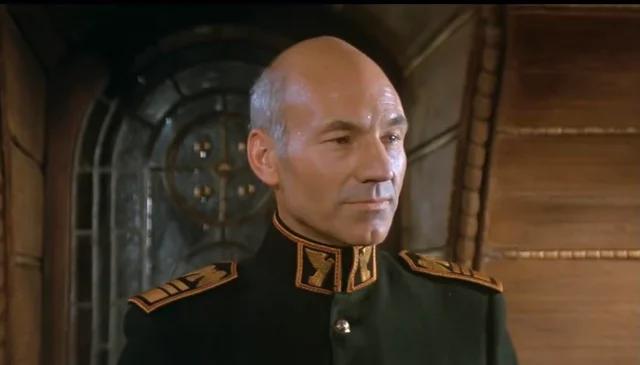
Sir Patrick Stewart, the actor who could do everything from Shakespeare to Star Trek to Marvel and back again, has died. He was 86 years old.
If you grew up in the ’90s, Patrick Stewart represented everything that a good leader should be. Whether you knew him as Picard or as Charles Xavier, you knew him as the epitome of the cool-thinking, intelligent man of authority who truly cared about those who followed him. Stewart was also an acclaimed Shakespearean who was just as skilled at comedy as tragedy. Long before Star Trek, he brought his moral authority to both Excalibur and Dune. Anyone who has seen Green Room knows that Stewart could play a villain just as well as a hero. He simply was one of the best actors that we had.
A lot of people are going to be sharing their favorite Patrick Stewart scenes. It’s hard to pick just one, and no one should. For myself, I’m going with the first thing that popped into my mind when I heard he had passed. This scene is from Star Trek: The Next Generation’s “Chain of Command II.”