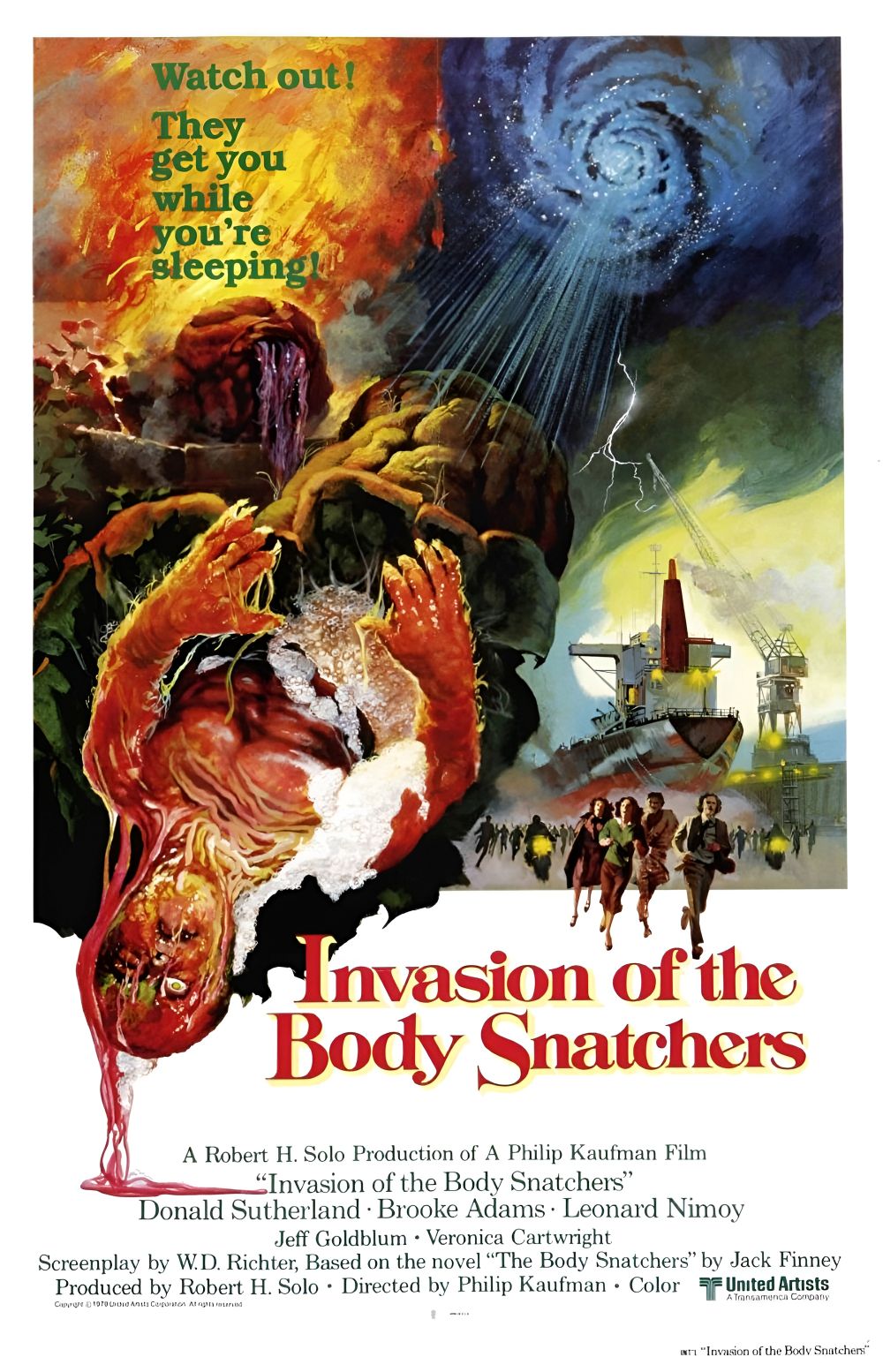
Horror Film Review: Invasion of the Body Snatchers (dir. by Philip Kaufman)


“I keep seeing these people, all recognizing each other.” — Elizabeth Driscoll

Most alien-invasion movies give you something obvious to fear: a flying saucer, a ruined skyline, a creature that clearly doesn’t belong here. Philip Kaufman’s Invasion of the Body Snatchers goes after something more uncomfortable. What happens when the person beside you looks perfectly normal, but you can’t shake the feeling that they’re gone? Released in 1978, this remake of Don Siegel’s 1956 film of the same name turns that question into a funny, disgusting, and increasingly desperate nightmare. Its greatest weapon isn’t an alien organism. It’s the possibility that being human is something you can lose while the rest of the world carries on as if nothing has happened.

That fear takes hold through Elizabeth Driscoll, played by Brooke Adams, who notices an unsettling change in her boyfriend. Nothing about his appearance explains it; he simply no longer seems like himself. Her colleague Matthew Bennell, a San Francisco health inspector played by Donald Sutherland, listens sympathetically but initially searches for a reasonable explanation. Unfortunately, reason has some catching up to do. Alien life forms are duplicating people while they sleep, leaving behind replacements who possess familiar faces but none of the emotional attachments. Adapted, like the original, from Jack Finney’s The Body Snatchers, the story turns an outrageous premise into a horribly intimate problem.

What’s especially effective is that Elizabeth’s concern resembles something people might ordinarily dismiss. Relationships change. Partners become distant. A person who once seemed attentive can suddenly appear distracted or cold. How do you explain that someone isn’t themselves when you have no physical evidence and can’t point to a single decisive incident? Adams makes that uncertainty convincing. Elizabeth isn’t immediately trying to prove an alien invasion; she’s trying to get someone to understand an experience she can barely describe. The science-fiction concept works because the emotional situation already makes sense. Before the movie asks us to believe in replacement bodies, it asks us to recognize the discomfort of feeling shut out by someone familiar.

Kaufman gets plenty of mileage out of the gap between noticing a problem and understanding it. Early scenes contain little disturbances that don’t immediately announce themselves as clues. Background figures behave strangely, conversations feel slightly off, and people seem to be moving according to instructions the main characters haven’t received. You begin watching the edges of the image, wondering who belongs there and who has already changed. That’s where the film’s paranoia takes root. Rather than simply telling us that Matthew and Elizabeth are frightened, Kaufman encourages us to adopt their increasingly suspicious way of looking at everyone. Watching becomes a form of anxious detective work.

The nice thing about this approach is that the film doesn’t need every suspicious detail to become a dramatic revelation. Sometimes a strange person is simply strange, and sometimes an awkward interaction remains unexplained. That uncertainty makes the environment feel less predictable than a straightforward series of planted clues would. We’re never comfortably ahead of the characters, checking off signs of an invasion we already understand. Instead, we share their problem of deciding what matters. Once the possibility of replacement enters the picture, practically any behavior can look incriminating. Someone is too calm, too hurried, too distracted, or too interested in what you’re doing. There’s no useful baseline anymore.

San Francisco is essential to that effect. A crowded city should offer anonymity and plenty of places to disappear, but here it gradually becomes a network of observers. Restaurants, offices, streets, and public facilities stop feeling neutral. Even asking for help becomes risky when there’s no reliable way to know who is answering. The shift from the earlier film’s small California community gives the remake a different kind of claustrophobia. There’s more room to run, yet fewer reasons to believe running will help. Kaufman makes a recognizable city feel like a trap without needing to empty its streets. The ordinary activity is what makes it oppressive: everybody seems to have somewhere to go, and you’re increasingly certain you don’t want to follow them.

That change also helps distinguish the remake’s concerns from those of the 1956 original. Siegel’s film sits within the Cold War and Red Scare atmosphere, its replacement story lending itself to fears of Communist infiltration as well as the pressures of McCarthyist conformity. Kaufman’s version leans more heavily into the conspiracy-minded mood of the 1970s. Suspicion reaches beyond dangerous outsiders to institutions, professional authority, and the mechanisms of everyday life. The frightening question isn’t just whether someone has infiltrated society. It’s whether society is already organized around keeping you confused. Discovering the truth doesn’t restore control; it reveals how little control the characters have.

The setting adds another bitter layer: this is San Francisco after the idealism of the 1960s counterculture has started wearing thin. A city associated with freedom, experimentation, and communal possibility becomes the backdrop for the destruction of individuality. The film catches something unsettling in the distance between the promise of personal liberation and the emotional isolation that can follow it. People have ways to discuss feelings, relationships, and self-improvement, but that vocabulary doesn’t necessarily help them connect. The invasion feels less like a complete break with their world than a horrible extension of tendencies already taking shape within it. The old dream of everyone coming together returns in a form nobody should want.

That doesn’t mean the movie is simply sneering at countercultural ideals or suggesting that conformity is inevitable. Its sympathies remain with affection, eccentricity, and the difficult business of caring about other people. What it distrusts is the substitution of smooth language for genuine feeling. There’s a difference between understanding someone and talking them out of their own experience, and the film keeps poking at that distinction. The invaders offer an existence without emotional conflict, but removing pain also means removing the attachments that make pain possible. It’s an awful bargain disguised as a sensible solution. From that angle, the invasion is selling a particularly extreme version of peace of mind.

Leonard Nimoy makes that idea especially sharp as psychiatrist and self-help celebrity David Kibner. He speaks with the confidence of someone accustomed to explaining other people to themselves, and his calm manner initially seems comforting. Before long, though, that reassurance starts to feel oppressive. When someone insists that your terror is merely a misunderstanding, how do you tell compassion from dismissal? Nimoy keeps that question alive without overplaying it. His composure becomes a source of tension precisely because it’s so controlled. In a movie full of people struggling to articulate their distress, he always seems to have an answer ready. Eventually, that feels less like wisdom than a reason to worry.

Against that polished certainty, Sutherland’s rumpled warmth is a major asset. Matthew seems intelligent and attentive rather than exceptionally brave, which makes his growing desperation convincing. He’s willing to listen, but he also needs time to abandon the explanations that usually make his world manageable. Sutherland lets him be funny and slightly awkward without turning him into a lovable collection of quirks. You believe he has a life outside the plot. That matters because the movie isn’t simply threatening his physical survival. It’s dismantling the ordinary habits, professional confidence, and personal connections that allow him to function.

His relationship with Elizabeth gives that dismantling an emotional center. Adams and Sutherland build their closeness through looks, conversations, and small gestures rather than big romantic speeches. There’s warmth between them, but also hesitation, as though they’re still working out what they’re allowed to acknowledge. The restraint makes the relationship feel vulnerable even before the invasion closes in. In a story about bodies surviving while personalities disappear, their chemistry provides something the special effects can’t: a sense of what replacement would erase. A duplicate could repeat the right words, but the movie has already shown us how much communication happens in the spaces around them.

Jeff Goldblum and Veronica Cartwright bring welcome friction as Jack and Nancy Bellicec. Goldblum’s nervous, argumentative manner keeps Jack from becoming a generic supporting character, while Cartwright makes Nancy’s alarm feel immediate and physically exhausting. Together, the central group is messy in recognizably human ways. They interrupt, disagree, misjudge situations, and occasionally get on each other’s nerves. Their humor isn’t a distraction from the horror; it establishes the untidy individuality the invaders would eliminate. The prospect of a world without conflict might sound attractive in theory, but spending time with these people makes its emotional cost clear. An easier existence would also be a much emptier one.

When the physical horror arrives, it gives that emptiness a nasty material form. Developing duplicates look wet, unfinished, and unpleasantly organic, turning an abstract fear of lost identity into something you can practically smell. There’s something especially upsetting about seeing a recognizable human shape emerge without the person who should belong to it. Kaufman knows when to stop suggesting and show us the evidence, and those moments hit harder because the surrounding suspense has been so controlled. The effects aren’t merely punctuation between chase scenes. They make replacement feel like a biological process that has no interest in whether its victims understand or consent.

Sleep is an equally effective threat because there’s no sustainable way to avoid it. A locked door might keep someone outside, but it can’t keep you awake forever. As exhaustion takes over, the characters’ bodies become unreliable allies, and the movie’s rhythm grows more desperate. Brief moments of rest carry their own suspense because relief and surrender begin to resemble each other. That’s one of the film’s cruelest moves: something comforting and necessary becomes the condition that makes you vulnerable. Survival requires constant vigilance, while ordinary human limits guarantee that vigilance will eventually fail.

The film’s relentless pressure can make its later passages feel deliberately exhausting. Once the invasion becomes undeniable, there’s less room for the social comedy and ambiguity that make the opening so engaging. But that narrowing feels purposeful rather than merely repetitive. The characters lose options, and the movie loses breathing room with them. Places that once seemed distinct start to feel like extensions of the same hostile environment. By then, the question isn’t whether they can explain what’s happening. It’s whether knowing makes any practical difference at all.

By the time Invasion of the Body Snatchers reaches its brutal conclusion, its opening uneasiness has become a way of life. Every familiar face demands scrutiny, and every moment of relief feels borrowed. The famous ending brings that uncertainty to a devastating point without needing to explain away its power. What stays with me, though, is how much warmth the film puts at risk before it gets there. Kaufman makes humanity look awkward, argumentative, affectionate, and vulnerable—hardly an efficient arrangement, but one worth defending. The replacements can reproduce a face and move through the routines of a life. The horror is everything they leave out.
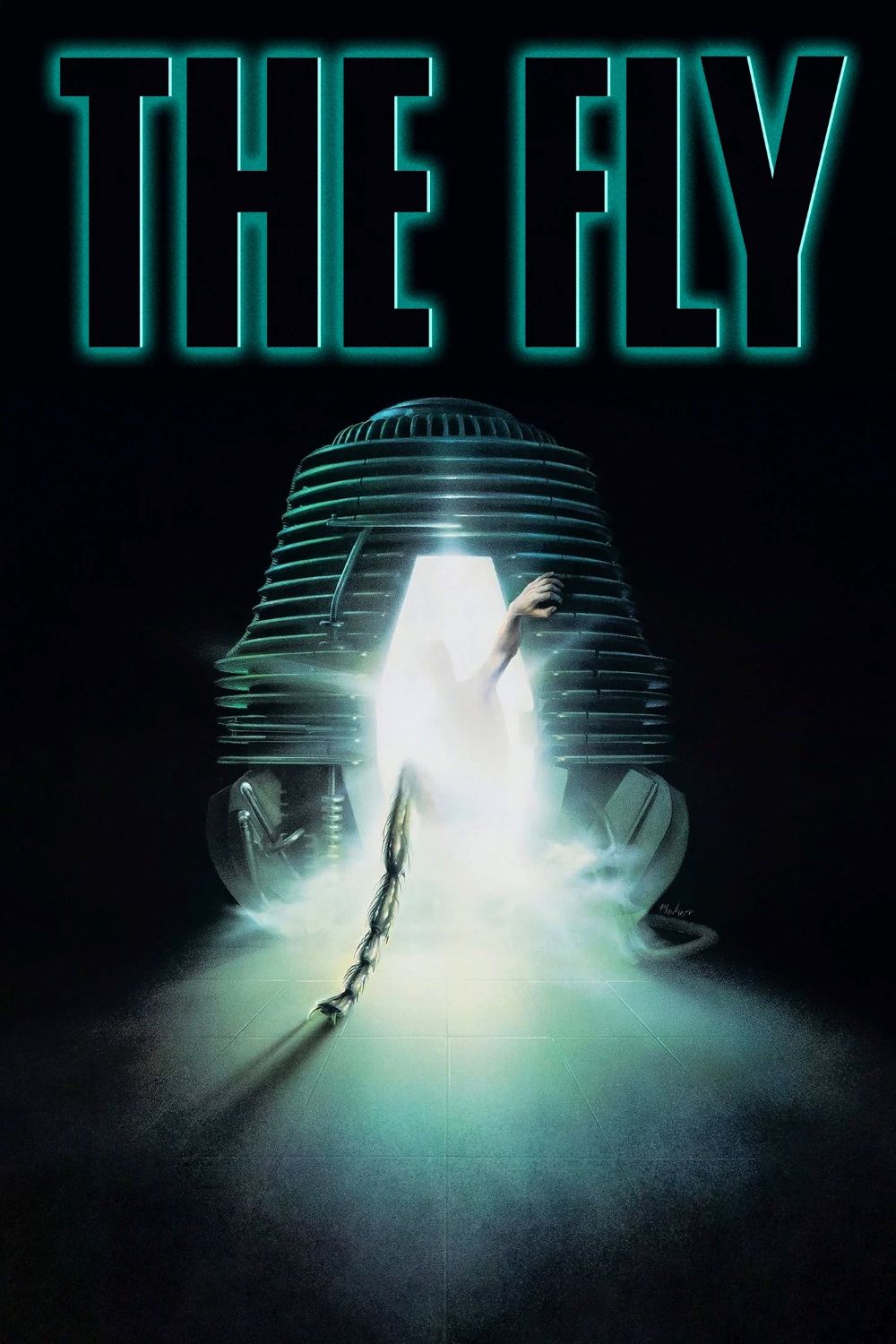
Horror Film Review: The Fly (dir. by David Cronenberg)


“I’m saying… I’m saying I – I’m an insect who dreamt he was a man and loved it. But now the dream is over… and the insect is awake.” – Seth Brundle

There’s a cruel little stretch in David Cronenberg’s The Fly (1986) when its central experiment seems to have worked out beautifully. Seth Brundle feels stronger, his confidence skyrockets, and the future looks wide open. Of course, we know better. The movie’s title alone tells us this isn’t heading anywhere pleasant. What makes the film so effective is how badly it makes us want to be wrong. Beneath the slime, broken flesh, and increasingly alarming eating habits is a romance worth caring about. Cronenberg gets us invested in a life just before showing us how horribly it can unravel.

A remake of the 1958 film of the same name, The Fly also draws from the original 1957 short story by French-British writer George Langelaan. Cronenberg takes considerable liberties with the plot, but his film really leans into the story’s darker themes and tone. Scientific curiosity leads to bodily catastrophe, and love becomes inseparable from the suffering it cannot prevent. Those ideas give the remake something substantial to build on. Cronenberg then adds his own fascination with unstable flesh and the loss of bodily control, creating a version that feels less like a retelling than a deeply personal reinvention.

For me, that combination makes it levels better than the original. The 1958 film remains an entertaining science-fiction nightmare, but Cronenberg makes the premise more emotionally involving by changing how the disaster unfolds. Instead of making the scientist’s altered appearance the central revelation, he turns transformation into a drawn-out process. We watch the damage develop alongside the characters, who keep trying to understand it, explain it, and bargain with it. The suspense isn’t simply about what Seth will look like next. It’s about how much of his old life will remain when the next change arrives.

Jeff Goldblum plays Seth as a brilliant scientist whose social skills haven’t quite caught up with his intellect. When journalist Veronica Quaife, played by Geena Davis, becomes interested in his teleportation research, their professional connection develops into something warmer. The attraction gives Seth’s otherwise isolated existence a welcome sense of possibility. Unfortunately, jealousy and alcohol eventually push him into testing the machine on himself. An unnoticed housefly enters the pod with him, and the resulting genetic fusion begins rewriting his body. His breakthrough works, just not in any way he intended.

Goldblum is terrific because he makes Seth’s awkwardness appealing without sanding down his less attractive qualities. His strange rhythms and sudden bursts of enthusiasm suggest someone who spends most of his time following thoughts other people haven’t caught up with. You can see why Veronica would find him fascinating, but you can also see the arrogance underneath his excitement. Once the transformation begins, Goldblum doesn’t abandon that characterization. He twists it. Curiosity becomes fixation, confidence becomes aggression, and Seth’s desire to share his discovery becomes a demand that someone else validate it.

Davis makes Veronica much more than the person standing nearby when the next horrible thing happens. She gives the relationship an emotional credibility that the entire movie depends on. Her affection for Seth feels genuine, as does her growing uncertainty about staying close to him. The film never pretends those feelings are mutually exclusive. She can love him and fear him, want to help him and recognize that she’s in danger. Davis handles those contradictions without making them feel like dramatic switches. They accumulate, leaving Veronica increasingly trapped between what she remembers and what she sees.

That tension becomes sharper because Seth initially welcomes his altered condition. His new strength and energy seem to confirm everything he wants to believe about his invention. He hasn’t damaged himself; he has supposedly improved himself. Cronenberg lets that delusion become seductive before exposing its ugliness. Seth’s denial isn’t just a convenient way to delay the inevitable. It grows naturally from his pride and the sheer awfulness of the alternative. Accepting the truth would mean admitting that the achievement meant to transform his life has instead made that life impossible.

Then the effects start making denial difficult for everybody. Chris Walas and his team give the transformation a wonderfully unpleasant physicality. Seth doesn’t simply sprout insect features and become a conventional movie creature. His body deteriorates, sheds pieces of itself, and develops functions he can barely comprehend. The makeup is remarkable, but its real achievement is how closely it works with Goldblum’s performance. Changes in posture, movement, and speech keep the effects attached to a recognizable person. We aren’t admiring an elaborate monster design from a safe distance. We’re watching someone struggle to inhabit his own skin.

Considering its 1986 release, the film can definitely be seen as an analogy for the AIDS crisis of the era. Seth’s deterioration and Veronica’s anguish as she watches someone she loves waste away give that reading real weight. Cronenberg originally understood the material as an analogy for disease more generally, rather than one specific illness. That broader intention doesn’t weaken the AIDS interpretation; it leaves room for it. The film captures the helplessness surrounding serious illness without requiring every detail to correspond to a single diagnosis. What matters is the frightening gap between recognizing that a body is failing and being able to do anything about it.

That’s also why the relationship becomes more upsetting as the creature effects become more extreme. The physical horror never replaces the human situation; it tightens its grip on it. Seth wants to survive, but his desperation increasingly threatens Veronica’s safety and autonomy. Her compassion cannot solve that conflict, and the film refuses to pretend otherwise. Cronenberg finds something genuinely tragic in the persistence of affection after the possibility of rescue has nearly disappeared. By the climax, we can be horrified by Seth’s actions without forgetting the frightened person behind them. Neither response cancels out the other, which makes the final stretch devastating.

The real achievement of The Fly is that its most outrageous images never overwhelm its simplest emotional truth: watching someone suffer can mean discovering how little power love actually gives you. Cronenberg turns a familiar monster-movie setup into something grotesque, intimate, and painfully sad without losing its dark humor or entertainment value. The original premise supplies the accident, but this remake makes every consequence matter. Long after the shock of the effects settles, what remains is the distance between the future Seth and Veronica briefly imagined and the ending neither could escape. That’s a far nastier thing to leave an audience with than a jump scare.

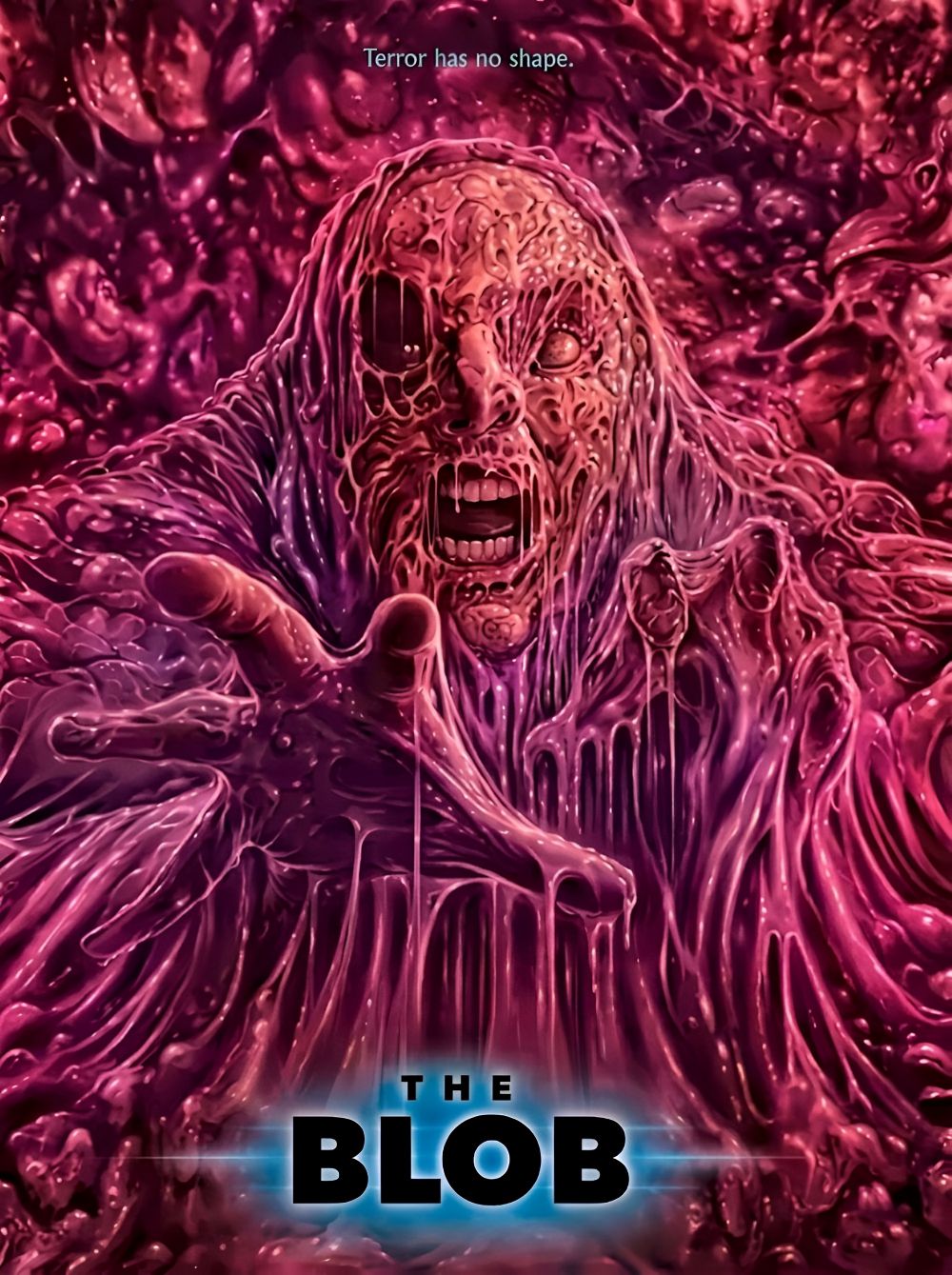
Horror Film Review: The Blob (dir. by Chuck Russell)


“Listen to me, Briggs, think for a minute, do you suppose an army of guys in plastic suits show up every time a meteor falls?” — Brian Flagg

A monster doesn’t need claws, teeth, or even a face to ruin your evening. Sometimes a wobbling mass of pink slime will do just fine, especially when the filmmakers know how to make every inch of it look hungry. Chuck Russell’s The Blob (1988) takes a premise that could easily inspire nothing but giggles and turns it into a nasty, energetic horror show. A more cynical and violent remake of the original 1958 creature feature, it succeeds by taking its ridiculous threat seriously without forgetting how much fun a ridiculous threat can be. The movie has a wonderfully direct goal: make you squirm, then make you enjoy it.

The setup wastes little time getting things moving. Something falls from the sky near the small California town of Arborville, a curious man gets too close, and an unpleasant discovery becomes a rapidly growing emergency. Among those caught in the chaos are cheerleader Meg Penny, played by Shawnee Smith, and local rebel Brian Flagg, played by Kevin Dillon. Russell and co-writer Frank Darabont (yes, that Frank Darabont) introduce their community through familiar faces and recognizable social divisions. You don’t need an elaborate history of the town to understand it. A few interactions establish who belongs, who gets judged, and who assumes they have everything under control.

That economical approach is one of the movie’s strengths. Rather than spending ages explaining why you should care, it gives the characters enough personality to register and lets the situation do the rest. The familiarity also creates expectations that the film enjoys upsetting. Certain people seem important, certain places seem safe, and certain decisions seem sensible. None of those impressions is especially reliable. Without spoiling the surprises, the early stretch makes it clear that this isn’t a particularly generous movie toward its characters. That unpredictability gives the action an extra charge because you can’t always settle comfortably into the usual horror-movie rules.

The effects provide the biggest reason to watch, though, and they remain impressively unpleasant. The creature has a thick, sticky physicality that makes it feel like something occupying the same space as its victims. It stretches, swells, and presses into places where nothing that size should fit. The makeup work makes the consequences of contact horribly clear without reducing every attack to the same bloody image. Some shots look more convincing than others, but even the rough edges have charm. There’s visible imagination behind the grotesquerie, and the craftsmanship gives this shapeless thing a stronger screen presence than plenty of monsters with elaborate designs.

What makes those effects work dramatically is Russell’s attention to setting. He doesn’t simply keep dropping the creature in front of another person and repeating the process. A hospital sequence establishes the danger, a diner encounter turns an everyday location into a nightmare, and a phone booth provides a particularly tense confrontation. The movie theater sequence adds a bigger dose of public panic. Each has its own rhythm and identity, which keeps the attacks from blurring together. The details are best left unspoiled, but the overall effect is clear: ordinary spaces become much less comforting when the monster doesn’t need to use the door.

Smith gives the movie its most dependable human presence. Meg could have remained a stock cheerleader reacting to things happening around her, but the film allows her to become increasingly decisive. Smith sells that progression without making it feel like a sudden personality transplant. Meg is scared, sometimes overwhelmed, and still willing to act when someone needs help. That’s a simple foundation for a horror heroine, but it works. She gives the audience someone to follow emotionally while the effects department does its worst. The performance never demands that the movie slow down to admire her courage; it lets her choices establish it.

Dillon has a slightly harder time escaping the shorthand built into Brian. The motorcycle, leather jacket, and long hair make his outsider status obvious almost immediately. A few early moments push the misunderstood-bad-boy routine harder than necessary. Still, Dillon brings an appealing scruffiness to the role, and his attitude fits a story in which respectability doesn’t necessarily equal good judgment. His partnership with Meg works because their differences matter less as the emergency grows. They don’t need elaborate backstories or a heavily emphasized romance to hold the film together. Their shared determination supplies enough momentum between the bigger horror sequences.

The remake’s cynicism becomes especially noticeable when official intervention enters the picture. Without giving away the later developments, the film questions whether looking organized and speaking confidently should automatically earn anyone’s trust. That suspicion gives the story a sharper edge than its goofy monster might suggest. The danger exposes weaknesses in the community rather than simply giving everyone an obvious enemy to unite against. It isn’t deep political analysis, but it doesn’t need to be. The contrast between an openly destructive creature and people claiming to manage the crisis provides another source of tension, making the human side of the disaster feel troubling in its own way.

There are limitations. Several supporting characters are drawn broadly, and some dialogue does little more than announce the personality type delivering it. The explanatory passages aren’t as engaging as the visual storytelling, particularly once the audience already understands the immediate stakes. A few effects shots also strain against the production’s ambitions. Yet Russell rarely lets those problems stall the movie for long. He keeps the pace brisk while giving the suspense enough room to develop. Just as importantly, the occasional humor doesn’t turn the whole thing into a spoof. You can laugh at the situation and still care when it turns ugly.

What ultimately makes The Blob work is the confidence of its execution. It knows its monster is absurd, knows its characters are familiar, and knows the audience came expecting a mess. Then it delivers that mess with enough invention and nerve to make the familiar feel exciting again. The harsher attitude distinguishes it from the original, but the appeal remains refreshingly basic: a town, a growing threat, and people scrambling to stay ahead of it. Russell makes a faceless pile of goo feel like a genuine screen villain. That’s no small achievement for something that looks like it escaped from the dessert table.

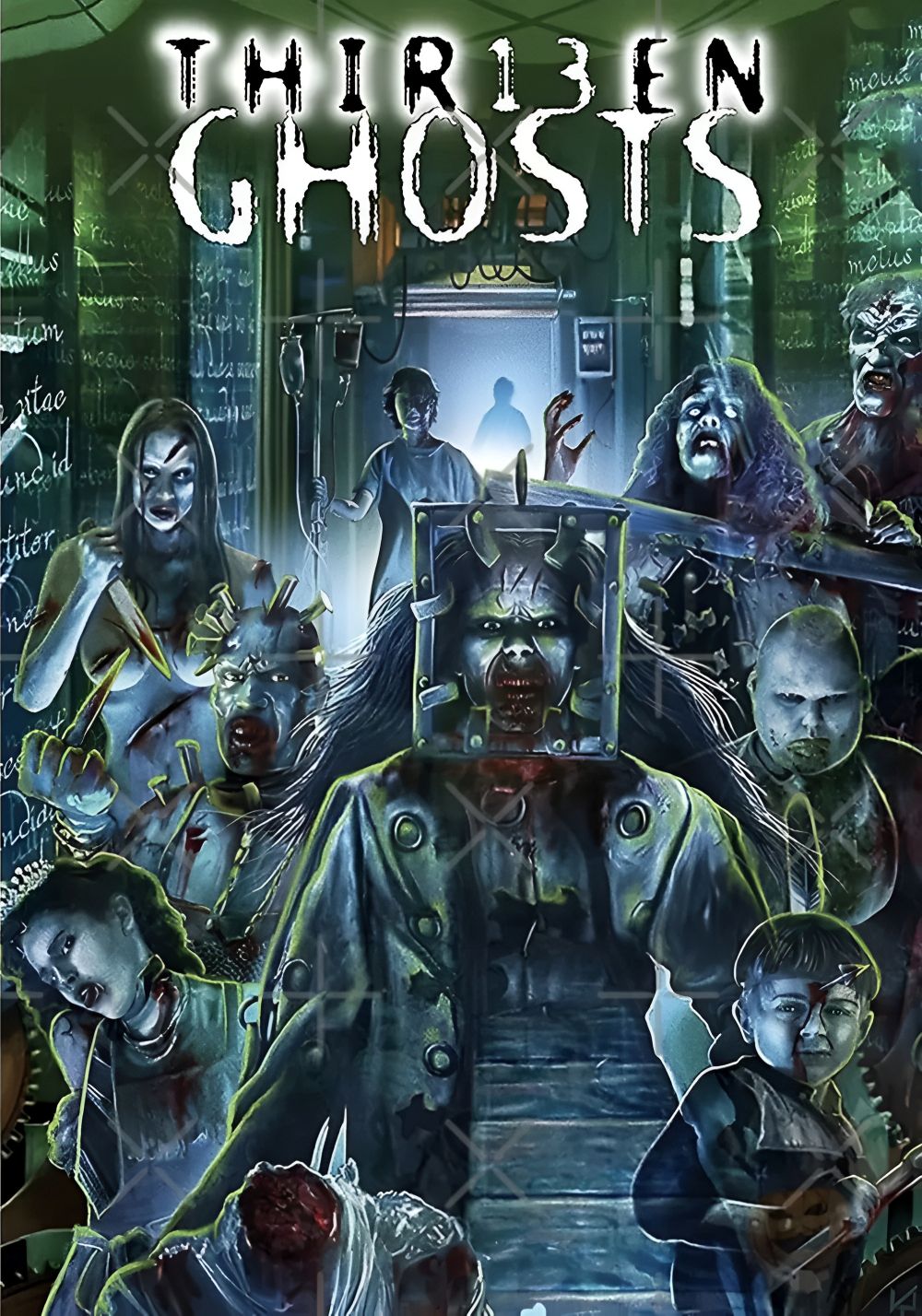
Horror Film Review: Thirteen Ghosts (dir. by Steve Beck)


“Did I say there’s a petting zoo downstairs? No! There are ghosts downstairs, Arthur!” — Dennis Rafkin

In Thirteen Ghosts, getting a spectacular house for free turns out to be considerably worse than struggling to afford one. That cruel little reversal gives Steve Beck’s 2001 horror film a promising starting point: a family’s apparent good fortune becomes another nightmare they have to survive. As a remake of William Castle’s 1960 film 13 Ghosts, though, it isn’t interested in preserving much of its predecessor’s low-budget charm. Beck trades playful spook-show entertainment for grotesque creatures and brutal violence. The result has an unmistakable identity, but its impressive visual imagination often outpaces its ability to tell a compelling story.

Tony Shalhoub plays Arthur Kriticos, a widowed father trying to provide some stability for his children. When his wealthy uncle Cyrus, played by F. Murray Abraham, leaves him an extraordinary house, it looks like the kind of opportunity he can’t afford to question. Arthur arrives with his family and their nanny, only to discover that their new home contains trapped spirits and some deeply suspicious machinery. Naturally, the house isn’t simply haunted. Its design has a purpose, and the people walking through it have become part of something they don’t understand.

There’s a nasty streak running through that setup, and the remake embraces it. Castle’s original has the scrappy appeal of an old carnival attraction, where the modest effects and ghost-viewing gimmick contribute to the fun. Beck’s version wants to hit harder. The ghosts look tortured, their attacks feel vicious, and the atmosphere offers little of the earlier film’s playful reassurance. That approach separates the remake from the original rather than leaving it feeling like a glossy imitation. Still, the difference is enormous. It keeps the basic inheritance premise while taking the experience about as far from Castle’s charmingly cheap thrills as possible.

The strongest part of that transformation is the house itself. Its glass walls, strange inscriptions, and mechanical components make it feel more like an elaborate trap than somewhere anyone could live. The transparency is especially effective. Haunted-house movies usually make darkness and concealment threatening, but here the characters can look through walls without knowing what they’re seeing or how to reach safety. Everything appears exposed, yet very little feels understandable. Even during stretches when the plot becomes clumsy, the setting holds your attention. There’s almost always an unsettling detail somewhere in the frame.

The special glasses that reveal the ghosts make good use of that environment. Without them, a seemingly empty room can contain something capable of killing you. With them, the house becomes even less inviting. It’s a clever connection to the original’s viewing gimmick, repurposed to suit the remake’s harsher personality. The bathroom encounter with the Angry Princess is particularly effective because it builds danger around a character’s limited awareness. For a moment, the film doesn’t need complicated explanations or frantic action. The simple possibility of sharing a confined space with an unseen threat does the work.

The creatures are equally important to the movie’s appeal. Their makeup, clothing, and physical behavior suggest distinct personalities and horrible histories. They aren’t interchangeable figures waiting to jump into the camera. Several look interesting enough to support much longer sequences, which makes their treatment frustrating. The movie introduces these elaborate designs and then rushes toward the next confrontation. You want to understand what separates one spirit from another, but the screenplay too often treats them as obstacles in a supernatural obstacle course. The imagination behind their appearances is stronger than the storytelling that puts them to use.

That hurry extends to the scares. Beck frequently pushes the action with rapid editing, loud sound effects, and sudden bursts of violence. There’s some fun in that aggressive approach, especially if you enjoy horror that refuses to be restrained. But the constant pressure eventually flattens the suspense. When nearly every encounter arrives at full volume, there’s little room for dread to build. An ugly figure lingering behind glass can be more disturbing than another noisy attack. The movie creates plenty of striking images, then seems nervous about letting the audience sit with them.

The actors help keep the chaos watchable. Shalhoub gives Arthur a weary sincerity that makes his concern for his children believable. Matthew Lillard brings an anxious, twitchy energy that fits the increasingly frantic situation, while Shannon Elizabeth and Rah Digga add life to the ensemble. Unfortunately, the family’s emotional circumstances get less attention than the machinery surrounding them. Arthur’s desire to turn an inheritance into security should make the house’s betrayal sting. Instead, the film keeps interrupting that thread to explain another supernatural complication or send everyone running. The characters remain likable enough, but they rarely become as interesting as their surroundings.

By the time the house has revealed its true colors, Thirteen Ghosts has made a better case for its production design than its storytelling. There’s real pleasure in its elaborate nastiness, and Beck deserves credit for giving the remake a personality separate from Castle’s original. This isn’t the same haunted-house ride with a fresh coat of paint; it’s a colder, bloodier attraction built on the old foundation. Whether that trade works depends on how much creature design and frantic violence you need to stay entertained. For me, there’s enough to enjoy, but not enough to stop wishing the movie would slow down and let its best ideas haunt us.

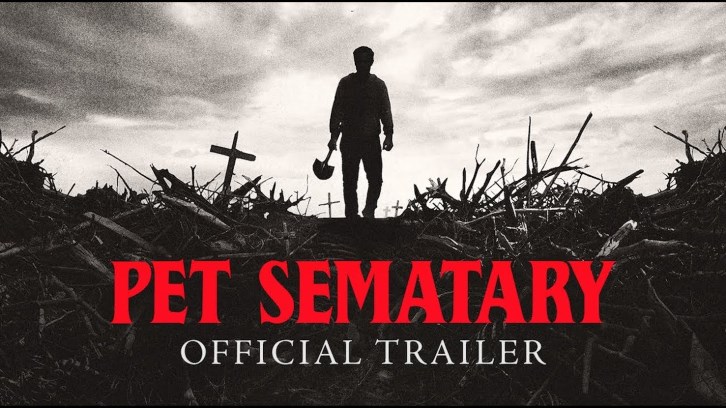
Horror Trailer: Pet Sematary


Pet Sematary

It looks like one of the advantages of It being such a success in the box-office in 2017 was the return of Stephen King film adaptations. It’s not just in the theaters that we’ve seen this latest run in Stephen King films, but on streaming services like Netflix (Gerald’s Game and 1922) and Hulu (Castle Rock series).

Now we have the first trailer for the remake of the Stephen King cult classic film Pet Sematary set to come out early April 2019. The film will star Jason Clarke in the role of Louis Creed with John Lithgow playing the role of Jud Crandall (a role made famous by the late, great Fred Gwynne).

One thing that the trailer has shown me that I approve of is the fact they finally cast the correct cat in the role of the Creed family’s beloved cat Church. The original film a Russian Blue was picked for the role when in the book it was a Maine Coon. From a quick glimpse in the trailer it looks like we’re getting a pissed off Maine Coon in the role of Church.

Sneak Peek: Suspiria “Improvise Freely”


suspiria-1

As we get closer to the Fall film season, we’re getting more hype on upcoming films that’s not part of the summer or holiday blockbuster hype train. One such film that has been getting some buzz is Luca Guadagnino’s remake of Suspiria.

Our very own Lisa Marie is very leery of this remake since she holds the original by giallo maestro Dario Argento in such high regard. While I’m always open to any film whether original, sequel or remake, I do hold remakes with a certain degree of cautious optimism. I’m more than willing to give any remake, especially horror remakes, a chance to stand on it’s own merits. For the most part horror remakes tend to be cash grabs and not up to the standard set by the original.

Here’s to hoping that Guadagnino’s remake of Suspiria is one that bucks the trend of disappointing horror remakes. A clip released by Amazon Studios does seem to up the intrigue factor for the film. At least, for this film fan.

Suspiria (2018) Official Trailer


suspiria-1

Where has the time gone.

In my absense, it looks like other people have flourished, but now I think it’s time to make a return and this time for good.

What better way to mark my return than to show and talk about the first official full-length trailer for what could be one of the more divisive horror remakes set to arrive in a couple months.

I am talking about Suspiria by Italian filmmaker Luca Guadagnino (Call Me by Your Name, A Bigger Splash and I Am Love). The original film by Italian giallo maestro Dario Argento many horror fans consider a great example of the Italian giallo of the late 70’s and early 80’s. Just like most fandoms, whenever there’s talk about one of the classics being remade there’s levels of trepidation, anger and guarded optimism.

While I’m never one to look at remakes as ruining the originals. IF that was the case then we wouldn’t have excellent horror remakes such as Carpenter’s The Thing and, to an extent, Zack Snyder’s Dawn of the Dead.

While I’m excited to see what Guadagnino brings to the table when it comes to his remake of Suspiria, I am also somewhat guarded in that the original film was such a surreal experience that remaking it note for note wouldn’t add anything new to the experience.

Here’s to hoping this is one horror remake that falls under the great side of the equation instead of the trash end.