Review: Flight of the Navigator (dir. by Randal Kleiser)


“That is my family, but that’s not my home. My home is back in 1978!” — David Freeman

Flight of the Navigator turns a child’s worst possible homecoming into an unexpectedly funny, wistful, and imaginative science-fiction adventure. Released in 1986, it begins as a modest suburban mystery before expanding into a story about time displacement, missing years, alien technology, and the strange loneliness of returning home to a life that has moved on without you. It has the glossy, accessible surface of a Disney adventure, but there is a surprisingly melancholy idea at its center: what would it feel like to lose eight years of your life while everyone you love has had to live through them without you?

The movie follows David Freeman, a 12-year-old boy who disappears in 1978 after going into the woods to retrieve his younger brother Jeff. David wakes up in 1986, apparently having been gone only a few hours from his own point of view. The shock is immediate. His parents are older, Jeff is now his taller teenage brother, the family has moved, and David has become a long-unsolved missing-person case. This opening stretch is probably the film’s strongest material because it plays the scenario straight enough to make it genuinely unsettling. David is not simply a kid dropped into a flashy futuristic world; he is a child abruptly disconnected from the only reality he knows.

That emotional hook gives Flight of the Navigator more weight than many similar children’s adventures. David’s confusion is easy to understand, and the film wisely lets the situation breathe before revealing all of its science-fiction machinery. The sight of his family recognizing him after years of grief is touching, but it also comes with discomfort. David wants everything to return to normal, while his parents are overwhelmed by the impossible fact that their vanished son has returned unchanged. The movie does not dig into the full psychological consequences of that situation, because it is still fundamentally a family adventure, but it gives the idea enough attention to make the stakes feel personal.

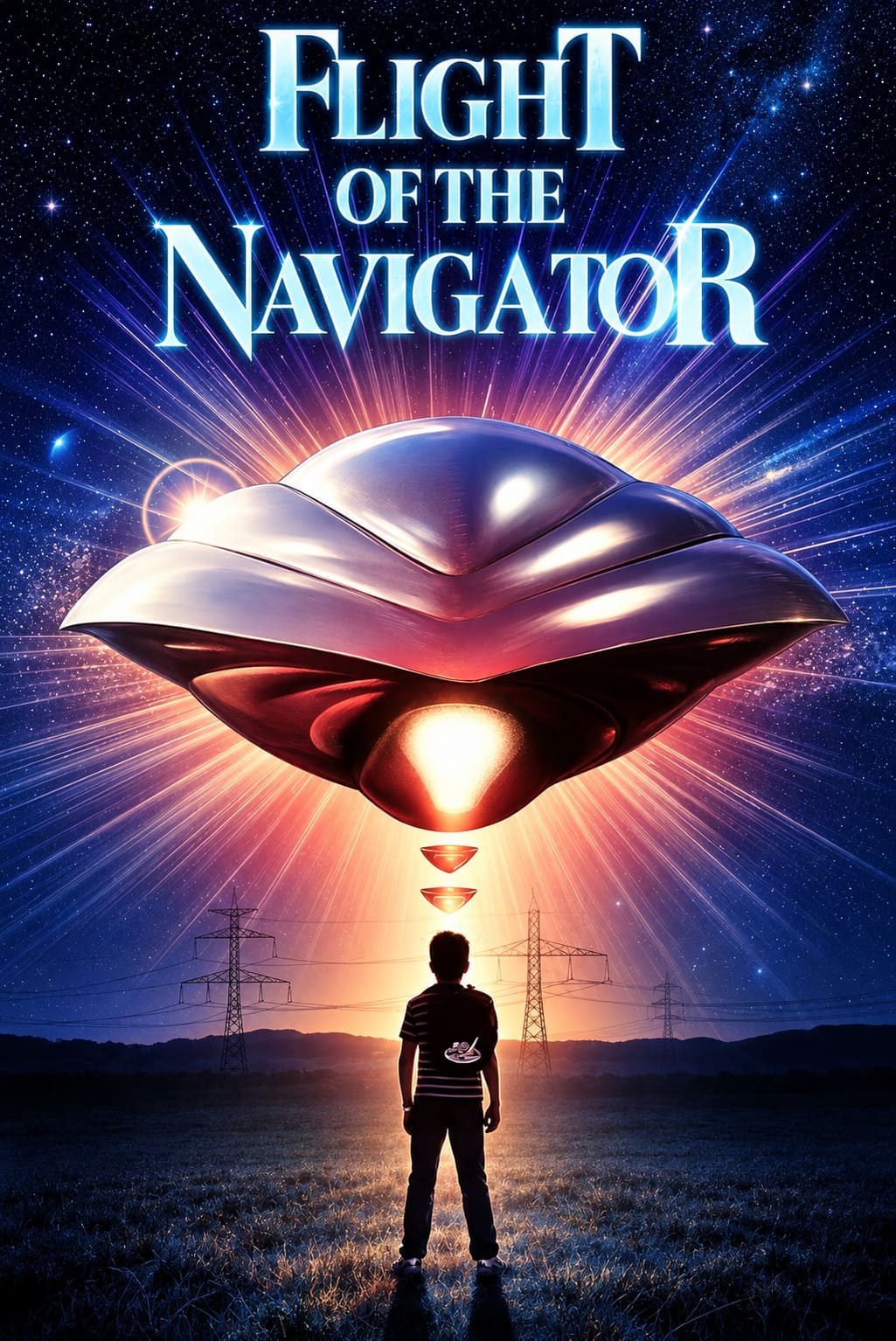
Once NASA becomes involved, the story shifts into a more conventional but still entertaining sci-fi mode. Doctors discover that David has advanced knowledge in his brain that he cannot consciously explain, and the mystery leads him to a crashed alien spacecraft. The ship, known as the Trimaxion Drone Ship, is the movie’s most iconic element. Its smooth silver form, with no visible seams or conventional cockpit, still looks appealing because it has a simple, alien elegance. It is not overly busy or mechanical in the way many science-fiction vehicles are. Instead, it resembles a floating metallic organism, something sleek and strange that could plausibly have appeared in a child’s dream.

The ship’s computer, MAX, is what really gives the movie its personality. Voiced by Paul Reubens, MAX begins as a calm, efficient artificial intelligence but gradually becomes sillier and more mischievous after downloading human information from David’s era. Reubens’ performance is a major reason the character works. He does not simply do a recognizable Pee-wee Herman routine, although the playful vocal energy is certainly there. MAX’s changing voice and increasingly erratic sense of humor make him feel like an alien intelligence trying to imitate human behavior and getting it only partly right.

There is a fine line between amusing and annoying when a movie lets its comic sidekick become too hyperactive, and Flight of the Navigator occasionally crosses it. MAX can become a little much, especially during the later scenes where he starts cracking jokes, changing his vocal effects, and behaving like an overexcited child with access to interstellar technology. Still, that energy is part of what makes the film feel uniquely of its era. MAX is not as polished or emotionally sophisticated as later animated or CGI companions, but he remains memorable because he is odd. His humor feels less like a studio-tested collection of one-liners and more like a machine that has accidentally discovered cartoons, pop culture, and sarcasm all at once.

Joey Cramer carries much of the movie as David, and he gives the role more sincerity than the material sometimes requires. He is believable as a regular kid who becomes frightened, angry, curious, and eventually exhilarated by what is happening around him. David is not written as a perfect young hero. He can be stubborn and impulsive, especially when he decides he has to take control of his own situation, but that makes sense. Adults have spent much of the story examining him, restraining him, and treating him as a scientific puzzle. His decision to escape with MAX is reckless, yet it also feels like the response of a child who is desperate to reclaim some agency.

The film’s visual effects deserve credit for helping sell its larger ideas. By modern standards, the effects are obviously dated in places, particularly when the ship changes shape or moves at impossible speeds. Yet the movie uses its effects well enough that they remain charming rather than distracting. The morphing sequence in which the ship transforms into its sleeker form was especially impressive for the time, and even now it has an appealing practical-digital hybrid quality. It does not look completely real, but it looks imaginative. The ship has presence, and the movie understands the pleasure of simply watching it fly through clouds, skim across water, or streak through the night sky.

The electronic score by Alan Silvestri is another major part of the film’s identity. Silvestri is often associated with larger, more overtly heroic scores, especially in films such as Back to the Future, but his work here is more synthetic and futuristic. The music helps create a sense of wonder while also grounding the film in the mid-1980s. It can sound very much of its time, with prominent synthesizers and a clean electronic texture, but that is not a weakness. The score fits a movie about an ordinary kid encountering a cold, shiny, unknowable piece of advanced technology.

One of the better things about Flight of the Navigator is that it does not make its protagonist’s adventure entirely consequence-free. David gets to fly an alien ship, travel at incredible speeds, and encounter a universe beyond his suburban life. That is the wish-fulfillment element, and the film delivers it well. At the same time, the adventure exists because something has gone wrong in David’s life. His journey begins with loss. The movie never becomes as emotionally dark as its premise could allow, but it never completely forgets that David has been separated from his family and displaced in time.

The ending is satisfying because it returns the story to that emotional core. David’s ultimate choice is not just about whether he wants to keep flying around with MAX. It is about whether he can go home, even if home is no longer exactly what it was. The resolution is neat and arguably a little too convenient, but it earns its feel-good payoff. This is a family film, after all, and the movie knows that its audience wants the wonder of space travel without being left in despair over the time-travel implications.

In the end, Flight of the Navigator remains a warm, inventive, and slightly strange piece of 1980s science-fiction. It is not a perfect movie. Some of the comedy is broad, the adults at NASA are more functional than memorable, and the story occasionally rushes past ideas that could have been explored more deeply. But its central concept is strong, its spaceship is iconic, its score is distinctive, and its combination of melancholy and fun gives it more staying power than many nostalgia-driven family movies. It captures the feeling of being a kid who wants to escape into the unknown, while also recognizing that the people waiting at home are what make that escape matter.
Retro Television Review: The American Short Story Episode 5: Bernice Bobs Her Hair


Welcome to Retro Television Reviews, a feature where we review some of our favorite and least favorite shows of the past!  On Saturdays, I will be reviewing The American Short Story, which ran semi-regularly on PBS in 1974 to 1981.  The entire show can be purchased on Prime and found on YouTube and Tubi.

This week, we have an adaptation of the short story that brought F. Scott Fitzgerald his first great literary success.

Episode #5 “Bernice Bobs Her Hair”

(Dir by Joan Micklin Silver, originally aired in 1976)

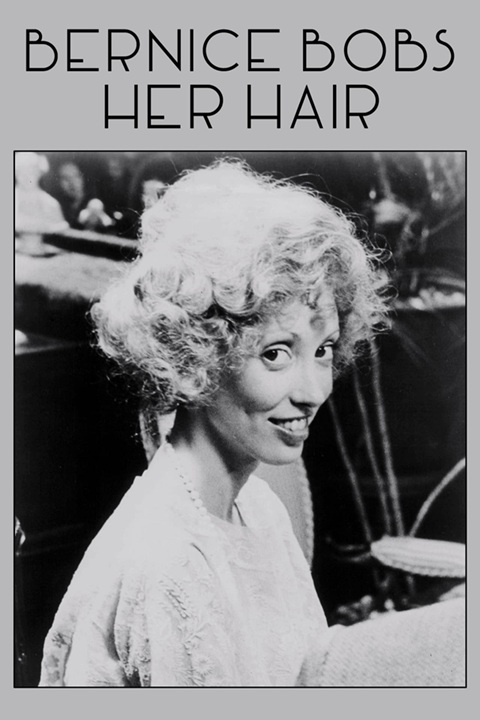
In this adaptation of a short story by F. Scott Fitzgerald, Shelley Duvall plays Bernice.  Bernice is a socially awkward young woman from the country who, at the start of the glorious 1920s, spends the summer in the city with aunt (Polly Holliday) and her popular cousin, Marjorie (Veronica Cartwright).  Though initially annoyed with having to watch over her cousin, Marjorie eventually decides to teach Bernice how to be a “society girl.”  Marjorie teachers her how to flirt and, even more importantly, Marjorie spreads a rumor that Bernice is not only going to get her hair bobbed (which, at that time, was associated with being a flapper) but she’s going to let all the boys watch.  Bernice goes from being seen as someone who is boring to being someone who is daring and rebellious.  The rumor of her bobbing her hair gives Bernice a mystique, one that will only last as long as there’s a possibility of it happening.

Soon, all of the boys are interested in Bernice and Bernice becomes even more popular than Marjorie.  Marjorie, with her long braids and her cultivated manners, watches in jealousy and horror as the boy across the street, Warren (Bud Cort), suddenly goes from liking Marjorie to liking Bernice.  Marjorie is herself in love with Warren, though one gets the feeling that the love was more about the idea of Warren pining for her than any real desire to be with him.  Realizing that the key to Bernice’s popularity is due to her unfulfilled promise to get hair bobbed, Marjorie tricks Bernice into actually doing it.  Suddenly, Bernice is no longer as popular and her aunt is no longer comfortable with her being seen as a member of the family.  The party invitations dry up and Marjorie once again claims her place as the long-haired society queen.  Bernice prepares to return home but she has one more trick up her sleeve before she leaves.

I liked this one.  Joan Micklin Silver gets wonderful performances from her cast and shows that she, more than even Robert Altman, understood how to best utilize Shelley Duvall’s quirky screen presence.  While this adaptation is dominated by Duvall, I also really enjoyed Bud Cort’s earnest eccentricity as Warren.  (“I’m getting old.” — 19 year-old Warren.)  Finally, Veronica Cartwright gave an intelligent performance, one that kept Majorie from just becoming a one-dimensional villain.  A look at the mystique of popularity and the way that social standards are casually accepted and rarely questioned, Bernice Bobs Her Hair works as both a wonderful short story and a witty short film.

Retro Television Review: Miami Vice 3.20 “By Hooker by Crook”


Welcome to Retro Television Reviews, a feature where we review some of our favorite and least favorite shows of the past!  On Mondays, I will be reviewing Miami Vice, which ran on NBC from 1984 to 1989.  The entire show can be purchased on Prime!

This week, Sonny falls for a madame.

Episode 3.20 “By Hooker by Crook”

(Dir by Don Johnson, originally aired on March 20th, 1987)

Here I am, halfway through the third season of Miami Vice and it still amuses the Heck out of me how shocked Crockett and Tubbs are whenever their cover gets blown.

As far as  I can tell, neither Crockett nor Tubbs make much of an effort at maintaining their cover, beyond using the names Burnett and Cooper.  (Tubbs occasionally uses a fake Jamaican accent.)  They dress exactly the same as cops as they do when they’re criminals.  They hang out, in public, with the other members of the Vice Squad.  They occasionally respond to “all unit” calls, which means that anyone in the area at the time will recognize them as being cops.  Add to that, Crockett is supposedly a minor Florida celebrity, a former football star who went to Vietnam.  In short, these two have the worst covers ever but they’re still stunned when the criminals see through their “Burnett and Cooper” identities …. even though it happens in every episode!

This time, it’s George Takei, playing a viscous crime lord, who sees through their cover and orders his men to attack.  It leads to a shoot-out, much of which is filmed in slow motion.  It would be pretty exciting and dramatic, except for the fact that one of Takei’s henchmen is played Captain Lou Albano, the rubber band-wearing wrestler.  It also doesn’t help that Takei is …. well, he’s Takei.  He camps up his villain role to such an extent that it’s impossible to take him seriously as any sort of threat.  Even though he orders his men to kill an escort played by Vanity, he still comes across as being flamboyant, eccentric old George.

This episode was directed by Don Johnson and, as often happens when a cast member first tries his hand at directing, it’s filled with shots that are supposed to make you go, “Hey, this guy’s got a vision!”  The slow motion gunfight is an example of this.  An extended scene that is filmed with a fish-eyed lens (the better to represent Izzy’s point of view as he looks through a peephole) is another example.  A sex scene between Crockett and a madame who is played by Melanie Griffith is filmed in soft focus and lit in such a way that it looks like the entire set is about to burst into flame from the heat.  Johnson the director seems to be saying, “Dang, Don Johnson’s hot!”

At the time of this episode, Melanie Griffith was divorced from Don Johnson and married to Steve Bauer.  Later, she would divorce Bauer and remarry Johnson.  Johnson and Griffith do have amazing chemistry in this episode so kudos to Johnson the Director for making a good casting choice.  Johnson the actor owes him one.

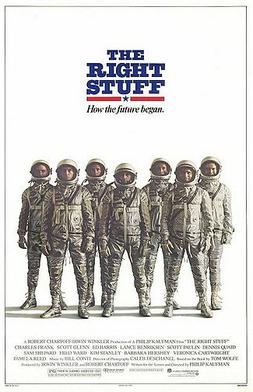
Lisa Marie Reviews An Oscar Nominee: The Right Stuff (dir by Philip Kaufman)


There’s a brilliant scene that occurs towards the end of 1983’s The Right Stuff.

It takes place in 1963.  The original Mercury astronauts, who have become a symbol of American ingenuity and optimism, are being cheered at a rally in Houston.  Vice President Lyndon Johnson (Donald Moffat) stands on a stage and brags about having brought the astronauts to his supporters.  One-by-one, the astronauts and their wives wave to the cheering crowd.  They’re all there: John Glenn (Ed Harris), Gus Grissom (Fred Ward), Alan Shephard (Scott Glenn), Wally Schirra (Lance Henrisken), Deke Slayton (Scott Paulin), Scott Carpenter (Charles Frank), and the always-smiling Gordon Cooper (Dennis Quaid).  The astronauts all look good and they know how to play to the crowd.  They were chosen to be and sold as heroes and all of them have delivered.

While the astronauts are celebrated, Chuck Yeager (Sam Shepard) is at Edwards Air Force Base.  Yeager is the pilot who broke the sound barrier and proved that the mythical “demon in the sky,” which was whispered about by pilots as a warning about taking unnecessary risks, was not waiting to destroy every pilot who tried to go too fast or too high.  Yeager is considered by many, including Gordon Cooper, to be the best pilot in America.  But, because Yeager didn’t have the right image and he had an independent streak, he was not ever considered to become a part of America’s young space program.  Yeager, who usually holds his emotions in check, gets in a jet and flies it straight up into the sky, taking the jet to the edge of space.  For a few briefs seconds, the blue sky becomes transparent and we can see the stars and the darkness behind the Earth’s atmosphere.  At that very moment, Yeager is at the barrier between reality and imagination, the past and the future, the planet and the universe.  And watching the film, the viewer is tempted to think that Yeager might actually make it into space finally.  It doesn’t happen, of course.  Yeager pushes the jet too far.  He manages to eject before his plane crashes.  He walks away from the cash with the stubborn strut of a western hero.  His expression remains stoic but we know he’s proven something to himself.  At that moment, the Mercury Astronauts might be the face of America but Yeager is the soul.  Both the astronauts and Yeager play an important role in taking America into space.  While the astronauts have learned how to take care of each other, even the face of government bureaucracy and a media that, initially, was eager to mock them and the idea of a man ever escaping the Earth’s atmosphere,  Chuck Yeager reminds us that America’s greatest strength has always been its independence.

Philip Kaufman’s film about the early days of the space program is full of moments like that.  The Right Stuff is a big film.  It’s a long film.  It’s a chaotic film, one that frequently switches tone from being a modern western to a media satire to reverent recreation of history.  Moments of high drama are mixed with often broad humor.  Much like Tom Wolfe’s book, on which Kaufman’s film is based, the sprawling story is often critical of the government and the press but it celebrates the people who set speed records and who first went into space.  The film opens with Yeager, proving that a man can break the sound barrier.  It goes on to the early days of NASA, ending with the final member of the Mercury Seven going into space.  In between, the film offers a portrait of America on the verge of the space age.  We watch as John Glenn goes from being a clean-cut and eager to please to standing up to both the press and LBJ.  Even later, Glenn sees fireflies in space while an aborigines in Australia performs a ceremony for his safety.  We watch as Gus Grissom barely survives a serious accident and is only rescued from drowning after this capsule has been secured.  The astronauts go from being ridiculed to celebrated and eventually respected, even by Chuck Yeager.

It’s a big film with a huge cast.  Along with Sam Shepherd and the actors who play the Mercury Seven, Barbara Hershey, Pamela Reed, Jeff Goldblum, Harry Shearer, Royal Dano, Kim Stanley, Scott Wilson, and William Russ show up in roles both small and large.  It can sometimes be a bit of an overwhelming film but it’s one that leaves you feeling proud of the pioneering pilots and the brave astronauts and it leaves you thinking about the wonder of the universe that surrounds our Earth.  It’s a strong tribute to the American spirit, the so-called right stuff of the title.

The Right Stuff was nominated for Best Picture but, in the end, it lost to a far more lowkey film, 1983’s Terms of Endearment.  Sam Shepard was nominated for Best Supporting Actor but lost to Jack Nicholson.  Nicolson played an astronaut.

Horror on TV: One Step Beyond 2.25 “The Haunting” (dir by John Newland)


On tonight’s episode of One Step Beyond, a man suspects that his best friend is having an affair with his fiancee.  What better way to take care of the problem than by leaving his friend to die on the side of a mountain?

It seems like the perfect crime and the man might get away with it …. but only if he can do something about the ghost who seems to be stalking him in the days leading up to his wedding!

As always, this is supposedly based on a true story.

This episode originally aired on March 1st, 1960.

Enjoy!

Horror on TV: One Step Beyond 2.25 “The Haunting” (dir by John Newland)


On tonight’s episode of One Step Beyond, a man suspects that his best friend is having an affair with his fiancee.  What better way to take care of the problem than by leaving his friend to die on the side of a mountain?

It seems like the perfect crime and the man might get away with it …. but only if he can do something about the ghost who seems to be stalking him in the days leading up to his wedding!

As always, this is supposedly based on a true story.

This episode originally aired on March 1st, 1960.

Enjoy!

Goin’ South (1978, directed by Jack Nicholson)


Jack Nicholson was not an overnight success.

Nicholson was 17 years old when he first came to Hollywood in 1954.  Looking to become an actor, Nicholson toiled as an office worker at the MGM cartoon studio, took acting classes, and went to auditions.  It would be four years before he even landed his first role, the lead in the Roger Corman-produced The Cry Baby Killer.  When that film failed to become a hit, Nicholson spent the next ten years doing minor roles and occasionally starring in a B-picture.  He auditioned for some big parts, like Benjamin Braddock in The Graduate, Buck Barrow in Bonnie and Clyde, and Guy Woodhouse in Rosemary’s Baby, but his big break continued to allude him.  By 1969, Nicholson was so disillusioned with acting that he was planning to instead pursue a career as a director.  However, before Nicholson officially retired from the acting game, he received a call from the set of Easy Rider.  Depending on who you ask, Rip Torn, who had previously been cast in the role of alcoholic George Hanson, had either quit or been fired.  Bruce Dern, the first choice to replace Torn, was busy filming They Shoot Horses, Don’t They?  Nicholson agreed to step into the role and the rest is history.

Easy Rider may have made Jack Nicholson one of the world’s biggest film stars but he never lost his ambition to direct.  In 1971, he made his directorial debut with Drive, He Said, a film about campus unrest.  At the time, the film flopped at both the box office and with critics and quickly sunk into obscurity.  (It has subsequently been rediscovered and, in some cases, positively reevaluated.)  After the failure of Drive, He Said, it would be another seven years before Nicholson again got a chance to direct.

Nicholson’s second film as a director, Goin’ South, is a comedic western.  Nicholson plays Henry Lloyd Moon, an unsuccessful outlaw who used to ride with Quantrill’s Raiders.  When Moon is captured in Longhorn, Texas, he is sentenced to be hanged.  Fortunately, for Moon, Longhorn has a special ordinance.  Any man condemned for any crime other than murder can be saved from the gallows if a local woman agrees to marry him and take responsibility for his good behavior.  As a result of this ordinance, Longhorn is populated almost exclusively by single women and reformed outlaws.

While standing on the gallows, the cocky Moon is stunned to discover that none of the women want to marry him.  Finally, an old woman emerges from the crowd and announces that she’ll become Moon’s wife.  When Moon hops off the gallows and thanks her, the woman drops dead.  Fortunately, another, younger woman, Julia Tate (Mary Steenburgen, making her film debut), steps forward.

Once they’re married, the lecherous Moon discovers that Julia is a virgin and that the only reason she married him was so she could force him to work in the secret gold mine that’s hidden underneath her property.  The railroad will soon be taking over the land and Julia wants to get all of the gold before she leaves town for Philadelphia.  Though Julia, at first, wants nothing to do with Moon, he eventually wears her down through sheer persistence and the two fall in love.

Complicating matters is Deputy Towfield (Christopher Lloyd), who is upset because he feels that Julia was meant to be his wife.  Also, the members of Moon’s former gang (including Danny DeVito and Veronica Cartwright) show up at Julia’s house and discover the truth about the mine.

Goin’ South gets off to a good start.  The scene on the gallows, where Moon waits for someone to marry him and save his life, is genuinely funny and Nicholson and Steenburgen have a playful chemistry for the first hour of the movie.  Nicholson leers even more than usual in this film but the script is written so that the joke is always on Moon.  Much of the film’s humor comes from Moon always overestimating both his charm and his cleverness.  However, once Moon and Julia finally consummate their marriage, the movie loses whatever narrative momentum it may have had and gets bogged down with the subplots about Towfield and Moon’s gang.  There are funny moments throughout but the story gets away from Nicholson and the film is reduced to a series of set pieces, none of which build up to much.

Not surprisingly, Nicholson gets good performances from his cast, which is largely made up by the members of his 1970s entourage.  Along with Danny DeVito and Christopher Lloyd, longtime Nicholson associates like Tracey Walter, Ed Begley Jr., Richard Bradford, Jeff Morris, and Luana Anders all appear in small roles.  John Belushi plays the tiny role of Deputy Hector.  (Goin’ South was actually the first film in which Belushi was cast, though production didn’t actually begin until after Belushi had finished working on National Lampoon’s Animal House.)  Unfortunately, despite all of the good performances, the script doesn’t do much to develop any of the characters.  Belushi especially feels underused.  (Because Belushi had moved on to Animal House by the time the film went into post-production, Nicholson ended up dubbing several of Belushi’s lines himself.)

Drive, He Said was largely considered to have failed at the box office because Nicholson remained behind the camera so he took the opposite approach with Goin’ South.  Nicholson is in nearly every scene and he gives one of his broadest performances.  It works for the first half of the film, when Moon is constantly trying to get laid and failing every time.  But, during the second half of the movie, Nicholson’s failure to reign in his performance works to the film’s detriment.  When the movie needs Nicholson to be romantic, he’s still behaving like a horny cartoon. Whenever he looks at Mary Steenburgen, it seems as if his eyes should be popping out of his head, Tex Avery-style.  He’s an entertaining cartoon, but a cartoon nonetheless.  As a result, Goin’ South is often funny but it still feels very inconsequential.

Like Drive, He Said, Goin’ South was both a critical and a box office flop and it temporarily turned Nicholson off of directing.  It would be another 12 years before he would once again step behind the camera.  In 1990, Nicholson directed The Two Jakes, the sequel to one of his best films, Chinatown That would be Nicholson’s last film as a director.  Nicholson acted for another 20 years, following the release of The Two Jakes.  To date, he made his final screen appearance in 2010, with a supporting role in James L. Brooks’s How Do You Know.  Nicholson has disputed claims that he’s officially retired, saying that he’s instead just being more selective about his roles.  Even though it’s been ten years since we last saw him on screen, Jack Nicholson remains an American icon and a living legend.

TV Review: Chilling Adventures of Sabrina 2.4 “Doctor Cerberus’s House of Horrors” (dir by Alex Garcia Lopez)


Is Chilling Adventures of Sabrina the most underlit show on Netflix?

Seriously, every scene on the show seems to take place in near darkness.  I get that’s because the show itself is supposed to be dark and spooky and I appreciate the fact that the show is trying to maintain a proper atmosphere but still, as I watched the fourth episode of the 2nd season, I found myself shouting, “Will someone turn on a freaking light!?”  Like a lot of things about this show, the constant darkness seems like one of those “it seemed like a good idea at the time” concepts.

That said, I also have to say that I liked this installment a bit more than the previous episode.  Though it can probably be correctly stated that this was something of a filler episode, it still had enough surreal moments to remain entertaining.  In fact, it reminded me a bit of last season’s superior Dreams In A Witch House.  Like that episode, House of Horrors largely took place in the minds of the show’s characters.  Whereas Dreams In A Witch House used the character’s nightmares as a way to provide a glimpse of their subconscious fears and desires, this episode used Tarot readings.

The episode begins with Hilda and Dr. Cee hanging out at Cerebrus Books.  No mention is made of the fact that Dr. Cee apparently has an incubus inside of him, which seems like an odd thing to go unmentioned.  Anyway, a fortune teller (played by Veronica Cartwright) shows up and asks if she can do readings in the back of the store.  Hilda and Dr. Cee promptly agree because …. well, when do they ever say no to anyone?

For the next hour, various characters wandered into Cerebrus Books and got their fortune read.  The fortune teller turning over her cards would lead to everyone having a surreal vision of the future.  The visions rarely turned out well but, with one huge exception, the fortune teller was always quick to explain that the ominous vision was actually a good thing.  For instance, Sabrina may have seen herself getting killed during Nick’s magic show but the fortune teller was quick to explain that the vision meant Sabrina should put her faith in Nick and not trust anyone else.  Theo may have had a vision of turning into a boy and then having his body turn to wood but apparently, that meant Theo should trust others to help him out.  Roz was thinking of having an operation to get her sight restored but her vision — in which a blind girl accused Roz of stealing her eyes — convinced Roz that she should remain blind.  Harvey saw that going to Rhode Island would lead to him having a Satanic roommate.  Hilda envisioned telling Father Blackwood the truth about the baby but then discovered that would just lead to Blackwood cheating on her.  “Some secrets,” the fortune teller announces, “should stay secrets.”

Finally, Ambrose showed up and got his vision of the future.  Four things disturbed him.  First off, Luke was nowhere in the vision.  Secondly, in the vision, Father Blackwood made him a member of the Judas Society and ordered him to murder the Spellmans.  Third, in the vision, Ambrose did just that.  And fourth, the fortune teller told Ambrose this was going to happen, regardless of what he did.

Rushing to Father Blackwood’s office, Ambrose asked for an assurance that Father Blackwood would never hurt the Spellmans. “Of course not!” Blackwood replied before informing Ambrose that Luke was dead and that Ambrose was now a member of the Judas Society….

After all this, it was revealed that the fortune teller had actually been Ms. Wardwell in disguise.  I can’t say that I was particularly surprised by this reveal.  Since Wardwell was, up until the show’s final five minutes, the only regular not to have made an appearance, it was obvious that the fortune teller would turn out to be her.  I’m going to assume that her advice was intentionally bad and we should definitely be worried about Sabrina’s relationship with Nick.

Anyway, this episode was entertaining enough.  Since Sabrina is really the only multidimensional character on the show, Chilling Adventures can be uneven when it doesn’t focus on her but this show managed to do a pretty good job with the other characters.  We may not have learned anything new about any of them but some of their visions were enjoyably surreal and macabre.  The scenes of Theo’s body turning to wood were well-handled and Roz’s vision was genuinely frightening.  Even though you knew they weren’t real, the scenes of a murderous Ambrose stalking through the Spellman House were appropriately creepy.

Up next in the TSL’s Sabrina review-a-thon: Case returns with his reviews of Episodes Five and Six!

Horror on TV: One Step Beyond 2.25 “The Haunting” (dir by John Newland)


On tonight’s episode of One Step Beyond, a man suspects that his best friend is having an affair with his fiancee.  What better way to take care of the problem than by leaving his friend to die on the side of a mountain?

It seems like the perfect crime and the man might get away with it …. but only if he can do something about the ghost who seems to be stalking him in the days leading up to his wedding!

As always, this is supposedly based on a true story.

This episode originally aired on March 1st, 1960.

Enjoy!

Cleaning Out The DVR: Widsom (dir by Emilio Estevez)


(I recorded the 1986 film, Wisdom, off of Retroplex on Mary 1st.)


(SPOILER ALERT!  The ending of this film is so extremely stupid that there’s no way I’m not going to discuss it in this review.)

Meet John Wisdom (Emilio Estevez)!

He’s got one of those ironic names, as people in pretentious movies often do.  He’s extremely naive but his name is Wisdom.  He does a lot of stupid crap but his name is Wisdom.  And I guess the audience is meant to feel that Wisdom understands more than even he knows.

Or something like that.

Who knows?

Anyway, John Wisdom has got some issues.  He’s a college dropout who can’t get a good job because he has a criminal record.  He didn’t really do anything wrong, of course.  All he did was steal a car on the night of his high school graduation.  Hey, who hasn’t done that?  Anyway, Wisdom would be happy to just spend all day sitting around in his bathtub but his father (Tom Skerritt) insists that Wisdom find some sort of employment.

Eventually, Wisdom ends up working in a fast food restaurant.  It turns out that he’s not very good at it, which leads me to suspect that Wisdom probably wouldn’t be very good at any of the other jobs that he was pursuing either.  To be honest, the main reason that Wisdom works at the restaurant is so that Charlie Sheen can have a cameo as Wisdom’s boss.

(Strangely, Martin Sheen is nowhere to be found in the movie.  It wouldn’t surprise me if Emilio Estevez — who both directed and wrote the script — originally envisioned Martin playing his father.  Tom Skerritt does an extended Martin Sheen impersonation as Daddy Wisdom.)

Anyway, Wisdom decides that since the system refuses to give him a fair chance, he’s going to live the rest of his life as an outlaw.  So, Wisdom starts to rob banks.  However, instead of stealing all of the money, Wisdom is more interested in setting fire to mortgage and loan records.  Wisdom explains, via voice over, that he’s concerned about the working people who keeps getting screwed over by the banks.  That’s all good and well but I thought the whole reason that Wisdom started robbing banks was because there was no other way for him to make any money.  So, when did Wisdom go from being a greedy criminal to an altruistic rebel?

Naturally, Wisdom and his girlfriend, Karen (Demi Moore), becomes folk heroes.  Everyone wants to meet Wisdom and protect him from the police.  But eventually, Karen gets gunned down by a police helicopter.  Poor Karen.  She didn’t even want to rob banks.  Well, actually, she did want to rob banks.  And then she didn’t.  And then she did again.  Karen’s motivation and personality changes from scene-to-scene, largely because she’s a poorly written character.  But no matter.  She’s dead now.

But Wisdom’s still alive!  Except, soon, he finds himself surrounded by cops.  Standing in the middle of a football field (Oh my God!  The symbolism!), Wisdom is gunned down by law enforcement…

…except suddenly, Wisdom’s back in the bathtub.  Apparently, he was just daydreaming about his girlfriend getting gunned down in front of him.  Wait … what?  Seriously, what type of ending is that!?  At the very least, the film could have ended with Wisdom robbing a bank for real and accepting that his dream is destined to come true.  I mean, that would have been stupid but at least it would have been something.  Instead, things end with Wisdom leaving the bathroom.

So, basically, the entire film was just Wisdom daydreaming about robbing banks and eventually getting gunned down on a football field.  Oh, Wisdom.  You got some issues, sweetie!

Emilio Estevez directed this film a year after appearing in The Breakfast Club.  Like many directorial debuts, it’s incredibly dumb.  You can tell that Estevez wasn’t sure what he wanted to say but he was still damn determined to say it.  Why do so many actors end up directing such pretentious and/or boring movies?  On the plus side, there were a few attempts at deliberate humor (Wisdom is not a particularly organized bank robber) and Demi Moore did a fairly good job playing an inconsistent character.  Otherwise, Wisdom is mostly memorable for having one of the worst endings of all time.