Brad reviews FEAR THE NIGHT (2023), starring Maggie Q!


I became obsessed with Hong Kong cinema in the mid-to-late 90s and followed it religiously for at least a decade. I remember when I first heard the name Maggie Q. She was starring in a Hong Kong movie called NAKED WEAPON that was written by Wong Jing and directed by Ching Siu-Tung. These guys are responsible for two of my all-time favorite films. Jing wrote and directed the hilarious GOD OF GAMBLERS with Chow Yun-fat, and Ching directed the classic A CHINESE GHOST STORY, with Leslie Cheung. While I’ve never seen NAKED WEAPON, I took note of her name. Then she started showing up on American movie screens in films like MISSION IMPOSSIBLE III and LIVE FREE OR DIE HARD. She was also on the small screen in my living room on shows like NIKITA and STALKER. Whatever she appeared in, she was almost always a badass, so I always enjoyed it when she showed up. That’s what piqued my interest when I was browsing recently and came across Maggie Q in Neil LaBute’s FEAR THE NIGHT.

In this film, she plays Tess (Maggie Q), an Iraq War veteran who is having a difficult time adjusting to life back home. She’s also a recovering alcoholic, and her relationship with her sister Beth (Kat Foster) goes from being awkward, to passive aggressive, to just plain ugly. Still, she goes to the bachelorette party for her younger sister, Rose (Highdee Kuan), at their family’s remote farmhouse out in the country. The weekend includes several other women, and while Tess isn’t exactly the life of the party, it looks like they’re going to have a good time. That is, until a group of masked men show up and start attacking the house, and some of the ladies, with arrows. It soon becomes clear that these guys are up to no good, and they’re willing to murder any person who gets in their way. But they didn’t count on a badass like Tess being around, and the job they thought would be easy soon becomes one of the longest nights of their lives.

FEAR THE NIGHT is an enjoyable suspense thriller, but it’s also an extremely straightforward and unoriginal home-invasion thriller. It may not do anything particularly new with the formula, but for me, Maggie Q makes it worth watching. We’ve seen plenty of movies in which unsuspecting victims are trapped in an isolated location with a bunch of morons, only to discover that at least one of them is more than capable of fighting back. I just enjoy watching Maggie Q, who brings the sort of physical presence and action-movie credibility that makes it easy to believe that Tess can hold her own against these guys.

FEAR THE NIGHT does touch on some interesting subjects, including the difficulties Tess faces as she tries to put her military past behind her and rebuild her life. Her crappy relationship with her sister Beth adds another layer to the story, although the dialogue and character development don’t always do these ideas justice. The movie’s heavy-handed approach kind of gets on my nerves, to be honest. LaBute seems to want to say something about the way some men view women, but he doesn’t really handle the situation in a realistic way. The main villain hates Maggie for no other reason than he got insulted at the gas station. The convenience store confrontation is good, but it doesn’t seem to warrant the violent and murderous events that will soon follow!

Fortunately, there’s enough action to keep things moving. Tess is amazingly resourceful, and the attackers quickly discover that their victims aren’t going to make things easy for them. The isolated setting gives the whole thing a claustrophobic feel. It would have been nice if there had been a few more surprises along the way, but Maggie Q makes for an awesome action heroine.

FEAR THE NIGHT isn’t going to change anybody’s opinion about this kind of thriller, and there are certainly better examples of the genre out there. Still, if you enjoy watching a tough lady turn the tables on a bunch of creeps, there are worse ways to spend an hour and a half. It’s not a particularly memorable movie, but I always enjoy watching Maggie Q kick ass on screen, and as far as I’m concerned, that was more than enough reason to give it a look.
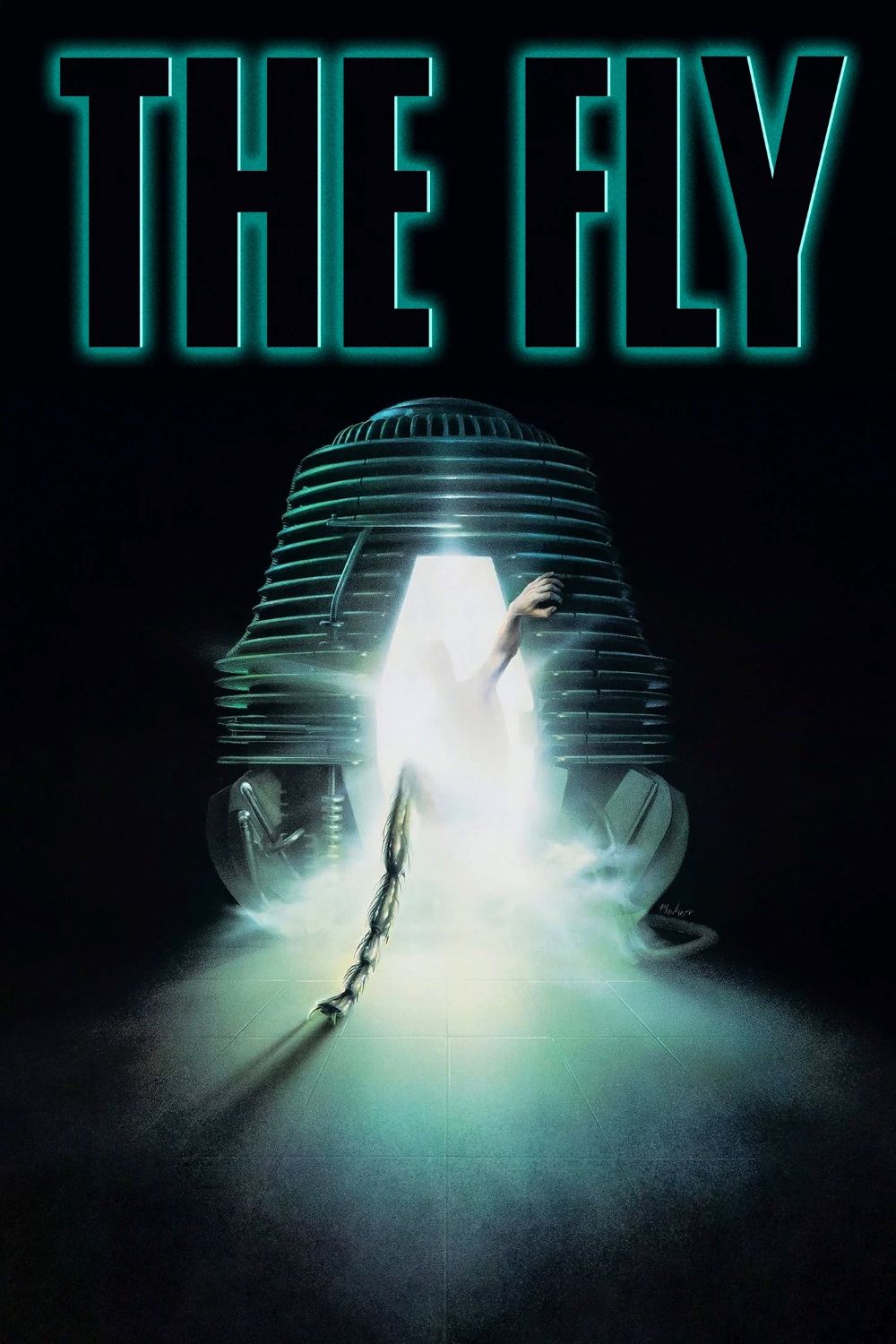
Horror Film Review: The Fly (dir. by David Cronenberg)


“I’m saying… I’m saying I – I’m an insect who dreamt he was a man and loved it. But now the dream is over… and the insect is awake.” – Seth Brundle

There’s a cruel little stretch in David Cronenberg’s The Fly (1986) when its central experiment seems to have worked out beautifully. Seth Brundle feels stronger, his confidence skyrockets, and the future looks wide open. Of course, we know better. The movie’s title alone tells us this isn’t heading anywhere pleasant. What makes the film so effective is how badly it makes us want to be wrong. Beneath the slime, broken flesh, and increasingly alarming eating habits is a romance worth caring about. Cronenberg gets us invested in a life just before showing us how horribly it can unravel.

A remake of the 1958 film of the same name, The Fly also draws from the original 1957 short story by French-British writer George Langelaan. Cronenberg takes considerable liberties with the plot, but his film really leans into the story’s darker themes and tone. Scientific curiosity leads to bodily catastrophe, and love becomes inseparable from the suffering it cannot prevent. Those ideas give the remake something substantial to build on. Cronenberg then adds his own fascination with unstable flesh and the loss of bodily control, creating a version that feels less like a retelling than a deeply personal reinvention.

For me, that combination makes it levels better than the original. The 1958 film remains an entertaining science-fiction nightmare, but Cronenberg makes the premise more emotionally involving by changing how the disaster unfolds. Instead of making the scientist’s altered appearance the central revelation, he turns transformation into a drawn-out process. We watch the damage develop alongside the characters, who keep trying to understand it, explain it, and bargain with it. The suspense isn’t simply about what Seth will look like next. It’s about how much of his old life will remain when the next change arrives.

Jeff Goldblum plays Seth as a brilliant scientist whose social skills haven’t quite caught up with his intellect. When journalist Veronica Quaife, played by Geena Davis, becomes interested in his teleportation research, their professional connection develops into something warmer. The attraction gives Seth’s otherwise isolated existence a welcome sense of possibility. Unfortunately, jealousy and alcohol eventually push him into testing the machine on himself. An unnoticed housefly enters the pod with him, and the resulting genetic fusion begins rewriting his body. His breakthrough works, just not in any way he intended.

Goldblum is terrific because he makes Seth’s awkwardness appealing without sanding down his less attractive qualities. His strange rhythms and sudden bursts of enthusiasm suggest someone who spends most of his time following thoughts other people haven’t caught up with. You can see why Veronica would find him fascinating, but you can also see the arrogance underneath his excitement. Once the transformation begins, Goldblum doesn’t abandon that characterization. He twists it. Curiosity becomes fixation, confidence becomes aggression, and Seth’s desire to share his discovery becomes a demand that someone else validate it.

Davis makes Veronica much more than the person standing nearby when the next horrible thing happens. She gives the relationship an emotional credibility that the entire movie depends on. Her affection for Seth feels genuine, as does her growing uncertainty about staying close to him. The film never pretends those feelings are mutually exclusive. She can love him and fear him, want to help him and recognize that she’s in danger. Davis handles those contradictions without making them feel like dramatic switches. They accumulate, leaving Veronica increasingly trapped between what she remembers and what she sees.

That tension becomes sharper because Seth initially welcomes his altered condition. His new strength and energy seem to confirm everything he wants to believe about his invention. He hasn’t damaged himself; he has supposedly improved himself. Cronenberg lets that delusion become seductive before exposing its ugliness. Seth’s denial isn’t just a convenient way to delay the inevitable. It grows naturally from his pride and the sheer awfulness of the alternative. Accepting the truth would mean admitting that the achievement meant to transform his life has instead made that life impossible.

Then the effects start making denial difficult for everybody. Chris Walas and his team give the transformation a wonderfully unpleasant physicality. Seth doesn’t simply sprout insect features and become a conventional movie creature. His body deteriorates, sheds pieces of itself, and develops functions he can barely comprehend. The makeup is remarkable, but its real achievement is how closely it works with Goldblum’s performance. Changes in posture, movement, and speech keep the effects attached to a recognizable person. We aren’t admiring an elaborate monster design from a safe distance. We’re watching someone struggle to inhabit his own skin.

Considering its 1986 release, the film can definitely be seen as an analogy for the AIDS crisis of the era. Seth’s deterioration and Veronica’s anguish as she watches someone she loves waste away give that reading real weight. Cronenberg originally understood the material as an analogy for disease more generally, rather than one specific illness. That broader intention doesn’t weaken the AIDS interpretation; it leaves room for it. The film captures the helplessness surrounding serious illness without requiring every detail to correspond to a single diagnosis. What matters is the frightening gap between recognizing that a body is failing and being able to do anything about it.

That’s also why the relationship becomes more upsetting as the creature effects become more extreme. The physical horror never replaces the human situation; it tightens its grip on it. Seth wants to survive, but his desperation increasingly threatens Veronica’s safety and autonomy. Her compassion cannot solve that conflict, and the film refuses to pretend otherwise. Cronenberg finds something genuinely tragic in the persistence of affection after the possibility of rescue has nearly disappeared. By the climax, we can be horrified by Seth’s actions without forgetting the frightened person behind them. Neither response cancels out the other, which makes the final stretch devastating.

The real achievement of The Fly is that its most outrageous images never overwhelm its simplest emotional truth: watching someone suffer can mean discovering how little power love actually gives you. Cronenberg turns a familiar monster-movie setup into something grotesque, intimate, and painfully sad without losing its dark humor or entertainment value. The original premise supplies the accident, but this remake makes every consequence matter. Long after the shock of the effects settles, what remains is the distance between the future Seth and Veronica briefly imagined and the ending neither could escape. That’s a far nastier thing to leave an audience with than a jump scare.

Mad Pulp Science!


by Sol Immerman

The pulp era was full of men and women (but mostly men) of science who had been driven mad by their search for knowledge and power.  Today, we pay tribute to the terrifying scientists of the pulp era!

by Ralph Joiner

by Robert Fuqua

by Rafael DeSoto

by Graves Gladney

by Rafael DeSoto

by Herman Bischoff

by Henry Fox

by David Berger

by John Doolin

by Frank R. Paul

by George Menendez Rae

Brad plays HANGMAN (2017), starring Al Pacino & Karl Urban!


I’ve always enjoyed a good serial killer movie. I’ve also always enjoyed actor Al Pacino. So, when I came across the serial-killer thriller HANGMAN and noticed that it starred Pacino, I decided to give it a shot.

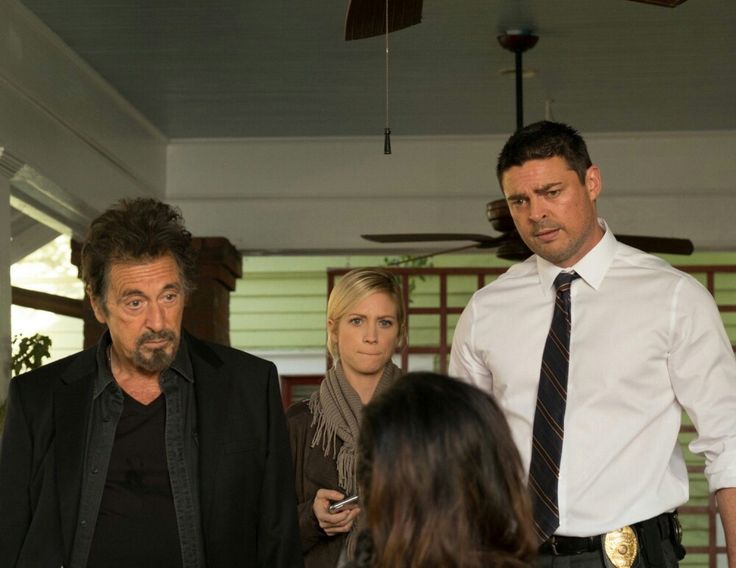
HANGMAN follows detectives Will Ruiney (Karl Urban) and Ray Archer (Pacino) as they search for a serial killer who’s murdering people while playing a sick version of the children’s game of the same name. Ruiney’s the detective in charge and he asks for help from Archer, who’s now retired, when some of the clues seem to be linked directly to them both. Complicating matters is the fact that just before the serial murders began, Ruiney was asked to work with New York Times journalist Christi Davies (Brittany Snow), who’s returned to her hometown of Monroe, GA to write a story profiling cops in this day and age. Now, the two cops and the reporter must race against the clock to find the killer as quickly as possible, as he hangs someone different each night and leaves the next cryptic clue.

Now don’t get me wrong, I wasn’t expecting another movie of the quality of SEVEN or THE SILENCE OF THE LAMBS, but I expected more than this. On paper, HANGMAN at least sounds like the kind of movie I often like. I love following detectives around as they try to piece together clues and encounter various obstacles and surprises along the way. Throw in the legendary Pacino, who’s played some awesome cops over the years. I first became a huge fan of Pacino with the release of his cop-thriller SEA OF LOVE, not his more legendary roles in THE GODFATHER films. SEA OF LOVE came along at the perfect time for me to discover him in the late 80’s on VHS after he’d taken a multi-year break from the film industry. And Karl Urban is very good when he’s working with the right material. I thought he was great in movies like the recent STAR TREK films and DREDD. And for full disclosure, I love Brittany Snow and think she’s beautiful in the PITCH PERFECT movies, and I’m not ashamed!  Unfortunately, when director Johnny Martin tried to put the story, the actors, the action and the mystery all together, what we’re left with is a movie that I didn’t enjoy at all.

The story is ridiculous. Would a reporter for the New York Times be allowed to be so involved in the investigation of the serial killer that she’s allowed to be in the room with the medical examiner while they’re removing hearts and stuff? Would she be allowed to follow the detectives into buildings where the serial killer is and then wander off by herself? Is there any shock that she ends up taken by the Hangman? In a case where a serial killer is carving letters into victims and hanging them in public, wouldn’t there be more people working the case than a current cop, a retired cop, and a Pulitzer-nominated journalist? Apparently not in Monroe, GA. And good grief, when we find out why the serial killer is doing this, it may be the worst excuse for serial murders in film history. I was like, seriously, THIS is why you’ve chosen to hang so many people after practicing your hand carving skills?!! I generally have a lot of patience for cop movies, but the one thing I really struggle with is a story that requires the characters we’re supposed to care about to act stupid in order for the plot to move forward.

As far as Al Pacino is concerned, the man’s a thespian legend who’s starred in some of the greatest movies ever made and nothing can ever take that away from him. But if an alien landed on Earth, and the only thing he knows about Al Pacino is his performance in HANGMAN, that alien would not spread a positive endorsement of the man’s work when he returns to his home galaxy. He turned me off immediately when he tried to affect some kind of Southern accent since the movie’s set in Georgia. Please don’t do that Al, especially since it goes away only to reemerge again late in the film. I don’t want to speculate on exactly how Pacino was enticed to join this film, but I do think that he must have picked up on the fact that it was a dog, and he seems completely disinterested. Karl Urban probably fares best in the acting department, even though his character does a lot of dumb stuff, and even though he’s about as one-note as it gets. Yet, he’s so serious that it actually kind of works with all the incompetently absurd things going on with this movie. As for Brittany Snow, after seeing this, I still think that she’s beautiful in the PITCH PERFECT movies.

I don’t want it to sound like I’m coming down too hard on the film or its director. I actually enjoyed Martin’s vigilante-themed film from the same year, VENGEANCE: A LOVE STORY, which starred Nicolas Cage. But the truth is that I’m generally easy to please, because I can appreciate a ridiculous genre thriller when it knows it’s ridiculous and has some fun with it, and I can also appreciate a dark, disturbing serial killer movie that gets under my skin and guts me emotionally. Unfortunately, dear readers, in this case, HANGMAN does neither, and I think it sucks.

Horror Film Review: The Blob (dir. by Chuck Russell)


“Listen to me, Briggs, think for a minute, do you suppose an army of guys in plastic suits show up every time a meteor falls?” — Brian Flagg

A monster doesn’t need claws, teeth, or even a face to ruin your evening. Sometimes a wobbling mass of pink slime will do just fine, especially when the filmmakers know how to make every inch of it look hungry. Chuck Russell’s The Blob (1988) takes a premise that could easily inspire nothing but giggles and turns it into a nasty, energetic horror show. A more cynical and violent remake of the original 1958 creature feature, it succeeds by taking its ridiculous threat seriously without forgetting how much fun a ridiculous threat can be. The movie has a wonderfully direct goal: make you squirm, then make you enjoy it.

The setup wastes little time getting things moving. Something falls from the sky near the small California town of Arborville, a curious man gets too close, and an unpleasant discovery becomes a rapidly growing emergency. Among those caught in the chaos are cheerleader Meg Penny, played by Shawnee Smith, and local rebel Brian Flagg, played by Kevin Dillon. Russell and co-writer Frank Darabont (yes, that Frank Darabont) introduce their community through familiar faces and recognizable social divisions. You don’t need an elaborate history of the town to understand it. A few interactions establish who belongs, who gets judged, and who assumes they have everything under control.

That economical approach is one of the movie’s strengths. Rather than spending ages explaining why you should care, it gives the characters enough personality to register and lets the situation do the rest. The familiarity also creates expectations that the film enjoys upsetting. Certain people seem important, certain places seem safe, and certain decisions seem sensible. None of those impressions is especially reliable. Without spoiling the surprises, the early stretch makes it clear that this isn’t a particularly generous movie toward its characters. That unpredictability gives the action an extra charge because you can’t always settle comfortably into the usual horror-movie rules.

The effects provide the biggest reason to watch, though, and they remain impressively unpleasant. The creature has a thick, sticky physicality that makes it feel like something occupying the same space as its victims. It stretches, swells, and presses into places where nothing that size should fit. The makeup work makes the consequences of contact horribly clear without reducing every attack to the same bloody image. Some shots look more convincing than others, but even the rough edges have charm. There’s visible imagination behind the grotesquerie, and the craftsmanship gives this shapeless thing a stronger screen presence than plenty of monsters with elaborate designs.

What makes those effects work dramatically is Russell’s attention to setting. He doesn’t simply keep dropping the creature in front of another person and repeating the process. A hospital sequence establishes the danger, a diner encounter turns an everyday location into a nightmare, and a phone booth provides a particularly tense confrontation. The movie theater sequence adds a bigger dose of public panic. Each has its own rhythm and identity, which keeps the attacks from blurring together. The details are best left unspoiled, but the overall effect is clear: ordinary spaces become much less comforting when the monster doesn’t need to use the door.

Smith gives the movie its most dependable human presence. Meg could have remained a stock cheerleader reacting to things happening around her, but the film allows her to become increasingly decisive. Smith sells that progression without making it feel like a sudden personality transplant. Meg is scared, sometimes overwhelmed, and still willing to act when someone needs help. That’s a simple foundation for a horror heroine, but it works. She gives the audience someone to follow emotionally while the effects department does its worst. The performance never demands that the movie slow down to admire her courage; it lets her choices establish it.

Dillon has a slightly harder time escaping the shorthand built into Brian. The motorcycle, leather jacket, and long hair make his outsider status obvious almost immediately. A few early moments push the misunderstood-bad-boy routine harder than necessary. Still, Dillon brings an appealing scruffiness to the role, and his attitude fits a story in which respectability doesn’t necessarily equal good judgment. His partnership with Meg works because their differences matter less as the emergency grows. They don’t need elaborate backstories or a heavily emphasized romance to hold the film together. Their shared determination supplies enough momentum between the bigger horror sequences.

The remake’s cynicism becomes especially noticeable when official intervention enters the picture. Without giving away the later developments, the film questions whether looking organized and speaking confidently should automatically earn anyone’s trust. That suspicion gives the story a sharper edge than its goofy monster might suggest. The danger exposes weaknesses in the community rather than simply giving everyone an obvious enemy to unite against. It isn’t deep political analysis, but it doesn’t need to be. The contrast between an openly destructive creature and people claiming to manage the crisis provides another source of tension, making the human side of the disaster feel troubling in its own way.

There are limitations. Several supporting characters are drawn broadly, and some dialogue does little more than announce the personality type delivering it. The explanatory passages aren’t as engaging as the visual storytelling, particularly once the audience already understands the immediate stakes. A few effects shots also strain against the production’s ambitions. Yet Russell rarely lets those problems stall the movie for long. He keeps the pace brisk while giving the suspense enough room to develop. Just as importantly, the occasional humor doesn’t turn the whole thing into a spoof. You can laugh at the situation and still care when it turns ugly.

What ultimately makes The Blob work is the confidence of its execution. It knows its monster is absurd, knows its characters are familiar, and knows the audience came expecting a mess. Then it delivers that mess with enough invention and nerve to make the familiar feel exciting again. The harsher attitude distinguishes it from the original, but the appeal remains refreshingly basic: a town, a growing threat, and people scrambling to stay ahead of it. Russell makes a faceless pile of goo feel like a genuine screen villain. That’s no small achievement for something that looks like it escaped from the dessert table.

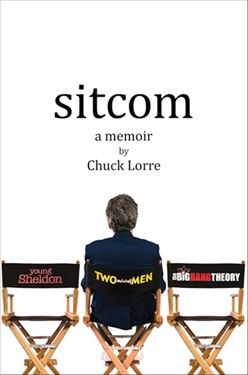
The Adventures of a History Nerd: Sitcom by Chuck Lorre


What happens when a successful but somewhat self-important television producer gets it into his head that he’s the modern-day equivalent of Robert Evans?

He ends up writing a memoir like Sitcom.

Now, don’t get me wrong. Chuck Lorre has both produced and written for a number of shows that were very successful. In his book, he admits that old-style network sitcom is pretty much a dying breed, so one should be prepared to give him some credit for being one of the few people around still finding consistent success with the format. As I read his book, I was amazed to be reminded of just how many shows he was involved with, one way or another. Of course, he was also involved in quite a few shows that were not successful. (As of right now, the true secret of his success seems to be doing nostalgic period spin-offs based on The Big Bang Theory.) Lorre’s habit of posting “vanity cards” at the end of his shows is either brilliant or annoying, depending on how you look at it. He includes a few of his favorite vanity cards in his memoir, and none of them are particularly profound. But, as long as I’m posting random Thoughts on the Culture, who am I to judge? Part of being a successful writer is truly believing that people really want to know your thoughts and opinions on every little thing.

That said, his book is kind of a strange read. He discusses each of his shows but doesn’t really go into much detail beyond complaining about the people he worked with. On Twitter, everyone’s already discussed his bizarrely dismissive (and frustratingly vague) comments about Anna Faris. Throughout the book, he promises to tell us the story of his widely publicized feud with Charlie Sheen, but he really doesn’t. He gives us some details, but he doesn’t really dig too much into any of it, and what he does share isn’t anything that isn’t already well-known. (Wow, did you know that Charlie Sheen has addiction issues?) He also promises to tell us how he and Charlie Sheen reconciled, but again, he really doesn’t. Instead, one gets the feeling that they just magically stopped being mad at each other. Maybe that’s what happened; I don’t know. I’ve noticed that guys have a strange ability to just get over things. Reading the book, it becomes apparent that it’s not just actors who Lorre has issues with. Almost everyone who has ever worked with him—from producers to other writers—is portrayed as being duplicitous. He criticizes his father for being a Republican. He criticizes his mother for even existing. There’s an old saying: If everyone you meet is a jerk, then you’re the jerk. Lorre’s even a bit rude to the few people he does like. Melissa McCarthy may be a good actress, but did you know that she owes her entire career to Chuck Lorre?

This is the sort of thing that Robert Evans was able to pull off while he was alive. That’s because, deep down, Robert Evans seemed to understand that he was playing the role of Mr. Hollywood. Reading Lorre’s book, one gets the feeling that he takes himself way too seriously. Yes, he’s the guy behind the goofy shows like Two and a Half Men and The Big Bang Theory. He’s also the guy who helped to produce The United States of Al and Mom, two of the most depressing sitcoms ever made. (Mom had its moments, but, speaking as someone with ADHD, I’ve never quite gotten over Allison Janney’s character having to see a therapist just because she got diagnosed with something that I’ve successfully navigated my entire life.)

That said, I am a history nerd, and Sitcom does provide a reminder of some of the shows that, for better or worse, shaped our current culture. If nothing else, Chuck Lorre will probably be remembered as the last network sitcom impresario. His book shows how much things have changed over just the past twenty years. Today, multi-camera sitcoms with live audiences and laugh tracks feel like an artifact from a soon-to-be-forgotten age.

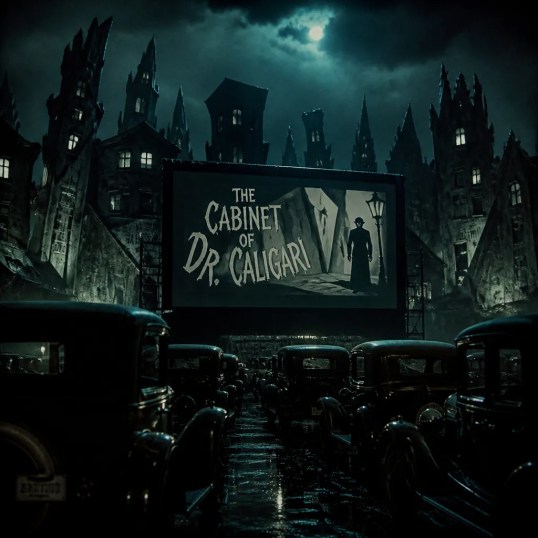
Bonus Horror on the Lens: The Cabinet of Dr. Caligari (dir by Robert Wiene)


The Cabinet of Dr. Caligari is a film that I’ve shared many times previously on the Shattered Lens.  The first time was in 2011 and then I shared it again in 2014, 2015, 2016, 2017, 2018, 2019, 2020, 2021, 2022, and 2024!  Well, you know what?  I’m sharing it again because it’s a classic, it’s Halloween, and everyone should see it!  (And let’s face it — it’s entirely possible that some of the people reading this post right now didn’t even know this site existed in any of those previous years.  Why should they be deprived of Caligari just because they only now arrived?)

Released in 1920, the German film The Cabinet of Dr. Caligari is one of those films that we’ve all heard about but far too few of us have actually seen.  Like most silent films, it requires some patience and a willingess to adapt to the narrative convictions of an earlier time.  However, for those of us who love horror cinema, The Cabinet of Dr. Caligari remains required viewing.  Not only did it introduce the concept of the twist ending (M. Night Shyamalan owes his career to this film) but it also helped to introduce German expressionism to the cinematic world.

My initial reaction to The Cabinet of Dr. Caligari was that it simply wasn’t that scary.  It was certainly interesting to watch and I was happy that I was finally experiencing this film that I had previously only read about.  However, the film itself was obviously primitive and it was difficult for my mind (which takes CGI for granted) to adjust to watching a silent film.  I didn’t regret watching the film but I’d be lying (much like a first-year film student) if I said that I truly appreciated it after my first viewing.

But you know what?  Despite my dismissive initial reaction, the film stayed with me.  Whereas most modern films fade from the memory about 30 minutes after the end credits,The Cabinet of Dr. Caligari has stuck with me and the night after I watched it, I even had a nightmare in which Dr. Caligari was trying to break into my apartment.  Yes, Dr. Caligari looked a little bit silly staring through my bedroom window but it still caused me to wake up with my heart about to explode out of my chest.

In short, The Cabinet of Dr. Caligari passes the most important test that a horror film can pass.  It sticks with you even after it’s over.

For the curious with an open mind to watch with, here is Robert Wiene’s The Cabinet of Dr. Caligari!

Enjoy!

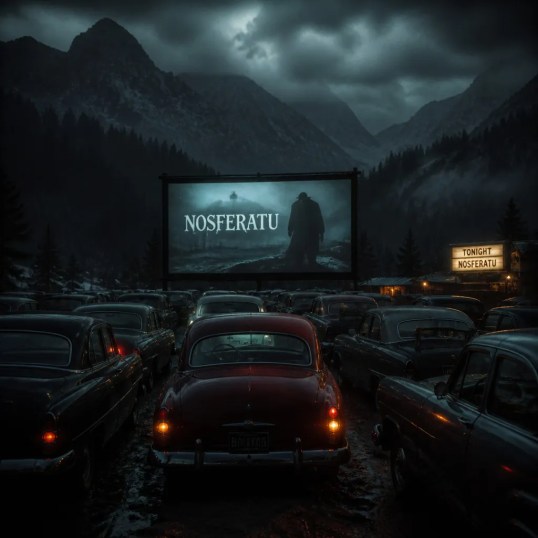
Horror on the Lens: Nosferatu (dir by F.W. Murnau)


Today’s Horror on the Lens is a classic film that really needs no introduction!  Released in 1922, the German silent film Nosferatu remains one of the greatest vampire films ever made.  It’s a film that we share every October and I’m happy to do so again this year!

Enjoy!

Lisa Marie Reviews The Amazing Race 39.6 “A Fine Line Between Confidence And Stupidity”


Watching last night’s episode of The Amazing Race, I realized that I’ve just about had it with Riley and Ann-Marie.

Everything about them just strikes me as being fake. Yes, they’re big fans of teams working together and, every episode, we get at least one self-righteous monologue about running the race the right way and not being mean. But I can’t help but notice that, for the most part, when Riley and Ann-Marie say, “Let’s work together,” what they really mean is “Help us.” As well, the whole “Boss Lady Alliance” thing would be a lot more impressive if they weren’t constantly finishing at the back of the pack. When you look at how well Ann-Marie and Riley work together and also at how athletic the two soccer players are, you have to really wonder if maybe they’d be doing better if they concentrated on running their own race instead of worrying about an alliance that Ann-Marie and Riley decided to start because they had some time to kill in an airport. (To me, the best part of last night’s episode was Ann-Marie and Riley insisting that the back six teams should all work together at the intersection and then leading everyone to the wrong location.) It seems that every episode will feature at least one clip of Riley bragging about being a Marine, one clip of Ann-Marie bragging about how nice they are, and one clip of them briefly getting frustrated because they think they deserve more help than they’ve been given. I don’t care how much they chant “BLA,” this is a race. No one is watching this show to see people work together. We’re watching to see them compete.

On the other hand, Matt and Michelle are regularly presented as being this season’s villains, just because they’ve rejected the whole “Let’s help each other!” thing. But Matt and Michelle are consistently finishing in first place and they’re working well together, so really, it seems like they’ve found what works for them. When Matt said that he wasn’t good at working in a group, I wanted to cheer. Some people just aren’t group people. Erin and I have often joked about going on The Amazing Race. If we did, we wouldn’t help anyone.

Actually, we probably would help Doug and Dylan. They’re nice and I felt bad for them at the Intersection, when the teams actually were required to work together and no one wanted to work with Doug or Dylan. (The fact that Dylan and Erin ended up finishing the task relatively quickly was very satisfying.) Doug and Dylan were the last to arrive at the pit stop but, fortunately, this was the first non-elimination leg of the race. Yay!

Here’s how everyone finished tonight:

Matt and Michelle came in first and Daisha and Dalton came in second. They did it by running their own race and not following someone to the wrong location. Matt and Michelle also used their express pass. (For some reason, it didn’t register with me that they were lying when they earlier told Anuar and Andrea that they had already used it. So, I was genuinely surprised.)

Conner and Garrett, my favorite team, used their express pass and came in third. Conner and Garrett are a good example of how to be nice without being obnoxiously self-righteous about it.

Anuar and Andrea came in fourth. They’re proving to be a much stronger team than I expected.

Erin and Javi managed to come from behind and come in fifth. They’ve struggled with consistency but they do work well together.

Ann-Marie and Riley came in sixth and Ali and Joanna came in seventh. Again, for all the talk about being boss ladies, it’s been a while since either team has had a really strong finish.

And finally, Doug and Dylan came in last but yay! Non-elimination!

At the end of this episode, the teams flew to Sri Lanka and met Phil on a beach, where he announced that it was time for the teams to vote for who would get hit with the dreaded Double U-Turn! We ended on a cliffhanger but I would be surprised if Matt and Michelle don’t get U-turned. Hopefully, they’ll survive.

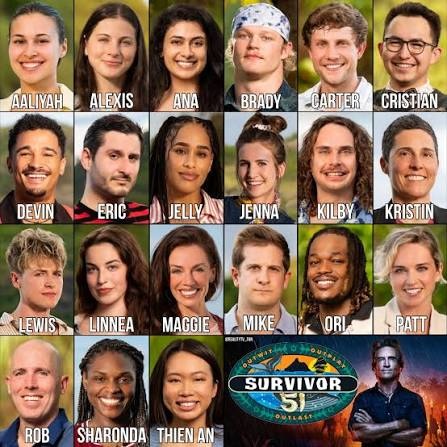
Lisa Marie Reviews Survivor 51.6 “I Love Crying”


This episode was entitled “I Love Crying.” I can’t really remember for sure who said the line. It sounds like something Devin would have said in an attempt to promote his own self-image of being some sort of benign guru. But I could also imagine Kilby saying it after Dina returned from Tribal Council.

There was a lot of crying in this episode. It started at the Dina tribe, with Eric sobbing while talking about how betrayed he felt by his “best friend” Kilby. It can sometimes be easy to forget when the show only airs once a week, but each episode of Survivor only covers two or three days of gameplay. So, Eric’s breakdown was over being betrayed by someone he had really only known for four days. According to his Survivor bio, Eric is a mental health professional.

Over at Toka, Maggie was crying because the rest of the tribe wasn’t as serious and humorless as she was. They made themselves a swing. She went to catch fish. Mike spent this episode worried that he was going to get voted out, but he shouldn’t have been worried—not as long as the Savu tribe consisted of only Devin, Jelly, and Ori.

It’s still difficult for me to believe just how completely the Savu tribe fell apart during the final part of the immunity challenge. They had been doing pretty well up until that point. Actually, now that I think about it, Ori was the one who had been doing well. He was the one who pulled over the puzzle pieces. He was the one who threw the beanbags that knocked all of the puzzle pieces to the ground. He was the one who, briefly, gave Savu a lead in the challenge. Then Jelly and Devin, both of whom regularly brag about their genius, spent the rest of the challenge staring at the puzzle pieces and trying to figure out how to put them back together. Admittedly, some people aren’t good at puzzles. I absolutely suck at puzzles, but I’m also willing to admit that. Devin has spent this entire game bragging about his abilities, but he’s yet to really back any of it up.

Before Tribal Council, Jelly secured her safety by telling Devin and Ori that she had an immunity idol. With Ori voting for Devin and Devin voting for Ori, it came down to Jelly’s decision, and there really wasn’t any doubt that she was going to stick with Devin. I, honestly, would have stuck with Ori because Ori can actually do things, but Jelly and Devin have an unbreakable bond. Ori gave up his vote to play his Shot in the Dark, which is one of those moves that I’ve only seen succeed once in the history of Survivor. As such, Ori was voted out of the game by a vote of 2-0.

Along with everything else, this episode also featured one of those terrible summit meetings. The three tribes sent one representative each to the summit. Ori, Sharonda, and Kristen met on the beach and were told that two would be able to take food back to their tribe and one would go to Exile Island. Sharonda and Ori both waited for Kristen to volunteer to go to Exile and, of course, that’s what Kristen did. Sharonda bragged about how she manipulated Kristen into giving up food, but to me, I don’t really get that strategy. Anyone who goes to Exile is going to have a chance to get an advantage. Manipulating Kristen into doing something that could be good for her game really isn’t something to brag about.

By going to Exile, Kristen got the tether idol, which means that she can give immunity to either Sharonda or Ori (whoops) up until the top five. However, if Sharonda and Ori are both voted out, it becomes a regular immunity idol. Ori is now gone, so all Kristen has to do now is hope that Sharonda follows.

Next week—the tribes merge! Oh, this is going to be a mess. There will be 7 former Toka members and 4 former Savu members on the tribe, along with Carter, who was a member of both tribes before the shakeup. It’ll be interesting to see who stays loyal to whom.

Lisa Marie