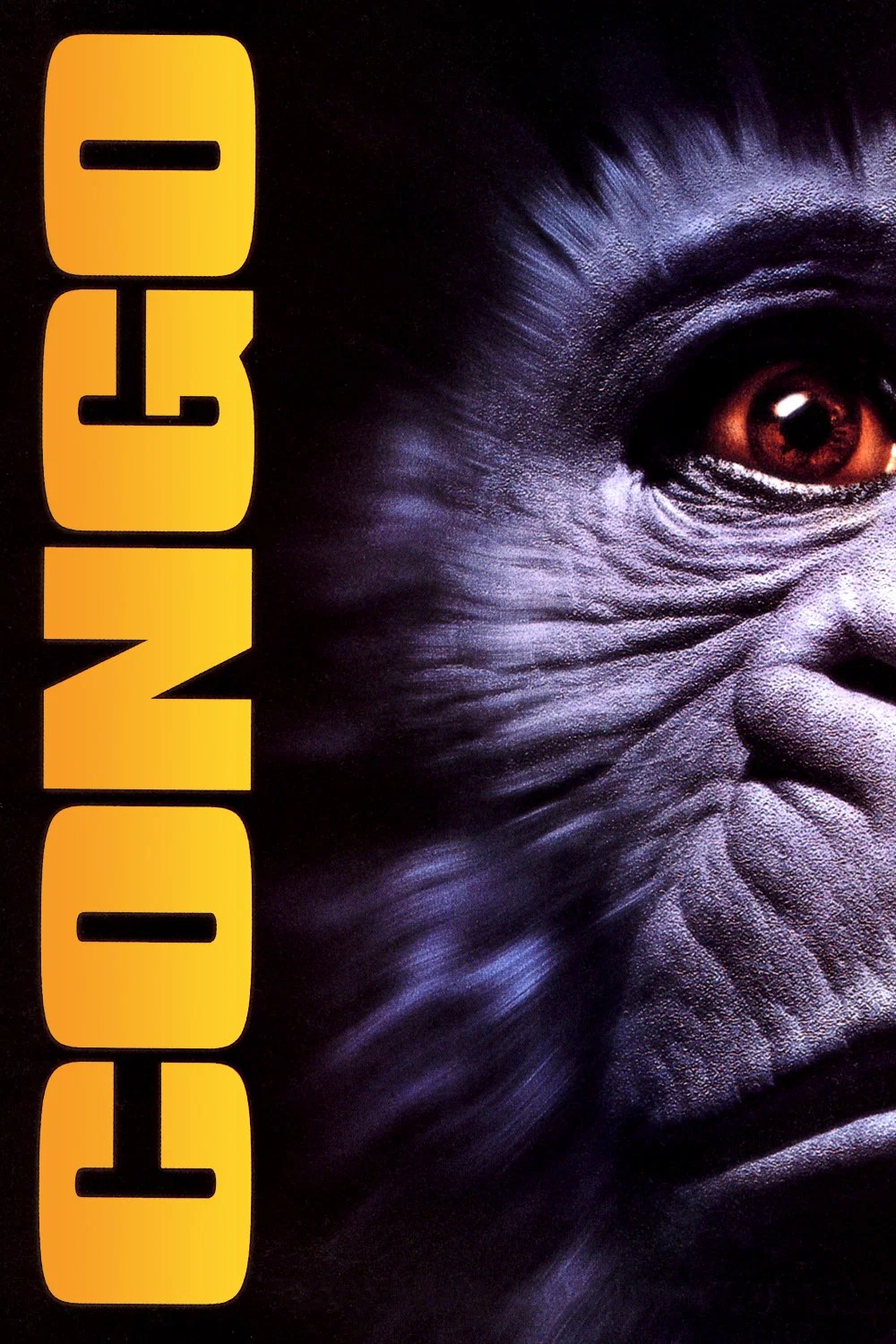
Guilty Pleasure No. 129: Congo (dir. by Frank Marshall)


Congo is the kind of movie that makes perfect sense as a guilty pleasure because it is always hovering just above the level of complete nonsense, yet it has enough energy and conviction to remain enormously watchable. Directed by Frank Marshall, the 1995 film turns Michael Crichton’s jungle-thriller premise into a sprawling mixture of monster movie, treasure hunt, corporate conspiracy, technological anxiety, and old-fashioned adventure serial. It is loud, messy, often ridiculous, and loaded with moments that should not work at all. But that is the pleasure of Congo: it commits so completely to its bizarre material that the movie becomes difficult to dislike.

The setup is wonderfully overstuffed. A corporate expedition disappears while searching for a legendary diamond mine in the Congo, apparently after encountering some mysterious, deadly force. At the same time, primatologist Peter Elliot is preparing to return Amy, a gorilla he has raised and taught sign language, to the wild. Amy has recurring dreams—or perhaps memories—of a strange jungle city, and she communicates through a glove that translates her signs into a robotic voice. Before long, Peter, Amy, corporate representative Karen Ross, Romanian explorer Herkermer Homolka, and a mercenary guide named Captain Munro Kelly are all headed toward the same lost city, where diamonds, ancient ruins, and murderous white gorillas await.

That synopsis alone explains why Congo has developed such a devoted guilty-pleasure reputation. It is a movie where satellites, laser weapons, genetically engineered guard apes, corporate greed, sign-language research, volcanoes, and ancient African mythology all exist in the same story without anyone pausing to question the sheer overload of it. The movie treats every development with sincere urgency, even when the audience is watching Amy the gorilla say “Amy good gorilla” through a computerized voice device. It is impossible not to admire the confidence. Congo never winks at the audience, never admits that its premise is wild, and never cuts itself down to a more manageable size. It simply keeps adding more adventure-movie ingredients until the whole thing becomes strangely hypnotic.

Laura Linney’s Karen Ross and Dylan Walsh’s Peter Elliot are meant to anchor all of that craziness, but they are also among the film’s blandest elements. Linney is a talented actress, and she brings a professional focus to Karen’s corporate mission, but the character is written in such functional terms that she rarely feels like more than the person carrying the plot’s technological and business-related exposition. Karen is competent, determined, and occasionally vulnerable, but she never develops a particularly distinctive personality. Linney plays her with a seriousness that fits the film’s overall tone, yet that seriousness can make her feel oddly distant. She is there to make sure the satellite plot, the diamond plot, and the rescue plot keep moving, rather than to provide much spark on her own.

Walsh has an even tougher assignment as Peter. He is essentially the emotional center of Amy’s story, and the film needs the audience to believe in his paternal, almost codependent relationship with her. But Peter is such a mild, generic protagonist that he often gets swallowed by the movie’s more eccentric ideas. Walsh is not bad, exactly; he is simply too subdued for a film filled with volcanic eruptions, killer gorillas, and Tim Curry speaking every line as though he is announcing the end of civilization. His performance has a sincere gentleness that helps the scenes with Amy, but it also makes him feel like he wandered in from a quieter, more conventional family adventure. When the movie becomes bigger and stranger, Peter’s personality does not expand with it.

That blandness becomes especially noticeable because Ernie Hudson and Tim Curry are having such an obviously fantastic time in their roles. Hudson plays Captain Munro Kelly with the relaxed confidence of someone who knows he is the coolest person in the room. Munro is a professional guide, a fighter, a pilot, and a survivor, but Hudson does not turn him into a grim action-movie cliché. He gives the character humor, charisma, and a reassuring calm under pressure. Whenever the group faces another disaster—whether it is hostile terrain, dangerous animals, mercenaries, or the increasingly unhinged situation inside the lost city—Hudson makes Munro feel like the one person who might actually know what he is doing.

Hudson’s performance also gives Congo a sense of fun that the central characters sometimes lack. He has an easy screen presence, and he seems to understand that the film works best when it leans into the pleasures of a grand, pulpy adventure. Munro is not a particularly deep character, but Hudson makes him memorable through timing, attitude, and sheer likability. The movie becomes livelier whenever he takes charge, whether he is negotiating with people in the field or calmly reacting to another completely absurd revelation. If Karen and Peter are the story’s functional leads, Munro is the character who gives the audience someone to enjoy following.

Then there is Tim Curry as Herkermer Homolka, who delivers what can only be described as a masterclass in hammy, scenery-chewing entertainment. Curry does not merely play Homolka; he devours the role with a kind of operatic enthusiasm. Every line is delivered in his grand Romanian accent with the force of a proclamation, and every gesture suggests that Homolka believes he is the hero of the greatest expedition in history. Curry appears to be enjoying himself so much that it becomes infectious. He is not interested in realism, restraint, or subtle characterization. He is there to make every scene larger, louder, and more theatrical.

Homolka is already a ridiculous figure on the page: a pompous explorer with a famous family name, an exaggerated ego, and a dramatic flair that makes him seem less like a real adventurer than a flamboyant villain from a lost serial. Curry recognizes that the only correct way to play him is at maximum volume. His performance turns every bit of dialogue into an event. He gives the impression that he has spent years preparing speeches for this exact jungle expedition, waiting for the chance to announce his discoveries to the world. Even when Homolka is making selfish or foolish decisions, Curry makes him too entertaining to hate.

The contrast between Curry and the more restrained leads is one of the reasons Congo feels so odd. Linney and Walsh approach the material with a level of seriousness that suggests they are trying to preserve some emotional credibility. Hudson and Curry, by contrast, seem to recognize that credibility is not really the point. Hudson brings a cool, knowing charm, while Curry turns the movie into a one-man theatrical spectacle whenever he appears. Neither approach is necessarily wrong, but the difference creates a tonal imbalance. The film’s heroes feel flat because its supporting players are so much more alive.

The killer gorillas, of course, are another major source of the film’s guilty-pleasure appeal. These are not normal gorillas defending their territory. They are pale, vicious creatures bred to protect the diamond city of Zinj, and they attack with the exaggerated menace of monsters in a haunted-house ride. The effects have not aged gracefully. The suits and animatronics are visible, the movements can be stiff, and the creatures are often more amusing than frightening. Yet they remain memorable because the movie gives them a distinct, nightmarish look: white fur, glowing eyes, sharp teeth, and sudden appearances from dark corridors or jungle fog.

Frank Marshall directs the action with enough pace and polish to keep Congo from collapsing under the weight of its own silliness. The jungle setting, the ruined city, the expedition equipment, the satellite imagery, and the volcanic finale all give the movie a bigger sense of scale than its reputation might suggest. It feels like a genuine studio blockbuster from a time when Hollywood would spend serious money on an unapologetically strange idea. The film is not elegant, and it is certainly not believable, but it is never boring for long.

As a conventional adventure movie, Congo is uneven. Its African setting is often treated as a vague, dangerous backdrop, and its plot is overloaded with enough corporate jargon and techno-babble to distract from the more entertaining monster-movie material. But as a guilty pleasure, it is hard to beat. The movie is too bizarre to be generic and too sincere to feel cynical. Laura Linney and Dylan Walsh may be stuck playing bland characters at the center of the chaos, but Ernie Hudson and especially Tim Curry make the journey worth taking. Curry’s performance alone is a treasure: a joyous, magnificent display of overacting that turns Congo from a merely strange blockbuster into something genuinely unforgettable.

Previous Guilty Pleasures

  1. Half-Baked
  2. Save The Last Dance
  3. Every Rose Has Its Thorns
  4. The Jeremy Kyle Show
  5. Invasion USA
  6. The Golden Child
  7. Final Destination 2
  8. Paparazzi
  9. The Principal
  10. The Substitute
  11. Terror In The Family
  12. Pandorum
  13. Lambada
  14. Fear
  15. Cocktail
  16. Keep Off The Grass
  17. Girls, Girls, Girls
  18. Class
  19. Tart
  20. King Kong vs. Godzilla
  21. Hawk the Slayer
  22. Battle Beyond the Stars
  23. Meridian
  24. Walk of Shame
  25. From Justin To Kelly
  26. Project Greenlight
  27. Sex Decoy: Love Stings
  28. Swimfan
  29. On the Line
  30. Wolfen
  31. Hail Caesar!
  32. It’s So Cold In The D
  33. In the Mix
  34. Healed By Grace
  35. Valley of the Dolls
  36. The Legend of Billie Jean
  37. Death Wish
  38. Shipping Wars
  39. Ghost Whisperer
  40. Parking Wars
  41. The Dead Are After Me
  42. Harper’s Island
  43. The Resurrection of Gavin Stone
  44. Paranormal State
  45. Utopia
  46. Bar Rescue
  47. The Powers of Matthew Star
  48. Spiker
  49. Heavenly Bodies
  50. Maid in Manhattan
  51. Rage and Honor
  52. Saved By The Bell 3. 21 “No Hope With Dope”
  53. Happy Gilmore
  54. Solarbabies
  55. The Dawn of Correction
  56. Once You Understand
  57. The Voyeurs 
  58. Robot Jox
  59. Teen Wolf
  60. The Running Man
  61. Double Dragon
  62. Backtrack
  63. Julie and Jack
  64. Karate Warrior
  65. Invaders From Mars
  66. Cloverfield
  67. Aerobicide 
  68. Blood Harvest
  69. Shocking Dark
  70. Face The Truth
  71. Submerged
  72. The Canyons
  73. Days of Thunder
  74. Van Helsing
  75. The Night Comes for Us
  76. Code of Silence
  77. Captain Ron
  78. Armageddon
  79. Kate’s Secret
  80. Point Break
  81. The Replacements
  82. The Shadow
  83. Meteor
  84. Last Action Hero
  85. Attack of the Killer Tomatoes
  86. The Horror at 37,000 Feet
  87. The ‘Burbs
  88. Lifeforce
  89. Highschool of the Dead
  90. Ice Station Zebra
  91. No One Lives
  92. Brewster’s Millions
  93. Porky’s
  94. Revenge of the Nerds
  95. The Delta Force
  96. The Hidden
  97. Roller Boogie
  98. Raw Deal
  99. Death Merchant Series
  100. Ski Patrol
  101. The Executioner Series
  102. The Destroyer Series
  103. Private Teacher
  104. The Parker Series
  105. Ramba
  106. The Troubles of Janice
  107. Ironwood
  108. Interspecies Reviewers
  109. SST — Death Flight
  110. Undercover Brother
  111. Out for Justice
  112. Food Wars!
  113. Cherry
  114. Death Race
  115. The Beast Within
  116. Girl Series
  117. Gone in 60 Seconds
  118. Swordfish
  119. Marked For Death
  120. The Internship
  121. The Angry Red Planet
  122. 2012
  123. Old School
  124. No Escape
  125. In Death Series
  126. Alligator
  127. Little Annie Fanny
  128. Wicked Wanda

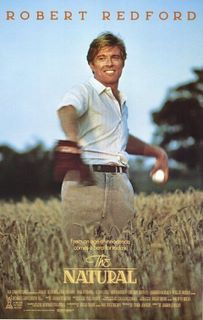
I Finally Watched The Natural (1984, Dir. by Barry Levinson)


Earlier today, I finally watched The Natural.

As a baseball fan, it feels like heresy to admit that it took me this long to watch The Natural.  I had seen plenty of scenes from the film.  I knew the music because there’s no way you can watch as much as baseball as I do without hearing it at least a few times every scene.  I knew about Wonderboy and the big home run and how Roy Hobbs came out of nowhere to lead the perennially last-place New York Knights to the championship series but I had never actually watched the entire film from beginning to end.

Until this afternoon.

When the movie started, I was worried.  Robert Redford plays Roy Hobbs, an outstanding hitter whose promising career appears to be over when a mysterious woman (Barbara Hersey) shoots him in the gut.  At the start of the movie, Roy and his girlfriend Iris (Glenn Close) are supposed to be teenagers but Redford was nearly 50 and Glenn Close was close to 40.  The whole point of the first part of the movie is that Roy and Iris are young and they have their whole future ahead of them but the actors were both clearly middle-aged.  There was a scene where Roy strikes out the best batter in the league (Joe Don Baker) and the batter kept calling Roy a kid but Redford looked like he was older than Baker.

The good thing is that you only have to buy Redford as being a teenager for about 15 minutes.  After he gets shot, Roy stops playing for several years.  By the time Roy makes it to the major leagues, he’s supposed to be older than everyone else.  No one gives Roy much of a chance when he’s first signed to the New York Knights.  The other players (including Michael Madsen) don’t respect him and the manager (Wilford Brimley) refuses to play him.  But when Roy Hobbs finally does get a chance to swing his home-made bat, he hits homer after homer.  Roy is a natural, the next great player even if he is at an age when most players retire.  A journalist (Robert Duvall) tries to uncover his background.  A seductress (Kim Basinger) tries to lead him astray.  A gambler (Darren McGavin) and the team’s owner (Robert Prosky) try to get him to throw the big game.  Anyone who has watched a baseball game knows how it ends because we’ve all heard the music and seen that clip.  But even if everyone knows how the story concludes, it’s impossible not to cheer when Roy gets a hit and to feel bad when he takes a strike.  Redford may have been old for a baseball player but he looked good out there, swinging that bat and throwing that ball.

I loved The Natural.  It’s extremely sentimental movie.  Sometimes, it feels old-fashioned.  That’s perfect for baseball, though.  Baseball is a sentimental, old-fashioned game and the story of Roy Hobbs is what baseball is all about.  The Knights are behind for most of the season.  Roy hits a slump.  But neither he nor the team ever give up because they know that baseball is a game of endurance.  It’s not like football, where you just have to win 9 games to make it to the playoffs.  Baseball is about never giving up, no matter what the score is.  Even the movie’s supernatural aspects — the sudden storms, a lightning bolt hitting a tree and creating Wonderboy, and even Glenn Close looking like an angel in the stands — work because baseball is a mystical sport.  It’s the closest thing we have to a spiritual sport.

You couldn’t make a movie like The Natural about football or basketball.  Only the game of baseball could have given us The Natural.

Scenes That I Love: Joe Don Baker In Walking Tall


Today would have been the 90th birthday of Joe Don Baker!

Our scene that I love features Joe Don as Sherriff Buford Pusser.  Some local crooks thought that they could keep the sheriff out of their bar.  In this scene from 1973’s Walking Tall, he proves them all wrong.

Brad’s “Scene of the Day” – Brenda Benet watches Joe Don Baker swing his big stick!


Today would have been the 80th birthday of actress Brenda Benet, a beautiful and talented woman whose life was cut short with tragedy. Born Brenda Ann Nelson in Los Angeles, California on August 14th, 1945, Benet had a career spanning over 16 years, mostly on TV. She’s probably best known for playing the character of Lee DuMonde in 298 episodes of Days Of Our Lives, but she appeared in episodes of many other classic TV series, and even in the Elvis Presley movie HARUM SCARUM (1965). In her personal life, she was married to actor Bill Bixby from 1971 to 1980, and they had one child, Christopher Sean Bixby. Tragically, Christopher died in 1981 during a ski vacation in California. Devastated and in the grip of depression after her son’s death, Brenda took her own life on April 7th, 1982. A very sad end for a very beautiful woman.

Today, I choose to celebrate her beauty and talent in this scene from WALKING TALL (1973). This is not her character’s most revealing scene in the film, but her exotic beauty at the beginning is quite the contrast to a situation that’s about to get real ugly. Rest in peace, Brenda.

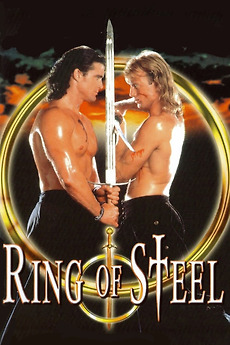
Ring of Steel (1994, directed by David Frost)


After Olympics-bound fencer Alex Freyer (Robert Chapin) accidentally kills his opponent, he is blacklisted from the sport.  His career seems like it’s over until he’s saved from a mugging by the mysterious Man In Black (Joe Don Baker).  The Man In Black says that he’s been watching Alex and he knows that Alex could be “the best.”  The Man In Black isn’t talking about the Olympics, though.  He’s talking about taking part in a series of underground sword fights, know as the Ring of Steel.  Alex is all for it, until he learns how high the stakes actually are.  The Man In Black is determined to keep Alex fighting so he abducts Alex’s girlfriend (Darlene Vogel).

This is one of the many “underground fighting films” that were made in the 90s.  The plot is nothing special but the use of swords instead of fists does add an unexpected spark to the fight scenes.  Robert Chapin, who also came up with the film’s story (and who wrote an original draft of the screenplay that was considerably darker than the film that was eventually made), was a stuntman and an accomplished swordfighter so the fights in Ring of Steel feel authentic and are exciting even if the story is predictable.  Joe Don Baker plays the villain, a character who actually is credited as being “The Man In Black,” and he does a good job tempting Alex to the dark side and then mocking his attempts to escape.  Though I prefer Baker as a hero, he always really threw himself into his villainous roles.

Ring of Steel used to show up on cable when I was a kid.  I always made a point to watch it.  It’s on YouTube now and it’s still an entertaining fight film.

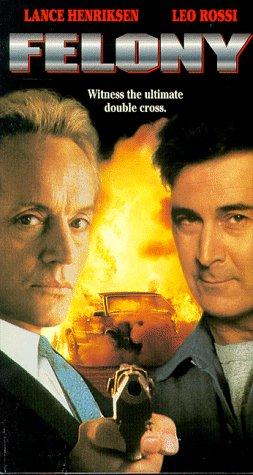
Felony (1994, directed by David A. Prior)


In New Orleans, a drug raid gone wrong leads to eleven cops being gunned down and then blown up.  The disastrous raid was being filmed for a Cops-like reality show  The show’s producer, Bill Knight (Jeffrey Combs) finds himself being pursued through New Orleans by a collection of rogue intelligence agents, cops, and gangsters, all of whom want the tape of the massacre.

It’s a simple direct-to-video premise and the film’s plot hits every chase film cliche, while keeping the action moving at a decent pace.  Bill Knight is not supposed to be a typical action hero.  He’s just a television producer who was in the wrong place at the wrong time.  Yet Knight proves himself to be as indestructible as any Arnold Schwarzenegger hero.  He gets shot, twice.  He falls from a great height.  He crashes through a window.  He repeatedly gets hit over the head.  And yet, his injuries never seem to really slow him down or even hurt that much.  He does hook up with a nurse (Ashley Laurence) but still, it’s hard to believe anyone could take that much punishment and keep running.  Jeffrey Combs, the brilliant star of films like Re-Animator, is miscast as Knight but he’s still always entertaining to watch.

In fact, the cast is the main thing that Felony has going for it.  David Prior was able to assemble a true group of B-movie all-stars.  Lance Henriksen and David Warner are the evil intelligence agents who are determined to kill Knight.  (Warner finally gets to handle a grenade launcher and we’re all the better for it.)  Leo Rossi and Charles Napier are the two New Orleans cops who are investigating the drug raid.  Joe Don Baker is the rogue intelligence agent who dresses like a cowboy and who is trying to clean up everyone else’s mess.  The cast keeps the action moving and there are enough eccentric personalities in this film that it’s always watchable.  I think this might be the only film to feature Joe Don Baker and Lance Henriksen performing opposite each other.  If nothing else, it deserves to be watched for that!

(The cover for Felony features Lance Henriksen and Leo Rossi but not Jeffrey Combs, even though Combs is the lead in the film and Rossi’s role is actually pretty small.  Henriksen also doesn’t have blonde hair in the movie.  There are plenty of double crosses in the movie but I can’t think of any that really qualify as the “ultimate double cross.”)

Even with its miscast lead and its cliche-heavy plot, Felony is what direct-to-video action movies should be all about, fact-paced action and a cast unlike any other,


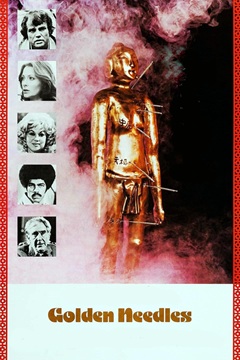
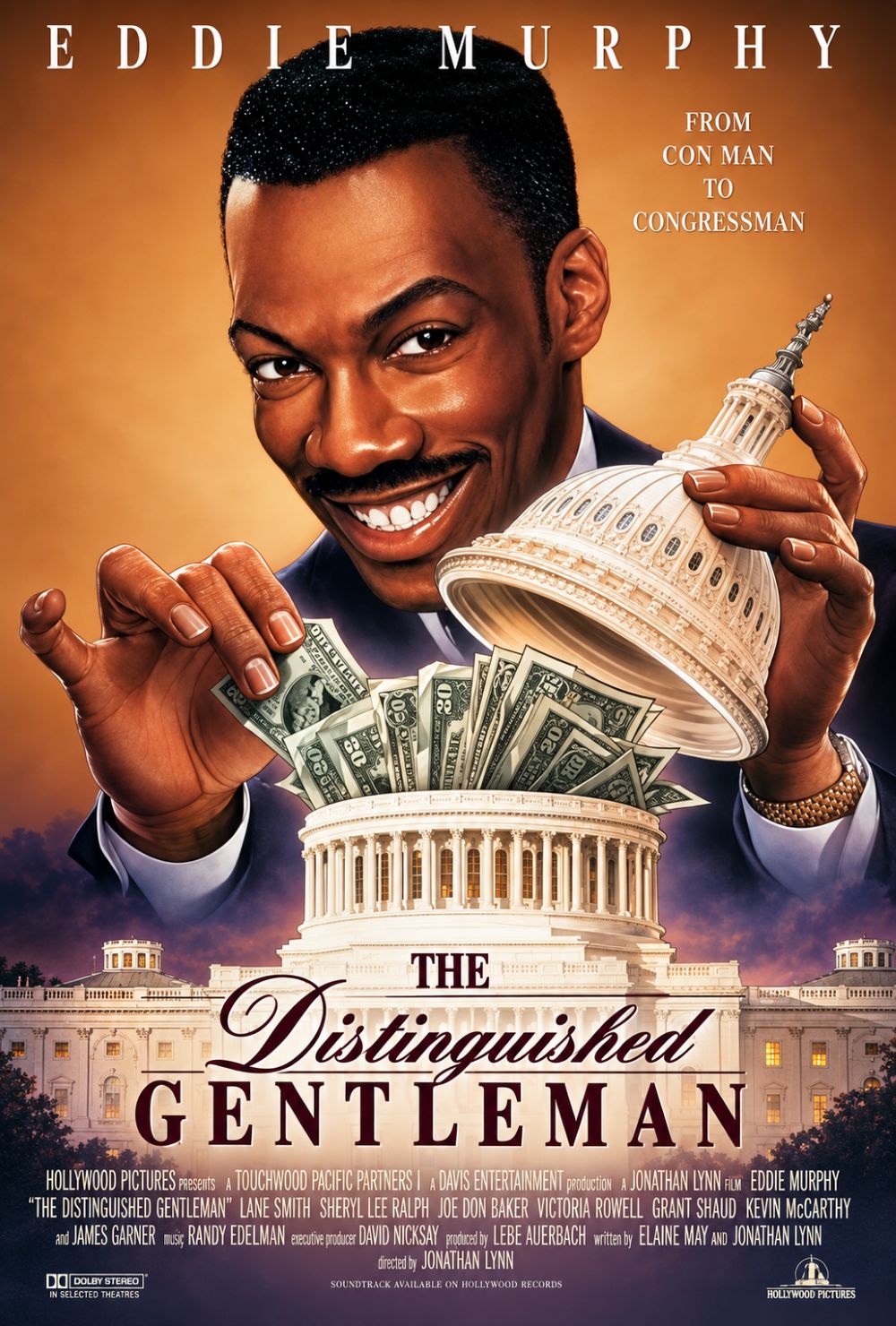
Golden Needles (1974, directed by Robert Clouse)


An ancient Chinese statue contains several acupuncture needles that, when placed correctly, can grant a man unstoppable vim and vigor.  It can also grant amazing sexual prowess, which is why every elderly crime boss in the world wants it.  In Hong Kong, a group of flamethrower-toting thugs steal the statue so that their boss, Lin Tao (Roy Chiao), can sell the statue to a Los Angeles mobster named Winters (Burgess Meredith!).  Winters’s agent in Hong Kong, Felicity (Elizabeth Ashley), decides to hire Vietnam vet Dan Mason (Joe Don Baker) to steal the statue from her so that she can not only take Winters’s money but also sell the statue herself.  Mason agrees, in return for money and sex.

Eventually, the action does move from Hong Kong to Los Angeles.  That allows Jim Kelly to make an appearance as Jeff, a buddy of Mason’s who helps him look for the statue and who takes part in one lousy fight scene.  It’s really a glorified cameo.  Robert Clouse previous directed Enter The Dragon, in which Kelly played the member of the heroic trio who didn’t survive.  There are actually a handful of Enter the Dragon cast members scattered throughout Golden Needles but, unfortunately, Bruce Lee was dead and John Saxon was apparently unavailable.

There are a few good action sequences in this film, though if you’re hoping to see Joe Don Baker lay down some sweet kung fu moves, you’re going to be disappointed.  Baker’s character throws people through windows but there’s not much finesse in his fighting style.  I still appreciated Baker’s performance in Golden Needles.  Clouse makes good use of Baker’s lumbering form, showing how out of place he is in Hong Kong.  Baker and Elizabeth Ashley make a good team and Burgess Meredith gives a performance that’s only slightly less subtle than his turn as the Penguin on Batman.  The film’s PG-rating keeps the violence from getting too extreme but it also probably made Golden Needles perfect for a Saturday matinee.

Golden Needles is an enjoyable oddity.  See it if you’re a Joe Don Baker fan.

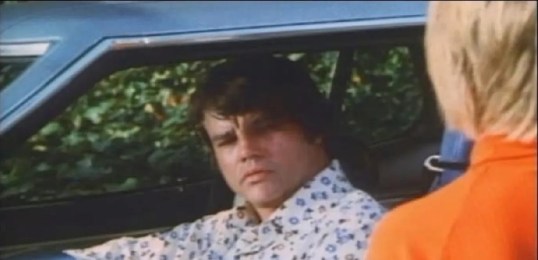
The TSL Grindhouse: Mitchell (dir by Andrew V. McLaglen)


I come here to defend Mitchell.

First released in 1975, Mitchell does not have a great reputation.  It’s often described as being one of the worst of the 70s cop films and Joe Don Baker’s performance in the lead role is often held up to ridicule.  A lot of that is due to the fact that Mitchell was featured on an episode of Mystery Science Theatre 3000.  Last year, for my birthday, my friend Pat McCurry actually hosted a showing of the MST 3K version of Mitchell.  I laughed all the way through it.  It was a funny show and most of the jokes uttered by Joel and the Bots landed.  That said, I wish they hadn’t been so hard on Joe Don Baker.  Baker was an outstanding character actor, one whose good ol’ boy persona sometimes kept people from realizing just how fiercely talented he actually was.

Here’s the thing with Mitchell.  Just because a film is snarkable, that doesn’t mean that it’s a bad film.  Just because there are moments in a film that inspire you to talk back to the screen, that doesn’t make it a bad film.  Some of the most enjoyable films that I’ve ever watched were enjoyable specifically because they were made to inspire the audience to talk back to the characters.  Whatever flaws you may want to find in Mitchell, it’s an entertaining film.  The plot may be impossible to follow but who cares?  When you’ve got Joe Don Baker, John Saxon, and Martin Balsam all in the same film, does the plot really matter?

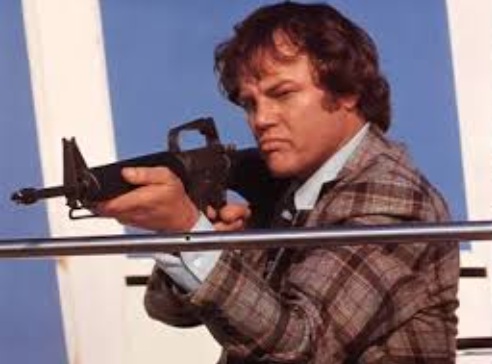
This is a film that you watch for the personalities involved.  Balsam plays a wannabe drug lord who always seems to be somewhat annoyed.  Someone once describes Bernie Sanders as always coming across as if he was about send his meal back to the kitchen because it was too cold and that’s a perfect description of Balsam’s performance in Mitchell.  John Saxon plays a sleazy rich guy who murders a burglar and then tries to cover up his crime.  Saxon is calm, cool, collected, and completely confident that his wealth will get him out of anything.  And then you’ve got Joe Don Baker as Mitchell, wearing an ugly plaid suit, drinking beer the way that I drink Diet Coke, and continually pretending to be dumber than he actually is.  There’s an interesting subtext to these three characters and how they interact.  Saxon and Balsam play criminals who are both rich and who both think they can get away with anything because they’ve got money.  Mitchell is a complete and total slob, a guy with a cheap apartment, a cheap suit, and absolutely no refinement at all.  Mitchell uses his good old boy persona to get the bad guys to continually underestimate him.  He ultimately turns out to be smarter and actually more ruthless than any of them.

Joe Don Baker throws himself into the role of Mitchell and there’ actually a lot of intentional humor to be found in his performance.  Baker doesn’t play Mitchell as being a supercop.  Instead, he plays Mitchell as being a blue collar guy who gets absolutely no respect.  Even when he’s on a stakeout, a random kid starts arguing with him.  (Mitchell loses the argument.)  Mitchell’s a jerk who busts his hooker girlfriend (Linda Evans) for having weed on her but he’s also the only one who could stop Balsam from doing whatever it is that Balsam thinks he’s trying to do.  (Again, don’t spend too much time trying to understand the plot.)  Mitchell’s super power is that he’s a slob who doesn’t give up.  To paraphrase Road House‘s Dalton, he plays dumb until it’s time not to be dumb.

As I said, it’s an entertaining film.  Where else are you going to see a not particularly high-speed chase between two station wagons?  Where else are you going to see John Saxon in a dune buggy or Joe Don Baker in a helicopter or Martin Balsam as the captain of a yacht?  Where else are you going to see a film that features its hero saying, “Yep, that’s grass,” before arresting his lover?  Mitchell is fun and entertaining and I’ll always defend both the movie and its star.

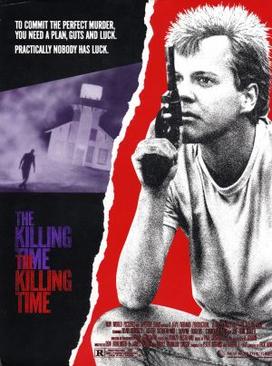
The Killing Time (1987, directed by Rick King)


After she is raped and beaten by her husband, Jake (Wayne Rogers), Laura Winslow (Camelia Kath) and her lover, Deputy Sam Wayburn (Beau Bridges), plot to murder him.  Sam and Laura come up with a plan to shoot Jake and frame another deputy, the recently hired Brian Mars (Kiefer Sutherland), for the crime.  What Sam doesn’t know is that Brian isn’t Brian.  Instead, “Brian” killed the real deputy and stole his identity.  Fake Brian has his own reasons for wanting to kill Jake but he also doesn’t appreciate Sam and Laura trying to set him up.

This is a typical 80s neo-noir, with an interesting premise that is sabotaged by subpar execution.  A big problem is with the casting.  Beau Bridges, whose stock-in-trade has always been a natural human decency, is miscast as a deputy who would conspire to not only murder someone but also frame an innocent man.  Camelia Kath doesn’t have the style necessary to be a compelling femme fatale.  Sutherland is good when he’s playing a psychopath but he’s less convincing when he has to pretend to be Brian.  It’s hard to believe that Sutherland’s obviously unstable killer would be able to fool anyone.

Instead, the film is stolen by Joe Don Baker and Wayne Rogers.  Joe Don Baker plays the sheriff who gives up his retirement plans so that he can solve the biggest crime that’s ever been committed in his jurisdiction,  Baker’s role isn’t huge but he still gives one of the better performances in the film.  If anyone was born to play a small-town sheriff, it was Joe Don Baker.  Meanwhile, Rogers is very much cast against type as the evil Jake but the film uses Rogers’s good guy persona to its advantage.

The other big problem is that, other than Baker’s sheriff, there’s no one likeable to be found in this movie.  The movie tries to generate sympathy for Sam but once you decide to frame an “innocent” man for murder, it’s impossible to then go back to being a sympathetic character.  Brian may be a killer but Sam didn’t know that when he and Laura decided to frame him for killing Jake.

Movies like this used to be a HBO mainstay.  Even though the movies themselves often weren’t that good, I still miss those days.


Checkered Flag or Crash (1977, directed by Alan Gibson)


Joe Don Baker stars at “Walkaway” Madden, a race car driver who got that name because he has always managed to walk away from every crash.  When Madden agrees to compete in an off-road race through the Philippines, he is not happy to discover that his sponsor has arranged for a female journalist named C.C. Wainwright (Susan Sarandon) to accompany him and record his adventures.  Walkaway’s a good ol’ boy and C.C.’s an independent woman but wouldn’t you know it, they’re in love by the end of the race.

This has one of the most simple plots that I’ve ever seen.  Madden and C.C. race through the jungle and there’s never really any doubt about how the race is going to end because all of the other drivers are terrible, except for Madden’s former partner, Doc Pyle (Alan Vint).  A manic Larry Hagman plays Bo Cochran, the promoter who put the race together, and gets the majority of the film’s laughs.  When I watched this movie, I thought it had been made to capitalize on the success of Smokey and the Bandit but then I saw that Checkered Flag actually came out a few months before Burt Reynolds and Jackie Gleason hit the drive-in circuit.  The young Susan Sarandon is a lively presence and she has a surprising amount of chemistry with Joe Don Baker, ideally cast here as a good ol’ boy who likes to drive fast.  The movie doesn’t hold many surprises but the game cast keeps it watchable.

Director Alan Gibson was a Canadian filmmaker who had previously worked for Hammer films, directing the last of their Dracula films before he eventually found himself in the Philippines, working with Larry Hagman, Susan Sarandon, and Joe Don Baker.