I love westerns! Absolutely love them! Every now and then someone still gets them right, and director and star Kevin Costner delivered a great one in OPEN RANGE. Of course, one of his best decisions was casting Robert Duvall as the lead in his film. It’s a film I rewatch each year. As a matter of fact, I watched it just a couple of weeks ago and enjoyed it again.
In recognition of OPEN RANGE being released 23 years ago today, on August 15th, 2003, I thought it might be fun to share this scene from one of the best westerns of the 21st century!
“You got problems with the whole fuckin’ world.” — Officer Bob Hodges
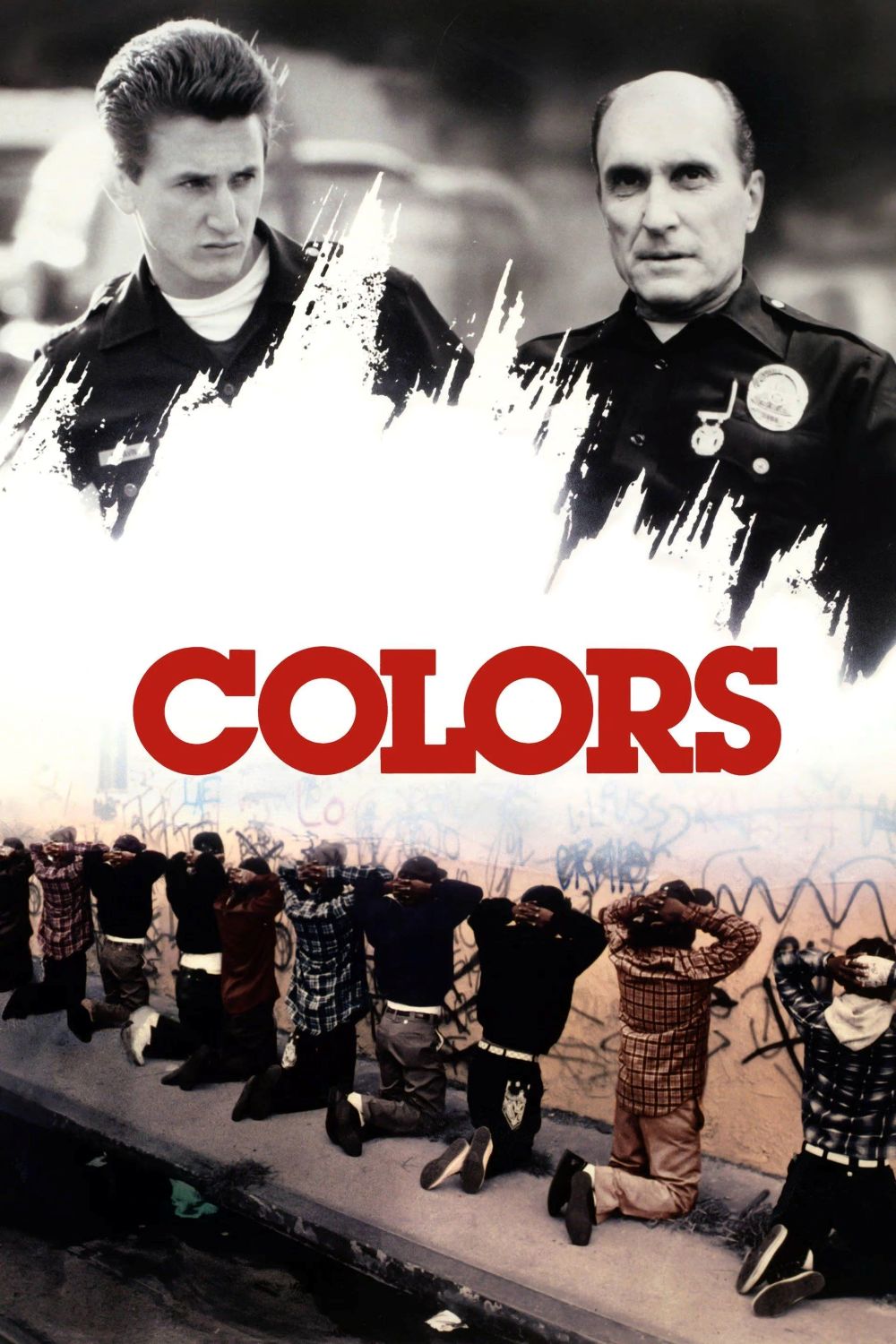
Consider, for a moment, the cultural landscape of 1988. Inner-city gang violence was hardly a new phenomenon, but it remained largely relegated to local news broadcasts and distant urban nightmares for most of the country. Dennis Hopper’s Colors changed that dynamic almost overnight, serving as a brutal, unfiltered introduction to a world that mainstream America had collectively chosen to ignore. Hopper, whose own countercultural credentials were cemented decades earlier with Easy Rider, took a considerable risk here, and while the final product is undeniably uneven, its cultural footprint is impossible to overstate. The film functions simultaneously as a historical document, a cautionary tale, and a cinematic watermark that forever altered how audiences perceived the volatile landscape of Los Angeles.
The basic setup is old-school buddy-cop material. Robert Duvall plays Bob Hodges, a seasoned LAPD officer in the CRASH unit—Community Resources Against Street Hoodlums—who has spent enough years policing Los Angeles to understand that aggression does not automatically produce respect. Sean Penn plays Danny McGavin, his hotheaded new partner, a guy who approaches every situation like he has something to prove. They are assigned to patrol neighborhoods divided by Bloods, Crips, and Chicano gangs, attempting to keep retaliation killings from escalating into full-scale warfare. The main plot is not especially complicated, and that is probably intentional. Hopper is less interested in a twist-heavy police procedural than in dropping the viewer into a city where tension seems to hang over every street corner, traffic stop, and act of public bravado.
Duvall is the film’s anchor. Hodges is not written as a saint—he is still a cop working inside a hostile and often brutal institution—but Duvall gives him a weary, almost paternal quality that makes him more compelling than the standard “veteran teaching the rookie a lesson” archetype. He understands that policing gangs is not as simple as walking in, making arrests, and congratulating yourself afterward. He has a kind of street fluency, knowing when to talk, when to threaten, and when to step back before a small humiliation becomes a body count. Penn, meanwhile, is all sharp edges. McGavin is reckless, racist in ways he may not fully recognize, and always a half-second away from making a situation worse. Penn can be exhausting here, but that is the point. His character embodies the movie’s fear that a badge, a gun, and an appetite for confrontation can be as combustible as any gang rivalry.
Hopper directs Colors with a lot of energy and an almost documentary-like alertness to its setting. The film’s Los Angeles feels sun-blasted, crowded, and perpetually unstable, not the glossy dream factory of postcards and celebrity magazines. Haskell Wexler’s cinematography does huge work in making the city feel tactile and lived-in. Hopper also has a sharp ear for the way music, cars, clothing, graffiti, and neighborhood boundaries become a visual language of identity. The title is not subtle, but it works: colors signify affiliation, pride, danger, and the instantly visible lines people are willing to kill or die over. The film’s soundtrack, including Ice-T’s title song, further locks it into the cultural moment, giving the movie a rawness that separates it from more generic police thrillers.
What makes Colors uncomfortable is also what makes it valuable. Its attention to gangs was controversial from the beginning, with critics and community voices arguing that it risked sensationalizing violence and reducing Black and Latino communities to dangerous backdrops for a cop story. The criticism is fair. The film sees gang life largely from the windshield of the LAPD cruiser; its gang-affiliated characters are often treated as threats, symbols, or tragic consequences rather than people granted the same interiority as Hodges and McGavin. Even at its strongest, Colors can make complex social realities feel like an arena in which two white cops test their methods and masculinity.
Still, it would be wrong to dismiss it as empty exploitation. Colors does not really romanticize its violence. Hopper shoots drive-bys, funerals, and retaliations with a nasty abruptness; nobody comes out looking triumphant. The gang members are not cleanly divided into monsters and victims either. Some are cruel, some are frightened, some are locked into a status they may not know how to escape, and some clearly enjoy the power that comes with being feared. The movie may not fully examine poverty, segregation, institutional racism, the drug economy, or generational trauma, but the instability of its world comes through. The police are not presented as saviors, either. They are frequently antagonistic, operating through intimidation and humiliation, while McGavin’s actions repeatedly demonstrate how easily law enforcement can intensify exactly the conflict it claims to contain.
This is where Colors matters most historically. Before it, movies had certainly depicted urban crime, racial conflict, and youth violence, but Hopper’s film made contemporary L.A. gang culture recognizable as a major studio subject. It helped bring gang culture, strained police-community relations, and inner-city issues into a much wider popular conversation. The film did not invent the genre that followed, but it helped clear a path for the wave of gang-related and urban-crime movies that arrived in the late ’80s and especially the ’90s. Films such as Boyz n the Hood, American Me, South Central, New Jack City, and Menace II Society inherited some of its urgency, its focus on neighborhoods under siege, and its refusal to pretend gang violence was merely a distant news-story problem.
The major difference is that many of those later movies also corrected Colors’ biggest limitation: they shifted the point of view inward. Boyz n the Hood does not treat South Central as a backdrop for police work; it makes the residents’ friendships, families, dreams, grief, and daily routines the emotional center. American Me follows the historical and institutional roots of Chicano gang identity with a scope Colors never attempts. South Central turns toward redemption, fatherhood, and the possibility—however fragile—of interrupting the cycle. In that sense, Hopper’s film can feel like an important opening statement rather than the final word. It showed mainstream audiences the subject; the films that followed increasingly demanded that audiences understand the people living inside it.
Its influence can also be felt internationally, though it is best understood as part of a broader transnational exchange of urban-crime cinema, hip-hop culture, and anti-police sentiment rather than a simple one-to-one blueprint. Mathieu Kassovitz’s La Haine is far more formally daring and politically focused than Colors, but both films draw power from a city divided by territory, race, policing, and simmering retaliation. La Haine brought France’s banlieues to mainstream French audiences and put police violence and marginalized youth at the center of the frame. Where Colors views the street crisis through law enforcement’s eyes, La Haine makes its young Black, Jewish, and Arab protagonists the whole point. Yet the resemblance is there in the oppressive sense of escalation, the combustible police encounters, and the idea that one violent incident can send an already alienated community toward catastrophe. Colors helped establish a mainstream vocabulary for this kind of story, while La Haine transformed that vocabulary into something more intimate, stylized, and politically devastating.
In the end, Colors is messy, dated in places, and frustratingly narrow in its perspective, but those flaws are part of why it is worth revisiting. It captures a Hollywood industry beginning to confront an issue it did not fully understand, using the sturdy frame of a cop thriller to look at a social wound much larger than its plot. Dennis Hopper brings volatility, Duvall brings soul, Penn brings danger, and Los Angeles itself does the rest. It is not the definitive gang film—later movies would surpass it in depth, perspective, and emotional force—but it is a crucial precursor. Colors made the subject visible to the mainstream, and the films that came after kept pushing the camera closer to the people trapped inside the picture.
Born in 1973, I missed the first John Travolta phenomenon. I wasn’t even five years old when movies like SATURDAY NIGHT FEVER and GREASE were released. Now don’t get me wrong, I loved John Travolta as a kid. I remember watching GREASE at my cousins’ house when I was around ten, and we all loved it. Probably the movie I loved the most is Brian De Palma’s BLOW OUT from 1981. Fox 16 out of Little Rock loved to play that movie, and I thought it was so great. It was the mid-80’s when I was watching it, so his best work had been several years before.
From the mid-80’s to the early 90’s, I was obsessed with renting videos at our local rental shops. Do y’all remember the crap that Travolta was putting out then… TWO OF A KIND (1983), PERFECT (1985), THE EXPERTS (1989), CHAINS OF GOLD (1990), etc? I remember wanting to watch RAMBO: FIRST BLOOD PART II at the movies when I was kid, and the theater in Conway, Arkansas was playing 2 movies: RAMBO and PERFECT. My mom insisted on PERFECT. So there we were, Dad, Mom, my older brother, me, and my younger sister in the theater watching PERFECT. It was an R-rated film, and Mom walked us out less than half an hour into the movie due to some guy putting his head under a woman’s skirt. I still remember the other patrons laughing at us as we walked out. This moment is burned into my psyche. Travolta did work on the hit LOOK WHO’S TALKING movies, but at the time, he got no credit because these were talking baby movies. It almost seemed like Travolta’s career had become something of a joke from the time I was a grade schooler all the way into my college years. I still loved him, but any time his name came up, the conversation was always about his good movies that were made years earlier contrasted against the crap he was in now.
And then Tarantino’s PULP FICTION was released in 1994, he was absolutely incredible, and I was all about phase 2 of the John Travolta phenomenon. I watched just about everything he did over the next five years at the movie theater. During this remarkable stretch, I saw him in GET SHORTY, BROKEN ARROW, PHENOMENON, FACE/OFF, and many others. I revisited PHENOMENON again this week, and it took me back to that time when a 22 year old college student was rediscovering what a talented actor Travolta could be with the right material.
George Malley (Travolta) is a likable “Everyman” who works as a mechanic in a small town in Northern California. On his 37th birthday, a mysterious flash of light knocks him over and changes everything. Suddenly he’s the smartest guy in town, and he can even move things with his mind. At first, his abilities amaze his friends and neighbors, but they soon begin to be afraid of him because they don’t understand him. George doesn’t understand why he’s so smart all of a sudden, but he’s falling in love with Lace (Kyra Sedgwick) anyway. The ultimate “answer” is somewhat realistic, and ultimately quite moving.
Director Jon Turteltaub (WHILE YOU WERE SLEEPING, NATIONAL TREASURE) does a good job by focusing on George and his friends rather than the supernatural “mystery elements” of the plot. We may not understand exactly why George has these extraordinary abilities, but they mostly remain a backdrop in a story about love, friendship, and mortality. The film asks a simple question: How would we react if someone we’ve known all our lives is suddenly one of the most amazing people on earth? If you follow much social media these days, we know the answer. How often do we see people get torn down as soon as they show any exceptional ability? We even see this in our own families, and we see it in this movie as well. Watching the film 30 years later, that fact really sticks out to me.
I’ve been a fan of PHENOMENON for three decades specifically because I love John Travolta’s performance in the movie. He’s just so likable, so when things start to go bad for him, we’re disappointed as well. He plays George as a man whose growing genius makes him want to help people even more. He’s so sincere that we never stop pulling for him, which is a true testament to Travolta’s incredible work. Kyra Sedgwick is amazing as well. As a mother and having been hurt before, her character takes her time letting George into her life, but once she does she goes all in. I love it. Forest Whitaker, Robert Duvall, and Jeffrey DeMunn all have outstanding moments that make the small-town community feel real. Their friendships specifically help provide an emotional strength that most films don’t have.
PHENOMENON isn’t a perfect film, as it’s probably a little too long, and it may linger a little too much on vague “science.” However, it is a film that’s most interested in showing us a character who uses the gifts he’s been given to make life better for those around him while he can. It’s a timeless idea that gives PHENOMENON a power that has only grown stronger with time. It’s also a reminder that John Travolta has a magnetic screen presence. Beneath all of his charisma is an actor capable of tremendous warmth and vulnerability. At the end of the day, those are the kinds of characters we end up really caring about.
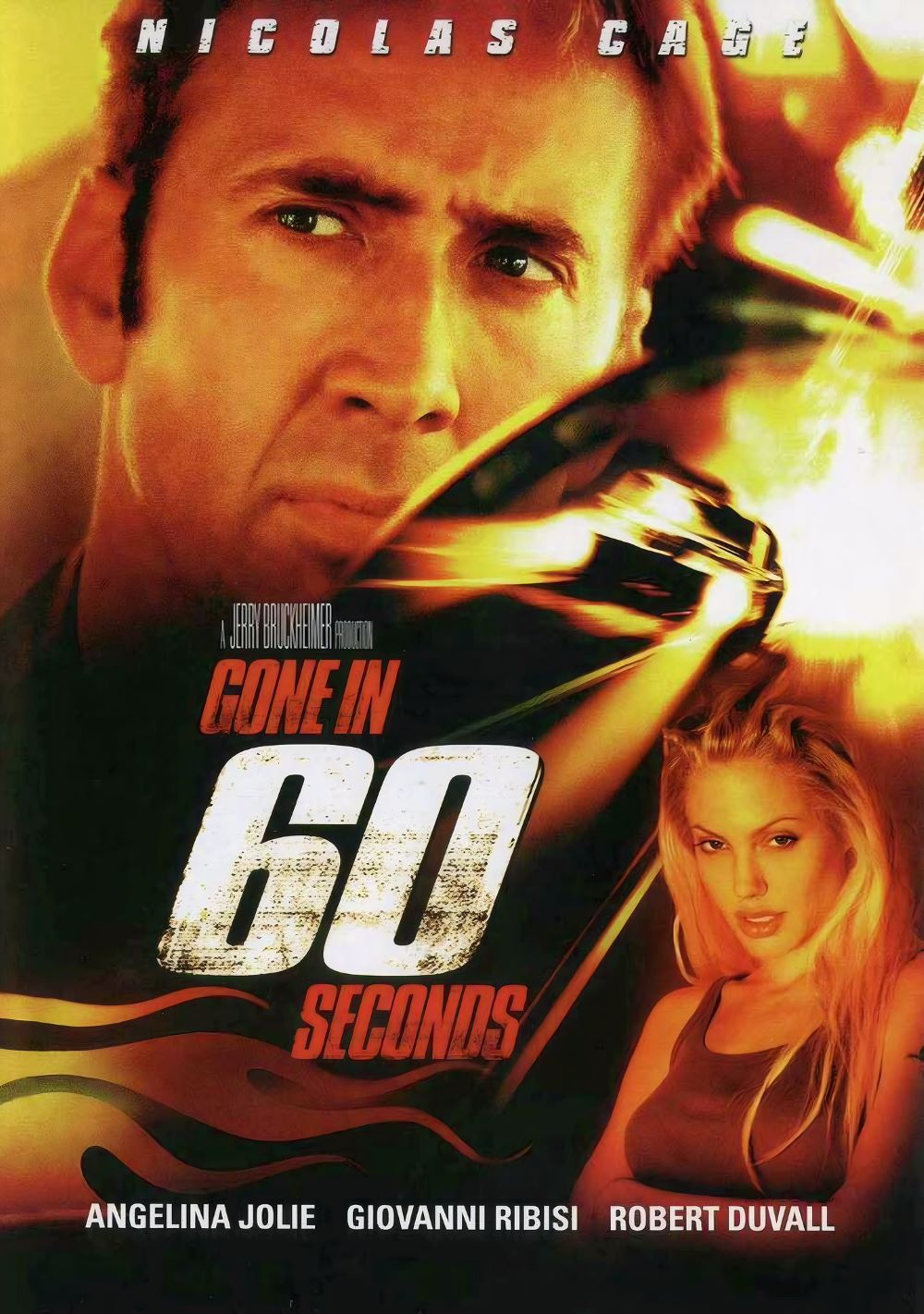
There is a specific, almost alchemical quality to the late 1990s and early 2000s era of Nicolas Cage as an action star. Before the internet turned every one of his performances into a meme and before his financial troubles led him down the rabbit hole of direct-to-video oddities, Cage was genuinely one of the most exciting and weirdly compelling action heroes on the planet. From The Rock in 1996 to Con Air in 1997 and Face/Off in 1997, he delivered a holy trinity of high-octane insanity that no other actor could have pulled off. By the time the calendar flipped to 2000, Cage was at the peak of his powers, and director Dominic Sena’s Gone in 60 Seconds arrived as both a victory lap and a slight exhale. It is not as unhinged as Face/Off nor as tightly wound as The Rock, but it is a perfect snapshot of its moment: a glossy, MTV-infused car heist flick that smells like gasoline, leather, and late-90s hubris. And while it has plenty of shortcomings, Gone in 60 Seconds has earned its place not in the pantheon of great action cinema, but in that more beloved hall of fame: the Guilty Pleasure.
The plot is as simple as a carburetor. Cage plays Randall “Memphis” Raines, a legendary car thief who has supposedly gone straight, now living a quiet life designing hybrid engines. But when his reckless younger brother Kip, played with sweaty desperation by Giovanni Ribisi, botches a job for a ruthless British gangster named Raymond Calitri (Christopher Eccleston at his sleaziest), Memphis is forced back into the life he left behind. The task is absurdly impossible: steal 50 specific luxury cars in a single weekend, or Calitri will kill Kip. That’s right, fifty cars. In three days. The film never really bothers to explain the logistics of storing or delivering that many vehicles, but that’s not the point. The point is the ride, the revving engines, and the way Cage stares at a 1967 Shelby GT500 named Eleanor like she’s the ghost of a lost lover. That car is the real star, and the film knows it.
Dominic Sena, who previously directed Cage in the underrated road thriller Kalifornia, brings a music video sensibility to the proceedings. Gone in 60 Seconds is drenched in late-90s visual tics: slow-motion shots of hubcaps spinning, golden sunsets glaring off polished chrome, and a soundtrack that alternates between nu-metal grooves and bluesy rock. The editing is fast but not confusing, and the heist sequences have a rhythmic, almost choreographed feel. You never believe for a second that Memphis and his crew—a motley collection of oddballs played by Robert Duvall, Vinnie Jones, and a very underutilized Angelina Jolie—can actually pull off fifty thefts without the entire LAPD catching on. But the film operates on movie logic. Cars are hotwired in seconds, police radio chatter is effortlessly avoided, and every chase defies the laws of physics. It is pure fantasy, and that is exactly why it works as a guilty pleasure.
Now, let’s talk about Cage. In 2000, he was still riding the high of that legendary late-90s run, and Gone in 60 Seconds fits neatly into his brand of action star as tortured romantic. Memphis Raines is not the coked-up lunatic Castor Troy or the shouty Stanley Goodspeed. He is weary, melancholic, and trying to be honorable in a dishonorable profession. Cage plays him with a hangdog sincerity that is surprisingly effective. When he talks to Eleanor, stroking her steering wheel and whispering about how she tests her drivers, he is utterly committed. There is no irony, no winking at the camera. That is the secret to Cage’s enduring appeal in this era: he treats absurd material with the same intensity he would bring to a Shakespeare soliloquy. The action sequences—especially the climactic chase where Eleanor leaps over a drawbridge—showcase Cage’s physicality and willingness to do real stunt work. He sells the danger and the desperation. You believe that this man would risk everything for a car, and that belief makes the film’s silliness palatable.
But let’s be honest about the shortcomings, because Gone in 60 Seconds has plenty. The middle act drags considerably. For a movie about stealing fifty cars, there is a surprising amount of standing around in warehouses and having conversations about “respecting the machine.” Angelina Jolie’s character, Sara, is Memphis’s ex-girlfriend and a fellow thief, but she is given almost nothing to do except look cool in leather and exchange tepid romantic banter with Cage. The chemistry between them is nonexistent. Christopher Eccleston’s Calitri is a one-note villain who likes opera and cruelty, and his final defeat is laughably abrupt. Delroy Lindo plays a dogged detective, but he is so incompetent that he never generates real tension. The film’s central gimmick—the ticking clock of fifty cars in three days—is inconsistently tracked, and by the final act, you have no idea how many cars are left or why it still matters. The dialogue is also gloriously corny. Lines like “Ride or die” and “Respect the car, man” are delivered with such straight faces that they circle back around to being endearing.
And yet, Gone in 60 Seconds earns its status as a guilty pleasure because it understands exactly what it is. This is not a sophisticated heist thriller like Heat or a gritty crime drama. It is a shiny, high-budget B-movie about a man and his car, and it leans into that identity without apology. The final twenty-minute chase sequence is genuinely thrilling, with real cars being destroyed and practical stunts that modern CGI could never replicate. Eleanor getting airborne, landing hard, and somehow still running is a moment of pure cinematic joy. The sound design—the roar of that V8 engine, the screech of tires on asphalt—is visceral and satisfying. And Cage’s performance, even when the script lets him down, holds the whole thing together. He is the anchor that keeps the film from floating away into utter nonsense.
Looking back from today’s perspective, Gone in 60 Seconds is a time capsule of a very specific moment. It captures the tail end of the late-90s obsession with extreme sports, tuner culture, and the idea that cars had souls. It also captures Nicolas Cage at a fascinating crossroads: still an A-list action star, still capable of opening a blockbuster, but already showing the signs of the wonderful weirdness that would later define his career. This film is not his best, not by a long shot, but it is one of his most rewatchable. You put it on when you want to turn your brain off, hear some great engine noises, and watch a sweaty, sincere Nic Cage talk to a Shelby like she is his long-lost sweetheart. That is the definition of a guilty pleasure. It is not good in the traditional sense, but it is fun. And sometimes, fun is enough.
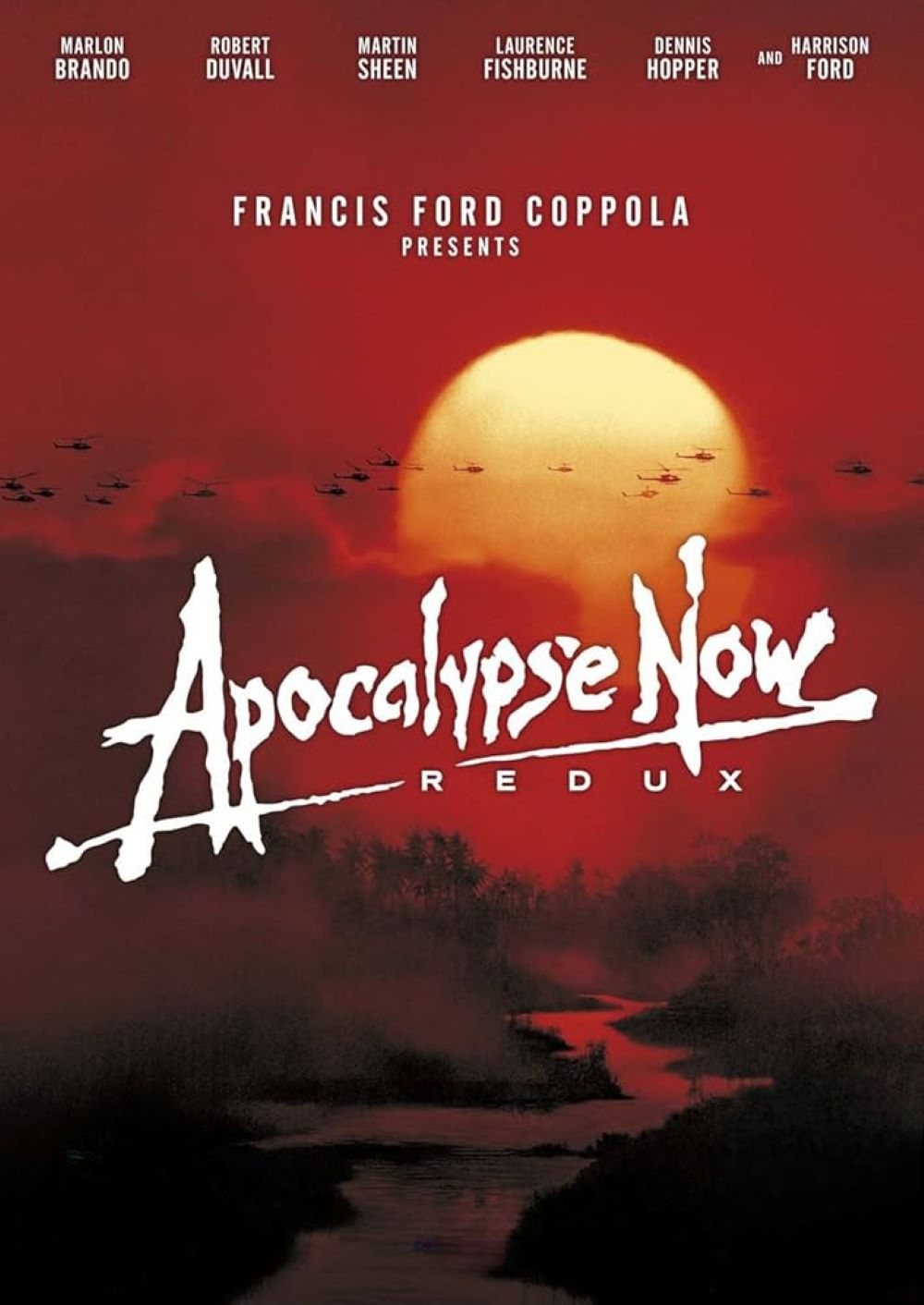
There is a specific kind of cinematic fever dream that only war, isolation, and a touch of madness can produce, and Francis Ford Coppola’s Apocalypse Now remains its gold standard. Co-written by Coppola and John Milius (the latter a colorful, larger-than-life figure in 1970s Hollywood), the film’s screenplay originally leaned harder into Milius’s romantic vision of martial will before Coppola reshaped it into something more hallucinatory and morally ambiguous. When we talk about the Redux version, released in 2001, twenty-two years after the original, we are not just revisiting that fever dream; we are plunging back into an even more hallucinatory, bloated, and revealing cut of the material.
At over three hours and twenty minutes, Apocalypse Now Redux is both a gift and a test of endurance. For those who only know the theatrical cut, this version feels less like a director’s tweak and more like unearthing a lost, more indulgent diary entry from Coppola’s own heart of darkness. The core remains the same: Captain Benjamin Willard (Martin Sheen), a morally hollowed-out assassin, is sent upriver during the Vietnam War to terminate Colonel Walter Kurtz (Marlon Brando), a once-brilliant Green Beret who has gone rogue and set himself up as a demi-god in the Cambodian jungle. The structure is a loose but unmistakable adaptation of Joseph Conrad’s classic 1899 novella Heart of Darkness, transposing Conrad’s grim critique of Belgian colonialism onto America’s own imperial overreach in Southeast Asia. Conrad’s journey up the Congo River becomes the Navy patrol boat’s crawl up the Nùng River, with each stop revealing a new layer of absurdity, violence, and spiritual decay.
The most immediate thing to address is what Redux adds, because those additions fundamentally alter the rhythm of the film. The theatrical cut is a lean, relentless descent. Redux is a meandering, hypnotic, and sometimes frustratingly pensive journey. Several major extended sequences distinguish this cut from the original. The first involves the Playboy Playmates. In the theatrical cut, we see them briefly at a chaotic USO show. In Redux, we get an extended sequence where Willard’s crew trades a canister of fuel for two hours with the stranded bunnies after their helicopter runs low on fuel. Later comes the brutal, psychedelic chaos of the Do Lung Bridge, which is extended in Redux to emphasize the utter breakdown of command and reality. And finally, deep in the journey, after surviving a tiger attack, Willard and the crew stumble upon the French rubber plantation, where a family of colonial planters refuses to leave their dying world. Each of these sequences grinds the forward momentum in different ways—the bunnies through desperate transaction, the bridge through absurd chaos, the plantation through nostalgic rot.
But to truly appreciate what Coppola is doing in Redux, you have to stop thinking of the Nùng River as a simple journey and start seeing it as a vertical descent—a layered, infernal funnel where each stop corresponds to a different circle of moral decay, much like the structure of Dante Alighieri’s Inferno, the first part of his epic narrative poem The Divine Comedy. The patrol boat is not just transport; it is a cramped, filthy ferry crossing the River Styx, and the further Willard and his crew go, the thinner the veil between civilization and savagery becomes. The Redux version, with its extended sequences, actually sharpens this Dantesque geometry rather than diluting it, because each added stop becomes another hellish layer, another specific flavor of corruption rotting under the jungle canopy. And importantly, the order of these stops tells a specific story of descent. Willard first encounters raw, commodified desire at the USO show, then plunges into the absurd mechanical chaos of the Do Lung Bridge, and finally drifts into the refined, decaying nostalgia of the French plantation—each circle deeper, stranger, and more spiritually corrosive than the last.
Consider the first major stop after leaving the relative order of the Delta: the extended Playboy Playmate sequence. In Dante’s Inferno, the early circles punish the lustful and the gluttonous—sins of appetite and passion that still acknowledge desire, however distorted. This stop is the hell of commodified desire, and it functions as the upper circle of Redux’s inferno. The bunnies are not seductresses; they are air-dropped promises of home, stranded and forced to barter their presence for fuel. The crew’s transaction—a canister of gas for two hours of the bunnies’ company—is transactional depravity laid bare. There is nothing refined here. The soldiers who swarm the boat are not conquering heroes; they are starving ghosts pawing at a mirage of femininity. The corruption is the commodification of intimacy, the way the war machine grinds up even fantasy into a trade good. In Dante’s Inferno, the lustful are eternally swept by winds, never at rest. Here, the winds are helicopter rotors, and no one finds peace. This stop still has energy, still has motion—it is desperate, ugly, and pathetic, but not yet defeated. It is the first circle: sin as transaction.
Further upriver, deeper into the jungle, you hit the second major stop in Redux’s order: the Do Lung Bridge. In Dante’s structure, the middle and lower circles punish the violent, the fraudulent, and the sowers of discord—those whose sins actively tear apart the fabric of order. The bridge is a sustained vision of the eighth circle—the Malebolge, the evil ditches of the fraudulent. This is the hell of absurd, endless combat, and it sits far below the bunnies’ desperate lust because it has abandoned desire altogether. The bridge is supposed to be a strategic point, but no one in command knows who is fighting whom or even which side holds which trench. Soldiers fire blindly into the dark; engineers build and rebuild sections of bridge that are destroyed every night by an invisible enemy. The wounded groan, a psychedelic light show of flares and tracers turns the sky into a flickering carnival of death, and a dazed soldier informs Willard that this place has been “crazy” for days. There is no front line, no objective, only endless, repetitive, pointless construction and destruction. The corruption here is systemic: the war has become an autopilot nightmare where violence generates nothing but more violence. Unlike the bunnies, who still want something, the soldiers at the bridge don’t even know what they are doing anymore. They simply perform the same broken task for eternity. Willard’s only reaction is a numb observation that he should inform his superiors, but he never will. The bridge is the point where any remaining belief in order or purpose dissolves into white noise. It is the second circle: sin as automation.
Then, after the bridge’s chaos, the crew drifts into the third major stop: the French rubber plantation. In Dante’s Inferno, the deepest circles before the frozen center punish heresy and treachery—sins of the intellect and will, where belief becomes a cage. The plantation functions exactly like this. It is the hell of nostalgia and colonial rot, a step deeper than the bridge’s chaos because it has calcified into ideology. After the raw transaction of the bunnies and the absurd violence of the bridge, the crew stumbles upon a walled pocket of denial. Here, the French family sips wine, argues geopolitics, and pretends the war is a tragic inconvenience rather than a total collapse. This is the hell of the static dead—people who refuse to acknowledge that their world has already ended. The rubber trees themselves, planted in neat, tyrannical rows, symbolize extractive cruelty made mundane. Willard sleeps with a widowed French woman, a moment of hollow lust that feels more like a funeral rite than passion. The corruption here is polite, intellectual, and almost seductive—but it is still decay wearing a starched shirt. Unlike the bunnies’ squalid desperation, the plantation has manners. Unlike the bridge’s chaotic noise, the plantation has quiet arguments. That makes it more insidious, and therefore deeper in the infernal funnel. This is the third circle: sin as denial.
By the time Willard finally reaches Kurtz’s compound, he has descended past all these preparatory circles into the ninth and final circle of Dante’s Inferno—Cocytus, the frozen lake of treachery, where Satan himself is trapped in ice. Kurtz is no longer a man but a fixed point of absolute darkness. His compound is a Cambodian nightmare of severed heads, pagan rituals, and whispered monologues. Unlike the bunnies’ desperate transaction, the bridge’s absurd chaos, or the plantation’s nostalgic denial, Kurtz’s hell is complete stillness. He has murdered and been worshipped for it. He has rejected every prior layer—commerce, command, colonialism—and arrived at a nihilistic truth: that horror is the only moral absolute. Willard’s task is not to understand Kurtz but to kill him, and in doing so, to become him. That is the final descent: not into fire, but into the ice of total moral withdrawal. The Redux version emphasizes this by making Kurtz more verbose but also more inert. He is trapped not by chains, but by his own unbearable clarity. The three stops before him—the bunnies, the bridge, the plantation—are all failed attempts to build meaning in the jungle. Kurtz is the place where meaning dies entirely.
What remains unchanged, across both cuts, is the technical majesty. Vittorio Storaro’s cinematography still haunts the soul. The opening shot—a napalm-blasted jungle dissolving into the slow rotation of a ceiling fan in a Saigon hotel room, with The Doors’ “The End” whispering over the soundtrack—is one of the great tone-setters in cinema history. The Redux cut luxuriates in these images even longer, letting the heat and humidity seep through the screen. The attack on a Vietnamese sampan, where an innocent family is slaughtered in a burst of trigger-happy panic, remains devastating. Laurence Fishburne’s young, wide-eyed Clean, Dennis Hopper’s jittery, sycophantic photojournalist (a role that feels like pure id), and Robert Duvall’s iconic Lieutenant Colonel Kilgore, who loves the smell of napalm in the morning, all deliver performances that feel less like acting and more like channeling. Duvall’s surf-obsessed madman is even more absurdly perfect in Redux because the added length makes his brief screentime feel like a welcome blast of cold air before the suffocating final act.
Which brings us back to Marlon Brando as Kurtz. Here is where Redux both helps and hurts. The theatrical cut gives Kurtz a mythic, almost abstract presence—shadowy, whispering, half-sculpted. Brando showed up overweight and unprepared, so Coppola shot him mostly in shadow. In Redux, those shadows remain, but the added material includes a longer, more discursive monologue where Kurtz reads from a Time magazine article about the war and rambles about the horror of administering lethal injections to polio-stricken villagers. It is more Brando, which is never nothing, but it also demystifies the monster. The terror of Kurtz in the original cut is that he is an idea, a reflection of Willard’s own potential. In Redux, he becomes a sweaty, slightly boring philosopher. The famous “the horror, the horror” death scene still lands, but getting there feels like you have already been swimming in his rhetoric for too long. The added footage makes Kurtz more human but less terrifying, which may or may not be an improvement depending on your tolerance for Brando’s mumbling.
The casual viewer might find Redux interminable. Let’s be honest: three and a half hours of madness, helicopters, and nihilism is a lot. There are stretches in the plantation sequence where you might check your phone. The pacing is deliberately, almost arrogantly slow. Coppola is not trying to entertain you; he is trying to drown you. And in those moments of slog—when the French family drones on about geopolitics, when the bunnies’ desperation overstays its welcome, when the bridge’s chaos becomes repetitive rather than shocking—you might be tempted to declare the whole Redux experiment a failure. But here is the uncomfortable truth that separates Apocalypse Now Redux from mere indulgent director’s cuts: the film’s occasional sluggishness, its bloated digressions, its refusal to maintain a clean narrative spine, are not flaws so much as they are the correct representation of the very thing the film’s themes and narrative ideas were trying to explore. This is a movie about a journey into moral rot, about the collapse of linear purpose into circular nightmare, about men who have stared too long into the abyss and lost the ability to tell a clean story. Why should the film itself be clean? The theatrical cut is a masterpiece of compression, yes—but compression is an act of control, and Apocalypse Now is ultimately about the loss of control. The Redux version, for all its unevenness, is the more honest artifact because it refuses to polish the madness into neat dramatic beats. The original film is a nightmare you cannot wake from; Redux is the insomnia that precedes it, the sweaty, bored, terrifying awareness that there is no ending, only more jungle.
This is why, despite its longer running time and the areas where the pacing sometimes slogs through, the film overall succeeds as not just a fever dream of the filmmaker, writers, and actors who survived its legendary production—the typhoons, the heart attacks, Brando’s chaos, Sheen’s breakdown—but as the correct representation of the very thing the film’s themes and narrative ideas were trying to explore. Apocalypse Now is about the impossibility of remaining sane in an insane environment. The Redux cut, by refusing to be efficiently sane, becomes a more immersive simulation of that condition. The theatrical cut tells you about the horror; the Redux cut makes you live inside its tedious, exhausting, occasionally boring reality. And boredom is part of horror, too—the long stretches between atrocities, the waiting, the pointless arguments, the nights that won’t end. Coppola, Milius, Sheen, Brando, and everyone else who survived the Philippines shoot did not emerge with a clean story. They emerged with scars, footage, and a kind of shell-shocked awe. The Redux version honors that survival by refusing to pretend the experience was anything other than a mess. It is the director’s cut as wound, not as polish.
For the obsessive, for those who want to see the entire messy, unfinished vision behind one of the great artistic catastrophes (the documentary Hearts of Darkness is essential companion viewing), Redux is invaluable. It reveals that the original 1979 cut was a miracle of editing—a salvage job that turned a troubled production into a masterpiece. Redux is the rough draft of that miracle. It has a bloated, novelistic quality, more concerned with atmosphere than narrative efficiency. As a loose adaptation of Heart of Darkness, it is oddly more faithful than the original cut—because Conrad’s novella is also meandering, digressive, and filled with colonial asides that do not advance the plot. But faithfulness is not the same as greatness.
The Redux version is a flawed, overstuffed, hypnotic masterpiece that sometimes trips over its own ambition. It earns its runtime not through tight storytelling, but through sheer, oppressive mood. And in the end, that is the point. You are not supposed to leave Apocalypse Now feeling satisfied. You are supposed to leave feeling like you have stared into something ancient and ugly. The Redux version just makes you stare longer, dragging you down through each Dantesque circle—from the desperate, transactional depravity of the Playboy bunnies, through the absurd, autopilot chaos of the Do Lung Bridge, past the polite, rotting nostalgia of the French plantation, and finally into the frozen stillness of Kurtz’s compound—until there is nothing left but the ice and the horror. And in those moments when the film slows to a crawl, when you check your watch and wonder why we are still at the plantation, that is not a failure of art. That is the art itself, reminding you that hell is not a nonstop carnival of screams. Hell is also a long, boring dinner with people who refuse to die. Whether that is luxury or punishment is for you to decide. But Apocalypse Now Redux succeeds precisely because it trusts you to sit with that discomfort and recognize it for what it is: the truth.
Today, the Shattered Lens celebrates the 82nd birthday of the iconic screenwriter and director, John Milius!
While director Francis Ford Coppola definitely put his own stamp on 1979’s Apocalypse Now, the film started life as a script written by John Milius and the film itself is full of dialogue that could only have been written by Milius. The most famous example is Robert Duvall’s monologue about the smell of napalm in the morning. Actually, the entire helicopter attack feels like pure Milius. Reportedly, Duvall’s character was originally named Colonel Kharnage but, by the time the movie was made, his name had become Kilgore. It’s still not exactly a subtle name but it’s not quite as obvious as Kharnage.
(When James Caan read the script, he loved the role so much that he was offended to not be offered it and, as a result, he turned down offers to play not only Willard but also Kurtz.)
In honor of Francis Ford Coppola’s birthday, today’s scene that I love comes from The Godfather.
In this scene, a self-pitying Johnny Fontane (Al Martino) discusses his career problems with Marlon Brando’s Vito Corleone. Johnny is losing his voice. Johnny is up for a role in a big movie but he worries that the producer will never allow him to appear in the film. Johnny says he doesn’t know what to do and he sheds a tear….
….and that’s not a smart thing to do when you’re talking to Don Corleone.
This scene contains some of the best moments of The Godfather. Al Martino was a professional singer with little acting experience. (While Johnny Fontane was a major character in Mario Puzo’s book, he only appeared in two scenes in the film version. Coppola later said that he thought the Johnny Fontane chapters were so poorly written that he would have turned down the film if he had to include too much of the character.) In order to get an effective performance out of Martino, Brando did not warn him that he would actually be slapping him. During one take, Brando got so aggressive that he knocked off Martino’s toupee and caused Robert Duvall to start laughing. It was all worth it, though. Martino was thoroughly convincing as Johnny Fontane and Marlon Brando won (but did not accept) his second Oscar for Best Actor. Coppola did not win Best Director for The Godfather (1972 was a competitive year) but he made up for it 1974 when he was honored for The Godfather Part II.
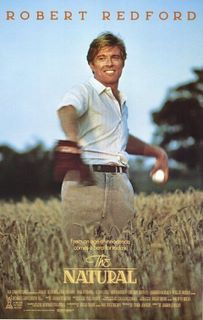
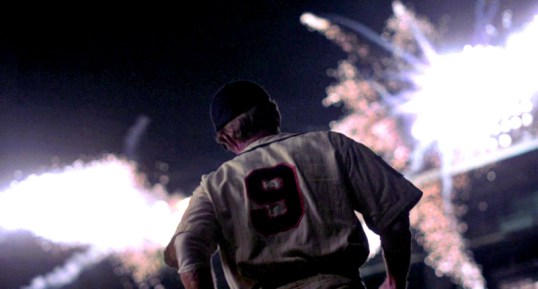
As a baseball fan, it feels like heresy to admit that it took me this long to watch The Natural. I had seen plenty of scenes from the film. I knew the music because there’s no way you can watch as much as baseball as I do without hearing it at least a few times every scene. I knew about Wonderboy and the big home run and how Roy Hobbs came out of nowhere to lead the perennially last-place New York Knights to the championship series but I had never actually watched the entire film from beginning to end.
Until this afternoon.
When the movie started, I was worried. Robert Redford plays Roy Hobbs, an outstanding hitter whose promising career appears to be over when a mysterious woman (Barbara Hersey) shoots him in the gut. At the start of the movie, Roy and his girlfriend Iris (Glenn Close) are supposed to be teenagers but Redford was nearly 50 and Glenn Close was close to 40. The whole point of the first part of the movie is that Roy and Iris are young and they have their whole future ahead of them but the actors were both clearly middle-aged. There was a scene where Roy strikes out the best batter in the league (Joe Don Baker) and the batter kept calling Roy a kid but Redford looked like he was older than Baker.
The good thing is that you only have to buy Redford as being a teenager for about 15 minutes. After he gets shot, Roy stops playing for several years. By the time Roy makes it to the major leagues, he’s supposed to be older than everyone else. No one gives Roy much of a chance when he’s first signed to the New York Knights. The other players (including Michael Madsen) don’t respect him and the manager (Wilford Brimley) refuses to play him. But when Roy Hobbs finally does get a chance to swing his home-made bat, he hits homer after homer. Roy is a natural, the next great player even if he is at an age when most players retire. A journalist (Robert Duvall) tries to uncover his background. A seductress (Kim Basinger) tries to lead him astray. A gambler (Darren McGavin) and the team’s owner (Robert Prosky) try to get him to throw the big game. Anyone who has watched a baseball game knows how it ends because we’ve all heard the music and seen that clip. But even if everyone knows how the story concludes, it’s impossible not to cheer when Roy gets a hit and to feel bad when he takes a strike. Redford may have been old for a baseball player but he looked good out there, swinging that bat and throwing that ball.
I loved The Natural. It’s extremely sentimental movie. Sometimes, it feels old-fashioned. That’s perfect for baseball, though. Baseball is a sentimental, old-fashioned game and the story of Roy Hobbs is what baseball is all about. The Knights are behind for most of the season. Roy hits a slump. But neither he nor the team ever give up because they know that baseball is a game of endurance. It’s not like football, where you just have to win 9 games to make it to the playoffs. Baseball is about never giving up, no matter what the score is. Even the movie’s supernatural aspects — the sudden storms, a lightning bolt hitting a tree and creating Wonderboy, and even Glenn Close looking like an angel in the stands — work because baseball is a mystical sport. It’s the closest thing we have to a spiritual sport.
You couldn’t make a movie like The Natural about football or basketball. Only the game of baseball could have given us The Natural.
Lenny Montana started out as a boxer and a wrestler. He eventually ended up working as a bouncer and a bodyguard for the leadership of the Colombo Crime Family. However, Montana achieved his immortality as a result of veteran tough guy actor Timothy Carey turning down the role of Luca Brasi in The Godfather. Brasi was the Corleone Family’s most feared enforcer and Carey, who had made a career out of playing psychos, was one of the most feared men in Hollywood, one who was rumored to have pulled a gun on more than a few directors. (For the record, Stanley Kubrick loved him.) When Carey turned down the role in favor of doing a television series, Francis Ford Coppola offered the role to Lenny Montana. Montana may not have had Carey’s screen acting experience but he brought real-life authenticity to the role. When Michael says that Luca Brasi is a “very scary man,” one look at Lenny Montana confirms it. Unfailingly loyal to the family and willing to do anything for the Don, Luca Brasi represents the Family’s strength. When Luca Brasi is killed, you know that the old era of the Corleones is ending as well. Without Luca, the Corleones are in deep trouble.
My favorite Luca Brasi scene comes at the beginning of the film. Surprised to be invited to Connie’s wedding, Luca wants to thank the Don personally. Nervous about acting opposite Marlon Brando, Montana flubbed his lines. The scene, with the flub, was kept in the film and it served to humanize both Luca and Don Corleone. (The Don’s smile was due to the fact that Marlon Brando was having trouble not laughing.) It’s a nice little scene, one that reminds us that even gangsters are human.