Retro Television Review: Homicide: Life On The Street 6.3 “Blood Ties, Part 3”


Welcome to Retro Television Reviews, a feature where we review some of our favorite and least favorite shows of the past!  On Sundays, I will be reviewing Homicide: Life On The Street, which aired from 1993 to 1999, on NBC!  It  can be viewed on Peacock.
This week, the Wilson case is finally resolved.

Episode 6.3 “Blood Ties, Part 3”

(Dir by Mark Pellington, originally aired on October 31st, 1997)

“Yo, Frank!” Detective Ballard yells at Pembleton at the start of this episode and I have to admit that I immediately cringed at the sound of it.  The man’s name is “Detective Pembleton.”  Ballard has done nothing so far to give her the right to address Homicide’s best character as “Yo, Frank!”

Of course, the main theme of this episode seemed to be all the detective who have been with the show since the beginning suck and that the new arrivals can do no wrong.

Take Falsone, for instance!  After a drug dealer is murdered, Falsone proves himself to be the only one who can talk to the dealer’s traumatized child.  Lewis is a buffoon in this episode, gloating over the dead dealer and traumatizing the kid while trying to lead him through the police station.  But Falsone?  He knows exactly what to say and, with his gentle prodding, the kid identifies the murderer of his parent as being a narcotics detective who is on the Mahoney payroll.   When Lewis asks Falsone why he’s so awesome, Falsone explains that he’s divorced and he misses his own kids….

OH MY GOD!  He’s a young detective who gets results and he’s divorced!  For a show that previously avoided stereotypes, Homicide is going out of his way to promote a big one in the form of Detective Falsone.

Meanwhile, the Wilson case is resolved.  It turns out that Ballard was totally correct and Pembleton was totally wrong.  Melia was killed by a member of the Wilson family and, to the surprise of absolutely no, the murderer turns out to be Hal Wilson (Jeffrey Wright, giving perhaps the worst performance of his distinguished career), the twitchy son of Felix.  Hal was obsessed with Melia and flew into a rage when he found out she was sleeping with his father.  Pembleton even gets Hal to admit it but –– Law & Order plot twist time! — Felix and Hal were only willing to talk to Pembleton on the condition that they weren’t Mirandized so the confession is inadmissible.  (That doesn’t seem like something that the normally meticulous Pembleton would agree to but whatever.)  Felix, Hal, and the entire family leave Baltimore for San Diego.

Afterwards, Ballard track Pembleton down and tells him that she’s going to be a Baltimore homicide detective whether he likes it or not.  Pembleton admits that he was wrong.  Watching the scene, one gets the feeling that the show is telling us, “Who needs Pembleton and Bayliss and all those boring cops when we’ve got new cop who are young and sexy and infallible?”

And here’s the thing.  There’s nothing wrong with bringing in new characters.  There’s nothing wrong casting attractive actors in those roles.  There is something wrong with pushing the characters to whom we’ve grown attached aside and insisting that we instead embrace new characters that we barely know.

This was a disappointing ending for the first three-parter of the series.  The season has just started and I’m already sick of Falsone trying to prove that the Luther Mahoney shooting wasn’t justified.  I’m sick of everyone talking about George Rae Mahoney as if she’s some total badass as opposed to a plot device.  And I’m tired of my favorites being pushed to the side.

We are not off to a good start.
Retro Television Review: Homicide: Life On The Street 6.1 “Blood Ties, Part One”


Welcome to Retro Television Reviews, a feature where we review some of our favorite and least favorite shows of the past!  On Sundays, I will be reviewing Homicide: Life On The Street, which aired from 1993 to 1999, on NBC!  It  can be viewed on Peacock.

This week, we start season 6.

Episode 6.1 “Blood Ties: Part 1”

(Dir by Alan Taylor, originally aired on October 17th, 1997)

It’s a new season of Homicide and, while Pembleton and Bayliss have been off working in the robbery division, some changes have occurred.  Sgt. Howard has left Homicide to work in another division.  Brodie’s documentary won an Emmy and he’s moved to Los Angeles.  Melissa Leo and Max Perlich are no longer a part of the cast.

Instead, we have three new detectives.  Gharty and Falsone (ugh!) are now full-time members of the squad.  Joining them is Laura Ballard (Callie Thorne), a recent transfer from Seattle.  When Pembleton and Bayliss return to Homicide, the first that they see is Ballard and Gharty being given a commendation for solving “the Rico case.”  Meanwhile, Falsone is walking around the squad room like he owns the place.  Giardello praises the new detectives and basically acts as if Pembelton and Bayliss are useless.

And listen, as much as I dislike Falsone and Jon Seda’s mumbling performance in the role, I do think that Peter Gerety is well-cast as Gharty.  And Callie Thorne seems like she’ll do a good job as Ballard, even if this episode does spend a bit too much time trying to convince us that she’s the greatest detective since Frank Pembleton.  But, when it comes to Homicide, I want to follow detectives like Munch, Lewis, Pembleton, and Bayliss.  I want to watch as Kellerman battles his demons and Giardello battles his superiors.  My point is that I don’t care about these new people.  I don’t care that Ballard is a hotshot detective.  I don’t care that Gharty is a blue-collar guy who is looking to prove himself.  I can’t stand Falsone.  I don’t want any of these people to be the new lead characters on the show.  I want Melissa Leo with her weird accent.  What are we even doing here, Homicide?

This episode, however, seemed to be determined to force the new characters on me.  For instance, Georgia Mahoney (Hazel Goodman) is in town, looking to get revenge for the death of her brother Luther.  She’s got people shooting at Lewis, Kellerman, and Terri Stivers.  Needless to see, Lewis and Kellerman get involved in tracking down and arresting not only Georgia but also Junior Bunk (Mekhi Phifer), Luther’s incompetent nephew.  However, Falsone gets involved too.  This means that we have to sit through an entire scene of Falsone attempting to interrogate Kellerman about the Mahoney shooting and the inconsistencies in the statements given by Lewis, Stivers, and Kellerman..  Hey, Falsone — YOU’RE THE NEW GUY!  WE LIKE KELLERMAN!  LEAVE HIM ALONE, YOU MUMBLING DOUCHEBAG!

Meanwhile, at a banquet honoring distinguished businessman and civil right activist Felix Wilson (James Earl Jones), a young Haitian woman is found beaten to death in the men’s room.  Her name is Melia and she worked for the Wilsons.  Now, in this case, Pembleton and Bayliss are the primaries but Ballard and Gharty still come along to provide support and soon, Ballard and Pembleton are arguing about the best way to handle the investigation.  Ballard thinks that Pembleton is going easy on Felix Wilson because of Wilson’s standing in the black community.  Pembleton thinks that Ballard should remember who the primary investigator is.  And myself, I’m wondering why Pembleton and Ballard are having the type of conversations that Pembleton used to have with Bayliss.  Whenever Pembleton and Bayliss debate prejudice, it works because we know who Pembleton is and we know how Bayliss is.  We don’t know enough about Ballard for her debate with Pembleton to really mean anything.

Apparently, Homicide was nearly cancelled after the end of season 5.  When it was renewed, it was done on the condition that had to improve its rating and win its time slot.  This episode feature a lot of action.  A man on a motorcycle fires at Falsone and Lewis.  A sniper hits Kellerman in the arm.  The cops stop Georgia’s private plane from taking off and arrest her.  Visually, this episode is brightly lit and there’s none of the odd camera angles that dominated the previous few seasons.  Comparing this episode to the episodes that came before it creates a tonal whiplash that can only be compared to going from the Steve Carell-led Office to the Ed Helms version.  It’s not necessarily bad but it just doesn’t feel right.

This episode ends with Georgia in jail and Pembleton still investigating the death of Melia.  Season 6 is off to a start and I’m not really happy about how it’s going so far but we’ll see what happens.

Retro Television Review: Homicide: Life On The Street 5.21 “Partners And Other Strangers”


Welcome to Retro Television Reviews, a feature where we review some of our favorite and least favorite shows of the past!  On Sundays, I will be reviewing Homicide: Life On The Street, which aired from 1993 to 1999, on NBC!  It  can be viewed on Peacock.

This week, we discover that Daniel Baldwin will not be returning to Homicide.

Episode 5.21 “Partners and Other Strangers”

(Dir by Leslie Libman and Larry Williams, originally aired on May 9th, 1997)

A call to investigate what appears to be a suicide leads Pembleton and Brodie to an isolated house in Baltimore.  The dead man has been found with a shotgun in his hands and his face blown apart.  It’s not until Pembleton looks at the dead man’s ID that he discovers that the man is former Detective Beau Felton.

Played by Daniel Baldwin, Felton was originally a major character on Homicide.  He was the cynical, sweaty detective who had an affair with Megan Russert, a partnership with Kay Howard, and a marriage with a crazy woman who wouldn’t let him see his kids.  Felton is the one who Robin Williams yelled at for being an insensitive ass in the Bop Gun episode.  As the series progressed and the focus shifted from characters like Felton and Bolander to Pembleton and Bayliss, Felton was given less and less too.  Daniel Baldwin was fired from the series at the end of season 3.  Felton was said to have been suspended for his rowdy behavior at a convention.

The episode fills us in on what happened to Felton after his suspension.  He apparently retired from the force and then stopped returning phone calls.  He disappeared and everyone else moved on.  At first, the squad room wonders if they could have done anything to prevent Felton’s suicide.  Howard and Lewis (who lost his previous partner to suicide and who nearly lost Kellerman to the same thing) are especially hit hard.  We get several flashbacks to the episodes that featured Felton and we’re reminded of just how much Daniel Baldwin used to sweat when he was on the show.

Dr. Cox takes a look at the skull fragments and the blood splatter and she realizes that Felton didn’t kill himself.  He was shot in the back of the head and then someone tried to make it look like he committed suicide.  Pembleton, Howard, and Bayliss are now investigating the murder of Beau Felton and they’re getting some help.

Megan Russert flies in from France to offer up her skills as an investigator.  If I remember correctly, Russert was never that good of a detective but it’s nice that she showed up.

Detective Paul Falsone (Jon Seda), from the auto theft squad, says that Felton was working with a notorious group of car thieves.  Falsone wants to help the investigation for …. reasons, I guess.

Finally, Detective Stuart Gharty (Peter Gerety) shows up.  When we last saw Gharty, he was a decorated cop who was too scared to enter an apartment building to help out one of his fellow officers.  Now, Gharty is working for Internal Affairs.  He reveals to Giardello that Felton was working undercover and he was helping to uncover a crooked cop in the department.  Colonel Barnfather announces that Gharty is going to work with Homicide on the Felton case.

Even if I didn’t already know that Falsone and Gharty are going to become regular characters during season six, it would be obvious from the introductions they’re given in this episode.  Peter Gerety, who later played a sympathetic judge on The Wire, is fine in the role of Gharty.  But I can already tell that Falsone is going to annoy me.  Some of it is because his character is the type of cliche that Homicide has, to this point, avoided.  He’s a young rebel who gets results …. HIS WAY!  From the minute he shows up, he’s telling Howard and Pembleton how they should conduct their investigation and it’s kind of annoying.  I mean, who the Hell is this jerk?  As played by Jon Seda, Falsone mumbles the majority of his dialogue and he just doesn’t seem like he belongs on Homicide.

This is a two-parter so we’ll see how the investigation wraps up (or doesn’t) next week.  Oddly, I have to admit that Felton’s death didn’t really have the type of emotional impact that the show seemed to think that it would.  Unlike the lovably eccentric Crosetti, Felton was never really that interesting of a character.  Far more impactful than the squadroom thinking about all of the times Felton acted like a jerk was the scene where Pembleton followed Bayliss to his uncle’s home.  Later, Pembleton told Bayliss that he now understood why Bayliss has been missing work.  In the past, this would have led to a fight between the two of them but both Bayliss and Pembleton have grown over the season.  Pembleton apologizes for following Bayliss.  (“I’m a detective.  It’s what I do.”)  Bayliss opens up about how he’s struggling with the concept of forgiveness.  As always, the show’s heart is with Bayliss and Pembleton.

Next week, season 5 comes to an end!

Retro Television Review: Homicide: Life On The Street 5.20 “Narcissus”


Welcome to Retro Television Reviews, a feature where we review some of our favorite and least favorite shows of the past!  On Sundays, I will be reviewing Homicide: Life On The Street, which aired from 1993 to 1999, on NBC!  It  can be viewed on Peacock.

This week’s episode was written by none other than Yaphet Kotto!

Episode 5.20 “Narcissus”

(Dir by Jean de Segonzac, originally aired on May 2nd, 1997)

A shooting at four in the morning leads to a group of white patrolmen chasing a black suspect across West Baltimore until he ducks into a building that they’ve been told not to enter.  The building is the headquarters of the African Revival Moment, a militant group that is led by a former cop who goes by the name of Burundi Robinson (Roger Robinson).  Robinson is one of the most powerful men in West Baltimore, a hero to the community and also someone who has connections to Baltimore’s police commissioner, James Harris.

As Robinson explains to Lt. Giardello, he and Harris were once partners.  When he and Harris busted a heroin dealer, Harris sold the drugs back to the dealer for $10,000.  When it was discovered that the drugs were missing from the evidence lock-up, Harris and Robinson flipped a coin with the understanding that the loser would resign from the force and take the fall.  Robinson lost the coin toss.  Robinson went on to start ARM and Harris became the police commissioner.

At first, Harris (who doesn’t appear in this episode but instead is simply a background figure of menace) protects Robinson and sends Col. Barnfather to the scene to order Detectives Pembleton and Munch to back off.  However, when a member of ARM comes forward to say that Robinson ordered the shooting because the victim was going to expose Robinson’s history of taking sexual improprieties with his followers, Harris suddenly starts ordering the police to get more aggressive with Robinson and ARM.  Harris does this with the full knowledge that the police raiding ARM headquarters and attempting to arrest Robinson will lead to a violent confrontation.  When the police eventually do bust into the headquarters, they discover that Robinson and all of his followers have committed suicide.  Giardello understands that was Harris’s hope all along.  He was willing to risk a riot just to silence the one man who could prove his corruption.

This episode was written by Yaphet Kotto and, not surprisingly, Giardello is at the center of the action.  The lengthy scene where he meets with Robinson is the highlight of the episode as both Giardello and Robinson have a unique understanding of how things work in Baltimore.  Giardello has had first-hand experience with Harris’s corruption and he’s not in the least bit surprised by either Robinson’s story or Harris’s heavy-handed attempts to control the investigation.  In a bit of wonderful irony, when Harris initially tries to protect the African Revival Moment, he uses the racist Captain Gaffney to interfere with Munch and Pembleton’s investigation.  Gaffney, one of the most loathsome characters on the show, is suddenly the one who is telling a suspect to demand a lawyer and leaking the name of the informant to Robinson.

This episode was a strong one all the way around, with Kotto, Andre Braugher, and Roger Robinson all playing proud men who each had their own unique view on how to best deal with the issue of race in Baltimore.  (One thing that sets Homicide apart from so many other shows is not just the diversity of the cast but also the diversity of personalities and opinions.)  The ending carries a punch.  When Giardello says that there will be Hell to pay, you believe him.

Retro Television Review: Homicide: Life On The Street 5.19 “Deception”


Welcome to Retro Television Reviews, a feature where we review some of our favorite and least favorite shows of the past!  On Sundays, I will be reviewing Homicide: Life On The Street, which aired from 1993 to 1999, on NBC!  It  can be viewed on Peacock.

This week, the Luther Mahoney saga comes to an end.

Episode 5.19 “Deception”

(Dir by Peter Medak, originally aired on April 25th, 1997)

A Nigerian drug courier is found dead in a hotel room and, of course, that means that Kellerman, Lewis, and Stivers are going to get another chance to go after Luther Mahoney.  After covering up the death of the actual courier, the police send in an undercover officer who delivers a batch of “bad” drugs to Mahoney’s middleman, Antonio Brookdale (Christopher Mann).  When the drugs hit the street, it leads to a revolt amongst Mahoney’s customers.  No one is buying from Mahoney and that causes Mahoney to lose his temper.  Luther Mahoney can handle almost anything but he can’t handle losing money.

Mahoney demands that Antonio meet him at a public park.  What Mahoney doesn’t know is that the police — including Kellerman, Stivers, and Lewis — have got the park staked out.  When Mahoney, in a fit of rage, shoots both Brookdale and an innocent mother with her kids, the police rush to the scene.  A panicked Mahoney jumps in his vehicle and drives away, leaving his crew behind to get arrested.

Lewis tracks Mahoney down to his apartment, where Mahoney is desperately packing up his money.  The sight of Mahoney causes Lewis to lose control.  He starts hitting Mahoney, demanding to know why Mahoney had to kill so many people when he could have just been content to sell drugs.  Mahoney manages to grab Lewis’s gun.  Kellerman and Stivers burst into the apartment with their own guns drawn.  Seeing them, Mahoney lowers his gun and says, “What are you going to do?  Read me my rights?”

“You have the right to remain silent….” Kellerman says, before shooting and killing Mahoney.

OH MY GOD, KELLERMAN JUST EXECUTED LUTHER MAHONEY!

Technically, you could argue that, as Mahoney was still holding the gun, the shooting was justified.  Mahoney lowered the gun but he never dropped it.  Nor did Mahoney ever say that he was surrendering.  Instead, he laughed and mocked the cops.  If Mahoney had raised the gun quickly enough, he probably could have gotten at least one shot in before Stivers and Kellerman had time to take action.  Then again, Kellerman also never ordered Mahoney to drop the gun.  Instead, he just shot him.  After Mahoney falls, Kellerman asks Lewis and Stivers if either has a problem with what happened.  “Nope,” Lewis says.  Stivers, however, doesn’t look convinced that the shooting was justified.

It’s a shocking moment but it’s also a moment that feels somewhat inevitable.  Kellerman has spent this entire season with people accusing him of being crooked.  Even though he was never charged, even his fellow detectives assumed that he must have been doing something to get in trouble in the first place.  Meanwhile, Mahoney killed numerous people and smirked every time that he got away with it.  Kellerman snapped and probably committed a crime.

If that’s not bad enough, Munch is contacted by Punchy DeLeon (Lewis Black), a small-time mobster who has just spent ten years in prison on a murder charge.  Punchy tells Munch that he knows that a criminal associate of his, Jimmy Pugliese, was murdered and buried in section C of the parking lot at the Plimco race track.  With Munch and Brodie in attendance, the parking lot is dug up and …. nothing is found.  Munch does some further investigating and discovers that Pugliese had a girlfriend named Fallon (Deborah Hazlett).  When he drives out to see her, he discovers that Pugliese (Brian Hemmingsen) is still alive.  Pugliese orders to Much to get off his front porch.  Much leaves, not realizing that he’s been followed by Punchy.

Back at the office, Sgt. Howard tells Munch not to worry about it because there hasn’t been an actual homicide.  However, then Fallon shows up and says that Pugliese has disappeared.  Munch drives out to Plimco, where he finds Punch waiting for him in Lot C.  Punchy explains that he took the fall for a murder the Pugliese committed.  Because Pugliese didn’t keep his promise to take care of Punchy’s wife while Punchy was in prison, Punchy used Munch to track down Pugliese.  And now, Pugliese really is buried under the parking lot.  (It helped that the parking lot itself was already ripped up due to Munch searching for the body the first time.)  Munch tells Punchy that he’s going back to prison.  Punchy replies that he did ten years for a murder he didn’t commit and suggests that should allow him to commit one murder without punishment.  It doesn’t work that way, which is kind of sad because Punchy was a likable guy.

Finally, Bayliss and Pembleton decide to be partners again.  Good news!  But Bayliss is also buying groceries for the uncle who molested him.  What the Hell, Bayliss!?

Seriously, this episode got dark!

Well, dark or not, this was one of the better episodes of season 5.  This was Homicide at its most cynical.  Luther Mahoney is dead but someone else will inevitably take his place and now Kellerman really has committed a crime.  (For all the cheering the cops do as they listen to Mahoney incriminate himself on tape, it’s not going to be much comfort to children of the innocent woman that he shot in the park.)  For once, Munch actually does his job well and the end result is a man getting murdered and Punchy going back to prison.

One final note: I will miss the magnificently evil performance of Erik Dellums, who played Luther Mahoney with the right mix of arrogance, hubris, and ruthlessness.  A good villain is hard to find!

Retro Television Review: Homicide: Life On The Street 5.15 “Wu’s On First?”


Welcome to Retro Television Reviews, a feature where we review some of our favorite and least favorite shows of the past!  On Sundays, I will be reviewing Homicide: Life On The Street, which aired from 1993 to 1999, on NBC!  It  can be viewed on Peacock.

This week, the guest stars take over.

Episode 5.15 “Wu’s On First?”

(Dir by Tim McCann, originally aired on Feberuary 7th, 1997)

When a cop is shot and killed, the new Baltimore Sun crime reporter, Elizabeth Wu (Joan Chen), writes up a story about what a great guy the cop was.  She is soon contacted by an informant who reveals that the cop was shot while buying drugs.  Eventually, the informant reveals that he was the one who shot the cop but he claims it was self-defense.  Wu gives up her informant to the police and when Col. Barnfather (who was embarrassed by the revelation that the victim was a dirty cop and who wants to get Wu off of the crime beat) makes a point of thanking her at the press conference, it leads to Wu being exiled from Baltimore and sent to cover the news in “the sticks.”

Meanwhile, Kellerman’s obnoxious brothers (Eric Stoltz and Tate Donovan) show up and try to convince him to move to Miami with them.  Kellerman is tempted but, when it turns out that his brothers have stolen Babe Ruth’s uniform, Kellerman remembers why he left home in the first place.  This episode features Kellerman getting arrested, though Lewis and Dr. Cox both show up to bail him out of jail.  (And don’t worry about his brothers.  They eventually get freed as well.)  In the end, Kellerman stays in Baltimore.  He does, however, give his brothers $155 to help them set things up in Miami.

This episode suffered from the guest star syndrome.  The regulars are all present but, for the most part, they take a back seat to Elizabeth Wu and Kellerman’s brothers.  Joan Chen, Eric Stoltz, and Tate Donovan are all talented but they’re not the reason why anyone would want to watch Homicide.  In Elizabeth Wu’s case, the story really does feel like fan fiction.  A new character shows up out of nowhere, all of the characters talk about how talented she is, and Giardello takes a liking to her.  This episode was co-written by David Simon (who, of course, wrote the book that the entire series was based on) and, much like the final season of The Wire, it makes the mistake of thinking that everyone else would be as interested in Simon settling old scores with The Baltimore Sun as Simon obviously was.

As I watched this episode, I wondered if maybe it was meant to be a backdoor pilot.  Actually, I guess it would count as two backdoor pilots in one.  It’s easy to imagine a show about Elizabeth Wu covering the news in small town Maryland.  It’s also easy to imagine a show about Kellerman’s brothers getting into trouble in Florida.

As it is, this episode doesn’t really feel like Homicide.  It’s a rare misfire.

Retro Television Review: Homicide: Life On The Street 5.6 “White Lies”


Welcome to Retro Television Reviews, a feature where we review some of our favorite and least favorite shows of the past!  On Sundays, I will be reviewing Homicide: Life On The Street, which aired from 1993 to 1999, on NBC!  It  can be viewed on Peacock.

This week, Detective Much meets Dr. Cox.

Episode 5.6 “White Lies”

(Dir by Peter Weller, originally aired on November 8th, 1996)

When a suburban housewife is reportedly found dead in bed, Detective Munch suspects that she was murdered by her husband, Phillip Engle (Scott Bryce, of As The World Turns fame).  Munch points out that the dead woman was wearing makeup, that Engle’s story is full of holes, and that it doesn’t make sense that a healthy woman’s heart would just stop in the middle of the night.  However, Dr. Cox is not convinced that the woman was murdered and, as she puts it, it’s not a murder until the M.E. says it is.  Munch finds himself investigating a crime that may or may not have been committed.  Ultimately, it turns out that the woman died of a heroin overdose.  Philip Engle was not trying to cover up a murder when he redressed his wife and moved her from the bathroom floor to her bed.  Instead, he was trying to preserve his wife’s dignity.

The story was a sad one and Scott Bryce did a great job as Phillip Engle.  For that matter, Richard Belzer gave one of his better performances as Munch.  This episode made you both respect Munch’s tenacity as a detective while also making you hate him for putting Phillip through so much pain.  That said, it was hard not to feel that this episode was a continuation of last week’s introduction of Dr. Cox.  The show seems to be really determined to make us love Dr. Cox.  I mean, we get it, Homicide.  She’s a badass.  You don’t have to keep hitting us over the head with it.

Meanwhile, Frank is still offering advice to Bayliss on how to be a homicide detective, even though Frank’s not allowed to go to crime scenes or conduct interrogations.  Bayliss’s latest case involves a suspect with a long history of stealing cars.  Frank watches as Bayliss screws up an interrogation, getting so lost in talking about how much he would like to steal a car and cruise down to California that the suspect replies, “I want a lawyer.”  Bayliss responds to Pembleton’s criticism by telling Pembleton to go into the Box and get the confession himself.  Bayliss seems to be sincere.  He truly wants Pembleton back in the Box.  Pembleton fantasies about storming into the Box like the Pembleton of old but he can’t do it.  He can’t break regulations.  He can’t risk another stroke.  As for the murder suspect, he goes free.

Lewis kicks Brodie out of his house.  Kay offers to let Brodie stay with her but Brodie ultimately declines the offer because he doesn’t want people gossiping about Kay.  Brodie says that he’s just going to sleep in the station.  Good luck with that, Brodie!  Seriously, do they even pay Brodie?  Why is he always one step away from living on the streets?

Kellerman take a polygraph concerning the accusations that he took a bribe from the Rolands.  Kellerman answers, “No,” when asked if he ever took a bribe but he ends the exam when he’s asked whether or not he knows of any other cops who were on Mitch Roland’s payroll.  Kellerman is told that he passed the polygraph.  But, so did Mitch Roland and “he answered all the questions.”

This was an okay episode, with the scenes between Bayliss and Pembleton being the highlight.  The stuff with the Rolands and the bribery accusations isn’t doing much for me.  This feels like a storyline that should have been resolved already.  That said, I do like it when Kellerman gets annoyed.  This episode ended with him hitting a punching bad and looking good while he did it.

Don’t let the bastards get you down, Kellerman!

Retro Television Review: Homicide: Life On The Street 4.21 “Scene of the Crime”


Welcome to Retro Television Reviews, a feature where we review some of our favorite and least favorite shows of the past!  On Sundays, I will be reviewing Homicide: Life On The Street, which aired from 1993 to 1999, on NBC!  It  can be viewed on Peacock.

This week, it’s another night in Baltimore.

Episode 4.21 “Scene of the Crime”

(Dir by Kathy Bates, originally aired on April 12th, 1996)

This week, three murders are committed in the projects of Baltimore.

The first murder occurs when a drug dealer is tossed off the roof of an apartment complex, “the towers.”  Making the Lewis and Kellerman’s investigation difficult is the fact that the city has given a security contract to the Black Muslims.  The Muslims have been patrolling the Towers for a year and, in that time, they’ve chased out most of the drug dealers that once terrorized the building’s residents.  Kellerman feels that the Muslims are racists.  Giardello says that the Muslims just caused the dealers to go to another block.  Lewis, however, is a bit more conflicted.  As he explains it to Kellerman, why should white neighborhoods by the only ones allowed to have their own private security force?

The second and third murders occur at another set of towers.  This time, two teenage drug dealers ended up shooting each other.  When Munch and Russert arrive at the scene, they are met by patrolman Stu Gharty (Peter Gerety).  Gharty walks them through the scene, shows how the two dealers ended up killing each other, and then excuses himself to wait for the medical examiner.  Munch is impressed with Gharty but Russert can’t help but note the thirty-minute time gap between when Gharty got the call about the shooting and when he called for homicide.  Gharty confesses that, when he first arrived, he didn’t immediately enter the building, despite hearing the gunshots.  Gharty was concerned for his safety.  Munch understands and, even more importantly, he doesn’t believe in getting other cops in trouble.  Russert, however, is angered, especially after it turns out that one of the teenagers bled to death while Gharty was waiting outside.

This was an excellent episode of Homicide, one that was smart enough to paint anyone as being all good or all bad.  Ishmael Al-Hadj (Victor Williams), the head of the Muslim security force, is an anti-white fanatic but Lewis has a point when he says that Ishmael and his men have largely kept peace in the Towers in a way that the police have not been able to do so.  In the end, Ishmael turns over the name of the murderer but only after he knows that the man is no longer in Baltimore.

As for Stu Gharty, Russert is absolutely correct when she says that he failed to do his duty but, largely due to Peter Gerety’s empathetic performance, it’s hard not to sympathize with Gharty.  As Russert herself admits, Gharty has been a good cop for years but, that one night, he allowed his fear to get the better of him.  Russert, who is still thinking like a captain despite being demoted, feels that one moment of weakness cannot be overlooked.  Just about everyone else disagrees.  Whereas Russert and Kay Howard sees someone who failed to do his job, a detective like Munch looks at Gharty and sees a 54 year-old cop who is just a few years away from getting reassigned a desk job on account of his age and who made one mistake because he didn’t want his family to get a call telling them that he was dead.  At one point, Gharty says he’s thinking of just taking retirement.  Of course, he didn’t.  Instead, he returned a few seasons later as a regular.

This episode also featured Munch preparing for the return of Bolander.  After calling Bolander multiple times, Munch finally got him to agree to drop by the Waterfront Bar.  Of course, Bolander never showed up.  And it makes sense, really.  After getting shot and nearly dying during the previous season, Bolander was obviously done with being a cop.  (And, of course, Ned Beatty was no longer on the show.)  Still, there was something rather poignant about Munch’s growing realization that his partner and his hero was no longer going to be around.

Next week, the season comes to an end!


Miniseries Review: The Corner (dir by Charles S. Dutton)


Actor T.K. Carter died on January 9th.  He was 69 years old and his passing really didn’t get the notice that he deserved.

T.K. Carter may not have been a household name but I imagine that most people would recognize him if they saw him.  He appeared on a lot of television shows.  He did his share of movies.  He was usually cast in comedic roles, often playing the best friend who would inevitably provide some sort of gentle commentary on the problems of his friends or coworkers.  I just recently finished reviewing Good Morning, Miss Bliss, which featured Carter as Milo.  I’m not really sure what Milo did at John F. Kennedy Junior High but he was certainly more likable than Miss Bliss.

Carter appeared in some films as well.  Ironically, his two best-known films were not comedic at all.  He plays Nauls in John Carpenter’s The Thinga film that pretty much ends with Kurt Russell and Keith David freezing to death while wondering whether or not one of them is actually a killer alien.  And he also played Cribbs, a pot-smoking member of the National Guard who finds himself lost in the Louisiana bayou in Walter Hill’s Southern Comfort.  I have to admit that, after having watched both of those films more than once, it was a bit strange to see Carter exchanging jokes with Hayley Mills and Dennis Haskins on Good Morning Miss Bliss.

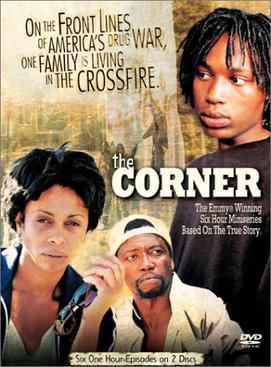
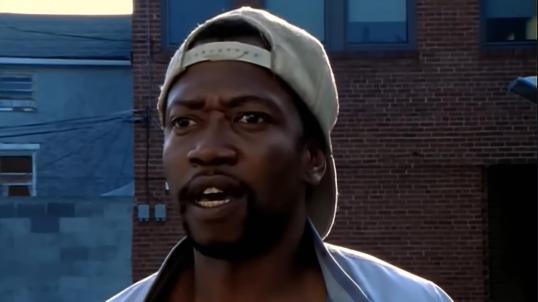
That said, if I had to pick Carter’s best performance, I would probably go with his work in the 2000 HBO miniseries, The Corner.  Based on a nonfiction book by David Simon, The Corner follows several characters over the course of one year in Baltimore.  Almost all of the characters are involved in the drug trade in some way or another.  DeAndre McCullough (Sean Nelson) is a fifteen year-old drug dealer who, despite his obvious intelligence, seems to be destined to become yet another statistic.  DeAndre’s parents are Fran (Khandi Alexander) and Gary (T.K. Carter).  At the start of the miniseries, both Fran and Gary are drug addicts and both of them make the effort to get clean.  Both have moments where their lives appear to be improving.  They both have moments where they relapse and have to start all over again.  Tragedy follows both of them.

The Corner is often described as being a forerunner to The Wire and indeed, there are definite similarities.  Like The Wire, The Corner was shot on location in Baltimore.  Like The Wire, The Corner emphasizes that futility of trying to wage a war on drugs.  As well, several members of The Corner‘s cast also appeared on The Wire.  Clarke Peters, Lance Reddick, Reg E. Cathey, Corey Parker Robinson, Delaney Williams, and Robert F. Chew are among the many Wire actors who appear in The Corner.  Interestingly enough, many of The Wire‘s cops and politicians appear as addicts in The Corner.  Clarke Peters and Reg E. Cathey play two long-time drug addicts who serve as a bit of a chorus for the neighborhood.  Lane Reddick appears as a recovering addict who tries to take advantage of Fran.

That said, The Corner doesn’t trust its audience in the same way that The Wire did.  That’s largely because The Corner was directed by Charles S. Dutton, who has never been a particularly subtle actor or director.  Dutton does a good job capturing the grit of Baltimore but he also includes “interviews” with various characters in which he asks questions while off-camera.  It feels a bit too on-the-nose, as if each episode of The Wire opened with a dramatic monologue from McNulty or Stringer Bell.  We don’t need the characters to look straight at the camera and tell us that things are bad.  We can see that for ourselves.

The entire cast does a good job but the best performance undoubtedly comes from T.K. Carter, who plays Gary as being an intelligent man, a good man, a hopeful man, but also a man who cannot escape his addiction.  With his gentle smile, his pleading eyes, and the almost shy way that he asks people to help him when he needs a fix, Carter gives a heart-breaking performance and one that shows that Gary truly is a prisoner of his addiction.  He doesn’t want to be an addict.  He wants to get clean.  But he also lives in a world where drugs are not only everywhere but they’re also the only escape that he and so many other people have from their oppressive existence.  With the government and the police treating the drug crisis as a war as opposed to a public health emergency, Gary’s two options really are either prison or the basement of his mother’s home.  The police view Gary as being nothing more than an criminal as opposed to someone with a sickness.  The dealers, meanwhile, view Gary as being a marketing opportunity.  T.K. Carter captures both Gary’s desperation and his sadness.  It’s a great performance and one that deserves to be remembered.  As played by T.K. Carter, Gary is the battered heart of The Corner.

T.K. Carter, RIP.