Retro Television Review: Homicide: Life On The Street 6.3 “Blood Ties, Part 3”


Welcome to Retro Television Reviews, a feature where we review some of our favorite and least favorite shows of the past!  On Sundays, I will be reviewing Homicide: Life On The Street, which aired from 1993 to 1999, on NBC!  It  can be viewed on Peacock.
This week, the Wilson case is finally resolved.

Episode 6.3 “Blood Ties, Part 3”

(Dir by Mark Pellington, originally aired on October 31st, 1997)

“Yo, Frank!” Detective Ballard yells at Pembleton at the start of this episode and I have to admit that I immediately cringed at the sound of it.  The man’s name is “Detective Pembleton.”  Ballard has done nothing so far to give her the right to address Homicide’s best character as “Yo, Frank!”

Of course, the main theme of this episode seemed to be all the detective who have been with the show since the beginning suck and that the new arrivals can do no wrong.

Take Falsone, for instance!  After a drug dealer is murdered, Falsone proves himself to be the only one who can talk to the dealer’s traumatized child.  Lewis is a buffoon in this episode, gloating over the dead dealer and traumatizing the kid while trying to lead him through the police station.  But Falsone?  He knows exactly what to say and, with his gentle prodding, the kid identifies the murderer of his parent as being a narcotics detective who is on the Mahoney payroll.   When Lewis asks Falsone why he’s so awesome, Falsone explains that he’s divorced and he misses his own kids….

OH MY GOD!  He’s a young detective who gets results and he’s divorced!  For a show that previously avoided stereotypes, Homicide is going out of his way to promote a big one in the form of Detective Falsone.

Meanwhile, the Wilson case is resolved.  It turns out that Ballard was totally correct and Pembleton was totally wrong.  Melia was killed by a member of the Wilson family and, to the surprise of absolutely no, the murderer turns out to be Hal Wilson (Jeffrey Wright, giving perhaps the worst performance of his distinguished career), the twitchy son of Felix.  Hal was obsessed with Melia and flew into a rage when he found out she was sleeping with his father.  Pembleton even gets Hal to admit it but –– Law & Order plot twist time! — Felix and Hal were only willing to talk to Pembleton on the condition that they weren’t Mirandized so the confession is inadmissible.  (That doesn’t seem like something that the normally meticulous Pembleton would agree to but whatever.)  Felix, Hal, and the entire family leave Baltimore for San Diego.

Afterwards, Ballard track Pembleton down and tells him that she’s going to be a Baltimore homicide detective whether he likes it or not.  Pembleton admits that he was wrong.  Watching the scene, one gets the feeling that the show is telling us, “Who needs Pembleton and Bayliss and all those boring cops when we’ve got new cop who are young and sexy and infallible?”

And here’s the thing.  There’s nothing wrong with bringing in new characters.  There’s nothing wrong casting attractive actors in those roles.  There is something wrong with pushing the characters to whom we’ve grown attached aside and insisting that we instead embrace new characters that we barely know.

This was a disappointing ending for the first three-parter of the series.  The season has just started and I’m already sick of Falsone trying to prove that the Luther Mahoney shooting wasn’t justified.  I’m sick of everyone talking about George Rae Mahoney as if she’s some total badass as opposed to a plot device.  And I’m tired of my favorites being pushed to the side.

We are not off to a good start.
Retro Television Review: Homicide: Life On The Street 6.1 “Blood Ties, Part One”


Welcome to Retro Television Reviews, a feature where we review some of our favorite and least favorite shows of the past!  On Sundays, I will be reviewing Homicide: Life On The Street, which aired from 1993 to 1999, on NBC!  It  can be viewed on Peacock.

This week, we start season 6.

Episode 6.1 “Blood Ties: Part 1”

(Dir by Alan Taylor, originally aired on October 17th, 1997)

It’s a new season of Homicide and, while Pembleton and Bayliss have been off working in the robbery division, some changes have occurred.  Sgt. Howard has left Homicide to work in another division.  Brodie’s documentary won an Emmy and he’s moved to Los Angeles.  Melissa Leo and Max Perlich are no longer a part of the cast.

Instead, we have three new detectives.  Gharty and Falsone (ugh!) are now full-time members of the squad.  Joining them is Laura Ballard (Callie Thorne), a recent transfer from Seattle.  When Pembleton and Bayliss return to Homicide, the first that they see is Ballard and Gharty being given a commendation for solving “the Rico case.”  Meanwhile, Falsone is walking around the squad room like he owns the place.  Giardello praises the new detectives and basically acts as if Pembelton and Bayliss are useless.

And listen, as much as I dislike Falsone and Jon Seda’s mumbling performance in the role, I do think that Peter Gerety is well-cast as Gharty.  And Callie Thorne seems like she’ll do a good job as Ballard, even if this episode does spend a bit too much time trying to convince us that she’s the greatest detective since Frank Pembleton.  But, when it comes to Homicide, I want to follow detectives like Munch, Lewis, Pembleton, and Bayliss.  I want to watch as Kellerman battles his demons and Giardello battles his superiors.  My point is that I don’t care about these new people.  I don’t care that Ballard is a hotshot detective.  I don’t care that Gharty is a blue-collar guy who is looking to prove himself.  I can’t stand Falsone.  I don’t want any of these people to be the new lead characters on the show.  I want Melissa Leo with her weird accent.  What are we even doing here, Homicide?

This episode, however, seemed to be determined to force the new characters on me.  For instance, Georgia Mahoney (Hazel Goodman) is in town, looking to get revenge for the death of her brother Luther.  She’s got people shooting at Lewis, Kellerman, and Terri Stivers.  Needless to see, Lewis and Kellerman get involved in tracking down and arresting not only Georgia but also Junior Bunk (Mekhi Phifer), Luther’s incompetent nephew.  However, Falsone gets involved too.  This means that we have to sit through an entire scene of Falsone attempting to interrogate Kellerman about the Mahoney shooting and the inconsistencies in the statements given by Lewis, Stivers, and Kellerman..  Hey, Falsone — YOU’RE THE NEW GUY!  WE LIKE KELLERMAN!  LEAVE HIM ALONE, YOU MUMBLING DOUCHEBAG!

Meanwhile, at a banquet honoring distinguished businessman and civil right activist Felix Wilson (James Earl Jones), a young Haitian woman is found beaten to death in the men’s room.  Her name is Melia and she worked for the Wilsons.  Now, in this case, Pembleton and Bayliss are the primaries but Ballard and Gharty still come along to provide support and soon, Ballard and Pembleton are arguing about the best way to handle the investigation.  Ballard thinks that Pembleton is going easy on Felix Wilson because of Wilson’s standing in the black community.  Pembleton thinks that Ballard should remember who the primary investigator is.  And myself, I’m wondering why Pembleton and Ballard are having the type of conversations that Pembleton used to have with Bayliss.  Whenever Pembleton and Bayliss debate prejudice, it works because we know who Pembleton is and we know how Bayliss is.  We don’t know enough about Ballard for her debate with Pembleton to really mean anything.

Apparently, Homicide was nearly cancelled after the end of season 5.  When it was renewed, it was done on the condition that had to improve its rating and win its time slot.  This episode feature a lot of action.  A man on a motorcycle fires at Falsone and Lewis.  A sniper hits Kellerman in the arm.  The cops stop Georgia’s private plane from taking off and arrest her.  Visually, this episode is brightly lit and there’s none of the odd camera angles that dominated the previous few seasons.  Comparing this episode to the episodes that came before it creates a tonal whiplash that can only be compared to going from the Steve Carell-led Office to the Ed Helms version.  It’s not necessarily bad but it just doesn’t feel right.

This episode ends with Georgia in jail and Pembleton still investigating the death of Melia.  Season 6 is off to a start and I’m not really happy about how it’s going so far but we’ll see what happens.

Miniseries Review: The Corner (dir by Charles S. Dutton)


Actor T.K. Carter died on January 9th.  He was 69 years old and his passing really didn’t get the notice that he deserved.

T.K. Carter may not have been a household name but I imagine that most people would recognize him if they saw him.  He appeared on a lot of television shows.  He did his share of movies.  He was usually cast in comedic roles, often playing the best friend who would inevitably provide some sort of gentle commentary on the problems of his friends or coworkers.  I just recently finished reviewing Good Morning, Miss Bliss, which featured Carter as Milo.  I’m not really sure what Milo did at John F. Kennedy Junior High but he was certainly more likable than Miss Bliss.

Carter appeared in some films as well.  Ironically, his two best-known films were not comedic at all.  He plays Nauls in John Carpenter’s The Thinga film that pretty much ends with Kurt Russell and Keith David freezing to death while wondering whether or not one of them is actually a killer alien.  And he also played Cribbs, a pot-smoking member of the National Guard who finds himself lost in the Louisiana bayou in Walter Hill’s Southern Comfort.  I have to admit that, after having watched both of those films more than once, it was a bit strange to see Carter exchanging jokes with Hayley Mills and Dennis Haskins on Good Morning Miss Bliss.

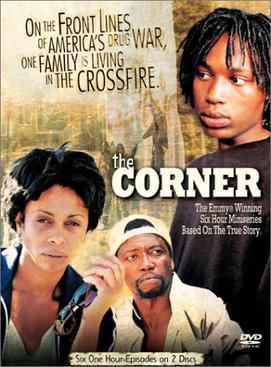
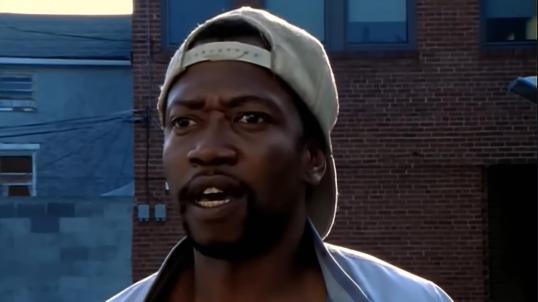
That said, if I had to pick Carter’s best performance, I would probably go with his work in the 2000 HBO miniseries, The Corner.  Based on a nonfiction book by David Simon, The Corner follows several characters over the course of one year in Baltimore.  Almost all of the characters are involved in the drug trade in some way or another.  DeAndre McCullough (Sean Nelson) is a fifteen year-old drug dealer who, despite his obvious intelligence, seems to be destined to become yet another statistic.  DeAndre’s parents are Fran (Khandi Alexander) and Gary (T.K. Carter).  At the start of the miniseries, both Fran and Gary are drug addicts and both of them make the effort to get clean.  Both have moments where their lives appear to be improving.  They both have moments where they relapse and have to start all over again.  Tragedy follows both of them.

The Corner is often described as being a forerunner to The Wire and indeed, there are definite similarities.  Like The Wire, The Corner was shot on location in Baltimore.  Like The Wire, The Corner emphasizes that futility of trying to wage a war on drugs.  As well, several members of The Corner‘s cast also appeared on The Wire.  Clarke Peters, Lance Reddick, Reg E. Cathey, Corey Parker Robinson, Delaney Williams, and Robert F. Chew are among the many Wire actors who appear in The Corner.  Interestingly enough, many of The Wire‘s cops and politicians appear as addicts in The Corner.  Clarke Peters and Reg E. Cathey play two long-time drug addicts who serve as a bit of a chorus for the neighborhood.  Lane Reddick appears as a recovering addict who tries to take advantage of Fran.

That said, The Corner doesn’t trust its audience in the same way that The Wire did.  That’s largely because The Corner was directed by Charles S. Dutton, who has never been a particularly subtle actor or director.  Dutton does a good job capturing the grit of Baltimore but he also includes “interviews” with various characters in which he asks questions while off-camera.  It feels a bit too on-the-nose, as if each episode of The Wire opened with a dramatic monologue from McNulty or Stringer Bell.  We don’t need the characters to look straight at the camera and tell us that things are bad.  We can see that for ourselves.

The entire cast does a good job but the best performance undoubtedly comes from T.K. Carter, who plays Gary as being an intelligent man, a good man, a hopeful man, but also a man who cannot escape his addiction.  With his gentle smile, his pleading eyes, and the almost shy way that he asks people to help him when he needs a fix, Carter gives a heart-breaking performance and one that shows that Gary truly is a prisoner of his addiction.  He doesn’t want to be an addict.  He wants to get clean.  But he also lives in a world where drugs are not only everywhere but they’re also the only escape that he and so many other people have from their oppressive existence.  With the government and the police treating the drug crisis as a war as opposed to a public health emergency, Gary’s two options really are either prison or the basement of his mother’s home.  The police view Gary as being nothing more than an criminal as opposed to someone with a sickness.  The dealers, meanwhile, view Gary as being a marketing opportunity.  T.K. Carter captures both Gary’s desperation and his sadness.  It’s a great performance and one that deserves to be remembered.  As played by T.K. Carter, Gary is the battered heart of The Corner.

T.K. Carter, RIP.