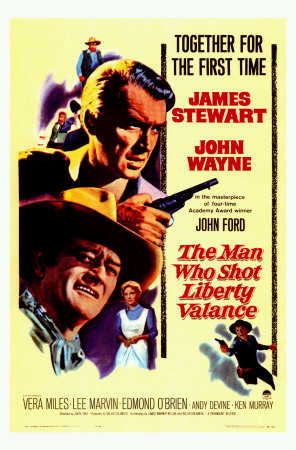
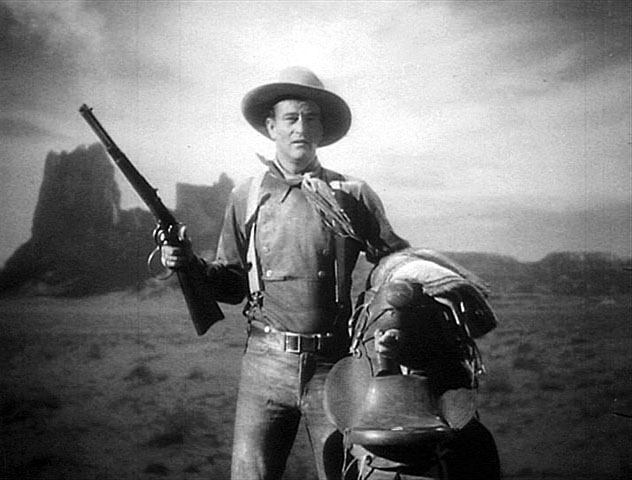
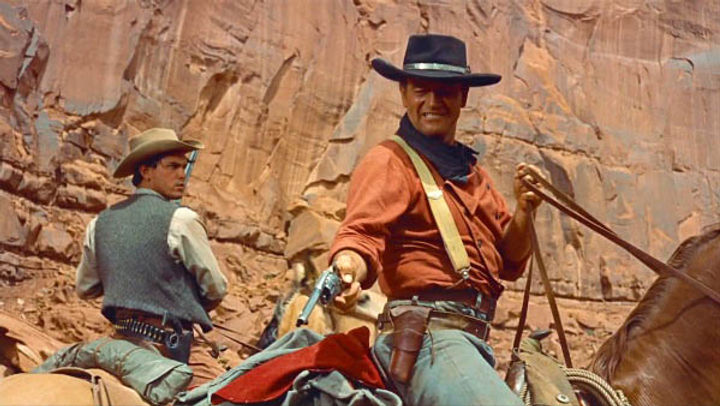
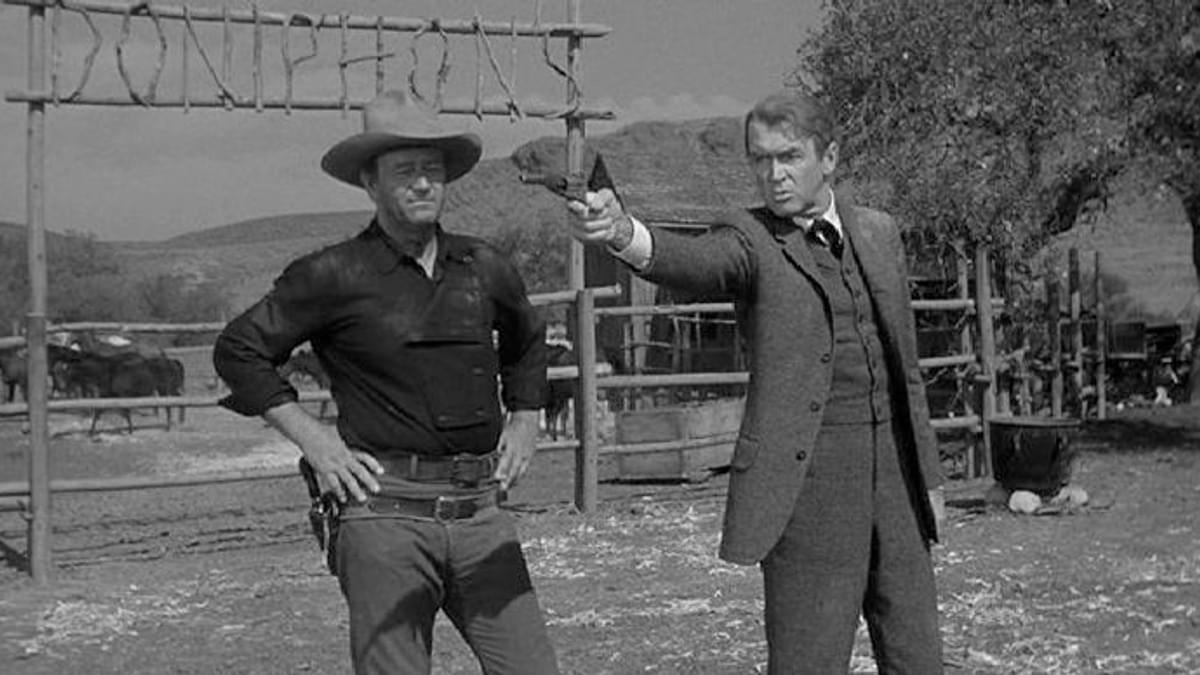
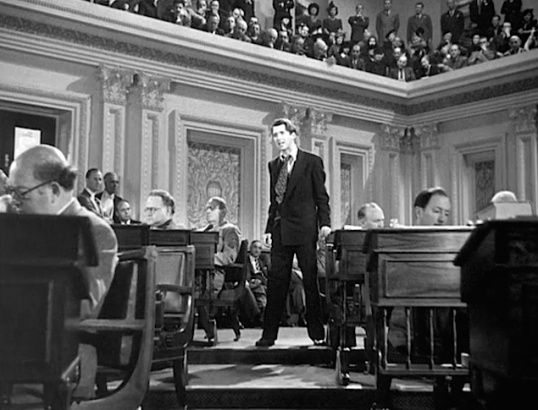
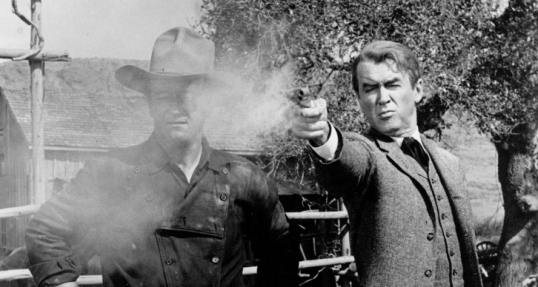
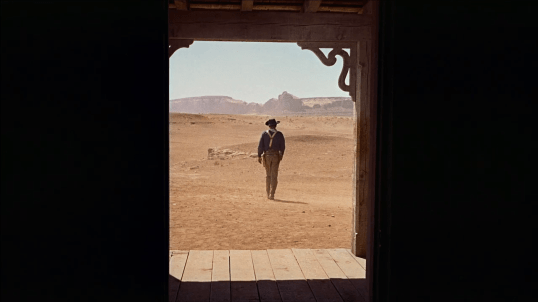
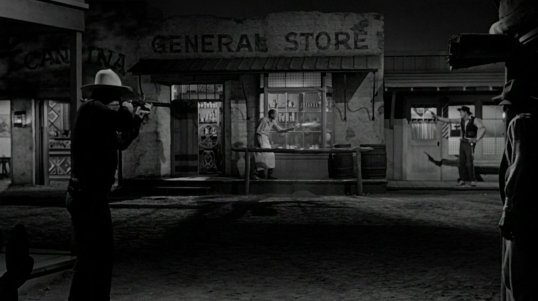
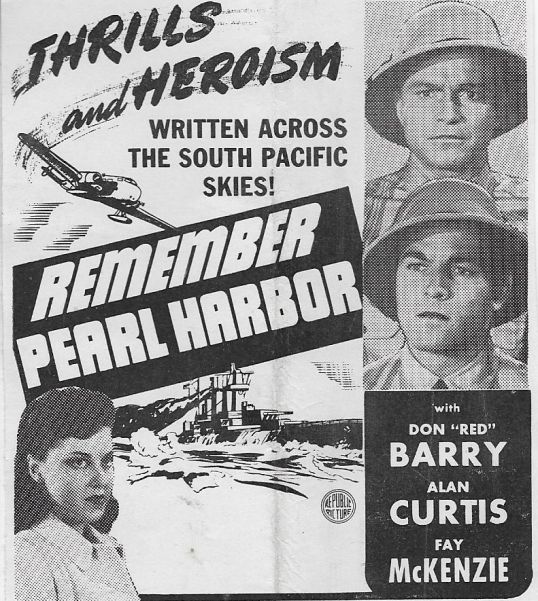
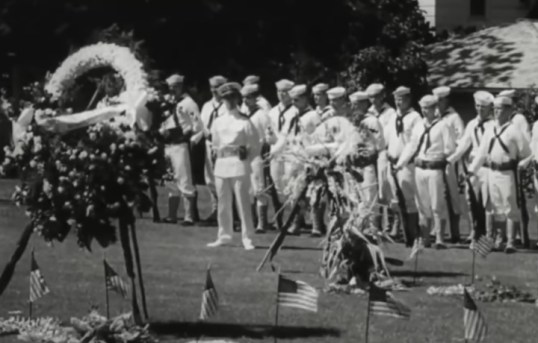
In 1962’s The Man Who Shot Liberty Valance,frontier lawyer Ransom Stoddard (James Stewart) comes to political prominence due to his notoriety for being the man who, in self-defense, gunned down notorious outlaw Liberty Valance (Lee Marvin). Stoddard, an intellectual who opposes violence, is not happy about this. When Stoddard considers refusing to be a delegate to the upcoming statehood convention, he is reprimanded by Tom Doniphon (John Wayne). Stoddard and Doniphon are friends but they’re also romantic rivals, both being in love with Hallie (Vera Miles). In this scene, Doniphon reveals the truth about who shot Liberty Valance.
“Our job is to lay down that sacrifice. That’s what we were trained for, and that’s what we’ll do.” — Admiral Blackwell
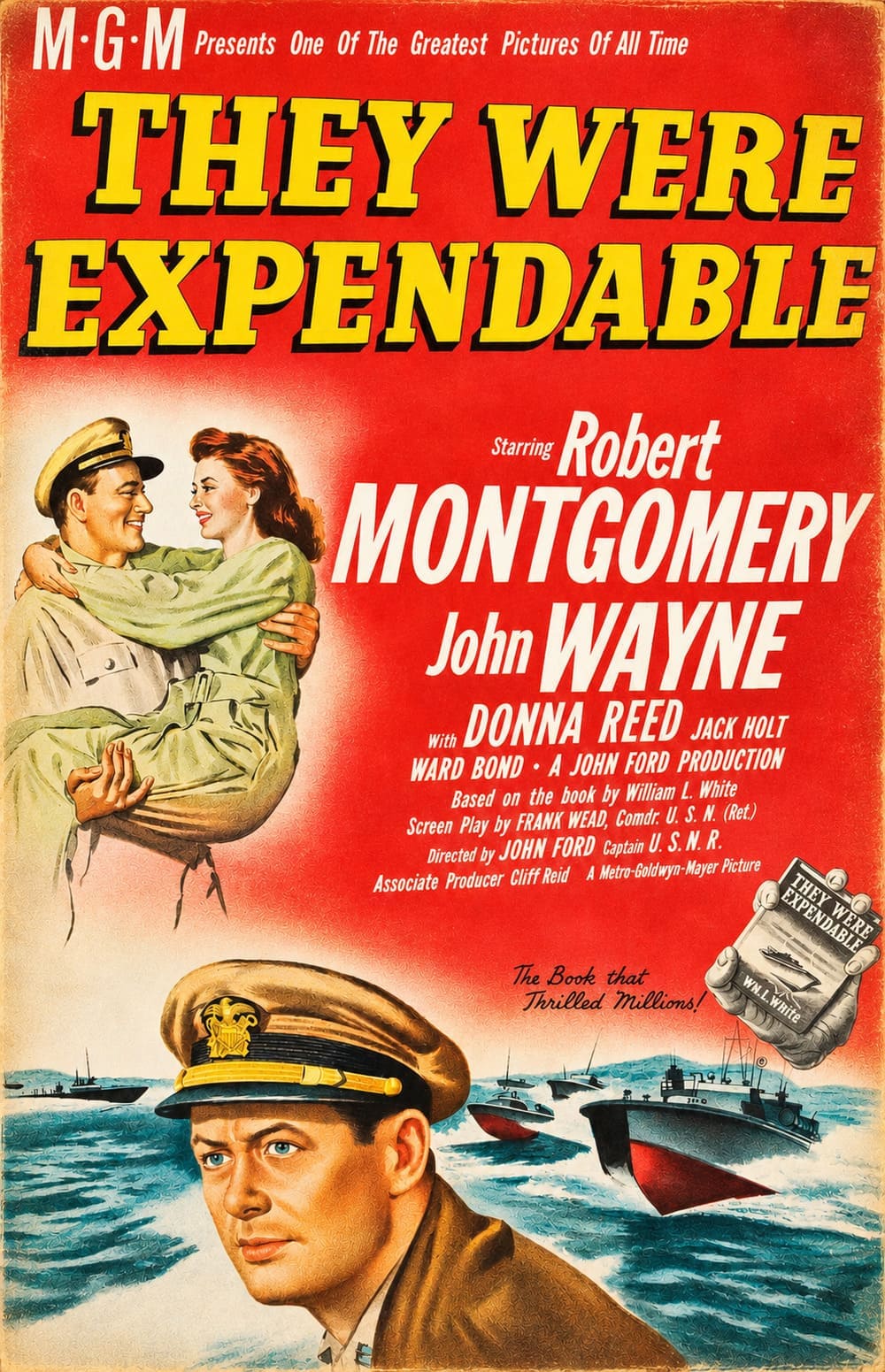
For a movie full of fast boats and urgent orders, They Were Expendable (1945) leaves a surprisingly quiet impression. The battles are exciting, but they are not what gives John Ford’s film its staying power. What lingers is the exhaustion between them, the effort to maintain ordinary manners, and the uncomfortable knowledge that capable people can do their jobs well and still lose ground. Ford makes room for all of that without draining the movie of energy. Instead, he turns a wartime adventure into something more personal: a story about people trying to hold themselves together as their circumstances steadily come apart.
The setting is the Philippines during the early months of America’s involvement in World War II. Lieutenant John “Brick” Brickley, played by Robert Montgomery, commands a patrol torpedo boat squadron whose usefulness has yet to be fully appreciated. His subordinate, Lieutenant “Rusty” Ryan, played by John Wayne, would prefer an assignment with better prospects. Their disagreement gives the opening stretch an easy dramatic hook. Brickley believes in the work already in front of them, while Ryan wants a chance to prove himself elsewhere. Once the fighting begins, those ambitions become tangled with more immediate questions of survival.
Montgomery gives the film a remarkably steady center. Brickley is authoritative without constantly announcing his authority, and Montgomery makes listening seem as important as giving orders. His calm never suggests that he knows everything will turn out fine. It feels like something he maintains because the men around him need it. As the situation worsens, small changes in his manner carry increasing weight. He has to absorb disappointment and then decide how to communicate it. That makes his leadership feel practical and human rather than an idealized quality the screenplay simply assigns him.
Wayne supplies the friction that keeps that steadiness from becoming monotonous. Ryan is impatient, proud, and eager to be somewhere his abilities will count. His frustration is understandable, but Ford does not automatically endorse it. Part of the pleasure is watching Wayne’s forceful screen presence meet circumstances that refuse to yield. Ryan cannot solve every problem by being tougher or more determined. The role gives Wayne room to suggest uncertainty beneath his confidence, especially when action gives way to waiting. He remains recognizably Wayne, but the movie makes that familiar strength look less secure.
Ford’s wartime experience provides an important context for this view of military life. A Navy officer who headed the Field Photographic Branch of the Office of Strategic Services, or OSS, he had also personally filmed combat at Midway while his position came under fire. He knew warfare as something witnessed through a camera under dangerous, uncontrollable conditions. That does not make every choice in They Were Expendable a direct reflection of his service, but it helps explain the film’s attention to exposure, confusion, and the disciplined behavior required to function when events stop making reassuring sense.
You can see that awareness in how Ford and cinematographer Joseph H. August place people within their surroundings. The boats, shorelines, open water, and crews remain important parts of the compositions. The stars belong to those spaces rather than seeming protected from them. Although the images are carefully arranged, they convey a convincing relationship between the men and the hazards around them. To my eye, Ford’s experience photographing real combat shows less in an imitation of documentary camerawork than in his respect for physical circumstances. Where someone stands, what protection exists, and how a group works together all matter.
The PT boats are a good example. Their speed makes them exciting to watch, but their size also makes them look vulnerable. Ford lets you admire their movement without suggesting they can outrun every consequence. The action has momentum because the boats seem capable, not invincible. Just as importantly, he connects their missions to the labor surrounding them. Preparation, waiting, medical treatment, and keeping equipment usable are not disposable scenes between the exciting bits. They establish how much effort goes into making action possible and how much more work follows when it is over.
Donna Reed’s Sandy Davyss, a nurse who develops a connection with Ryan, brings a different rhythm to the film. Their relationship offers a glimpse of companionship rather than a promise that romance can overcome the war. The dinner sequence is particularly touching because its pleasures are so modest. People make an effort, observe little courtesies, and try to enjoy an evening together. Ford gives those gestures time to register. Reed’s warmth helps the scene avoid feeling merely symbolic, while Wayne’s softer manner reveals a side of Ryan that his professional frustrations tend to conceal.
That interest in ordinary behavior extends across the squadron. Meals, jokes, instructions, and small acts of consideration make the men feel like people accustomed to living together. Ford understands that a community becomes convincing through shared habits, not just declarations of loyalty. As their situation deteriorates, those details acquire emotional weight. We know something about the life being disrupted. The film’s sadness grows from that familiarity, which is more effective than repeatedly telling us how much everyone has sacrificed.
The approach occasionally tests your patience. The episodic structure can feel loose, and a few sentimental touches seem more arranged than the quieter moments around them. Anyone expecting a tightly accelerating combat movie may find the pacing uneven. Still, most of the pauses earn their place. They allow fatigue to become visible and give the characters time to exist beyond their immediate military function. Tightening everything into a brisker adventure might improve the momentum while weakening the attachment that makes its losses matter.
What finally makes They Were Expendable so affecting is the way it changes the scale of a war movie. Large events determine the characters’ futures, but Ford keeps bringing us back to things within their reach: a job completed, a meal shared, a difficult order carried out. Montgomery, Wayne, and Reed give those moments enough feeling that the restraint never becomes cold. The film offers excitement, but its deeper achievement is making ordinary conduct under pressure worth watching. Ford leaves us with people whose circumstances grow smaller while the significance of their actions grows larger.
4 Shots From 4 Films is just what it says it is, 4 shots from 4 of our favorite films. As opposed to the reviews and recaps that we usually post, 4 Shots From 4 Films is all about letting the visuals do the talking.
These 4 Shots From 4 Films are dedicated to the memory of the great Maureen O’Hara.
4 Shots From 4 Maureen O’Hara Films
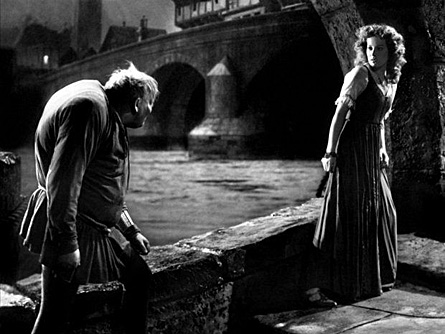
The Hunchback of Notre Dame (1939, dir by William Dieterle)
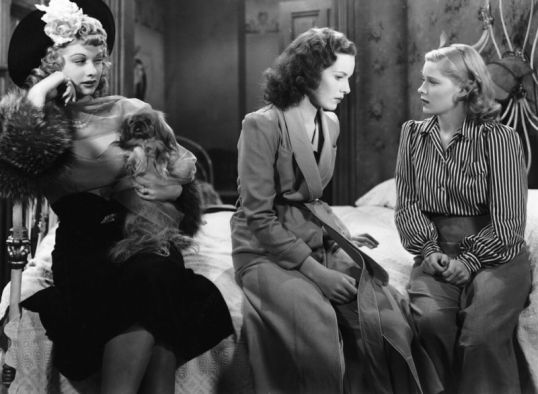
Dance, Girl. Dance (1940, dir by Dorothy Arzner)
Miracle on the 34th Street (1947, dir by George Seaton)
Since today is the 119th anniversary of the birth of John Wayne, it only seems right that today’s scene should come from the 1962 classic, The Man Who Shot Liberty Valance!
The famous steak scene features three of the greatest screen icons of Hollywood’s golden age: James Stewart, John Wayne, and Lee Marvin. Lee Marvin is the bully who is terrorizing the entire town. James Stewart is the idealist who thinks that the law, and not violence, is the answer. And John Wayne is …. well, he’s John Wayne. He’s the only man in town who can stand up to Lee Marvin but, at the same time, he’s also aware that his time is coming to a close. In the scene below, all three of the characters display their different approaches to life and a disagreement with steak nearly leads to violence.
This scene — and really, the entire film — features these three actors at their best. John Wayne is an actor who is often described as having “just played himself” but that’s really not quite fair. While Wayne’s outsized persona definitely does influence how the audience reacts to any character that he plays, he was a better actor than he’s often given credit for being. That’s especially evident in The Man Who Shot Liberty Valance, in which Wayne plays a confident man’s man who knows that fate is closing in on him. The coming of civilization (represented by James Stewart) will be great for the town of Shinbone but it will also leave men like Wayne’s Ton Doniphon with nowhere to go. The coming of civilization means that the heroes of the past are destined to become obsolete.
Enjoy this scene from The Man Who Shot Liberty Valance:
4 Shots From 4 Films is just what it says it is, 4 shots from 4 of our favorite films. As opposed to the reviews and recaps that we usually post, 4 Shots From 4 Films lets the visuals do the talking!
John Wayne’s birthday is just a few days away! Here’s 4 shots from the Duke’s unforgettable career.
4 Shots From 4 Films
Stagecoach (1939, directed by John Ford)
Sands of Iwo Jima (1949, directed by Allan Dwan)
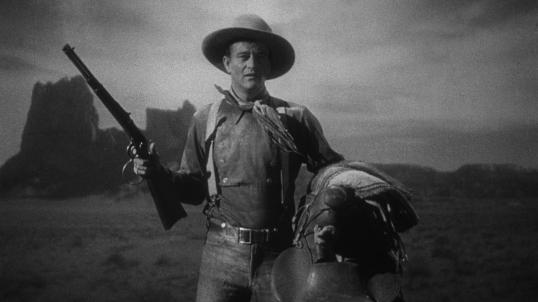
The Searchers (1956, directed by John Ford)
The Man Who Shot Liberty Valance (1962, directed by John Ford)
4 Shots From 4 Films is just what it says it is, 4 shots from 4 of our favorite films. As opposed to the reviews and recaps that we usually post, 4 Shots From 4 Films lets the visuals do the talking!
Today, we celebrate the birthday of one of the greatest American actors of all time, the wonderful James Stewart! It’s time for….
4 Shots From 4 James Stewart Films
Mr. Smith Goes To Washington (1939, dir by Frank Capra, DP: Joseph Walker)
It’s A Wonderful Life (1946, dir by Frank Capra, DP: Joseph Walker and Joseph Biroc)
Rear Window (1954, dir by Alfred Hitchcock, DP: Robert Burks)
The Man Who Shot Liberty Valance (1962, dir by John Ford. DP: William H. Clothier)
4 (or more) Shots From 4 (or more) Films is just what it says it is, 4 (or more) shots from 4 (or more) of our favorite films. As opposed to the reviews and recaps that we usually post, 4 (or more) Shots From 4 (or more) Films lets the visuals do the talking.
John Ford was born 132 years ago today, in Maine. Seeing as how John Ford is one of the most influential and important directors of all time, it was pretty much guaranteed that we were going to share a few shots from his filmography on the Shattered Lens.
In honor of John Ford, here are….
6 Shots From 6 Films: Special John Ford Edition
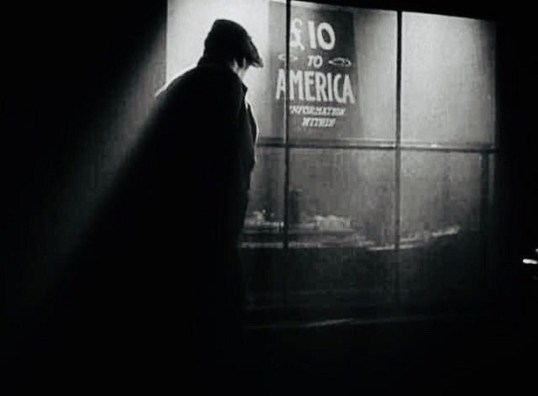
The Informer (1935, dir by John Ford, DP: Joseph August)
Stagecoach (1939, dir by John Ford, DP: Bert Glennon)
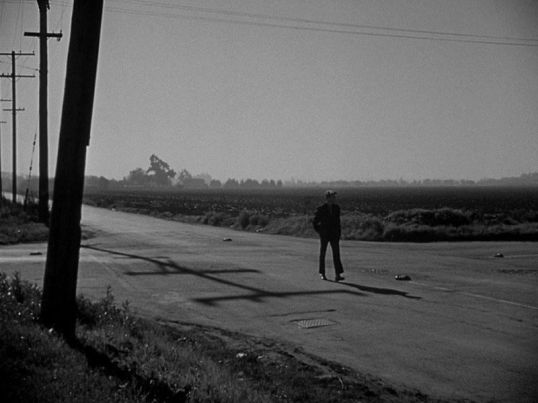
The Grapes of Wrath (1940, dir by John Ford. DP: Gregg Toland)
My Darling Clementine (1946, dir by John Ford, DP: Joseph MacDonald)
The Searchers (1956, dir by John Ford, DP: Winston C. Hoch)
The Man Who Shot Liberty Valance (1962, dir by John Ford. DP: William H. Clothier)
The legendary director John Ford was born 132 years ago today, in Maine of all places. He may have been born in New England but few directors have done a better job of capturing, on film, the forces that shaped America.
He also directed one of my favorite films, The Man Who Shot Liberty Valance. Today’s scene that I love comes from the end of that 1962 film and it features a line that would become a classic. “Print the legend.” That was a line that Ford clearly understood and I imagine it’s one that all great filmmakers eventually come to appreciate.
4 Or More Shots From 4 Or More Films is just what it says it is, 4 shots from 4 of our favorite films. As opposed to the reviews and recaps that we usually post, 4 Shots From 4 Films lets the visuals do the talking!
Visiting Pearl Harbor and seeing the remains of the Arizona, still trapped underwater and serving as a tomb for many of its crew, was one of the most moving experiences of my life. It’s not something that you’ll ever forget. You really don’t understand the full tragedy of Pearl Harbor until you visit for yourself. There have been several films made about Pearl Harbor, some better than others. Here are shots from four of them.
4 Shots From 4 Films: Remembering Pearl Harbor
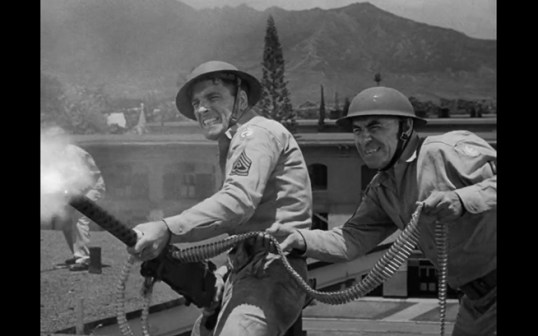
December 7th (1943, Dir. by John Ford)
From Here To Eternity (1953, Dir. by Fred Zinnemann)
Tora! Tora! Tora! (1970, Dir. by Richard Fleischer)
4 Shots From 4 Films is just what it says it is, 4 shots from 4 of our favorite films. As opposed to the reviews and recaps that we usually post, 4 Shots From 4 Films is all about letting the visuals do the talking.
These 4 Shots From 4 Films are dedicated to the memory of the great Maureen O’Hara.
4 Shots From 4 Maureen O’Hara Films
The Hunchback of Notre Dame (1939, dir by William Dieterle)
Dance, Girl. Dance (1940, dir by Dorothy Arzner)
Miracle on the 34th Street (1947, dir by George Seaton)