Review: Rollercoaster (dir. by James Goldstone)


“If they pay me and if they do what I say, I’ll never bother them again.” — Young Man

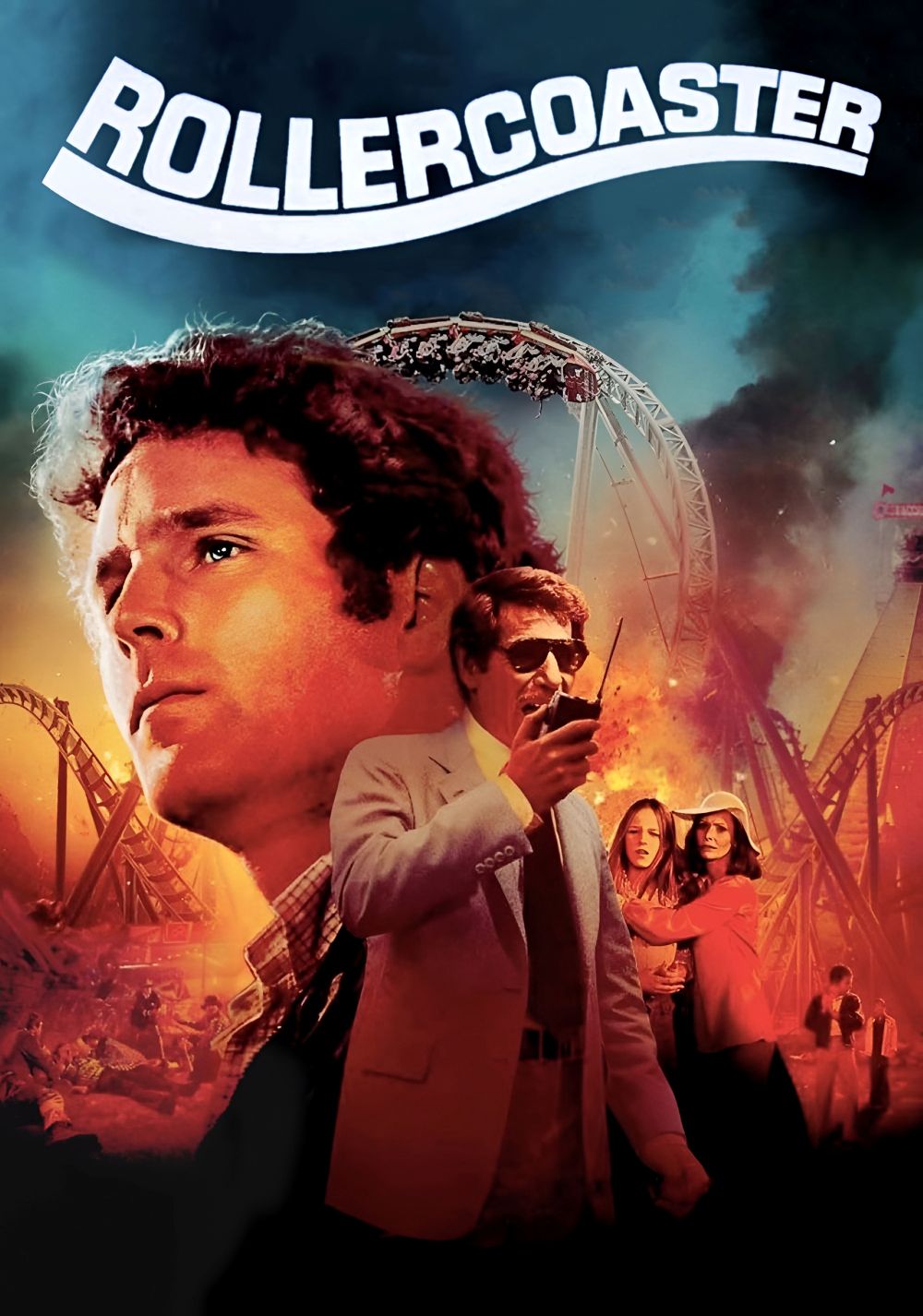
James Goldstone’s 1977 film Rollercoaster exists in a fascinating, albeit deeply flawed, space within the history of seventies disaster cinema. If you are a fan of retro 70s movies, specifically the whole Sensurround era where Hollywood was desperately trying to get people out of their living rooms and into theaters with seat-rumbling audio gimmicks, you have probably heard of this one. It has a genuinely neat, gritty vibe because it was actually shot on location at real amusement parks like Kings Island and Magic Mountain. You get this awesome, vintage, mid-century theme park atmosphere that you just cannot fake on a studio backlot. You can almost smell the cotton candy, the hot asphalt, and the stale beer. But once that initial wave of nostalgia wears off, you are left looking at what is actually on the screen, and honestly, Rollercoaster is not a great film. In fact, one could very easily say it is not even a good film. At its absolute best of times, it is a thoroughly average, middle-of-the-road thriller that feels more like a slightly elevated, padded-out television movie of the week than a major theatrical release.

The plot is about as standard as it gets for this era of disaster-adjacent cinema. A mysterious, young terrorist starts blowing up rollercoasters, not for any grand political manifesto, but simply to extort amusement park owners for millions of dollars. Enter our protagonist, Harry Calder, played by George Segal, who is a cynical safety inspector that just happens to survive the first derailment. Segal is basically just playing George Segal here—exasperated, a bit snarky, wearing a rumpled suit, and teaming up with an FBI agent played by Richard Widmark. The villain is played by a very young Timothy Bottoms, who is effectively creepy but given virtually zero backstory or motivation. He is just a blank-eyed psycho doing psycho things because the script needs an antagonist. The movie essentially just bounces from one park to another, with Segal walking around looking stressed while the FBI tries to figure out where the next bomb is hidden.

The pacing is arguably the film’s biggest sin. For a movie literally named Rollercoaster, it is shockingly lacking in momentum. Goldstone’s direction completely lacks the tight, pulse-pounding beats you would expect from a high-stakes thriller. There is so much filler here, so many scenes of Segal drinking coffee and staring at blueprints, and so much tedious FBI bureaucratic nonsense that it completely kills any tension. The romantic subplot feels entirely tacked on, and the climax fails to deliver the massive, explosive payoff you have been waiting for. If you judge Rollercoaster purely on its cinematic merits—the acting, the script, the direction—it is undeniably average, the kind of movie you leave on in the background while you fold laundry.

However, despite all of these glaring, undeniable flaws, Rollercoaster has a fascinating, almost prophetic legacy when you look back at the history of the thriller genre. It may not be remembered as a great movie, but it essentially built the exact template for an entire subgenre of cat-and-mouse thrillers that dominated the 90s. It practically invented the “specific-professional-against-a-psychopathic-mastermind” formula. Before Rollercoaster, thrillers were usually about spies, cops, or generic everymen. But this film introduced the idea of a highly specific, niche expert being forced into a one-on-one intellectual duel with a terrorist who targets them specifically because of their expertise. Think about how that exact template was endlessly copied and refined in the decades that followed. Look at In the Line of Fire, where Clint Eastwood plays a Secret Service agent hunted by a psycho played by John Malkovich. Or look at Blown Away, where Jeff Bridges is a bomb-defusing expert tormented by an Irish terrorist played by Tommy Lee Jones. Even The Bone Collector fits this mold perfectly, with Denzel Washington’s bedridden forensics expert being targeted by a serial killer who uses specific crime scenes just to test Washington’s intellect. All of these films drew direct DNA from Rollercoaster, using that exact same dynamic of a reluctant protagonist with a very particular set of skills being singled out by a psychopath who treats mass murder like a twisted, personalized game of chess. And if you want the absolute pinnacle of the “expert vs. bomb” trope, you have to look at Speed, which polished the cat-and-mouse dynamic perfected right here in Rollercoaster.

Because the original film was so hampered by 1970s filmmaking technology, it really makes you realize how easily this movie could be remade in this day and age. Back then, the actual destruction of the rides was limited by practical effects, clunky models, and standard camera angles that made the crashes feel somewhat static and safe. Today, technology in filmmaking has advanced to the point that the sheer scale, speed, and physical danger of the rides themselves really does become the focus of real danger. With modern CGI, drone cameras, and advanced practical rigging, you could put the audience right inside the front car of a 300-foot hyper-coaster as the tracks buckle and twist in slow motion. You could make the metal fatigue, the snapping cables, and the horrific physics of a derailment feel genuinely terrifying, turning the amusement park rides into massive, mechanical monsters rather than just static backdrop props for guys in suits to talk around.

Naturally, if Hollywood were to actually remake Rollercoaster today, you know exactly how it would look and who would star in it. It would undoubtedly star someone like Dwayne Johnson or Chris Pratt, a guy who can deliver a quip while looking concerned and holding a blueprint. They would inevitably give the safety inspector a tragic backstory, probably a dead wife or a kid they are estranged from, just to artificially raise the emotional stakes. And because it is a high-concept thriller that does not quite have the cultural weight of a massive comic book franchise, the remake would almost certainly be relegated to a streaming release. It would drop on a Friday on Netflix or Amazon Prime with a generic, algorithmically tested poster and a slick, forgettable title. It would be exactly the kind of mid-budget, mildly entertaining action flick you watch on a rainy Sunday afternoon before completely forgetting about it by Monday morning.

So, ultimately, how do you rate a movie like Rollercoaster? You just have to accept its extreme averageness and respect its ripple effect. It is clunky, the performances are uneven, and it is rarely as thrilling as its title promises. But it absolutely should not be written off entirely. It was the exact moment Hollywood realized that pitting highly specialized professionals against high-concept villains made for compelling, relatable drama. Without George Segal boredly walking around Magic Mountain, we probably do not get the overly dramatic, incredibly ridiculous, yet thoroughly entertaining 90s thriller boom, nor the slick, CGI-heavy streaming thrillers of today. Rollercoaster might just be a mediocre hill, but it is undeniably the hill that started the entire ride.
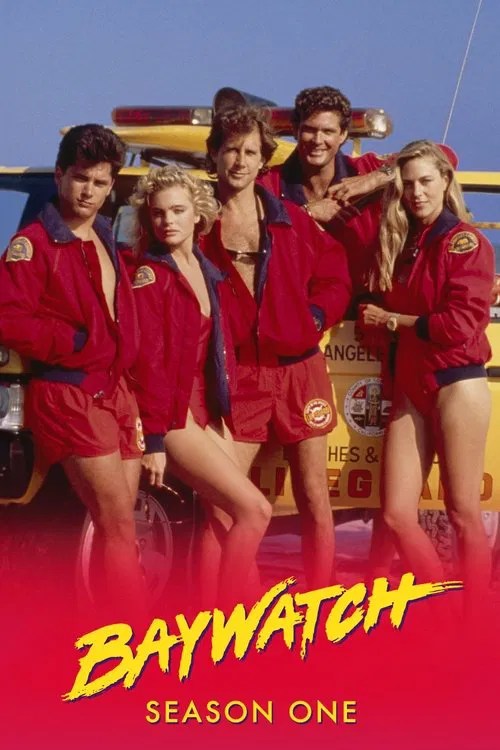
Retro Television Review: Baywatch 1.7 “The Cretin of the Shallows”


Welcome to Retro Television Reviews, a feature where we review some of our favorite and least favorite shows of the past!  On Saturdays, I will be reviewing Baywatch, which ran on NBC and then in syndication from 1989 to 2001.  The entire show can be viewed on Tubi.

This week, there’s a lot happening on the beach!

Baywatch 1.7 “The Cretin of the Shallows”

(Dir by Vern Gillum, originally aired on December 1st, 1989)

Eddie gets his wisdom teeth taken out.  Feverish and on pain-killers, he has a hallucination in which Gina Pomeroy (Holly Gagnier) kisses him.  Eddie spends the entire episode nervous that Craig is going to discover that he’s having an affair with his wife but actually, Eddie isn’t having an affair.  It’s not until the end of the episode that Gina tells Eddie that they never kissed and Eddie finally starts to relax.  Gina promises not to tell Craig because “I think it’s sweet.”  Myself, I’m just curious as to how stupid Eddie actually is.

Shauni and Jill deal with a teenage boy who has made a bet with his friends that he’ll be able to get a kiss from both of them.

And a horrifying serial killer (Robert Trebor) is stalking the night, brutally murdering people on the beach.

One of these storylines is not like the other!

The first season of Baywatch was seriously weird.  Light-hearted lifeguard hi-jinx would be mixed in with scenes of people being murdered.  Mitch and Craig weren’t just lifeguards.  They were also cops who solved mysteries (Kind of like Baywatch Nights!) and they put their lives at risk to do so.  Remember how I mentioned that Gina told Eddie that they never kissed?  She told him that after she had been rescued from the serial killer.  Gina nearly died!  Neither Gina nor Craig seemed to be too upset about that, though.  I would be a little bit traumatized but that’s just me.

This episode really didn’t work for me.  Personally, I like the light-hearted stuff.  It’s dumb but, at heart, Baywatch’s appeal is that it’s a dumb show with nice scenery.  Tossing a serial killer into the mix just made things unpleasant.  It didn’t feel like it belonged on a show about people running on the beach in red bathing suits.

This is my last Baywatch review of 2025.  Retro Television Reviews will be taking a break for the holidays so that I can focus on Awards Season and Christmas movies!  Baywatch will return on January 10, 2026.

Madhouse (1990, directed by Tom Ropelewski)


Mark (John Larroquette) and Jessa Bannister (Kirstie Alley) have a perfect yuppie lifestyle going until their respective family members show up at their California home and refuse to leave.  First, it’s Mark cousin (John Diehl) and his wife (Jessica Lundy).  Then it’s Jessa’s sister, Claudia (Alison LaPlaca), who has just left her husband and now has to find a new man to support her lifestyle.  Mark and Jessa just want some time alone but instead, they have to deal with a cat who is frequently mistaken for dead, broken marriages, a shipment of cocaine, and a neighbor (Robert Ginty) who builds weird bed frames.  Mark has a big contract to land and Jessa is trying to succeed as a television news reporter but it’s not easy when you’re living in a madhouse.

There are some films that you just like despite yourself and that’s the way I feel about Madhouse.  It’s very much an 80s film, with its emphasis on material goods and achieving the perfect lifestyle.  (The appearance of Dennis Miller as Mark’s co-worker only reminds us of just how much a product of its era that Madhouse is.)  There are a lot of jokes that don’t work and some, like the cat that is continually mistaken for dead, that shouldn’t work but do.  It’s a sitcom transferred to the movies and the humor rarely rises above that level.  It ever stars two of the decade’s biggest sitcom stars, John Larroquette and Kirstie Alley.  Larroquette shows us why he was better suited for television while Alley shows how tragic it was that she didn’t have a bigger film career.  Kirstie Alley gives such a dedicated and fearless performance as someone who has been driven to the end of her rope that it keeps you interested in the film.  Alley, like the great comedic actresses of Hollywood’s golden age, was an actress who could mix physical comedy with barbed one-liners and who was undeniably appealing as she moved from one disaster to the next.  In Madhouse, she was beautiful, frantic, sexy, neurotic, relatable, and funny all at the same time.  By the end of this movie, you really do wish she had gotten more and better opportunities to show off her talents in the years after Cheers went off the air.

Madhouse is nothing special.  It’s a generic comedy about unwanted family guests.  But I’ll always appreciate it for Kirstie Alley.

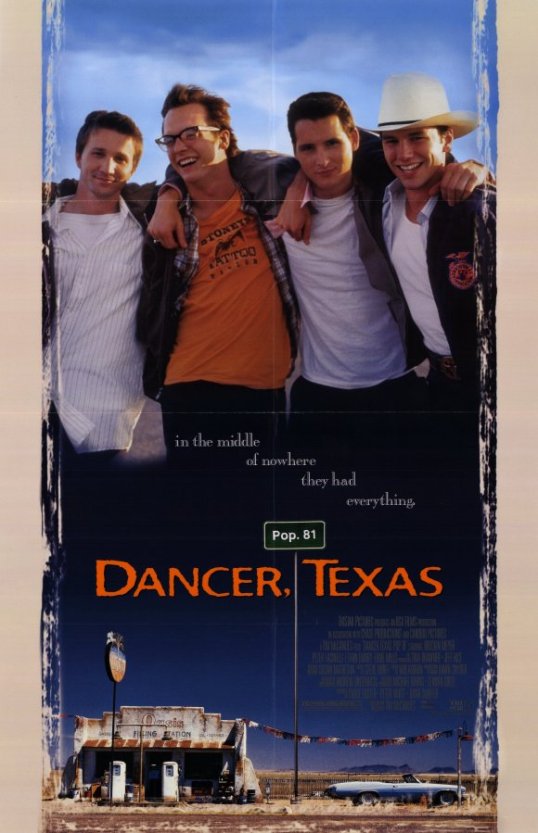
Back to School #53: Dancer, Texas Pop. 81 (dir by Tim McCanlies)


dancer-texas-pop-81-movie-poster-1998-1020196368

Dancer, Texas Pop. 81 is a 1998 film about a small town in West Texas that only has a population of 81 citizens.  Just from my own experience of telling people about how much I happen to like this movie, I get the feeling that only 81 people may have actually seen it.  But no matter!  Regardless of how many people have actually seen it, Dancer, Texas is one of my favorite films about my home state.

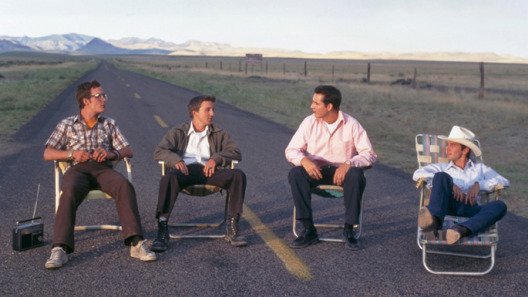
Dancer starts out with a scene that is so quintessentially Texan that it might as well appear next to Texas in the dictionary.  Four teenagers — all of whom are scheduled to soon graduate from high school — sit out in the middle of the highway.  The road seems to stretch on forever.  The land around them is empty.  If you’ve ever been to West Texas, you know what type of land I’m talking about.  It’s the type of land where you feel like you can see forever.  In the far distance, we see a pair of headlights.

“Car’s comin'” one of them drawls, knowing that they’ve got at least another 15 minutes before that car ever gets anywhere near the tiny town of Dancer, Texas.

These four teenage boys make up 80% of the graduating class of Dancer’s high school and all four of them are planning on leaving town and heading for Los Angeles.  Keller (Breckin Meyer) is their leader, the big dreamer who can’t wait to get out of the state.  Terrell Lee (Peter Facinelli) is the son of the only rich man in town and he’s being pressured by his mother to stay in Dancer and to learn the oil business.  John (Eddie Mills) is the simplest of the four and also the most reluctant about leaving.  He simply wants to be a farmer and he can’t understand why his taciturn father refuses to say anything to keep him from leaving town.  And finally, there’s Squirrel (Ethan Embry), who is the weird one.  Every group needs a weird one and Squirrel is weird even by the usual standards of small town oddness.

Not much happens in Dancer, Texas.  That goes for both the film and the town.  Over the course of two days, all four of the boys are forced to decide whether they really want to leave or if they actually want to stay.  Adding an extra poignancy to their decision is the fact that there literally is no chance that life in Dancer is ever going to change.  Dancer is as it has always been and always will be.  Deciding to stay means staying forever.  And, as the film shows, that’s okay for some people and terrible for others.

I really like Dancer, Texas.  Yes, it does move at its own deliberate pace and yes, a few scenes do tend to get a bit too obvious in their sentimentality (just to name two of the complaints that I saw from some commenters over at the imdb).  Meyer, Facinelli, and Mills all give such wonderfully natural performances that it makes you all the more aware that Embry seems a bit out-of-place.  But, ultimately, none of that matters.  Dancer, Texas is one of the most honest and sincere films that I’ve ever seen and it’s a film that does my home state proud.

Lisa’s Rating: 8 out of 10

211