Scenes That I Love: Norma Desmond visits Cecil B. DeMille in Billy Wilder’s Sunset Boulevard


Today, if Cecil B. DeMille is known at all, it’s for directing Biblical epics like The Ten Commandments.  However, there was much more to DeMille’s career than just that one film.  DeMille got his start during the early silent era and he quickly established himself as one of Hollywood’s first superstar directors.  Unlike many of his contemporaries, he survived the transition to sound and he remained a force in Hollywood at a time when many of the other silent directors were fading into obscurity.  DeMille played a key role in the founding of what would become the American film industry.  He began his career in 1914 and he made his last film in 1958.  That’s quite a legacy.

In 1950, when filming Sunset Boulevard, Billy Wilder needed someone to play the key role of one of Norma Desmond’s former directors.  Who better to represent the old style of Hollywood than Cecil B. DeMille?  In the scene below, DeMille plays himself.  Norma Desmond is, of course, played by Gloria Swanson, an actress whom DeMille had directed in the past.

From Sunset Boulevard, here’s a scene that I love.

Scenes That I Love: The Passover Scene From The Ten Commandments


Today’s scene that I love comes from 1956’s The Ten Commandments.

Cecil B. DeMille is often unfairly dismissed as a director, just as Charlton Heston is often underrated as an actor.  To me, this is one of the most powerful scenes in DeMille’s filmography.  The sound of the screams is haunting.  However, one must remember that, as with all the plagues that afflicted Egypt, the Pharoah was given fair warning.


4 Shots From 4 Biblical Films


4 Shots from 4 Films is just what it says it is, 4 shots from 4 of our favorite films. As opposed to the reviews and recaps that we usually post, 4 Shots from 4 Films lets the visuals do the talking!

4 Shots From 4 Biblical Epics

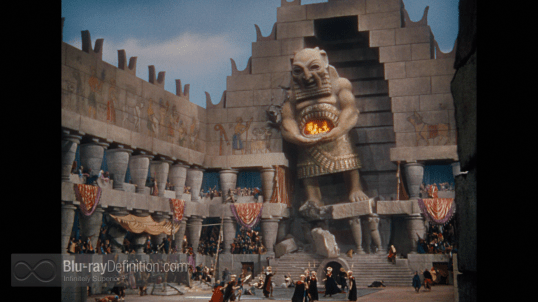
Samson and Delilah (1949, dir by Cecil B. DeMille, DP: George Barnes)

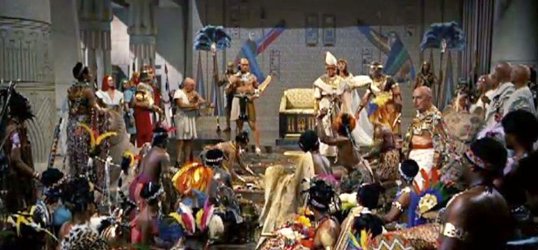
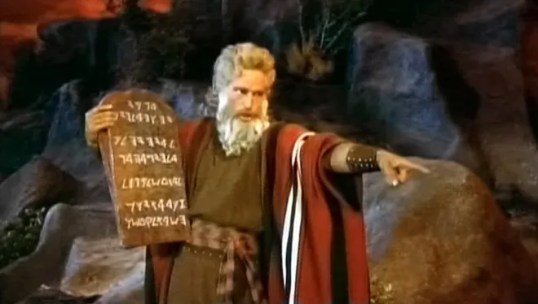
The Ten Commandments (1956, dir by Cecil B. DeMille, DP: Lloyd Griggs)

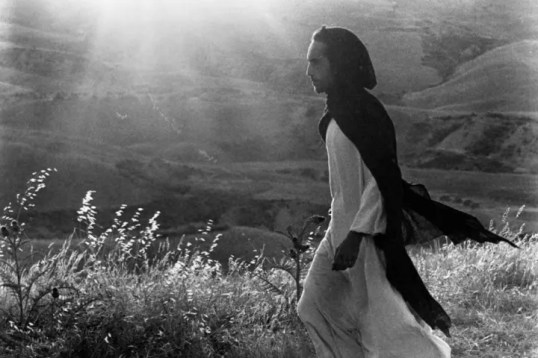
The Gospel According To St. Matthew (1964, dir by Pier Paolo Pasolini, DP: Tonino Delli Colli)

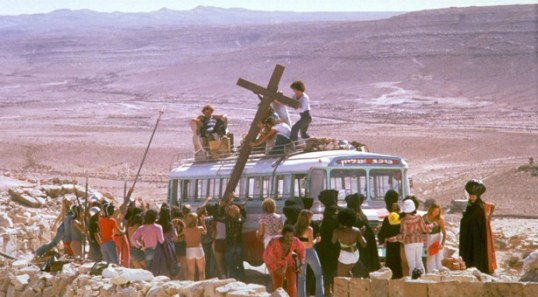
Jesus Christ Superstar (1973, dir by Norman Jewison, DP; Douglas Slocombe)

4 Shots From 4 Films: Madam Satan, Safe In Hell, Rasputin and the Empress, and Search For Beauty


4 Shots From 4 Films is just what it says it is, 4 shots from 4 of our favorite films.  As opposed to the reviews and recaps that we usually post, 4 Shots From 4 Films is all about letting the visuals do the talking.

All of the scenes below come from films that were made and released between the introduction of sound in the late 1920s and the adoption of the infamous Hays Production Code in 1934.  This was truly an exciting time for film as an art form.  Not only were filmmakers intoxicated with discovering what they could accomplish through the medium but they were also unhindered by censorship or regulation.  The end result was some of the most visually imaginative and narratively daring films to ever be released by the major American studios.

There’s a reason why film lovers continue to eagerly seek out pre-code films.  And if you want to experience what made the pre-Code era so memorable, you could not do any worse than to start with the four films featured in this post.

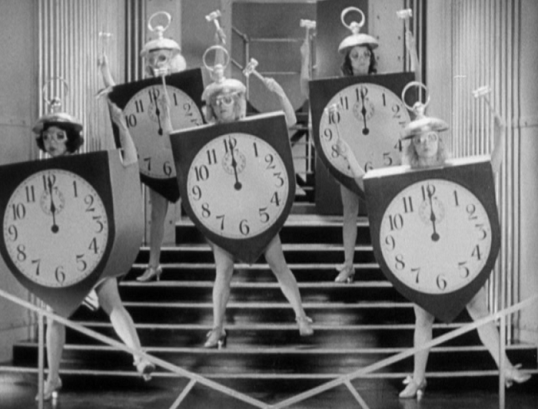
Madam Satan (1930, dir by Cecil B. DeMille)

Madam Satan (1930, dir by Cecil B. DeMille)

Safe in Hell (1931)

Safe in Hell (1931, dir by William Wellman)

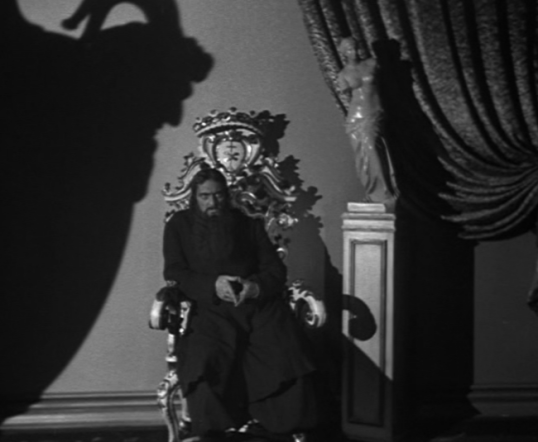
Rasputin and the Empress (1932, dir by Richard Boleslawski)

Rasputin and the Empress (1932, dir by Richard Boleslawski)

Search For Beauty (1934, dir by Erle C. Kenton)

Search For Beauty (1934, dir by Erle C. Kenton)

4 Shots From 4 Films: Special Cleopatra Edition


4 Shots From 4 Films is just what it says it is, 4 shots from 4 of our favorite films. As opposed to the reviews and recaps that we usually post, 4 Shots From 4 Films is all about letting the visuals do the talking.

Let’s celebrate the end of the month with four shots from four films about Caesar’s one true love, Cleopatra!

4 Shots From 4 Films

Cleopatra (1917, dir by J. Gordon Edwards)
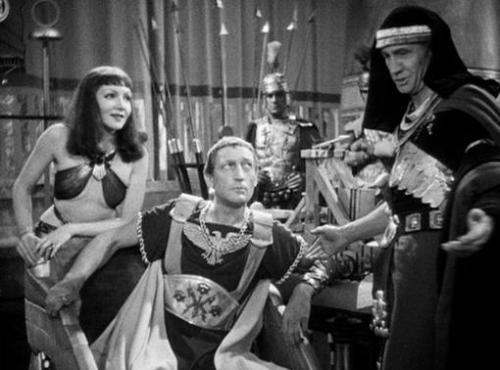
Cleopatra (1934, dir by Cecil B. DeMille)
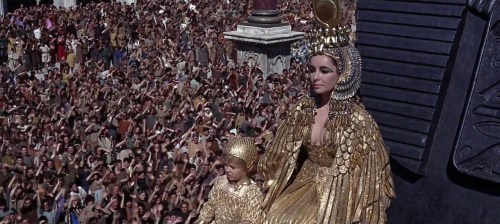
Cleopatra (1963, dir by Joseph L. Mankiewicz )

Cleopatra (1970, dir by Osamu Tezuka and Eiichi Yamamoto)
4 Shots From 4 Biblical Films


4 Shots from 4 Films is just what it says it is, 4 shots from 4 of our favorite films. As opposed to the reviews and recaps that we usually post, 4 Shots from 4 Films lets the visuals do the talking!

4 Shots From 4 Biblical Epics

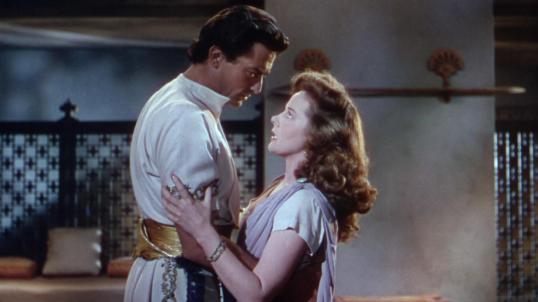
David and Bathsheba (1951, dir by Henry King. DP: Leon Shamroy)

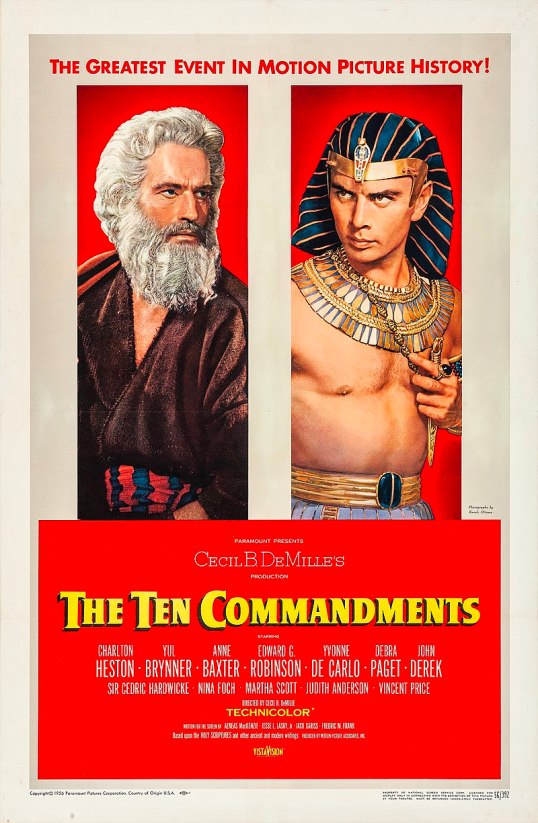
The Ten Commandments (1956, dir by Cecil B. DeMille, DP: Lloyd Griggs)

Ben-Hur (1959, dir by William Wyler, DP: Robert Surtees)

The Bible (1966, dir by John Huston, DP: Giuseppe Rotunno)

4 Shots From 4 Best Picture Winners: The 1950s


4 Shots From 4 Films is just what it says it is, 4 shots from 4 of our favorite films. As opposed to the reviews and recaps that we usually post, 4 Shots From 4 Films lets the visuals do the talking!

Today, I’m using this feature to take a look at the history of the Academy Award for Best Picture.  Decade by decade, I’m going to highlight my picks for best of the winning films.  To start with, here are 4 shots from 4 Films that won Best Picture during the 1950s!  Here are….

4 Shots From 4 Best Picture Winners: The 1950s

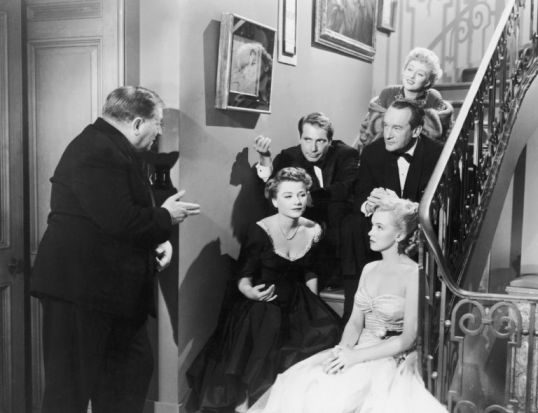
All About Eve (1950, dir by Joseph L. Mankiewicz, DP: Milton R. Krassner)

The Greatest Show On Earth (1952, dir by Cecil B. Demille, DP: George Barnes)

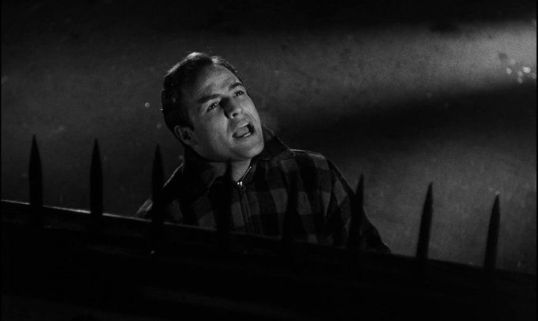
On The Waterfront (1954, dir by Elia Kazan, DP: Boris Kaufman)

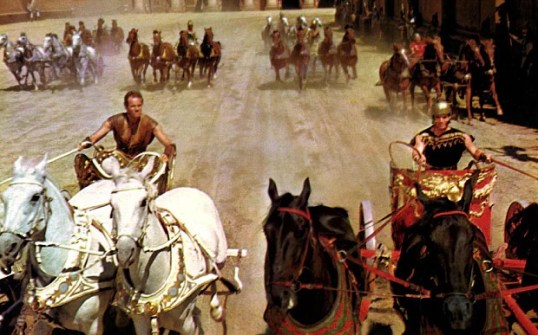
Ben-Hur (1959, dir by William Wyler, DP: Robert Surtees)

Scenes That I Love: Moses Parts The Red Sea In The Ten Commandments!


142 years ago, on this date, director Cecil B. DeMille was born in Ashfield, Massachusetts.  From the silent era until his death in 1959, DeMille was one of Hollywood’s superstar directors.  His films, which were often over the top and effective at the same time, helped to build the modern film industry.

Today’s scene that I love comes from DeMille’s final film.  From 1956’s The Ten Commandments, Moses parts the Red Sea.

(Please note, this video starts with a frozen image that lasts for about 12 seconds.)

12 Oscar Snubs From the 1950s


Audrey Hepburn and her Oscar.  At least the Academy didn’t snub her!

Continuing our look at the Oscar snubs of the past, it’s now time to enter the 50s!

World War II was over. Eisenhower was President. Everyone was worried about communist spies. And the Hollywood studios still reigned supreme, even while actors like Marlon Brando and James Dean challenged the establishment.  There were a lot great film released in the 50s.  There were also some glaring snubs on the part of the Academy.  Here’s twelve of them.

1950: The Third Man Is Not Nominated For Best Picture

….and Orson Welles was not nominated for Best Supporting Actor!  The Third Man received three Oscar nominations, for Director, Cinematography, and Editing.  The fact that Welles, Joseph Cotten, Alida Valli, and the film’s score were not nominated (and that King Solomon’s Mines was nominated for Best Picture instead of The Third Man) remains one of the more surprising snubs in Oscar history.

1952: Singin’ In The Rain Is Not Nominated For Best Picture

What the Heck, Academy!?  This was the year that The Greatest Show On Earth won the Best Picture Oscar.  Personally, I don’t think The Greatest Show On Earth is as bad as its reputation but still, Singin’ In The Rain is a hundred times better.

1953: Alan Ladd Is Not Nominated For Best Actor For Shane

How could Shane score a nomination for Best Picture without Shane himself receiving a nomination?

1954: Rear Window Is Not Nominated For Best Picture

Rear Window was not totally ignored by the Academy.  Alfred Hitchcock received a nomination for directing.  It also received nominations for Best Adapted Screenplay, Cinematography, and Sound.  However, Rear Window was not nominated for Best Picture and James Stewart, Grace Kelly, Raymond Burr, and Thelma Ritter all went unnominated as well.  Today, Rear Window is definitely better-remembered than the majority of 1954’s Best Picture nominees.  Certainly, it deserved a nomination more than Seven Brides For Seven Brothers and Three Coins in The Fountain.

1955: Ralph Meeker Is Not Nominated For Best Actor For Kiss Me Deadly

I guess I shouldn’t be surprised.  If the Academy wasn’t going to nominate Rear Window for Best Picture, there was no way that they would have nominated Ralph Meeker for playing a sociopathic private detective who, even if inadvetedly, helps to bring about the end of the world.

1955: Rebel Without A Cause Is Not Nominated For Best Picture or Best Actor

The 1955 Best Picture lineup was a remarkably weak one.  The eventual winner was Marty, a likeable film that never quite escapes its TV roots.  Picnic has that great dance scene but is otherwise flawed.  Mister Roberts was overlong.  Love Is A Many-Splendored Thing and The Rose Tattoo are really only remembered by those of us who have occasionally come across them on TCM.  Perhaps the best-remembered film of 1955, Rebel Without A Cause, received quite a few nominations but it was not nominated for Best Picture.  And while the Rebel himself, James Dean, was nominated for Best Actor, it was for his performance in East of Eden.  1955 was a strange year.

1955: Robert Mitchum Is Not Nominated For Best Actor For The Night of the Hunter

Robert Mitchum only received one Oscar nomination over the course of his entire career, for 1945’s The Story of G.I. Joe.  He deserved several more.  His performance as the villainous preacher in The Night of Hunter made Reverend Harry Powell into one of the most iconic film characters of all time.

1956: Cecil B. DeMille Is Not Nominated For Best Director For The Ten Commandments

Cecil B. DeMille was only nominated once for Best Director, for 1952’s The Greatest Show On Earth.  DeMille, however, deserved to be nominated for The Ten Commandments.  As campy as DeMille’s films can seem today, he was an expert storyteller and that’s certainly evident when one watches The Ten Commandments, a film that holds the viewer’s attention for nearly four hours.  DeMille deserved a nomination for the Angel of Death scene alone.  The screams in the night are haunting.

1957: Henry Fonda Is Not Nominated For Best Actor For 12 Angry Men

With 12 Angry Men, Fonda did something that very few actors can.  He made human decency compelling.  One gets the feeling that, much like Tom Hanks in Captain Phillips, Fonda made it look so easy that the Academy took him for granted.

1958: Touch Of Evil Is Totally Ignored

Anyone who had researched the history of the Academy knows that there was no way that the 1950s membership would have ever honored Orson Welles’s pulp masterpiece, Touch of Evil.  That said, it still would have been nice if they had.  Touch of Evil has certainly go on to have a greater legacy than Gigi, the film that won Best Picture that year.

1958: Vertigo Is Almost Totally Ignored

Vertigo did receive nominations for Art Direction and Sound but Alfred Hitchcock, James Stewart, and the film itself were snubbed.

1959: Some Like It Hot Is Not Nominated For Best Picture or Best Actress

Some Like It Hot received 6 Oscar nominations, including nominations for Best Director, Best Actor, and Best Adapted Screenplay.  It did not receive a nomination for Best Picture and, sadly, Marilyn Monroe did not receive a nomination for Best Actress.  Much as with Henry Fonda in 12 Angry Men, one gets the feeling that the Academy took Monroe for granted.  It’s sad to realize that, while two actresses have been nominated for playing Marilyn Monroe, Monroe herself would never be nominated.

Agree?  Disagree?  Do you have an Oscar snub that you think is even worse than the 12 listed here?  Let us know in the comments!

Up next: Things get wild with the 6os!

Night of the Hunter (United Artists 1955; D: Charles Laughton)

Scenes That I Love: Norma Desmond visits Cecil B. DeMille in Sunset Boulevard


Today, the Shattered Lens observes the 141st birthday of filmmaker Cecil B. DeMille.

Today, if Cecil B. DeMille is known at all, it’s for directing Biblical epics like The Ten Commandments.  However, there was much more to DeMille’s career than just that one film.  DeMille got his start during the early silent era and he quickly established himself as one of Hollywood’s first superstar directors.  Unlike many of his contemporaries, he survived the transition to sound and he remained a force in Hollywood at a time when many of the other silent directors were fading into obscurity.  DeMille played a key role in the founding of what would become the American film industry.  He began his career in 1914 and he made his last film in 1958.  That’s quite a legacy.

In 1950, when filming Sunset Boulevard, Billy Wilder needed someone to play the key role of one of Norma Desmond’s former directors.  Who better to represent the old style of Hollywood than Cecil B. DeMille?  In the scene below, DeMille plays himself.  Norma Desmond is, of course, played by Gloria Swanson, an actress whom DeMille had directed in the past.

From Sunset Boulevard, here’s a scene that I love.