Today would have been the 103rd birthday of actor Charlton Heston.
This scene that I love comes from one of the few horror films in which Heston appeared. An adaptation of Richard Matheson’s I Am Legend, 1971’s The Omega Man featured Charlton Heston as Robert Neville. By night, Neville protects his house against the mutant horde. By day, he tracks those sleeping mutants down and watches Woodstock over and over again.
“They don’t make them like that anymore,” Neville says.
This scene gets a lot of attention because of the contrast between the conservative Heston and the hippies in the film. To me, the reason that it works is because Woodstock is a documentary. Neville isn’t watching an actor pretending to be a character in a film. He’s watching an actual human being who went to the Woodstock music festival and who is presumably either now a mutant or dead. Imagine being the hippie interviewed by this scene and seeing yourself in The Omega Man and knowing you didn’t survive the apocalypse. For that matter, we also have to assume that all of the Woodstock performers have been turned into mutants as well. Write a song about that, Country Joe.
(I choose to believe that Arlo Guthrie made it to safety. Sha Na Na, though? Doomed.)
Neville’s right. They don’t make them like this anymore.
145 years ago, on this date, director Cecil B. DeMille was born in Ashfield, Massachusetts. From the silent era until his death in 1959, DeMille was one of Hollywood’s superstar directors. His films, which were often over the top and effective at the same time, helped to build the modern film industry.
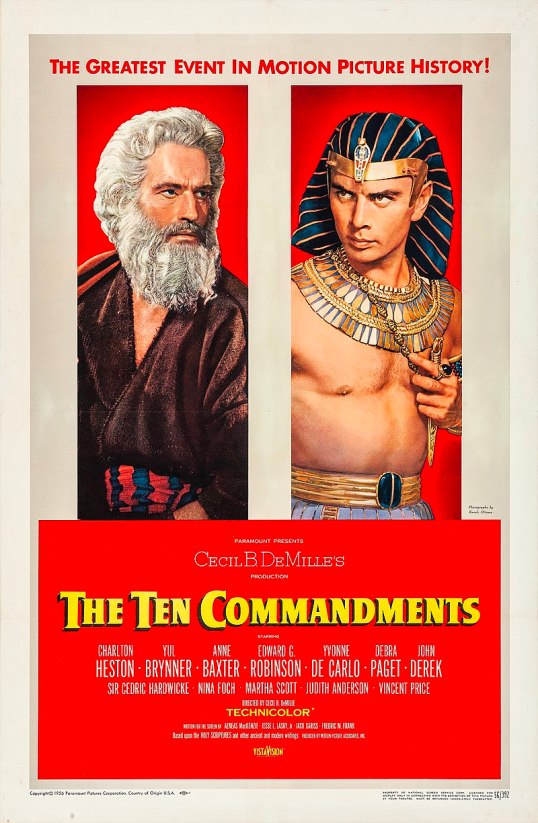
Today’s scene that I love comes from DeMille’s final film. From 1956’s The Ten Commandments, Moses parts the Red Sea.
(Please note, this video starts with a frozen image that lasts for about 12 seconds.)
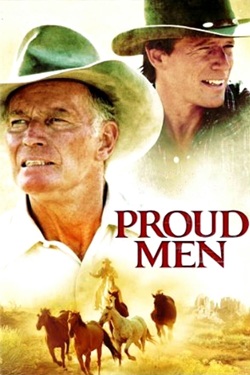
During the Vietnam War, Charley McLeod, Jr. (Peter Strauss) deserted from the U.S. Army. He has spent the last several years living in France with his wife Adrienne (Maria Mayenzet) but, when he learns that his father (Charlton Heston) is ill, Charley returns to the ranch where he grew up and tries to make peace with the old man before he dies. It’s not easy. Charley, Sr. never agreed with his son’s decision to desert and the local townspeople, including Charley’s former friend Brian (Alan Autry), view him as either being a coward or a traitor.
Proud Men was made for television and it’s clearly a product of a time when people were still coming to terms with both the war in Vietnam and the protests that surrounded it. Strauss isn’t the most convincing rancher that I’ve ever seen but, not surprisingly, Heston is totally believable as Charley’s old-fashioned father. Not much really happens in Proud Men. Charley, Jr. tries to prove himself by working on the ranch. Charley, Sr. holds back his emotions until the inevitable scene where he finally admits that he still loves his son. Probably the best performance comes from Alan Autry, whose character is written to be a bully but who also has a point when he point out that not everyone had the opportunity or the money necessary to just desert and start a new life in another country.
This is definitely a Dad film. It’s about working hard, doing what you have to do even when its difficult, and knowing how to throw a punch when someone in a bar disrespects your wife. It’s a minor film but I actually liked it. Heston may not have had the widest range as an actor but he was capable of very good work when he was cast in the right role, like he is here.
The late director Franklin J. Schaffner was born 106 years ago today.
Though Schaffner won an Oscar for directing Patton, my favorite Schaffner film will always be Planet of the Apes. In this scene, Charlton Heston discovers where he’s actually been for the entire movie.
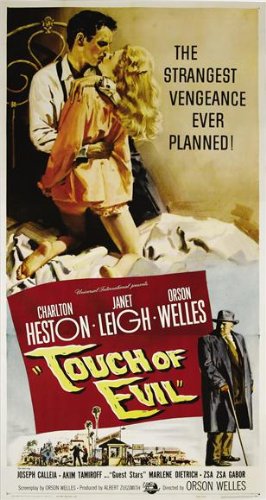
Since today is Orson Welles’s birthday, I wanted to share at least one scene that I love from his films. The famous tracking shot from 1958’s TouchofEvil, which begins in America and ends in Mexico, truly shows Orson Welles at his visionary best.
It’s also Welles at his most clever. Knowing that he wouldn’t be given control over the editing of the footage he shot, Welles included as many long shots as possible to make it more difficult for an editor to chop up or alter his vision.
“It’s gonna take a lot of good people to make this place decent again.” — Hugh Holmes
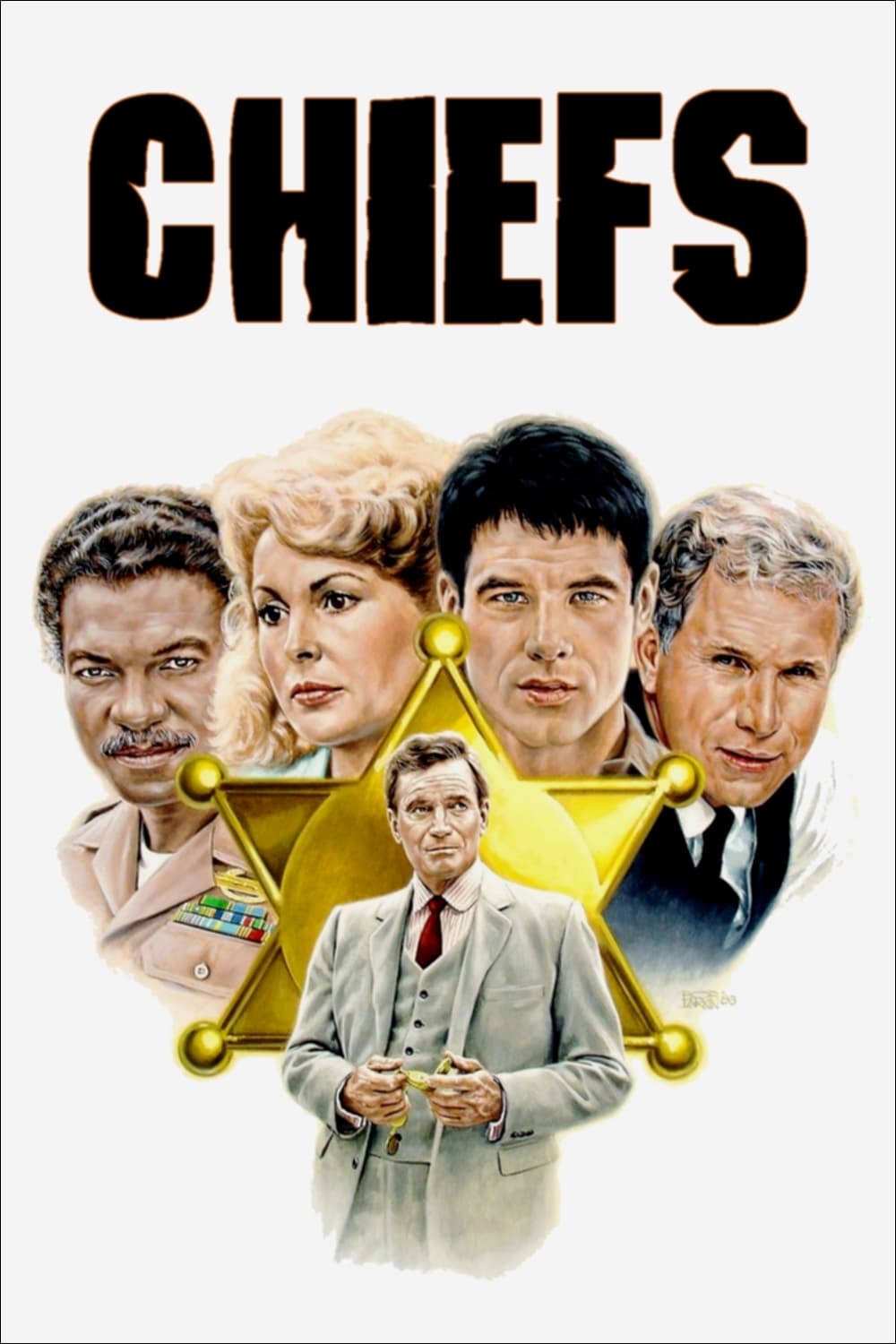
Chiefs, the 1983 CBS miniseries adapted from Stuart Woods’ Edgar Award-winning novel, triumphs as a faithful yet inventive translation of a sprawling literary thriller into television’s constrained canvas. Unfolding across four decades in Delano, Georgia (1924-1963), it chronicles three generations of deeply flawed police chiefs pursuing a serial killer who targets young boys, their quest shadowed by the American South’s seismic shift from Jim Crow’s iron grip to the civil rights revolution.
Woods’ debut novel uses the murders as a piercing allegory for societal rot—Delano a claustrophobic organism where racism, class divides, and omertà-like codes nurture evil. The miniseries scores a major win by distilling this 400-page epic into six compelling hours, preserving the book’s generational rhythm and thematic spine while leveraging TV’s strengths in visual dread and ensemble intimacy. Yet, as a TV production, it inevitably stumbles under the medium’s inherent drawbacks: commercial interruptions, budgetary limits, network sanitization, and episodic structuring that blunt the novel’s novelistic nuance.
Performances drive Chiefs, with Keith Carradine and Brad Davis towering as the absolute standouts, breathing transcendent life into Woods’ most vivid creations and elevating the adaptation beyond its TV trappings. Carradine’s Foxy Funderburke, the killer—a vulpine everyman whose sly charm cloaks bottomless depravity—is nothing short of revelatory. Woods crafts him as Delano’s perfect predator, evading justice across decades because prejudice and small-town loyalty provide endless cover; the miniseries unleashes Carradine’s eerie genius, his lanky frame slinking through scenes with piercing eyes and smirks that chill deeper than any scream. Watch him whistle casually amid shadows or flash a fox-like grin during backyard chats—it’s understated psychopathy at its peak, a masterclass in menace that makes Foxy scarier than modern slashers, his longevity indicting the chiefs’ every failure. Carradine doesn’t just play the monster; he inhabits its everyday skin, sly pauses and folksy drawl turning every frame into taut wire. It’s career-best work, haunting long after credits, the performance that cements Chiefs as essential viewing.
Matching that blaze is Brad Davis as Sonny Butts, the post-WWII chief whose war-hero shine curdles into tyrannical fury—one of the most volcanic turns in ’80s TV. Woods luxuriates in Sonny’s hypocrisy: brutalizing Black neighborhoods, shaking down suspects, half-chasing the killer amid integration’s tremors, his “heart of darkness” blending trauma with bigotry. The adaptation amps kinetic brawls absent in prose, but Davis owns it all—brooding intensity erupting in guttural snarls, trauma-flashed eyes, coiled physicality that dominates every standoff. His Southern accent locks authentic, chortles flipping to wide-eyed betrayal in heart-stopping beats; Sonny becomes tragically magnetic, a damaged bully whose rage mirrors Delano’s resistance, derailing justice while stealing the show. Davis channels raw, Brando-esque power without caricature, making mid-century arcs electric—visceral theater that rivals Carradine’s creeps for MVP crown.
The supporting ensemble holds strong but orbits these twin suns. Wayne Rogers brings MASH-grit to Will Henry Lee, the 1920s everyman chief, his weary resolve fitting the book’s naive obsession amid lynch-mob shadows. Stephen Collins’ crisp poise suits Billy Lee, the ambitious son bridging eras with subtle unease. Billy Dee Williams layers charismatic fire into Tyler Watts, the trailblazing ’60s Black chief, urgent under threats. Charlton Heston’s gravelly narration as Hugh Holmes anchors the old guard. Solid work all, but Carradine and Davis are the revelation, their chemistry with the killer-chief dynamic supercharging Woods’ prose.
Thematically, Chiefs touts adaptive victory: murders scalpel Southern sins—killer’s span enabled by whitewash, chiefs’ flaws (naivety, rage, complacency) echoing Jim Crow’s throes. Woods’ restraint (dread over gore) translates via Jerry London’s direction: TV-budget grit evokes Roots-sweep—rally torches, unearthed graves—pruning romances tautens pace, foregrounds racism’s backbone.
Yet television’s pitfalls drag it earthward, exposing media frailties the novel evades. Network TV demands commercial breaks, fracturing tension—cliffhangers feel forced, mid-episode lulls kill momentum where Woods’ chapters flow seamless. Budget caps hobble scope: no sweeping location shoots, recycled sets make Delano static vs. book’s vivid evolution; period details (cars, garb) ring true but cheapen under fluorescent lighting. CBS sanitization softens edges—Woods’ grayer morals binarize (heroes nobler, Sonny’s bigotry punchier for prime time), racial arcs gain clunky exposition (“We can’t let ’em take our way of life!”) where prose implies slyly. Episodic format sags pacing: generational pivots drag with filler (subplots padded for hours), killer’s decades-long credulity strains more on screen, visuals exposing logistical gaps the page glosses. Accents waver under non-native casts, a TV-casting haste; direction, competent, lacks cinematic flair—static shots, TV-gloss lighting mute novel’s sweaty dread. Ensemble shines brightest via leads, but supporting roles flatten into types, ensemble dilution print sustains. Flaws compound: preachiness in ’60s beats (TV’s social-message itch), conveniences (plot devices for act breaks), and era-inaccurate tweaks (anachronistic attitudes) betray source fidelity.
In the end, Chiefs succeeds more than it fails as an adaptation—capturing Woods’ generational prisms and Southern reckonings with enough fidelity and flair to transcend its era’s TV limitations, delivering cathartic release amid rising dread, propelled by Carradine and Davis’ unforgettable peaks. Its triumphs in atmosphere, those two volcanic turns, and thematic resonance outweigh the medium’s drags: clunky pacing, sanitized nuance, and budgetary blandness. Remarkably, it presages the true-crime boom on television decades later, laying groundwork for anthology masterpieces like True Detective, The Killing, and Fargo. Like those, Chiefs blends procedural hunts with existential rot, flawed antiheroes navigating moral quagmires, and killers embodying societal fractures—here, racism as the true long-game predator, with Carradine’s Foxy as proto-Rust Cohle eerie. Where modern series revel in cinematic polish and nonlinear flair, Chiefs proves the blueprint: small-town secrets, generational hauntings, justice as bloody evolution.
Cecil B. DeMille is often unfairly dismissed as a director, just as Charlton Heston is often underrated as an actor. To me, this is one of the most powerful scenes in DeMille’s filmography. The sound of the screams is haunting. However, one must remember that, as with all the plagues that afflicted Egypt, the Pharoah was given fair warning.
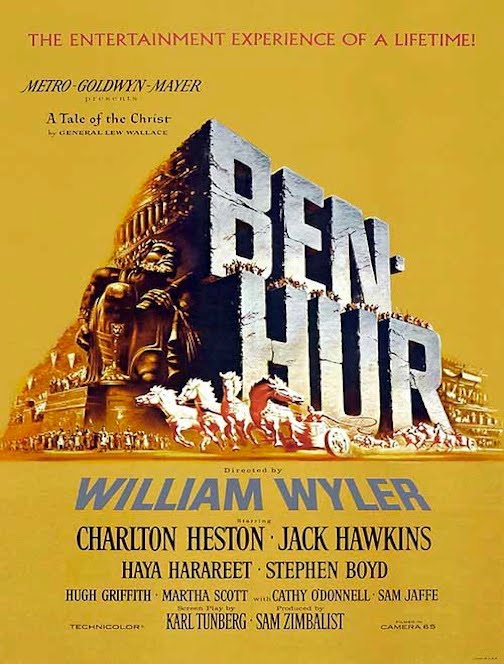
Today’s scene that I love comes from 1959’s Ben-Hur. The chariot race was one of the great action sequences of its era and its influence is still felt to this day. Rumor has it that Mario Bava was among the crew that helped to shoot the chariot race. Personally, I choose to believe that even if I can’t prove it!
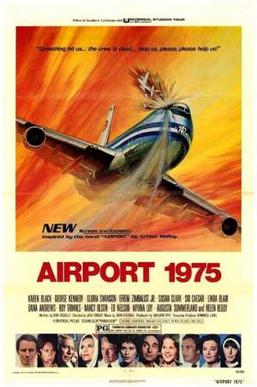
About halfway through 1974’s Airport 1975, Sid Caesar has one of the greatest lines in film history.
“The stewardess is flying the plane?”
Hell yeah, she is! After a collision with another plane takes out the crew of a Broening 747, it’s up to head flight attendant Nancy (Karen Black) to keep the plane from crashing until another pilot can somehow be lowered into the cockpit of the stricken airliner. Nancy’s never flown an airplane before but she is dating Al Murdock (Charlton Heston), who may be scared of commitment but who is still described as being one of the greatest pilots who has ever lived. None other than Joe Patroni (George Kennedy) says that no one knows more about flying than Al Murdock.
George Kennedy is the only cast member to return from the original Airport. When we previously met Patroni, he was the cigar-chewing chief mechanic for Trans World Airlines. In Airport 1975, he’s suddenly an executive with Columbia Airlines. His wife (Susan Clark) and his son (Brian Morrison) are also on the plane. Joe Patroni and Al Murdock are determined to bring that plane safely to the ground in Salt Lake City and if that means dropping a pilot into the cockpit from a helicopter, that’s what they’ll do. It’s all a question of whether or not Nancy can keep that plane from crashing while they round up a helicopter and a pilot.
Airport 1975 is so famous for being the movie where the stewardess is flying the plane that it’s often overlooked that it’s also the film where Linda Blair plays a young girl in need of a kidney transplant. When Sister Ruth (Helen Reddy) sees that the girl has a guitar with her, Ruth sings a folk song that has everyone on the airplane smiling. (If I was on a plane and someone started playing folk music, I’d probably jump out. That may seem extreme but seriously, you don’t want to test me on how much I dislike the folk sound.) This scene was, of course, parodied in Airplane! In fact, it’s pretty much impossible to watch Airport 1975 without thinking about Airplane!
It’s also overlooked that Gloria Swanson is one of the many stars to appear in this film but Swanson is the only one playing herself. Gloria Swanson starts as Gloria Swanson and I assume that this 1974 film was set in 1975 in order to generate some suspense as to whether or not Swanson was going to survive the crash. Swanson talks about how, in 1919, Cecil B. DeMille flew her over California. She does not talk about Joseph Kennedy or Sunset Boulevard and that’s a shame. As I watched Airport 1975, I found myself thinking about how different the film would have been if Gloria Swanson had been the one who had to pilot the plane instead of Karen Black.
“Gloria Swanson is piloting the plane?”
As entertaining as that would have been, it would have meant missing out on Karen Black’s intense performance as Nancy. At times, Nancy seems to be so annoyed with the situation that one gets the feeling that she’s considering intentionally crashing the plane into one of Utah’s mountains. At other times, she seems to be at a strange sort of peace with whatever happens. There’s a scene where she attempts to clear some of the clutter in the cockpit and an instrument panel falls on her head and it’s such a powerful moment because I know the exact same thing would have happened to me in that situation. There’s another moment where I’m pretty sure she accidentally kills the first pilot who attempts to drop into the cockpit and again, it’s a mistake that anyone could have made. The film doesn’t call her out on it because the film understand that none of us are perfect, except for Charlton Heston.
Speaking of which, Karen Black’s emotional performance contrasts nicely with the performance of Charlton Heston. This is perhaps the most Hestonesque performance that Charlton Heston ever gave. Al Murdock is confident, he doesn’t suffer fools, and he’s condescending as Hell. Every time he calls Nancy “honey,” you’ll want to cringe. And yet, it’s hard not to appreciate someone who can be so confident while wearing a tight yellow turtleneck. Charlton Heston watches as the first pilot to attempt to enter the cockpit plunges to his death and immediately declares that it’s his turn to try. “Get me in that monkey suit!” he snaps and it’s such a Heston moment that you have to love it.
There’s a ton of people in this movie. Norman Fell, Jerry Stiller, and Conrad Janis play three rowdy drunks. Erik Estrada, Efrem Zimbalist, and Roy Thinnes are the unfortunate members of the flight crew. Dana Andrews has a heart attack while piloting a small private plane. Myrna Loy appears not as herself but as Mrs. Delvaney, who spends almost the entire flight drinking. Christopher Norris plays Bette, who says that she may look like a teenager but she prefers to be called “Ms. Teenager” and that she’s trained in Kung Fu. Beverly Garland played Dana Andrews’s wife. Larry Storch is an obnoxious reporter. Character actor Alan Fudge plays Danton, the Salt Lake City controller who keeps Nancy calm until Charlton Heston can start snapping at people.
The first time that I watched Airport 1975, I was pretty dismissive of it but, over the years, I’ve rewatched it a few times and I have to admit that I’ve fallen in love with this wonderfully ridiculous film. There’s just so many odd details, like American Graffiti showing up as the plane’s in-flirt entertainment and Sid Caesar saying that he’s only on the flight because he has a small role in the movie and he finally wanted to see it. (It seems like it would have been cheaper to just go to a drive-in but whatever.) And there’s Karen Black, giving the performance of a lifetime and letting us all know that, in 1975, the stewardess flies the airplane!
Today would have been the 102nd birthday of actor Charlton Heston.
This scene that I love comes from one of the few horror films in which Heston appeared. An adaptation of Richard Matheson’s I Am Legend, 1971’s The Omega Man featured Charlton Heston as Robert Neville. By night, Neville protects his house against the mutant horde. By day, he tracks those sleeping mutants down and watches Woodstock over and over again.