“G.I. Joe is the code name for America’s daring, highly trained special mission force. Its purpose: to defend human freedom against Cobra, a ruthless terrorist organization determined to rule the world!”
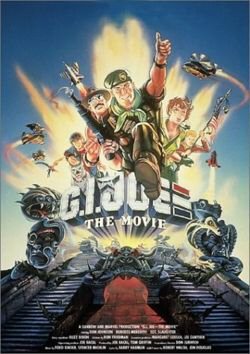
Actually, you only thought that Cobra was a ruthless terrorist organization. In G.I. Joe: The Movie, it is revealed that Cobra is actually the brainchild of Golobulus (voiced by Burgess Meredith), a human/serpent hybrid who is the ruler of Cobra-La, an ancient civilization hidden away in the Himalayas. Golobulus not only recruited Cobra Commander, but his servant Pythona implanted the dream that led to Dr. Mindbender creating the Cobra Emperor. Despite having the power to do all that, Golobulus still has to steal G.I. Joe’s latest weapon so that he can launch and open a bunch of space spores that will turn all of humanity into snakes. It’s up to G.I. Joe to stop them. Everyone thinks that new recruit Falcon (Don Johnson) is just Duke’s irresponsible kid brother, so, of course, it will be up to him to save the day.
G.I. Joe: The Movie is actually not bad as far as 1980s animation is concerned. Cobra-La may have a silly name, but it’s a memorable location, and the scenes involving Cobra Commander being put on trial while trapped in a giant Venus flytrap are actually pretty impressive. Cobra Commander was turned into a snake in this movie, and his hissing “I was a man” is a hundred times more effective than it should have been. Since the original G.I. Joe animated series was canceled around the same time this was released, G.I. Joe: The Movie actually does wrap up the show. After fighting an ancient civilization of flying monsters and talking serpents, what was really left for G.I. Joe to do?
There are a lot of battle scenes and, again, no one dies. Originally, that wasn’t the plan. When G.I. Joe: The Movie was animated, Duke was killed while saving his brother’s life. However, when Transformers: The Movie underperformed at the box office, it was decided to release G.I. Joe: The Movie straight to video and not to kill off anyone in the cast. Dialogue was added to indicate that Duke was actually just severely injured, despite the fact that he obviously died in battle. In the movie, Duke passes out and everyone looks away with tears in their eyes. Falcon defeats Cobra-La and then says, “That was for you, brother,” while looking up at the star-filled sky. It was just a flesh wound!
No matter what else might be said, the animated G.I. Joe: The Movie was better than any of the live-action films that came out thirty years later.
“If they pay me and if they do what I say, I’ll never bother them again.” — Young Man
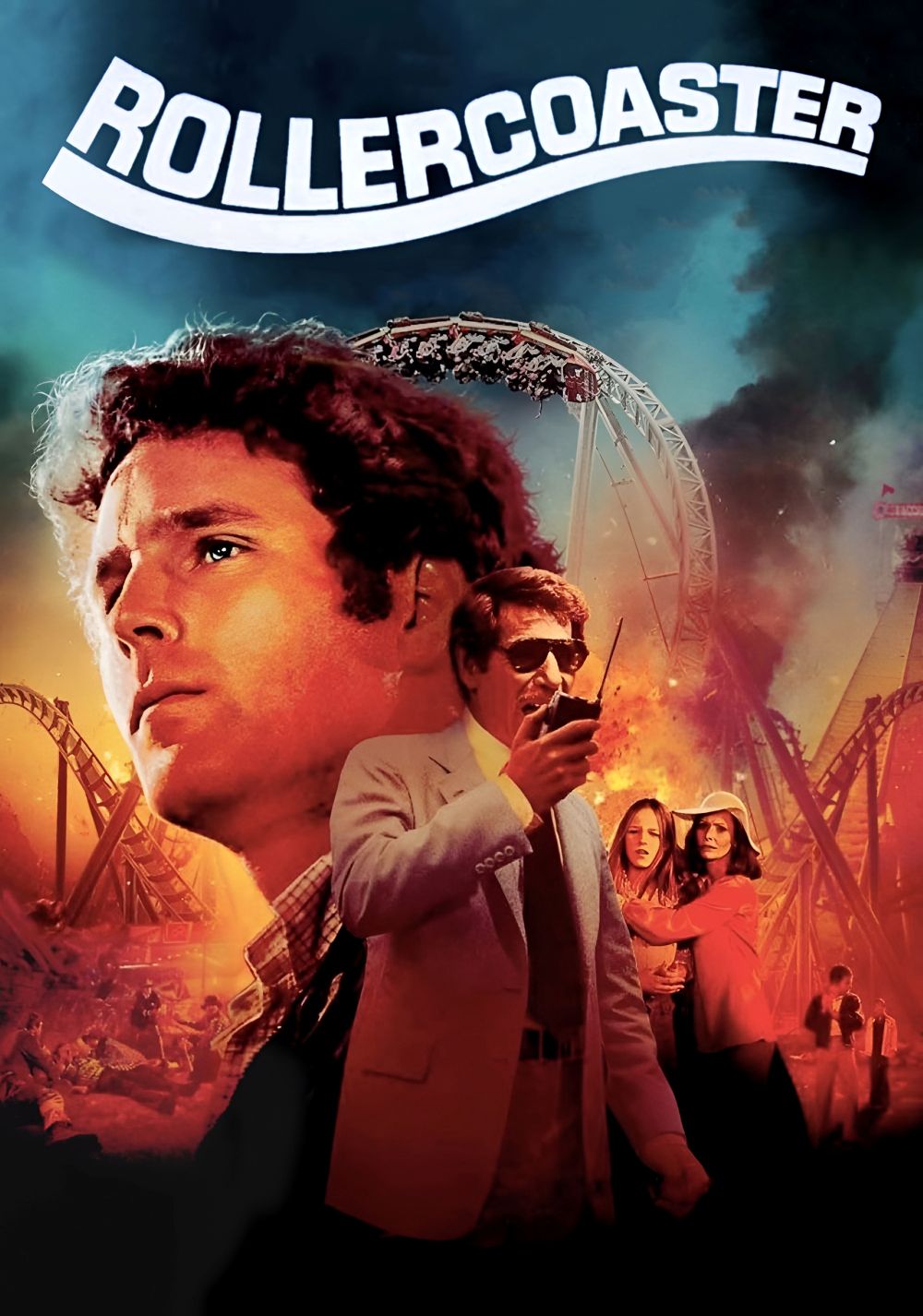
James Goldstone’s 1977 film Rollercoaster exists in a fascinating, albeit deeply flawed, space within the history of seventies disaster cinema. If you are a fan of retro 70s movies, specifically the whole Sensurround era where Hollywood was desperately trying to get people out of their living rooms and into theaters with seat-rumbling audio gimmicks, you have probably heard of this one. It has a genuinely neat, gritty vibe because it was actually shot on location at real amusement parks like Kings Island and Magic Mountain. You get this awesome, vintage, mid-century theme park atmosphere that you just cannot fake on a studio backlot. You can almost smell the cotton candy, the hot asphalt, and the stale beer. But once that initial wave of nostalgia wears off, you are left looking at what is actually on the screen, and honestly, Rollercoaster is not a great film. In fact, one could very easily say it is not even a good film. At its absolute best of times, it is a thoroughly average, middle-of-the-road thriller that feels more like a slightly elevated, padded-out television movie of the week than a major theatrical release.
The plot is about as standard as it gets for this era of disaster-adjacent cinema. A mysterious, young terrorist starts blowing up rollercoasters, not for any grand political manifesto, but simply to extort amusement park owners for millions of dollars. Enter our protagonist, Harry Calder, played by George Segal, who is a cynical safety inspector that just happens to survive the first derailment. Segal is basically just playing George Segal here—exasperated, a bit snarky, wearing a rumpled suit, and teaming up with an FBI agent played by Richard Widmark. The villain is played by a very young Timothy Bottoms, who is effectively creepy but given virtually zero backstory or motivation. He is just a blank-eyed psycho doing psycho things because the script needs an antagonist. The movie essentially just bounces from one park to another, with Segal walking around looking stressed while the FBI tries to figure out where the next bomb is hidden.
The pacing is arguably the film’s biggest sin. For a movie literally named Rollercoaster, it is shockingly lacking in momentum. Goldstone’s direction completely lacks the tight, pulse-pounding beats you would expect from a high-stakes thriller. There is so much filler here, so many scenes of Segal drinking coffee and staring at blueprints, and so much tedious FBI bureaucratic nonsense that it completely kills any tension. The romantic subplot feels entirely tacked on, and the climax fails to deliver the massive, explosive payoff you have been waiting for. If you judge Rollercoaster purely on its cinematic merits—the acting, the script, the direction—it is undeniably average, the kind of movie you leave on in the background while you fold laundry.
However, despite all of these glaring, undeniable flaws, Rollercoaster has a fascinating, almost prophetic legacy when you look back at the history of the thriller genre. It may not be remembered as a great movie, but it essentially built the exact template for an entire subgenre of cat-and-mouse thrillers that dominated the 90s. It practically invented the “specific-professional-against-a-psychopathic-mastermind” formula. Before Rollercoaster, thrillers were usually about spies, cops, or generic everymen. But this film introduced the idea of a highly specific, niche expert being forced into a one-on-one intellectual duel with a terrorist who targets them specifically because of their expertise. Think about how that exact template was endlessly copied and refined in the decades that followed. Look at In the Line of Fire, where Clint Eastwood plays a Secret Service agent hunted by a psycho played by John Malkovich. Or look at Blown Away, where Jeff Bridges is a bomb-defusing expert tormented by an Irish terrorist played by Tommy Lee Jones. Even The Bone Collector fits this mold perfectly, with Denzel Washington’s bedridden forensics expert being targeted by a serial killer who uses specific crime scenes just to test Washington’s intellect. All of these films drew direct DNA from Rollercoaster, using that exact same dynamic of a reluctant protagonist with a very particular set of skills being singled out by a psychopath who treats mass murder like a twisted, personalized game of chess. And if you want the absolute pinnacle of the “expert vs. bomb” trope, you have to look at Speed, which polished the cat-and-mouse dynamic perfected right here in Rollercoaster.
Because the original film was so hampered by 1970s filmmaking technology, it really makes you realize how easily this movie could be remade in this day and age. Back then, the actual destruction of the rides was limited by practical effects, clunky models, and standard camera angles that made the crashes feel somewhat static and safe. Today, technology in filmmaking has advanced to the point that the sheer scale, speed, and physical danger of the rides themselves really does become the focus of real danger. With modern CGI, drone cameras, and advanced practical rigging, you could put the audience right inside the front car of a 300-foot hyper-coaster as the tracks buckle and twist in slow motion. You could make the metal fatigue, the snapping cables, and the horrific physics of a derailment feel genuinely terrifying, turning the amusement park rides into massive, mechanical monsters rather than just static backdrop props for guys in suits to talk around.
Naturally, if Hollywood were to actually remake Rollercoaster today, you know exactly how it would look and who would star in it. It would undoubtedly star someone like Dwayne Johnson or Chris Pratt, a guy who can deliver a quip while looking concerned and holding a blueprint. They would inevitably give the safety inspector a tragic backstory, probably a dead wife or a kid they are estranged from, just to artificially raise the emotional stakes. And because it is a high-concept thriller that does not quite have the cultural weight of a massive comic book franchise, the remake would almost certainly be relegated to a streaming release. It would drop on a Friday on Netflix or Amazon Prime with a generic, algorithmically tested poster and a slick, forgettable title. It would be exactly the kind of mid-budget, mildly entertaining action flick you watch on a rainy Sunday afternoon before completely forgetting about it by Monday morning.
So, ultimately, how do you rate a movie like Rollercoaster? You just have to accept its extreme averageness and respect its ripple effect. It is clunky, the performances are uneven, and it is rarely as thrilling as its title promises. But it absolutely should not be written off entirely. It was the exact moment Hollywood realized that pitting highly specialized professionals against high-concept villains made for compelling, relatable drama. Without George Segal boredly walking around Magic Mountain, we probably do not get the overly dramatic, incredibly ridiculous, yet thoroughly entertaining 90s thriller boom, nor the slick, CGI-heavy streaming thrillers of today. Rollercoaster might just be a mediocre hill, but it is undeniably the hill that started the entire ride.
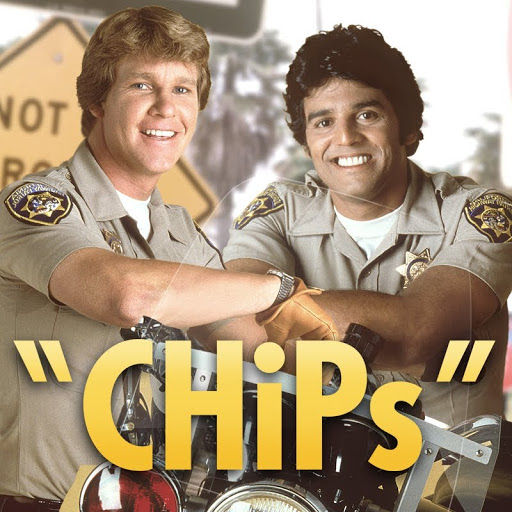
Welcome to Late Night Retro Television Reviews, a feature where we review some of our favorite and least favorite shows of the past! On Mondays, I will be reviewing CHiPs, which ran on NBC from 1977 to 1983. The entire show is currently streaming on Freevee!
This episode was a tough one.
Episode 2.5 “MAIT Team”
(Dir by John Florea, originally aired on January 13th, 1979)
On a desolate stretch of highway, several cars sit totaled. At least two are in flames. A truck sits stalled in the middle of the road, the bloody body of the driver still behind the steering wheels. A woman screams that her father is having a heart attack. Sitting off the road, in a ditch, is an overturned police car. Officer Sindy Cahill is unconscious in the wreckage.
This hardly a typical episode of CHiPs. This show has featured many spectacular crashes but this episode is the first to feature fatalities. And its not just one person who dies in the crash. Eleven people die, including the driver of the truck and the man having a heart attack. The sight of Ponch looking at the dead bodies is jarring because it’s not what we expect from a show like CHiPs.
And, I have to admit, it was jarring for me on a personal level. In May, my Dad was in a serious car accident, one that ultimately involved four vehicles. He broke his shoulder and, afterwards, had to learn how to walk again. He spent a week in a hospital. (That was the week that we didn’t have any power due to the storms so I couldn’t even call to get an update on his condition.) He spent a month in a rehab facility, staying there until his insurance company kicked him out. Severely weakened by the stress and Parkinson’s, he came home and died a month later. I still find myself thinking about how, if he just hadn’t gone to the store that Sunday, he never would have been in that accident and he would still be alive today. Did I say that I merely think about it? It’s actually something that I’ve been obsessing on, even since the hospital first called me to tell me what had happened. I had a hard time watching this episode of CHiPs and I’m having a hard time writing about it right now.
It’s a good episode, even if it is very different from the episodes that came before it. Ponch, Jon, and a group of experts (known as the MAIT Team) attempt to determine what caused the accident. With a lefty state senator (played by Victor Newman himself, Eric Braeden) and an insurance investigator (Michael Bell) both eager to put the blame on Cahill, it falls to the MAIT Team to figure out what caused the accident and to assign blame. In the end, just as with my Dad’s accident, they discover that no one was truly at fault. The setting sun reflected off a distant mirror and temporarily blinded the driver. Cahill ended up in a ditch after she swerved to avoid him. The other drivers were just in the wrong place at the wrong time. Life is like that sometimes.
The emphasis here was on everyone working together to get to the truth. Even the state senator and the insurance investigator played an important role in discovering what happened. By being skeptical, they forced the MAIT Team to question everything and truly uncover the facts of the accident. As this episode made clear, the MAIT Team wasn’t formed just to exonerate Cahill. Instead, the MAIT Team was all about getting to truth, no matter what that truth might be.
Though this episode was not an easy one for me to watch, it was a good one.
 “G.I. Joe is the code name for America’s daring, highly trained special mission force. Its purpose: to defend human freedom against Cobra, a ruthless terrorist organization determined to rule the world!”