Welcome to Late Night Retro Television Reviews, a feature where we review some of our favorite and least favorite shows of the past! On Thursdays, I will be reviewing Hunter, which aired on NBC from 1984 to 1991. The entire show is currently streaming on Tubi and several other services!
This week, the story of the snow queen comes to a close.
Episode 1.14 “The Snow Queen: Part Two”
(Dir by Richard Colla, originally aired on March 30th, 1985)
The second part of The Snow Queen saga opens with a stylish action sequence. As Huey Lewis sings I Want A New Drug on the soundtrack, we watch as both Molinas (Dennis Franz) and Hunter approach, from opposite sides, the boat where Sally LaPone is hiding out with one of her friends. Molinas is approaching the boat so that he can murder Sally for the mob bosses in New York. Hunter, on the other hand, is approaching the boat to try to save Sally’s life. The guards that surround the boat have no idea what’s going on and they end up getting into a gunfight with both Molinas and Hunter. Molinas, being the sleaze that he is, pretends that he drew his gun to help Hunter as opposed to killing Sally.
Meanwhile, at a club, a smitten Vic Terranova (Dennis Farina) pushes McCall, who is working undercover, to take the stage. Shots of McCall performing are mixed with shots of Molinas and Hunter shooting people and Sally once again escaping.
Molinas wants to kill Sally while McCall wants to use Sally’s testimony to take down Terranova and his drug-fueled empire. Hunter wants to stop Molinas from killing anyone else and Sally just wants to be left alone. The episode does a good job of switching from one character to the next, capturing the desperation of everyone involved. One especially memorable sequence features Dennis Franz showing Sally’s pictures to a group of teenagers outside of a punk club. Just from the reactions of Franz and the punks, one gets the feeling that the sequence wasn’t actually scripted. There’s a gritty authenticity to the action in this episode and it makes for compelling viewing.
Of course, this is an episode of Hunter so everything does eventually lead to another shoot out. Both Vic and Molinas go down in a hail of bullets and it’s actually kind of a shame. Both Farina and Franz did such a good job in these two episodes that it’s unfortunate that their characters won’t be able to return in the future. Franz, in particular, was brilliantly sleazy as the loathsome Molinas. If only he hadn’t pulled that gun on Hunter, Molinas could have been one of those recurring villains that audiences would love to hate.
Still, all things come to an end and, since this is Hunter, they end in gunfire instead of arrests. Sally survives but the final shot of the episode reveals that she’s been traumatized beyond belief by everything she’s seen and experienced. McCall’s hope was that Sally would get immunity in return for testifying against Vic. But, with Vic dead, Sally really doesn’t have any leverage that she could use to avoid jail.
Seriously, this was a dark episode! But it was a compelling one and I’m glad that, for once, Hunter showed that not everyone just shrug off violence and move on. Not everyone is Rick Hunter.
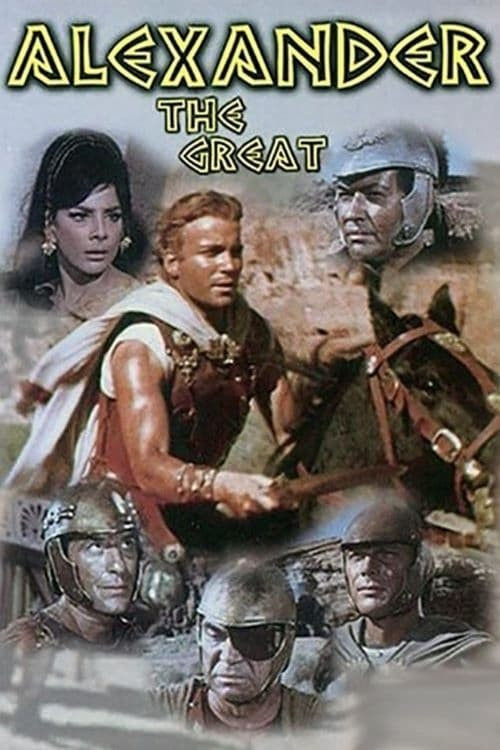
Welcome to Retro Television Reviews, a feature where we review some of our favorite and least favorite shows of the past! This Thursdays, I will be reviewing Alexander The Great, which was filmed in 1963 but didn’t air on CBS until 1968. The show can be found on YouTube!
This week, we take a look at William Shatner and Adam West in Alexander The Great, a pilot that never became a series.
Episode 1.1 “Alexander The Great”
(Dir by Phil Karlson, originally aired on January 26th, 1968)
Greek leader Alexander the Great (a very blonde William Shatner) is determined to defeat the forces of King Darius and conquer all of Persia. But, before he can fight his latest battle, he has to rescue his kidnapped best friend Cleander (Adam West), calm the nerves of his mentor Antigonus (Joseph Cotten), and deal with two insubordinate generals (John Cassavetes and Simon Oakland). Only then will Alexander be ready to defeat the fearsome, beheading-obsessed Persian general, Memmon (Cliff Osmond, wearing a truly horrifying wig and fake beard).
This hour-long episode features a lot of talking, a lot of scheming, and one good battle scene. Unfortunately, that good battle scenes becomes a lot less impressive once you discover that it was lifted from the 1959 film, The Giant of Marathon. As for the scheming, it’s not really a surprise when the generals plays by Cassavetes and Oakland reveal that they’re planning on assassinating Alexander during the battle. Both characters are so obviously villainous that their very presence amongst the ranks will lead most viewers to doubt whether Alexander is truly the tactical genius that everyone seems to think he is.
For most viewers, the main appeal of Alexander the Great will be the chance to see William Shatner and Adam West playing best friends. This pilot was made before Shatner was cast as Captain Kirk and West as Batman. While West gives a relatively sober performance as Cleander, Shatner shows that he had all of his famous acting tics long before he boarded the Enterprise. Shatner delivers every line as if he’s expecting to be handed an Emmy at any moment. The halting cadence is present. The overly dramatic punctuation is present. The habit of telegraphing every line and emotion by moving his head is present. This is the type of performance that feels more like William Shatner imitating himself than actually trying to play a character. Today, we’re all used to William Shatner poking fun at his reputation so it’s always a bit jarring to watch something like Alexander the Great and see just how seriously Shatner used to take himself.
Alexander the Great ends with Alexander achieving victory over both Memmon and his own duplicitous generals. He buries Antigonous, who was earlier murdered by the mutineers. And then, with a big smile on his face, Alexander hopes on his horse and rides off with Cleander and his surviving generals. Watching Shatner riding his horse, it becomes obvious that, had this pilot become a show, it would have been a western that just happened to take place in ancient Greece and which featured togas and mini-skirts instead of chaps and hats.
This pilot was shot in 1963 but it was rejected by the network and shelved. In 1968, when West was Batman and Shatner was Kirk, the pilot was taken out of storage and aired as an episode of an anthology show. Needless to say, it didn’t lead to a series. Adam West later poked fun at the pilot in his autobiography, saying that it was the greatest waste of an hour ever made. I think West was a bit too hard on the pilot. It’s not terrible as much as it’s just bland. No production featuring not only Shatner and West but also Joseph Cotten, Simon Oakland, and John Cassavetes has a right to be this mild.
One does wonder how, if the pilot had become a series, it would have deal with Alexander eventually drinking himself to death. Imagine what Shatner and West could have done with that!
If you’ve ever wondered what would happen if you mashed up a gritty police procedural with a futuristic New York City and a slow-burn romance that somehow never gets old, J.D. Robb’s In Death series is your answer. Now 62 books deep and still going strong, this series is a masterclass in how to take well-worn tropes—brilliant but emotionally closed-off detective, deadly serial killers, found family, and a romance that simmers across dozens of books—and make them feel fresh, addictive, and weirdly comforting every single time. It’s the kind of series you can binge like comfort food, but with a side of cybernetic enhancements and murder so creative it’ll make you side-eye your toaster. And yes, it’s absolutely a guilty pleasure—but not because it’s badly written or because Robb has lost her touch. It’s a guilty pleasure like that extra slice of pie you know you shouldn’t have but can’t resist, or buying a lottery ticket despite the astronomical odds. You know it’s not good for you in the grand scheme of things, but dang it, it feels good in the moment.
The series kicks off with Naked in Death, where we meet Lieutenant Eve Dallas, a homicide detective in 2058 New York who’s all sharp edges and zero patience for nonsense. She’s the kind of cop who’d rather work a double shift than talk about her feelings, which is convenient because her past is a landmine of trauma she’d prefer to ignore. Enter Roarke, the Irish billionaire with a shady past, a face that could melt glaciers, long black hair, deep blue sea eyes, and an Irish brogue that could charm the pants off a saint. He’s the billionaire playboy whose dubious criminal past built his legitimate business empire, and he’s the perfect foil to Eve’s law-abiding, no-nonsense demeanor. Their dynamic is the heart of the series and the ultimate embodiment of the “opposites attract” trope. Here you have two diametrically opposed characters—a by-the-book cop and a former criminal turned businessman—who somehow end up being perfect for each other. Their push-and-pull of trust, loyalty, and simmering tension is what makes their relationship so compelling. Robb (a pseudonym for Nora Roberts) takes her time with Eve and Roarke’s romance, letting it develop over the first handful of books in a way that makes their eventual partnership feel earned. And even when they’re officially together, their relationship keeps evolving—through marriage, career shifts, and the occasional murderous ex-lover trying to ruin their day. It’s the kind of slow-burn romance that makes you sigh happily every time they share a quiet moment, even if you know it’s all a little ridiculous.
What’s wild about In Death is how effortlessly it blends its genres while still finding new ways to retell similar stories. The sci-fi elements are often window dressing—hover cars, androids, and off-planet travel exist, but the focus is always on the murders, the investigation, and the people solving (or committing) them. The police procedural side is where the series shines, and Robb’s ability to take familiar setups (a killer targeting a specific demographic, a conspiracy within the police force, a cold case resurfacing) and twist them into something fresh is impressive. You’d think after 60-plus books, the well would run dry, but Robb consistently finds inventive angles, whether it’s the method of murder, the killer’s motive, or the personal stakes for Eve and her team. The supporting cast is a huge part of the charm, too. There’s Delia Peabody, Eve’s former rookie turned trusted partner, whose growth from wide-eyed newbie to seasoned detective is one of the series’ most rewarding arcs. Then there’s Captain Ryan Feeney, the gruff but lovable former cop turned consultant, whose gruff exterior hides a heart of gold (and a love for old-school tech). Even the villains often have depth, with motives that range from tragically relatable to straight-up unhinged.
But let’s talk about the tropes, because In Death has them in spades—and yet, they never feel lazy. Eve and Roarke are the poster children for the “opposites attract” trope, and it works because Robb gives them enough depth and chemistry to make their connection feel real. Eve is the classic “genius detective with a dark past” trope, but Robb gives her enough nuance and growth that she never feels like a caricature. She’s stubborn, yes, but she also learns—slowly—to let people in, to trust her team, and to accept that she doesn’t have to carry the weight of the world alone. Roarke, for his part, could easily have been a one-note “rich love interest” character, but instead, he’s a fully realized partner who respects Eve’s independence while also being unapologetically protective. Their relationship is built on mutual admiration and a shared sense of justice, and it’s refreshing to see a romance in a long-running series that doesn’t devolve into drama for drama’s sake. Even the recurring themes—like Eve’s struggle with her abusive childhood, or the way her job constantly tests her emotional boundaries—are handled with a deft touch that keeps them from feeling repetitive.
The series isn’t without its quirks, though. Some of the later books can feel a bit formulaic, with Eve and her team solving cases in a way that starts to resemble a well-oiled machine. And let’s be real: the number of times Eve gets into physical altercations with suspects who are way bigger and stronger than her, only to come out on top, starts to stretch credibility after a while. But these are minor nitpicks in the grand scheme of things. The real magic of In Death is how it makes you care about these characters, even when the plots start to blur together. There’s a comfort in returning to Eve’s world, where you know you’re going to get a solid mystery, a few laughs, and a healthy dose of heart. The series also does a great job of evolving its characters over time. Peabody’s rise through the ranks, for example, is a slow burn that pays off in satisfying ways, and even side characters like Dr. Morris, the medical examiner, get their moments to shine.
Another standout feature of the series is its ability to balance tone. One minute, you’re knee-deep in a gruesome murder investigation, and the next, you’re laughing at Eve’s sarcastic inner monologue or Roarke’s dry humor. The dialogue is sharp, the banter is frequent, and the chemistry between the characters—both romantic and platonic—keeps the pages turning. And while the sci-fi elements might not be the most hard-hitting or innovative, they serve their purpose: creating a world that feels just different enough from our own to be intriguing, but familiar enough to be relatable. New York in 2058 is still New York, just with more gadgets and a few extra layers of bureaucracy. It’s a world you want to escape into, even if you know it’s all a little indulgent.
At its core, In Death is a series about resilience. Eve’s journey from a traumatized orphan to a woman who’s found love, purpose, and a sense of belonging is the emotional backbone of the series. And while the mysteries are often the driving force of individual books, it’s the characters and their relationships that keep readers coming back. Robb’s ability to weave together sci-fi, police procedural, and romance into a cohesive, engaging whole is no small feat. It’s a testament to her skill as a storyteller that a series this long can still feel so vibrant and alive, even when it leans on familiar tropes. In a genre landscape where so many series fizzle out after a few books, In Death is a rare beast: a long-running saga that manages to stay fresh, fun, and deeply satisfying, book after book. Whether you’re here for the murders, the romance, or the sheer joy of watching Eve Dallas evolve, there’s plenty to love—and plenty more to dive into. And if anyone judges you for binging 10 books in a row? Well, they clearly haven’t experienced the simple joy of curling up with a new In Death novel and letting the rest of the world fade away.
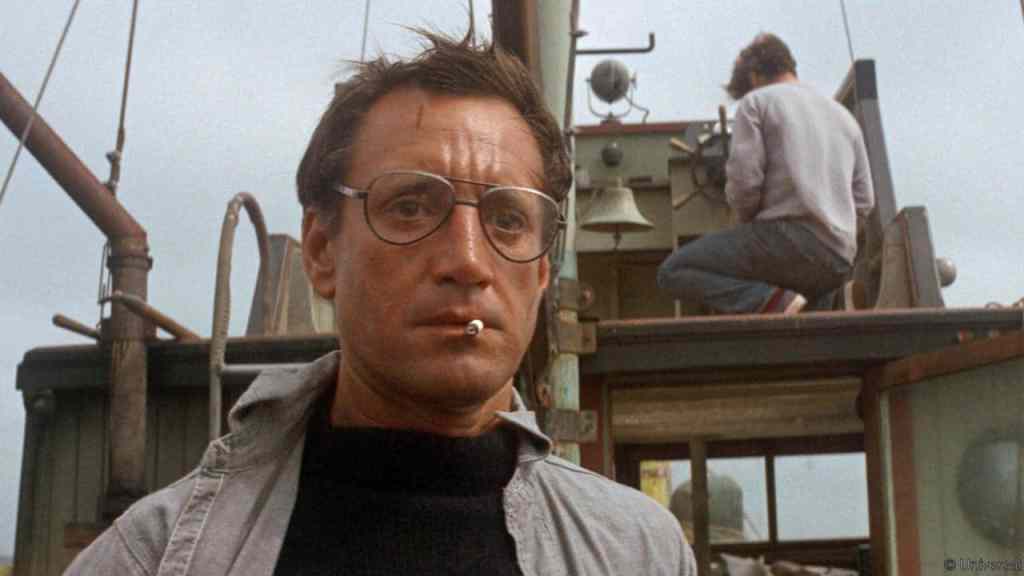
When I think of my favorite movie heroes, it seems that I’ll often lean towards men who may not appear that heroic on the surface but always seem to find the courage to do what needs to be done. Now don’t get me wrong, I love larger-than-life characters like John McClane, John Rambo, and Indiana Jones, but my ideal hero isn’t like those guys. My favorite heroes are normal guys, that is, until fate forces them to be more. A perfect example is Chief Martin Brody from JAWS.
Brody isn’t fearless. In fact, one of the first things we learn about him is that he’s afraid of the water. He’s a former New York City police officer who moved his family to the quiet island of Amity, only to find himself facing an absolute nightmare. While so many movie heroes run toward danger because they know they can handle it, Brody runs toward danger despite believing he can’t.
What makes him heroic isn’t supersized strength or expert fighting ability. It’s his sense of responsibility. Brody is always trying to do the right thing. He wants to close the beaches, but politics and the tourist money get in the way. Even after he’s pressured into backing down, he doesn’t stop trying to protect the people on the beach. And when the time comes, he gets on board the Orca with Quint and Hooper to go hunt a great white shark, even though that’s the last place on Earth he wants to be. His courage isn’t the absence of fear. Rather, it’s choosing to take action even though he is afraid.
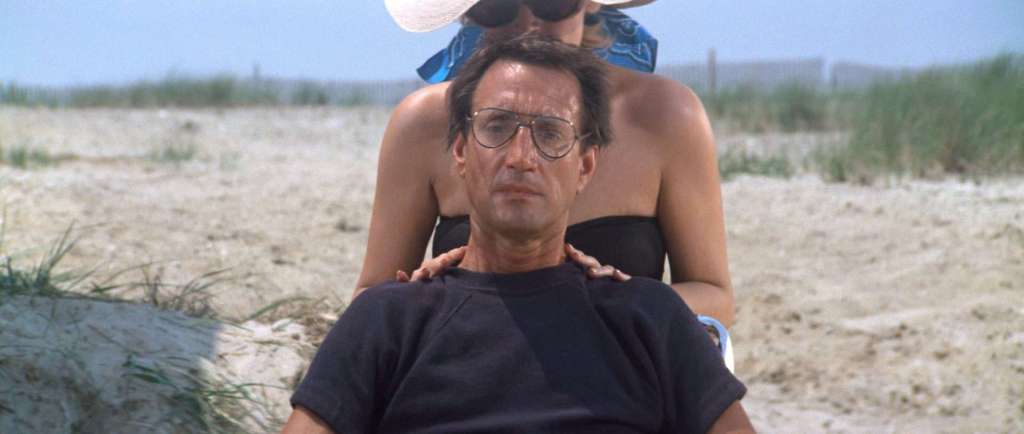
Of course, it doesn’t hurt that Brody is played by one of my all-time favorite actors, Roy Scheider, a man who has his own section in my massive physical media collection. Scheider deserves a tremendous amount of credit for making Brody feel so real. He doesn’t play Brody as tough. His facial expressions, body language, and nervous energy portray a man who is terrified. In other words, he represents how we might feel if we were in that position. Scheider’s performance reminds us that ordinary people are capable of extraordinary courage when others are counting on them.
That’s why Martin Brody is one of my favorite movie heroes. He doesn’t have superpowers, military training, or funny catch phrases, even if his “You’re gonna need a bigger boat” has become one of the most famous quotes in cinematic history. And he doesn’t stop being afraid, either. He’s just a decent man who keeps doing the right thing, even when he’s scared. That’s the kind of hero I can relate to.
Hi, everyone! Tonight, on Mastodon, I will be hosting the #TubiThursday watch party! Join us for Best Of The Best, starring Eric Roberts!
You can find the movie on Tubi and you can join us on Mastodon at 9 pm central time! (That’s 10 pm for you folks on the East Coast.) We will be using #TubiThursday hashtag! See you then!
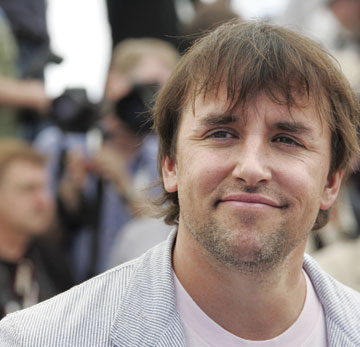
Today, the Shattered Lens wishes a happy birthday to the greatest director come out of Texas, Richard Linklater!
Today’s scene that I love comes from Linklater’s 1991 film, Slacker. Filmed in Austin, this film not only established Linklater as one of the best indie film directors but it also inspired a countless number of other aspiring filmmakers. How many other director have attempted to make a Slacker? None have done it as well as Linklater. Indeed, the film not only helped to define the modern independent film aesthetic but it also continues to shape the way that people view Texas’s idiosyncratic capital city.
In this opening scene, Linklater himself gets the film started, delivering a monologue as he’s driven around Austin.
4 Shots From 4 Films is just what it says it is, 4 shots from 4 of our favorite films. As opposed to the reviews and recaps that we usually post, 4 Shots From 4 Films lets the visuals do the talking!
Today, we wish a happy 66th birthday to Texas’s greatest filmmaker, Richard Linklater!
That means that it’s time for….
4 Shots From 4 Films
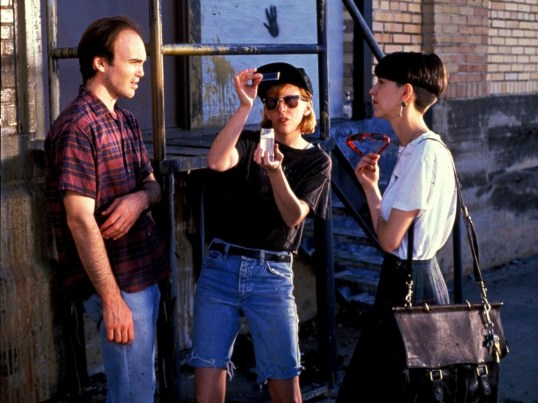
Slacker (1991, dir by Richard Linklater)
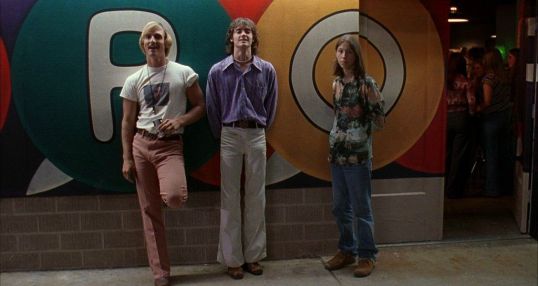
Dazed and Confused (1993, dir by Richard Linklater)