Late Night Retro Television Review: Freddy’s Nightmares 2.21 “Prisoner of Love”


Welcome to Late Night Retro Television Reviews, a feature where we review some of our favorite and least favorite shows of the past! On Fridays, I will be reviewing Freddy’s Nightmares, a horror anthology show which ran in syndication from 1988 to 1990. The entire series can be found on Tubi!

Let’s go to prison!  Is Freddy coming?

Episode 2.21 “Prisoner of Love”

(Dir by Richard T. Schor, originally aired on March 4th, 1990)

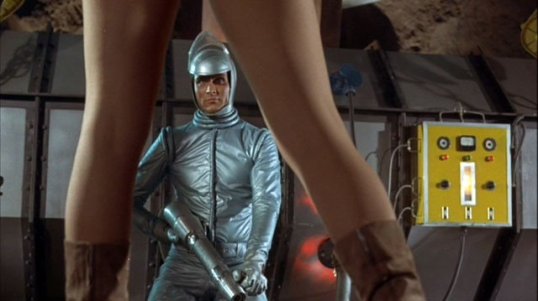
A flakey Episcopalian named Father Jarvis (Vincent Baggetta) is appointed the new chaplain of Springwood Prison.  Jarvis has just returned from Haiti and has a rather liberal outlook towards prison reform.  When he falls in love with Death Row prisoner Violet (Maria Richwine), he gives her a Haitian drug that will make it appear as if she’s died.  He promises her that he will dig her up from the prison graveyard before she suffocates.  Unfortunately, Jarvis oversleeps and Violet suffocates in her coffin.

Still, another prisoner named Brenda (Tara Buckman) overheard Jarvis talking to Violet and she decides that she wants the same drug.  Jarvis gives it to her but it turns out that Jarvis is also being haunted by the ghost of Violet.  Violet says that she can’t move on until Brenda forgives her for killing Brenda’s boyfriend.  Brenda finds herself being held captive by the crazed Father Jarvis.

This episode was the second-to-late for Freddy’s Nightmares and, unfortunately, it’s not very good.  Between the histrionic acting and the predictable plot, this story really makes you wish that Freddy was doing something more than just introducing it.  As it was, this episode really reminded me of how limiting the show’s format was.  Whenever something scary happens, it’s always a given that it will turn out to be a dream.  It’s predictable and a little bit dull, unless it’s one of the rare episodes in which Freddy actually played a role in the story.

Next week, we will finish up Freddy’s Nightmares!

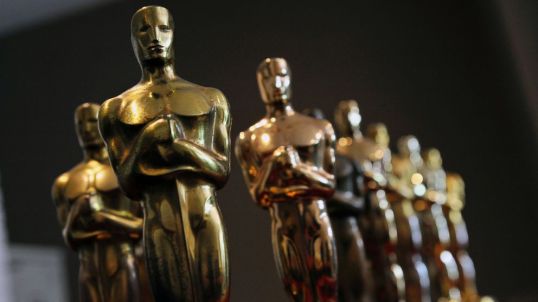
Lisa Marie’s Oscar Predictions For July


As you look over my latest Oscar predictions, you may notice that I’ve dropped two films that I originally had listed as major contenders.  Disclosure Day opened to mixed reviews and it really seems to have vanished from the cultural conversation in the wake of the release of The OdysseyDigger has not opened yet but I just get the feeling that this is going to be another pretentious Alejandro Iñárritu film.  Whenever anyone mentions the previous victory of Birdman, it always seems to be done with a slight bit of embarrassment.  I think Iñárritu’s time as an Oscar favorite might be over.

These predictions below are based on what’s been released, what will be playing at the major festivals, which trailers generated excitement (hello I Play Rocky!), which films are most likely to appeal to the Academy’s political biases (hello Ink and The Social Reckoning) and, as always, a lot of wishful thinking on my part.  (Hello I Play Rocky again!)

To see how my thinking has or has not evolved, check out my picks for March, April, May, and June!

Best Picture

The Adventures of Cliff Booth

Being Heumann

The Debut

Dune: Part Three

Fjord

Ink

The Odyssey

Project Hail Mary

The Social Reckoning

Wild Horse Nine

Best Director

David Fincher for The Adventures of Cliff Booth

Phil Lord and Christopher Miller for Project Hail Mary

Cristian Mungiu for Fjord

Christopher Nolan for The Odyssey

Denis Villeneuve for Dune: Part Three

Best Actor

David Corenswet in Mr. Irrelevant

Ryan Gosling in Project Hail Mary

Anthony Ippolito in I Play Rockly

John Malkovich in Wild Horses

Robert Pattinson in Primetime

Best Actress

Ellen Burstyn in Place To Be

Sandra Huller in Fatherland

Ruth Madeley in Being Heumann

Julianne Moore in The Debut

Renate Reinsve in Fjord

Best Supporting Actor

Steve Buscemi in Wild Horse Nine

Matt Dillon in I Play Rocky

Paul Giamatti in The Debut

Guy Pearce in Ink

Jeremy Strong in The Social Reckoning

Best Supporting Actress

Pamela Anderson in Place To Be

Anne Hathaway in The Odyssey

Samantha Morton in The Odyssey

Parker Posey in Wild Hose Nine

AnnaSophia Robb in I Play Rocky

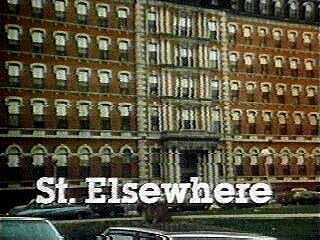
Retro Television Review: St. Elsewhere 4.4 “The Naked and the Dead”


Welcome to Retro Television Reviews, a feature where we review some of our favorite and least favorite shows of the past! On Fridays, I will be reviewing St. Elsewhere, a medical show which ran on NBC from 1982 to 1988.  The show can be found on Daily Motion.

Life is getting dark in Boston!

Episode 4.4 “The Naked and the Dead”

(Dir by Leo Penn, originally aired on October 30th, 1985)

This episode opens with Dr. Craig in an even worse mood than usual.  There’s two newspapers in Boston and they each have a totally different weather forecast.  One says that the day is going to be warm and sunny.  The other says to expect rain.  How is Dr. Craig supposed to know whether or not take an umbrella to the hospital!?  Ellen, meanwhile, is preparing for Stephen’s funeral, which is going to be held later in the day.

Yes, Dr. Craig does go to the hospital on the day of his son’s funeral.  He says that he has no choice because his patients need him but it’s obvious that the hospital is his way of avoiding the grief and guilt that he feels over the death of his son.  Ellen worries about whether or not Stephen will be buried in a comfortable suit.  Dr. Craig yells at a post-op patient for smoking and eating too much.  They’re both dealing with their sadness.

Dr. Westphall, meanwhile, deals with his nonstop depression by coming up with new (and impractical) community projects for the hospital.  In this episode, he leaves Tommy with a babysitter so that he can try to persuade the Board of Directors to fund his latest project, a clinic devoted to battling malnutrition.  The Board turns him down.  Westphall returns home a depressed.  That’s nothing new.  Westphall is always depressed.  That said, this was the first episode in which I really felt as if I understood Westphall’s depression.  Westphall feels guilty because, for all of his medical training, he still doesn’t understand his son’s autism.  So, instead of dealing with Tommy, Westphall throws himself into the hospital.  He’s really not that much different from Dr. Craig.

While that’s going on, Bobby hooks up with a physical therapist at the hospital.  Nurse Lucy (Jennifer Savidge) steals his scrubs and we get the sight of a half-naked Mark Harmon running through the hospital.  Meanwhile, an aspiring teenage photographer (Robert Romanus — DAMONE FROM FAST TIMES AT RIDGEMONT HIGH!) is beaten up when he sells some bad drugs to the other inhabitants of the group home where he lives.  The photographer is dead by the end of the episode.  It’s just that type of day.

This episode ends with Dr. Craig and his wife going to the funeral.  It’s raining, of course.

Wow, what a depressing episode!  Fortunately, the strong ensemble cast kept things bearable, even though there wasn’t much happiness to be found over the course of the hour.  Still, I worry about Dr. Craig.  He really does seem like he’s just a few days away from snapping.  Hopefully, he’ll express his grief at some point.  It’s not good to hold all that in.  We know there’s a bar near the hospital and Dr. Craig seems like he’s on the verge of becoming a regular.

Are things going to continue to get dark or is Boston going to see happier day?  We’ll find out next week!

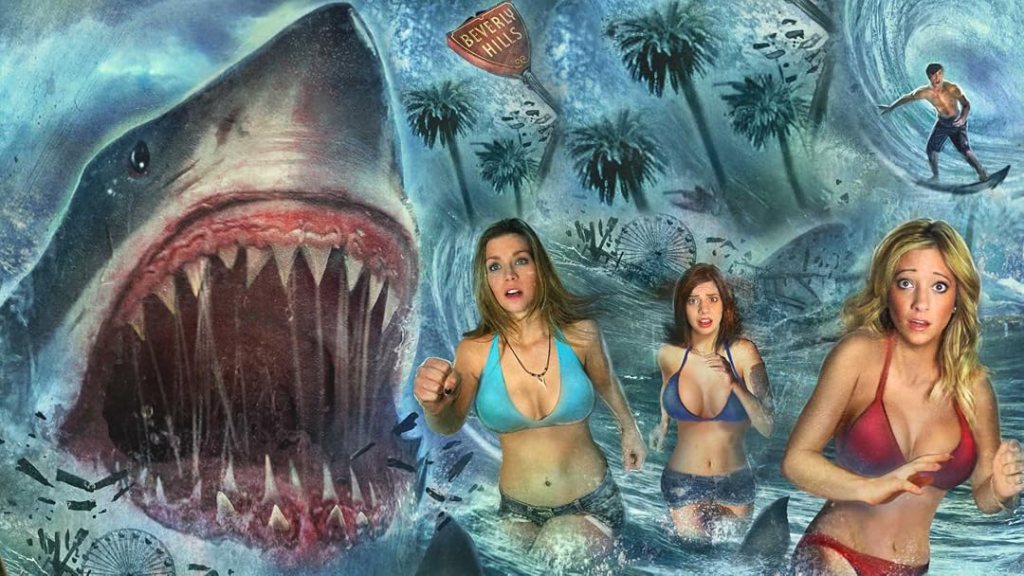
Brad reviews 90210 SHARK ATTACK (2014)!


There are bad movies, there are worse movies, and then there are the worst possible movies. 90210 SHARK ATTACK just may be the worst of the worst.

I’m not going to spend a lot of time on the plot, but it revolves around a group of horny college students who are spending the weekend in a beautiful mansion in Beverly Hills. They’re there for an Oceanic Anthropology class, where they’ll be working on special projects under the supervision of their scheming professor, Pamela Vantzen (Donna Wilkes). Unknown to the rest of the students, Alyssa (Stephanie Shemanski) is in possession of a cursed shark tooth necklace, and when she gets excited, bad things tend to happen.  

I knew I was in trouble when the movie opened on a Beverly Hills trolley car with Christmas decorations on it, signs like “Deck the Hills” and various artwork of Christmas presents. The movie is set during the summer. I also kept wondering how they would encounter sharks since the mansion they’re staying in is “miles away from the ocean,” but it turns out that the filmmakers didn’t care about this issue, so I soon stopped worrying about it myself. What this movie does have is a loop of stock footage that includes Beverly Hills, CGI sharks, a beach, and an aquarium that it cuts back to time after time. Between the extensive credit sequences and the stock footage, I would guess the actual actors are not on the screen more than 45 minutes of the entire 75-minute runtime.   

It doesn’t get much better when the actors are on the screen. I watched this because Donna Wilkes is in it. I had recently watched her in JAWS 2, and I remember her back in the ‘80’s in the enjoyable, low-budget exploitation film ANGEL (“High School Honor Student by Day. Hollywood Hooker by Night”). She doesn’t have anything to work with here, and neither do the other actors. The characters and dialogue are as ridiculous as you would expect, but in a boring way, not a fun way. So much time is spent watching them walk from room to room, or across the yard, or taking a shower, or gallivanting in the pool. I couldn’t even enjoy the shower scenes, because they only focused on the men!

When it’s all said and done, there’s very little time left for the sharks. And based on our movie, that’s not a big issue. Our CGI shark gets less than 30 seconds for the entire film. This part is sad, because the one thing that I did find ridiculously fun in a “wtf” kind of way is when the demonic ghost-shark first appears at about the 47-minute mark.

At the end of the day, I blame director David DeCoteau for this mess. I’ve been watching some of his “Wrong” series of Lifetime TV movies with the #MondayMania live tweet group. Those movies aren’t high art, but they are fun, campy thrillers, so I know he can make an enjoyable film. At the end of the day, I didn’t expect something great, but I did expect him to try to entertain us. Apparently, that was too much to ask!  

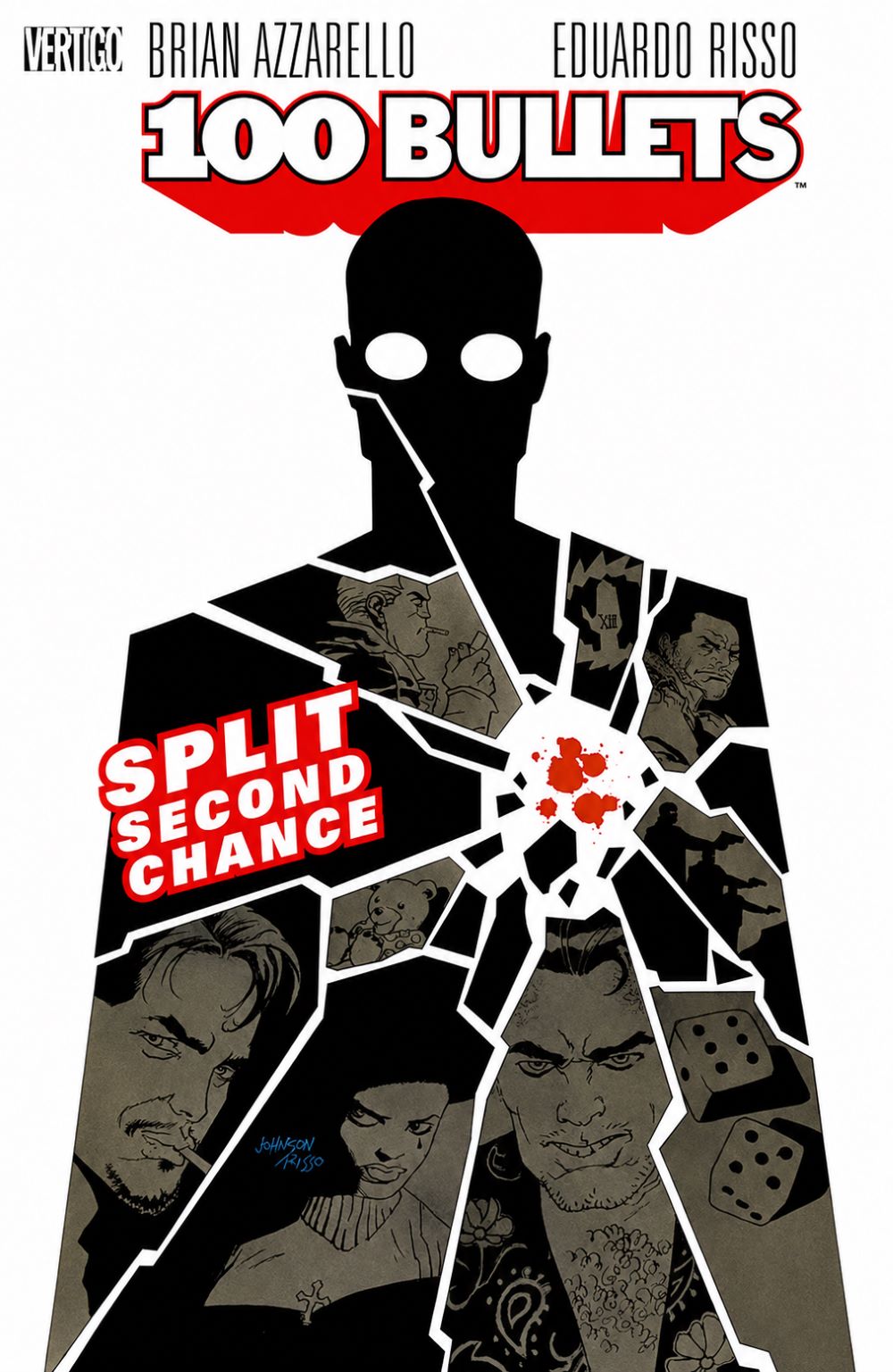
Review: 100 Bullets Vol. 2 – Split Second Chance


“Asking questions is free… but the answers—they can cost you your life.” — Agent Graves

In the first volume of 100 Bullets, Brian Azzarello and Eduardo Risso laid down a stunning thesis for their magnum opus: a world where the wronged are offered the ultimate temptation of consequence-free vengeance. That volume, First Shot, Last Call, functioned as a potent thematic introduction, establishing the series’ central moral quandary through self-contained stories. With Split Second Chance, the creative team makes a crucial pivot. This collection, gathering issues #6-14, successfully preserves the gritty, anthology-style explorations of revenge while beginning to weave a much larger, more intricate conspiracy that feels poised to consume everything in its path. If the first book was a promise, this second volume is the first, gripping step toward its fulfillment, even if it occasionally stumbles under the weight of its own ambition.

The volume opens with “Short Con, Long Odds,” a two-part story that initially feels like familiar territory. We are introduced to Chucky, a small-time gambler fresh out of prison, who is approached by Agent Graves. As before, Graves offers incontrovertible proof of a betrayal and the tools for retribution—this time against Chucky’s childhood friend, Pony, who has seemingly built a successful gambling empire on his partner’s misery. What makes this story stand out is its focus on the petty, desperate world of gambling. Risso’s art is especially potent here, capturing the sad, seedy underbelly of street-corner hustles and back-alley games. The story’s conclusion, which unfolds off-panel, is a masterclass in implication, leaving the reader to piece together the grim aftermath. It is a solid entry that reinforces the series’ core premise, but its real purpose becomes clear retroactively as the larger plot comes into focus.

This is the volume where the series’ title begins to earn its meaning. Agent Graves is no longer just a cipher; he is revealed to be a man with a history, and Split Second Chance doles out those histories with deliberate, tantalizing precision. The most significant revelation comes in “Day, Hour, Minute… Man,” where we learn about The Trust and the enigmatic Minutemen. This arc peels back the curtain, suggesting that Graves and his associate, Mr. Shepherd, were once part of this shadowy organization before faking their deaths to escape its clutches. The introduction of Lono, the chilling hitman from the first volume’s “The Samurai,” becomes far more significant. His meeting with Graves is charged with a dangerous, unspoken history, confirming that Graves’s “gifts” are a part of a larger, more personal agenda. The plot is thickening nicely, and the promise of a sprawling, interconnected narrative starts to feel exhilaratingly real.

However, it is in the standalone stories that Azzarello’s writing truly shines, showcasing his ability to extract raw, human emotion from his noir framework. The standout is undoubtedly “Heartbreak, Sunnyside Up,” a single-issue story that follows a hard-working diner waitress named Rose. Rose’s life is a grinding cycle of poverty and worry for her runaway daughter. When Agent Graves appears, he doesn’t just offer her a gun and a target; he delivers a slow, agonizing explanation of how her daughter became a heroin-addicted prostitute after being molested by her own father. It is a moment of pure, unflinching tragedy. The brilliance of the story lies not in the revenge itself, but in the horror of the revelation. Azzarello forces the reader and the character to sit with the unbearable truth, making the subsequent act of violence feel less like empowerment and more like a desperate, last resort. It serves as a powerful reminder that “sometimes evil is closer to home than we think.”

“The Right Ear, Left in the Cold” offers a fascinating twist on the formula by introducing Cole Burns, a deadly assassin living undercover as a neighborhood ice cream man. This story introduces the concept of the “sleeper agent,” a tool that Graves and Shepherd can “reactivate” for their own ends. Cole is a more capable and cold-blooded protagonist than the average victim, which makes his story less about moral choice and more about professional obligation. Yet, it deepens the mythology, showing that Graves has an entire network of operatives at his disposal, further blurring the line between righteous avenger and puppet master. His ultimate task of retrieving the briefcase from Dizzy Cordova in the final arc, “Parlez Kung Vous,” masterfully ties this new plot thread back to the series’ very first protagonist.

Throughout it all, Eduardo Risso’s artwork remains the series’ undeniable and consistent anchor. His style, which perfectly captured the cold, deliberate mood in the first volume, continues to excel in Split Second Chance. Risso’s panels have a cinematic rhythm; his compositions are economical yet expressive, using deep shadows and stark contrasts to build a world that feels dangerous and morally unstable. He excels at conveying unspoken tension and character attitude through posture and expression, a vital skill for a noir story where much is left unsaid. While some readers may find the depiction of female characters hyper-sexualized, Risso and colorist Grant Goleash unquestionably create a visual language that is sleek, uneasy, and unmistakably noir. The story’s pace may occasionally lag, but the art is always arresting.

100 Bullets: Split Second Chance is a more challenging and rewarding book than its predecessor. It sacrifices some of the first volume’s focus and self-contained impact to lay the foundation for something much grander. This is the volume where the series starts to earn its reputation for dense, interwoven plotting. It is a work of deliberate, intricate world-building that asks the reader to be patient and pay close attention. It is not without its flaws—some stories feel more like necessary setups than complete narratives, and the unrelentingly grim tone can be exhausting. Yet, the moments of genuine human tragedy, like Rose’s story, and the thrilling expansion of the central mystery make Split Second Chance an essential step in the journey. It confidently expands the world of 100 Bullets, deepening its mythology and proving that this is a saga built for the long haul.

100 Bullets Volume Reviews
Live Tweet Alert: Join #FridayNightFlix for Kickboxer 2!


As some of our regular readers undoubtedly know, I am involved in a few weekly watch parties.  On Twitter, I host #FridayNightFlix every Friday and I co-host #ScarySocial on Saturday.  On Mastodon, I am one of the five hosts of #MondayActionMovie!  Every week, we get together.  We watch a movie.  We tweet our way through it.

Tonight, at 10 pm et, I will be hosting #FridayNightFlix!  The movie?  Kickboxer 2!

If you want to join us this Friday, just hop onto twitter, find Kickboxer 2 on Prime, start the movie at 10 pm et, and use the #FridayNightFlix hashtag!  I’ll be there happily tweeting.  It’s a friendly group and welcoming of newcomers so don’t be shy.

See you there!


Song of the Day: Deep Down by Ennio Morricone


Danger: Diabolik (1968)

Since today is Mario Bava’s birthday, it only seems appropriate that today’s song of the day should come from one of his films.

From Ennio Morricone’s score to Mario Bava’s 1968 film Danger: Diabolik, here is Deep Down!


Scenes That I Love: The Opening of Mario Bava’s Black Sunday


Since today is the birthday of the great Mario Bava, today’s scene that I love comes from one of Bava’s best films.  Here is the wonderfully atmospheric and ominous opening of 1960’s Black Sunday:

4 Shots From 4 Films: Special Mario Bava Edition


4 Shots From 4 Films is just what it says it is, 4 shots from 4 of our favorite films. As opposed to the reviews and recaps that we usually post, 4 Shots From 4 Films lets the visuals do the talking.

112 years ago today, the most important Italian filmmaker of all time was born.  Today is Mario Bava’s birthday!  And, as we often do here at the Shattered Lens, it’s time to celebrate with…

4 Shots From 4 Mario Bava Films

Black Sunday (1960, dir by Mario Bava)

Kill, Baby, Kill (1966, dir by Mario Bava)

Lisa and the Devil (1972, dir by Mario Bava)

Shock (1977, dir by Mario Bava)