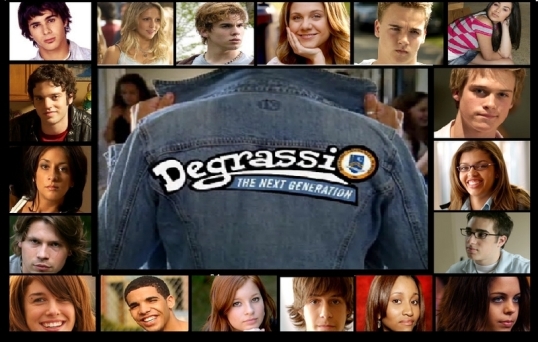
Welcome to Late Night Retro Television Reviews, a feature where we review some of our favorite and least favorite shows of the past! On Sunday, I will be reviewing the Canadian series, Degrassi: The Next Generation, which aired from 2001 to 2015! The series can be streamed on YouTube and Tubi.
This week, we start season 3!
Episode 3.1 “Father Figure: Part 1”
(Dir by Bruce MacDonald, originally aired on September 17th, 2003)
The third and fourth seasons of Degrassi: The Next Generation were Degrassi at its best so, over the upcoming year, we’ve got a lot to look forward to. Unfortunately, though, we have to start things off with some Emma drama.
The season premiere finds Emma in a bad mood. Yeah, that’s a shock, right? Emma was always in a bad mood. This time, she does have a somewhat legitimate grievance, even if, as usual, she seems to be totally unaware that other people have lives that don’t necessarily revolve around whatever she’s upset about at the moment. Her mother has always refused to tell Emma much about Shane McKay. Emma’s only memory of her father is visiting him in a clinic and Spike telling him that he couldn’t be a part of Emma’s life. Emma thinks that Shane was a doctor. Of course, all of us veteran Degrassi watchers know the truth. Shane McKay was a flakey high school student who suffered brain damage when he dropped acid and fell off a bridge.
Sean, quite sensibly, says that maybe Emma should just let it go for a bit, seeing as how she actually has a nice home and mother and stepfather who love her. (Emma often seems to forget that Sean has essentially been abandoned by his entire family.) Sean also points out that Spike is pregnant and doesn’t need the extra pressure of Emma constantly losing her temper. Realizing that Sean is making too much sense, Emma instead partners up with Craig and tracks down Shane. As the episode ends, she discovers that Shane (played by Jonathan Torrens) is living in an assisted living facility,
While all of that is going on, Paige is freaking out because of the location of her locker. Spinner makes a series of deals which leads to him eventually convincing new student Chris Sharpe (Daniel Keith Morrison) to trade lockers. Chris’s locker is located in Degrassi’s best hallway. Paige is happy about that. But the locker still looks old and dingy. Paige would rather have Jimmy’s locker. Good luck with that, Paige. Despite agreeing to set aside their differences at the last school dance, Jimmy is back to hating Spinner.
This episode also features the return of Caitlin Ryan, who comes back Toronto for Spike’s baby shower. (The creepy Farrell twins show up too. AGCK!) Caitlin meets Joey’s new girlfriend, realtor Sydney (Elisa Moolecherry). Before realizing who Sydney is, Caitlin rambles on about how she and Joey have such a complicated romantic history. This was the episode in which Caitlin was suddenly changed from being a level-headed professional woman to a neurotic klutz who continually got into awkward situations.
This is a two-part episode. We’ll conclude the story of Shane McKay next week!
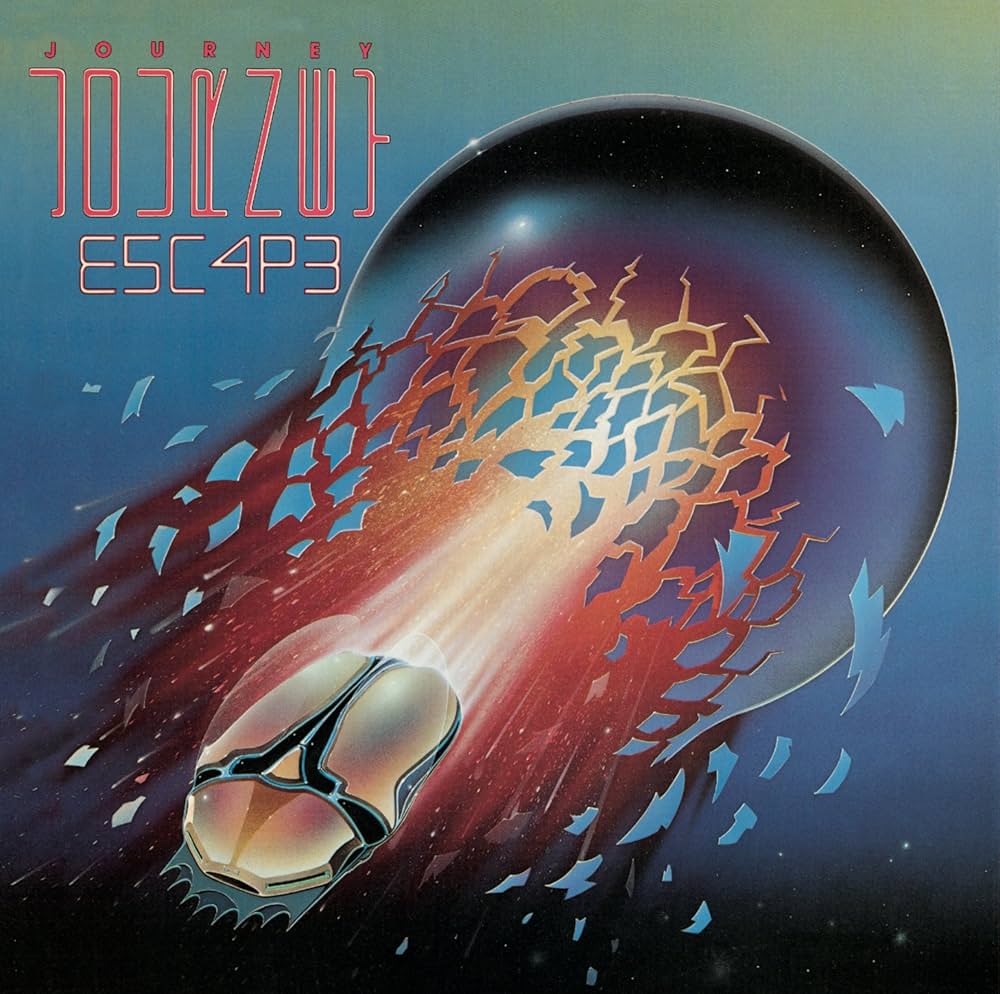
Let’s be real for a second: if you had to pick one single album that perfectly encapsulates the moment arena rock shook off its 70s blues-rock hangover and planted its flag square in the middle of the 1980s, it’s Escape. Journey’s seventh studio album, dropped in the sweltering summer of 1981, wasn’t just a commercial smash—it was a cultural re-calibration. It’s the record that took a band of former San Francisco prog-rockers, gave them a glossy sheen, and turned them into the house band for every stadium, coliseum, and municipal auditorium from coast to coast. This wasn’t a sellout; this was a breakthrough. Escape didn’t just ride the wave of arena rock—it basically built the wave, grabbed a surfboard, and rode it straight to diamond-certified immortality.
The secret to Escape’s world-conquering power starts with the lineup, plain and simple. This was the first full album with keyboardist Jonathan Cain fully integrated into the songwriting engine, and his arrival cannot be overstated. Before Cain, Journey had a more progressive, meandering sound—great musicianship, sure, but lacking that killer hook that could stop a radio dial in its tracks. Cain, alongside guitar virtuoso Neal Schon and the golden-throated Steve Perry, formed a triumvirate that just clicked. They started writing songs that were lean, mean, and built for maximum emotional impact. Cain’s keyboard riffs became the melodic anchor, Schon’s guitar work shifted from noodly solos to these wide, shimmering power-chord landscapes, and Perry? Man, Perry just did what he did best—singing his lungs out with that raspy, soulful tenor that could make a breakup feel like a Shakespearean tragedy and a triumph feel like winning the lottery. The production, helmed by the legendary Kevin Elson and Mike Stone, was pristine, layering every synth pad and backing vocal until it sounded like a cathedral of rock sound. It was expensive, it was ambitious, and it worked like a charm.
Now, let’s talk about the hits, because you literally cannot escape them—pun absolutely intended. The opening salvo of Don’t Stop Believin’ is arguably the most iconic album opener in rock history, and I’ll fight anyone who disagrees. That plinking piano intro, the creeping bass line, the way it builds and builds until Perry finally explodes with that “streetlight people” chorus—it’s pure adrenaline in musical form. It peaked at number nine on the Billboard Hot 100, but that statistic is laughable considering it’s become a karaoke national anthem for multiple generations. Then you’ve got Open Arms, the ultimate power ballad that sat at number two for six agonizing weeks, kept from the top spot by Olivia Newton-John’s Physical. But honestly? Open Arms is the one that still makes grown adults tear up at weddings and funerals alike. It’s tender without being saccharine, huge without being bombastic. And you can’t forget Who’s Crying Now, the first single, which kicks off with that unforgettable synth hook and rides a funky, almost new-wave groove that proved Journey could adapt without losing their identity. Still They Ride rounds out the hit parade, a more melancholic, bluesy number that showed they had range beyond the stadium anthems.
But here’s the thing that makes Escape a true landmark: the deep cuts are just as vital as the singles. This isn’t a two-hit wonder padded with filler. The title track, Escape, is a turbo-charged rocker that might actually be the most inspiring song on the whole record, a call to break free from whatever’s holding you down. Stone in Love became a massive FM radio staple in its own right, a nostalgic trip back to teenage summers that feels both specific and universal. Keep on Runnin’ and Lay It Down bring the raw energy, with Schon’s guitar biting harder than anywhere else on the album, while Mother, Father closes out the A-side with a dramatic, almost cinematic sweep that hints at the band’s prog-rock past. Every single track clocks in under five minutes, every chorus is built for a crowd of twenty thousand people to shout back, and every guitar solo feels like it was recorded in an echo chamber the size of a football field. It’s a record that was deliberately, meticulously designed for live performance, and it shows in every note.
So how did Escape usher in the 80s arena rock era? Let’s break it down. Before this album, the arena rock landscape was dominated by the bombastic blues of Led Zeppelin, the theatrical metal of Van Halen, and the working-class heartland rock of Bruce Springsteen. Those were all massive acts, sure, but they were holdovers from the 70s. Journey, with Escape, offered something different: a sound that was cleaner, brighter, and more synth-forward, yet still packed enough guitar muscle to satisfy the headbangers. They basically invented the template that bands like Bon Jovi, Def Leppard, and REO Speedwagon would ride to glory for the rest of the decade. The massive, layered backing vocals, the anthemic “whoa-oh” choruses, the gleaming keyboard patches that sounded like they were beamed in from a sci-fi future—all of that became the default setting for 80s rock. Escape proved that you didn’t need gritty distortion or bluesy swagger to fill a stadium; you just needed a killer hook, a relatable lyric about love or dreams, and a chorus that could be heard over the roar of twenty thousand screaming fans. It was rock music that was aspirational, not confrontational—music for the masses, not the misfits. And the industry took notice. Suddenly, every major label was hunting for their own Steve Perry, their own Jonathan Cain, their own glossy production team to replicate that Escape magic.
Looking back over forty years later, Escape hasn’t aged a day. It still sounds massive, still sounds fresh, and still sounds like the definitive blueprint for 80s arena rock. It’s the album that made Journey a household name, that turned Don’t Stop Believin’ into an eternal anthem, and that showed the world how to marry melody with muscle in a way that filled seats and sold records. Sure, you can argue that Infinity or Departure had more adventurous moments, but neither of those albums had the cultural reach, the radio dominance, or the sheer, unadulterated swagger of Escape. This was the moment when Journey stopped being a band and started being an institution. Escape didn’t just capture the sound of 1981—it predicted the sound of the next decade. It’s a time capsule, a greatest-hits collection in its own right, and a masterclass in how to build a rock album that’s built to last. Put it on, turn it up, and try not to sing along. I dare you.
When THE SPECIALIST came out back in ‘94, Sylvester Stallone was on a pretty good run of films, with his prior two movies being CLIFFHANGER and DEMOLITION MAN. I’m a fan of Stallone, but he wasn’t the main reason I went to see THE SPECIALIST at the movie theater. I went to see it because James Woods is in it. I’ve always been drawn to actors who are little different than your traditional Hollywood leading men. That’s why I’m especially fond of actors like Charles Bronson, Roy Scheider, and Woods. This was a point in Woods’ career where he seemed to be transitioning from a leading man to more supporting roles, but he still always brought his best to every performance. And anytime one of my favorite actors was in a movie, I was going to see it on the big screen.
Stallone plays Ray Quick, a former CIA explosives expert who now uses his unique set of skills to kill bad guys. His latest client is the extremely beautiful May Munro (Sharon Stone), who enlists his assistance in ridding the earth of Thomas Leon (Eric Roberts), a Miami mobster who murdered her parents when she was a girl. The problem… his former friend and now mortal enemy, Ned Trent (James Woods), works for the mobsters, led by patriarch Joe Leon (Rod Steiger). Nobody understands Quick like Trent, and with Munro having her own set of secrets, this job is going to be much more difficult than he imagined!
I won’t sit here and pretend that THE SPECIALIST is an incredible film. It’s very much a thriller of its time… with the humid Miami locations, oversized set pieces, lots of slo-mo, and even more double-crosses. It’s more melodramatic than I remember, but I probably appreciate that more now than I did then. It’s also impossible to look back on THE SPECIALIST and not remember where Sharon Stone was at that point in her career. Two years earlier, BASIC INSTINCT had made her one of the biggest stars in Hollywood. It felt like the pairing with Stallone was trying to recapture that magic, but it didn’t really work. There are a couple of sex scenes between the two, but director Luis Llosa is no Paul Verhoeven, so the scenes don’t share the same power.
With Stallone’s controlled, some might say comatose, performance, the movie truly belongs to James Woods. His Ned Trent is cocky, sadistic, and entertaining. He attacks every scene with so much intensity that you can’t take your eyes off him and he easily steals the film. I also enjoyed the strong supporting cast. Rod Steiger doesn’t have that much screen time, but he brings an unmistakable energy to the role of crime boss Joe Leon. Then there’s Eric Roberts, whose sleazy performance as Tomas Leon adds another layer of intensity that tries to match Woods. The scenes involving Woods, Steiger, and Roberts are some of the best of the film.
Is THE SPECIALIST one of Stallone’s action classics? Definitely not, but looking back at the kind of movies we get served these days, I’d say it’s pretty darn entertaining. Stallone and Stone could have brought more personality to their characters, but James Woods just about makes up for them by delivering one of his most delightfully over-the-top villains. And it’s just fun seeing veterans like Rod Steiger and Eric Roberts bring their own talents to the proceedings. I miss the times when movies were full of big stars and unique character actors. Whether you love it or not, THE SPECIALIST is one of those movies that you took home from the video store on a Friday night, popped in the VCR, and proceeded to have a good weekend. I miss that era of movies, and I especially miss those interesting stars!
Welcome to Retro Television Reviews, a feature where we review some of our favorite and least favorite shows of the past! On Sundays, I will be reviewing Homicide: Life On The Street, which aired from 1993 to 1999, on NBC! It can be viewed on Peacock.
This week, Brodie gets a storyline, Luther Mahoney continues to destroy lives, and Pembleton’s marriage collapses. It’s a busy few days in Baltimore.
Episode 5.16 “Valentine’s Day”
(Dir by Clark Johnson, originally aired on February 14th, 1997)
When a man is found dead in the apartment of Alan Schack (Neil Patrick Harris), Detective Munch assume that it was a case of suicide. However, Brodie went to school with Schack and is convinced that he’s the murderer. Munch refuses to take Brodie serious but, luckily, Sgt. Howard is more open-minded. After Alan beats up Brodie and leaves him on a snowy street, Brodie leaves Baltimore because he knows he’ll never get over the shame of being beaten up Neil Patrick Harris. Just kidding! Instead, Brodie doctors a tape to make it seem as if the police have evidence of Alan killing the victim. Alan falls for it because …. I guess he’s just really stupid. Like seriously, wouldn’t Alan have — at the very least — noticed that he was dressed totally different on videotape than he was on the day he committed the murder? Or does Alan just wear the same outfit day after day?
When two seemingly unrelated bombs go off, Kellerman and Bayliss find themselves investigating a — all together now! — “red ball!” Their investigation eventually leads them to the son of the grocer who was murdered by Luther Mahoney a few episodes ago. The bombs are being sent to the people who the son blames for Luther getting away with murder. One bomb is sent to the courthouse. “Lewis is at the courthouse!” Bayliss exclaims. “So is Julianna!” Kellerman says. Well, that’s convenient.
Frank and Mary Pembleton attend marriage counseling. It doesn’t go well. Frank finally agrees to allow their newborn daughter to be baptized despite the fact that he’s still struggling with his faith. Mary, however, still leaves Frank afterwards. She takes their daughter with her. Frank is left alone in their home, staring at an empty crib.
And finally, due to budget cutbacks, Giardello has to dust his own office!
On the plus side, I related to Giardello’s need to dust. As a sometimes struggling Catholic, I appreciated that the show took seriously Mary’s concerns about their daughter dying outside of a State of Grace.
Unfortunately, the rest of the episode just felt off. Neil Patrick Harris as a tough guy drug dealer? Nope. Sorry. I loved NPH as Dr. Horrible but I’m still not buying it. As for the bombing storyline, it felt almost like a parody of an episode of Homicide. Oh no! There’s a bomb at the courthouse and Lewis and Dr. Cox just happen to be standing right outside the doorway!
I regret to say it but this episode just didn’t work for me.
I’ve starting my summer job of writing about Big Brother at Reality TV Chat Blog. In honor of that, today’s song of the day is the little-remembered theme song from the first season of Big Brother!
After listening to this, you’ll understand why they’ve gone with an instrumental theme song from season two on.
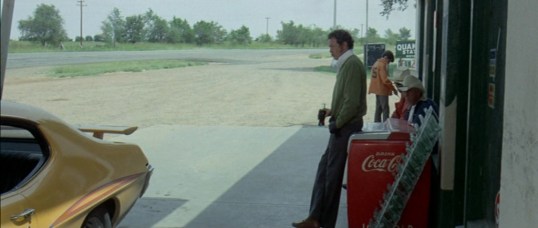
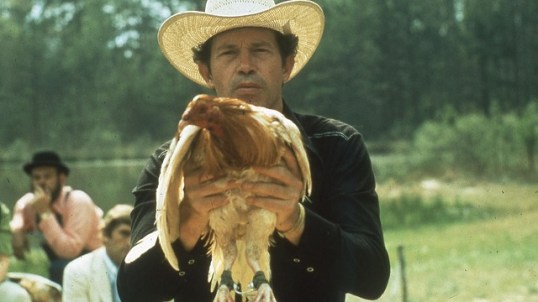
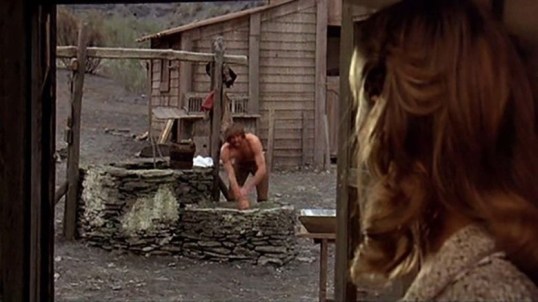
4 Or More Shots From 4 Or More Films is just what it says it is, 4 shots from 4 of our favorite films. As opposed to the reviews and recaps that we usually post, 4 Shots From 4 Films lets the visuals do the talking!
96 years ago today, the great director Monte Hellman was born in New York City. Though Hollywood never quite understood Hellman or his idiosyncratic vision, he and his films have inspired a countless number of independent filmmakers. Hellman started his career with Roger Corman and was one of the first directors to recognize the talent of actors like Jack Nicholson and Warren Oates. When Monte Hellman passed away in 2021, he was eulogized as one of the key figures of the Hollywood counterculture. Today, we celebrate Hellman and his films with….
4 Shots From 4 Monte Hellman Films
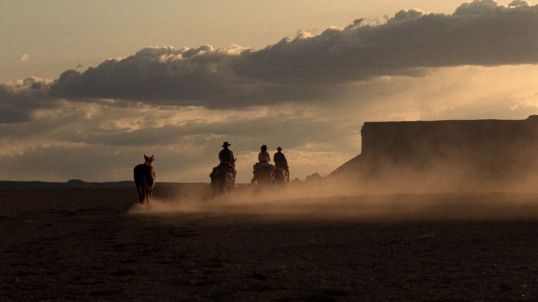
The Shooting (1966, dir by Monte Hellman, DP: Gregory Sandor)
Two-Lane Blacktop (1971, dir by Monte Hellman, DP: Jack Deerson)
Cockfighter (1974, dir by Monte Hellman, DP: Nestor Almendros)
China 9, Liberty 38 (1978, dir by Monte Hellman, DP: Guiseppe Rotunno)
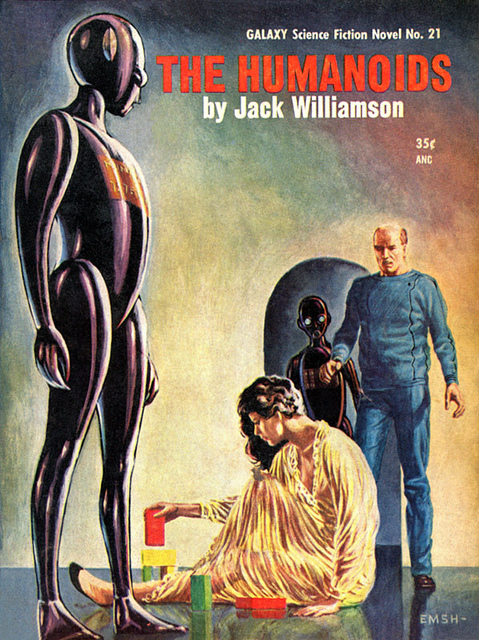
This cover is from 1954. I have seen this cover credited to Ed Valigursky, William Timmins, and Edmund Emshwiller. I’m going with Emshwiller because it appears that he signed his work.
Today’s music video of the day is for another song that I discovered while driving around Vice City in a stolen car.
(Several stolen cars, actually.)
Talk Talk’s Life’s What You Make It is one of the most popular songs on Grand Theft Auto: Vice City‘s FLASH FM. It’s the perfect song to listen to when you’re heading out to take down some drug dealers or if you just want to drive along the beach and wonder why Tommy Vercetti never learned how to swim.
The song was a hit both when it was originally released in 1985 and when it re-released in 1990. The video was filmed in Wimbledon Common, London, during the early hours of the day. The video was directed by Tim Pope, who directed videos for almost everyone in the 80s and 90s but is probably best-regarded for his work with The Cure.
Pope also directed the film, The Crow” City of Angels and was the original director for The Last King of Scotland. Though Pope eventually left and was replaced on that project, he was responsible for casting Forest Whitaker as Idi Amin, the role that would eventually win Whitaker an Oscar.