Late Night Retro Television Reviews: CHiPs 5.27 “Force Seven”


Welcome to Late Night Retro Television Reviews, a feature where we review some of our favorite and least favorite shows of the past!  On Mondays, I will be reviewing CHiPs, which ran on NBC from 1977 to 1983.  The entire show is currently streaming on Prime!
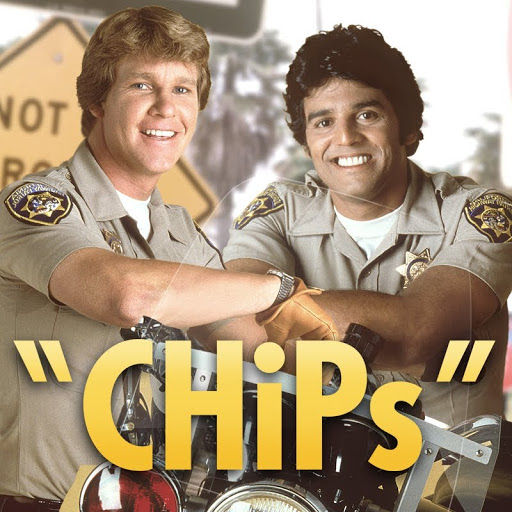
This week, the fifth season comes to an end.

Episode 5.27 “Force Seven”

(Dir by Leslie H. Martinson, originally aired on May 23rd, 1982)

When evil rich guy Nakura (John Rhys-Davies) steals a short-range missile from a military convoy,  he informs the Mayor of Los Angeles that he will fire that missile at the city unless he’s paid a healthy ransom.  The Mayor wants to send in the SWAT Team but one-eyed Lt. John Legarre (an eyepatch wearing Fred Dryer — yes, the star of Hunter) objects.  Guns won’t do the job, Legarre explains.  Why not send in Force Seven?

Led by Legarre, Force Seven is a secret division of the LAPD.  Including Legarre, there’s only four of them.  (So, why aren’t they Force Four?)  Sly (Tony Longo — hey, Mad Dog from 1st & Ten) is tough and strong and also a ventriloquist.  Cindy (Dona Kei Benz) is small but fast and doesn’t have a sense of humor.  Rick Nichols (Tom Reilly) is a rebel cop who does things …. HIS WAY!  What do they all have in common?  They all know karate!

This doesn’t sound like an episode of CHiPs, does it?

Well, technically, it’s not.  It’s a backdoor pilot.  Ponch and Baker appear at the start of the episode, arresting an engineer who is carrying the schematics for the stolen missile.  And they also appear at the very end of the episode, in which Getraer asks them if they remember that engineer they pulled over.  However, neither Ponch nor Baker interact with anyone from Force Seven.  I get the feeling that the Force Seven pilot was shot and then someone decided, “Why don’t we add Erik Estrada and Larry Wilcox and disguise this as an episode of CHiPs?”

Imagine if you were a CHiPs fan in 1982.  It’s the night of the season finale.  You turn on the TV because you want to watch motorcycle chases and car crashes.  Instead, you find yourself watching Fred Dryer wearing an eye patch and Tony Longo using a puppet to discuss elements of Eastern philosophy.  That’s one reason why backdoor pilots have never made sense to me.  They always seem like they would have just ticked off anyone who was watching.

Force Seven did not become a show.  From watching this episode, I think it probably would have been enjoyably dumb if it had led to a series.  As I already mentioned, Fred Dryer wears an eye patch.  Tony Longo is made up to look like Sylvester Stallone.  (His character is even named Sly!)  There’s something kind of amusing about two guys who are so big that they could obviously just take anyone out with one punch instead choosing to drag out every fight with karate.

(Amusingly enough, in Force Seven, the mayor of Los Angeles was played by former real-life mayor Sam Yorty, who ran for President in 1972.  The police commissioner was played by Ed Davis, the real life former chief of the LAPD who was serving in the California State Senate at the time and who later ran for the U.S. Senate in 1986.)

It is a little sad that this was Larry Wilcox’s final episode of CHiPs.  Fed up with Estrada getting all of the good storylines, Wilcox did not return for Season 6.  (His replacement would be played by Force Seven‘s Tom Reilly, though as a different character.)  For the first two seasons, Wilcox was the main character while Erik Estrada was the comedic sidekick.  However, by the time season 5 rolled around, it was clear that the producers were far more interested in Estrada than Wilcox.  As an actor, Wilcox wasn’t a showy as Estrada but he was more believable a cop.  In his final episode, Wilcox gets not a grand goodbye but instead appears only in two brief scenes.

Next week, we’ll start the sixth and final season!
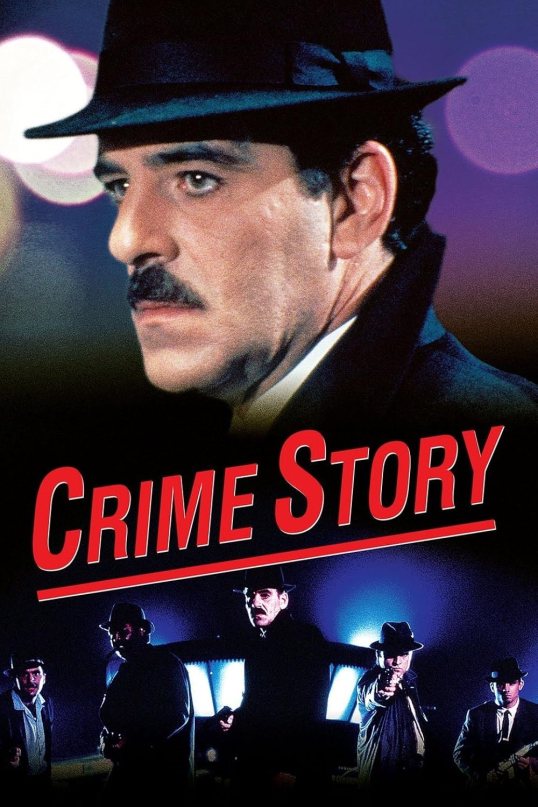
Retro Television Review: Crime Story 1.11 “Crime Pays”


Welcome to Retro Television Reviews, a feature where we review some of our favorite and least favorite shows of the past!  On Mondays, I will be reviewing Crime Story, which ran on NBC from 1986 to 1988.  The entire show can be found on Tubi!

Our story so far….

Episode 1.11 “Crime Pays”

(Originally aired on December 5th, 1986)

This week’s show will be easy to review because it’s a clip show.  It’s a bit more honest than most television clip shows.  It doesn’t feature the character sitting around saying stuff like, “I’ll never forget that time we gunned down half of Luca’s crew.”  Instead, the show’s narrator (Jack Angel) tells us that we’re going to see the story so far and then we see just that.  The best thing about this episode is Angel’s tough guy voice.

It’s not bad for a clip show.  It’s basically all of the Torello and Luca scenes without any of the filler.  If nothing else, it lets us know which of the past plotlines we should remember and which ones we can safely forget.  (Remember that Torello is obsessed with Luca.  Remember that Luca is determined to become a big man in the mob.  Don’t necessarily forget about David Arbams’s storylines but, at the same time, don’t worry if your memory’s a little fuzzy.)  But it’s still a clip show, nonetheless.


Have A Pulpy Moon Day!


by John Melo

57 years ago today, the first manned spaceflight to the Moon touched down on the lunar surface.  Let’s celebrate this wonderful anniversary with a little help from the pulps!  Not only were these covers illustrated by some of the finest artists working in the business but they also provide a clue as to how people imagined life on the Moon before Neil Armstrong first stepped out of the capsule.

by Joe Orlando
by Edmund Emshwiller
by Frank Frazetta
by Albert Drake
by Enoch Bolles
by Howard V. Brown
by Robert Graef
by Lawrence Sterne Stevens
by Walter Popp
by Roger Kastel

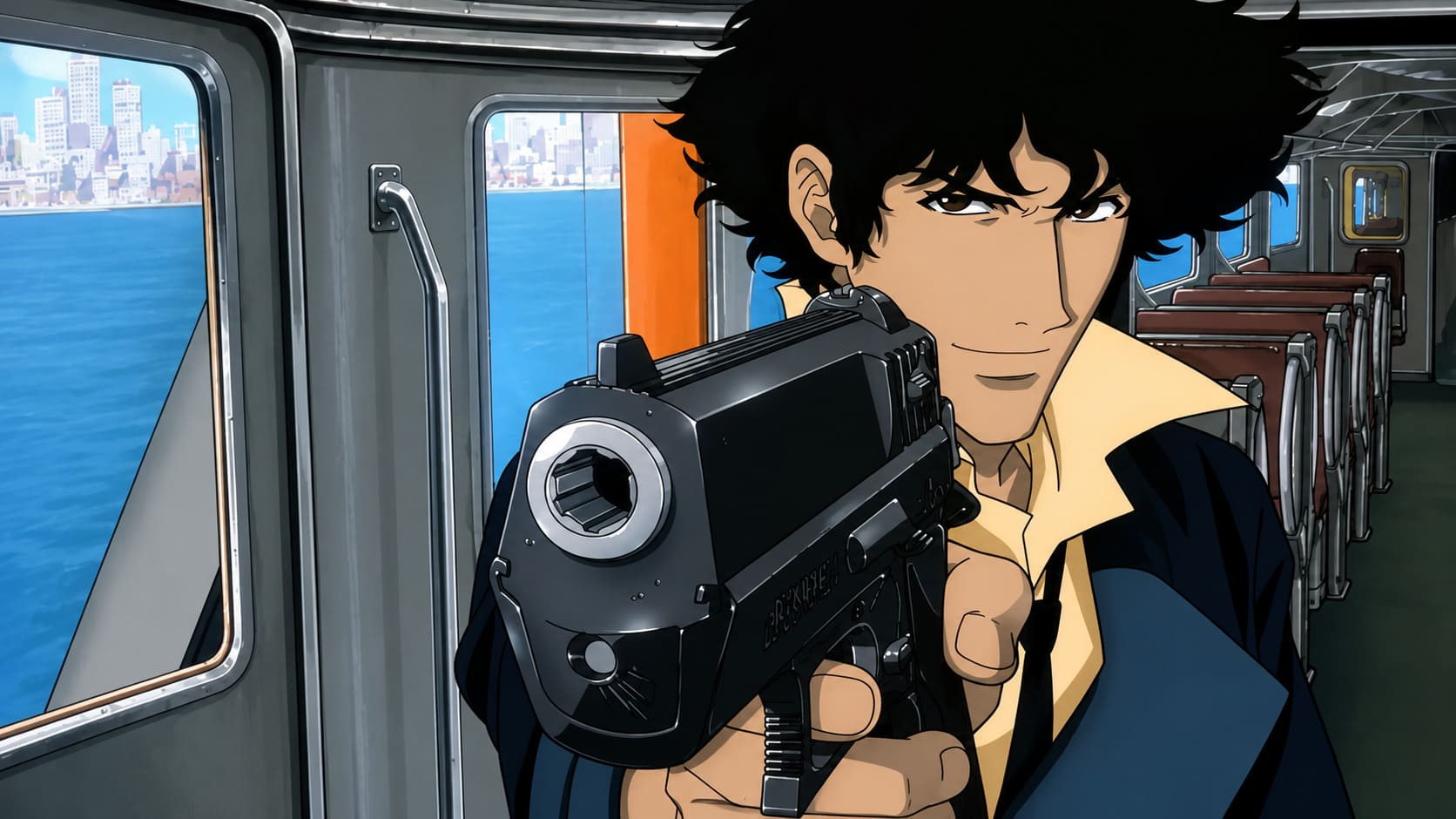
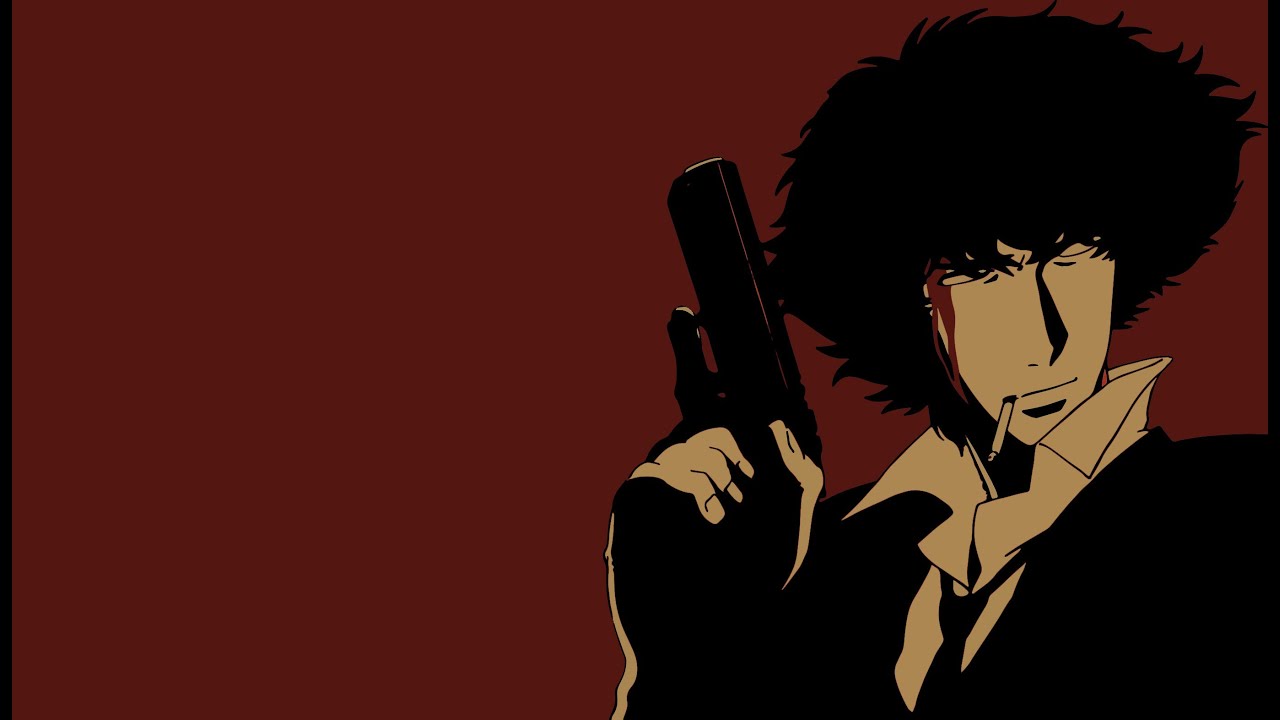
Hero of the Day: Spike Spiegel (Cowboy Bebop)


“I’m not going there to die. I’m going to find out if I’m really alive.” — Spike Spiegel

Few characters in anime history have cemented their legacy as indelibly as Spike Spiegel, the slacker protagonist of the neo-noir masterpiece Cowboy Bebop. At first glance, Spike seems to embody an archetype familiar to action media: the effortlessly cool, lone-wolf bounty hunter. Yet, what elevates him from a mere trope to an enduring icon is the profound juxtaposition at the core of his existence. Spike’s charisma does not stem from a traditional hero’s righteous drive, but rather from a deeply compelling contradiction—he is a man desperately trying to live in the present while being inextricably anchored to a violent past. This duality makes him not just a stylish action hero, but a fascinating study in trauma, detachment, and the performance of coolness.

Much of Spike’s immediate magnetism is undeniably visual and kinetic. Designed with a lanky frame, a perpetually rumpled suit, and a mop of unruly green hair, he subverts the traditional muscular anime hero. His physicality, heavily inspired by Bruce Lee’s Jeet Kune Do, further enhances his appeal. In combat, Spike does not fight with rage or precise, robotic calculation; he fights like he is dancing, waving off punches with a sardonic grin and fluid, almost lazy movements. He takes beatings as readily as he dishes them out, projecting an aura of invincibility that feels earned through sheer style rather than superhuman ability. This effortless physical grace makes him incredibly fun to watch, establishing a baseline of “cool” that the rest of his character actively deconstructs.

Beneath this facade of unflappable nonchalance, however, lies a complex psychological defense mechanism. Spike’s iconic philosophy—”whatever happens, happens” (katso okyaku-sama)—is often misinterpreted as pure nihilism, but it is actually the coping strategy of a broken man. By acting as though nothing matters, Spike shields himself from the agonizing grief of his past with the Red Dragon Syndicate and the woman he lost, Julia. His apparent laziness regarding bounty hunting, his refusal to take life seriously, and his perpetual, half-lidded expression are all mechanisms to avoid forming new attachments that could cause him pain again. This makes him a deeply relatable hero; his apathy is not a superpower, but a scar.

What truly makes Spike an interesting hero, however, is the nature of his ultimate conflict. Standard heroes fight to save the world or protect the innocent, but Spike’s narrative arc is intensely intimate and selfish. His antagonist, Vicious, is not a world-ending threat, but a dark mirror reflecting the life Spike tried to leave behind. When the past finally catches up to him, Spike is forced to drop his slacker persona and confront the ghosts he has been running from since the series began. His heroism is defined not by a desire to do good, but by a fatalistic need to set things right, even if the cost is his own life. He is a tragic hero wrapped in the guise of a comedic beatnik, fighting a war for his own soul rather than the fate of the universe.

Ultimately, Spike Spiegel endures as a charismatic and fascinating character because he is a masterclass in tragic irony. He spends the entire series convincing both his crew and the audience that he is a phantom, a man who died once and is simply living on borrowed time. Yet, in his final moments, his actions prove that he was more alive—and more capable of love, loyalty, and sacrifice—than he ever let on. Spike’s blend of kinetic coolness, guarded vulnerability, and fatalistic resolve creates a character that is as heartbreaking as he is effortlessly cool. It is this precise mixture that ensures that long after the final credits roll, Spike Spiegel remains the quintessential space cowboy.

Hero of the Day

Song of the Day: The Other Side by Public Service Broadcasting


Today’s sonf of the day is Public Service Broadcasting’s inspiring tribute to space exploration, The Other Side!

Yes, those are the voices of actual NASA engineers and astronauts, experiencing the dark side of the moon for the very first time.

This is from PSB’s classic album, Race for Space.

Enjoy!

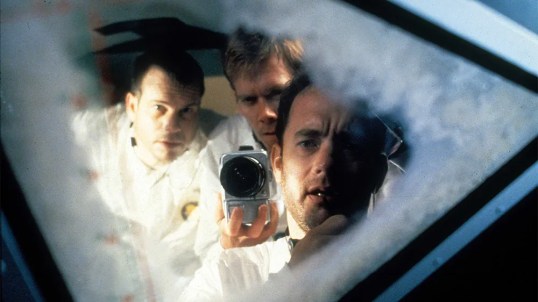
Scenes That I Love: James Lovell Dreams Of The Moon In Apollo 13


Apollo 13 (1995, dir by Ron Howard, DP: Dean Cundey)

Today we have an absolutely beautiful scene from 1995’s Apollo 13.  In this scene, astronaut Jim Lovell (Tom Hanks) takes a look at the moon and, for a minute, thinks about what could have been, if only a malfunction hadn’t scuttled Apollo 13’s moon landing and left Lovell and his two crewmates apparently stranded in space.  Though Lovell may dream of walking on the moon, he knows it won’t happen and that his only concern now is getting both himself and his crew back home.

Some critics have a tendency to dismiss Ron Howard as just being a director who makes middlebrow films but this scene shows him to be a director who instinctively understands not only what it’s like to dream but also what it’s like when reality intrudes on those dreams.  This scene features both Howard and Tom Hanks at their best.

4 Shots From 4 Films: Special Moon Edition


4 Shots From 4 Films is just what it says it is, 4 shots from 4 of our favorite films. As opposed to the reviews and recaps that we usually post, 4 Shots From 4 Films lets the visuals do the talking.

Today, we pay tribute to the moon!  It’s time for….

4 Shots From 4 “Moon” Films

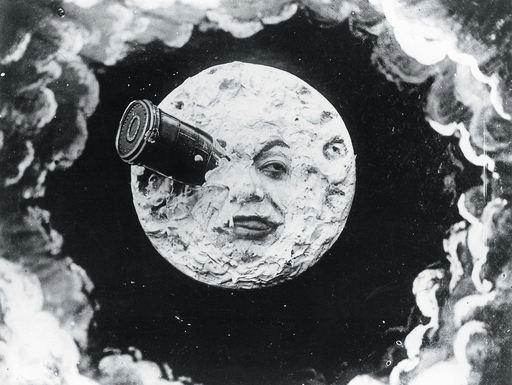
A Trip to the Moon (1902, dir by Georges Melies)

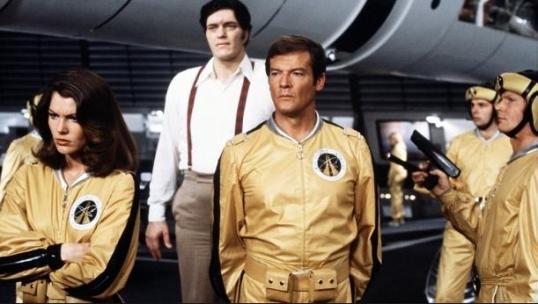
Moonraker (1979, dir by Lewis Gilbert)

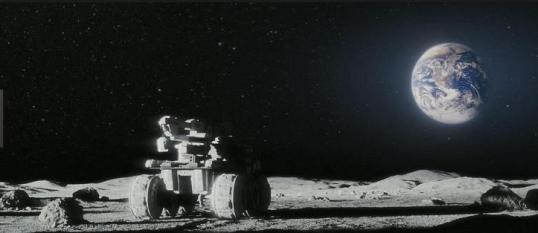
Moon (2009, dir by Duncan Jones)

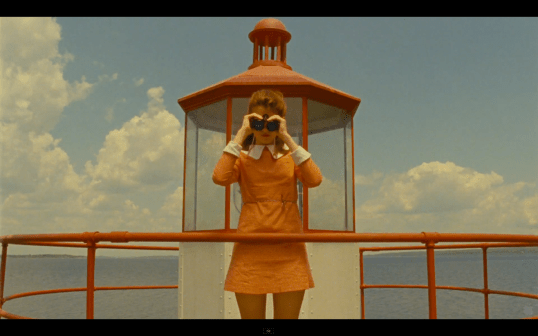
Moonrise Kingdom (2012, dir by Wes Anderson)

Monday Live Tweet Alert: Join Us For The Adventurer: The Curse of the Midas Box!


As some of our regular readers undoubtedly know, I am involved in hosting a few weekly live tweets on twitter and occasionally Mastodon.  I host #FridayNightFlix every Friday, I co-host #ScarySocial on Saturday, and I am one of the five hosts of Mastodon’s #MondayActionMovie!  Every week, we get together.  We watch a movie.  We snark our way through it.

Tonight, for #MondayActionMovie, the film will be 2013’s The Adventurer: The Curse of the Midas Box!

It should make for a night of fun viewing and I invite all of you to join in.  If you want to join the live tweets, just hop onto Mastodon, find the movie on YouTube and hit play at 8 pm et, and use the #MondayActionMovie hashtag!  The  watch party community is a friendly group and welcoming of newcomers so don’t be shy.   

See you soon!

AMV of the Day: No Place for a Hero (Cowboy Bebop)


The latest “AMV of the Day” is one of those pairings that just clicks immediately. Short Change Hero by The Heavy brings a smoky, blues-soaked sense of grit that feels tailor-made for Spike Spiegel, whose cool detachment always carries a hint of melancholy beneath the surface.

What makes the edit work is how naturally the song’s mood settles into the world of Cowboy Bebop. Spike has always been a character defined by style, but his appeal is just as much about weariness, regret, and motion without resolution, and this track leans into all of that without forcing the connection.

The result is an AMV that feels less like a simple montage and more like a character study. It captures why Spike remains one of Shinichiro Watanabe’s most iconic creations: a figure who can look effortlessly untouchable while still feeling deeply haunted.

Song: Short Change Hero by The Heavy

AnimeCowboy Bebop

CreatorDr. Wolf

Past AMVs of the Day