Late Night Retro Television Review: 1st & Ten 4.9 “Team Picture”


Welcome to Late Night Retro Television Reviews, a feature where we review some of our favorite and least favorite shows of the past! On Wednesdays, I will be reviewing 1st and Ten, which aired in syndication from 1984 to 1991. The entire series is streaming on Tubi.

Welcome to 2013!

Episode 4.9 “Team Picture”

(Dir by Stan Lathan, originally aired on November 30th, 1988)

Weird, weird episode.

Taking place 25 years in the future, this episode features the ’88 California Bulls reuniting in 2013.  Of course, since this episode was made in 1988, its version of 2013 is a bit different from the one that we all lived through.  The 2013 of this episode is a dark and depressing dystopia, with militarized police and …. well, maybe it wasn’t that much different from what we lived through.

In 2013, former wide receiver Billy Cooper is a reporter who is hoping to go from the sports desk to the anchor desk.

TD Parker (OJ Simpson) is now the mayor of Los Angeles.

Zagreb is still playing in the NFL.

Doug Clayton is a Nobel prize-winning scientist.

Dr. Death works at a lumber yard.

Mad Dog owns twenty-five “sex discos.”

Bubba Kincaid is now the “King of Beer.”  After his bar was shut down and demolished, he started Bubba Beer, which we are told is the “last American beer.”

And Jethro — well, no one has seen Jethro for ten years.  Bubba tried to get Jethro to join him in his Bubba Beer business but Jethro refused.  He went into wrestling and then he vanished.  Most of his teammates are angry with him.  They view him as being a crybaby who needs to man up.

In this episode, Jethro resurfaces at the Dodds Corporate Headquarters in Los Angeles.  He’s got a bomb strapped to his chest and he’s threatening to blow the whole place up.  TD and Billy both try to talk to him but Jethro doesn’t want to hear what they have to say.  Dr. Death approaches him and encourages him to blow himself up.  Finally, Bubba goes to Jethro and apologizes for abandoning him.  Unfortunately, Bubba gets shot by a robot sniper and is transformed into a pile of blue ash as Jethro watches.

And that’s how the episode ends!

I appreciated the fact that this episode was so weird.  It pretty much came out of nowhere and I’ll be surprised if it’s ever referenced again.  Probably the most interesting thing about it is that all of the Bulls ended up becoming jerks.  No one seems to really care that Jethro might die.  For that matter, Jethro isn’t that upset when Bubba gets killed.

I imagine when this episode aired, it was meant to be a commentary on how uncertain the life of a pro-athlete can be once they’re no longer playing.  For every success story, there’s someone else who ends up losing all of their money and being exiled to the fringes of society.  Seen today, it’s hard to watch Jethro without thinking about CTE and all of the former players who have succumbed to it.

This episode was so odd that it defies a traditional “good or bad” classification.  I appreciated it for trying to do something different.
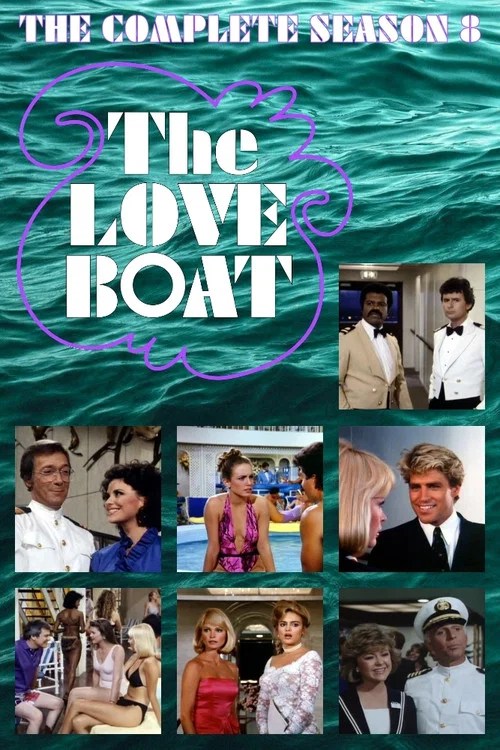
Retro Television Review: The Love Boat 8.2 and 8.3 “Vicki and the Fugitive/Lady in the Window/Stolen Years/Dutch Treat”


Welcome to Retro Television Reviews, a feature where we review some of our favorite and least favorite shows of the past!  On Wednesdays, I will be reviewing the original Love Boat, which aired on ABC from 1977 to 1986!  The series can be streamed on Paramount Plus!

This week, we have a two-hour episode of The Love Boat!

Episodes 8.2 and 8.3 “Vicki and the Fugitive/Lady in the Window/Stolen Years/Dutch Treat”

(Dir by Robert Scheerer, originally aired on September 29th, 1984)

This week, the crew is assigned to a European cruise!  Aboard the Royal Viking Sky, the crew and their passengers sail from England to the Netherlands and back again.  This is one of those episodes that was shot on location and, as always, the scenery is lovely.

The stories on the other hand….

Vicki falls for a deckhand named Peter (Patrick Cassidy).  In fact, Vicki even finds herself falling in love with him.  (In this episode, it’s established that Vicki is now 17.  Is she old enough now to actually get paid a salary for all the work she does on the boat?)  However, Peter is actually Anton, a young man who is being pursued by Interpol.  The show spends a lot of time trying to make it appear as if Antono is a criminal of some sort.  Actually, he’s just a royal prince who ran off because he wasn’t ready to accept his official duties.  Vicki is happy to discover that Anton isn’t a criminal but unhappy that he now has to stay behind and rule a kingdom in Europe.

Captain Stubing probably could have helped Vicki during all of this but he was too busy pursing a romance with Inga Van Damme (Elke Sommer), a mysterious passenger who, much like Anton, appeared to be keeping a secret from her romantic partner.  Telling Stubing that she couldn’t be with him, Inga left the ship early.  Stubing wandered all over Amsterdam, searching for her.  And he discovered her …. working as a madam.  “It is legal here,” Inga explains.  “But is it morally right?” Stubing replies.

Speaking of being morally right, Dr. Foster (Pat Harrington, Jr.) finds himself on the boat with both his wife (Eileen Brennan) and his mistress (Teri Copley)!  Wow, how many times can the exact same thing happen on the Love Boat?  As always with this show, the husband went back to his wife but, fortunately, his mistress met someone while leaving the boat.  “Can I help you with your bags?” the charming stranger asks.  “Are you married?” the former mistress replies.

Finally, Danish Lisa Anderson (Cloris Leachman) meets Erik Larsen (George Kennedy), another Dane, on the boat.  (George Kennedy speaks with his normal American accent.)  Erik falls in love with Lisa (Hey!  That’s my name!) but Lisa is haunted by memories of her former lover (Tim Robbins) being dragged away by the Nazis during World War II.  At first, it seems that Lisa is too haunted by what happened to move on.  However, it is eventually revealed that her former lover is Erik Larsen!  Somehow, Tim Robbins grew up to be George Kennedy.  In her memories, it appears that Lisa betrayed Erik but actually, by pointing him out to the Nazis, she bought him time.  While everyone else in the town square was being executed, Erik was being interrogated and, because of this, he was still alive when the Americans returned.

So, here’s the problem.  Cloris Leachman, not surprisingly, gives a great performance as Lisa.  And George Kennedy, once you get over the idea that he’s supposed to be Danish, gives a pretty good performance as Erik.  But flashbacks of Nazi atrocities feel very much out-of-place when mixed in with scenes of Vicki dating a prince and the doctor trying to balance being on a cruise with both his wife and his mistress.  Tonally, this episode is all over the place.

That said, the scenery’s lovely (am I repeating myself) and Ted McGinley fit in nicely with the rest of the crew.  Pat Klous isn’t bad as Judy but, at least at this point in the season, she doesn’t have the same sort of brother/sister chemistry that Lauren Tewes had with Fred Grandy and Bernie Kopell.  McGinley, of course, had the advantage that, while he was new, he still wasn’t replacing anyone.  Poor Pat Klous still has to escape from the shadow of the former cruise director.

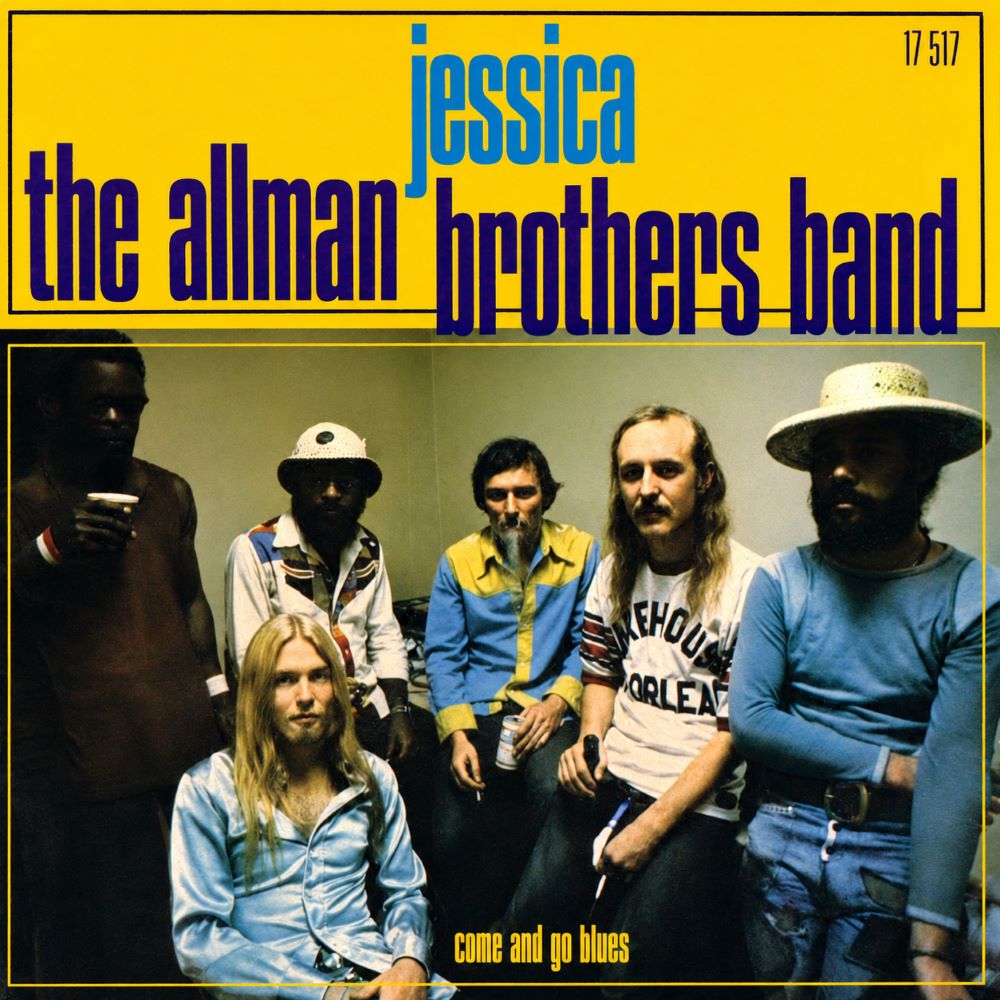
Song of the Day: Jessica (by The Allman Brothers Band)


When you sit down with Jessica by The Allman Brothers Band, it’s hard not to feel an immediate sense of warmth and uplift. It’s pure joy set to music, a sonic road trip with the top down and a sunny sky above. The backstory is pretty great too—Dickey Betts wrote it for his little daughter, and you can practically hear her bouncing around the room in that playful, carefree melody. It’s an instrumental, which means the guitars have to do all the talking, and man, do they have a lot to say. The song is a masterclass in weaving intricate parts together, from the opening acoustic strums to the dual-guitar harmonies that just make you want to tap your foot.

The real magic kicks in about halfway through. The song’s structure is a journey, with themes and melodies weaving in and out. There’s a fantastic piano solo from Chuck Leavell that comes in a bit before the halfway mark, but the main event, the centerpiece guitar solo, is where Dickey Betts truly shines. His solo begins at 3:45, and it’s like he’s telling a story without words. It’s not about flashy, fast playing, but about crafting a melody that feels both conversational and powerful—just pure, expressive Southern rock.

What’s so interesting is the technique behind that sunny sound. Betts was paying tribute to the great Django Reinhardt with this tune, actually writing it to be played using only two fingers on the fretboard. That restriction somehow gave the melody its distinct, rolling quality. It’s built on a major scale with a slightly bluesy twist, giving it that upbeat yet soulful feel. He uses clean, melodic phrasing and these country-inspired double stops that just sing, making the guitar sound as natural as breathing. It’s a testament to his genius that he could create something so timeless with such a simple, almost limiting, approach.

It’s wild to think this cheerful song came out of a period of heavy loss for the band, after the deaths of Duane Allman and Berry Oakley. Instead of wallowing, they channeled that energy into this seven-and-a-half-minute celebration of life. The fact that it’s named after Betts’ daughter just adds to its personal, life-affirming feeling. For me, Jessica is the definitive proof that a guitar solo, when done right, can say more than a thousand lyrics ever could. Betts’ solo from 3:45 onward is a masterpiece of mood and melody, and it’s the reason this song has become one of the most iconic and beloved instrumentals in rock history.

Great Guitar Solos Series

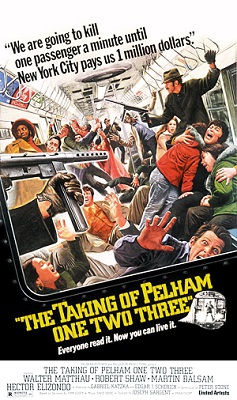
Scenes that I Love: Walter Matthau Talks To Robert Shaw in The Taking of Pelham One Two Three


101 years ago, on this date, Joseph Sargent was born in New Jersey.  Sargent would go on to become one of the busiest directors of the 70s, 80s, and 90s, working in both film and television.  Though he would never receive the type of critical attention as some of his contemporaries, Sargent was a skilled director who specialized in making entertaining, no-nonsense films.  Though his reputation was tarnished a bit by the fourth Jaws film, it should be remembered that Sargent was also responsible for films like Colossus: The Forbin Project, Tribes, Nightmares, and The Taking of Pelham One Two Three.

1974’s The Taking of Pelham One Two Three has come to be recognized as a genre classic.  It’s certainly one of my favorite films about how New Yorkers will be rude to anyone in any circumstances.  You can see an example of this in today’s scene that I love.  Having hijacked a train, Robert Shaw calls in his last of demands and gets a very New York response.

4 Shots From 4 Films: Special Paul Schrader Edition


4 Or More Shots From 4 Or More Films is just what it says it is, 4 shots from 4 of our favorite films. As opposed to the reviews and recaps that we usually post, 4 Shots From 4 Films lets the visuals do the talking!

Today is the birthday of the one and only Paul Schrader!  It’s time for….

4 Shots From 4 Paul Schrader Films

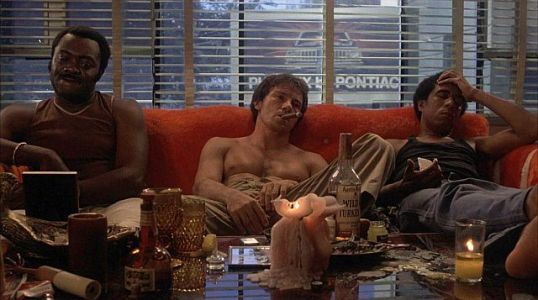
Blue Collar (1978, dir by Paul Schrader, DP: Bobby Byrne)

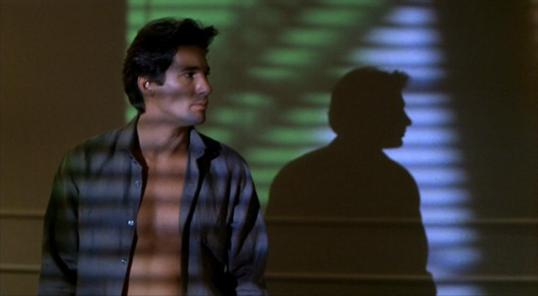
American Gigolo (1980, dir by Paul Schrader, DP: John Bailey)

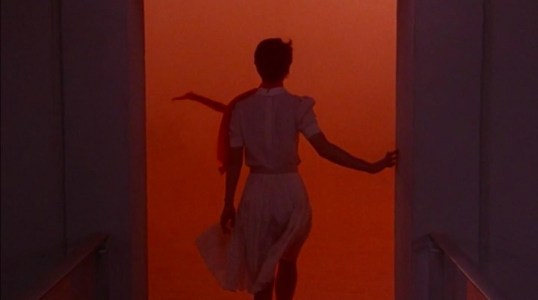
Cat People (1982, dir by Paul Schrader, DP: John Bailey)

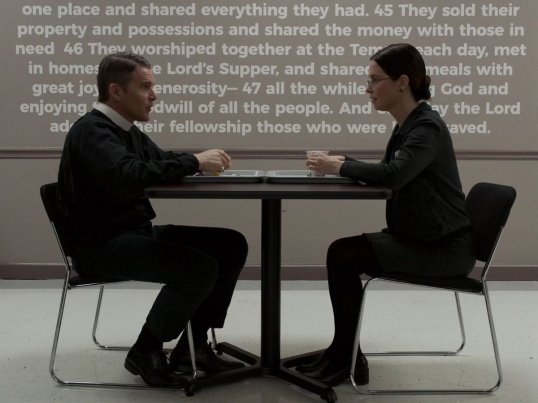
First Reformed (2018, dir by Paul Schrader, DP: Alexander Dynan)

Music Video of the Day: Night and Day by U2 (1990, directed by Wim Wenders)


With Night and Day, U2 not only provide their own spin on Cole Porter’s best-known song but they also introduced the sound that would define them throughout the 90s. This was the first song of U2’s post-Joshua Tree era.

The video was directed by the German director, Wim Wenders. U2 would subsequently provide songs for Wenders’s Until The End Of The World and Far Away So Close. Bono would also produce and provide the story for The Million Dollar Hotel, one of Wenders’s less regarded films.

Enjoy!