Review: The Equalizer (dir. by Antoine Fuqua)


“When you pray for rain, you gotta deal with the mud too.” — Robert McCall

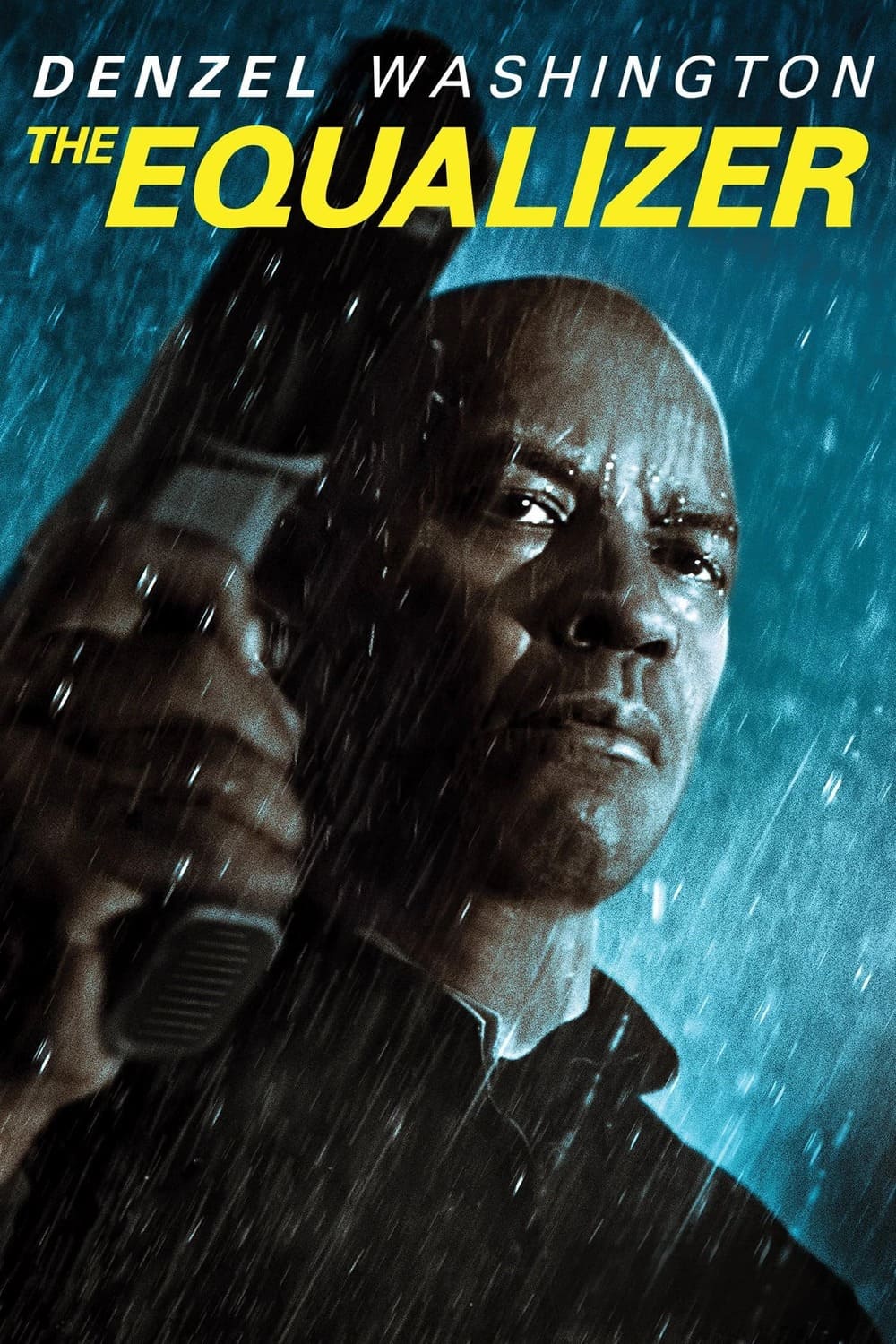
Antoine Fuqua’s The Equalizer is a film remake of the original 1980s TV series that starred Edward Woodward in the title role, and it feels like a throwback to the gritty, no-nonsense action thrillers of that era, but with a modern polish that only a director like Fuqua can deliver. From the opening frame, you know you’re in for something that’s equal parts stylish and brutal, a film that doesn’t waste time with unnecessary fluff and instead gets straight to the point: justice, served cold and calculated. Denzel Washington plays Robert McCall, a man who looks like your average big-box store employee by day but transforms into a methodical, almost surgical force of retribution by night. The premise is simple—McCall can’t stand to see good people get hurt, and when the Russian mob pushes him too far, he snaps into action—but the execution is anything but.

Where Woodward’s McCall was a more cerebral, world-weary ex-intelligence officer who relied on wit and strategy as much as physical force, Denzel’s version is a man of few words who lets his actions do the talking. Woodward brought a melancholic, almost philosophical edge to the role, giving the original series a more introspective, morally ambiguous tone. Denzel, though, brings a quiet intensity that’s all about controlled fury, shifting the film’s tone toward something more visceral and immediate. It’s less about the internal struggle and more about the sheer efficiency of justice being delivered, which makes Fuqua’s version feel like a high-octane action thriller rather than a brooding character study. This difference in approach is key to why the movie works so well as a modern reboot—it keeps the spirit of the original while amping up the energy to match today’s action standards.

This version of The Equalizer stands out in how it balances its quiet, character-driven moments with explosive bursts of violence. Fuqua has always had a knack for action, but here he takes his time building tension, letting scenes breathe in a way that makes the eventual payoff feel earned. There’s a sequence early on where McCall takes apart a room full of Russian gangsters, and it’s not just the choreography that impresses—it’s the precision. Every movement has purpose, every strike is efficient, and the whole thing unfolds with a kind of balletic brutality. Washington sells it all with that signature calm intensity of his, the kind of performance where you’re never quite sure if he’s about to offer you a cup of tea or put you in the ground. His McCall is a man of discipline, a guy who’s clearly spent a lifetime honing his skills, and it shows in the way he carries himself, whether he’s reading a book in a diner or turning a hardware store into an improvised armory.

The story itself isn’t reinventing the wheel. It’s a classic revenge tale with a heavy dose of vigilante justice, but the devil’s in the details. McCall isn’t some invincible super-soldier; he’s a guy who’s smart, resourceful, and, above all, patient. He doesn’t rush into things. He plans, he observes, and when he finally makes his move, it’s with the kind of cold efficiency that makes you wince and cheer at the same time. The film’s villain, Teddy Rensen, played by Marton Csokas, is a solid antagonist—a slick, ruthless mob fixer who’s used to getting his way. Csokas brings a quiet menace to the role, and his dynamic with Washington crackles with tension, especially in their final confrontation, which is as much a battle of wits as it is a physical showdown.

Fuqua’s direction is a masterclass in pacing and atmosphere. He knows how to make even the simplest scenes feel charged with meaning. Take, for example, the way he frames McCall in his apartment, surrounded by mementos of a past life we only get glimpses of. There’s a sense of history there, a depth to the character that’s never explicitly spelled out but is always felt. And then there’s the action, which is shot with a clarity that’s refreshing in an era where so many directors rely on shaky cam and rapid cuts to hide their lack of choreography. Fuqua lets you see everything, and it makes the violence hit harder because of it. The climactic battle in the hardware store is a perfect example—it’s a long, unbroken take (or at least feels like one) that puts you right in the middle of the chaos, and it’s thrilling precisely because you can follow every punch, every improvised weapon, every desperate move.

The supporting cast does a great job of fleshing out the world around McCall. Chloe Grace Moretz plays Teri, the young prostitute who becomes the catalyst for McCall’s crusade, and she brings a vulnerability to the role that makes her more than just a damsel in distress. She’s tough, but she’s also broken, and Moretz nails that balance. Then there’s Harold, McCall’s coworker and only real friend, played by Bill Pullman. Their scenes together provide some much-needed levity, but they also serve as a reminder that McCall isn’t just a machine—he’s a human being with connections, however tenuous, to the world around him.

One of the things I like most about The Equalizer is how it doesn’t glorify violence so much as it treats it as a necessary evil. McCall doesn’t enjoy what he does; he does it because he feels he has to. There’s a fascinating psychological undercurrent to his conversations with Teri about the nature of the people who hurt others, specifically this idea that the cruel and corrupt always find a way to rationalize their monstrous actions. The film really explores this twisted logic where abusers and criminals somehow convince themselves they are actually the good guys, completely blind to their own wickedness. It cuts to the heart of the movie’s theme: that real justice isn’t always pretty, and sometimes the only way to stop a relentless villain is to step into the darkness and meet them on their own brutal terms. It’s a morally complex idea, and the film doesn’t shy away from it. McCall isn’t a hero in the traditional sense. He’s a man with a very particular set of skills, and he uses them to tip the scales in a world that’s heavily weighted toward the cruel and the powerful.

Visually, the film is stunning. Fuqua and his cinematographer, Mauro Fiore, make Boston feel like a character in its own right, all grimy streets and neon-lit alleys. The color palette is dark and moody, with pops of color—like the red of a taillight or the blue of a neon sign—that stand out in a way that feels almost painterly. And the score by Harry Gregson-Williams is the perfect complement, all pulsing synths and deep, ominous basslines that ratchet up the tension without ever feeling overbearing. It’s the kind of soundtrack that you don’t notice until it’s gone, and then you realize how much it was adding to the experience.

If there’s a downside to The Equalizer, it’s that the plot can feel a bit thin at times. The story is straightforward, almost to a fault, and there are moments where you wish it would delve a little deeper into McCall’s backstory or the larger implications of his actions. But then again, that’s not really what the movie is going for. This isn’t a sprawling epic; it’s a tight, focused thriller that’s more concerned with mood and atmosphere than with intricate plotting. And in that regard, it succeeds admirably. The film is lean, mean, and never boring, with a runtime that flies by because it’s so damn entertaining.

Denzel Washington, of course, is the glue that holds it all together. At this point in his career, he could probably read the phone book and make it compelling, but The Equalizer gives him a role that’s tailor-made for his strengths. McCall is a man of few words, but every line Washington delivers carries weight. Whether he’s calmly negotiating with a gangster or unleashing hell on a group of armed thugs, he commands the screen with an effortless charisma that’s hard to look away from. It’s the kind of performance that reminds you why he’s one of the greatest actors of his generation.

In the end, The Equalizer is a movie that knows exactly what it is and doesn’t apologize for it. It’s a violent, stylish, and endlessly watchable action thriller with a lead performance that elevates it above the usual fare. It doesn’t pretend to be anything more than it is, and that’s part of its charm. In a world where so many films try to be everything to everyone, The Equalizer is content to be a well-made, pulse-pounding revenge story—and it’s all the better for it. If you’re a fan of action movies that don’t skimp on the brains or the brawn, this one’s a must-watch. Just don’t be surprised if you find yourself rooting for a guy who’s technically a vigilante. After all, in a world this unfair, sometimes you need an equalizer.
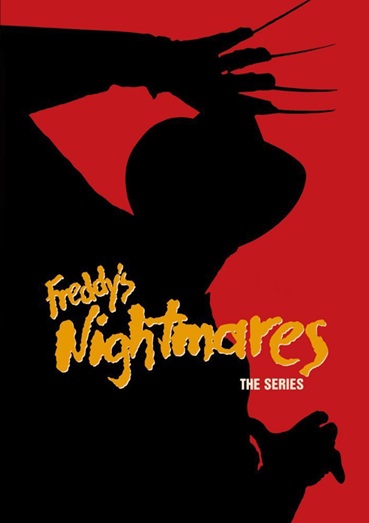
Late Night Retro Television Review: Freddy’s Nightmares 2.19 “A Family Affair”


Welcome to Late Night Retro Television Reviews, a feature where we review some of our favorite and least favorite shows of the past! On Fridays, I will be reviewing Freddy’s Nightmares, a horror anthology show which ran in syndication from 1988 to 1990. The entire series can be found on Tubi!

This week’s episode is all about death, natural and otherwise.

Episode 2.19 “A Family Affair”

(Dir by Keith Samples, originally aired on February 19th, 1990)

Paul (Leonard O. Turner) is having an affair with Claire (Kim Morgan Greene).  He doesn’t want his wife, Helen (Marlene Warfield), or his son, Jason (Morris Chestnut) to find out so when Claire becomes possessive and breaks into his house, he resorts to drastic measures and kills her.  However, he and Jason then discover that Claire has already killed Helen.  Months later, Paul and Jason are now estranged and Jason is doing drugs.  When Paul has a heart attack, he is visited by Claire’s spirit.  Claire is now the Angel of Death and has come to claim his soul.  Paul begs Claire to give one more week of life so that he can settle his affairs.  Claire agrees and then says that she still can’t return empty-handed.  Guess who overdoses?

“Drugs,” Freddy Krueger says, “Now there’s a real nightmare!”

Did you hear that kids?  The horribly scarred. undead serial killer who is the host of this show says that you better not do drugs.  Freddy — or I should say, Robert Englund — delivers the line in a very solemn tone.  Freddy’s Nightmares is trying to be socially responsible.

Oh, what to say about this episode?  Kim Morgan Greene was enjoyably snarky while playing the Angel of Death.  Otherwise, this was a pretty boring episode.  Paul’s a jerk and, as a result, he loses everyone that he cares about.  If Paul was in any way sympathetic, that would be sad.  As it is, it’s hard to care.

Only three episodes left!

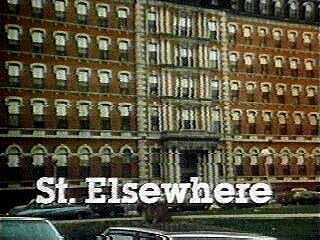
Retro Television Review: St. Elsewhere 4.2 “Fathers and Sons”


Welcome to Retro Television Reviews, a feature where we review some of our favorite and least favorite shows of the past! On Fridays, I will be reviewing St. Elsewhere, a medical show which ran on NBC from 1982 to 1988.  The show can be found on Daily Motion.

This week, Dr. Craig’s son returns home.

Episode 4.2 “Fathers and Sons”

(Dir by Mark Tinker, originally aired on September 25th, 1985)

In this episode, we discover what Dr. Westphall did after he left St. Eligius.  After checking Tommy into a special school for autistic children, Westphall went to Africa and volunteered his time at a clinic.  Now that he’s returned to Boston, he wants St. Eligius and its residents to follow his example.  In fact, he’s requiring it.  He wants to set up a free clinic.  He wants to set up a charity.  He tells the residents that they will now be required to volunteer in the community.  He’s planning on shaking things up.  Auschlander tells Westphall that not all of his plans are practical.  Westphall says that he doesn’t care.

Westphall also proceeds to move back into his old house and he retrieves Tommy from the school.  (Tommy responds by hitting Westphall.)  It’s actually pretty easy to see what’s happening here.  At the end of the previous season, Westphall was determined to move on with his life.  He was going to leave his depressing house.  He was going to admit that he couldn’t raise Tommy by himself.  However, now that he’s returned to Boston, Westphall is returning to his old life while expecting St. Eligius to change.  Westphall is channeling his personal frustrations into the hospital.  I don’t think this is going to go well.

Speaking of change, Luther is training to become a paramedic.  In this episode, he rides around in an ambulance with two bickering paramedics who are also a couple (played by Adam Arkin and Melanie Chartoff).  This storyline allowed the action to move beyond the confines at the hospital and, at times, it almost played like a parody of a more traditional medical show.  Luther becomes a stand-in for the viewer, watching as the domestic drama unfolds in  between medical emergencies.

The majority of the episode revolves around Dr. Craig, who is not happy that his son, Stephen (Scott Paulin), is visiting with his very pregnant wife, Yvonne (Suzanne Lederer).  When we last saw Stephen, he was a hotshot Ivy League medical student with a bright future ahead of him.  Then he got busted for drug possession and Dr. Craig stopped speaking about him.  In this episode, we learn that Stephen is now a student at Ohio State.  Stephen claims that he’s no longer on drugs but it’s obvious that Dr. Craig is never going to be able to forgive Stephen for letting him down.  That said, Dr. Craig does soften a bit when he talks to Yvonne and she lets him feel the baby kicking.

At the end of the episode, Stephen is driving down a street in Boston.  He’s just had dinner with his parents.  Yvonne is in the passenger’s seat.  A quick shot of Stephen’s eyes reveal that he’s high on something.  Yvonne screams as Stephen crashes the car.  Yikes!  That’s a frightening way to end things!

This was a good episode.  It appears that, with the start of season four, the showrunners finally figured out that Dr. Craig was the most interesting character on the show.  William Daniels and Bonnie Bartlett are both excellent in this episode.

I just hope the baby will be okay.

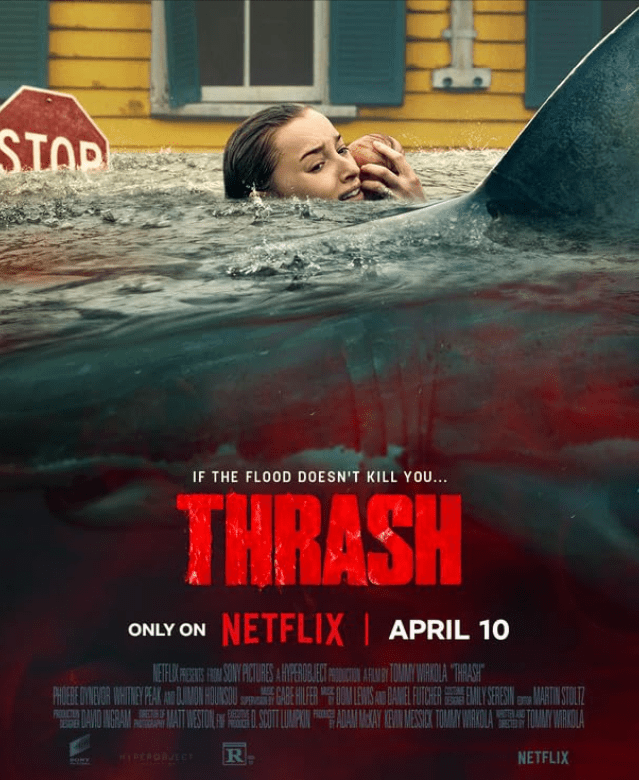
Thrash, Film Review by Case Wright (wri/dir: Tommy Wirkola)


It’s not quite shark week, but we’re still all in on sharks eating people here at TTSL. I watched this shark v people movie with Lisa and it was pretty fun. It did have a touch of environmentalist gobbledygook, but it was brief enough to ignore. My advice to anyone doing a shark film is to stick to reality: sharks. You don’t need to bring in vampires, werewolves, or climate change to raise the stakes.

There is a category five hurricane that hits a South Carolina town, it breaks the seawall, the town is taken by the sea, and sharks come in to eat everyone. There were some decent tropes to keep the popcorn popping: abusive foster parents, redneck foster kids, a pregnant woman who gives birth, an annoying anxiety-ridden lady who stares at things through the movie and rises mostly to the occasion, and a wise sailor/marine biologist who actually saves the day.

The mean foster parents and some good Samaritans become shark food, but that was about it. I was happy to see the foster parents die, but one of the foster parents was straight up murdered by the foster kids, which made the foster kids less sympathetic to me. Yes, foster dad was a horrible jerk, but there was no reflection on the fact that they killed him. You would’ve thought the abusive foster parent would’ve been well thought of by the director and writer because he was a state subsidized parent. I thought government intervention was supposed to make everything better?

My three big critiques is that there were not enough deaths, some scenes were too bright, and the protagonist did not get to save the day. “Thrash” was low on the body count; it made me wonder if they ran out of money or had to donate half of their money to an NGO. Did it have to be “Sharknado” levels of shark chomping? No, but I think that there were only five deaths in this film and that’s a little light.

The other critique is the lighting; typically, Netflix films are really dark and I don’t mean mood; it’s actually difficult to see. “Thrash” went the other direction and there was clear sunlight in a number of scenes that were supposed to be at night. The director had an environmentalist streak; so, maybe it was purposeful to lower a carbon footprint and use daylight to film? I do not have a good answer because it took me out of the story.

Finally, the anxiety-ridden star, whom I will call Anxious Girl, was more annoying than inspiring. Also the film ended where the Anxious Girl and the pregnant woman needed to be rescued by Anxious Girl’s uncle. I don’t think the writer understood that this was a failure. The Anxious Girl faced her fears and should’ve saved the day, but it was her Uncle, a minor character, who had to save the protagonist and pregnant woman. Was the Anxious Girl annoying? Sure, but she grew as a character and by taking away her chance at true heroism, it made the victory hollow and deflated.

Is the film worth watching? Sure. Like a tinder date missing a left-arm, “Thrash” was all right.

Live Tweet Alert: Join #FridayNightFlix for My Science Project!


As some of our regular readers undoubtedly know, I am involved in a few weekly watch parties.  On Twitter, I host #FridayNightFlix every Friday and I co-host #ScarySocial on Saturday.  On Mastodon, I am one of the five hosts of #MondayActionMovie!  Every week, we get together.  We watch a movie.  We tweet our way through it.

Tonight, at 10 pm et, I will be hosting #FridayNightFlix!  The movie?  My Science Project!

If you want to join us this Friday, just hop onto twitter, find My Science Project on Prime, start the movie at 10 pm et, and use the #FridayNightFlix hashtag!  I’ll be there happily tweeting.  It’s a friendly group and welcoming of newcomers so don’t be shy.

See you there!


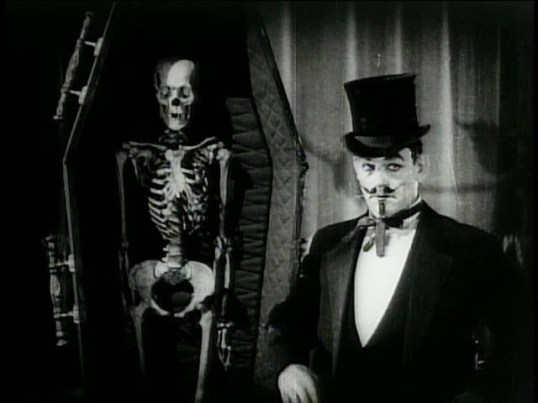
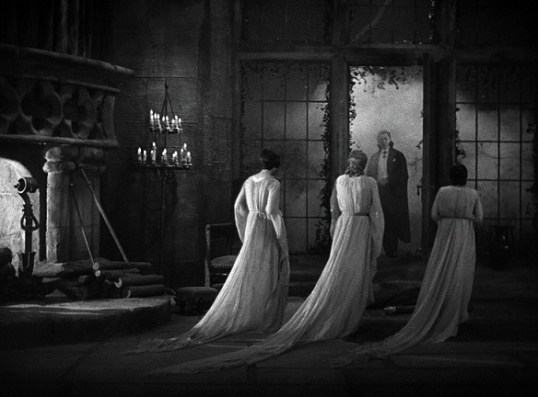
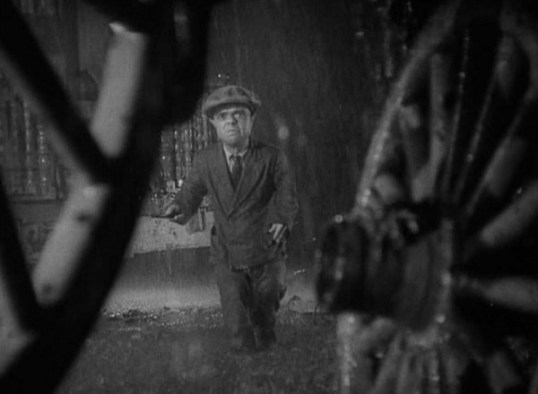
4 Shots From 4 Films: Special Tod Browning Edition


4 Shots From 4 Films is just what it says it is, 4 shots from 4 of our favorite films. As opposed to the reviews and recaps that we usually post, 4 Shots From 4 Films is all about letting the visuals do the talking.

 Tomorrow will be the 146th birthday of director is Tod Browning, who started his career during the silent era, ended it in the sound era, and was responsible for some of the most important horror and suspense films of both eras!

It’s time for….

4 Shots From 4 Tod Browning Films

West of Zanzibar (1928, dir by Tod Browning, DP: Percy Hilburn)

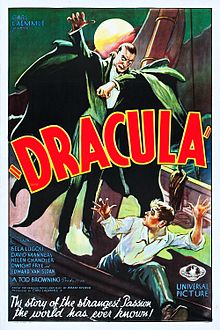
Dracula (1931, dir by Tod Browning. DP: Karl Freund)

Freaks (1932, dir by Tod Browning, DP: Merritt Gerstad)

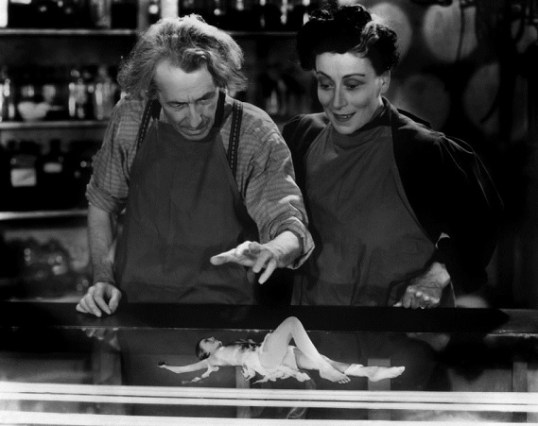
The Devil-Doll (1936, dir by Tod Browning, DP: Leonard Smith)

Scenes That I Love: Dracula Meets Van Helsing


146 years ago, on July 11th in Kentucky, director Tod Browning was born.  Though Browning was a director who was comfortable working in any genre, he is today best remembered for the horror films that he directed for Universal studios.  Today’s scene that I love comes from Tod Browning’s 1931 adaptation of Dracula.

In this scene, Count Dracula (Bela Lugosi) is introduced to Prof. Van Helsing (Edward Van Sloan).  Van Helsing notes something interesting about Dracula’s reflection, namely that he doesn’t have one.  Needless to say, the Count is not amused.

Music Video Of The Day: Dr. Feelgood by Mötley Crüe (1989, directed by Wayne Isham)


This song spent 109 weeks on the charts after its release and it remains one of Mötley Crüe’s most popular singles.

Nikki Sixx, who wrote the song, later told Rolling Stone that the song was based on several different drug dealers that he had done business with before getting sober.  Just two years before Dr. Feelgood became a hit, Sixx had been a notorious junkie who, after a heroin overdose, was actually legally dead for two minutes before a paramedic was able to revive him with two shots of adrenaline.

Dr. Feelgood became Mötley Crüe’s first and, to date, only gold single in the United States.  The video follows the song’s title character as he goes from working the streets to owning a mansion.  In a repeat of what happened to Tony Montana, Dr. Feelgood’s own hubris eventually brings him down.  As for why Mötley Crüe is performing in a revival tent, it probably just looked cool.

Director Wayne Isham is one of the most recognizable names when it comes to music video directors.  If you were someone who was anyone in the music business, Isham probably directed at least one video for you.

Enjoy!