Coming at you live from Perdido Key, FL, I thought I’d share some of my favorite beach scenes! Enjoy!
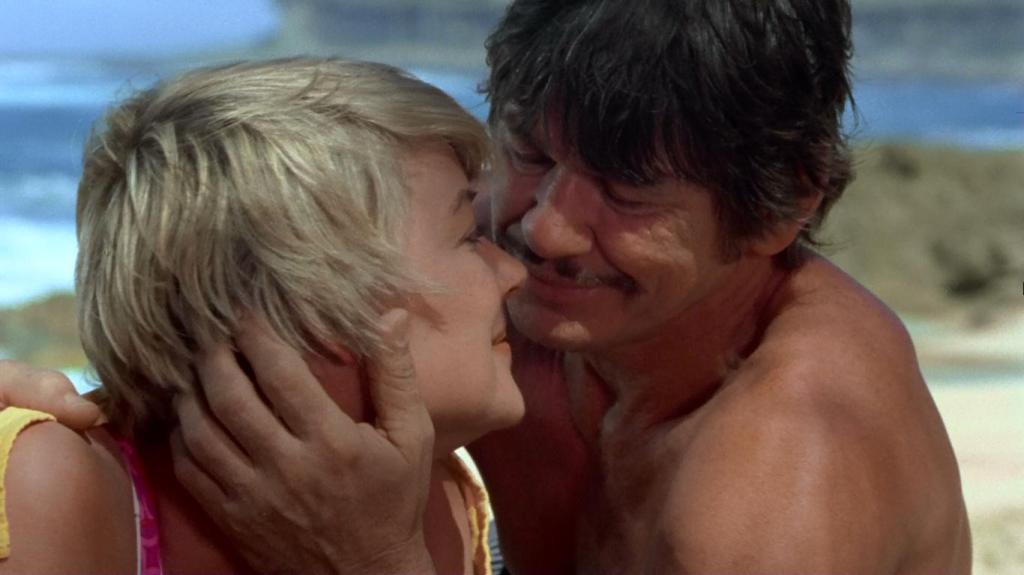
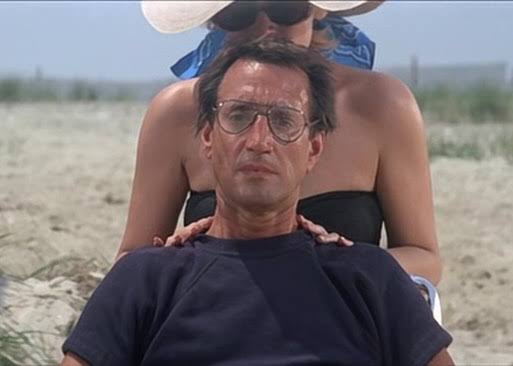

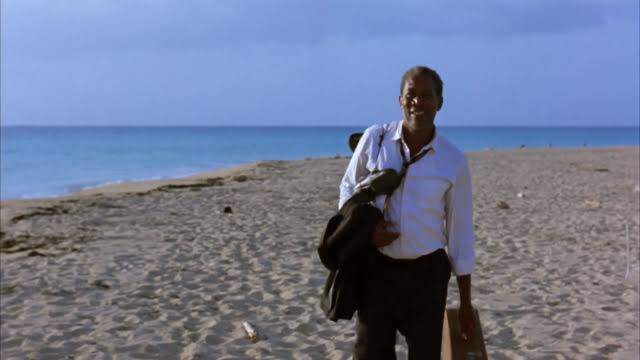
Coming at you live from Perdido Key, FL, I thought I’d share some of my favorite beach scenes! Enjoy!
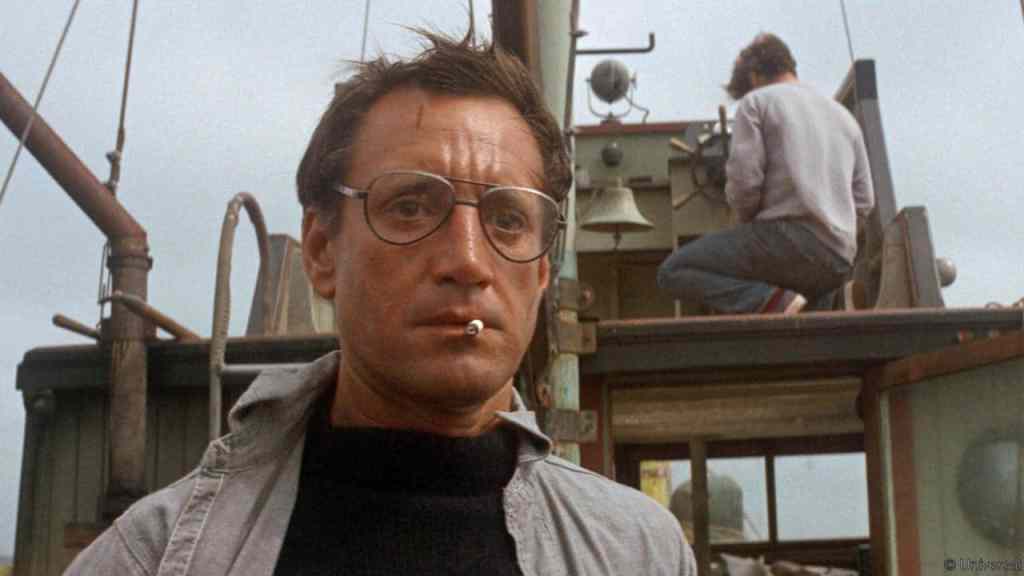
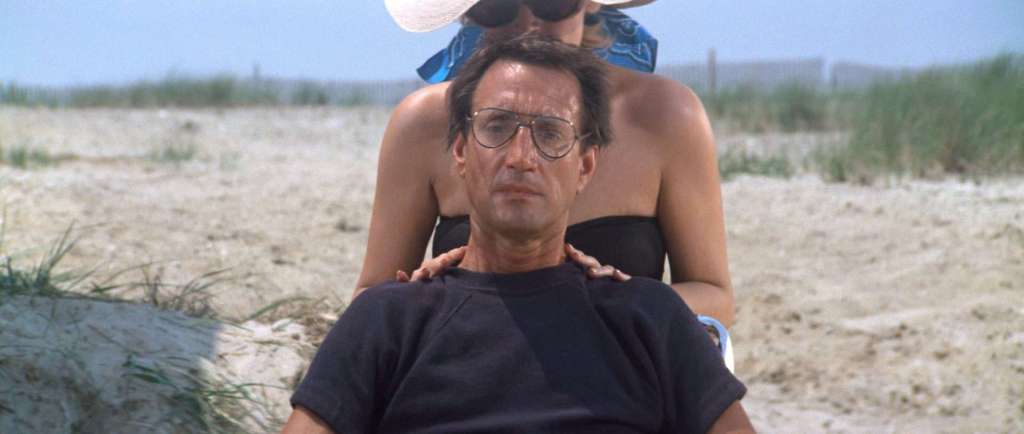
When I think of my favorite movie heroes, it seems that I’ll often lean towards men who may not appear that heroic on the surface but always seem to find the courage to do what needs to be done. Now don’t get me wrong, I love larger-than-life characters like John McClane, John Rambo, and Indiana Jones, but my ideal hero isn’t like those guys. My favorite heroes are normal guys, that is, until fate forces them to be more. A perfect example is Chief Martin Brody from JAWS.
Brody isn’t fearless. In fact, one of the first things we learn about him is that he’s afraid of the water. He’s a former New York City police officer who moved his family to the quiet island of Amity, only to find himself facing an absolute nightmare. While so many movie heroes run toward danger because they know they can handle it, Brody runs toward danger despite believing he can’t.
What makes him heroic isn’t supersized strength or expert fighting ability. It’s his sense of responsibility. Brody is always trying to do the right thing. He wants to close the beaches, but politics and the tourist money get in the way. Even after he’s pressured into backing down, he doesn’t stop trying to protect the people on the beach. And when the time comes, he gets on board the Orca with Quint and Hooper to go hunt a great white shark, even though that’s the last place on Earth he wants to be. His courage isn’t the absence of fear. Rather, it’s choosing to take action even though he is afraid.
Of course, it doesn’t hurt that Brody is played by one of my all-time favorite actors, Roy Scheider, a man who has his own section in my massive physical media collection. Scheider deserves a tremendous amount of credit for making Brody feel so real. He doesn’t play Brody as tough. His facial expressions, body language, and nervous energy portray a man who is terrified. In other words, he represents how we might feel if we were in that position. Scheider’s performance reminds us that ordinary people are capable of extraordinary courage when others are counting on them.
That’s why Martin Brody is one of my favorite movie heroes. He doesn’t have superpowers, military training, or funny catch phrases, even if his “You’re gonna need a bigger boat” has become one of the most famous quotes in cinematic history. And he doesn’t stop being afraid, either. He’s just a decent man who keeps doing the right thing, even when he’s scared. That’s the kind of hero I can relate to.
Hero of the Day
“Showtime!”
Since today is Bob Fosse’s birthday, it’s only appropriate that today’s scene that I love comes from his 1979’s masterpiece, All That Jazz!
This sequence captures everything we need to know about Joe Gideon (Roy Scheider). We see his talent. We see his self-destructive habits. And, though we don’t realize it until the end of the film, we also see that death is patiently waiting for him.

Today’s scene that I love comes from Bob Fosse’s 1979 masterpiece, All That Jazz. This scene features the legendary Ann Reinking at her best. Roy Scheider said that he cried after shooting this scene.
Happy Father’s Day weekend to all who observe.
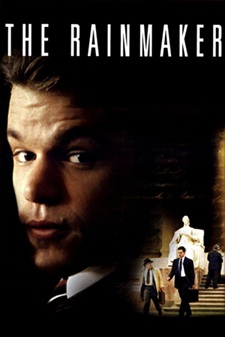 Rudy Baylor (Matt Damon) is an idealistic young law school graduate who discovers that having a degree and passing the bar doesn’t automatically make you a success. He gets a job working a bar that just happens to be owned by an ambulance chasing attorney named Bruiser Stone (Mickey Rourke). Bruiser takes Rudy on as an associate and assigns his associate, Deck Shifflet (Danny DeVito), to teach Rudy how to find cases. When Bruiser flees the country to escape an FBI investigation, Rudy and Deck start their own law firm. Rudy soon finds himself with the case of his young career, representing a family in a law suit against Great Benefit Insurance. Rudy also falls for Kelly (Claire Danes), a young woman who is being abused by her husband (Andrew Shue).
It can be hard to believe today but, in the 90s, every John Grisham novel was adapted for the screen. Most of the adaptations weren’t very good but audiences ate them up. In many ways, The Rainmaker is the ultimate John Grisham adaptation because it contains every single trope that John Grisham made popular with his legal thrillers. This time, Matt Damon is the charismatic attorney. Roy Scheider is the soulless corporate CEO who needs to be brought down. Jon Voight is the intimidating opposing counsel. Danny DeVito is the eccentric comic relief and Mickey Rourke is the dues ex machina who returns to the movie to give Rudy a piece of information at the exact right moment. The appeal of Grisham is that he made readers (and eventually moviegoers) feel like insiders while presenting them with stories that were essentially very simple good vs evil morality tales. The insurance company is so cartoonishly evil that there’s no doubt Rudy is going to defeat them. There’s also no doubt that Rudy is going to find a better calling than ambulance chasing because the only thing that people hate more than insurance companies is lawyers.
The Rainmaker is never as complex as it pretends to be but it’s an entertaining legal movie. It was also director Francis Ford Coppola’s last big hit. It’s really more of a Grisham film than a Coppola film but Coppola’s influence is still felt in the almost uniformly excellent cast. (Ignore Andrew Shue if you can. Melrose Place was very popular in the 90s.) Damon, Danes, Rourke, Voight, Dean Stockwell, Danny Glover, Teresa Wright, Virginia Madsen, and Mary Kay Place all give memorable performances. Roy Scheider is loathsome as the sweater-wearing CEO. Best of all is Danny DeVito, who gets all of the best lines.
The Rainmaker was the best of the 1990s Grisham adaptations. While it’s not quite a masterpiece, it’s still emotionally very satisfying.
What’s an Insomnia File? You know how some times you just can’t get any sleep and, at about three in the morning, you’ll find yourself watching whatever you can find on cable or streaming? This feature is all about those insomnia-inspired discoveries!
If you were struggling to get to sleep last night, you could have jumped over to Tubi and watched the 1989 film, Listen to Me.
Listen to Me tells the story of two poor but ambitious teenagers who receive debate scholarships to fictional Kenmont University. Monica Tomanski (Jami Gertz) is a liberal from Chicago. Tucker Muldowney (Kirk Cameron) is a “shit-kickin’ conservative” who is from Oklahoma. Despite their different political beliefs, Monica and Tucker find themselves assigned to be debate partners by the college’s legendary debate coach, Charlie Nichols (Roy Scheider).
At Kenmont, debate is as popular and as important as football is at some other colleges. The entire student body shows up to listen to the debates and to cheer for their side. It’s like Oxford, if Oxford was solely populated by 80s teen actors. (Seriously, there’s a lot of familiar faces wandering around that campus.) Charlie is convinced that this could be the year that he wins the national tournament. Gar McKellar (Tom Quill), the troubled son of Sen. McKellar (Anthony Zerbe), is one of the best debaters in the country. However, Gar fears that winning a national debate tournament will somehow lead to him going into politics. He wants to be a writer and he’s got a self-destructive streak. As you probably already guessed, this all leads to Tucker and Monica debating the arrogant Harvard team in front of the Supreme Court. The topic? Whether or not Roe v Wade should be overturned….
A few thoughts on Listen to Me:
Kirk Cameron’s “Oklahoma” accent is, without a doubt, the worst that I have ever heard in any film ever made. When I was growing up, I did occasionally live in Oklahoma. I still visit Oklahoma frequently. Yes, people in Oklahoma do have an accent. However, that accent sounds nothing like whatever Cameron was trying to do in this film. Whenever Kirk Cameron speaks, he sounds less like an Oklahoma farm boy and more like the tubercular son of a once proud New Orleans family. Beyond the accent, Cameron just isn’t believable as a quick-on-his-feet debate champ. He overplays when he should underplay and underplays …. well, I can’t think of a single scene that he underplays. It’s just not a good performance.
Jami Gertz is a bit more convincing as Monica. (It perhaps helps that Gertz, like her character, is actually from Chicago.) But, for the majority of the film, Monica is seriously underwritten. She’s a straw feminist, who largely exists so that Tucker can tell her to loosen up.
As for the other debaters, we don’t learn much about them. That’s a shame because some of them — like Amanda Peterson’s crippled debater — seem like they would be much more interesting to follow than either Gar, Tucker, or Monica. It’s a crime to cast Peter DeLuise as an Ivy League debater without giving us a chance to actually see him debate.
Roy Scheider gives the best performance in the film, which isn’t really a surprise. That said, Charlie Nichols was a terrible debate coach, one whose entire philosophy seemed to be based on teaching his debaters to make loud and emotional arguments and hope that the judge doesn’t understand how competitive debating is supposed to work.
Would the Supreme Court really judge a national debate tournament?
As for the debates themselves, it’s hard not to notice that all of the arguments are emotional. There’s little talk of evidence or research or anything else. Instead, the characters talk about how abortion has personally effected them. (The Harvard team is portrayed as being snooty villains when they dare to bring up an actual clinical study about abortion.) Admittedly, I did not do college debate but I was involve with Speech and Debate in High School and, when it came to debate, I always tried to get by with the same cutesy techniques that everyone uses in this film. If the judge was a man, I definitely showed a little leg. If someone asked me about a study that disproved my argument, I’d respond by citing a fictional study that disproved their study. I was the Queen of Dramatic Personal Anecdote! And I rarely made it out of the preliminary rounds because most judges — the good ones, at least — were able to tell that I hadn’t bothered to do my homework and that I was just trying to skate by on charm and wit. My coach often told me that if I would actually do the work, I’d probably make it to the semis and beyond but …. eh, doing the work was just too much …. well, work. So, you can imagine my surprise when Tucker and Monica used the same techniques that I used and were declared to be the best debaters in the country!
Seriously, I was robbed!
Listen to Me is a very 80s film, right down to the debate montages and the explanations about why Roe v Wade would never actually be overturned. It tries to do for college debate what numerous other college-set films did for football an binge-drinking. Unfortunately, the film’s intentions are defeated by a didactic script and a miscast lead. It feels considerably longer than 100 minutes, which might help you with your insomnia.

Previous Insomnia Files:
Today’s scene that I love comes from Bob Fosse’s 1979 masterpiece, All That Jazz. This scene features the legendary Ann Reinking at her best. Roy Scheider said that he cried after shooting this scene.
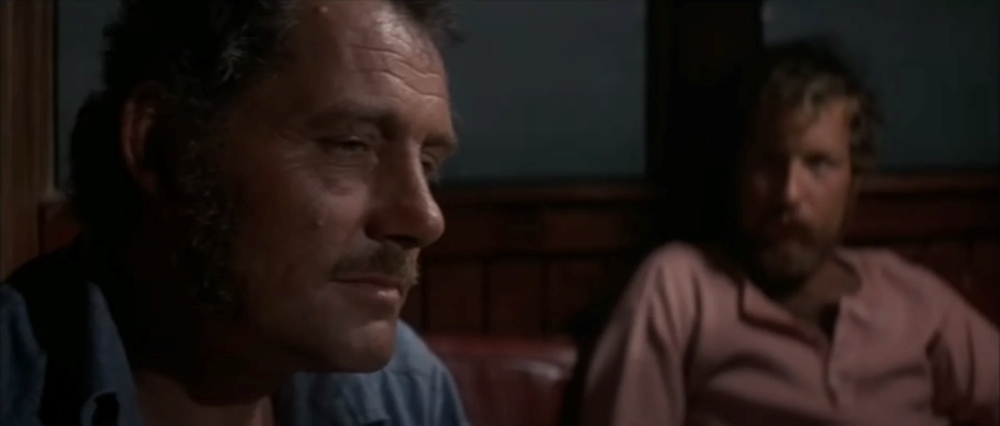
“You know the thing about a shark, he’s got…lifeless eyes, black eyes, like a doll’s eye. When he comes at ya, doesn’t seem to be livin’. Until he bites ya and those black eyes roll over white.” — Quint
People have blamed Spielberg and his breakout film, Jaws, as the cause of the blockbuster mentality that studios have had since this film came out. Studios and producers wanted to recreate the ultra-successful box-office numbers of Jaws. Despite the fact that this film was modestly budgeted, people nowadays who think they’re film experts point to it as the culprit. They’ve called it the film that begun the dumbing down of Hollywood when creativity was sacrificed for profit.
Why did I pick a scene from this film as a favorite? I picked this particular scene because it’s one reason why the film succeeded and made people come back again and again. It’s a scene that perfectly captures one reason why we love to see films in a communal setting. We want to share the same experience and emotions this scene brought up from the pit of each audience’s psyche.
Jaws didn’t ruin the creativity in filmmaking. I like to think that this one film was a filmmaker at his most creativie (shark wouldn’t work properly so Spielberg kept it off-screen which just added to the terror and tension in the film). This very scene goes down as one of the greatest film monologues. It sets up the danger the trio faces with some anecdotal evidence from the very person who survived the experience, but who might have become unhinged because of it. I love the look of frozen terror on the face of Richard Dryefuss’ character as he listens to Robert Shaw tell the story of the ill-fated journey of the U.S.S. Indianapolis.
This latest “Scenes I Love” is why I consider Spielberg one of the best filmmaker of his generation and probably beyond that.
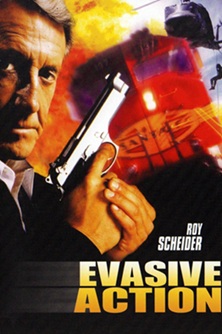 Some of the toughest criminals in America are being transported, via train, to a high security prison. For some reason, instead of using an entire train to transport the prisoners and guards, it’s decided to just put the criminals in one car attached to a normal passenger train. Did the passengers in the other cars get a warning that would be traveling with a bunch of desperate criminals? Did they at least get a discount on their tickets? Of course, Mafia kingpin Enzo Martini (Roy Scheider, slumming) engineers a takeover with the rest of the prisoners. It’s up to Sheriff Wes Blaidek (Ray Wise) and bartender Zoe Clark (Delane Matthews) to stop the prisoners.
This is a fast-moving, dumb-as-Hell action movie that’s memorable mostly for having a cast that was very much overqualified for the film. Keith Coogan, Dorian Harewood, Don Swayze, Ed O’Ross, and Sam J. Jones are all in this thing. Clint Howard plays the homicidal serial killer who lets a child live because the kid has seen Taxi Driver. Dick Van Patten plays the head of the parole board. I can understand why Roy Scheider might be selected to play a mob boss and how Clint Howard and Don Swazye ended up playing killers. But how do you look at this film’s story and think, “This need Dick Van Patten?” It’s Die Hard on a train but without the wit or the budget. The movie moves quickly, there’s plenty of train and helicopter action and it’s still good to see so many familiar and eccentric talents gathered together to bring too life one very stupid movie. It’s too bad they couldn’t find room for Joey Travolta or Joe Estevez but I guess you can’t have everything.
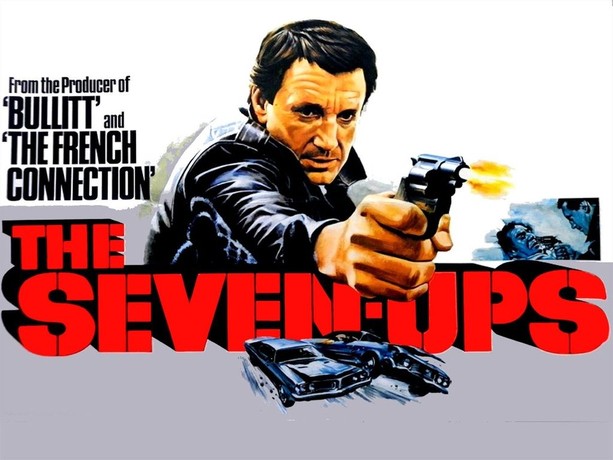
Every Monday night at 9:00 Central Time, my wife Sierra and I host a “Live Movie Tweet” event on X using the hashtag #MondayMuggers. We rotate movie picks each week, and our tastes are quite different. Tonight, Monday February 24th, we’re watching THE SEVEN-UPS starring Roy Scheider, Tony Lo Bianco, Ken Kercheval, Richard Lynch, and Bill Hickman.
THE SEVEN-UPS is about an elite New York City police unit, led by detective Buddy Manucci (Roy Scheider). The unit is nicknamed the “seven-ups” based on their ability to secure convictions and jail sentences of 7 years and up. While working a job, one of his fellow seven-ups is killed, and Buddy will do anything to find the men who did it.
I wrote a full review of THE SEVEN-UPS just last week because it’s truly a great movie and features one of the best car chase sequences ever put on film. Rather than repeat a lot of those same facts, I’m including a link to my review below, which also includes the trailer for the film:
So, join us tonight for #MondayMuggers and watch THE SEVEN-UPS! It’s on Amazon Prime.

