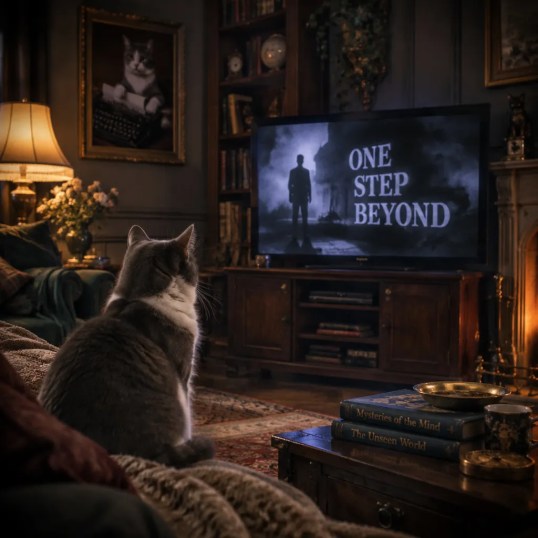
For this year’s final Horrorthon episode, we have the …. final episode of One Step Beyond!
In this, the series’ very last episode, a Boston newspaper reporter in 1883 somehow manages to write a firsthand account of one of the greatest natural disasters in human history, the volcanic eruption of Krakatoa. Making his accomplishment all the more amazing is that he not only filed the story the day before it happened but he also says that he has no memory of writing it! What’s going on? Take one step beyond and find out!
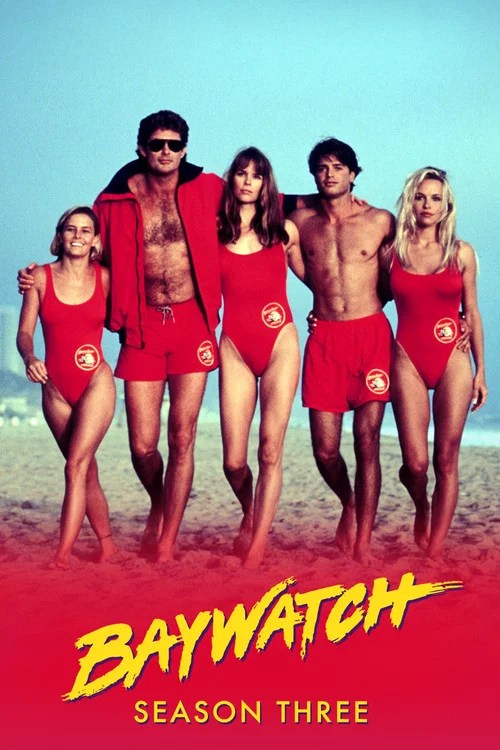
Welcome to Retro Television Reviews, a feature where we review some of our favorite and least favorite shows of the past! On Saturdays, I will be reviewing Baywatch, which ran on NBC and then in syndication from 1989 to 2001. The entire show can be viewed on Tubi.
This week, Brody and Summer go through rookie school!
Episode 3.4 “Rookie of the Year”
(Dir by Gus Trikonis, originally aired on October 5th, 1992)
This week’s episode follows Matt Brody and Summer Quinn through rookie school as they compete for Rookie of the Year. The winner gets to choose a beach assignment. Eddie Kramer won the honor in his class. Brody has a shot this year, but only if he can beat arrogant Clint Chandler (Race Nelson) in the Gauntlet, a grueling race across the beach and through the ocean.
The episode gives us a few questions to ponder.
Will Brody overcome his rebellious attitude and the disapproval of his wealthy father (Dirk Benedict)?
Will Summer find the courage to make the pier jump?
When C.J. and Stephanie discover that they share an ex-boyfriend, and that he rented his old apartment to both of them, will they be able to live together?
The answer to all three questions is yes. If you didn’t instinctively know that, you have obviously never watched Baywatch.
Brody comes close to dropping out of rookie school, until Mitch tells him he reminds him of a young hothead who had a problem with his dad. “Eddie Kramer?” Brody says. Mitch shakes his head. “About a foot taller.” (Mitch means himself. Brody still deserves some credit for clocking that he is basically Eddie Kramer with a rich dad.)
C.J. may be into crystals and Stephanie may be down-to-earth and practical, but they still make their odd-couple dynamic work.
And Summer may be scared of jumping off the pier, but she does it after encouragement from C.J. and Brody. Brody wins Rookie of the Year not just because he beat Clint in the Gauntlet, but because he helped Summer make the jump.
Meanwhile, it is announced that Guido Torzini (Buzz Belmondo), a guy with a pencil-thin mustache who has been hanging around headquarters whether anyone asked him to or not, will be Baywatch’s official maintenance engineer. Congratulations, Guido, whoever you may be.
This was an episode built out of montages. The rookies run into the water. The rookies run out of the water. Sometimes they do it in slow motion. It was thoroughly predictable, but the beach was lovely and the ocean was inviting.
There was nothing at all challenging about this episode.
Happy Halloween! I’ve really enjoyed this horrorthon. Were some of the films terrible? Oh Yeah!
Some were terrible!
AI has improved by a quantum leap and will likely surpass all normal film in the next 3 years. If “Nightwalker” is the competition for AI films, good riddance to traditional filmmaking. Do a lot of the characters look leathery and similar in AI films? You betcha! However, they’re less pretentious and boring.
In “Nightwalker”, a boring knight wants to get immortal life and seeks out a vampire and finds one. All I kept thinking was- why didn’t they use AI? It would’ve been better and cheaper. Granted, this short film was garbage trash; so, maybe the AI substitution is a bit unfair. What do I say to this critique? Bruh, whaddya a cop?
I will do a few more reviews for Halloween, but I hope the films are better than this. Let the machines rise!!!
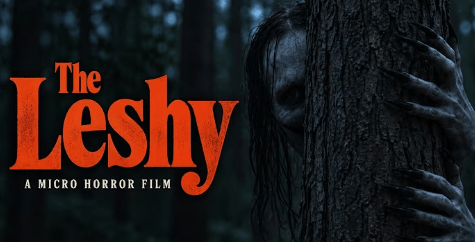
The Leshy is a “micro horror film”. Is it terrible? No. It’s not. Jon Kent, the creator, has some real brass. I was very skeptical that a short film could deliver a story in a minute, but it did. The characters are clear, there is a story, and a payoff. The Leshy checks all the blocks for an entertaining short and does not try to be more than it is.
A man is dragging a dead body in the woods and he gets hunted by the leshy. I don’t know the physiology of a leshy, but it seems hungry. I would highly recommend that you take a minute out of your day to watch this.
Welcome to Late Night Retro Television Reviews, a feature where we review some of our favorite and least favorite shows of the past! On Fridays, I will be reviewing SLEDGE HAMMER!, a cop comedy which ran on ABC from 1986 to 1988. The entire series can be found on Prime!
This week, Sledge might be DOA!
Episode 1.12 “Miss of the Spider Woman”
(Dir by Charles Braverman, originally aired on December 20th, 1986)
Sledge has been poisoned!
The poison takes five days to do its work. Unfortunately, Sledge spent four days in a coma. Plus, daylight savings time kicked in. And also, his watch is broken. So, by the time Sledge wakes up, he’s actually only got about four or five hours left to go. While the doctors try to find an antidote, Doreau and Sledge investigate who poisoned him and why.
Actually, the why is easy to explain. It was a mistake! The mysterious Juanita (Eileen Barnett) wanted to poison Sledge’s neighbor but the woman who was hired to “deliver” the poison to Sledge was near-sighted and ended up in the wrong apartment. Whoops! Instead of trying the poison trick again, Juanita just has Sledge’s neighbor shot. It’s all because the neighbor was expecting a package that contained a valuable statue that Juanita wanted.
Through some good old-fashioned, death-fueled police work, Sledge tracks Juanita down to her boat. Juanita gives him what she says is the antidote and then reveals that he actually just drank more poison. Oh, Sledge! At least Sledge is still able to subdue and arrest her. Captain Trunk arrives at the last minute with actual antidote. Sledge survives! Later, he eats a powdered donut that had the fingerprints of a notorious serial killer. Everything’s back to normal!
This was a good take on two classic film noirs, D.O.A. and The Maltese Falcon. David Rasche made me laugh even while I was worrying about Sledge dying. I was happy he survived. The city wouldn’t be the same without him.
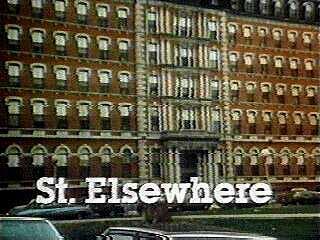
Welcome to Retro Television Reviews, a feature where we review some of our favorite and least favorite shows of the past! On Fridays, I will be reviewing St. Elsewhere, a medical show which ran on NBC from 1982 to 1988. The show can be found on Daily Motion.
In this special two-part episode, 50 years of St. Elsewhere are documented in just two hours.
Episodes 4.17 and 4.18 “Time Heals”
(Dir by Mark Tinker, originally aired on February 19th and February 20th, 1986)
Aired over two nights, “Time Heals” uses St. Eligius’s 50th anniversary to give us 50 years of history. While the staff prepares to observe half a century of serving Boston, the episode skips back and forth in time.
In 1935, a young and enthusiastic priest named Joseph McCabe (Edward Herrmann) prepares for the opening of a hospital that he hopes will serve the downtrodden and forgotten of Boston. Monsignor Senti (Norman Burton) views McCabe as a troublemaker. Meanwhile, a young Donald Westphall watches as his father helps bring a wounded man named Patrick O’Casey (William Russ) to the hospital. Later, Westphall’s sister and mother are killed in a house fire.
In 1945, a young liver specialist named Daniel Auschlander (James Stephens) is brought on staff and meets an angry teenage Donald Westphall (Michael Sharrett). Donald shines shoes in the hospital lobby. When Donald is caught stealing, Father McCabe takes him to the hospital’s gym and gives him a boxing lesson. As for Auschlander, he allows a returning serviceman named Patrick O’Casey to see his young daughter, who is suffering from polio and has been placed in an isolation ward.
In 1955, the Archdiocese sells the hospital to the city and Father McCabe is fired. McCabe gets drunk. Auschlander says that he intends to resign in protest. McCabe replies that that would be a mistake—Auschlander is the man McCabe has recommended as his replacement. Meanwhile, Patrick O’Casey’s daughter dies after spending ten years in an iron lung, and a cocky intern named Mark Craig (William Daniels, sans mustache) has a panic attack while performing his first operation. The demanding Dr. David Domedion (Jackie Cooper) orders Craig back into the operating room. Later, Craig tells another resident, Donald Westphall (Ed Flanders, his hair dyed black but still looking quite middle-aged), that he’s been offered a position at Boston General and will never return to St. Eligius.
In 1965, Dr. Craig returns to St. Eligius, bitter that he was passed over for chief of surgery at Boston General. While a young Luther Hawkins sits in the waiting room, a newly arrived nurse named Helen Eisenberg helps Dr. Westphall deal with Terence O’Casey (Brian Kerwin), a young man having a bad acid trip. “Get a haircut, hippie,” Dr. Craig says at one point.
In 1975, Terence O’Casey is back in the hospital, waiting as Dr. Craig performs open-heart surgery on his father, Patrick. Donald Westphall is appointed hospital administrator. The same night, his wife, Maureen (Anita Gillette), is in an auto accident that leaves her brain-dead. Westphall is the one who has to decide to remove her breathing tube and allow her to pass on.
In 1985, high school principal Terence O’Casey is brought to the hospital with sudden paralysis. His doctor, Jack Morrison, struggles to diagnose Terence’s condition until he goes down to the basement, looks through the earliest hospital records, and reads about Terence’s sister, who died in an iron lung. Jack diagnoses Terence with Guillain-Barré syndrome, a paralyzing condition that can resemble polio.
Meanwhile, Jack’s son, Pete, is apparently abducted by a man at the hospital. I say “apparently” because the plotline feels a bit underdeveloped. The episode ends with the police returning Pete to Jack during St. Eligius’s anniversary party. Pete seems to be physically unharmed, and we’re not really given any details as to who abducted him or how the police tracked him down.
The subplot featuring Morrison’s son being abducted is oddly undeveloped, but that’s really the only flaw to be found in “Time Heals.” This is not only a great episode of St. Elsewhere; it’s also one of the greatest episodes of television I’ve ever seen. That said, it isn’t just a great episode of television. It’s a great work of art, period, from the excellent performances to the way the episode seamlessly mixes the flashbacks so that they come together to tell one epic story of the 20th century. Featuring both the story of the hospital and the story of the O’Caseys, “Time Heals” is a portrait of how times change and how they remain the same.
A few random notes:
For those who think Dr. Craig is too hard on his residents, this episode shows that Craig’s mentor was equally hard on him, and that it helped turn Craig into the surgeon he is today. That said, it’s also amusing to see that young Mark Craig was just as obnoxious as Victor Ehrlich.
I’ve often complained about how depressed Westphall always seems to be. This episode shows that Westphall has a lot of reasons to be depressed. The man’s life has been one tragedy after another.
One cannot overlook the importance of the O’Caseys to this episode’s power. The O’Caseys represent the community St. Eligius is meant to serve. The hospital is part of the family’s life. History repeats itself throughout the O’Casey storyline. In 1935, Patrick O’Casey is injured and nearly killed in a fight. By 1945, he’s married and a member of the U.S. Army. In 1965, Patrick’s son, Terence, is a drug-abusing member of the counterculture. By 1985, he’s a conservative high school principal who has an estranged relationship with his gay son, Kevin (John Scott Clough). All of the male O’Caseys have more in common than they realize.
Each decade is shot in a different visual style, which helps us keep track of things. The 1935 scenes are shot in black and white. The 1945 scenes feature muted colors. As we move through time, the colors become clearer and more vibrant until we finally find ourselves in 1985.
“Time Heals” is touching, powerful, and even funny. It’s a true work of art.
Welcome to Late Night Retro Television Reviews, a feature where we review some of our favorite and least favorite shows of the past! On Thursdays, I will be reviewing Hunter, which aired on NBC from 1984 to 1991. The entire show is currently streaming on Tubi and several other services!
This week, two special guest stars appear on Hunter!
Episode 2.8 “Million Dollar Misundestanding”
(Dir by Michael Peerce, originally aired on November 16th, 1985)
Hey, it’s Robert Englund!
In this episode, Englund appears as Vaughn. Vaughn is in charge of both the motor pool and the police impound lot. He’s been given orders not to let Hunter ever have a nice car because Hunter inevitably ends up destroying every car that he’s given. Vaughn takes his job seriously. That said, he still gets tricked by Hunter’s old “snatch a key while Vaughn isn’t looking” trick. “HUNTER!” Vaughn shouts as Hunter drives off in a new car that will be totally destroyed by the end of the episode.
It was nice to see Robert Englund. This episode aired in 1985, a year after the release of A Nightmare on Elm Street. This is probably one of the last roles that Englund played that was not, in some way, written to capitalize on him being a horror icon. Instead, he’s just a normal guy who gets annoyed with Hunter. Even when he’s yelling, there’s just something innately likable about Robert Englund.
This episode also features the great Robert Davi. Not surprisingly, Davi plays the main bad guy. He’s a security guard who masterminds the robbery of an armored car. He nets a million dollars in the robbery, kills his co-workers, and then kills his partners-in-crime. He puts the money in the trunk of a stolen Trans Am and then drives off. However, when he stops to make a call from a payphone, the Trans Am is stolen once again, this time by two teenage car thieves. Hunter and McCall crash into the Trans Am, totaling it.
At the police impound lot, the owner of the Trans Am is not happy to see that her car has been destroyed, However, she is happy to discover a million dollars in the trunk. Later, when Hunter and McCall go to her house to personally apologize for destroying her car, they discover her floating dead in her swimming pool. The money is missing.
Believe it or not, Robert Davi is not the murderer here. Instead, the woman was killed by her employer, club owner Tito Constantine (Phil Rubinstein). He has the money hidden on his boat. Davi, who has previously attacked both McCall and Hunter in his search for the cash, hijacks the boat. Hunter and McCall show up and chase after him. It all leads to Hunter and McCall recovering the money and two bad guys ending up all wet. Remarkably, neither one of the bad guys is killed in this episode. That’s a rare event for Hunter.
This was an enjoyably chaotic episode. Hunter is at its best when it focuses on gun fights and car chases and that’s what this episode was all about. Toss in Robert Englund and Robert Davi and you have pure 80s excitement! This episode worked for me.
Tonight’s episode of One Step Beyond deals with a bellboy named Gerald Perkins (David Opatoshu). Gerald keeps telling everyone that there’s going to be an earthquake but no one’s willing to listen to him. Everyone knows that Gerald is a recovering alcoholic so they assume that he’s just drinking again. Needless to say, it’s far easier to fire someone than to listen to his insane ramblings, right?
Well, considering that this story takes place in San Francisco in 1906, perhaps they should have listened.
According to host John Newland, this is a true story. It originally aired on January 12th, 1960!