“One way to maintain discipline is to shoot a man now and then.” — Maj. Gen. Georges Broulard
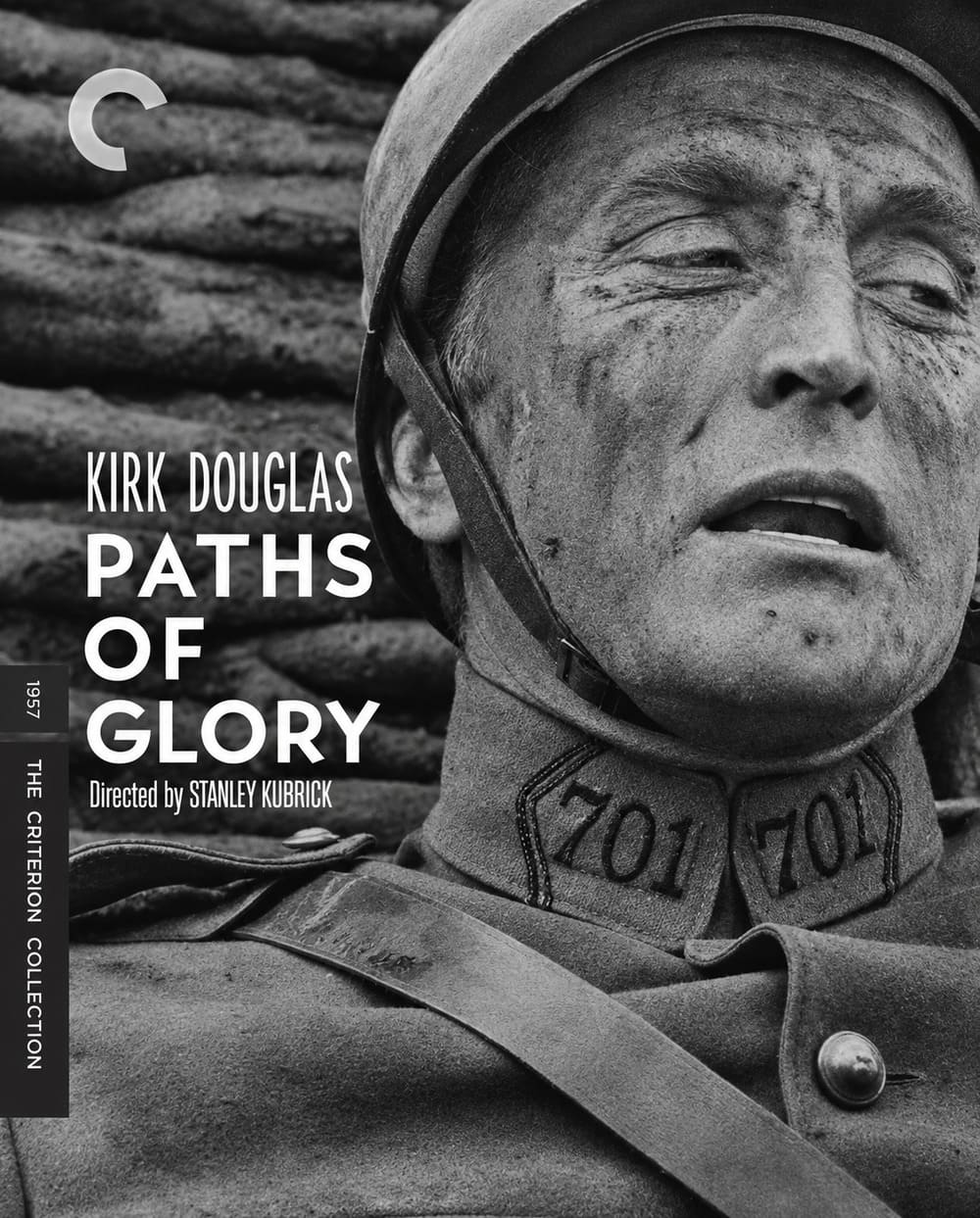
Stanley Kubrick’s Paths of Glory (1957) is a war movie with very little interest in making war look heroic. Its real target is the language that turns suffering into something supposedly noble: duty, sacrifice, honor, and, of course, glory. Those words sound impressive until you notice who gets to say them and who gets killed because of them. Starring Kirk Douglas as Colonel Dax, the film turns a failed military attack into a furious examination of institutional cruelty. What makes it so upsetting is not simply that innocent men suffer. It is that their suffering becomes useful to people who know how to make selfish decisions sound like necessary ones. Kubrick shows a world where authority protects itself first and then calls that protection patriotism.
The story takes place on the French front during World War I, where General Broulard encourages General Mireau to attack a heavily defended German position known as the Anthill. Mireau initially recognizes that the operation is unlikely to succeed. His soldiers are exhausted, the enemy is well positioned, and the expected losses are enormous. Then Broulard introduces the possibility of career advancement, and Mireau’s assessment becomes noticeably more optimistic. Nothing about the battlefield has changed. The only new factor is what Mireau might personally gain. It is an especially effective introduction because Kubrick does not need a dramatic confession of corruption. We watch a man talk himself into believing that his ambition and his military duty are conveniently the same thing.
Dax must lead the assault despite understanding how unrealistic the objective is. When the attack falls apart, the generals do not seriously reconsider the judgment that produced it. Instead, they turn the failure into a question of the soldiers’ courage. Three men are selected to face a court-martial for cowardice, with their punishment supposedly restoring discipline and defending the army’s reputation. Dax, a criminal lawyer before the war, takes on their defense. At that point, Paths of Glory shifts from a battlefield story into a courtroom drama, but the underlying conflict stays the same. The men have very little control over their lives in either setting. Whether they are ordered toward enemy guns or brought before military judges, decisions made above them determine their chances of survival.
The selection of three men for execution brings to mind the Roman military practice of decimation, in which one in ten soldiers from a disgraced unit was chosen by lot and killed to punish the group and frighten the survivors into obedience. The punishment in Paths of Glory is not literally decimation, but it operates through a similar logic: make a few men pay so everyone else gets the message. What matters is not establishing each soldier’s responsibility but demonstrating the power of command. That connection makes the court-martial feel less like a search for justice than an old form of intimidation wearing a modern uniform. The paperwork and formal proceedings do not remove the brutality. They give it an official appearance.
The story becomes even harder to dismiss when you consider its historical foundation. The film adapts Humphrey Cobb’s 1935 novel Paths of Glory, which was inspired by the Souain corporals affair. In March 1915, four French corporals were executed following a failed attack near Souain. The film uses three condemned soldiers and fictionalized characters, so it should not be treated as a literal reconstruction of that event. Still, the connection matters because it prevents the premise from feeling like cruelty invented purely for dramatic effect. The story grows out of a real example of military authority turning against its own men. Its anger is not based only on the idea that such injustice could happen, but on the knowledge that something like it did.
Honor and glory are the film’s central targets, although Kubrick is careful to separate genuine courage from the official language used to celebrate it. Dax accepts danger alongside his men and later risks his standing by defending them. Mireau, by contrast, treats honor as something that belongs to his rank and must be protected from embarrassment. Once the assault fails, the soldiers’ deaths become a way to preserve his version of events. If the men were cowards, then perhaps the plan was not the problem. Punishment offers a convenient explanation that leaves his judgment intact. The soldiers become expendable twice: first when their lives might purchase him advancement, and again when their deaths might protect him from blame.
That is what makes the film’s criticism more pointed than a general statement that war is terrible. It examines how institutions can reward the people who transfer the consequences of their decisions onto others. Mireau can describe the assault as a matter of national importance while privately responding to the possibility of promotion. He can demand executions in the name of discipline while avoiding an honest examination of his own conduct. The gap between his public explanations and personal motives is where the film finds much of its fury. Kubrick is not suggesting that ideals are automatically meaningless. He is showing how easily powerful people can borrow the language of ideals to make their own interests harder to challenge.
Broulard is arguably even more disturbing because he does not share Mireau’s obvious bluster. Adolphe Menjou plays him with a relaxed charm that makes his moral emptiness seem almost ordinary. He can discuss terrible outcomes with the ease of someone settling a minor professional disagreement. Where Mireau becomes defensive and angry, Broulard remains adaptable. He understands that careers can survive ugly situations as long as the right people are blamed and the necessary arrangements are made. His composure is frightening because it suggests experience. This is not a man overwhelmed by an exceptional moral crisis; he seems perfectly comfortable managing one.
His misunderstanding of Dax brings that attitude into sharp focus. Broulard assumes that Dax’s objections must conceal a professional ambition, as though defending the condemned men were simply an indirect way of seeking a better position. He cannot easily recognize outrage that is not part of a negotiation. That assumption tells us how thoroughly his world has been shaped by self-interest. He does not just behave cynically; he expects everyone else to do the same. Dax’s refusal to accept that logic creates a deeper conflict than a disagreement over military procedure. One man believes there are limits to what a person should do for advancement. The other barely seems to understand why anyone would impose those limits.
Douglas gives Dax the force needed to stand against these men without turning him into an unbeatable hero. His physical confidence makes him convincing as an officer, but there is also frustration beneath his authority. In the courtroom, his anger comes from recognizing that the proceedings are dishonest while still having to work within them. He argues as though evidence and reason should matter, even as the trial makes their irrelevance increasingly obvious. A more reassuring movie might allow his intelligence, courage, and powerful speeches to change the outcome. Kubrick denies us that comfort. Being able to expose an injustice is not the same as being able to stop it, especially when the people listening benefit from leaving it in place.
The courtroom scenes are devastating because the trial has the outward shape of fairness without its substance. The defendants are present, a defense is permitted, and officers sit in judgment, but those formalities do not create a meaningful opportunity for justice. Instead, they help the institution describe punishment as the result of a legitimate process. That distinction is essential to the film. The army does not simply seize three men and openly announce that their lives are convenient sacrifices. It gives their deaths a procedural explanation. Kubrick makes us watch how an institution can use the appearance of reason to conceal a decision that reason would never justify.
The condemned soldiers also keep the film from becoming only an argument between powerful officers. For the generals, they are examples, disciplinary problems, or pieces of an embarrassing situation. For the audience, they are frightened people trying to understand what is happening to them. Their reactions do not fit a single heroic pattern, and that makes their predicament more affecting. Fear does not become less real because someone wears a uniform, and facing death does not automatically produce dignity or clarity. By giving space to their distress, the film restores the individuality that the military process tries to erase. These are not interchangeable representatives of a failed attack. Each man has a life that cannot be replaced by an official explanation.
Kubrick’s visual choices reinforce these divisions without needing to announce them. The trenches are cramped, muddy spaces where bodies crowd together and danger feels close. The officers’ grand interiors offer room to walk, talk, and consider other people’s deaths at a comfortable distance. Those settings create two different experiences of the same war. For the soldiers, war is immediate and physical. For the generals, it can become a matter of reports, reputation, and carefully managed conversations. The contrast is especially bitter because the people with the most room to maneuver are the ones deciding the fate of those who have almost none.
The tracking shots through the trenches make that hierarchy feel physical. As Dax moves past his men, the camera gives a sense of the crowded human reality behind military plans. An order that sounds neat in a spacious room must eventually pass through these bodies. The assault then strips away any possibility of treating the operation as an exciting adventure. Moving forward is exhausting and dangerous, and determination cannot make the conditions less impossible. The sequence challenges the easy assumption that sufficient bravery can overcome any obstacle. Sometimes an order is simply disastrous, and blaming the men who cannot carry it out becomes another form of dishonesty.
Mireau’s attempt to have artillery fire on his own troops when they cannot advance is the clearest expression of that dishonesty. In his mind, the soldiers stop being people he is responsible for and become obstacles to his authority. Their inability to fulfill his expectations feels to him like an offense deserving punishment. The moment collapses the comforting distinction between danger from the enemy and protection from one’s own commanders. It also exposes the emptiness of his concern for military honor. If maintaining the appearance of obedience requires destroying the very men under his command, he is willing to consider it. His reputation has become more important than the purpose his authority supposedly serves.
If the film has a limitation, it is that its moral divisions can feel extremely sharp. The generals’ corruption leaves little uncertainty about where our sympathies should fall, and some dialogue makes explicit what the images and performances have already established. At times, the characters function as clear expressions of opposing moral positions. Still, that directness largely suits the material. The film is not asking us to puzzle over whether sacrificing innocent men for professional convenience might be defensible. It is asking us to sit with the fact that obvious injustice can continue even when someone names it accurately. Its bluntness gives that argument an anger that a more detached treatment might lose.
Then the final scene changes the emotional register. A frightened German woman sings before a roomful of French soldiers who initially respond with jeers. Gradually, their behavior changes. They grow quiet, listen, and begin humming along. After watching military authority reduce people to categories—cowards, officers, examples, casualties—we see a moment in which those divisions briefly loosen. The woman belongs to the enemy nation, but her vulnerability and her song reach the men in a way that official speeches have not. The scene does not suggest that suffering automatically makes people compassionate. Their first response is cruel. What matters is that they remain capable of moving beyond it.
That ending is tender without pretending to repair anything. The condemned men are not restored, the army has not become just, and Dax has not defeated the machinery around him. The song offers a brief experience of shared feeling rather than a solution. That restraint is what makes Paths of Glory so powerful. Kubrick tears apart the grand language used to justify sacrifice while refusing to treat ordinary human feeling as foolish or irrelevant. The film leaves honor looking less like a medal, a title, or a successful career than the difficult act of recognizing another person’s humanity when the institution around you finds it convenient not to.

