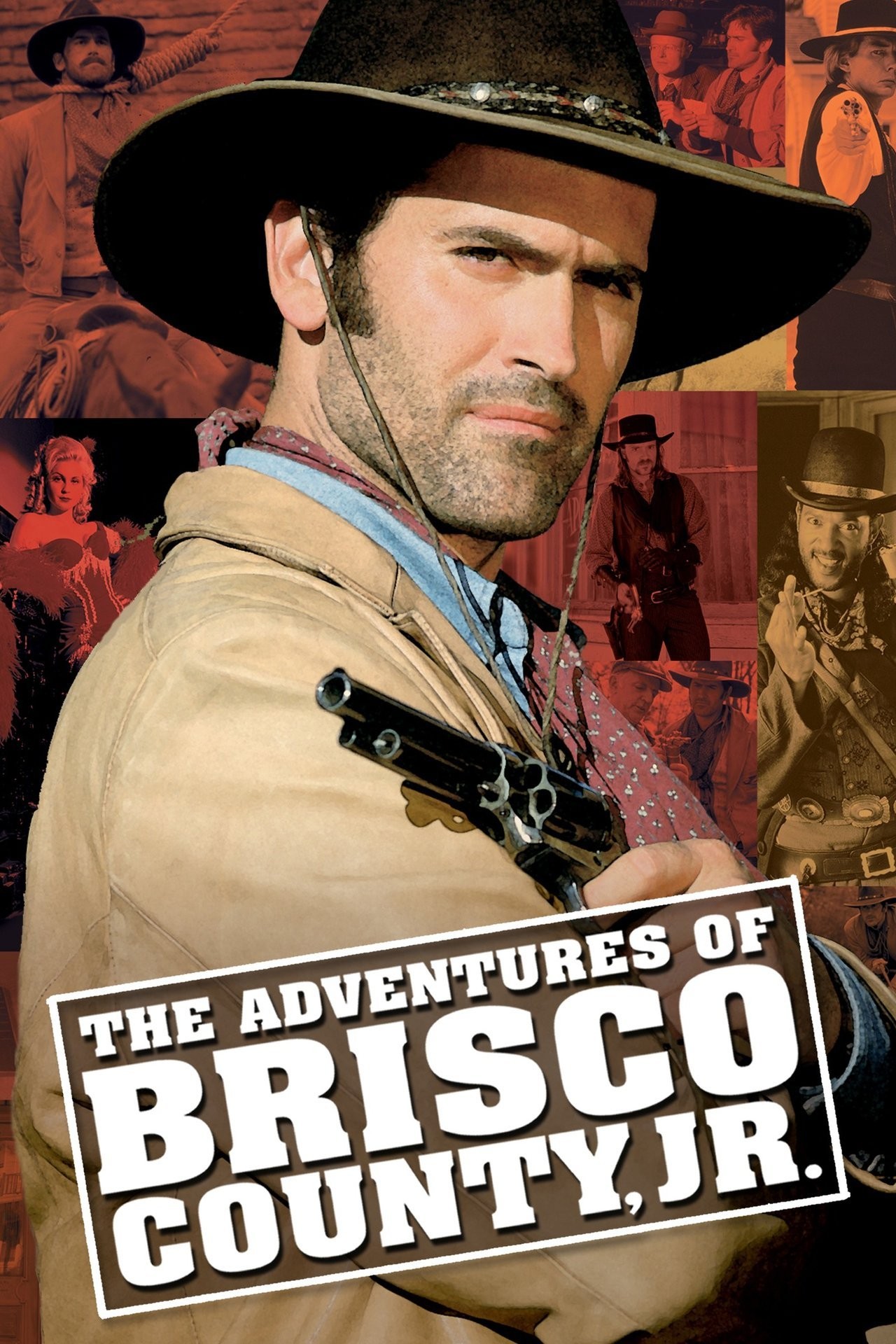
Icarus File No. 31: The Adventures of Brisco County, Jr.


“I’m looking for the coming thing.” — Brisco County, Jr.

Few television series embrace their own oddness as joyfully as The Adventures of Brisco County, Jr.. Blending frontier shootouts, pulp-serial adventure, broad comedy, sci-fi weirdness, and old-fashioned heroics into one deliberately unruly package, the short-lived Bruce Campbell vehicle has only grown more distinctive with time. It ran for a single season between 1993 and 1994, produced 27 episodes, and then vanished from network television before it had the chance to fully grow into the strange, funny, action-packed cult institution it deserved to be. That short life is part of its legend now. The show remains a wonderfully odd hybrid: a Western, an adventure serial, a sci-fi mystery, a screwball comedy, a buddy show, and a loving parody of old-fashioned television heroics. It was never content to simply be one thing, and that creative restlessness is exactly why it was so distinctive.

Bruce Campbell stars as Brisco County, Jr., a Harvard-educated lawyer who becomes a bounty hunter after the murder of his father, legendary lawman Brisco County, Sr. At first glance, that setup sounds like the foundation for a hard-edged revenge Western. Brisco is hired by a group of wealthy robber barons to track down John Bly, a charismatic outlaw who escaped after killing Brisco’s father. The show does not ignore that emotional hook, either. Campbell gives Brisco just enough sincerity that the character’s grief and desire to live up to his father’s reputation land when they need to. But the series almost immediately makes clear that it has no interest in being grim prestige television before prestige television was even a common phrase. Brisco may be motivated by vengeance, but he is also a cheerful idiot at times, an inventor’s dream customer, a romantic disaster, and a man genuinely enthusiastic about the future.

That optimism is one of the show’s most charming qualities. Brisco lives in 1893, but he is obsessed with modernity: bicycles, early automobiles, telephones, scientific gadgets, anything that might make the Old West feel less old. He repeatedly calls these new inventions “the coming thing,” often with the confidence of someone who knows history is on his side even when the technology in front of him is barely functional. It is a funny recurring bit, but it also gives the series an unusual personality. Brisco is not a traditional Western hero longing for a disappearing frontier. He is a cowboy-lawyer-adventurer who wants to survive the frontier and help drag it toward the twentieth century.

Campbell is the ideal actor for that balancing act. He had already built a devoted following through the Evil Dead films, where he proved he could sell broad physical comedy, cartoonish bravado, and genuine intensity all at once. The Adventures of Brisco County, Jr. puts those qualities to excellent use. Campbell looks like the square-jawed hero of a classic matinee serial, but he plays Brisco with a sly awareness of how ridiculous the genre can be. He can throw a punch, ride a horse, fire a gun, and deliver a tough-guy line, then immediately get tangled in a rope, outsmarted by a con artist, or humiliated by one of his own overconfident schemes. The show never treats him as incompetent exactly; Brisco is clever, brave, and unusually resourceful. But it understands that a hero is more entertaining when the universe keeps refusing to cooperate.

The early arc involving John Bly gives the show a memorable villain and a sense of forward momentum. Billy Drago, a genre veteran with one of the most instantly sinister faces and voices in film and television, plays Bly as a quietly unnerving outlaw rather than a loud, swaggering gunslinger. Drago had already become familiar to audiences through roles in crime thrillers, Westerns, horror, and action stories, and his presence adds serious genre street credibility to the series. He is particularly good at making Bly feel unpredictable. The character is intelligent, dangerous, and often strangely philosophical, with Drago giving even a casual line enough menace to make it sound like a threat. His addition helps sell the idea that, beneath the jokes and gadget-driven chaos, Brisco really is moving through a world populated by lethal people.

The show’s supporting cast is equally important to its success. Julius Carry’s Lord Bowler is the real secret weapon. Initially a rival bounty hunter with a powerful need to claim rewards before Brisco does, Bowler evolves into Brisco’s closest partner and one of the series’ most dependable sources of cool. Carry plays him with perfect deadpan timing, making Bowler’s irritation at Brisco’s eccentricities endlessly funny. Their chemistry is the foundation of the series. Brisco talks too much, overthinks everything, and barrels into trouble; Bowler observes, grumbles, and then saves the day when necessary. Their partnership has the rhythm of a classic buddy-action pairing, except it exists in a world where a frontier saloon might contain a mad inventor, an escaped criminal mastermind, and a mysterious glowing orb all in the same episode.

That orb is one of the show’s boldest ideas. Known as the Orb, it becomes the central sci-fi element in a series already packed with anachronistic comedy and pulp adventure. It possesses strange powers, influences human behavior, and hints at a much bigger mythology than the show ever had time to fully explain. The Orb plotline is not always the cleanest element of the series, but it matters because it shows how willing the creators were to push beyond ordinary Western storytelling. One week, Brisco might be hunting a gang of outlaws; the next, he might be dealing with supernatural powers, secret conspiracies, bizarre inventions, or stories that feel pulled from a 1930s adventure comic. The result is a show that can feel like The Wild Wild West, Indiana Jones, and a Saturday-morning serial filtered through a 1990s sitcom sensibility.

In that sense, The Adventures of Brisco County, Jr. was ahead of its time in the way it fused different genres into one coherent theme and narrative. The series never treated its Western setting, science-fiction mythology, slapstick humor, action serial influences, and detective-story plotting as separate gimmicks awkwardly stapled together. All of those elements were filtered through Brisco himself: a hero caught between an old frontier world and the uncertain promise of the future. His fascination with progress, invention, and “the coming thing” gave the show a thematic center strong enough to make even its strangest detours feel like part of the same larger adventure. What might have looked like a mess on paper usually plays as a deliberate expression of the show’s central idea: the Old West was changing, and Brisco was exactly the kind of eccentric hero built to stumble, joke, and fight his way into that change.

That same genre blending, however, likely confused audiences when the series first aired. In 1993, viewers and network marketers generally had a much easier time selling a show that could be described in one clean sentence. A Western was a Western. A sitcom was a sitcom. A science-fiction series was a science-fiction series. Brisco was all of those things at once, sometimes within the same episode. Its tonal shifts were part of the fun for viewers who connected with it, but they may have made it difficult for casual audiences to know what kind of show they were committing to every week. It was too playful and surreal for people expecting a straight Western, but its period setting could also make it seem less accessible to viewers looking for a more conventional action-comedy or sci-fi series.

Critics largely recognized how clever this mixture was. The show earned praise for its humor, its self-aware but affectionate approach to genre material, its charismatic cast, and its willingness to combine Western action with science fiction and absurdist comedy. Yet those very strengths also help explain why it was so short-lived. The Adventures of Brisco County, Jr. was difficult to market in the conventional network-TV landscape. Its placement did not help, either. The show aired on Fox during a period when the network was still building an identity and competing for viewers against much more established broadcasters. It arrived alongside other ambitious but unconventional Fox programming, including The X-Files, but Brisco did not become the breakout hit that its better-known network sibling did.

There is a strong argument that the series would have found a much bigger audience at the turn of the century, or even later. By the late 1990s and early 2000s, audiences had become increasingly comfortable with shows that mixed tones, genres, mythology, comedy, and serialized storytelling. Viewers were more willing to follow eccentric high-concept series whose worlds did not fit neatly into one category, especially as cable television, DVD collections, online fandom, and eventually streaming made it easier to discover a show outside its original broadcast slot. Brisco could have benefited enormously from that environment. Its episodic adventures would have made it easy to casually enjoy, while the larger mysteries around John Bly and the Orb would have rewarded devoted viewers. It is easy to imagine the show building a far larger fanbase through word of mouth, repeat viewing, and a culture more eager to embrace unapologetically nerdy genre experimentation.

That mismatch between quality and ratings is why the show became such a cult fan favorite. Fans who found it did not merely enjoy it; they tended to become attached to its specific flavor. The series offers a version of television adventure that feels generous rather than cynical. It wants to entertain first. Its jokes are broad but rarely mean-spirited, its action is energetic without becoming joyless, and its heroes are allowed to be capable, kind, foolish, and enthusiastic at the same time. Campbell’s performance became central to his larger cult-TV identity, while Carry’s Bowler remains one of the great underrated sidekicks in genre television. Even the show’s oddities—the Orb, the outlandish gadgets, the deliberately pulpy villains, the historical inaccuracies played for laughs—are not flaws to fans. They are the reason the series has lasted in memory.

Ultimately, The Adventures of Brisco County, Jr. is a lovable one-season wonder because it refuses to fit neatly into a box. It is a Western that looks toward the future, an action series that enjoys making its hero the punchline, and a sci-fi adventure that never loses sight of the human fun of two bounty hunters bickering their way across the frontier. Its cancellation remains disappointing because there was clearly more territory to explore, especially with Brisco, Bowler, Bly, and the Orb mythology. But the short run also preserves the show’s charm. It never had time to become routine. It remains a fast, funny, deeply peculiar burst of television imagination—and a reminder that sometimes the most enduring cult shows are the ones too weird, too ambitious, and too specific to become ordinary hits.

Previous Icarus Files:

  1. Cloud Atlas
  2. Maximum Overdrive
  3. Glass
  4. Captive State
  5. Mother!
  6. The Man Who Killed Don Quixote
  7. Last Days
  8. Plan 9 From Outer Space
  9. The Last Movie
  10. 88
  11. The Bonfire of the Vanities
  12. Birdemic
  13. Birdemic 2: The Resurrection 
  14. Last Exit To Brooklyn
  15. Glen or Glenda
  16. The Assassination of Trotsky
  17. Che!
  18. Brewster McCloud
  19. American Traitor: The Trial of Axis Sally
  20. Tough Guys Don’t Dance
  21. Reach Me
  22. Revolution
  23. The Last Tycoon
  24. Express to Terror 
  25. 1941
  26. The Teheran Incident
  27. Con Man
  28. Looker
  29. 1776
  30. Here

Review: Sunless Sea


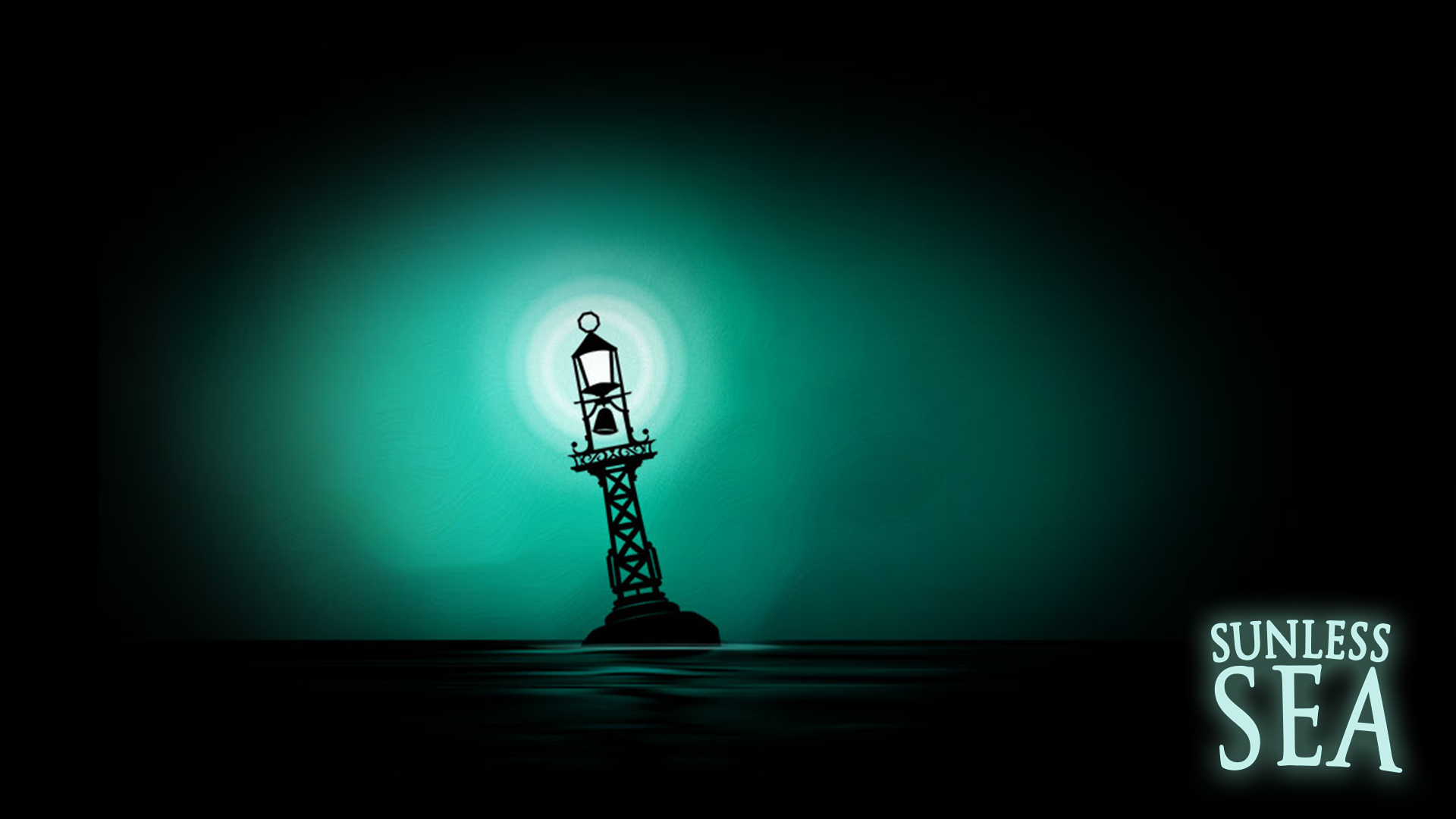
Sunless-SeaI acquired Sunless Sea by impulse as soon as I heard it was a “story-driven roguelike”. I had heard of it before as a “lovecraftian ship navigation simulator”. So happens it attempts to be both, and executes its proposal with laudable competence. Sunless Sea is Uncharted Waters: New Horizons for the SNES meets Eternal Darkness for the Gamecube. It is Sid Meier’s Pirates with a Doctor Who, wacky kind of horror, eldritch and horrifying in its own right. It is fantastic, and scary and fascinating.

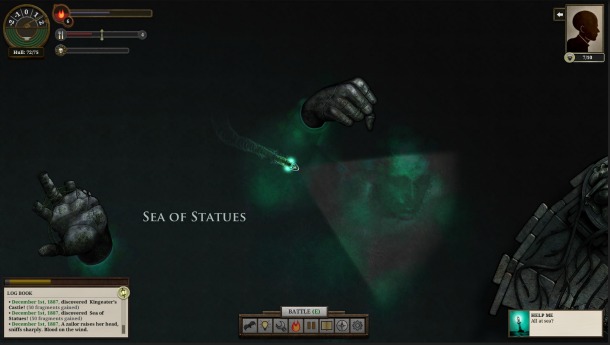
Sunless Sea evokes the mysteriousness of the oceans during the age of discoveries and displaces it into a fantasy, steampunk, victorian London to create a setting appropriately unknown. Your home port of Fallen London (Which as it implies, is London after falling into the earth. Get with the program.) is the only mostly safe place in the underground sea referred to as the Unterzee. As soon as you set sail from Fallen London, there’s no telling what you’ll find, with bat swarms, giant crabs and rat pirates being some of the most tame enemies you’ll encounter. The Unterzee is appropriately feared by those that dwell in it, and your own terror is only one of the things you must manage, lest despair drives you into joining the ghosts in the sea. Mind you, this is not a metaphor, there are actual sea ghosts who, on occasion, wail for you to join them. Your ship’s light brings some comfort at the cost of precious fuel. You must balance the intake of fear with the diminishing fuel and food supplies. It is a game of management. as well as exploration.

sunless1

But most of all, it’s story-driven. There is no single story to speak, but all of them are superbly written. You travel from port to port, from tale to tale, every one of them as eerie as the previous and never the same as any other. The seas are ruled by the gods of Salt, of Stone and of Storm, and you seek their favour, only hoping not to displease any of them. Spider-silk and mushroom wine are common trading goods, while human souls and uncensored romantic novels are illegal commodities. Every island you visit is a story. Every game update is a new set of stories added. It is a fascinating, ever expanding world for the fantasy and horror writer and all its consumers.

If I had to describe Sunless Sea in one word, it would be “enigmatic”. More extensively I’d describe it as dashingly green and black. But it offers too much content; it’s too original to be summarized so briefly. As a roguelike, it is unconventional. As a horror story, it is promising, and as an indie game as a whole it is very successful. I can only hope the Unterzee becomes richer and richer with its programmed updates, and so should you.


AMV of the Day: This Is War (Fullmetal Alchemist)


As a continue to write my Sucker Punch review I decided to take a break from it and watch some AMV’s on YouTube. I finally found one that I thought was worthy of becoming the latest “AMV of the Day”. This one combines one of the most popular action anime series of the last few years with a song from the American hard rock band 30 Seconds To Mars.

“This Is War” forms the basis for this AMv which takes that song and combines it with scenes from the anime series, Fullmetal Alchemist: Brotherhood. One thing which I always look at when choosing which AMV makes the grade is whether the creator has a fine grasp on the song and its lyrics. It’s simple enough to cut-edit anime scenes together and slap on a song to it, but matching the song to those very scenes takes skill and the creator of this amv definitely has that.

Creator: klepohi

Anime: Fullmetal Alchemist: Brotherhood

Song: “This Is War” by 30 Seconds To Mars

Sucker Punch (2nd Trailer)


Still recovering from the SF Giants winning the 2010 World Series so my review of the pilot episode of The Walking Dead is still in need of completion. To show that I haven’t been slacking off on my postings (Lisa Marie’s really been on a posting tear these past couple days. So proud of her.) I decided that what better stopgap until the review is up than to post the newly released 2nd trailer for Zack Snyder’s upcoming fantasy film, Sucker Punch, that seems to be a who’s who of the industry’s hottest young actresses. It has Emily Browning, Abbie Cornish, Vanessa Hudgens, Jamie Chung and (one of Lisa Marie’s favorites) Jena Malone. To help chaperone this quintet of hotness are the mature stylings of Carla Gugino and Scott Glenn.

This latest trailer gives a bit more of the narrative to Sucker Punch, but even with that the visuals may be what brings in the audience. Snyder looks to be the king of the hyperstylized visuals in Hollywood today. Whether that translates into a well-made product is still being debated, but one can never accuse Snyder of not having the eye for the spectacular.

The trailer shows more action with dragons, anime-style mecha, samurai, Nazis and zombies. Interestingly enough the trailer skimps on the Moulin Rouge-type sequence the Comic-Con trailer showed. I’m sure those scenes will be in the final film, but Legendary Pictures look to be using the stylized action to sell the flick. I’m for it either way. If sex doesn’t sell then cool violence does in Hollywood.

I’m wondering how much Legendary Pictures ended up paying Led Zeppelin to use “When the Levee Breaks” to score this trailer. It has to be some major coinage which tells me that the studio has high-expectations about this film succeeding and raking in even more coinage.

SDCC Exclusive: Zack Snyder’s Sucker Punch Cast Photos


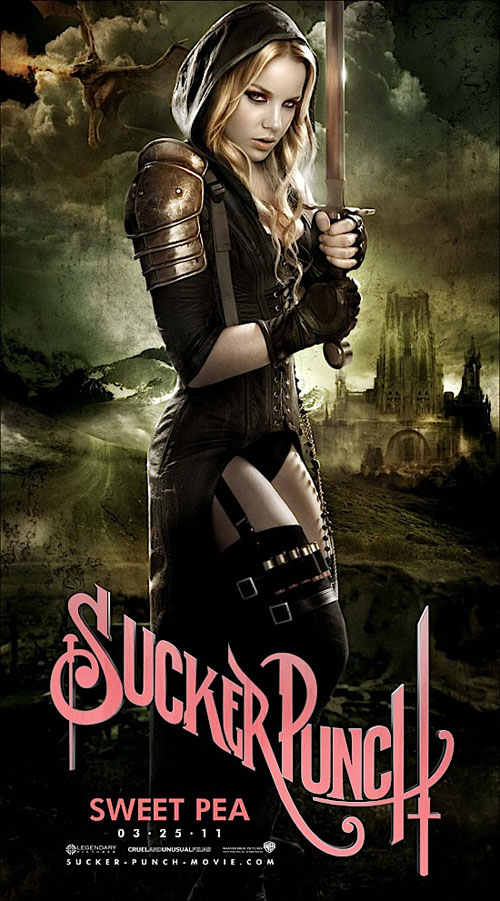
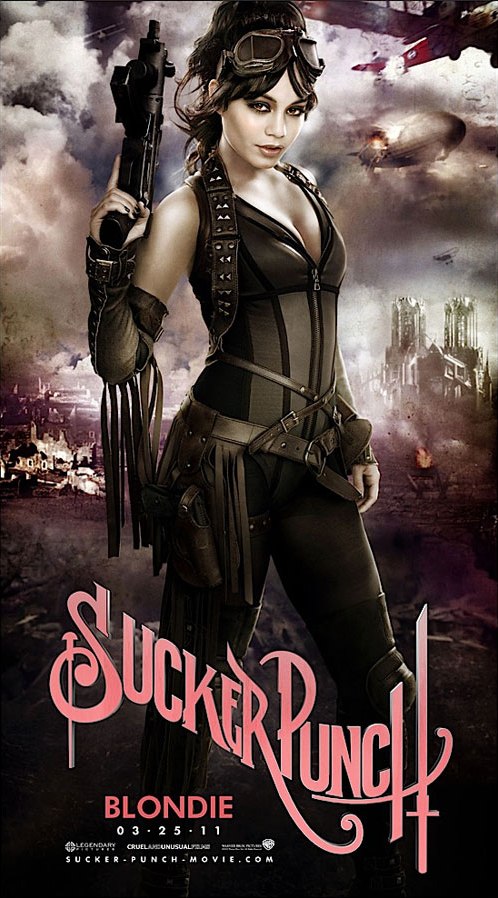
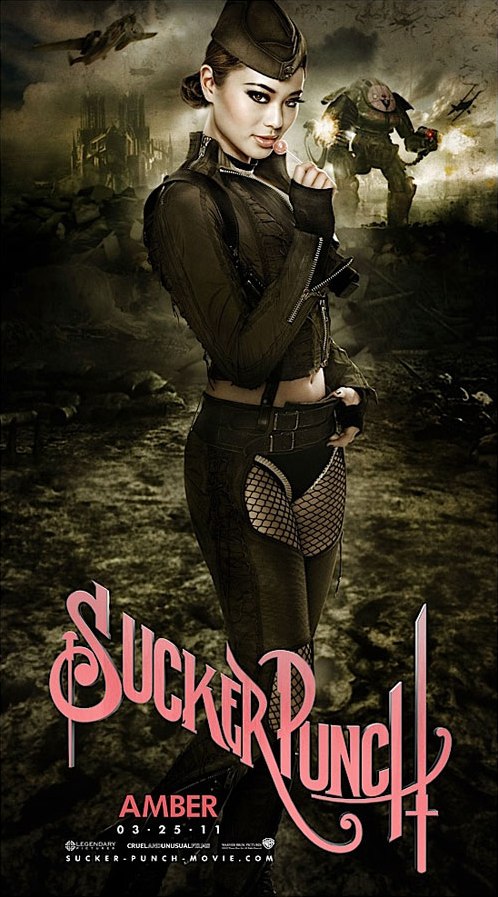
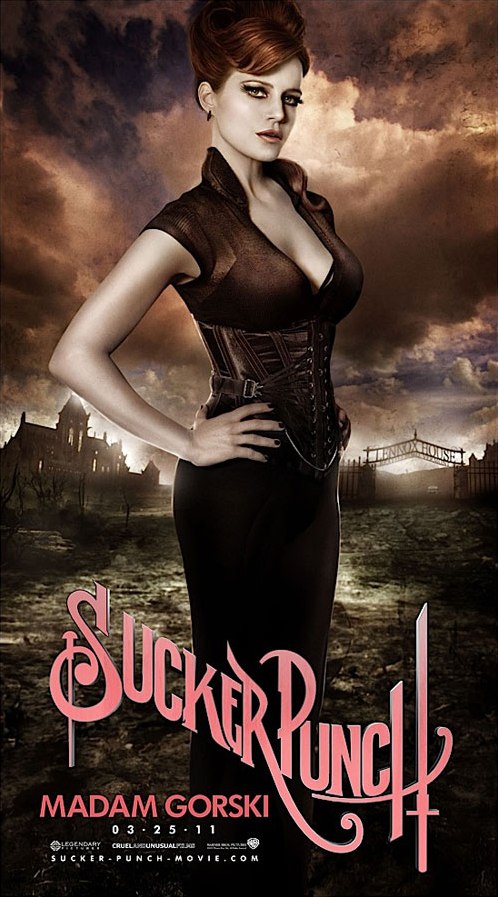
Zack Snyder’s upcoming dark urban fantasy called Sucker Punch seems tailor-made for the Comic-Con crowd. It stars some of Hollywood’s loveliest young women like Emily Browning, Jena Malone, Abbie Cornish, Vanessa Hudgens and Jamie Chung. It also stars fanboy favorite Carla Gugino who in past genre flicks wasn’t averse to baring it all for the sake of her art.

Sucker Punch has been described by Snyder himself as Alice in Wonderland but with machine guns, not to mention B-52 bombers, dragons, brothels. From some of the sneak-peeks into the production this particular Alice-themed flick also has zombie soldiers, a mecha-suit with a pink bunny painted on the armor not to mention some steampunk added into the mix.

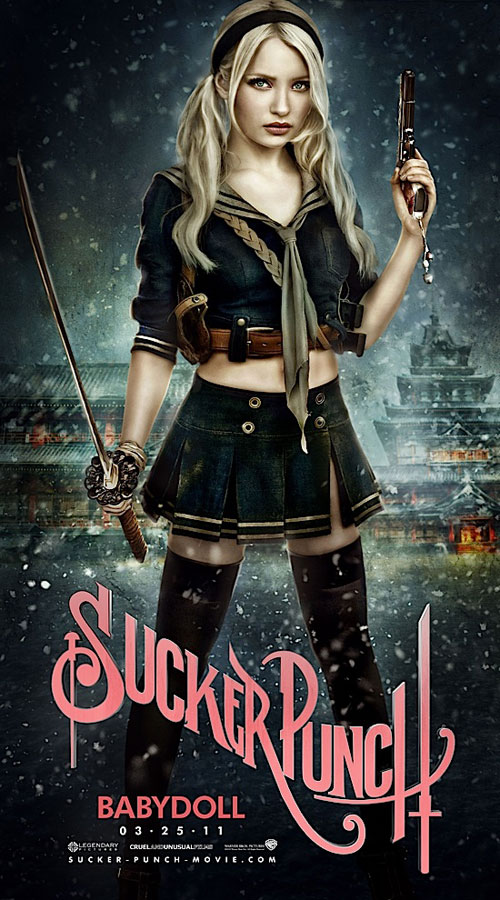
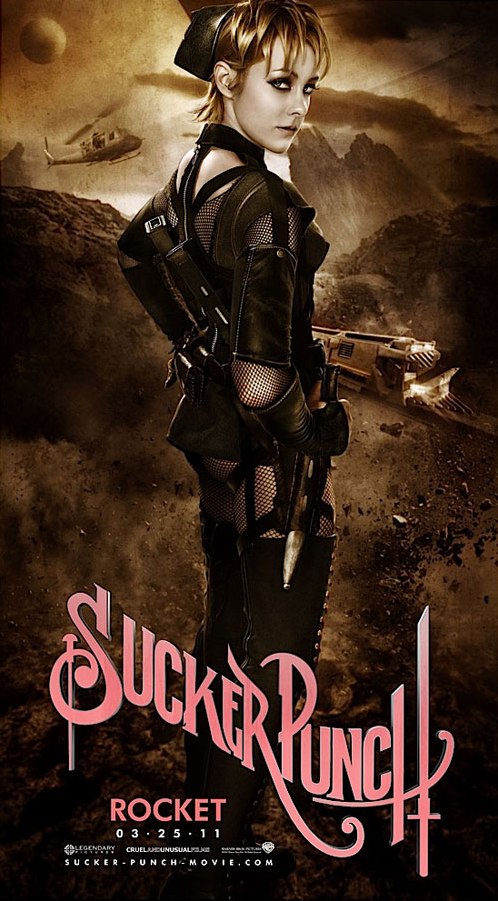
Just in time for this year’s Comic-Con, Warner Brothers has released for this event some very great and stunning character posters. I am actually very curious as to which artist painted and created these character posters since they’re truly gorgeous. If I only had room in my room’s walls to frame and put them up.I also like the little details in the posters. I had to stifle a silly grin after I noticed the charms hanging off of Babydoll’s automatic pistol.

Take a gander at the posters below.

Emily Browning as Babydoll

Jena Malone as Rocket

Abbie Cornish as Sweet Pea

Vanessa Hudgens as Blondie

Jamie Chung as Amber

Carla Gugino as Madam Gorksi


Past Review: The Prestige (dir. by Christopher Nolan)


2006 has been a quiet year for event films. The predicted blockbusters this past summer pretty much underperformed despite some being exactly as good as I thought they’d be. Other than Johnny Depp and the gang’s Pirates of the Caribbean: Dead Man’s Chest, every blockbuster didn’t blow the industry out of the water. It’s a very good thing that I had smaller films to tide me over. This year has been a very good ones for some independent-minded and smaller films which came out during the slow first couple months of the year and during the graveyard release months between the end of summer and the start of the late year holidays. I’ve already had the chance to see such very good films like Running Scared from Wayne Kramer and Hard Candy from David Slade to The Proposition from John Hillcoat. I am glad to say that Christopher Nolan’s film adaptation of Christopher Priest’s novel, The Prestige is another non-blockbuster that excites, entertains and, in the end, keeps the audience mystified but not confused.

I’ve read Christopher Priest’s novel about dueling late 19th-century London magicians. It’s a novel written in epistolary format with each chapter and section written as entries into the journal of one of the main characters in the story. The novel itself is pretty straightforward as it tells the story in near chronological order. I was hesistant to embrace this film adaptation when I first heard about it since alot of the mystery of of the story wouldn’t translate so well in film if they followed the strict order of how the story was told in the novel. For Christopher Nolan and his brother, Jonathan, to just adapt the novel straight-out would’ve made for a dull and boring mystery-thriller. I was glad that the Nolan brothers were inventive enough to borrow abit from Christopher Nolan’s first feature film, Memento. Their film adaptation of The Prestige doesn’t go backwards in its narrative, but it does mixes up the chronological order of the story somewhat, but not to the point that Tarantino does in Pulp Fiction and Kill Bill. The two Nolans fudges abit with the timeline to add some backstory filler to help give the characters that Christian Bale and Hugh Jackman portrays with the reason for their pathological obsession with each other.

Christopher and Jonathan Nolan’s screenplay for The Prestige was able to keep the mystery of the story intact, but it also keeps the amount of red herrings in such films to a minimum. Michael Caine’s character, Harry Cutter, opens up the film explaining just exactly what constitutes a magic trick on stage. How it’s divided into three parts. First, there’s “The Pledge” wherein the magician shows the audience something ordinary he or she will use in the trick. Soon, the magician will follow this up with “The Turn” where the abovementioned ordinary object does something extraordinary in front of the audience. The pay-off of the magician’s trick is “The Prestige” where the audience’s astonishment occurs as they fail to deconstruct and figure out the means of the trick. That’s pretty much the film in a nutshell. It’s one big magic trick. The clues are there for the audience to see, gather and extrapolate their answer to the mystery that is the story. The screenplay doesn’t treat the audience as if they need to be hand-held throughout the film. In fact, anyone who pays attention will be able to solve one-half of the mystery by the first hour. I won’t say exactly whose half of the mystery it will be but people will be kicking themselves afterwards if they don’t figure it out right away.

This magic trick of a film does have its many underlying layers of themes to add some complexity, drama and tension to the characters of Alfred Borden (Christian Bale) and Rupert Angier (Hugh Jackman). I’ve already mentioned that throughout the film their mutual obsession about each other is due to a backstory detailing their past. A past where they were initially friends — rivals even — and apprentices to the magician Milton (played by Ricky Jay) and Harry Cutter (excellently played by Michael Caine as the only voice of reason throughout the film) who creates and maintains the devices used in all the stage tricks. Borden and Angier’s obsession is not just in ruining and sabotaging each other’s magic tricks and lives, but also trying to find out each other’s secrets as they both learn magic tricks which amaze and thrill the gentry of London’s stage. From the beginning of the film these two characters begin a journey towards a path of destructive behavior which puts not just each other’s lives at risk, but those who they care about. All of it in the name of humiliating and upstaging the other due to a tragic incident early in their mutual careers. These two individuals were not sympathetic characters and I applaud Christopher Nolan and his brother for not softening up their hard edges.

Most adaptors will try to make a story’s characters more sympathetic and likable. They went the opposite in The Prestige. But even these two dark characters continue to exude the charisma and strong personalities that the audience will root for one or the other. Should they root for the charismatic and born shownman that Hugh Jackman’s Angier character plays or go for the perfectionist Borden character Christian Bale plays. A perfectionist whose technical skills surpasses that of Angier’s but whose introverted and brooding personality makes him little or no stage presence.

Both Jackman and Bale play their characters well. The film wouldn’t be so good if it wasn’t for the work of these two actors. It helps that they’re surrounded by quality supporting character like Michael Caine as the seasoned, veteran mentor to the dueling magicians. Even Scarlett Johansson does very well with the part she’s given. It’s a part that many sees as more of a throwaway character. A piece of very good-looking distraction for both the story and the audience. But she gamely plays the role of pawn for both Angier and Borden. Unlike Michael Caine’s character who remains the singular voice of sanity in the film, even Johansson’s character of Olivia gets pulled into the obsessions and betrayals that’s plagued both Angier and Borden. But in the end, she’s just part of the process of “The Turn” and if people have been watching the film closely right from the beginning then she’s also a clue as to the secret of one of the amazing magic tricks shown by the two magicians.

The Prestige also has a distinct look about it. The 19th-century London just before the start of the new millenium gives it a certain sense of Victorian-era familiarity. Production designer Nathan Crowley shows a London at the height of its Gilded Age, but soon gives way to a certain steampunk look as inventor Nikola Tesla makes an appearance during an integral part of the story. David Bowie portrays Tesla as an eccentric genius whose search for the secrets of the universe will lead to the discovery of what many of that era would consider magic. It’s the ingenius looking technology created for the Tesla sequence which finally gives The Prestige it’s root in fantasy and science-fiction. The film doesn’t dwell on this new development but from that part of the story and until the end, the film takes on a look and feel of a steampunk mystery-thriller. There’s not enough films that tries to mine this new subgenre and I, for one, am glad that Christopher Nolan added this new dimension to the film’s overall look.

In the end, The Prestige really needs to be seen to be appreciated and for people to make up their minds about the film. Some will see it as a thriller with twists and turns that doesn’t insult the intelligence of its audience. Some may see the film as just one large gimmick from start to end. Those people will probably be correct as well. The film at its most basic level is one long magic trick with all three acts. It has “The Pledge” which is then followed up by “The Turn” and then ends with “The Prestige”. It will be up to each individual who sees the film to make the final decision as to whether they’ve bought into all three acts of the magic trick that is The Prestige, or come away having felt like they’ve wasted their time. I’ve not come across many who felt like the latter, even those whose own feelings about the film don’t reach the same level of praise as I have for Christopher Nolan’s latest offering. All I know is that this is a film that delivers on its premise to confound and amaze. It also continues to validate my views that Bruce Wayne and Batman are in very good hands with Christopher Nolan at the wheel. The Prestige was easily one of the best film of 2006.